In this article
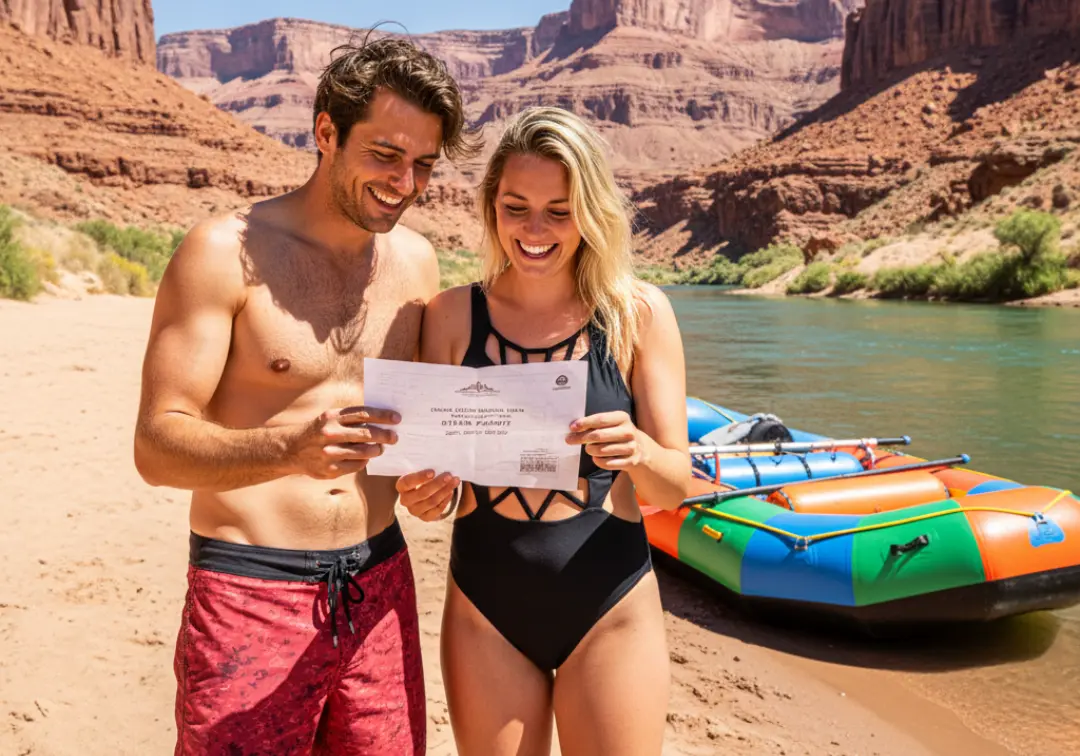
Holding it in your hand—the crisp paper or digital confirmation for a trip down the Grand Canyon or the Middle Fork of the Salmon River. It feels like the ultimate prize, the end of a long, competitive journey. But that noncommercial river permit isn’t a ticket to an amusement park; it’s an authorization to lead. This guide will show you how to navigate the complex world of USA river permits, but more importantly, it will provide the River Readiness Framework to ensure that when you win a spot through the river permit lottery, you are truly ready for the powerful river.
The journey to the water’s edge is about more than just luck. It’s about understanding the ‘why’ behind the wait—the legal mandates like the Wild and Scenic Rivers Act that protect these fragile river resources. It involves mastering the permit strategy for the three primary paths to the river: the simple lottery, the weighted lottery, and first-come, first-served systems, each with its own unique application method. We’ll move from application to action, learning data-driven application strategies to improve your success rates and coordinating group efforts to maximize your chances before the application deadline. Finally, we’ll go beyond permit acquisition itself with our framework, a unique matrix that connects your hard-won permit to the essential skills, certifications, and gear required to earn your place on the river.
The Regulatory Landscape: Why Permits Exist

Before you can understand how to win a river permit, you have to understand why they exist in the first place. This isn’t an arbitrary system designed to create scarcity; it’s a deliberate conservation tool built on a foundation of federal law. On these designated rivers, a permit is required for all private, self-guided river trips. These rivers are not just recreational playgrounds; they are protected national treasures, and the permit system is the primary mechanism for that protection.
Which Governing Bodies Manage Permits and Under What Laws?
The vast majority of coveted river permits in the United States are administered by three principal federal agencies: the Bureau of Land Management (BLM), the National Park Service (NPS), and the U.S. Forest Service (USFS). These agencies are the stewards of the rivers that flow through our National Parks, National Forests, Wilderness Areas, and other designated public lands. The cornerstone of their authority and the primary legal justification for the entire permitting process is the Wild and Scenic Rivers Act explained of 1968. This landmark legislation created a mandate to preserve certain Wild and Scenic Rivers with “outstandingly remarkable” scenic, recreational, geologic, fish and wildlife, historic, or cultural values in a “free-flowing condition” for the enjoyment of present and future generations.
This legal obligation is not a suggestion; it is a directive that directly informs management strategies. Section 7 of the Act is particularly powerful, as it prohibits federal assistance for any water projects that would adversely affect a designated river’s values, reinforcing the protective mandate. This legal framework is the reason for the high-stakes, competitive lotteries; they are a direct consequence of conservation law, designed to mitigate human impact by strictly limiting user numbers and enforcing launch restrictions on overnight river trips. This responsibility can sometimes be complex, with overlapping jurisdictions, such as the Upper Salt River in Arizona (managed by both the USFS and the White Mountain Apache Tribe) or the San Juan River (overseen by the BLM and the Navajo Nation), which can add layers to the river permit application process. With this legal foundation in place, let’s explore the specific objectives that guide how agencies balance the dual mandate of public access and the core principles of river conservation.
What Are the Core Objectives of the Permit System?
Every rule and regulation you encounter in the permit programs can be traced back to a few core objectives. At the heart of it all is Resource Protection. This is the primary goal. Limiting visitor numbers is the most effective tool for minimizing campsite impacts, reducing water and land pollution, and preventing irreparable damage to sensitive riparian ecosystems and priceless cultural sites within the entire river corridor. To achieve this, river managers use the concept of “carrying capacity”—the maximum level of use an area can sustain without degrading its natural and social values.
Closely tied to this is the goal of preserving Experience Quality. A key value of these wild rivers is the opportunity for solitude and a genuine wilderness experience. The permit system is what prevents a stunning canyon like Westwater Canyon from feeling like a crowded highway. It ensures that groups can enjoy the natural scenery, hear the sounds of the river, and feel a sense of remoteness without the constant presence of other parties. Finally, a critical and often overlooked objective is Public Safety. Managing group numbers on technically difficult whitewater sections prevents congestion in major rapids, where a multi-boat pileup could be disastrous. It also prevents overcrowding at the limited campsites available, which can increase risks from fire, sanitation issues, and environmental hazards. By limiting the number of simultaneous private river trips, agencies can also ensure more effective management of search and rescue (SAR) operations in an emergency. The BLM’s approach to permits and visitor use frames the system as a tool that strikes a delicate balance between providing public access and fulfilling the legal mandate to preserve these resources. Preserving experience quality and resource protection ultimately comes down to the actions of every boater on the river and a commitment to adhering to proper river etiquette.
Understanding why these permit systems exist is the first step; now, we’ll deconstruct the three primary models agencies use to allocate these limited opportunities.
Deconstructing the Permit Systems: The Three Paths to the River
Agencies use three primary models to allocate permits: the simple lottery, the weighted lottery, and first-come, first-served. Each permit system presents unique challenges and demands a different strategic approach from the applicant. It’s important to understand the commercial vs. private distinctions, as this guide focuses on permits for private boaters.
System 1: How Does a Standard Lottery System Work?
The standard lottery, or public lottery, is the most common method for sought-after rivers where demand vastly exceeds supply. It’s a pure game of chance, designed to provide an equal opportunity for all applicants to enter lottery. Most of these federal lotteries are managed through the centralized reservation system at Recreation.gov. The application process is straightforward: an application window opens, and with a typical application deadline of January 31 for the following summer season, lottery applications are due well in advance. Applicants pay a small, non-refundable application fee to enter their preferred launch dates. Once the window closes, lottery results are determined by a completely randomized selection. Recreation.gov uses sophisticated, unbiased algorithms like the Fisher-Yates Shuffle and a Cryptographically Secure Pseudo Random Number Generator (CSPRNG) to ensure fairness.
After the application window closes, all entries are gathered, randomly assigned a queue position, and processed in order. The system attempts to award an applicant’s first-choice date; if that’s taken, it moves to their second choice, and so on, until an award is made or all preferences are exhausted. The quintessential example of this is the “Four Rivers Lottery” for Idaho’s Middle Fork Salmon River, Main Salmon River, Selway River, and the Snake River through Hells Canyon. It’s a classic game of chance with very low success rates, and it’s crucial to understand that in this system, persistence offers no statistical advantage. Your odds are the same whether it’s your first year applying or your twentieth. You can see exactly How the lottery process works on the official government portal.
While the standard lottery is a pure game of chance, some systems are designed to reward those who have been playing the game the longest.
System 2: What Is a Weighted Lottery and How Does It Reward Persistence?
A weighted lottery is a more complex system designed to improve the odds for applicants who have been unsuccessful in previous years. The core mechanic involves assigning “points” or “chances” to applicants based on their river trip history, giving them more “tickets” in the drawing. The most renowned and intricate weighted lottery in the United States is the Grand Canyon National Park noncommercial river permit system. Here, individuals accrue one standard point—a form of weighted lottery points—for each year they have not participated in a trip or won a permit, up to a maximum of five points. Even first-time applicants get a boost, as they start with five points, making them instantly competitive.
The strategy for a weighted lottery gets deeper. In the Grand Canyon river permit system, a critical consideration is the Potential Alternate Trip Leader (PATL). All trip leader requirements must be met, and the point value for an entire lottery application is determined by the person with the lowest number of points, so choosing your partners wisely is paramount. The system also includes legacy “Bonus Points” which were granted to individuals on the old physical waitlist before 2006; these points are added to an application’s standard total and are extremely valuable. Another popular example is Montana’s Smith River, where unsuccessful applicants can purchase a bonus point each year, and their chances in the lottery are equal to their accumulated points squared. This system clearly rewards long-term dedication but requires careful strategic planning, especially regarding group composition and the strict group size limits. You can read the full details on the Grand Canyon’s weighted lottery system directly from the NPS, which includes information on creating a river user account and the Privacy Act.
Moving away from chance and persistence, the third system rewards something else entirely: speed and timing.
System 3: How Do First-Come, First-Served (FCFS) Systems Work?
First-Come, First-Served systems reward planning, timing, and persistence over luck. In these systems, permits become available at specific times or through specific channels, and the quickest person wins. One common method is the Online “Rolling Release,” exemplified by Oregon’s John Day River. Here, permits are released in batches (for instance, 26 weeks in advance) at a precise time on a specific day. Success requires users to be logged into their accounts and ready to click “book” the second the clock strikes the hour. Another classic method is the Competitive Call-In. After an initial lottery, cancelled permits on rivers like the Rogue River in Oregon become available via a dedicated, notoriously busy phone line that requires relentless redialing. These alternative application methods often arise due to strict cancellation policies.
For those with extreme flexibility, the In-Person / Day-Of Launch method, also used on the Rogue River, involves physically showing up at the ranger station early in the morning to claim any last-minute cancellations or no-shows. It’s a high-risk, high-reward strategy. Finally, for very remote rivers like the Bruneau River or Jarbidge River, or for the off-season on regulated rivers, you may find Self-Issue Permits. These self-issue options involve a low-tech method of simply filling out a form at a kiosk at the launch site. The type of permit system often implies something about the river’s character: a lottery suggests extremely high demand, FCFS suggests high but manageable demand, and a self-issue permit suggests a river whose remoteness or inherent difficulty naturally limits the number of users. The BLM’s official page on the Rogue River permit process details confirms many of these FCFS methods.
Now that you understand the different systems, let’s consolidate this information into a single, strategic tool for planning your next trip.
The Permitted Rivers Directory: A Strategic Overview
To effectively plan your permit applications, you need data. This directory serves as a primary tool for trip planning, allowing you to compare some of the most popular private boating trips in the U.S. based on location, river difficulty, permit type, and odds of success. Use it to identify specific rivers that match your skill level, your tolerance for competition, and your strategic approach.
Master River Permit Directory
Popular Multi-Day River Rafting Permits
A comparison of lottery systems, difficulty, and typical trip details for popular river trips.
States & Agency
AZ, NPS
Details
Permit: Weighted Lottery
Application: Feb (Main Lottery)
Season: Apr-Oct
Duration: 12-25 Days
Portal: NPS.gov
States & Agency
ID, USFS
Details
Permit: Standard Lottery
Application: Dec 1 – Jan 31
Season: Jun-Aug
Duration: 6-8 Days
Portal: Recreation.gov
States & Agency
ID, USFS
Details
Permit: Standard Lottery
Application: Dec 1 – Jan 31
Season: Jun-Aug
Duration: 6-8 Days
Portal: Recreation.gov
States & Agency
ID, USFS
Details
Permit: Standard Lottery
Application: Dec 1 – Jan 31
Season: Jun-Jul
Duration: 5-6 Days
Portal: Recreation.gov
States & Agency
ID, OR; USFS
Details
Permit: Standard Lottery
Application: Dec 1 – Jan 31
Season: Jun-Aug
Duration: 4-6 Days
Portal: Recreation.gov
States & Agency
CO, UT; NPS
Details
Permit: Standard Lottery
Application: Dec 1 – Jan 31
Season: Jun-Aug
Duration: 4-5 Days
Portal: Recreation.gov
States & Agency
CO, UT; NPS
Details
Permit: Standard Lottery
Application: Dec 1 – Jan 31
Season: May-Jun
Duration: 4-5 Days
Portal: Recreation.gov
States & Agency
UT, BLM
Details
Permit: Standard Lottery
Application: Dec 1 – Jan 31
Season: Apr-Jun
Duration: 3-7 Days
Portal: Recreation.gov
States & Agency
MT, MT FWP
Details
Permit: Weighted Lottery
Application: Early Jan – Mid Feb
Season: May-Jul
Duration: 4-5 Days
Portal: MT FWP
States & Agency
OR, BLM/USFS
Details
Permit: Lottery & FCFS
Application: Dec 1 – Jan 31
Season: May-Sep
Duration: 3-5 Days
Portal: Recreation.gov
States & Agency
CA, USFS
Details
Permit: Standard Lottery
Application: Dec 1 – Jan 31
Season: May-Aug
Duration: 1-3 Days
Portal: Recreation.gov
States & Agency
AZ, USFS
Details
Permit: Standard Lottery
Application: Dec 1 – Jan 31
Season: Mar-Apr
Duration: 3-5 Days
Portal: Recreation.gov
To add more context, let’s look closer at three “Crown Jewel” rivers:
- Colorado River, Grand Canyon: This is the undisputed pinnacle of multi-day private river trips in North America. The journey is world-class, but the logistics are substantial. The competitive weighted lottery system requires long-term planning, and the trip itself involves significant permit cost/fees for food, gear, and park fees. The required experience/skills are high, demanding leaders comfortable with big water, complex rapids, and remote wilderness survival. The Grand Canyon noncommercial permit process page has all the authoritative data.
- Middle Fork of the Salmon River: This 100-mile wilderness trip is a true classic, flowing through the heart of the Frank Church-River of No Return Wilderness. It’s part of the USFS “Four Rivers Lottery,” and with odds often hovering around 3%, it’s a tough permit to draw. The trip is highly regulated, with limited campsite availability as camps are assigned for the entire journey. There is also a mandatory list of required gear to ensure resource protection.
- Selway River: Often considered the hardest river permit to get in the United States, the Selway is a test piece for expert-level boaters. Only one launch is permitted per day, making the odds in the “Four Rivers Lottery” staggeringly low. Its reputation is built on continuous, demanding wilderness whitewater that demands a skilled and cohesive team. Water flow considerations are critical on this river.
For a broader look at these and other amazing trips, check out our guide to the best USA rafting trips. With this directory in hand, the numbers can look intimidating. Let’s shift from what the systems are to how you can actively and intelligently play the game to win.
Strategic Acquisition: How to Play the Game and Win
Winning a high-demand river permit isn’t just about luck; it’s about playing the odds intelligently. By using a data-driven approach and coordinating with your group, you can significantly improve your success rates.
How Can a Statistical Approach Improve Your Odds?
The foundation of a successful strategy is a realistic understanding of the success rates/odds. For the most coveted rivers in peak season, your chances are often in the low single digits. The 2023 “Four Rivers” lottery statistics tell the story: over 58,000 permit applications were submitted for just 1,069 available permits. For Idaho’s Selway River, the odds were around 1.5%, while the Middle Fork of the Salmon was about 3.3%. Faced with numbers like these, the single most effective way to increase your odds is to target less popular launch dates.
Demand is heavily concentrated during the high-use season of late June and July, driven by ideal weather and predictable water levels. This is where strategy comes in. The “shoulder seasons”—late May, early June, or late August and September—are your key strategic target. Applying for these season dates means you are facing far less competition, which dramatically increases the statistical probability of drawing a permit. Of course, there’s a trade-off. Shoulder season trips may require more robust preparation for variable weather and water conditions. A late May trip could mean high, cold water and fickle spring weather, while a low-water summer trip in September might face technical rapids that are more difficult to navigate. This data-driven choice is a calculated risk, but for well-prepared groups, it’s a risk that often pays off. The official Middle Fork of the Salmon permit data on Recreation.gov is the source for these lottery statistics and underpins this entire approach.
Beyond individual timing, the most powerful strategy involves coordinating as a team—the “permit party.”
What is the “Permit Party” and How Does It Maximize Chances?
The “permit party” is a widely used strategy where a group of boaters coordinates their applications to maximize the group’s overall chances. There are two primary methods. The first is Targeting a Specific Date. If your group is set on a particular week, perhaps for a holiday weekend or a reunion, every member of the group submits an individual application for the same set of dates. This effectively multiplies the number of entries for that specific launch, giving your group a better shot at securing one of those coveted spots.
The second method is Maximizing General Access. If the group’s priority is simply getting on the river anytime during the season, members coordinate to apply for different, non-overlapping launch dates. This spreads the applications across the entire calendar, dramatically increasing the odds that someone in the group will draw a permit. When using this strategy, however, you must revisit the Grand Canyon PATL dilemma. While adding a Potential Alternate Trip Leader provides insurance in case the original applicant has to back out, remember that adding a PATL with a lower point total nullifies the advantage of a high-point trip leader. For experienced groups with multiple qualified leaders who all have high point totals, the mathematically superior strategy is often for each person to apply individually without listing PATLs. The official Grand Canyon PATL requirements FAQ directly confirms this rule.
Pro-Tip: Before the lottery even opens, your permit party needs to have a frank conversation about priorities. Is the goal a specific week, or is it just getting on the river? Who are the most qualified leaders? Clearly defining the group’s goals and understanding the specific rules of your target river will prevent confusion and ensure your strategy is sound from the start.
Effective group strategy requires clear communication and a solid understanding of the rules. For any group planning a river expedition, understanding the principles of guiding a raft is a foundational step toward a successful expedition. If the lottery still doesn’t go your way, the game isn’t over; the aftermarket for cancelled permits, a result of cancellation policies, offers a second chance for the diligent.
You Won a Permit… Now What? The River Readiness Framework
This is the moment the entire article has been building toward. You won. The email is in your inbox. The celebration is loud, but in the quiet moments that follow, a new, more significant challenge emerges. The issued permit was the starting gun, not the finish line. Now you must prove you are ready for the river. This skill development framework connects the administrative challenge of getting a permit to the practical challenge of river running preparedness and safe river adventures.
The River Readiness Framework Matrix
A matrix outlining the readiness required for popular multi-day river expeditions.
Key Challenges & Experience
High-volume water, powerful hydraulics, long duration, remote desert environment. Requires extensive experience leading multi-day trips on Class IV rivers.
Certifications & Gear
WFR for trip leader, WFA for others, and SWR. Master skills in flip recovery and big-water swimming. Essential gear includes a groover, fire pan, and satellite communicator.
Key Challenges & Experience
Technical, continuous, steep-gradient rapids. Extremely remote. Requires expert-level skills in a chosen craft and proven ability to lead trips in continuous Class IV+ whitewater.
Certifications & Gear
WFR and Advanced SWR. Master skills in strainer negotiation and boat-pin extraction. Essential gear includes a groover, fire pan, and comprehensive repair kit.
Key Challenges & Experience
Continuous Class III-IV rapids, remote alpine environment. Requires solid experience leading multi-day trips on Class III-IV rivers with confident rowing skills.
Certifications & Gear
WFA/WFR and SWR. Master skills in active swimming in rapids and throw bag accuracy. Essential gear includes a groover, fire pan, ash container, and strainer.
Key Challenges & Experience
Pool-drop rapids and warmer water. Requires experience on Class III rivers, making it a good first multi-day trip for new trip leaders.
Certifications & Gear
WFA and SWR recommended. Master skills in basic self-rescue and throw bag use. Essential gear includes a groover, fire pan, and first aid kit.
Key Challenges & Experience
Low-gradient, high-desert scenery with cultural sites. Requires experience on Class II-III rivers with a focus on expedition planning and Leave No Trace principles.
Certifications & Gear
WFA recommended. Master skills in flatwater boat handling and Leave No Trace ethics. Essential gear includes a groover, fire pan, and first aid kit.
What is the International Scale of River Difficulty?
The foundational language of river running is the International Scale of River Difficulty, which classifies whitewater on a scale from I to VI. Understanding this scale is the first step in assessing your own readiness.
- Class I (Easy): Fast-moving water with small waves and few obstructions.
- Class II (Novice): Straightforward rapids with clear channels that require basic maneuvering.
- Class III (Intermediate): Rapids with moderate, irregular waves that require good boat control. This is often considered the benchmark for exciting but manageable whitewater.
- Class IV (Advanced): Intense, powerful rapids demanding precise boat handling. Self-rescue can be difficult, and strong group rescue skills are essential.
- Class V (Expert): Extremely long, obstructed, or violent rapids with a high degree of endangerment. A swim is dangerous, and rescue is difficult even for experts.
- Class VI (Extreme): Rapids that are generally considered unrunnable or carry the risk of extreme consequences.
This scale provides a universal measure of a rapid’s technical difficulty and potential consequences. The single most authoritative source for this classification system in the United States is American Whitewater, which maintains the official definitions for the International Scale of River Difficulty. Understanding how rafting risk correlates with river class is crucial for making an honest self-assessment. With this common language established, we can now build a matrix that aligns specific rivers with the required skill sets needed to navigate them.
How Do You Progress Skills and Obtain Essential Certifications?
The core principle of safe river running is progression. A permit for a Class IV river should never be a boater’s first experience with that level of difficulty. Building a “river resume” with the required experience/skills is critical for safety. Aspiring trip leaders must progress from easier, more accessible rivers to more challenging and remote ones, gaining essential experience with logistics, group dynamics, and varied water conditions along the way.
Formal training is a non-negotiable component of this progression. The most critical training is in Swiftwater Rescue (SWR). A 2-3 day SWR course, such as an ACA Level 4 certification, is the minimum standard for any private group planning to run Class III or higher whitewater. These courses teach critical hands-on skills like aggressive swimming, throw rope techniques, managing boat pins and entrapments, and Class IV-V rescue techniques using mechanical advantage systems to unpin a fully loaded raft. This training transforms a group from a collection of passengers into a competent rescue team. The second non-negotiable is Wilderness Medicine. Professional help can be days away, so a Wilderness First Aid (WFA) certification is the minimum for all participants. The trip leader and ideally several other members should hold a higher-level Wilderness First Responder (WFR) certification, as these courses focus specifically on managing medical emergencies in remote, resource-limited environments. You can see the full ACA Swiftwater Rescue Curriculum to understand the depth of these skills. These certifications are the tangible proof of readiness that must accompany a hard-won permit.
Pro-Tip: Taking a Swiftwater Rescue course does more than teach you skills; it fundamentally changes your mindset. You learn to see the river not just as a source of fun, but as a powerful force to be respected. You stop being a potential liability and become a genuine asset to your team, capable of making calm, effective decisions under extreme pressure.
Having these skills is a vital part of building a comprehensive river rescue kit. Finally, having the right skills must be matched by having the right—and often mandatory—group gear.
What is the “Holy Trinity” of Mandatory Expedition Gear?
On self-supported, noncommercial river trips on most western rivers, there is a “holy trinity” of specific, mandatory group gear required by the managing agencies.
- Portable Toilet System: Commonly called a “groover,” this is a washable, reusable, and sealable container for solid human waste. All solid waste must be packed out of the river corridor to prevent contamination and protect the pristine environment.
- Fire Pan: To prevent scarring the ground and minimize wildfire risk, all campfires must be contained within a metal fire pan with raised edges. All ash and charcoal must be cooled and packed out with your trash.
- Major First Aid Kit: This isn’t your standard household first aid kit. It’s a comprehensive kit designed to handle significant trauma, medical emergencies, and environmental injuries common to river trips, from deep lacerations to allergic reactions and fractures.
Beyond this trinity, other essential safety items for any remote expedition include a robust boat repair kit and a reliable satellite communication device (like an InReach or Spot). Gear recommendations must also be adapted to the specific environment. A desert river trip through Dinosaur National Monument requires an emphasis on sun protection like biminis and a large water-carrying capacity. In contrast, a high-alpine trip demands extensive cold-weather layering systems and drysuits to manage the constant risk of hypothermia. The NPS page on Required Equipment for River Trips in Dinosaur provides an excellent official example of these mandates. Reinforcing your gear list, especially knowing how to build a robust raft repair kit, is a critical component of the responsibility that comes with accepting a permit.
This journey—from understanding the law, to winning the lottery, to developing the skills—brings us to the ultimate measure of a successful trip.
Conclusion
The U.S. river permit system is not a barrier to entry; it is a legal necessity rooted in the Wild and Scenic Rivers Act, carefully designed to balance public access with resource protection, experience quality, and public safety. Permits are allocated through three primary systems—lotteries, weighted lotteries, and FCFS—and each requires a different strategy for success. Applicants can dramatically increase their odds by employing data-driven tactics like targeting shoulder seasons and coordinating group applications to multiply their chances. But the ultimate success of a trip is not measured by winning a lottery. It is measured by the safe and responsible execution of the expedition, which requires a deliberate process of skill development, formal training in swiftwater rescue and wilderness medicine, and proper gear preparation. Use our River Readiness Framework to assess your own skills and start planning your progression for the river of your dreams.
Frequently Asked Questions about USA River Permits
What is the hardest river permit to get in the USA?
The float permit for the Selway River in Idaho is widely considered the hardest river permit to get due to only one launch being permitted per day. Other highly competitive noncommercial river permits include the Colorado River through the Grand Canyon and the Middle Fork of the Salmon River.
How does the Grand Canyon river permit lottery work?
The Grand Canyon uses a weighted lottery system that awards points to applicants for each year they are unsuccessful, increasing their chances over time. An application’s chances are based on the individual (trip leader or alternate) with the lowest number of points.
Can I increase my chances of winning a river permit lottery?
Yes, the most effective strategy is to apply for less popular “shoulder season” dates in the spring and fall. Coordinating applications with a group to cover more dates also increases the likelihood that someone in the group will be successful.
What happens to cancelled river permits?
Cancelled permits are made available to the public, but the release method varies by river. Some are reallocated through follow-up lotteries (Grand Canyon), released online at specific daily times (Middle Fork Salmon), or become available through competitive call-ins (Rogue River).
Risk Disclaimer: Whitewater rafting, kayaking, and all related river sports are inherently dangerous activities that can result in serious injury, drowning, or death. The information provided on Rafting Escapes is for educational and informational purposes only. While we strive for accuracy, the information, techniques, and safety advice presented on this website are not a substitute for professional guide services, hands-on swiftwater rescue training, or your own critical judgment. River conditions, including water levels, currents, and hazards like strainers or undercut rocks, change constantly and can differ dramatically from what is described on this site. Never attempt to navigate a river beyond your certified skill level and always wear appropriate safety gear, including a personal flotation device (PFD) and helmet. We strongly advise rafting with a licensed professional guide. By using this website, you agree that you are solely responsible for your own safety. Any reliance you place on our content is strictly at your own risk, and you assume all liability for your actions and decisions on the water. Rafting Escapes and its authors will not be held liable for any injury, damage, or loss sustained in connection with the use of the information herein.
Affiliate Disclosure: We are a participant in the Amazon Services LLC Associates Program, an affiliate advertising program designed to provide a means for us to earn advertising fees by advertising and linking to Amazon.com. As an Amazon Associate, we earn from qualifying purchases. We also participate in other affiliate programs and may receive a commission on products purchased through our links, at no extra cost to you. Additional terms are found in the terms of service.