

In this article
Standing at the put-in of a river you’ve run a dozen times. The sky is clear, but the water feels different—it’s pushier, the eddies are smaller, and the familiar roar of the first rapid has a sharper edge. This subtle change isn’t random; it’s the river telling a story about a storm that happened miles away, days ago. True river mastery comes not just from knowing the lines, but from learning to read these stories—to understand precisely how weather sculpts the power you’re about to navigate.
This isn’t an academic exercise. For a rafter, understanding the interplay between weather and river dynamics is the fundamental skill that transforms raw data into wilderness instinct. It’s what enables safer, more confident navigation. We’ll begin by decoding the river’s pulse, learning why discharge (cfs) is the single most critical metric. We’ll explore the immediate, dramatic impacts of acute weather events like floods and droughts, and then zoom out to see how chronic climate changes, driven by rising temperatures, are rewriting the seasonal playbooks for our most iconic western rivers. This journey will equip you with a scientific framework to anticipate a river’s behavior, read its changing language, and ultimately, make smarter decisions on the water.
Deconstructing the River’s Pulse – The Science of Flow
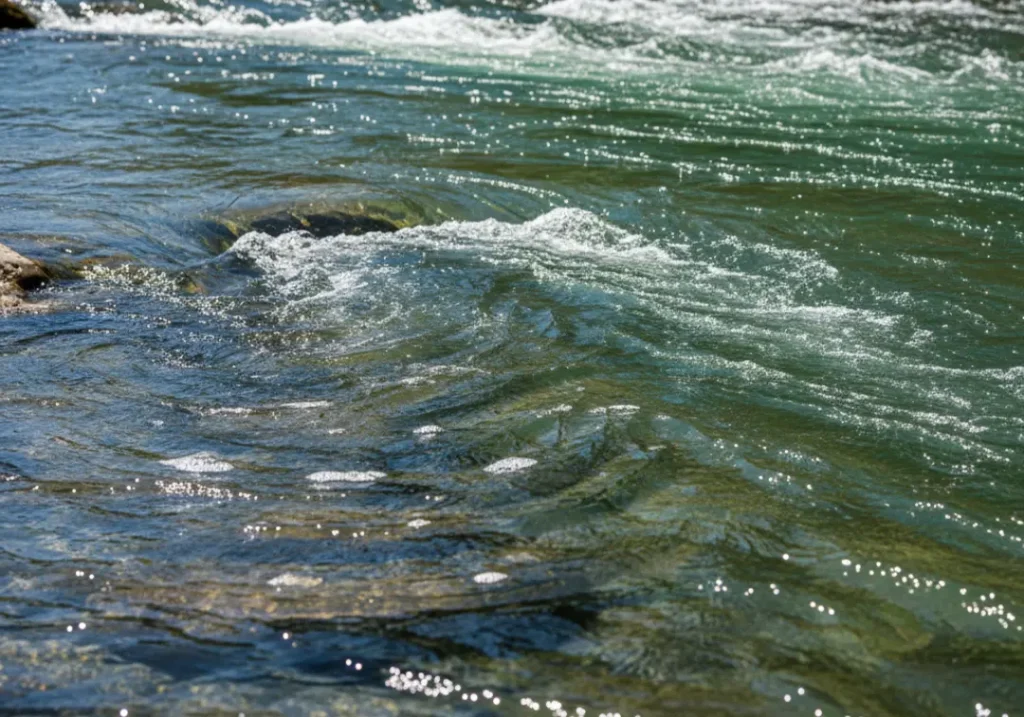
To truly understand a river, you have to speak its language. That language is written in numbers and forces, moving beyond simple observation to quantitative analysis. These are the fundamental river processes that shape river landscapes, and understanding them is the foundation of our craft.
How is a River’s Discharge Measured and Why Does It Matter?
When we talk about how “big” a river is, we’re often talking about its River Discharge (Q). This is the volume of water moving past a single point per unit of time, almost always measured in cubic feet per second (cfs). It’s easy to confuse this with Stage, or gage height, which is simply the water level measured against an arbitrary point like a bridge piling. Think of it this way: stage tells you how high the water is, but discharge tells you how powerful it is. The secret lies in the fundamental equation that governs open-channel flow: Discharge (Q) = Area (A) x Velocity (V). This relationship is the key to everything, revealing how changes in the river channel‘s shape or the river flow velocity translate directly into force, including the erosive power of hydraulic action and abrasion. To get this number, hydrologists use the velocity-area method, dividing a river’s cross-section into dozens of small rectangular segments. They then measure the water’s depth and speed within each segment, calculate the partial discharge for each one, and sum them up to get the total discharge for the river.
Of course, no one can be out on every river, every day, taking these measurements. Instead, hydrologists perform this process dozens of times at various water levels to create a “rating curve.” This is a graph that correlates specific stage heights to known discharge volumes, allowing the continuous, automated stage readings from a gauge to be converted into reliable discharge data. This system, explained in detail in the USGS process for streamgaging, is brilliant, but it has one critical weakness: it relies on a stable channel geometry. On rivers with mobile beds—like braided, sediment-choked glacial rivers—the channel floor is constantly being built up or scoured away through processes like vertical erosion and lateral erosion. A single major river flood can carve the channel five feet deeper. In this scenario, the old rating curve is useless. The practical takeaway for us is huge: on dynamic rivers, the same gage height can represent vastly different discharge levels from one year to the next. Scouting is essential, and a rafter who relies only on the painted rock at the put-in is a rafter who is dangerously misinformed about understanding what CFS means for river difficulty.
The Deluge & The Drought – How Acute Weather Events Reshape the River
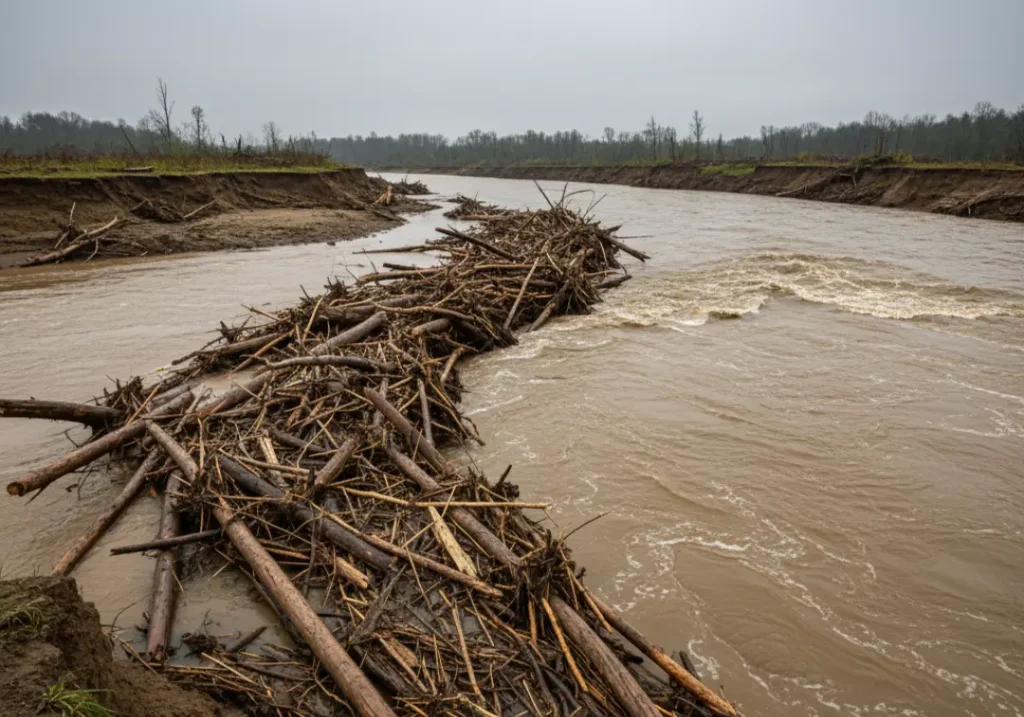
With a grasp of how river flow is quantified, we can now visualize its behavior over time, especially when the river responds to a storm or the prolonged absence of one. These short-term events can dramatically alter a river’s character, flow, and hazard profile in a matter of hours or days.
How Does Heavy Rainfall Trigger a Flood Response?
The primary tool for visualizing a river’s response to a storm is the hydrograph—think of it as the river’s EKG, plotting its discharge over time. A classic storm hydrograph starts with baseflow, the steady, groundwater-fed flow of the river. As runoff from heavy rainfall begins, the graph shows a rising limb, which climbs to a peak discharge before gradually falling along the recession limb back toward baseflow. A critical metric on this graph is “lag time”—the duration between the peak of the rainfall event and the river’s peak discharge. A short lag time indicates a “flashy” hydrograph, one with a steep, almost vertical rising limb. This is a watershed that responds violently and quickly to rain. In contrast, a “gentle” hydrograph shows a gradual rise and a long lag time, indicating water is being absorbed and released slowly.
Pro-Tip: Learn to recognize the immediate physical signs of a gathering flood pulse, even on a clear day. If the river suddenly turns muddy, starts rising inexplicably, or carries an increasing amount of fresh debris like leaves and twigs, it’s a non-negotiable signal to get to high ground immediately. The flood is already on its way from upstream.
What makes a river flashy? The answer lies in the watershed. Steep topography, impermeable surfaces like bedrock or urban pavement, and already saturated soils all contribute to rapid stormwater runoff, increasing the risk of dangerous flash floods. Human activity and land use planning can act as a powerful multiplier. Urbanization replaces absorbent soil with concrete, washing concentrated pollutants into the river, while a severe wildfire can leave behind a “burn scar” of hydrophobic soil that sheds water like glass. The rafter’s critical takeaway is that a thunderstorm over a distant city or a burn scar 30 miles upstream can generate a dangerous downstream flood pulse with little to no local warning. These extreme storms are not just about more water; the National Weather Service on flood types provides clear distinctions. A major flood unleashes a river’s power to physically re-engineer its own channel through intense soil erosion and mass movement, which introduces new and unpredictable river hazards that weren’t there on your last run.
What are the Impacts of Prolonged Drought on a River System?
The impacts of droughts are more than just a lack of rain; a drought is a prolonged period of drier-than-normal conditions that starves a river system. Its most fundamental impact is the reduction of baseflow. As water tables drop, the groundwater contribution that sustains rivers through dry periods dwindles, leading to critically lower water levels. This triggers a cascade of consequences, starting with severe degraded water quality. Less water means higher concentrations of pollutants, and slower, shallower river water heats up faster as air temperature rises, reducing the dissolved oxygen essential for aquatic species. This leads directly to ecosystem harm, and can cause harmful algal blooms, create dead zones, and result in massive fish kills.
The effects of modern, temperature-driven severe droughts are profound. The Colorado River’s Millennium Drought is a stark example of “volume depletion,” where decades of rising temperatures and overallocated water resources have led to historic low flows due to high rates of evaporation from reservoirs. This heat also leads to “inefficient runoff,” where a significant portion of the spring snowmelt evaporates or is absorbed by parched soils before reaching the river. Contrast this with the “reduced flow pressure” crisis on the Lower Mississippi River, where sustained low flows allowed a dense wedge of saltwater intrusion from the Gulf of Mexico to push far upstream, threatening municipal drinking water supplies in places like New Orleans and Plaquemines Parish, Louisiana. The Army Corps of Engineers even built an underwater sill to slow its advance. For a rafter, the lessons are varied. On one river, a drought might mean low, technical, and “bony” rapids. On another, it can cause profound water quality changes you’d rather not be swimming in. As the USGS defines drought, it’s a complex hydrological event, often exacerbated by upstream dam management that can further alter a river’s natural response to dry conditions.
Rivers in the Sky & The Big Thaw – Understanding Seasonal and Large-Scale Weather Patterns

While single events shape a river for a week, larger, recurring cycles define its character for a season or even an era. By elevating our perspective from individual storms to these massive atmospheric and seasonal weather patterns, we can begin to anticipate a river’s behavior months in advance, particularly in the American West.
What is an Atmospheric River and How Does it Impact Western Rivers?
An Atmospheric River (AR) is exactly what it sounds like: a long, narrow filament of concentrated water vapor in the atmosphere that is a critical component of the global hydrological cycle. This phenomenon of water vapor transport moves incredible amounts of moisture from the tropics toward the poles. A strong AR can carry more moisture than the liquid discharge of the Mississippi River. The most famous example is the “Pineapple Express,” which funnels a plume of warm, moist air from near Hawaii directly into the West Coast of North America. These events play a dual role. They are essential for water supply, delivering 30-50% of the annual precipitation in many areas and often acting as powerful “drought busters.”
However, their hazardous potential is unlocked by orographic lift. As the moisture-laden air is forced up and over mountain ranges like the Sierra Nevada or the Cascades, it cools rapidly and is forced to release extreme precipitation as heavy downpours. This can trigger dangerous landslides and other forms of mass movement like slumping and rockfalls. The most dangerous scenario for river runners is a “rain-on-snow” event. This occurs when a warm AR brings heavy, warm rain that falls on a deep, existing snowpack. The combination is devastating; the rain’s thermal energy melts the snowpack at a super-accelerated rate, producing flood volumes that far exceed what either the rain or the melting snowpack could generate alone. This is the rafter’s ultimate red flag. As NOAA explains atmospheric rivers, these are not normal storms. A forecast for a mid-winter Pineapple Express is a clear signal of a high probability for extreme, channel-altering floods.
How is Climate Change Affecting Snowmelt and the Rafting Season?
In the western U.S., the winter snowpack is our largest reservoir, providing up to 75% of our annual water supply. The key metric for this resource is Snow-Water Equivalent (SWE), which measures the actual amount of liquid water contained within the snow. For decades, rafters have looked to the April 1st SWE report as the definitive predictor of the summer’s flows. But the impacts of climate change are altering this playbook. A well-documented trend driven by rising global temperatures is causing earlier spring snowmelt. Across the West, peak spring runoff is now occurring one to three weeks earlier than it did in the mid-20th century.
This is a direct result of shifting precipitation patterns and has consequences for river hydrographs and for rafters. The result is an altered hydrograph shape: a more intense, concentrated spring peak that arrives earlier, followed by a longer, more pronounced period of low stream flow in late summer and fall. The “prime” rafting season is effectively shrinking and shifting, putting immense stress on river ecosystems. We get a shorter, more intense high-water period, followed by a longer, drier low-water season. The concept of “inefficient runoff” returns here with a vengeance. Rafters can no longer rely solely on SWE reports to predict summer flows. As this USGS data on changes in streamflow timing shows, the old correlations are breaking down. A modern rafter must now factor in antecedent soil moisture and spring temperature forecasts. An above-average snowpack that melts off too quickly or soaks into bone-dry ground can still yield a frustratingly below-average rafting season, impacting everything from local economies to hydropower generation. This new reality makes planning a trip on a classic snowmelt-driven river like the Main Salmon a more complex and dynamic calculation than ever before.
Pro-Tip: To get a truer picture of the upcoming season, look beyond the statewide SWE percentage. Use resources like the NRCS SNOTEL network to examine individual basin snowpack, soil moisture content, and, most importantly, the 30- and 90-day temperature forecasts. A forecast for a hot, dry spring can diminish an excellent snowpack long before it becomes runoff.
Conclusion
The language of the river is written by the weather. A river’s discharge is the vital sign of its power, and the hydrograph is the key to anticipating its next move. We’ve seen how intense rainfall can trigger flashy, dangerous floods, while prolonged droughts degrade water quality and create technical, low-water challenges. We’ve also seen how large-scale patterns like Atmospheric Rivers and the undeniable trend of earlier spring snowmelt are fundamentally altering river seasonality and flood risk, especially in the West. For a rafter, this knowledge isn’t just interesting—it’s a critical safety tool. It’s what allows you to interpret real-time data, make informed decisions in a dynamic environment, and transform your understanding into true wilderness instinct.
Transform this knowledge into action. Explore our complete library of river safety and hazard identification guides to build the skills you need to navigate any river with confidence.
Frequently Asked Questions about How Weather Affects Rivers
How does rainfall affect river discharge?
Rainfall has a significant impact on river processes and landscapes by directly increasing river discharge. It adds water to the river channel through surface runoff and groundwater infiltration. The speed and magnitude of this increase depend on the rainfall intensity and duration, as well as watershed characteristics like soil type, vegetation, and topography.
What is an atmospheric river?
An atmospheric river is a long, narrow corridor of concentrated water vapor in the atmosphere that transports vast amounts of moisture from the tropics to higher latitudes. Famous examples like the “Pineapple Express” are crucial for water supply in the western U.S. but can also cause extreme flooding and landslides when they make landfall over mountainous terrain, especially during rain-on-snow events.
How does climate change affect water quality in rivers?
Climate change degrades river water quality primarily through rising water temperatures, which reduce the levels of dissolved oxygen that are essential for fish and other aquatic species, sometimes leading to harmful algal blooms. It also contributes to more frequent extreme storms that increase polluted runoff from urban and agricultural areas, and more frequent droughts that concentrate existing pollutants in lower flows.
What are the impacts of droughts on rivers?
Droughts reduce river flow by diminishing rainfall and depleting the groundwater (baseflow) that sustains rivers during dry periods. This shrinks aquatic habitats, leading to lower water levels, warmer water temperatures, higher pollutant concentrations, and severe stress on the ecosystem that can result in ecosystem harm and fish kills.
Risk Disclaimer: Whitewater rafting, kayaking, and all related river sports are inherently dangerous activities that can result in serious injury, drowning, or death. The information provided on Rafting Escapes is for educational and informational purposes only. While we strive for accuracy, the information, techniques, and safety advice presented on this website are not a substitute for professional guide services, hands-on swiftwater rescue training, or your own critical judgment. River conditions, including water levels, currents, and hazards like strainers or undercut rocks, change constantly and can differ dramatically from what is described on this site. Never attempt to navigate a river beyond your certified skill level and always wear appropriate safety gear, including a personal flotation device (PFD) and helmet. We strongly advise rafting with a licensed professional guide. By using this website, you agree that you are solely responsible for your own safety. Any reliance you place on our content is strictly at your own risk, and you assume all liability for your actions and decisions on the water. Rafting Escapes and its authors will not be held liable for any injury, damage, or loss sustained in connection with the use of the information herein.
Affiliate Disclosure: We are a participant in the Amazon Services LLC Associates Program, an affiliate advertising program designed to provide a means for us to earn advertising fees by advertising and linking to Amazon.com. As an Amazon Associate, we earn from qualifying purchases. We also participate in other affiliate programs and may receive a commission on products purchased through our links, at no extra cost to you. Additional terms are found in the terms of service.