
In this article
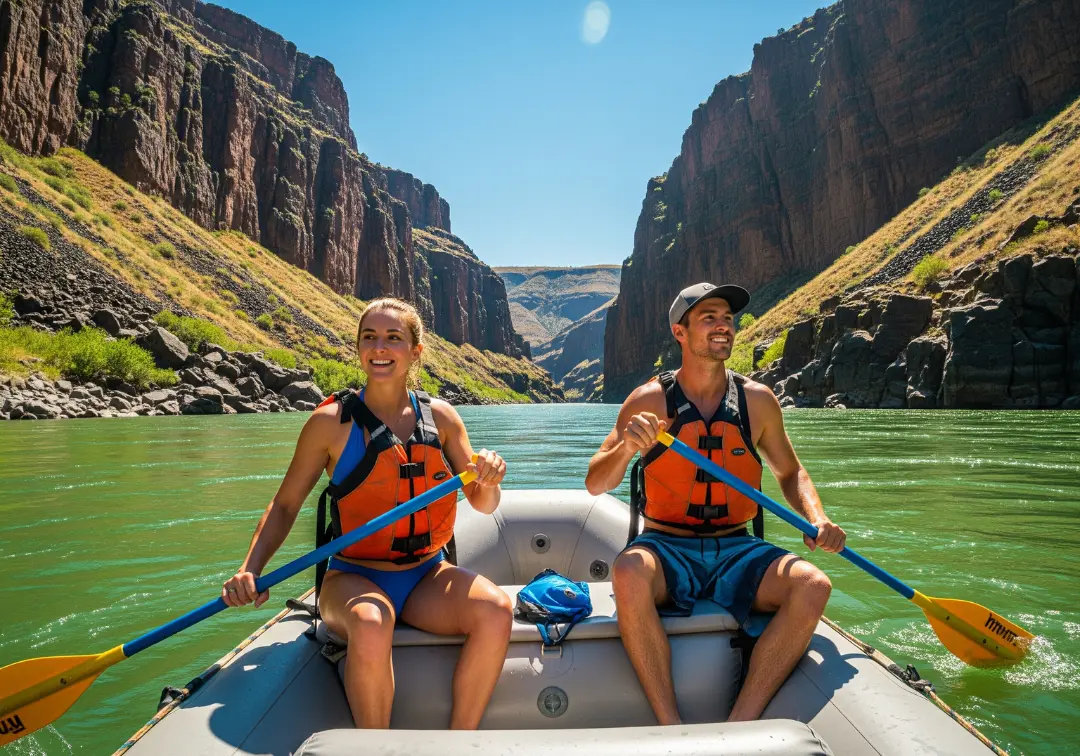
Standing at the Corn Creek Boat Ramp, the cool Idaho air thick with the scent of pine and the low rumble of the Salmon River. The USDA Forest Service ranger from the Salmon-Challis National Forest hands you your permit, but the real question isn’t on the paper—it’s in the water’s speed and color. Whether you’re planning a fully outfitted guided trip or a private, self-guided trip, this guide is built to answer that critical question. Is this the thrilling, high-volume challenge your expert crew craves, or the warm, family-friendly float you promised your kids? This guide transforms abstract flow data (CFS) and complex permit procedures into a clear, actionable playbook for your whitewater rafting adventure, empowering you to precisely engineer the Main Salmon River experience your group is dreaming of.
This is your strategic guide to the river’s pulse. We will decode the permit lottery, transforming the USFS process from a source of anxiety into a manageable plan. You’ll learn how to read the USGS White Bird gauge not just as a number, but as a direct forecast of on-the-water conditions, from the peak-flow Class IV rapids of June to the technical, pool-drop character of August. We will chart a navigational blueprint, a mile-by-mile beta of the river’s most significant rapids and historical sites, providing the core intelligence for daily planning. And finally, we’ll give you a strategic framework—a “Tale of Two Rivers” narrative—to help you choose the perfect season for your group’s skill level and desired experience.
What Makes the Main Salmon a Legendary Wilderness Expedition?
This trip is far more than just a standard rafting trip; it’s an immersion into a protected wilderness on a scale that exists almost nowhere else. A multi-day wilderness rafting expedition here requires detailed planning, skill, and respect for the powerful forces—both natural and bureaucratic—that guard its gates. To understand the journey, you must first understand the theater of operations.
Why is this river called the “River of No Return”?
The name itself evokes a sense of commitment and adventure, and for good reason. It’s a title earned from a history of one-way trips and untamed geography.
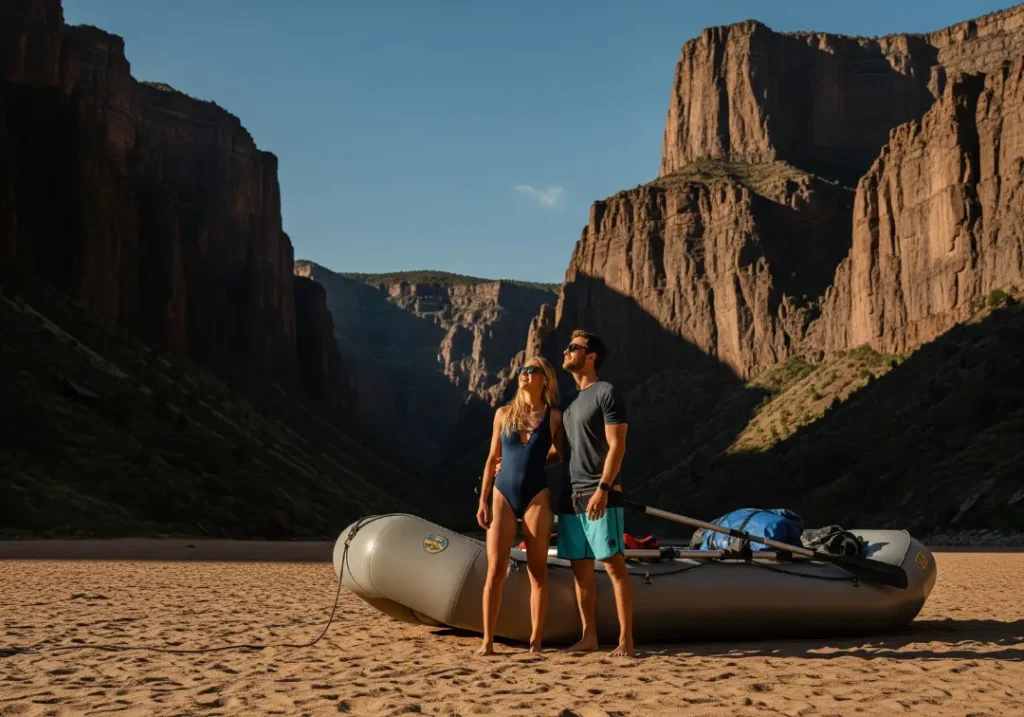
The journey we’re focused on is the 79-mile “Wild” section, which flows from the Corn Creek Boat Ramp put-in to Long Tom Bar. This classic Main Salmon trip cuts directly through the heart of the 2.3-million-acre Frank Church–River of No Return Wilderness—the largest contiguous wilderness area in the lower 48 states. Out here, there are no roads, no cell service, and no easy way out. The name “River of No Return” is not a marketing slogan; it’s a historical fact. Early settlers and miners would build wooden scows to float supplies downstream to remote homesteads and gold-rush cabins. But the current was too powerful and the scenic river canyon too steep to power any craft back upstream. Theirs was a one-way journey; upon arrival, they would dismantle their boats and use the lumber for building.
The river’s geography, fed by snowmelt from the Bitterroot & Payette National Forests, is just as formidable as its history. It carves the second deepest gorge in North America, plunging to depths greater in places than the Grand Canyon. This immense scale is legally protected by its Wild & Scenic status under the Designation under the Wild and Scenic Rivers Act and the Central Idaho Wilderness Act of 1980, which mandate its preservation and form the legal basis for the strict permit system. Crucially, the Salmon’s 425-mile course is one of the longest free-flowing, undammed rivers in the contiguous United States. This results in a natural, unregulated hydrograph, a true pulse driven by snowmelt, not by a dam operator. This creates the river’s signature “pool-drop” character, where calm pools are punctuated by powerful rapids, and gives rise to its renowned large, sandy beaches—the perfect campsite for a multi-day expedition.
Understanding the river’s protected status is the first step; gaining access to it is the next, and it requires navigating a formidable bureaucratic gate.
How Do You Secure a Permit for a Main Salmon Trip?
For many a private boater, the hardest rapid to navigate is the permit process itself. “Permit Anxiety” is real, but it can be managed with a clear strategy and an understanding of the timeline. These trip logistics aren’t designed to be difficult; they’re designed to protect the wilderness experience by limiting the number of people on the water at any one time.
What are the key dates and rules for the lottery system?
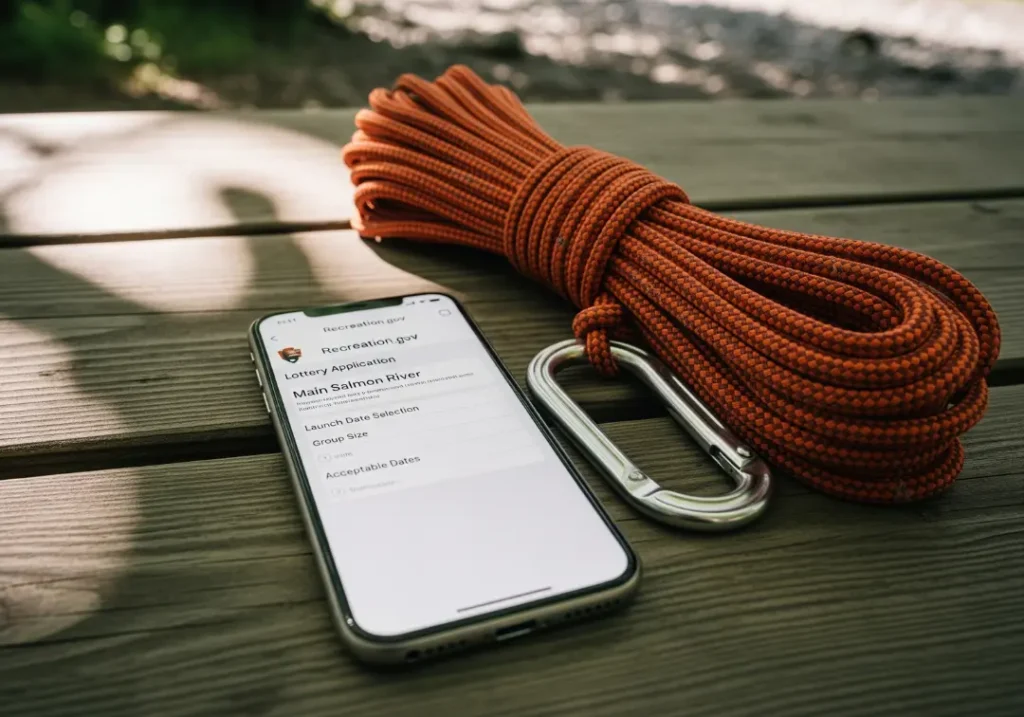
The entire permit system is managed by the Salmon-Challis National Forest through the official Recreation.gov website and mobile app. Think of this as your mission control for the entire application process.
The period of highest demand, known as the Lottery Control Season, runs from June 20 to September 7. During these launch windows, a randomized lottery strictly caps launches at eight total per day (a mix of private and commercial trips). The application window for this lottery is short and absolute: it opens on December 1 and closes on January 31. Mark your calendar, because there are no exceptions. The lottery results are announced on February 14—a Valentine’s Day gift or heartbreak—and successful applicants must confirm their launch by March 15. If you miss that confirmation deadline, your permit is forfeited and released back into the system.
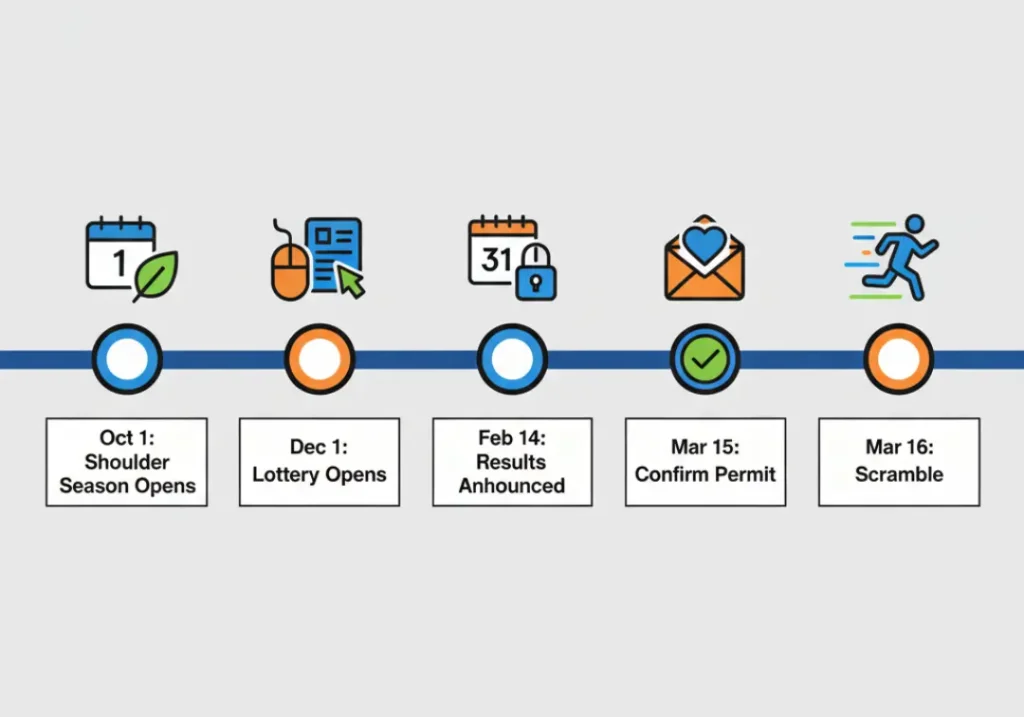
There are two primary costs to consider. First, a non-refundable $6.00 fee is required to enter the lottery. If you are successful, you will then pay a Special Recreation Fee of $4.00 per person per day for the trip itself. For those who want to avoid the lottery’s uncertainty, dates outside the control season become available on a first-come, first-served basis starting at 10 AM Eastern Time on October 1 of the preceding year.
Pro-Tip: Don’t give up if you don’t win the lottery. On March 16, any unconfirmed permits are released to the public on Recreation.gov. This is the “Post-Lottery Scramble.” Be online and ready right when they are released. Additionally, monitor the site frequently. The cancellation policy requires trips be cancelled at least 21 days in advance for a fee refund, creating a predictable window where last-minute permits can suddenly reappear. Persistence often pays off.
With the critical deadlines for the lottery now clear, it’s essential to understand the on-river regulations that come with a successful permit. You can find all the details in the Official USDA Forest Service permit information.
What required equipment and regulations must every trip follow?
A permit is more than just a launch date; it’s an agreement to be a steward of the wilderness. The required equipment list and safety requirements are designed to ensure both your group’s safety and the protection of the river corridor.
First and foremost, the permit is non-transferable, and the permit holder must be present for the entire trip duration. During the control season, your trip length is determined by your group size cap; for example, a larger group of 21-30 people is limited to a 6-day/5-night trip. Every trip is required to carry specific gear. For waste and fire management, this includes an approved portable camp toilet system capable of carrying out all solid human waste, and a metal fire pan with an ash container to prevent scarring the beaches. For safety, you must have a USCG-approved PFD for every person (check for proper PFD fit), a shovel, and a bucket. Finally, every watercraft over 10 feet long must have a valid Idaho Aquatic Invasive Species (AIS) sticker.
During the lottery season, you don’t get to choose your campsites. Approximately 14 days before your launch, you will submit your camp requests, and 5-6 days before your trip, you will receive a pre-assigned itinerary via email. These are reservable campsites with specific campsite characteristics. All of this gear—the toilet system, the fire pan rules—is directly tied to the underlying principle of Leave-No-Trace, which is the paramount ethic in a designated Wilderness area. Be prepared for a thorough group gear check. When you arrive at the Corn Creek put-in, USFS staff will verify your permit and inspect all your required equipment before they allow your group to launch.
All these rules and gear lists are available on The Recreation.gov permit reservation portal, which is the definitive source. While you’re gathering mandatory safety items, it’s the perfect time to think about building a comprehensive river rescue kit tailored to your group’s skills and the river’s challenges.
Once your permit is secured and your gear is packed, the most critical planning variable remains: the river’s flow.
How Does River Flow Dictate the Difficulty of a Main Salmon Trip?
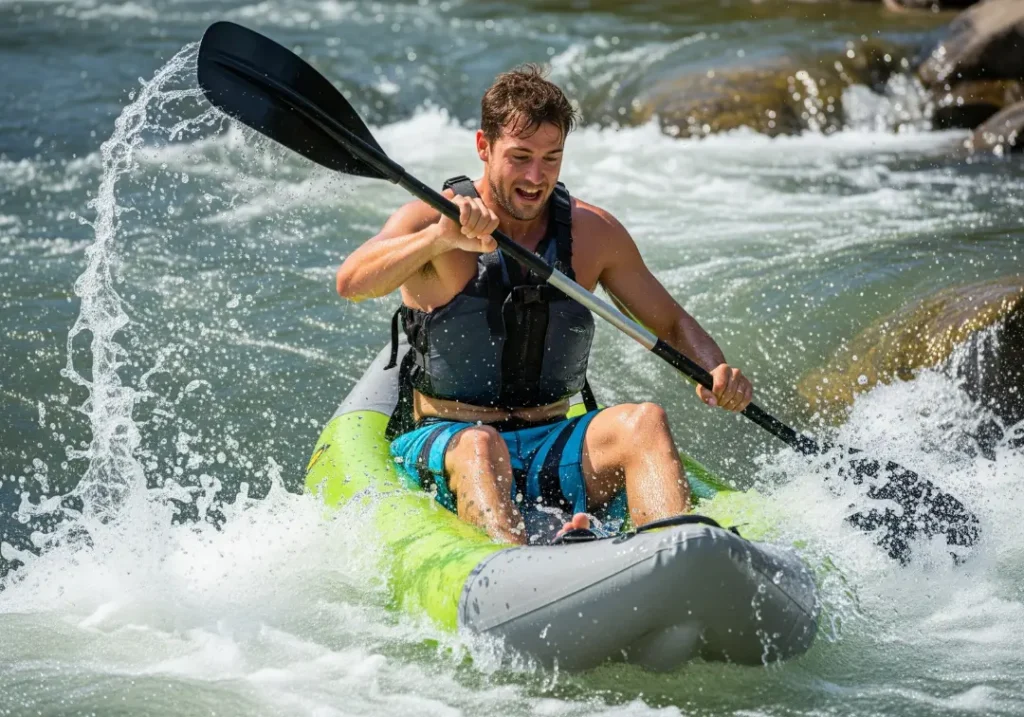
This is the core of the entire planning process. Understanding the relationship between flows (measured in cubic feet per second, or CFS) and on-the-water reality is the single most important skill for a Main Salmon River trip leader. It’s the difference between a trip that is challenging-but-fun and one that is dangerously overwhelming, and it dictates the skill progression required for a safe descent.
How do you read and interpret the river’s hydrograph?
The Main Salmon is a classic snow-fed wild river. Its volume is dictated entirely by the spring snowmelt from the high peaks of the Sawtooth, Salmon River, and Bitterroot mountain ranges. There is a single, universally accepted gauge for this section of river: the USGS 13317000 Salmon River at White Bird, ID. This is your oracle.
The river’s annual seasonal flow pattern, or hydrograph, is predictable in its general shape. It begins to rise in May, hits its peak in late May or early June, and then gradually recedes through July, August, and September when water temperature can climb into the comfortable 65-70°F range. The White Bird gauge has been recording data since 1910, providing an incredibly reliable set of historical averages that serve as a powerful long-term planning tool.
Here is a look at the historical mean flow for each month, which can help you anticipate the river’s difficulty curve when choosing a launch date:
| Historical Average Hydrograph for the Main Salmon | |
|---|---|
| Month | Mean CFS |
| May | 36,000 |
| June | 45,000 |
| July | 15,000 |
| August | 6,000 |
| September | 4,500 |
However, there are two critical details to understand. First is the “Lag Effect.” The White Bird gauge is located far downstream from the Wild section, creating a time lag of several hours to a full day between when the water passes your location and when it’s measured. This means you must use the gauge data as a predictive tool for the coming days, not as a real-time snapshot of your current conditions. Second, there is no publicly accessible gauge at the Corn Creek put-in. The White Bird gauge is the standard, lag and all. You must learn to interpret its trends. You can find all the Real-time and historical USGS streamflow data online to start tracking. This process connects directly to the fundamental skill of how to read a river, which is about more than just numbers.
What does high, medium, and low water actually feel like?
With an understanding of how to read the hydrograph, we can now translate those abstract CFS numbers into the distinct character the river takes on at different levels. This is a tale of two rivers, demanding a different flow-vs-technique matrix for each.
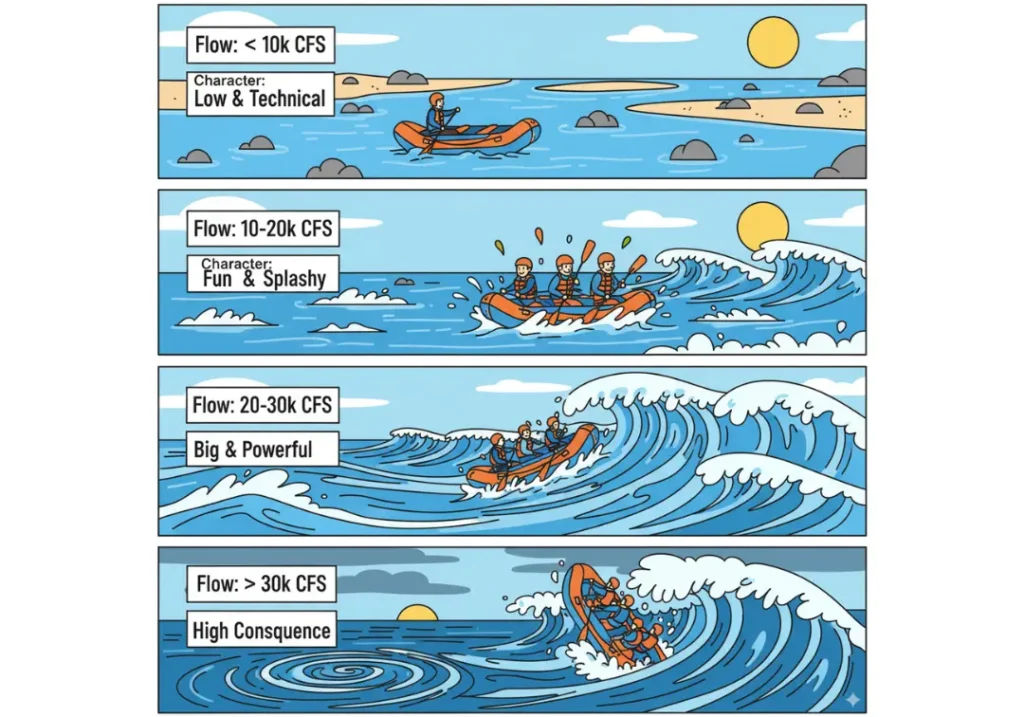
- High Flow (>30,000 CFS): The June High-Water Thrill Ride. At these levels, the river is a powerful, fast, and continuous force. Distinct rapids often “wash out,” blending into massive, continuous wave trains. The primary danger shifts from precise rock-dodging to managing immense hydraulic power, avoiding floating debris like whole trees, and dealing with disappearing eddies. Required skills include aggressive high-siding and precise ferry angles. This is expert-level boating that requires excellent physical fitness.
- Medium/Prime Flow (10,000-30,000 CFS): The Classic Big Water. This is the Main Salmon river rafting experience many people dream of. The rapids are large, powerful, and well-defined, offering thrilling but predictable lines. This is the sweet spot where rapids like Big Mallard Rapid are at their peak combination of size and technicality.
- Low Flow (<10,000 CFS): The August Family Flows. As the flow drops, the river becomes more technical and its “pool-drop” nature becomes more pronounced. More rocks are exposed, creating “boneyards” that require precise maneuvering and technical rock dodging. The water is significantly warmer, the pace of the trip is slower, and the iconic sandy beaches are at their largest. This is the best time of year for family trips.
The river’s baseline rating on the International Scale of River Difficulty is Class III. However, this is a generalization. During peak flows, several rapids like Big Mallard Rapid, Elkhorn Rapid, and Chittam Rapid escalate to become solid Class IV or even higher. The safety implications change with the water level. At high water, a swim is a serious event due to the cold (45-50°F), powerful water. Appropriate thermal protection, like a drysuit, is essential. At low water, while the river’s overall power is lower, the consequences of a navigational error—like pinning a raft on an exposed rock—can be just as significant. Key rapids change dramatically; a feature like “5 man rock” in Elkhorn can be completely submerged at high water, altering the entire line you need to take.
For the most up-to-date information, you can reference the National Water Prediction Service flow forecasts, which adds a layer of predictive authority to your planning. And when facing those high, cold flows, understanding the critical choice between a wetsuit vs. drysuit is a vital part of your safety plan.
Now that we’ve connected flow levels to the river’s general character, let’s map out the actual journey, rapid by rapid.
How Do You Navigate the Main Salmon’s Key Rapids and Landmarks?
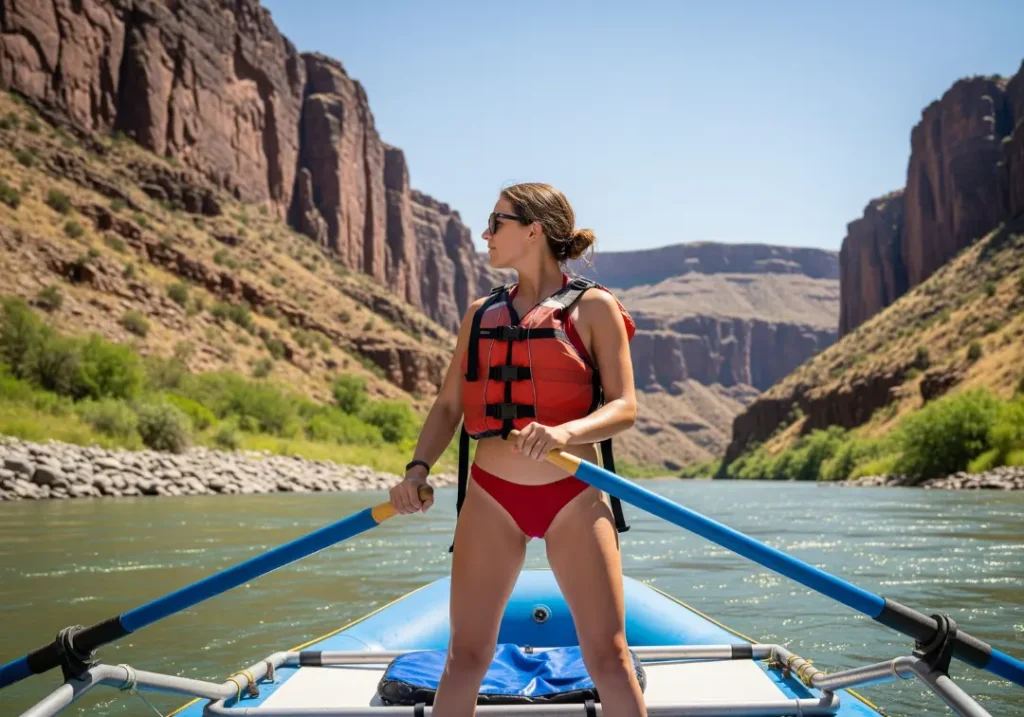
This is your dashboard for the river itself. Knowing the sequence of major rapids, side-hikes, points of interest, and take-out locations is fundamental to daily planning, managing your pace, and ensuring you don’t miss any of the canyon’s hidden gems. Having this rapid beta is crucial for every boater.
What is the mile-by-mile breakdown of the river corridor?
The 79-mile journey from Corn Creek is a highlight reel of whitewater, scenery, and history. Here’s a breakdown of the key sections.
The journey begins at River Mile 0.0, the Corn Creek Boat Ramp, the administrative hub where permits are checked and the expedition officially begins. The first section, from Miles 2.0-20.5, contains the warm-up rapids. You’ll encounter fun Class IIs like Gunbarrel before facing your first significant Class III, Rainer Rapid at mile 8.05. This is followed by Devil’s Teeth Rapid (12.9) and the long, complex Salmon Falls (20.5), which demands careful navigation. The heart of the whitewater lies in the Core Section from Miles 32.0-43.0. After the confluence with Bargamin Creek, the rapids come in quick succession: Bailey Rapid (32.5), Split Rock Rapid (33.5), the famous Big Mallard Rapid (37.0), Elkhorn Rapid (40.5), and Whiplash Rapid (43.0). This stretch requires focus and solid teamwork. The Final Rapids & Take-outs are from Miles 78.5-82.0. The last major challenge is the powerful Chittam Rapid (78.5). From there, you have two primary take-out options: Vinegar Creek Boat Ramp (79.0) and the most common end-point for the Wild section, Carey Creek Boat Ramp (82.0). Your choice of craft type, from a large oar raft or paddle raft to a nimble inflatable kayak (ducky), will influence how you approach each rapid.
Pro-Tip: Scouting major rapids is not a sign of weakness; it’s a sign of a smart trip leader. For rapids like Big Mallard (scout on the river-left scouting side) and Elkhorn (scout on the river-right bank), always pull over to look from designated scout points before you commit, especially at high water or if it’s your first time. Look for the main current, identify hazards, and map out your primary line and a backup “plan B” before you get back in your boat.
It’s important to acknowledge the formidable logistics of the vehicle shuttle. The shuttle driving distance from Corn Creek to Carey Creek is roughly 400 miles and takes over 9 hours, a major planning component for any private boater using a service like the Salmon River Transportation Company. Along the way, don’t forget to integrate key points of interest into your itinerary. The popular Barth Hot Springs at Mile 22.5 is a perfect mid-trip soak, and the Mackay Bar Ranch & Airstrip at Mile 56.0 signals your entry into the canyon’s lower, more open section near the confluence with the South Fork.
A government resource like this Bureau of Land Management river guide for the Lower Salmon is an excellent example of a navigational log. The skills you use to plan your days on the Main directly relate to The guide’s field blueprint for how to scout a rapid, a systematic process for safely analyzing any complex whitewater.
The river’s rapids tell its geologic story, but the canyon walls are also rich with the human history of its hardy inhabitants.
Who were the famous historical figures of the canyon?
The Main Salmon canyon is a living museum, populated by the ghosts of some of the American West’s most resilient and fascinating characters. Their homesteads are mandatory stops, offering a tangible link to a bygone era.
You will meet Sylvan “Buckskin Bill” Hart at his homestead at Mile 52.5. A college-educated engineer, he lived a completely self-sufficient life here from 1932 to 1980. He was a master craftsman, and his stone gun tower, built in defiance of the Forest Service, still stands guard over his property. Upstream of Mackay Bar, you’ll find the Polly Bemis Ranch, a National Historic Site where the remarkable Chinese woman lived after gaining her freedom and establishing a homestead in 1894. Across from Campbell’s Ferry lived Jim Moore, a prospector-turned-entrepreneur who supplied miners from his sprawling garden and orchard. His impeccably hand-hewn log buildings are remarkably well-preserved at what is now known as Jim Moore’s Place. Nearby, William Campbell established Campbell’s Ferry around mile 48-50 in 1898, a vital link on the “Three Blaze Trail” supply route for the Thunder Mountain gold rush.
These aren’t just stories; their homesteads are designated National Historic Sites that you can walk through today. The stories, especially Polly Bemis’s, reveal a cultural diversity far richer than the typical “mountain man” narrative of the West. Sites like Campbell’s Ferry and Jim Moore’s Place are preserved on the National Register of Historic Places, a testament to their significance. You can see this preservation effort documented in the Idaho State Historical Society’s official record for Jim Moore’s place. The human story here is ancient, stretching back centuries before these pioneers, as evidenced by the pictographs and native rock art at Legend Creek near Mile 4.4.
Beyond the whitewater and history, the river offers another layer of experience: its thriving fishery.
What Are the Fishing Regulations on the Wild Section?
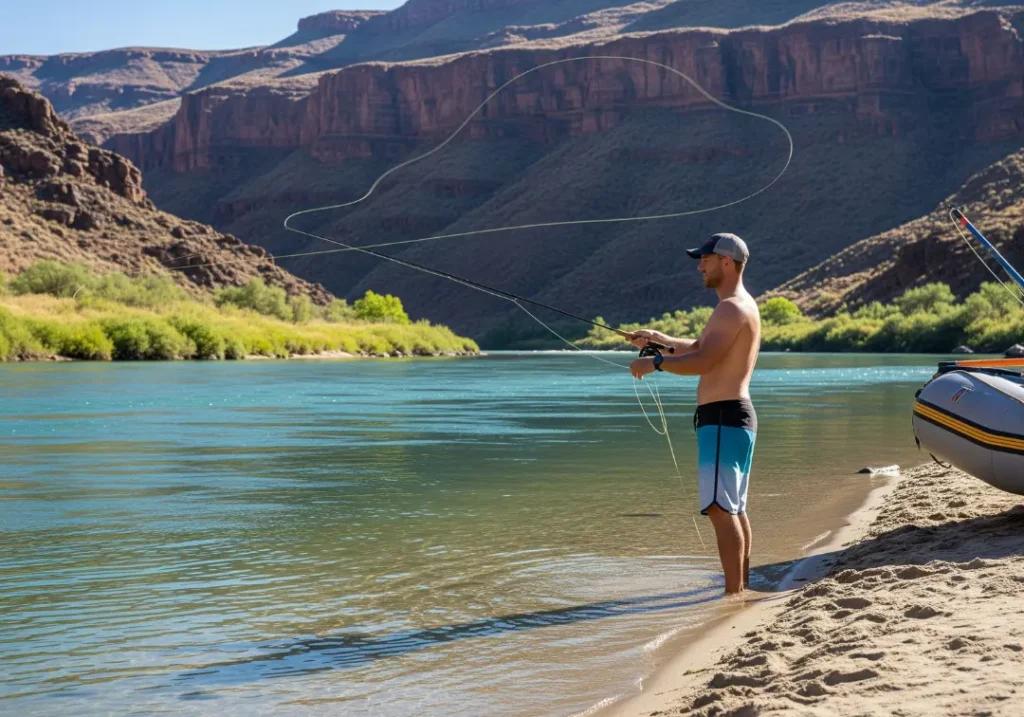
For anglers, the Main Salmon is a world-class destination. But fishing in this protected corridor comes with a specific and important set of fishing regulations designed to protect its native species. Demystifying the Idaho Fish & Game rules is key to enjoying this resource responsibly.
What are the rules for trout and bass?
These regulations apply to the entire “Wild” section, from the mouth of the Middle Fork Salmon upstream to the main Salmon’s headwaters.
For Trout (both Rainbow Trout and Cutthroat Trout), the daily bag limit is 6. However, there’s a crucial restriction: you may only keep hatchery-raised trout, which are identifiable by a clipped adipose fin. This rule effectively makes all native, non-clipped Cutthroat Trout a catch-and-release species, protecting the river’s wild population. Bull Trout are a federally listed threatened species and are strictly protected with a daily bag limit of zero. They must be released immediately and unharmed if caught.
In contrast, the regulations for Small-mouth Bass are notable: there are no bag, size, or possession limits. They are an abundant species in the lower river and can be harvested without restriction. While not always required, the best practice for all species, especially when practicing catch-and-release, is to use single, barbless hooks to minimize harm to the fish. And, of course, a valid Idaho fishing license is required for all anglers. For the most precise and official rules, always consult the primary source: the Idaho Fishing seasons and limits regulations.
With a complete picture of the Main Salmon experience, from permits and flows to rapids and fishing, you are now equipped to make the most critical decision of all.
Conclusion
You now hold the strategic blueprint for the Main Salmon. You know that the river’s character is defined by its seasonal hydrograph; flows above 30,000 CFS at White Bird create a powerful, Class IV big-water trip, while flows below 10,000 CFS offer a more technical, warm-water family float. You understand that access is strictly controlled during the June 20 – September 7 season by a lottery with a January 31 deadline, making a proactive strategy for applications, post-lottery releases, and cancellations essential. This journey is more than whitewater; it is an immersion into the nation’s largest wilderness, with mandatory stops at historic homesteads like Buckskin Bill’s Homestead and the Polly Bemis Ranch. And you know that successful navigation relies on understanding the USGS White Bird gauge’s “lag effect”—using its data not as a real-time snapshot but as a predictive tool for conditions in the coming days.
You now have the blueprint to transform your Main Salmon dream into a well-planned reality. Use these tools and strategies, and then share your experience in the comments below—what season did you choose, and what was the river’s character during your trip?
Frequently Asked Questions
What class are the rapids on the Main Salmon?
The Main Salmon is rated as Class III on the International Scale of River Difficulty. However, during high-water peak runoff in late May and June, several rapids intensify to become legitimate Class IV challenges.
Do you need a permit to raft the Main Salmon River?
Yes, a permit is mandatory for all non-commercial and commercial float trips on the “Wild” section from Corn Creek to Long Tom Bar at all times of the year. These permits are managed through a competitive lottery system on Recreation.gov for the peak season (June 20 – Sept 7).
How long does a Main Salmon rafting trip take?
Most Main Salmon trips on the 79-mile Wild section last between 5 and 8 days. During the lottery control season, the maximum trip duration is determined by group size, typically capping at 6 days (5 nights) for larger groups.
What is the best time of year to raft the Main Salmon?
The “best” time of year depends entirely on your group’s goals: June offers the most thrilling, high-adventure whitewater, while late July and August provide warmer water, bigger beaches, and a more relaxed, family-friendly experience.
Risk Disclaimer: Whitewater rafting, kayaking, and all related river sports are inherently dangerous activities that can result in serious injury, drowning, or death. The information provided on Rafting Escapes is for educational and informational purposes only. While we strive for accuracy, the information, techniques, and safety advice presented on this website are not a substitute for professional guide services, hands-on swiftwater rescue training, or your own critical judgment. River conditions, including water levels, currents, and hazards like strainers or undercut rocks, change constantly and can differ dramatically from what is described on this site. Never attempt to navigate a river beyond your certified skill level and always wear appropriate safety gear, including a personal flotation device (PFD) and helmet. We strongly advise rafting with a licensed professional guide. By using this website, you agree that you are solely responsible for your own safety. Any reliance you place on our content is strictly at your own risk, and you assume all liability for your actions and decisions on the water. Rafting Escapes and its authors will not be held liable for any injury, damage, or loss sustained in connection with the use of the information herein.
Affiliate Disclosure: We are a participant in the Amazon Services LLC Associates Program, an affiliate advertising program designed to provide a means for us to earn advertising fees by advertising and linking to Amazon.com. As an Amazon Associate, we earn from qualifying purchases. We also participate in other affiliate programs and may receive a commission on products purchased through our links, at no extra cost to you. Additional terms are found in the terms of service.