
In this article
Every whistle on the shelf is competing for one number, and it’s printed in the biggest font on the package. Decibels. It’s also the number that tells you the least about whether anyone downstream will actually hear you. The pattern keeps repeating in whitewater circles: the whistle people buy on volume alone is the one that gets swallowed by the rapid, because a river safety whistle has to beat one very specific kind of noise, not just be loud in general. Here’s what actually decides whether a blast carries, where the thing has to ride on your PFD, what the blasts mean, and which whistle fits the kind of boating you actually do.
Every Raft Needs a River Safety Whistle by Law
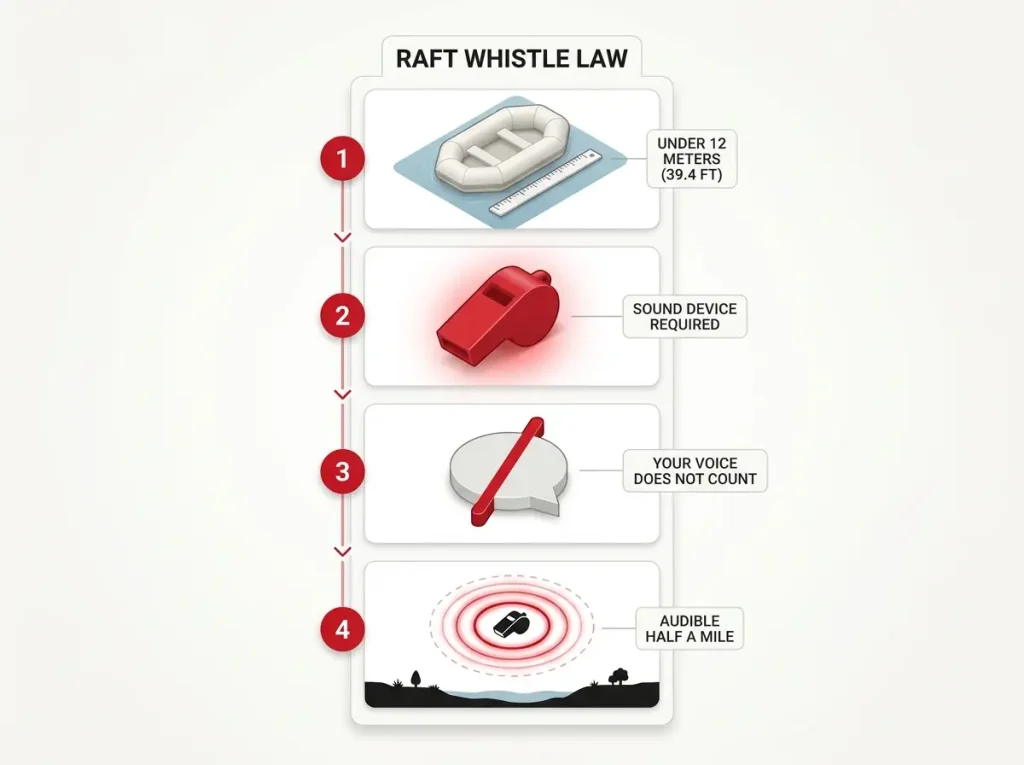
Most people carry a whistle because it came clipped to a rented life jacket, not because they know a federal rule put it there. The rule exists. Every vessel under 12 meters, which is 39.4 feet and covers every raft you will ever row, has to carry an efficient sound-producing device, and your voice does not satisfy it. That’s spelled out plainly in the BoatUS Foundation’s breakdown of Coast Guard equipment requirements, and it applies whether you’re a guest on a commercial trip or floating your own boat with three friends.
There’s a second number worth carrying in your head. Under the federal navigation rules governing sound and light signals, a sound device is expected to put out a four-second blast audible for roughly half a mile. Picture the whistle in your hand doing that over the noise of a rapid. If you can’t, the packaging is selling you something the whistle can’t deliver.
The industry numbers sit around this. ISO puts safety whistles in a 100 to 120 dB output band, and the SOLAS marine standard asks for 118 dB or better at one meter. Real specs, worth knowing, and all of them describe volume. Volume is the half that doesn’t decide anything.
One thing to settle first: the whistle lives on you. It goes on with your PFD and your helmet, not in the drybag with the lunch. That’s the same wear-it-don’t-pack-it logic behind picking a helmet for the class you run, and it’s why the PFD it clips to is the real mounting hardware here. Gear in a drybag is gear you don’t have.
The honest read: the legal floor is cheap to clear. Almost anything with a pealess chamber satisfies the letter of it. Everything past this point is about making the thing work when it counts.
Why Pea Whistles Swell Shut and Pealess Ones Don’t
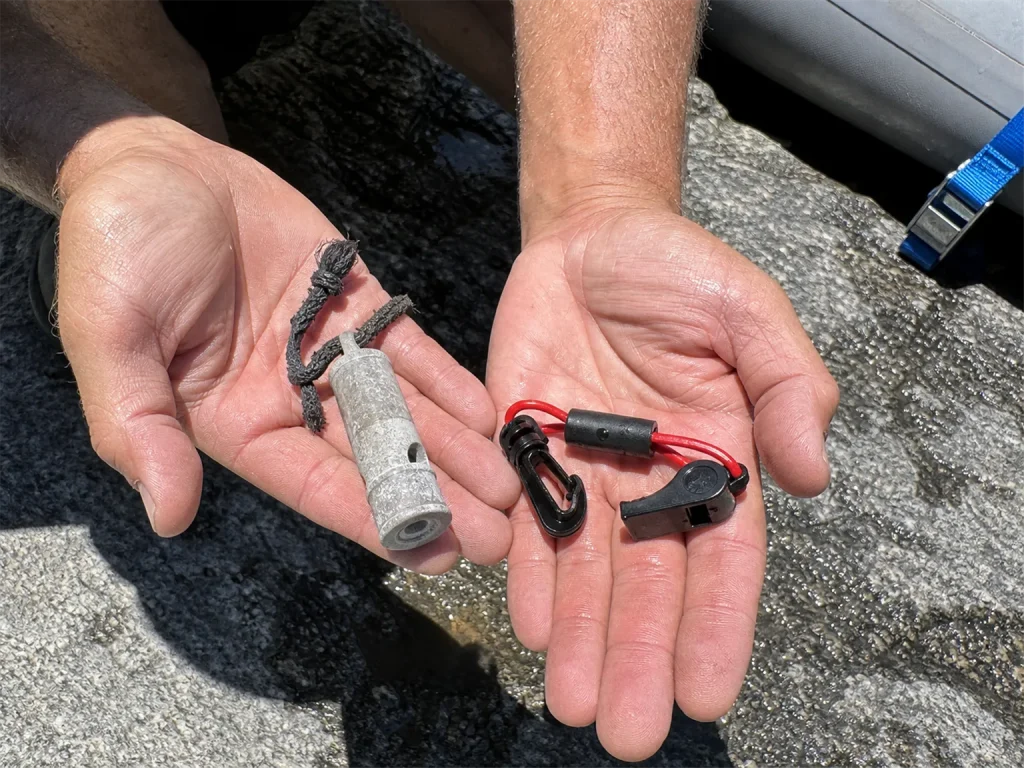
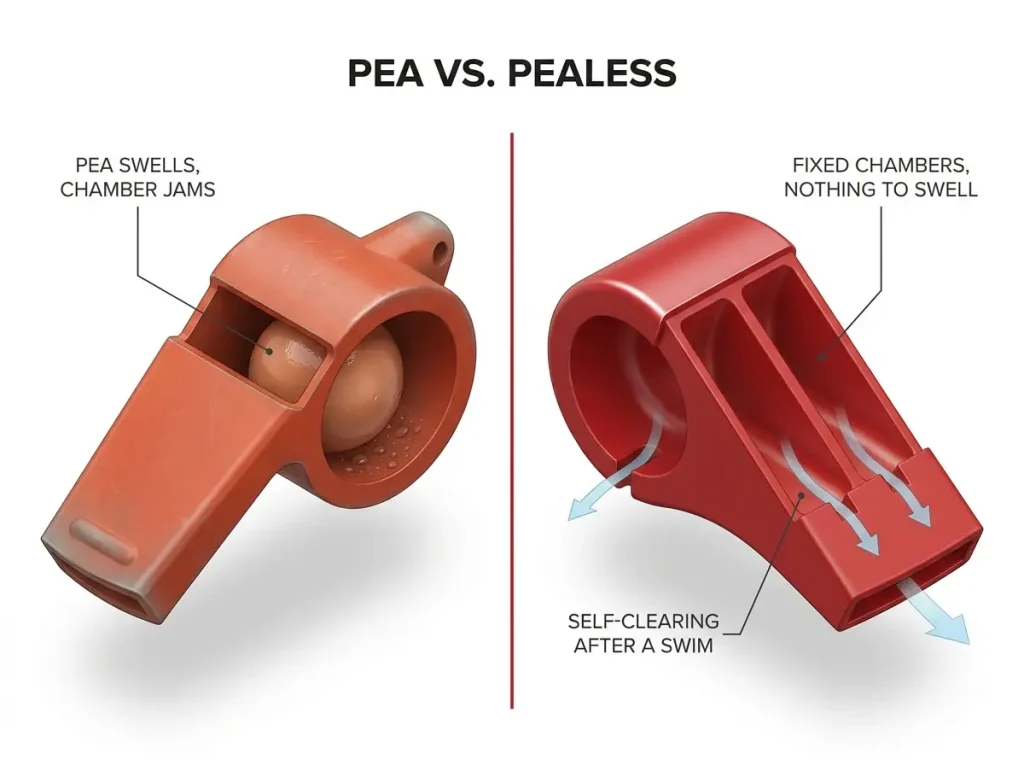
Name the failure first. The whistle in your junk drawer, the one with the little ball rattling around inside, works fine at a soccer game and quits the first time it takes a wave. That ball is a pea, usually cork or plastic, and it’s the only moving part in the whole thing. It’s also the failure point.
Get it wet and the pea swells. A swollen pea jams the chamber shut, and a jammed chamber makes no sound at all. Fox 40’s own breakdown of the pea versus pealess mechanism is blunt about it, which is notable given they built a company on the fix. Pealess whistles solve it by deleting the part: fixed internal chambers, no ball, nothing to swell.
The clever bit is what those chambers do underwater. They’re built to clear themselves, so the self-clearing chamber design built for water use is what separates a genuinely submersible whistle from a waterproof whistle that only says so on the packaging. No shaking it out. No blowing through it twice to clear it. You surface, you blow, it sounds. That’s the entire argument in one sentence.
There’s a bonus nobody advertises. A quality pealess whistle projects up to about 15% farther than an equivalent pea whistle of the same size, because the air path has fewer turbulent losses to fight. Same lungs, same breath, more river covered.
So the common mistake isn’t buying a bad pealess whistle. It’s trusting a pea whistle for water at all, then finding out on the first real splash of the day that the only signal you have is a mouthful of air.
The Decibel Number on the Box Is Selling You the Wrong Thing

Here’s where the shelf lies to you. Whitewater doesn’t just make noise, it makes a particular kind of noise, and the decibel rating on the package tells you nothing about whether your whistle wins that fight.
Why a Rapid Swallows a Low-Pitched Whistle
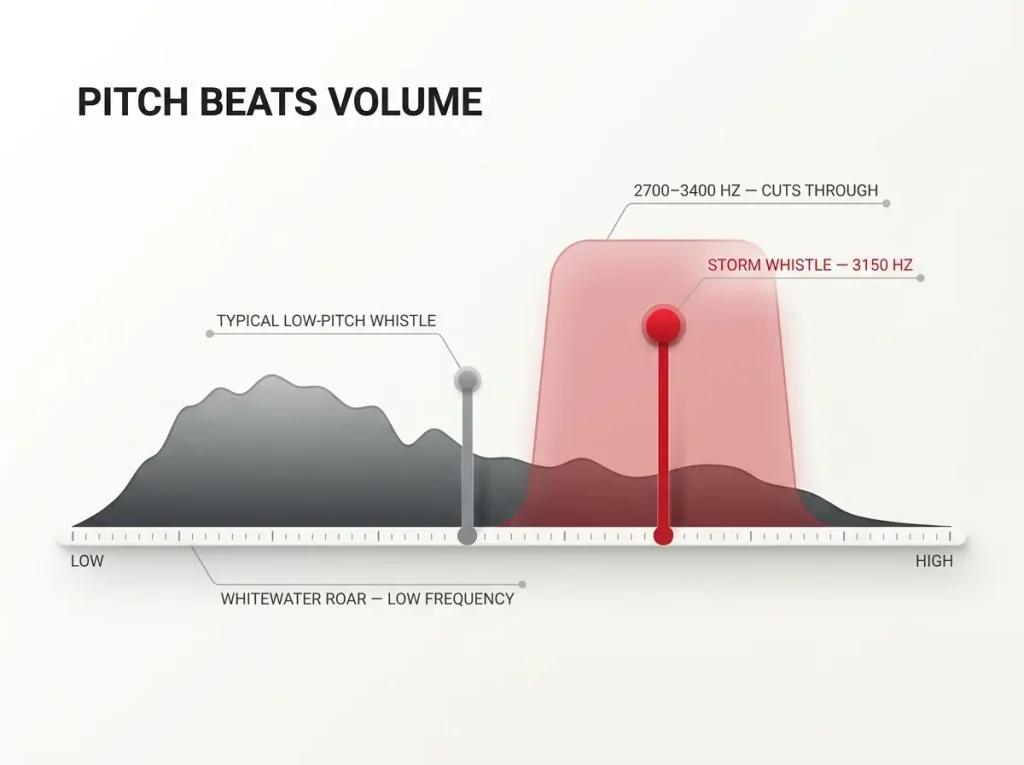
A rapid’s roar is concentrated in low frequencies. That’s the rumble you feel in your chest from the scout rock before you can see the drop. A whistle pitched low is competing with the river inside the river’s own band, and the river is bigger than your lungs.
The 2700 to 3400 Hz range is what gets over the top of it. A high-frequency whistle in that band can carry up to a mile in the right conditions, not because it’s louder but because nothing else on the river is making that sound. It’s the same reason a smoke alarm shrieks instead of rumbling. A rumble blends into a house. A high-pitch trill doesn’t blend into anything.
What the Numbers Actually Mean Side by Side
The Storm All-Weather Safety Whistle sounds at 3150 Hz according to the manufacturer’s published tone data, which lands it inside that band with room on both sides. That’s a spec that means something. It’s also the rare case where a number on a box maps to a real advantage on real water.
Now the other end. The HyperWhistle is marketed as the loudest whistle you can buy, tested past 142 dB, and every roundup on this topic cites it for exactly that reason. Sit with that for a second. It is the loudest, and it is not the answer, because loudness in the wrong band is just a bigger argument with the river. That’s the whole thesis of this page in one product.
Run the half-mile test from earlier on anything you’re considering. Four seconds, half a mile, over the noise of a rapid. A big dB figure won’t save a whistle that fails that picture.
Effort-to-Output — the Spec Nobody Prints
There’s a third number, and no manufacturer prints it: how much breath the thing costs you. A whistle you have to empty your lungs into is a whistle that works once. Your third blast is the one that matters, and by then you’re cold, you’re breathing hard from a swim, and you have maybe half the air you had at the ramp.
The practical read from people who’ve had to use one: a whistle that sounds off a short sharp breath is worth more in a real situation than one that needs everything you’ve got. Loud is easy to test in a parking lot. Cheap to blow is what you find out about at the worst possible time. And the reason any of this matters is that the blast isn’t the rescue, it’s the alert. It buys you eyes on the water so the throw bag you’re trying to get someone to look at can follow.
Cold Water Is When Your Whistle Quits on You
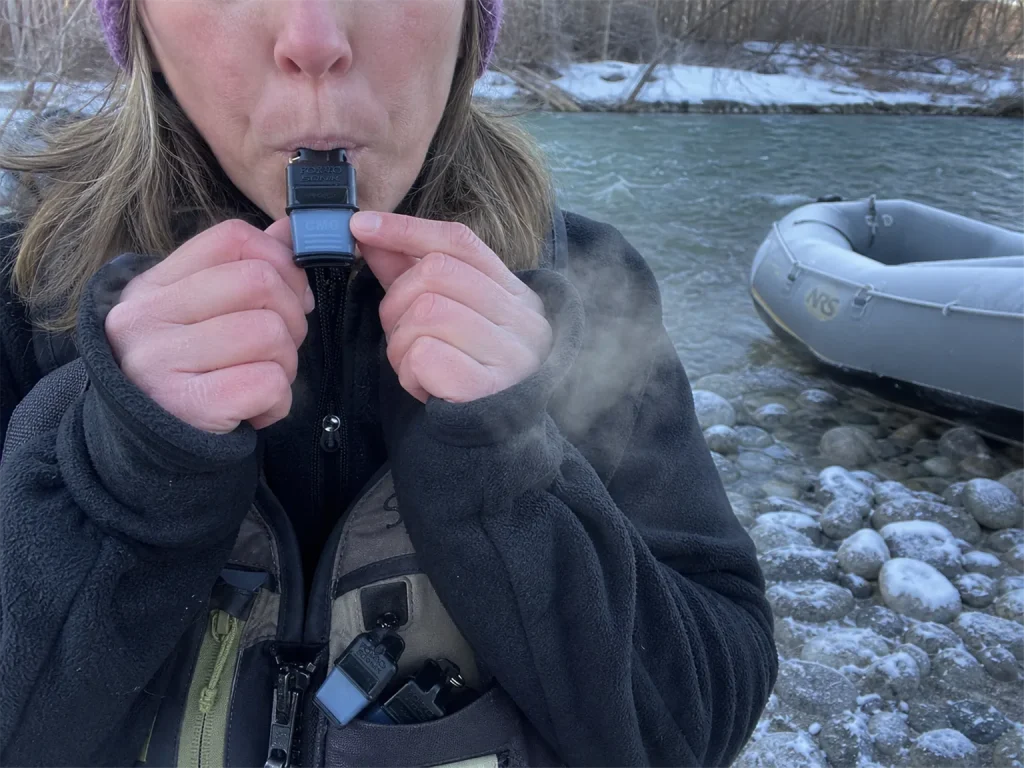
Every competitor writes that pea whistles “can freeze” and moves on. Nobody says when, and the when is the entire point.
In cold temperatures, moisture trapped around the pea can freeze solid, and one blow can then jam the pea against the chamber wall. Read that as a calendar, not a physics note. It describes an early-season snowmelt run: water cold enough to do it, splash constant enough to load the chamber, and a boater who last blew this whistle in a warm parking lot in September. The pea freezes before you ever need it. You find out at the moment you need it.
That’s a cruel piece of timing, because early season is also when the river is least forgiving of a swim. Cold water compresses the window in which any signal is useful at all. What cold water actually does to a swimmer’s ability to help themselves is the reason a signal that arrives late is the same as no signal. Your whistle is the front end of a chain that runs to a rope, then to a boat, then to warming someone up with what’s already in the boat. Break the first link and the rest never starts.
Cold changes your side of the equation too. That effort-to-output spec stops being theoretical the moment your hands won’t close properly and your chest is locked from the shock of the water. A whistle that took a full breath in the parking lot takes a breath you don’t have anymore. This is also why dressing for the water temperature rather than the air and carrying a whistle with nothing to freeze are the same decision wearing two hats.
If there is one day a year to test-blow your whistle before you push off, it’s the first cold one. Everybody remembers to check their drysuit gaskets in April. Nobody checks the one piece of gear that freezes shut for free.
Where the Whistle Rides and What Holds It There
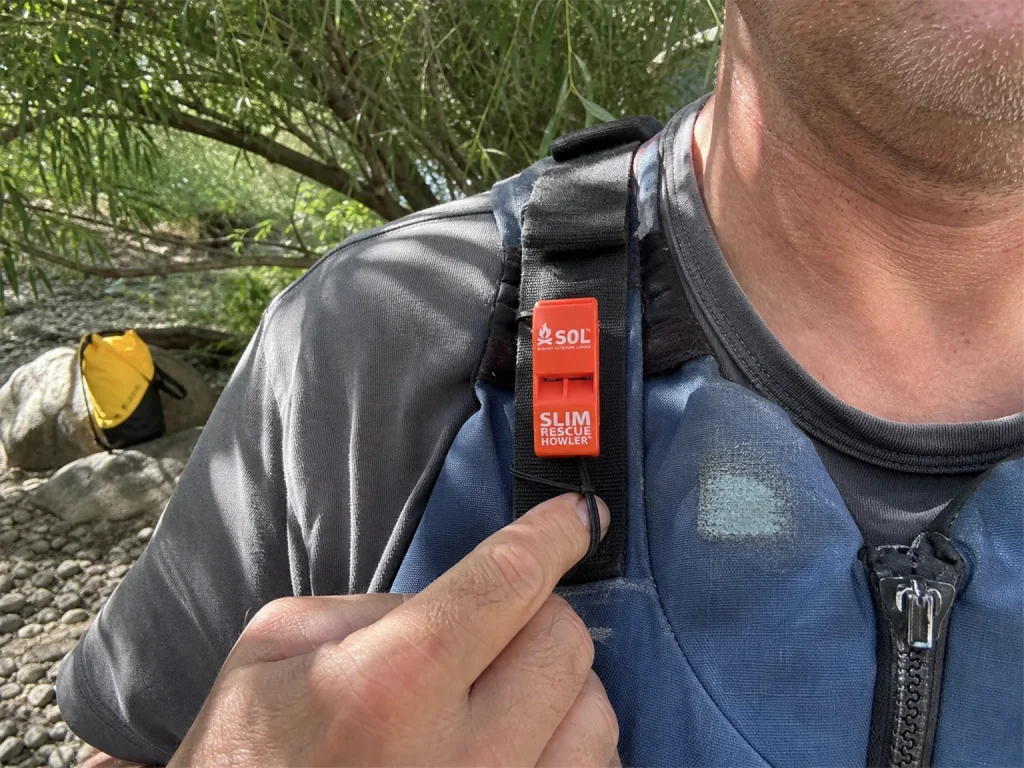
You can buy the right whistle and rig it into uselessness in about four seconds. This is the section that changes what most people do tonight.
The Zipper-Pull Mistake
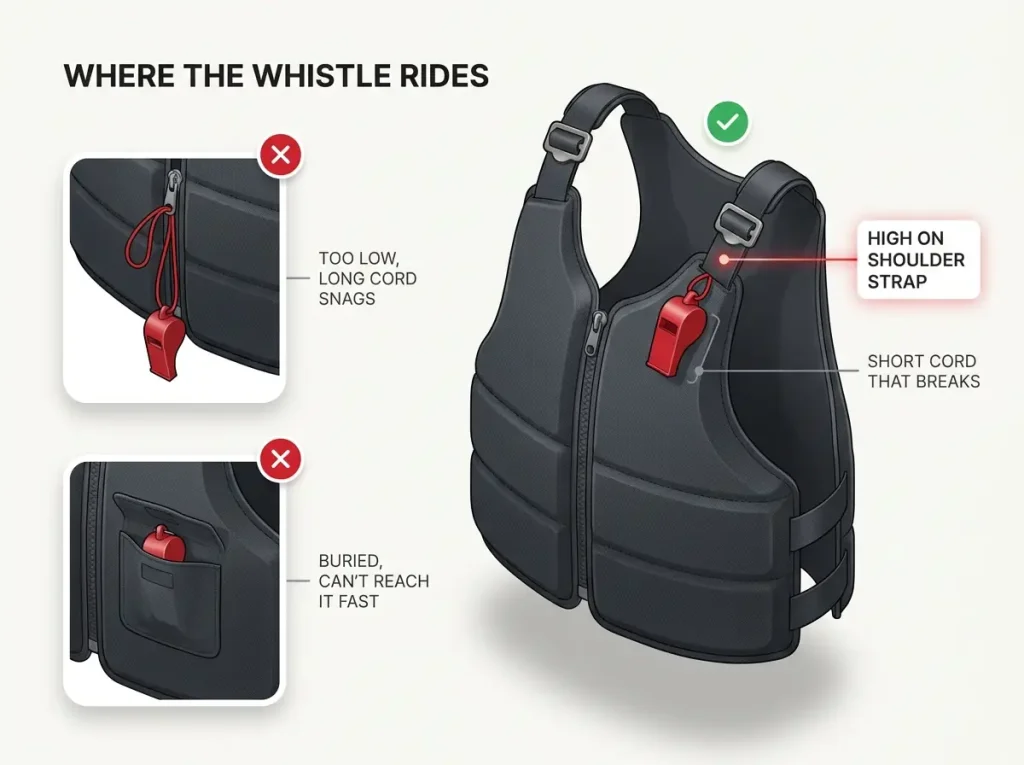
The single most common rigging error on the river is a whistle hanging off the PFD zipper pull on a long cord. It’s two problems stacked. The first is a snag: rescue-community consensus is to keep any zipper-pull loop under about an inch of slack, because a long cord is something for a submerged branch to find. The near-miss that keeps circulating in paddling circles is exactly that, a zipper-pull cord catching mid-swim.
The second problem is quieter and nobody mentions it. A long cord means the whistle is somewhere around your navel when you need it at your mouth, so you’re fishing for it with a cold hand while the thing you needed to signal about is happening.
Breakable Cord, Not Paracord
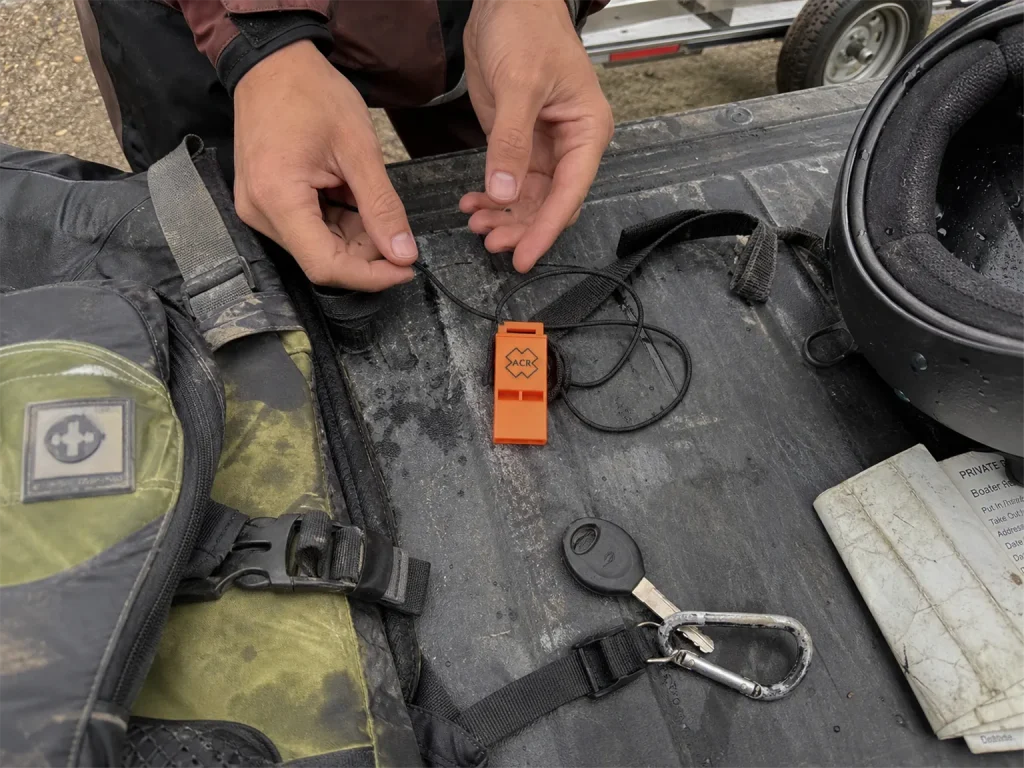
Here’s the counterintuitive one, so take it flat: use cord that will break. Paracord and other high-strength line will not break, and if it catches on a strainer, neither will you get free easily. Strength is the bug, not the feature. The cheap thin cord is correct precisely because it fails. Same logic rules out a heavy split ring or a burly shockcord loop: hardware that outlives the emergency isn’t doing you a favor. That’s standard swiftwater rescue thinking applied to the cheapest item on your PFD.
This is also where the river knife riding on the other side of that same PFD earns its keep. One is your plan for entanglement. The other is your plan for not needing the plan.
High on the Shoulder Strap
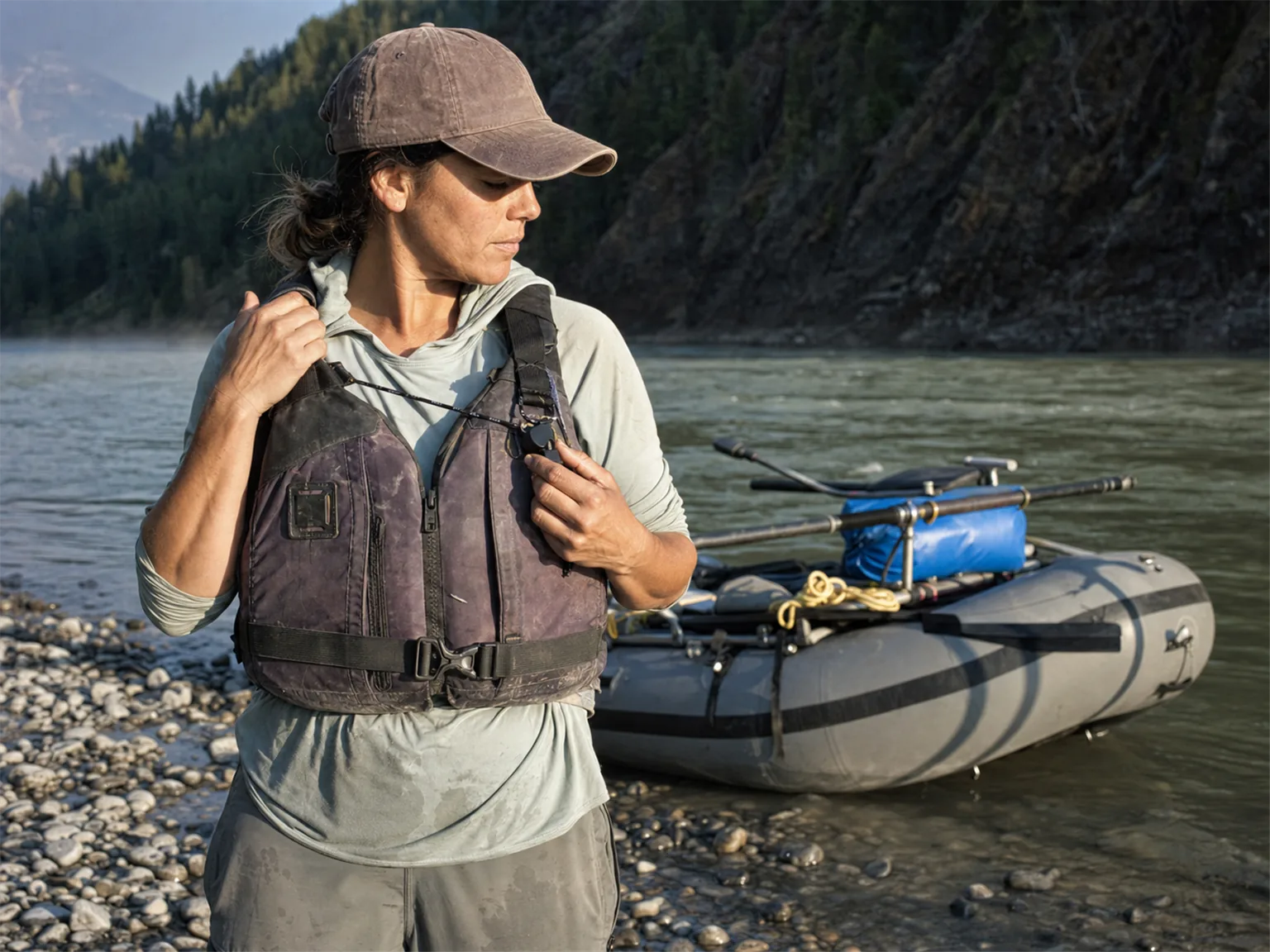
Mount it high on the PFD shoulder strap. Not the pocket, not the zipper, not a D-ring at your waist. High enough that your hand finds it and your mouth meets it in one motion.
Some PFDs have a built-in whistle sleeve or pocket sewn into the shoulder strap. If yours does, use it and skip the whole external-snag debate. It costs nothing, because you already paid for it. Check yours before you go buy cord, and look for a PFD with a dedicated whistle sleeve next time you replace one.
One Blast, Two Blasts, Three — What They Actually Mean

Whistle signal protocol sits inside the same system as the spoken guide commands that move the boat, and it has the same weakness: it only works if everyone shares it. Three blasts is genuinely universal. Everything else is a local dialect that people mistake for a language.
| Signal | What it commonly means | How universal |
|---|---|---|
| One blast | Attention, or stop and look at me | Varies by group and region |
| Two blasts | Stop, or all-clear depending on who taught you | Varies, and this is where groups collide |
| Three blasts, repeated | Distress. Something is wrong right now | Near-universal on rivers |
Three Blasts Is the Only Universal
Whatever else your group decides today, everyone in the boat must know that three sharp blasts, repeated, means something is badly wrong right now. That’s the non-negotiable. It’s the one signal you can reasonably expect a stranger on the bank to understand.
One and Two Blasts Are a Local Dialect
One blast usually means attention or stop. Two blasts means stop, or it means all-clear, depending entirely on where the person learned it. Both are real, both are common, and they contradict each other in the field. This is where the “universal river signals” framing that every article repeats quietly falls apart, because two of the three signals aren’t universal at all.
The Five-Blast Crossover That Trips People Up
There’s a fourth possibility nobody warns you about. Coastal and harbor convention sometimes uses five blasts for distress, a crossover from the navigation rules where the five-blast convention actually comes from. So a paddler who did a sailing course before they ever ran a river may default to five when it matters, on a river where the group agreed on three. That’s not a hypothetical. It’s a documented source of confusion and it’s the exact reason the next section exists. A call like high-side, which has to land in under a second, has the same problem: shared meaning or nothing.
Whistle Blasts and Hand Signals Are One System

Most articles cover whistle blasts. A different set of articles covers hand signals. Almost nobody says the thing that makes either one useful, which is that they’re a call and response, not two options on a menu.
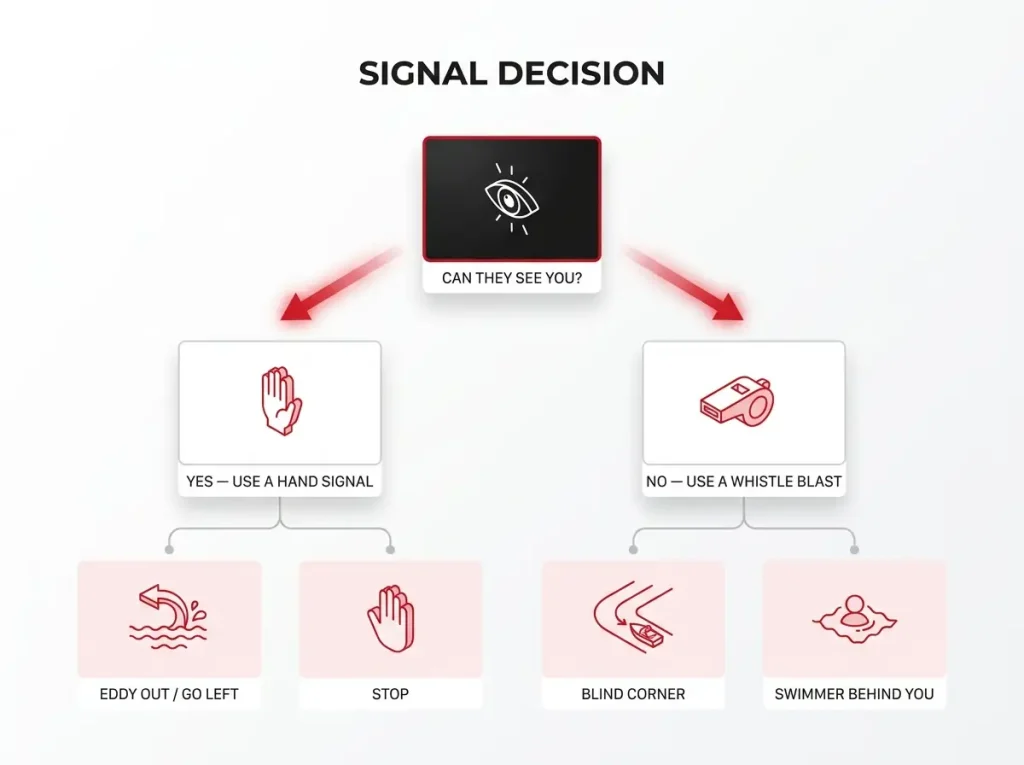
The universal distress signal isn’t three blasts. It’s three blasts paired with a big waving motion. Audible and visual, one act. That pairing is the tell that these were always one system, and the hand signals that carry the actual message once you have their attention are the other half of the thing you’re already carrying.
Here’s the decision rule, and it’s simpler than it sounds. Whistle when you need attention you don’t currently have. A blind corner. A boat downstream facing away. Somebody in the water behind you that nobody’s seen yet. Hand signal when you already have eyes and you need to transmit content. Go left. Eddy out. Stop.
Each one covers the other’s blind spot, and the physics is the reason. Sound bends around a corner; a hand signal doesn’t. A hand signal carries a specific instruction; a blast mostly means “look at me.” Neither is redundant with the other, which is why groups that only ever drilled one are running half a system and don’t know it.
Upstream versus downstream matters more than people expect. The boat below you is sitting inside the loudest thing on the river, and they cannot hear you over the rapid they’re currently in. No decibel number fixes that, which is precisely why the visual half exists. If your crew only ever practiced whistle blasts, the fix is free: run the hand signals once before the next launch.
Guides Standardize Signals. Private Boaters Assume.

There’s a real cultural line on the river between commercial trips and private ones, and this is one of the places it shows up with teeth.
A commercial outfit runs the same briefing 300 times a season, because somebody wrote it down and it became company procedure. The guide says the words at every launch whether the guests look bored or not. The pre-trip safety talk is the moment a supposedly universal signal standard gets formally confirmed as the local standard, for this group, today. That’s what a briefing actually does. It’s not a recital, it’s a handshake.
Private groups skip it, and the reason is almost sweet: these are your friends, you’ve boated this stretch for years, and saying “three blasts means emergency” out loud to people you’ve known for a decade feels faintly ridiculous. Then somebody blows two blasts at a bad moment and half the boat stops paddling while the other half keeps going, and everyone learns simultaneously that “two blasts” was never agreed on. It just felt agreed on.
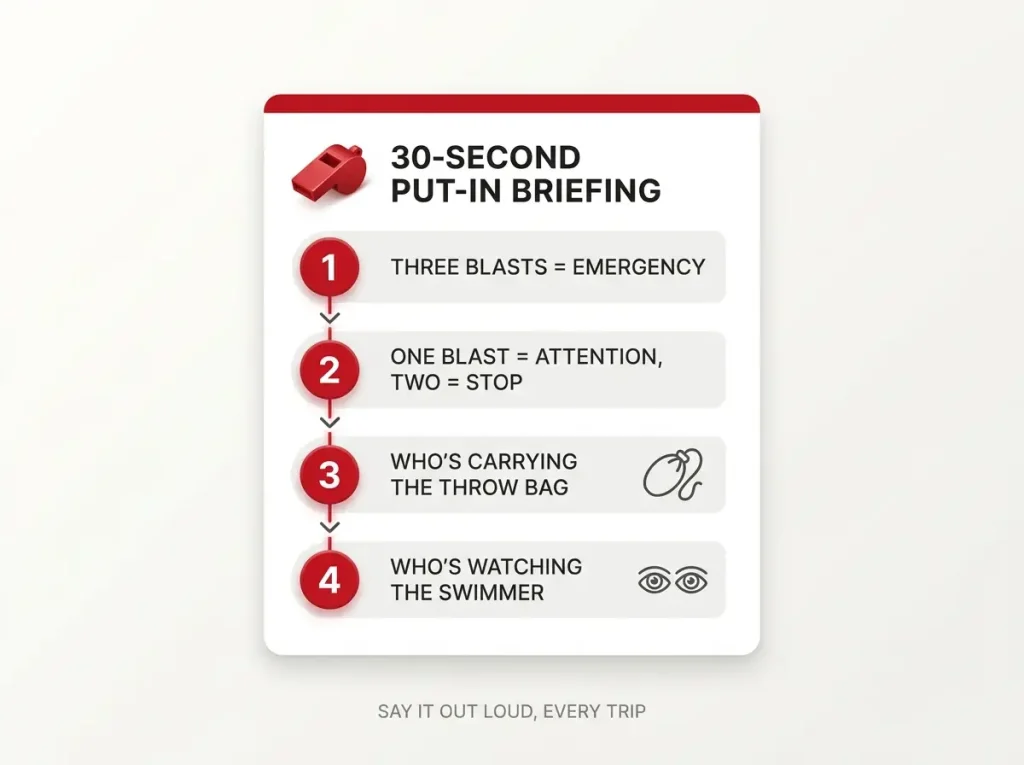
The prescription is thirty seconds, and it isn’t a lecture. At the put-in, out loud, every trip: three blasts is emergency. Then whatever else you’re using today. Then who’s carrying a throw bag and who’s watching the water. That’s it. That’s the whole habit, and it belongs alongside the rest of what goes into a pre-launch plan.
The counterintuitive part is who needs it most. It isn’t the group of strangers, who all expect a briefing and pay attention. It’s the familiar group, because a new member resets the baseline and nobody notices. One person who learned on different water is enough to break a signal system that has “worked” for years, and it breaks at the exact moment you’re relying on it. This is one instance of the baseline safety habits that hold across every class of water, and it’s the cheapest one on the list.
The line guides use on the ones who roll their eyes: the day you skip the talk is the day it matters. Run it with your regular crew too. The familiar group is the one that quietly stopped agreeing on anything years ago.
The Whistle You Buried in a Drybag on Day One
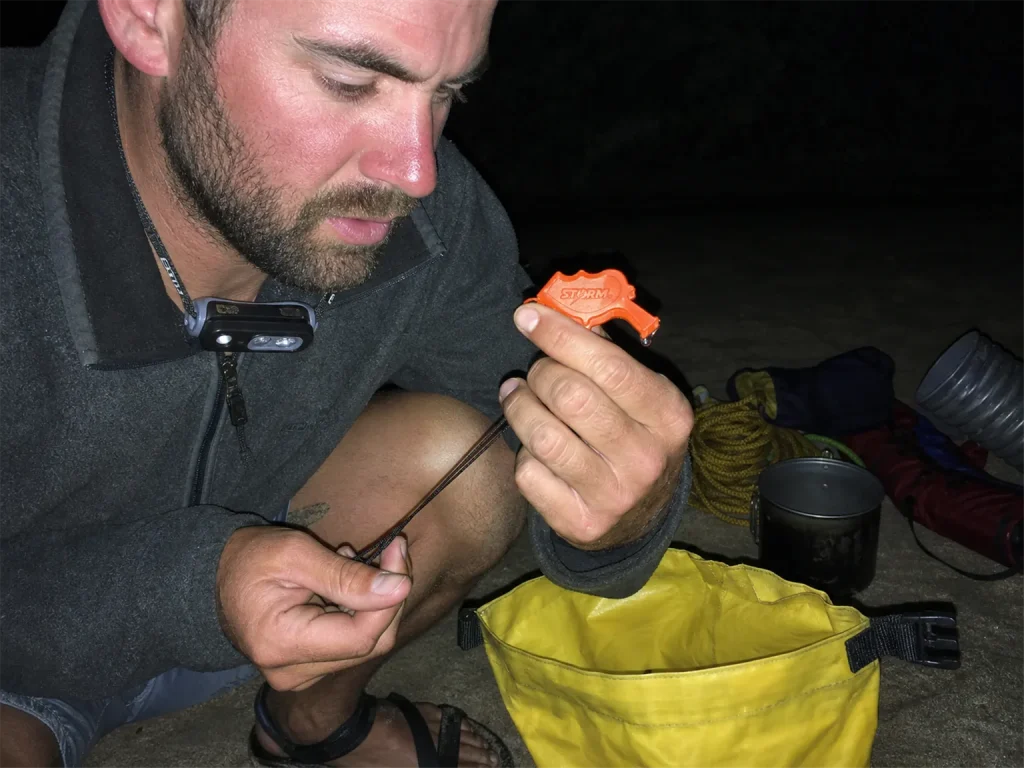
Day one you rigged it right. Day three, the cord has soaked and dried twice, the whistle has been in and out of a drybag at every camp, and nobody has made a sound with the thing since the parking lot. Multi-day trips are where a whistle quietly stops being a whistle, and no roundup on this topic mentions it.
So test-blow it before every put-in, not just once at the start of the trip. It takes two seconds and it’s the only way you find out on your terms instead of somewhere between there and the take-out. A whistle buried in a drybag for three days is exactly the whistle a boater discovers is swollen or cracked at the moment it needed to work, which is a discovery with no upside.
Check the cord too, not just the whistle. Soak-and-dry cycles plus UV are what quietly move a lanyard off spec in either direction: it frays down to breaking under nothing, or it stiffens and hardens until it won’t break when you need it to. Both failures look identical from a foot away, which is the problem. The same day-three eyes belong on the rest of the rescue kit that gets the same check, because the habit generalizes.
Then there’s the drybag trap, which is the wear-it-don’t-pack-it rule from earlier coming back around. On a multi-day trip the temptation to stow the whistle “just for the flat stretch” is real, and the flat stretch is where somebody goes swimming off a lunch rock. If it’s in the bag, you don’t have it. It’s on your chest or it’s decorative. Worth adding to the by-class gear checklist this belongs on as a line item you actually tick.
Notice what’s quietly happened by day three. The cold morning that’s most likely to jam a pea whistle is also the morning nobody feels like testing anything. That’s the pealess decision from earlier finally cashing out: a whistle with nothing to swell, seize, or wear out is a whistle that survives its own owner’s laziness.
On a multi-day, tie the whistle test to something you already do every morning. Blow it once while you’re cinching your PFD. Two seconds, no thinking required, and it’s the only gear check on the boat that confirms itself out loud.
What Changes Between a Guide’s Whistle and a Packrafter’s
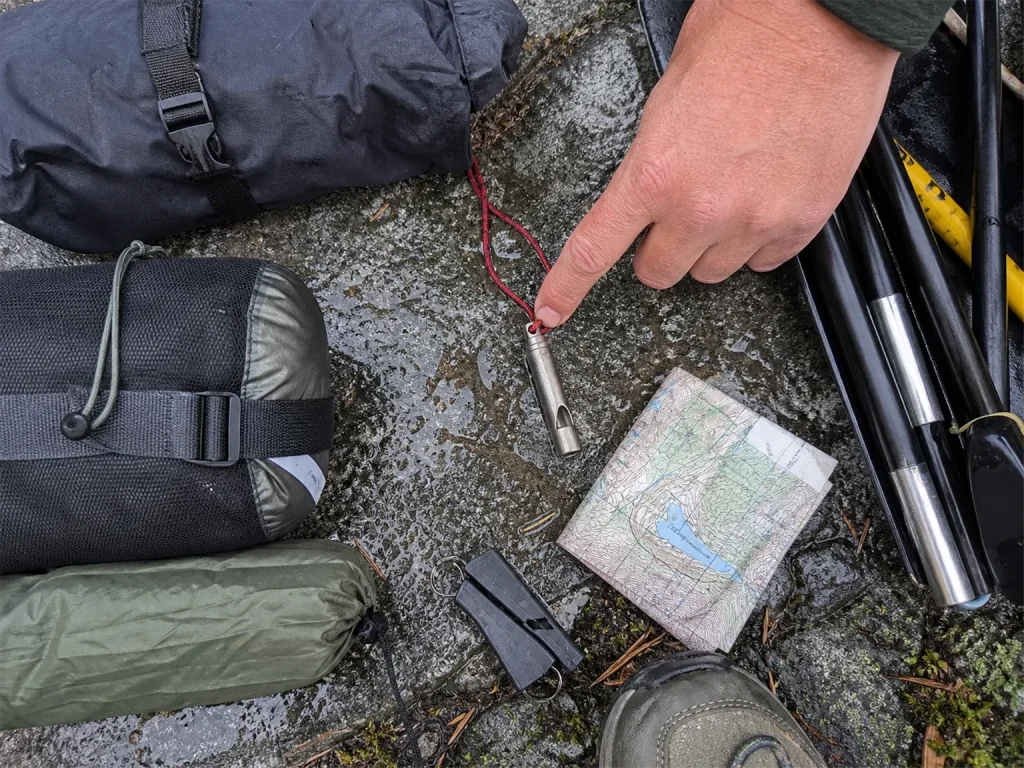
Everything above applies to everybody. This is where it stops being universal, and it’s the reason every “best whistle” list disagrees with every other one: they’re each quietly answering for a different boater and never saying which.
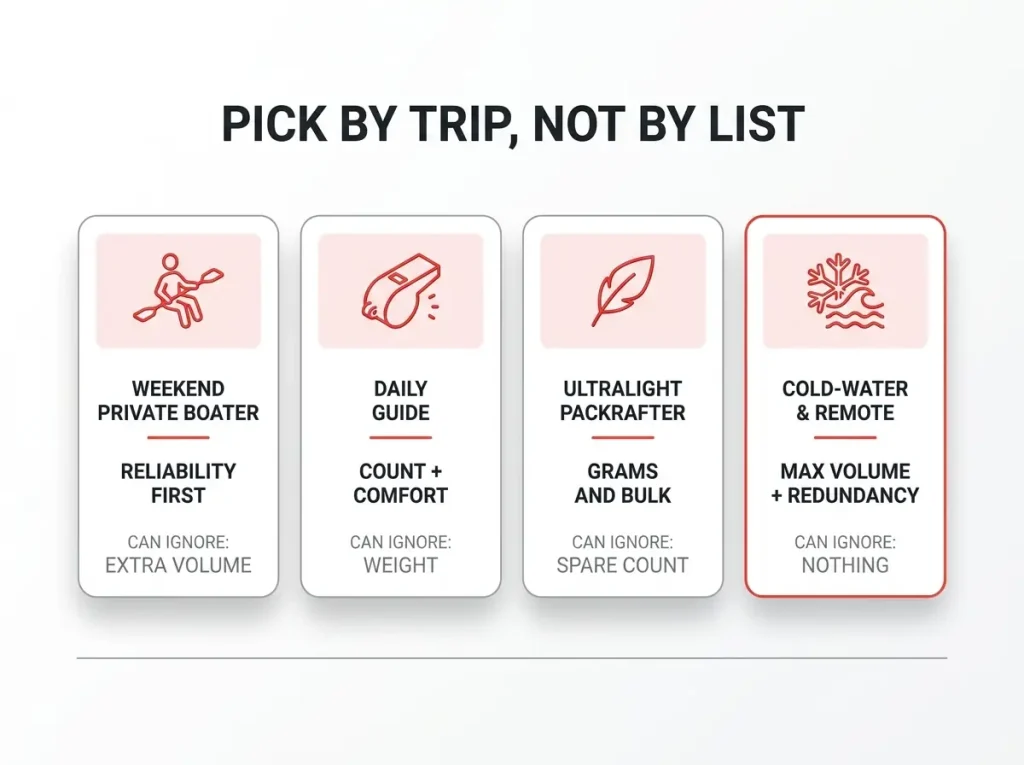
The weekend private boater optimizes for one thing: works every time, costs nothing to replace. Reliability, no exotic requirements, and honestly no need to think about it again for five years. That’s most readers, and the good news is that it’s the cheapest tier to satisfy.
The daily guide optimizes for count and comfort, which is a spec no listicle prints. They brief a new boat every day, guests lose whistles at a steady clip, and sounding one all season means a hard plastic mouthpiece stops being a neutral detail. Spares aren’t a nice-to-have for a guide, they’re the actual requirement.
The ultralight packrafter optimizes for grams and bulk, and is the only reader on this page for whom titanium is a rational purchase rather than a flex. The same trip-dependent logic decides whether you carry a pin kit at all, which is to say the answer is about the trip, not the gear.
Cold-water and remote trips optimize for max carry and redundancy. The trip where the signal window is shortest, per the cold-water section, is the trip that justifies both the biggest whistle you can find and a spare stashed somewhere else on your person. Same for Class IV rapids and Class V rapids, where the boat is spread out, the noise floor is higher, and a whitewater rescue that starts thirty seconds late is a different event entirely.
Now the honest part, because the anti-sell matters more than the upsell here. For most people reading this, the difference between the cheap right answer and the expensive right answer is nothing at all on the water. The tier that decides your outcome is “pealess, in the right frequency band, on your shoulder strap, on breakable cord.” Everything past that is fitting the tool to the trip, and it’s a much smaller decision than the shelf wants you to believe.
The Picks by the Kind of Boating You Do
No rankings, no best-overall theater. Every whistle below is pealess and sits in a defensible frequency band, which means several of them are functionally interchangeable for most readers. Find the heading that describes you, take the pick, stop reading. For the general standard any of these should meet, the National Safe Boating Council’s guidance on emergency safety whistles is a reasonable outside check on all of it.
For the Weekend Private Boater
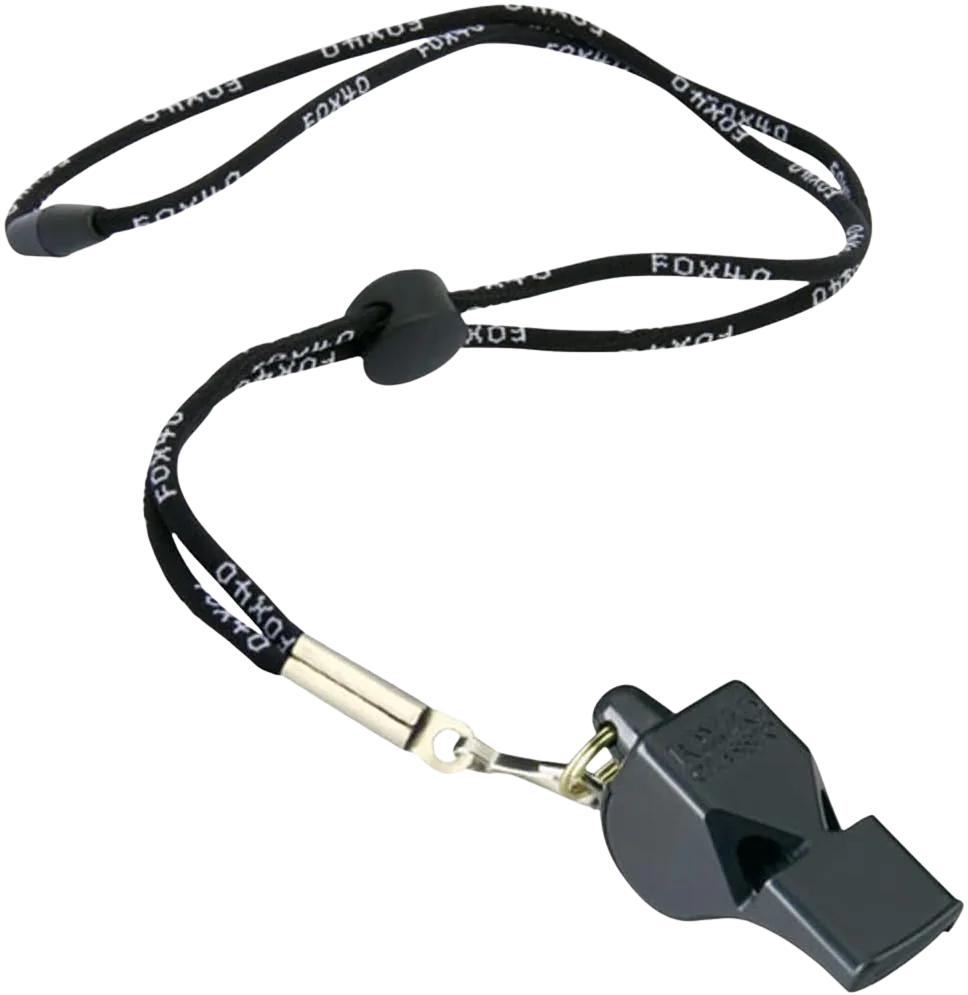
If you own one whistle and you’re not a guide, make it this one. The Fox 40 Classic Pealess Whistle is the pick precisely because there’s nothing interesting about it: three fixed chambers, no ball, self-clearing after a swim, and a price that makes buying a spare a non-decision. The honest trade-off is that it’s mid-pack on raw volume, which by now you know is the number that matters least.
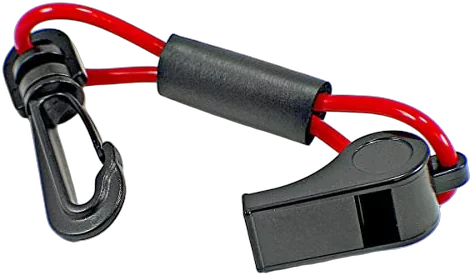
The Propel Paddle Gear Whistle is the same tier with a different attachment philosophy. The quick-access clip solves the rigging problem out of the box for people who don’t want to think about cord length, and the fact that it floats means a dropped whistle is a minor inconvenience instead of a gift to the river. Apply the same short-leash rule anyway: quick clip or not, keep it high and keep it tight.
For the Guide Running a New Boat Every Day
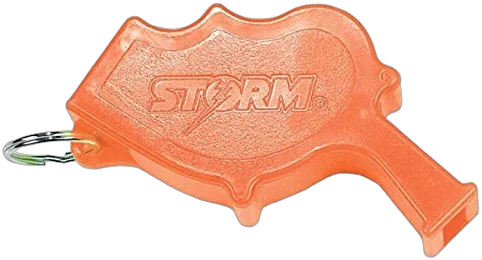
The Storm All-Weather Safety Whistle is the pick that follows directly from the frequency argument, and it’s mid-range rather than budget for a reason worth paying. If you’re the person responsible for a boat full of people who have never done this before, buy the tone, not the decibels. Budget alternative if you’re outfitting yourself and not a company: the Fox 40 Classic above does the job.
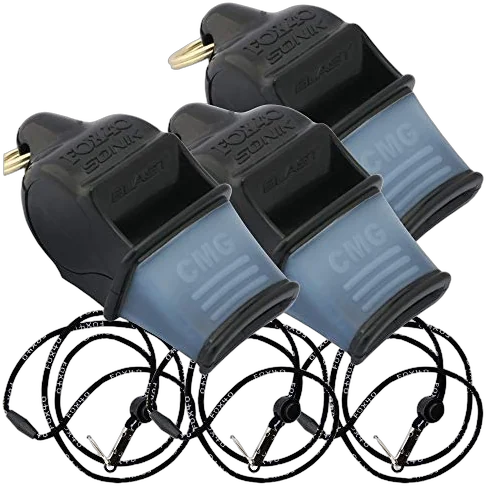
Buying the Fox 40 Sonik Blast CMG in the 3-pack is less a gear decision than an inventory one, which is exactly right for someone rigging a new boat every morning. The cushioned mouth grip reads like a comfort feature until you’ve sounded one repeatedly on a cold day. Budget alternative for a group that isn’t a commercial operation: the Heimdall 2-pack below.
For the Gram-Counting Packrafter
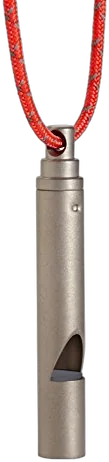
The Vargo Titanium Emergency Whistle is a premium buy and worth being straight about that. If you’re weighing your kit, it’s the rational pick and the weight penalty is effectively zero. If you’re not, this is a nicer-feeling version of a decision the Fox 40 Classic already made for you, and there’s no shame in the cheaper answer.
For Equipping the Whole Crew
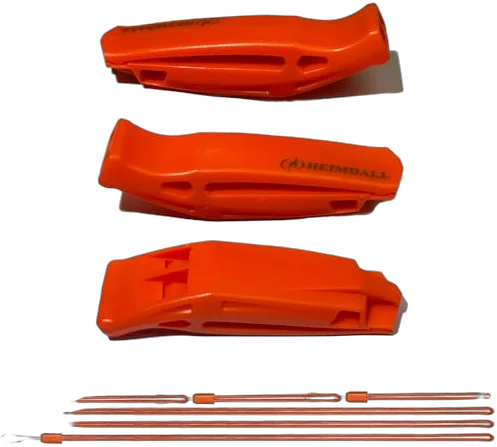
One whistle in a boat is a whistle on one person, and the person who goes swimming is rarely the person you’d have picked. The Heimdall Emergency Whistle 2-pack makes equipping everybody a rounding error on the shuttle gas, and the fact that they float means the ones that get dropped come back. Buy two packs, rig four PFDs, forget about it.
For Meeting the Legal Minimum Without Overthinking It
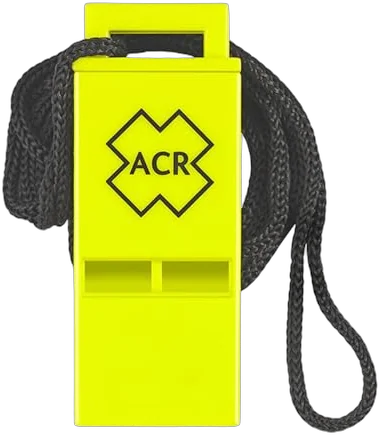
If your goal is to clear the rule from the first section and get on the water, the ACR WW-3 Res-Q Whistle does it for the least money here. It sits around 100 dB, which puts it at the quiet end of this list, so it’s the one pick where the trade-off is real rather than theoretical. On a small creek with the boat in sight it’s plenty. On big water with the crew spread out, buy up.
For Everyday Carry and Minimal Bulk
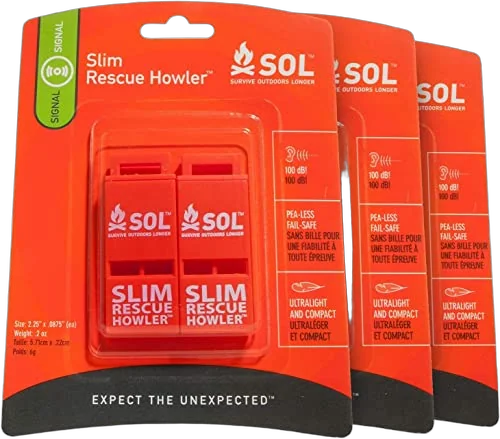
The SOL Slim Rescue Howler is what you buy when the shape is the feature. Riding flat against the strap is a genuinely different experience from a chunky whistle that catches on everything and eventually ends up in a pocket, which is to say: unused. Budget alternative: the Fox 40 Classic, which is bulkier but does the same acoustic job.
Conclusion
Pealess or nothing. The moving part is the failure point, it fails wet and it fails cold, and wet and cold is the entire job description.
Pitch beats volume. A whistle in the 2700 to 3400 Hz band goes over the top of a rapid’s roar, while a louder low-pitched one argues with the river and loses. That’s why the loudest whistle on the market isn’t the one to buy.
None of it counts unless the thing is high on your shoulder strap, on short cord that will break, and your group said out loud what three blasts means.
So before the next launch, whatever whistle is already clipped to your PFD: blow it once at the ramp and say the three-blast rule out loud to whoever’s in the boat. Thirty seconds, no purchase required, and it’s most of the value on this page.
Frequently Asked Questions
01Do you legally need a whistle on a raft?
Yes. The US Coast Guard requires every vessel under 12 meters or 39.4 feet, rafts included, to carry an efficient sound-producing device, and your voice does not satisfy the rule. It applies on a guided trip or your own boat. It’s also the cheapest requirement on the list to clear.
02Is the loudest whistle the best one for whitewater?
No. Pitch matters more than raw volume, because a rapid’s roar sits in low frequencies and a whistle in the 2700 to 3400 Hz band cuts over the top of it. A very loud low-pitched whistle competes with the river on the river’s own terms and loses.
03Why do pea whistles fail in cold water?
The pea is a moving part, and trapped moisture can swell it or freeze it solid so one blow jams it against the chamber wall. Pealess whistles use fixed self-clearing chambers with no ball, which is why they’re the river standard. Early-season snowmelt runs are where this failure shows up.
04Where should you attach a river safety whistle on a PFD?
High on the shoulder strap, on short cord that will break under load, never dangling from the zipper pull. Long high-strength cord like paracord turns the whistle into a snag hazard and leaves it below your chest when you need it at your mouth. Some PFDs have a built-in whistle sleeve.
05What does three whistle blasts mean on the river?
Three sharp blasts, repeated, means distress: something is wrong right now, look at me. It’s the one river signal that’s near-universal, while one and two blasts vary by group and region. Some boaters trained on coastal water default to five blasts instead, which is worth clearing up before you launch.