
In this article
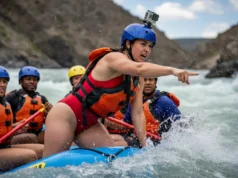
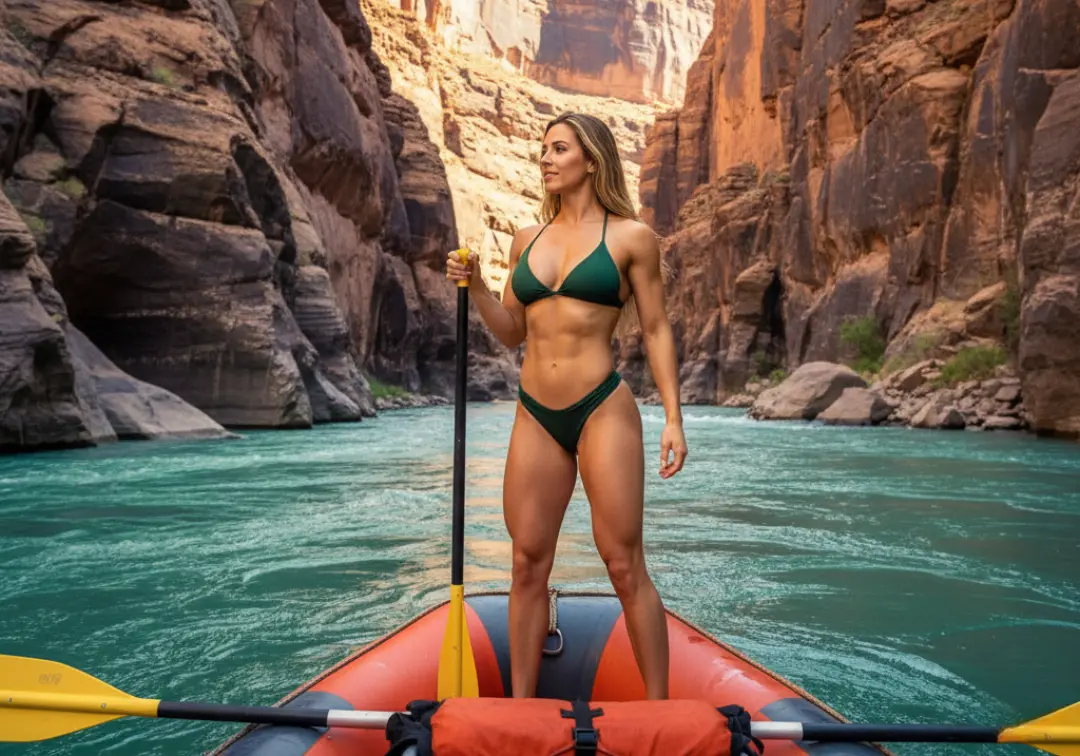
The raft plunges into a churning rapid, a wall of whitewater explodes over the bow, and chaos erupts. While guests cling to the ropes, their knuckles white and eyes wide, a single person remains the calm center. They are the eye of the storm—issuing clear commands, pulling precise oar strokes, and seeing a clear path through the turmoil. That person is the river guide.
This is the moment everyone sees, the one that makes the job look like a permanent vacation. But that calm control isn’t a gift; it’s earned. This blueprint deconstructs that moment, revealing the rigorous, step-by-step path of training, certification, and on-the-job mastery required to transform a passion for the river into a profession and earn that seat of command. It’s a journey from enthusiast to expert, and it starts not with a paddle stroke, but with a clear understanding of the realities of becoming a professional raft guide. We’ll explore the demanding blend of roles a guide must play, navigate the gauntlet of qualifications to get certified, master the professional’s toolkit, and chart a course for a sustainable career as a steward of the wild places you’ll call your office.
The Call of the River: Vocation, Mindset, and Realities
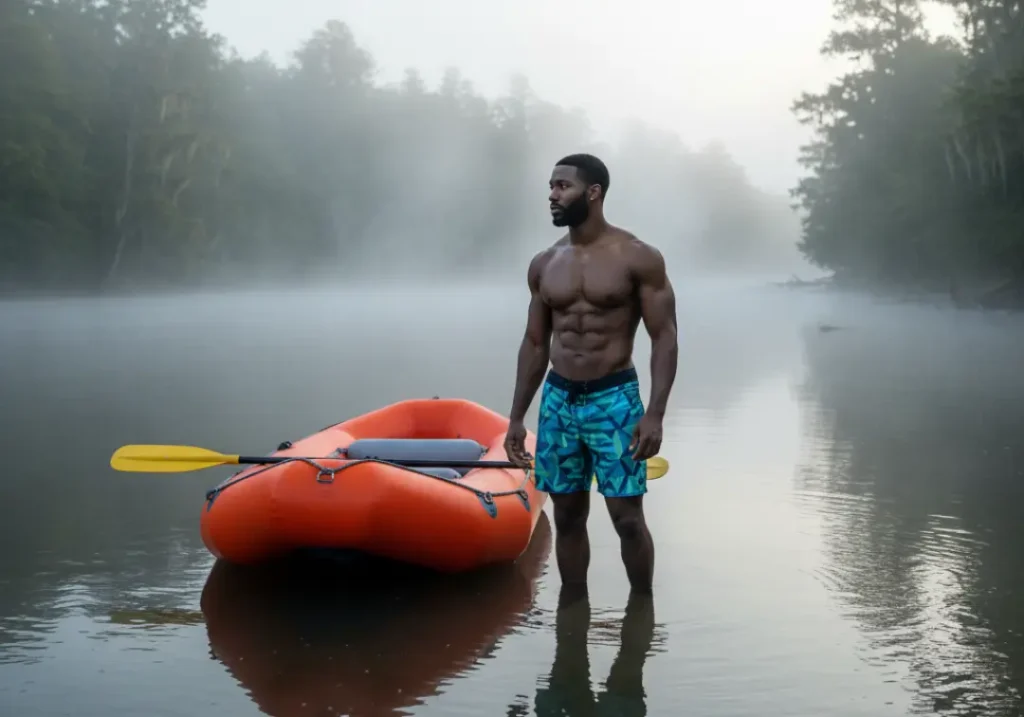
Before you ever touch an oar in a professional capacity, you have to answer the river’s call honestly. This isn’t just about loving the outdoors; it’s about embracing a demanding lifestyle. This section pulls back the curtain on the romanticized image of a river guide, offering a transparent look at the true nature of the role, the lifestyle it necessitates, and the foundational prerequisites for success before any technical training begins.
What Does a Modern River Guide Actually Do?
The archetype of the carefree, sun-soaked boater is a thin veneer over a complex and demanding reality. The professional whitewater raft guide is a hybrid: one part expedition leader and safety officer, one part entertainer and chef, and one part logistician and educator. At the very center of this identity is the primary responsibility: risk management. This isn’t just about navigating rapids. It is a constant, quiet assessment of the environment, the equipment, and, most importantly, the human element. On the water, a guide must remain calm “amid pure chaos,” simultaneously piloting a multi-ton craft through powerful water hydraulics, issuing crisp commands, monitoring guest fatigue, and mentally planning three moves ahead for the next river feature. It’s a state of dynamic focus that few professions demand.
But the job is so much more than what happens in the whitewater. A guide is a host, creating a sense of shared adventure by telling the best stories and funniest jokes, fostering a positive group dynamic that can turn a collection of strangers into a team. This requires a high degree of emotional intelligence; the ability to calm a nervous first-timer or manage a difficult personality is as crucial as reading the river’s currents. Behind the scenes, a typical day involves long, 12+ hour shifts of logistical labor—preparing and rigging a boat, meticulously packing food, delivering clear and confidence-inspiring safety speeches, customer fitting for lifejackets, and breaking down camp efficiently. Guides are also on the front lines of conservation, teaching Leave No Trace principles and river etiquette, transforming a rafting trip into an educational experience. And through it all, they must manage the significant emotional labor of maintaining a professional, positive, and confident demeanor through long, physically demanding days, regardless of foul weather or challenging clients. Understanding this complex identity is the first step; the next is honestly assessing if the lifestyle that supports it is a fit for you. For a deeper look at the foundational on-water skills, explore the core competencies of guiding a raft.
Pro-Tip: Guest psychology is 50% of the job. Before a big rapid, don’t just tell your crew what to do; tell them why. Explain that their aggressive paddling creates the momentum needed to punch through a wave. When people understand their role in the boat’s success, fear is often replaced by focus and determination.
What Are the Financial and Lifestyle Realities of Guiding?
The currency of a guide’s life is measured as much in experience as it is in dollars. The compensation and earning potential reflect this. Base pay is modest, with most industry sources indicating an hourly wage between $12 to $16. This is often supplemented significantly by gratuities, or tips, which are a critical component of a guide’s income. With tips averaging between $80 and $100 per trip, a guide’s earning potential is directly linked to the quality of the guest experience they provide. This reality is underscored by the fact that guiding is a seasonal gig. The rafting season is concentrated in the spring and summer, meaning a guide’s entire annual income is earned over just four to six months. This constraint necessitates a “low-cost lifestyle” and often requires finding off-season work in fields like ski patrol, construction, or the service industry. For a more official perspective, see the BLS median pay for Recreation Workers, which provides a broad picture of the compensation landscape.
The daily schedule is intensive, frequently exceeding 12 hours and encompassing meticulous preparation and extensive cleanup far beyond the on-water trip duration. To offset the low pay, many commercial outfitters provide free or subsidized staff housing. This fosters a tight-knit, communal culture—a powerful draw for many—but it also means limited privacy and financial independence. The career offers significant non-monetary benefits: unparalleled access to wild and beautiful rivers, opportunities for personal trips, professional discounts on gear, and being part of a passionate, like-minded community. Ultimately, an aspiring guide must conduct a personal cost-benefit analysis, weighing the modest income against the significant but intangible rewards of a life lived on the river. Understanding how gratuities sustain the guiding profession is key to grasping the full economic picture.
What Foundational Fitness and Mental Aptitude Are Required?
While the river doesn’t demand the explosive power of a sprinter, it does require relentless functional endurance and energy and stamina. The job requires the alertness to perform safely and effectively over long, physically demanding days. A targeted regimen for physical fitness should focus on cardio fitness for paddling through long pools of flatwater, core fitness for balance and injury prevention, and specific shoulders fitness and arms fitness for powerful paddle strokes and rescue maneuvers. Alongside fitness, non-negotiable water skills are a universal prerequisite. You must have strong swimming capability and be completely comfortable in moving water before ever applying to a guide school. The self-rescue standard is simple and absolute: a guide must be physically capable of performing a self-rescue, which includes pulling oneself back into a raft from the water, unassisted.
While fitness is the baseline, a positive attitude is what truly distinguishes a successful guide. This is a customer-interactive job where a proactive and helpful attitude helps you meet challenges with a smile. The river environment is constantly changing, and things will inevitably go wrong. The best professional river guides possess composure under pressure, clear communication and leadership skills, a knack for creative problem-solving, and the mental flexibility to adapt to changing conditions on the fly. The first, most actionable step you can take is to book a commercial trip on a river you hope to guide. Treat it as a crucial “informational interview.” Observe the professionals, ask pointed questions about the rapids and lifestyle, and see the job firsthand. An engaged guest who asks thoughtful questions and maintains a positive attitude is effectively pre-screening themselves as a promising candidate to the outfitter, and you might just take home an application. To start building the right physical foundation, review a framework for building paddling-specific strength.
The Path to Proficiency: Training, Certification, and Licensing
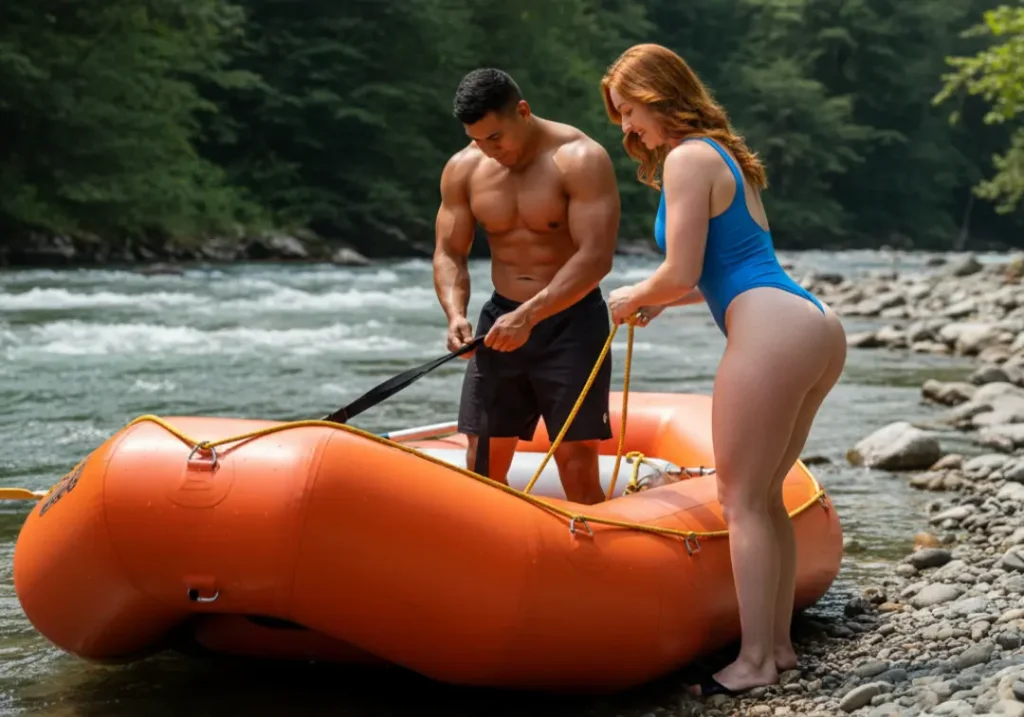
Once you’ve affirmed your personal aptitude for the guiding lifestyle, the journey shifts to acquiring the formal qualifications demanded by the industry. This section provides a detailed blueprint for navigating the formal qualification process, from selecting the right guide school and understanding its curriculum to obtaining the necessary certifications and understanding the patchwork of legal licensing requirements.
What Should You Expect from a Guide School?
For individuals with no prior experience, a whitewater guide school is the primary entry point. These programs, often held as a multi-day training course or over several training weekends in the spring, are designed to transform enthusiasts into competent, hirable guides-in-training. A typical raft guide school runs for 6 to 10 days and has prerequisites like a minimum age of 17 or 18, a high level of physical fitness, and strong swimming ability. The core curriculum is a blend of river theory—like basic hydrology and river geography—and extensive hands-on practice in boat handling for both paddle raft and oar raft setups, rigging a boat, knots, ropes, and safety procedures including flip drills and whitewater rescue techniques. Students progress from learning theory to executing “student-guided runs” and “student challenge runs,” where they take command of the raft under the watchful eye of an instructor on iconic rivers like California’s South Fork of the American River.
It’s critical to understand that the entire raft guide training functions as a prolonged, high-intensity job interview. Your attitude, work ethic, and ability to be a productive member of a team are scrutinized just as closely as your technical skills and paddle strokes. The curriculum extends far beyond the boat, covering soft skills like delivering a clear and concise safety speech, practicing professional river etiquette, and developing group leadership qualities. At the end of the course, top guide school graduates from outfitters like OARS are often invited to a “qualifying check-out process,” involving several checkout runs with senior guides to hone their skills under real-world conditions. Many schools even offer tuition reimbursement for hired graduates who complete the season. The choice of which guide school to attend is a significant career decision, as it often determines your initial professional network and the geographical region where you’ll begin your career. A key part of this curriculum involves mastering the fundamental paddle strokes, the building blocks of boat control.
Pro-Tip: Be the first to volunteer for every task, especially the unglamorous ones like scrubbing coolers or cleaning the bus. Instructors notice initiative. Ask thoughtful questions, listen more than you talk, and consistently demonstrate that you are there to learn and contribute to the team. A great attitude can make up for a less-than-perfect ferry angle.
What Medical and Rescue Certifications Are Non-Negotiable?
Parallel to the hands-on training of guide school, you must build a portfolio of nationally recognized certifications that serve as your professional credentials. The universal, non-negotiable requirements for any guide job are a current First Aid certification, CPR certification, and often an AED certification. Many outfitters will simply require a valid First Aid CPR AED certification from a reputable organization. This is the absolute baseline. However, the industry’s gold standard, particularly for guides working multi-day trips in remote areas like Hells Canyon, is the Wilderness First Responder (WFR) certification. A WFR course is an intensive program, typically a minimum of 70 hours, that focuses specifically on managing complex medical emergencies in the wilderness where definitive care is hours or even days away. For trips with more accessible evacuation points, a Wilderness Advanced First Aid (WAFA) certification may sometimes be considered an acceptable substitute.
In addition to medical training, all guides must be certified in water rescue. This is broadly known as Swiftwater Rescue (SWR), but it’s important to make a critical distinction. Many SWR courses are designed for firefighters and other first responders. A more relevant curriculum for a guide is often termed “Whitewater Rescue,” which emphasizes in-water techniques using a guide’s own boat and personal equipment. A comprehensive swiftwater rescue training from a body like the Swift Water Safety Institute (SSI) will offer programs like the PRO-I, specifically designed for guides and focusing on problem-solving with the limited resources you’d have on a river trip. When selecting a course, scrutinize the curriculum and the instructor’s background, prioritizing training that is directly applicable to a commercial rafting environment. These certifications are the foundation for building a comprehensive river rescue kit you’ll be expected to carry and master.
How Does State and Federal Licensing Work?
With your skills honed and certifications in hand, the final hurdle is navigating the complex and often fragmented world of legal licensing. A guide’s legal authority to work is not a single, universal license but a patchwork of state-level licenses, federal land-use permits, and sometimes even local ordinances. For example, Maine, home to Northeast Whitewater, employs a highly structured, state-controlled Prescriptive Model overseen by the Maine Department of Inland Fisheries and Wildlife. To get a Level I License for the Kennebec River, a guide needs an approved course, a minimum of 20 training runs, and must pass a written exam on whitewater law, ethics, and river safety. To advance to a Level II License for the Class V rapids of the Penobscot River requires even more guided runs. West Virginia, a hub for guiding on the New River Gorge (including the Upper New and Lower New sections) and the fall classic Gauley River, uses an Industry-Verified Model, placing responsibility on outfitters like ACE and Adventures on the Gorge to verify training trips, with no state exam. Colorado uses a Hybrid Model, requiring guides to work for a licensed outfitter, who is then responsible for ensuring its guides meet state-documented minimum qualifications.
This variation means a guide’s qualifications are not easily portable; an experienced guide from West Virginia cannot simply start working in Maine without going through their entire licensing process. On rivers flowing through federal lands, an additional layer of regulation exists. Outfitters must secure a Special Recreation Permit (SRP) from the Bureau of Land Management (BLM) or a Commercial Use Authorization (CUA) from the National Park Service (NPS). To further complicate things, some local jurisdictions, like El Dorado County in California, require county-issued permit tags on all watercraft. In short, a guide’s legal ability to work is a function of their personal licenses, their employer’s permits, and the specific river they are on. For official details on the federal layer, you can research federal Special Recreation Permits directly.
State Licensing Models for River Guides
A comparison of river guide licensing requirements across different states.
Key Requirements
7-day training course, extensive training runs on designated rivers, and current CPR/First Aid certification.
Licensing Process
A state-administered written test is required. The model is highly prescriptive, with the Dept. of Inland Fisheries & Wildlife controlling the system.
Experience Requirements
Must hold a Level I license and complete additional training runs on the Penobscot River, plus a certain number of paid trips.
Purpose
This is an upgrade to the Level I license and is required for guiding on more challenging rivers, such as the Penobscot Gorge.
Experience Model
Licensing relies on an outfitter-verified experience model. Guides must complete training, familiarization, and evaluation trips for each river section.
Licensing Process
The Division of Natural Resources oversees the process, but there is no state-administered exam and no guide-specific fee is charged by the state.
Licensing Type
This is a general guide license issued by the Dept. of Fish and Wildlife and is not specific to whitewater rafting.
Key Requirement
The main requirement is proof of a $1,000 surety bond, and the application requires detailing experience. There is no exam.
Outfitter Model
Guides must work for a licensed outfitter. The outfitter is responsible for ensuring guides are qualified, not the state directly.
Documentation
Training and experience are documented by the outfitter on state forms managed by Colorado Parks & Wildlife. There is no direct fee for the guide.
The Professional Guide’s Toolkit: Advanced Skills and On-the-Job Mastery
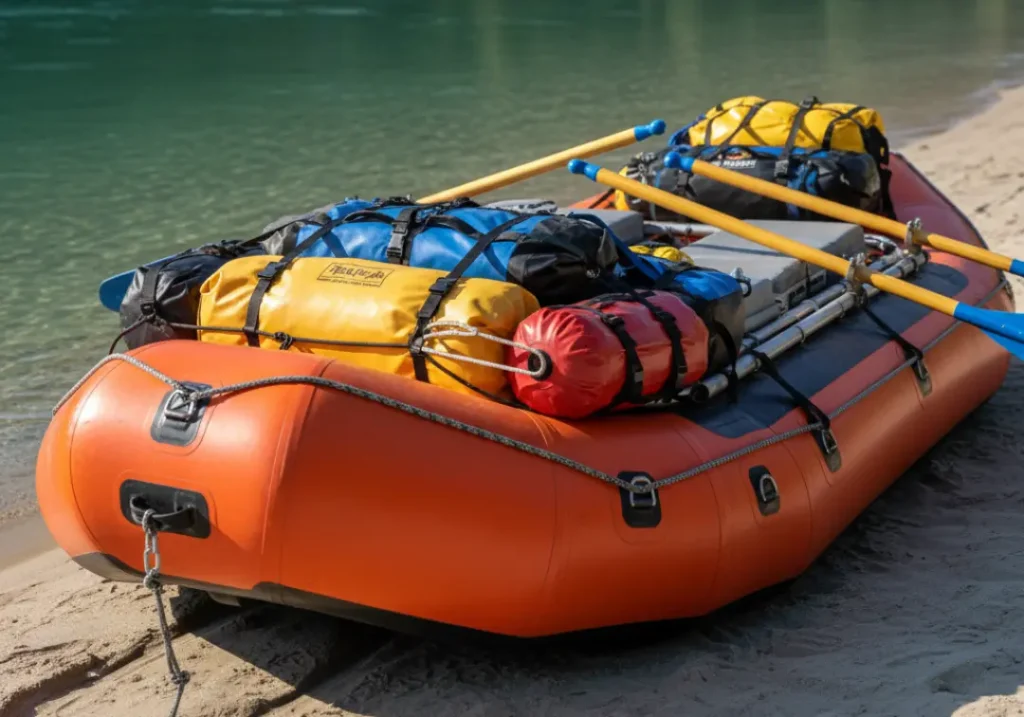
Achieving initial certification and licensing marks the beginning, not the end, of a guide’s education. The next phase is defined by mastering the advanced, practical arts that form the core of a seasoned guide’s on-the-job toolkit. This section delves into the meticulous science of rigging, the high-stakes practice of advanced rescue, and the complex logistics of managing multi-day expeditions.
What Is the Art and Science of Professional Rigging?
Professional rigging is proactive risk management. The core philosophy is to “rig to flip,” a principle that means all gear must remain completely secured even in a complete capsize. This starts with strap management and frame security. Straps should be sorted by length, and cam buckles should face inward for easy on-water adjustments. A key trick is to wet nylon straps before cinching them tight; as they dry and shrink, the load becomes even more secure. A critical safety habit is mitigating “Danger Ropes”—any loop of rope or webbing large enough to create an entrapment hazard. This is managed by daisy-chaining excess webbing and neatly coiling all ropes. For a multi-day oar rig, the rowing frame’s position is crucial for balance, and the frame must be precisely sized to the raft’s dimensions.
The details separate the pros from the amateurs. A well-rigged boat avoids “Tiger Traps,” which are hidden voids or unstable surfaces in the gear pile that can cause a dangerous fall or injury. This is prevented by carefully layering gear to create stable, flat surfaces. A fundamental rule of multi-day rigging is that all gear should be suspended from the frame, not resting on the floor. This “suspend-from-frame” rule allows the raft’s inflatable floor to flex independently over waves, protects it from abrasion, and distributes the load’s weight across the entire frame structure. Meticulous, hazard-free rigging is a hallmark of a competent professional. It’s a physical manifestation of your ability to anticipate river forces and potential chaos. You can learn more about the ‘rig-to-flip’ philosophy and other core principles of a secure boat.
How Do Guides Execute Advanced Rescue Scenarios?
A perfect rig prepares you for the river’s challenges, but true mastery is demonstrated when you must execute a rescue under pressure. The most common major incident is a raft flipping, and its recovery is a core, dynamic skill practiced extensively in guide school. It involves using your body weight and the raft’s perimeter line to systematically right the overturned boat. A more complex and dangerous scenario is a wrapped raft, where the boat is pinned against an obstacle by the powerful force of the current. In this situation, human strength is almost always insufficient, requiring a mechanical advantage system.
The industry-standard technique for boat recovery is the Z-drag system. This rope-and-pulley setup creates a theoretical 3:1 mechanical advantage, allowing a small team to generate immense pulling force. The essential components are a bomber anchor (a solid, unmovable object like a large tree or rock), a haul line, a “capture” prusik (or rope grab) at the anchor to prevent losing progress, and a “traveling” prusik on the haul line connected to a second pulley. The haul line runs from the pinned boat, through the pulley at the anchor, back to the pulley on the traveling prusik, and then to the rescuers. This creates a “Z” shape. The greatest challenge is often not building the system, but safely attaching the haul line to the pinned boat in the first place. The true art of the Z-drag lies in the risk assessment required to initiate it safely, as the immense force generated can rip D-rings clean off a raft if not applied correctly. It’s a powerful, but potentially destructive, last resort. To truly understand the mechanics, it’s essential to study how to harness the physics of a Z-Drag rescue system.
How Is an Expedition-Length Trip Managed?
On multi-day trips, the guide’s role expands to that of a full-service wilderness expedition manager, responsible for the safety, comfort, and sustenance of the entire group. Backcountry meal planning is a complex art, with the objective being to provide satisfying, high-energy meals while carefully managing weight, bulk, and the perishability of ingredients. A common benchmark is 1.5 to 2.5 pounds of food per person per day, providing 2,500 to 4,500 calories, with a focus on high caloric density. A typical menu strategy involves front-loading the menu with perishable items like fresh meats and vegetables for the first couple of days, then transitioning to non-perishable staples like pasta and grains as the trip progresses.
Meticulous organization is key. Food is often pre-portioned and repackaged to reduce waste and bulk, then packed into coolers and dry boxes in reverse order of use, so the last day’s meals are at the bottom. Camp management skills are equally critical and involve selecting appropriate sites on durable surfaces, organizing a central and sanitary kitchen, and setting up designated sleeping areas away from wildlife corridors. In sensitive and highly regulated river corridors, all solid human waste must be packed out using a portable toilet system, often called a “groover.” This unit must be set up in a private, sanitary location at each campsite and properly maintained throughout the trip. It’s an unglamorous but absolutely critical component of hygiene and Leave No Trace ethics. Mastering The science of river trip meal planning is a deep dive into one of the most essential expeditionary skills.
Building a Sustainable Career: Economics, Progression, and Stewardship

Mastering these advanced skills solidifies your professional competence, positioning you to build a long-term, sustainable career in the guiding world. This final section examines the path to a lifelong vocation in guiding, covering the economic health of the industry, the trajectory for professional advancement, international opportunities, and the guide’s ultimate role as a guardian of the river.
What Is the Financial Outlook for the River Guiding Industry?
The foundation of the river economy is strong. Participation in outdoor recreation is reaching record highs, creating robust demand for guided experiences. In 2022, the top five most popular commercial rafting rivers in the U.S. hosted over 820,000 visitors, a clear indicator of a resilient and stable market. Whitewater rafting functions as an “export industry” for many rural communities, bringing in crucial revenue from non-resident visitors that supports a wide range of local businesses. For instance, economic studies on rivers like the Ocoee in Tennessee and the Chattahoochee in Georgia show that rafting generates tens of millions in economic activity and supports hundreds of local jobs annually.
Despite this healthy demand, many outfitters face micro pressures. They are seeing narrowing profit margins due to the rising costs of labor, insurance, and government-issued permits. This creates a tension: while the growing popularity of outdoor recreation suggests a bright future for the industry, the financial pressures on outfitters may limit their ability to significantly increase guide wages. This can lead to a competitive job market where, despite high demand for trips, the financial prospects for frontline staff remain modest. Furthermore, the economic viability of the entire industry depends on continued access to public lands and waterways, making battles over river access an ongoing threat that guides and outfitters must constantly engage with.
What Does the Career Ladder for a River Guide Look Like?
Despite the economic pressures, a dedicated professional can navigate a clear and challenging path for career progression within the industry. The journey typically follows a well-defined ladder:
- Guide-in-Training (0 seasons): The entry point post-guide school. The focus is on learning specific river lines, assisting with chores, and absorbing the company culture.
- First-Year Guide (1-2 seasons): The first full professional role. Responsible for safely guiding guests on assigned river sections and delivering safety talks. A WFR and SWR certification are typically required.
- Senior Guide / Trip Leader (3-5+ seasons): An experienced guide who assumes lead responsibility for individual trips. They manage trip logistics, mentor junior guides, and make critical on-the-spot safety decisions.
- Operations Manager (5-10+ seasons): A senior, often year-round position responsible for managing all guides, fleet maintenance, gear inventory, budgeting, and ensuring safety standards are met across the entire operation.
The most significant career leap is the transition from Trip Leader to Operations Manager. This marks a fundamental shift from tactical, on-water execution to strategic, shore-based oversight. A guide’s world is the river and the immediate trip; a manager’s world is the complex interplay of staff schedules, vehicle maintenance, gear inventory, and multi-river trip departures. Guides who wish to make this transition should actively seek opportunities to learn “back-of-house” operations. This can include assisting in the equipment shop, learning the reservation system, or helping with vehicle shuttles to gain a holistic understanding of the business. Some experienced guides also branch out to lead private paddle raft trips.
River Guide Career Progression
A look at the typical path from trainee to operations manager.
Key Responsibilities
Learning river lines, assisting with rigging and camp chores, supporting senior guides, absorbing company culture and procedures.
Essential Skills/Certifications
Basic First Aid/CPR, enrollment in Swiftwater Rescue. Strong work ethic and teachable attitude.
Key Responsibilities
Safely guiding guests on assigned river sections, delivering safety talks, assisting with trip logistics, providing excellent customer service.
Essential Skills/Certifications
WFA/WFR, Swiftwater Rescue certification. Proficiency in boat handling and basic rescue techniques.
Key Responsibilities
Assuming lead responsibility for individual trips, managing trip logistics and timeline, mentoring junior guides, making critical safety decisions, serving as the primary point of contact for guests.
Essential Skills/Certifications
Advanced medical certification (WFR), advanced rescue skills. Proven leadership, problem-solving, and conflict resolution abilities.
Key Responsibilities
Managing and scheduling all guides and drivers, fleet and equipment maintenance/repair, purchasing and inventory, budgeting, ensuring trip quality and safety standards across the entire operation.
Essential Skills/Certifications
Extensive guiding experience, people management, logistical planning, mechanical aptitude, financial literacy. Commercial Driver’s License (CDL) is highly valued.
How Can a Guide Work Internationally?
For guides with a desire to travel, this career path extends beyond domestic rivers to opportunities around the globe. The primary enabler for international work is the Guide Training & Education (GTE) award from the International Rafting Federation (IRF). This is the “only globally recognised raft guide certification,” accepted by outfitters and regulatory bodies in dozens of countries across multiple continents. The certification acts as a professional “passport,” providing a common language and a standardized benchmark for guide skills that employers anywhere in the world can trust. It is important to note that unlike a guide school, the IRF certification is an assessment, not an instructional course. Candidates must present a logbook of prior river experience and hold a current First Aid/CPR certificate.
During a multi-day assessment workshop, candidates are evaluated on their proficiency in boat handling, crew management, delivering safety briefings, and executing rescue skills. Successful candidates are awarded a certification for a specific level of whitewater (e.g., Level 3, Level 4), which is valid for three years. This credential opens doors to incredible opportunities. On the Zambezi River in Zambia/Zimbabwe, a world-class Class IV-V run, local guides are accredited by the IRF, allowing international outfitters to confidently employ guides from around the world. Guiding in such contexts presents unique logistical challenges, like navigating the 1,000-foot hikes into and out of the Batoka Gorge, often supported by a local “porter culture.” It’s a chance to guide on the legendary rapids of the Zambezi River and experience the profession on a global scale.
What Is the Guide’s Role as an Environmental Steward?
Whether guiding at home or abroad, the ultimate evolution of a professional guide is to become a dedicated steward of the environments that provide their livelihood. The cornerstone of a guide’s environmental ethic is the set of Leave No Trace (LNT) principles, specifically adapted for fragile river corridors. Due to high use in narrow canyons, this means all solid human waste and toilet paper must be packed out using a portable toilet system. To minimize campfire impact, fires must be built in a fire pan to prevent scorching the ground, and all ash and charcoal must be cooled and packed out. Campsites are carefully chosen on durable surfaces like sandbars, and are generally located at least 200 feet from the water’s edge to protect riverside vegetation.
This commitment is a key differentiator between a professional operation and a casual user. Meticulous waste management and leaving a campsite cleaner than it was found are visible demonstrations of respect for the resource. A growing movement seeks to formalize this commitment through ecotourism and sustainability certifications. These include standards for operators from the Global Sustainable Tourism Council (GSTC) and individual credentials like the ECO Guide Certification. Pursuing these certifications provides third-party verification of sustainable practices, helps prevent “greenwashing,” and aligns guides with a growing market of environmentally conscious travelers. This dedication is a tangible way to become a powerful force for river conservation. Ultimately, this commitment to stewardship represents the culmination of the guide’s journey—from enthusiast to expert, and finally, from adventurer to advocate, as demonstrated by regulations governing the proper use of wild places like the guidance for Leave No Trace principles on the Kern River.
Conclusion
Becoming a river guide is a commitment to a multi-faceted profession that demands a unique blend of physical endurance, emotional intelligence, and composure under pressure. It is a journey that begins long before the first rapid. The formal qualification process is a rigorous gauntlet requiring guide school, a matrix of medical and rescue certifications like WFR and Whitewater Rescue, and the skill to navigate a complex web of state and federal licensing. A sustainable career is then built upon mastering the advanced skills of rigging, rescue, and expedition logistics, offering a clear progression from rookie guide to senior management. Ultimately, the career culminates in the role of steward, where a deep connection to the river ecosystem fosters an ethic of conservation manifested in a rigorous application of Leave No Trace principles.
Explore our complete library of river skills and safety guides to continue building the knowledge that turns passion into wilderness instinct.
Frequently Asked Questions about Becoming a River Guide
What certifications do I need to become a river guide?
The minimum required certifications for nearly all outfitters are current Standard First Aid and CPR. However, the professional standard for a career guide is a Wilderness First Responder (WFR) certification for advanced medical care and a specialized Whitewater Rescue (WWR) or Swiftwater Rescue (SWR) certification for technical rescue skills.
How much do river guides make?
A first-year guide can typically expect to earn a base wage of $12 to $16 per hour, but a substantial portion of their income comes from tips. Gratuities often average between $80 and $100 per trip, meaning a guide who provides an excellent guest experience can significantly augment or even double their base pay.
Do I need prior experience to be a river guide?
No, you typically do not need prior experience to be a river guide to get started. Most aspiring guides enter the profession by attending a guide school hosted by a commercial outfitter, which is designed to teach foundational skills to beginners.
How long does it take to become a raft guide?
You can become a hirable guide-in-training after successfully completing an intensive guide school, which typically lasts 6 to 10 days. However, progressing from a trainee to a confident, lead-capable guide or trip leader takes at least one to two full seasons of consistent on-water work and mentorship.
Risk Disclaimer: Whitewater rafting, kayaking, and all related river sports are inherently dangerous activities that can result in serious injury, drowning, or death. The information provided on Rafting Escapes is for educational and informational purposes only. While we strive for accuracy, the information, techniques, and safety advice presented on this website are not a substitute for professional guide services, hands-on swiftwater rescue training, or your own critical judgment. River conditions, including water levels, currents, and hazards like strainers or undercut rocks, change constantly and can differ dramatically from what is described on this site. Never attempt to navigate a river beyond your certified skill level and always wear appropriate safety gear, including a personal flotation device (PFD) and helmet. We strongly advise rafting with a licensed professional guide. By using this website, you agree that you are solely responsible for your own safety. Any reliance you place on our content is strictly at your own risk, and you assume all liability for your actions and decisions on the water. Rafting Escapes and its authors will not be held liable for any injury, damage, or loss sustained in connection with the use of the information herein.
Affiliate Disclosure: We are a participant in the Amazon Services LLC Associates Program, an affiliate advertising program designed to provide a means for us to earn advertising fees by advertising and linking to Amazon.com. As an Amazon Associate, we earn from qualifying purchases. We also participate in other affiliate programs and may receive a commission on products purchased through our links, at no extra cost to you. Additional terms are found in the terms of service.