
In this article
Standing at the horizon line of Lava Falls, the roar of a Class 10 rapid fills the air, a physical presence you feel in your chest. It’s the sound of the planet breathing. Approaching this chaos are two vessels: one, an elegant wooden dory, lining up to dance with precision through the waves; the other, a massive motorized raft, charging full speed into the heart of the whitewater. This single moment on the Colorado River captures the fundamental choice every Grand Canyon visitor must make. The classic dory vs raft question dictates not just the speed of your journey, but the very soul of your whitewater experience—the difference between historical intimacy and modern access, between quiet immersion and efficient exploration on your river adventure.
The choice you make is a philosophical one. You’re choosing between the conservationist vision of Martin Litton, who saw the dory as a vessel for quiet reverence, and the democratic-access mission of Georgie White, who saw the raft as a tool to share the canyon with the world. You’re deciding if you want to be a dancer or a brawler on the water. You’re weighing the counter-intuitive tradeoff between time and intimacy, discovering that a faster motor trip might see more sights, while a slower, oar-powered journey offers a deeper immersion into the canyon’s pulse. And most importantly, you’ll move beyond the myth that one is simply “more dangerous” to understand that the ultimate safety factor isn’t the boat, but the professional river guide at the oars or the helm.
Why Do These Boats Even Exist on the Colorado?
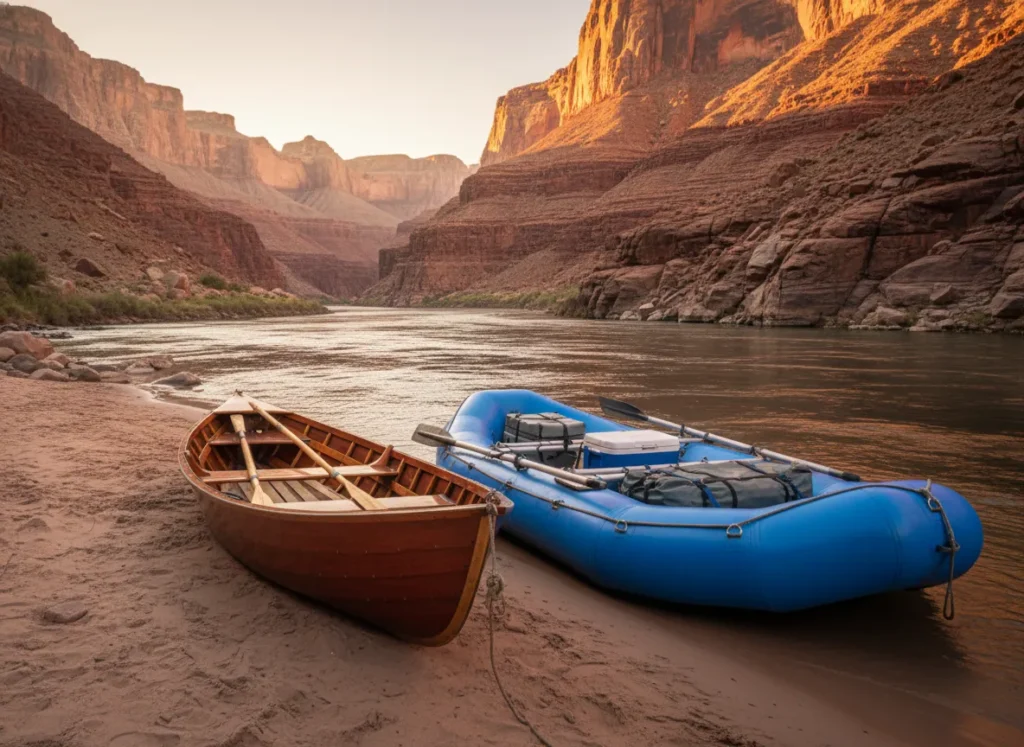
To understand these boats, you have to understand the people who brought them here. These watercraft aren’t just different designs; they are the physical embodiment of two radically different philosophies, born from two legends of the river. This is the “why” that defines everything that follows in Grand Canyon rafting.
What is the “Litton Philosophy” Behind the Dory?
In the mid-20th century, Martin Litton, a true Colorado River legend, was fighting tooth and nail against the damming of the Grand Canyon. When he looked at the clumsy, inflatable surplus rafts of the era, he saw something uninspiring. He wanted a boat with “magic” and “beautiful lines,” a vessel that could connect a passenger directly to the river’s currents. In the 1960s, he found his muse and adapted the Oregon McKenzie drift boat, itself a descendant of the hardy cod-fishing dory from the Grand Banks of Newfoundland. He created a craft that offered an intimate, quiet, and “mystic” experience. He started a tradition of naming his wooden boats after natural wonders “heedlessly destroyed by the hand of man,” like the Ticaboo and the Music Temple, turning each whitewater dory into a floating statement of conservation.
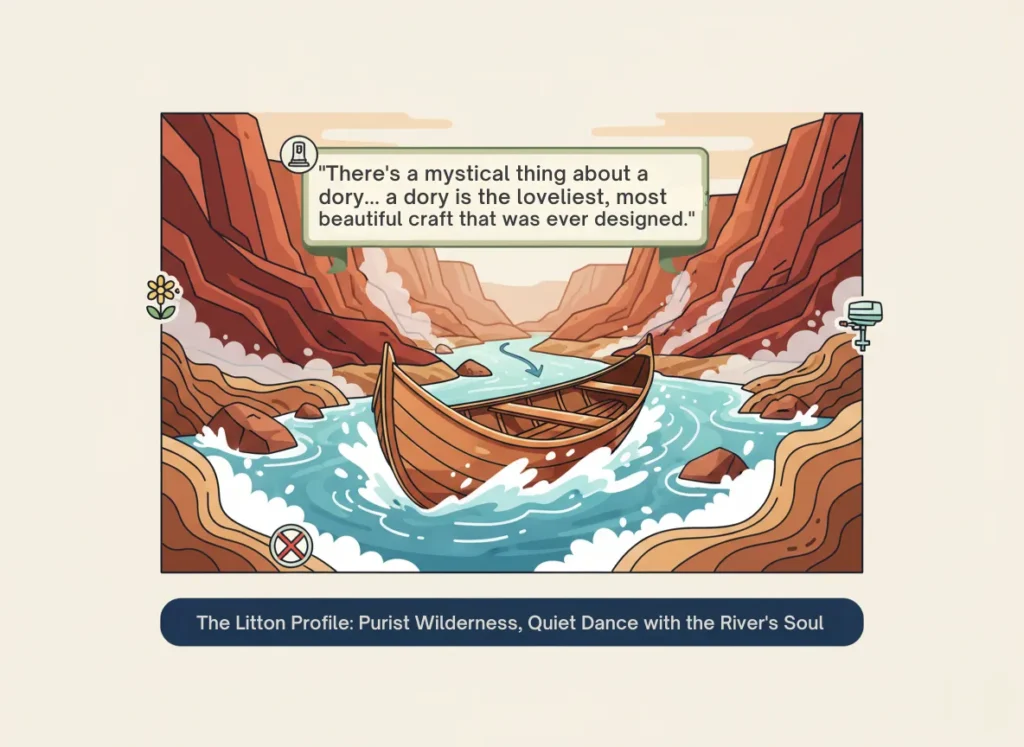
This gave birth to what we can call the “Litton Profile”: The Purist. This is the adventurer who seeks a historical connection, quiet intimacy, and a profound “wilderness experience,” as officially defined by the National Park Service in the Colorado River Management Plan which states its goal is to provide an experience where “natural sounds’ predominate.” For Litton, the dory was an argument against motors and mass tourism; it was a tool for deep, respectful immersion in seething hydraulics. Its nimbleness isn’t for thrill-seeking alone; it’s for navigating the river with precision, like a dance. This philosophy values the quality of the experience over the quantity of miles covered, embracing the river’s natural pace on a non-motorized trip.
While Litton was crafting a vessel for wilderness purism, another pioneer was engineering a revolution with a completely different philosophy in mind: river accessibility for all.
What is the “White Philosophy” Behind the Inflatable Raft?
Georgie White was the “wild woman” of the river, the pioneering godmother of commercial rafting in the Grand Canyon. Her philosophy was centered on access and democratization—making the “trip of a lifetime” possible for thousands, not just a few elite explorers. After WWII, she had an ingenious idea. She purchased cheap military-surplus bridge pontoons and famously lashed three together to create her massive “G-rig.” But her most significant innovation was putting an outboard motor on her rig. This single act, detailed in the NPS Revolutionizing the River historical article, fundamentally changed the scale and speed of Canyon travel. You can see more about the technical legacy of Georgie White Clark and how it shaped the sport.
This created the “White Profile”: The Explorer. This user values stability, safety, and the ability to see the entire canyon efficiently in a limited time. This philosophy accepts a trade-off: motor noise and larger groups in exchange for making the Grand Canyon accessible to families, older individuals, and those with tight schedules. It’s an approach that values the breadth of experience—seeing as much of the canyon’s wonders as possible—over the depth of silent immersion. The modern motorized raft, a direct descendant of her design which can be an S-rig motor, J-rig, or C-craft, is an inflatable boat that prioritizes stability and capacity, often running alongside a gear raft or other support boats.
These two opposing philosophies gave birth to vessels with radically different designs, each perfected for its unique purpose on the river.
What Are the Core Design Differences Between a Dory and a Raft?
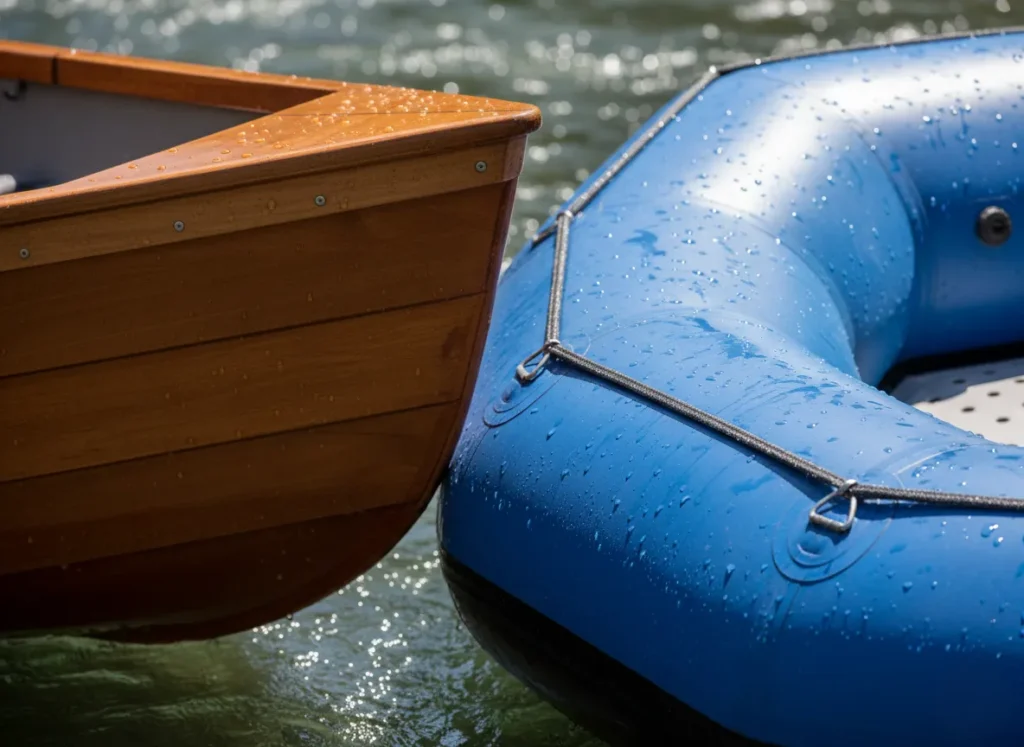
Now that we know the “why,” let’s get into the “what.” The performance of these boats in heavy water isn’t magic; it’s a direct result of their anatomy and material construction.
How is a Dory Engineered for Maneuverability?
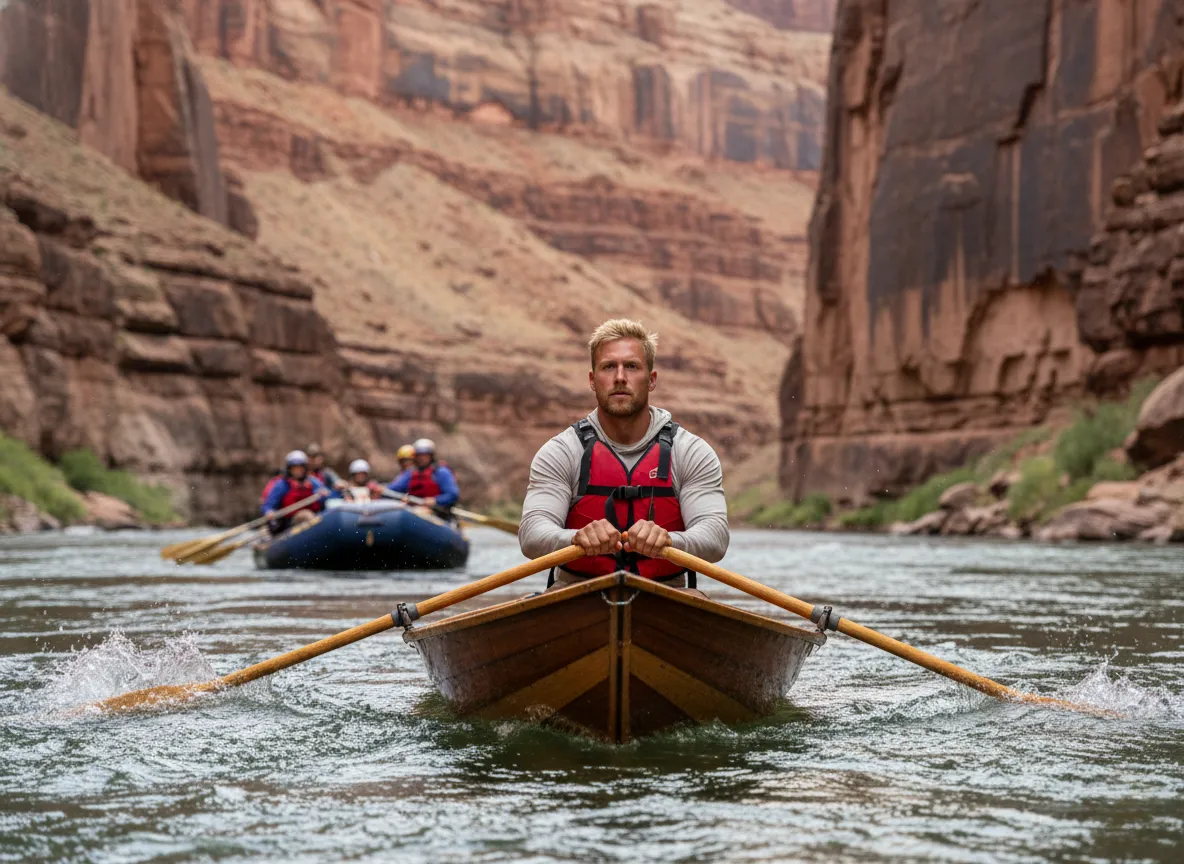
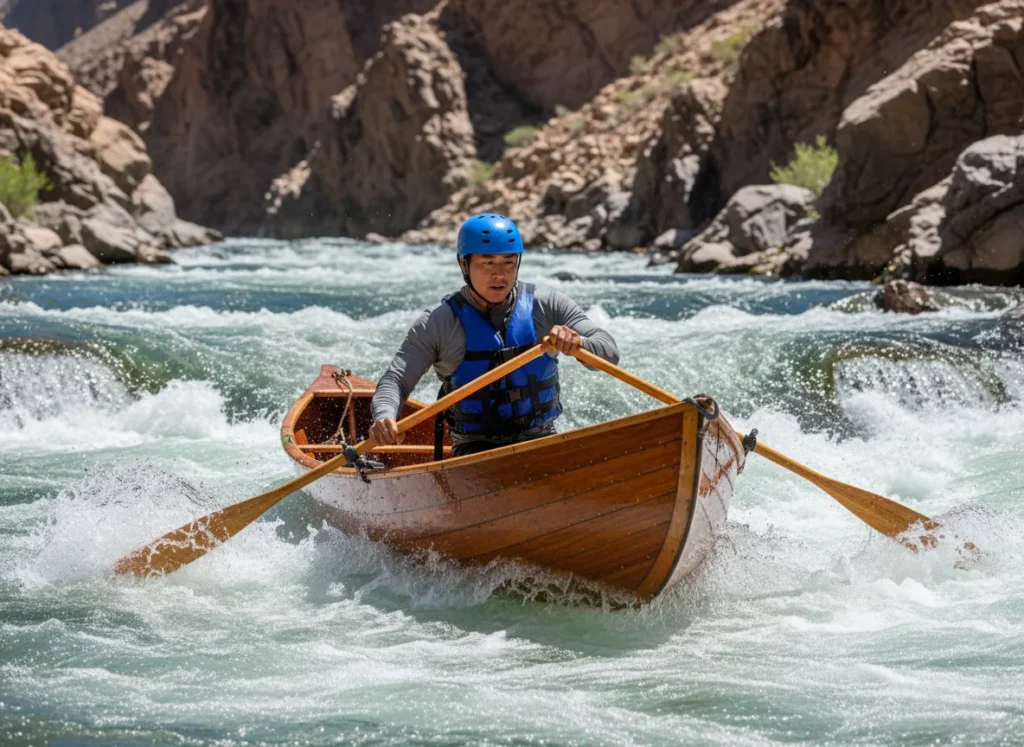
A dory’s incredible performance stems from its rigid, hard hulled boat design. This vessel, made of wood or fiber glass, allows it to cut through water with precision. Three key design features define its character. First is its flat bottom, which gives the boat stability when still but allows it to pivot easily. The second, and most critical, is its significant “rocker”—the pronounced bow-to-stern curve of the hull that lifts the ends out of the water. This drastically reduces the wetted surface area, allowing the dory to spin almost effortlessly on the tops of waves. The third feature is its high, flared hulls/sides, which splay outwards to provide crucial secondary stability when the boat leans in a turn and to deflect spray.
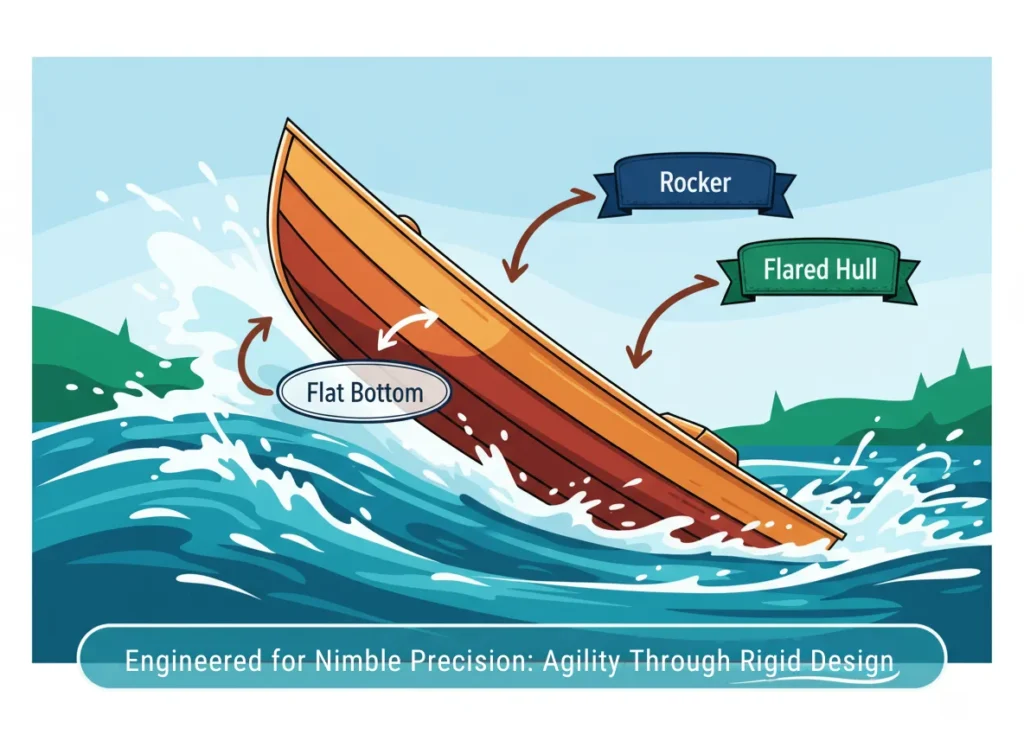
Together, these features create a boat that is not meant to be steered passively but to be actively maneuvered through “seething hydraulics.” This design, however, comes with a key disadvantage. The rigid hull has no give. An impact with a rock that a raft would simply bounce off of can cause catastrophic damage. This reality necessitates a defensive, precise navigation strategy, where the guide uses the boat’s agility to avoid obstacles at all costs. You can learn more about the specifics of The Anatomy of a Martin Litton Dory and the NPS Commercial Operating Requirements data that governs their construction.
Where the dory is engineered for nimble precision, the modern inflatable raft is a marvel of forgiving stability and resilience.
What Two Innovations Define the Modern Raft?
Modern rafts are far from simple “rubber boats”; they are sophisticated inflatable craft built from advanced, layered synthetic fabrics like inflatable rubber or plastic. The two primary materials are Chlorosulfonated Polyethylene (CSM), famously known as Hypalon, and Polyvinyl Chloride (PVC). While Hypalon (and its successor, Pennel Orca) is known for superior UV resistance, high-end, welded-seam PVC is exceptionally tough and airtight. This guide weighs material durability, UV and abrasion resistance in detail. This flexible-hulled design is the source of a raft’s primary advantage: it can absorb impacts from rocks and waves, making it incredibly forgiving.
The second, and arguably most critical, innovation is the self-bailing floor, developed in the 1980s. This design features an inflatable floor suspended above the boat’s true bottom, with large drain holes around the perimeter. When a wave crashes in, the weight of the water pushes down on the inflatable floor, forcing itself out through the drain holes in seconds. This completely eliminated the bailing requirement after every rapid, a laborious and mandatory task still required in dories. Academic research on Grand Canyon river experiences confirms how these modern designs have shaped trip logistics.
With these fundamental design differences in mind, we can now analyze how these vessels actually perform head-to-head in the demanding environment of the Colorado River.
How Do Dories and Rafts Handle Grand Canyon Rapids Differently?
The technical designs translate directly into two distinct strategies for running whitewater. This isn’t just a guide’s preference; it’s dictated by the physics of the boat itself.
What is the Difference Between “Defensive” and “Offensive” Rapids Strategy?
The higher performance and more maneuverable dory requires a defensive strategy. Because its rigid hull is vulnerable to impact, the boatman must use the dory’s agility to set a careful and intentional line, actively avoiding obstacles like rocks and keeper holes. The goal for this oar-powered craft is to dance through the rapid’s maze with precision. In Lava Falls, for instance, a dory guide must use exquisite skill to navigate around the massive, boat-flipping “Ledge Hole” hydraulic.
In contrast, the stable and forgiving inflatable raft employs an offensive, “punch-through” strategy. A raft guide will often aim for the biggest part of the wave—the “heart”—because that is where the water is deepest and safest. The raft’s flexible hull and immense stability allow it to absorb the wave’s energy and power through features that a dory must avoid. Revisiting our Lava Falls case study, a motor raft guide will “charge full speed into the heart of the rapid” to maintain momentum, punch through the wave, and avoid striking the propeller on rocks. This is a real-world strategy, and the consequences of running major rapids are just as real, as this NPS news release on a river fatality grimly reminds us. You can even learn how guides are trained to punch through Class III-IV stoppers with confidence.
This strategic difference creates two profoundly different experiences for the passenger, from the physical ride to the very pace of the journey.
How Does the Passenger Experience and Itinerary Differ?
The choice of boat directly shapes your physical effort and daily schedule. The “ride” feel in a dory is often described as being “on top of the water,” allowing passengers to feel every current like a “ballerina of whitewater.” Rafts, conversely, offer a more “comfortable” ride that punches through waves, especially oar rafts designed for lounging and motor rafts with supported seating. The motor vs non-motorized debate often comes down to this difference in speed and comfort.
Don’t fall for the “boredom” myth on non-motorized trips. On an oar raft or dory, the guide does 100% of the rowing, but passengers are not idle. Your participation level is active. You must engage in safety by executing the high-side command—a critical maneuver where everyone shifts their weight to the high side of the boat to prevent a flip. Dory riders have the additional job of bailing water by hand after rapids. The paddle raft is the “max physicality” option, where 6-8 guests are the “engine,” requiring continuous team paddling and a higher minimum age (16). Some outfitters even offer a hybrid trip option, allowing guests to experience different raft types.
This leads to a critical, counter-intuitive tradeoff in pace and trip duration. Motor rafts cover the full canyon in 6-10 days, while non-motor trips (Dory/Oar) last 12-18 days. But here’s the tradeoff: because they cover river miles so efficiently, the faster motor trips often allow for more time for hiking integration and off-river exploration, including the famous “hiker special” to places like Phantom Ranch. The slower non-motor trips offer a more “peaceful” and “immersive” river experience, where the journey itself is the focus. The choice is therefore between breadth (seeing more attractions on a motor trip) and depth (feeling the river’s natural pace on a non-motor trip). The noncommercial river trip regulations document provides excellent context on the logistics of these different trip lengths.
Pro-Tip: On any oar-powered trip (dory or raft), your most important job as a passenger is to be “river aware.” This means always having three points of contact when moving in the boat, keeping your water bottle and daypack clipped in so they don’t become hazards, and listening for the guide’s commands before you enter a rapid. Your active participation is part of the team’s success.
These differences in feel and pace are clear, but the most pressing question for many potential rafters revolves around a much starker topic: safety.
Which Boat Is Actually Safer in the Grand Canyon?
Let’s address the number one question head-on. Is one boat safer than the other? The answer is more complex—and more reassuring—than you might think.
Why is the Dory Perceived as More Dangerous?
There’s a common perception, often reinforced by outfitters, that dories are more dangerous, directly addressing the query “are dories safer than rafts?”. The perceived wisdom is that they have a higher flip risk, are the “least stable” of all craft, and have a “moderate to high flip/swim potential.” This isn’t entirely wrong; it’s rooted in the boat’s design. The same features that make it nimble—the rocker and flat bottom—reduce its primary stability compared to a wide, inflatable raft. This means a mistake by the guide or a misread current has a higher likelihood of resulting in a flip compared to a more forgiving raft.
Oar rafts are considered “highly stable,” and large motor rafts provide a profound “sense of security,” making the likelihood of a capsize seem “next to none.” This creates a simple binary in people’s minds: Dory = Risky/Thrilling, Raft = Safe/Secure. However, this simplistic narrative is dangerously incomplete.
But perception isn’t fact. When we look at actual incident data from the National Park Service, a more complex and surprising picture emerges.
What Does the Data Say About the Real Answer?
The most recent, explicitly identified fatal flip in available public data was a motor raft at Kwagunt Rapid, as detailed in this NPS news report on overturned motorboat. This does not mean motor rafts are dangerous. It means the river is dangerous, and any boat can flip. A dory flip may be more likely in the hands of a novice, but a motor raft flip, while exceptionally rare, can be a major incident involving many passengers. The discussion of Rafting Risk by River Class provides a broader context for how risk is managed in whitewater.
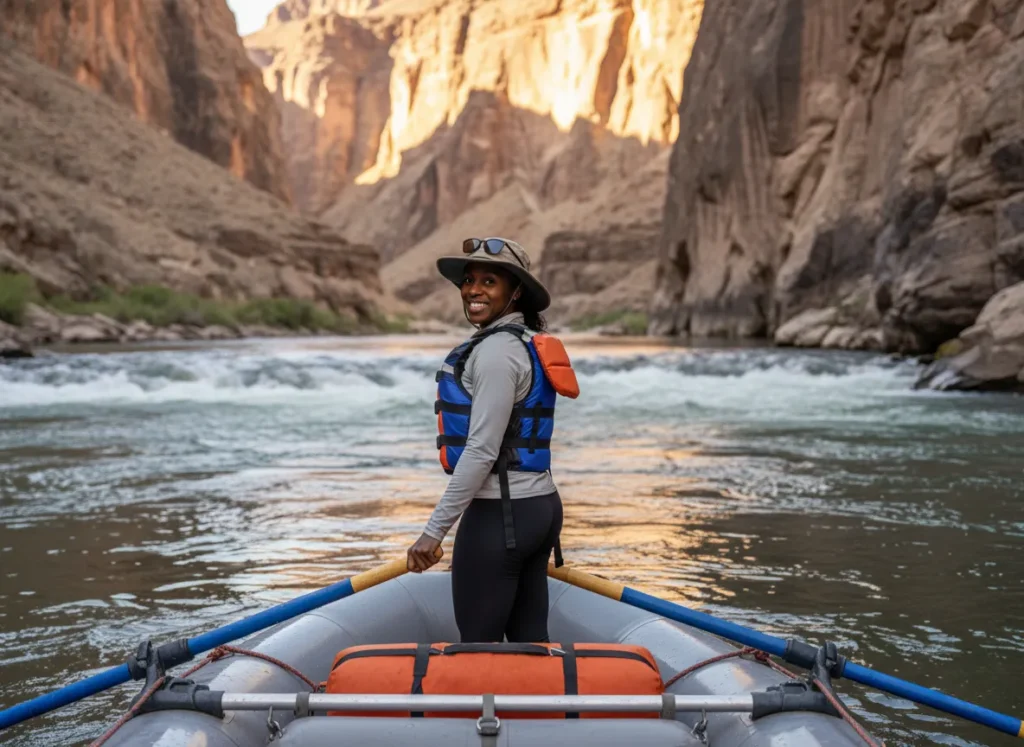
The real answer is this: It’s the Guide, Not the Gear. The ultimate safety factor is the skill, training, and judgment of the professional river guide. A dory should be reframed: it is a high-performance craft that is exceptionally safe in the hands of an expert who can set that “careful and intentional line.” The overall safety record of all commercial trips in the Grand Canyon National Park, regardless of boat type, is extremely high due to rigorous guide training and NPS oversight. All trips must provide USCG-approved Type V PFDs (life jackets), and regulations govern everything from group size to safety protocols, as detailed in the official Colorado River Management Plan official source. Your decision should be based on the type of experience you want, with the confidence that all commercial options are managed to a very high safety standard.
Pro-Tip: When choosing a company, ask about their guide training and retention. Companies that invest in multi-year training, swiftwater rescue certification, and Wilderness First Responder courses, and who have guides that return season after season, are demonstrating a deep commitment to safety and expertise. This is how you vet a rafting outfitter effectively.
With the safety question reframed around guide expertise rather than gear, you can now focus on the final, practical step: matching the vessel’s logistical attributes to your personal constraints and goals.
How Do You Choose the Right Trip Type for Your Goals?
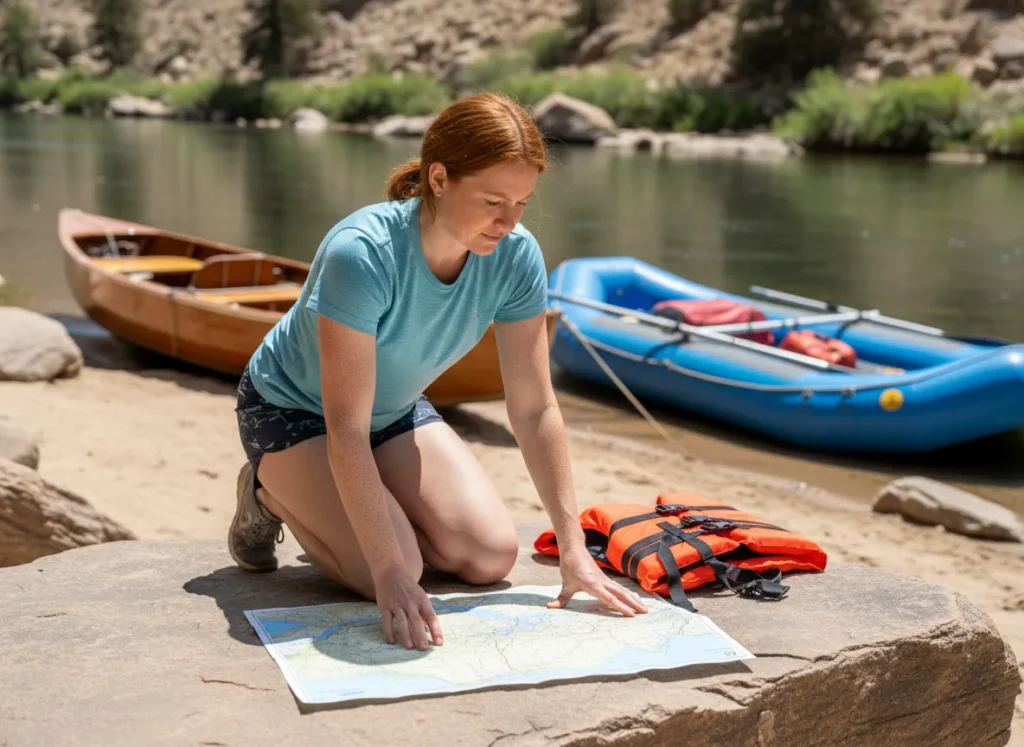
This is your practical decision guide for trip planning. We’ve consolidated all the key attributes into one comprehensive matrix to help you match a vessel’s characteristics to your personal constraints like available time, budget, and desired experience. Identify your top one or two priorities—perhaps it’s “maximum hiking time” or a “quiet wilderness feel”—and use the table to see which vessel best aligns with those goals. Categories like “Thrill Level” and “Wilderness Feel” connect directly back to the core philosophies of Litton and White we discussed earlier. Answering “is a dory trip worth it” depends entirely on these personal values, as the Grand Canyon dory trip cost is often comparable to oar raft trips of similar duration. Remember, there is no single “best” boat, only the best boat for your perfect Grand Canyon adventure, which is governed by federal regulations for boating.
The Grand Canyon Vessel Comparison Matrix
Compare vessel types for your adventure
Trip Information
Propulsion Type: Oar (Guide Powered)
Capacity: 4 Guests + 1 Guide
Trip Duration: 12-18 Days
Minimum Age: Typically 12+
Experience
Physicality: Low (Must be able to bail)
Thrill Level: High (Feel every wave)
Stability: Low Primary, High Secondary
Wilderness Feel: Maximum (Quiet, historic)
Trip Information
Propulsion Type: Oar (Guide powered)
Capacity: 4-5 Passengers
Trip Duration: 12-18 Days
Minimum Age: Typically 10-12+
Experience
Physicality: Low
Thrill Level: Moderate-High
Stability: Moderate-High
Wilderness Feel: Maximum (Quiet, immersive)
Trip Information
Propulsion Type: Paddle (Guest Powered)
Capacity: 6-8 Passengers
Trip Duration: 6-9 Days (Upper/Lower)
Minimum Age: Typically 16+
Experience
Physicality: High (Continuous paddling)
Thrill Level: High (Team effort)
Stability: High
Wilderness Feel: High (Team-focused)
Trip Information
Propulsion Type: Outboard Motor
Capacity: 14-20 Passengers
Trip Duration: 6-10 Days (Full)
Minimum Age: Typically 8+
Experience
Physicality: Very Low
Thrill Level: Moderate (Size dampens hits)
Stability: Very High
Wilderness Feel: Moderate (Motor noise)
Once you’ve aligned your personal logistics with a boat type, you can use a more detailed tool like The Grand Canyon Rafting Matrix to dive deeper into planning.
Conclusion
The choice between a dory and a raft is a choice between two foundational philosophies: Martin Litton’s vision of quiet, intimate wilderness immersion and Georgie White’s mission of democratic access for all. It’s a conservation-focused approach versus one of broad accessibility. Dories are engineered for maneuverability, requiring a defensive strategy, while rafts are engineered for stability, enabling an offensive “punch-through” strategy. While dories are perceived as less stable, the ultimate safety factor on any commercial trip is the skill of the guide; data shows that any vessel type can be involved in a serious incident. Your decision creates a profile: The Litton Profile (Dory/Oar) chooses depth and quiet, valuing the slow pace of the river itself and a low eco-footprint. The White Profile (Motor Raft) chooses breadth and efficiency, valuing access to the canyon’s many wonders in a shorter timeframe. Whichever you choose, practicing Leave No Trace principles is paramount.
Now that you understand the philosophies behind the boats, explore our complete library of Grand Canyon planning guides to take the next step in your adventure.
Frequently Asked Questions about Grand Canyon Boats
What is the main difference between a dory and a raft?
The main difference is that a dory is a rigid-hulled boat (wood or fiberglass) designed for maneuverability, while a raft is a flexible-hulled inflatable boat designed for stability. This core design difference dictates how they handle rapids, the feel of the ride, and even the philosophy of the trip.
Are dories safer than rafts in the Grand Canyon?
Neither boat type is inherently safer than the other; the primary safety factor is the skill and training of the professional river guide. While dories have lower initial stability and can flip more easily, all commercial trips are held to extremely high safety standards by the National Park Service, making the overall risk very low.
Will I get bored on a long, non-motorized oar raft trip?
It is highly unlikely you will get bored, as you are an active participant in an immersive wilderness experience, not a passive passenger. Even when not paddling, your roles include engaging in safety maneuvers like “high-siding,” taking in the spectacular and constantly changing scenery, and connecting with the natural pace of the river.
Which boat is best for families with kids?
For families with younger children (typically ages 8-11), the motorized raft is usually the best and only option due to its high stability, comfort, and lower minimum age requirements. For families with teenagers (12+), an oar raft offers a great balance of safety and a more classic wilderness pace, while paddle rafts (16+) are best for highly active families seeking a team challenge.
Risk Disclaimer: Whitewater rafting, kayaking, and all related river sports are inherently dangerous activities that can result in serious injury, drowning, or death. The information provided on Rafting Escapes is for educational and informational purposes only. While we strive for accuracy, the information, techniques, and safety advice presented on this website are not a substitute for professional guide services, hands-on swiftwater rescue training, or your own critical judgment. River conditions, including water levels, currents, and hazards like strainers or undercut rocks, change constantly and can differ dramatically from what is described on this site. Never attempt to navigate a river beyond your certified skill level and always wear appropriate safety gear, including a personal flotation device (PFD) and helmet. We strongly advise rafting with a licensed professional guide. By using this website, you agree that you are solely responsible for your own safety. Any reliance you place on our content is strictly at your own risk, and you assume all liability for your actions and decisions on the water. Rafting Escapes and its authors will not be held liable for any injury, damage, or loss sustained in connection with the use of the information herein.
Affiliate Disclosure: We are a participant in the Amazon Services LLC Associates Program, an affiliate advertising program designed to provide a means for us to earn advertising fees by advertising and linking to Amazon.com. As an Amazon Associate, we earn from qualifying purchases. We also participate in other affiliate programs and may receive a commission on products purchased through our links, at no extra cost to you. Additional terms are found in the terms of service.