

In this article
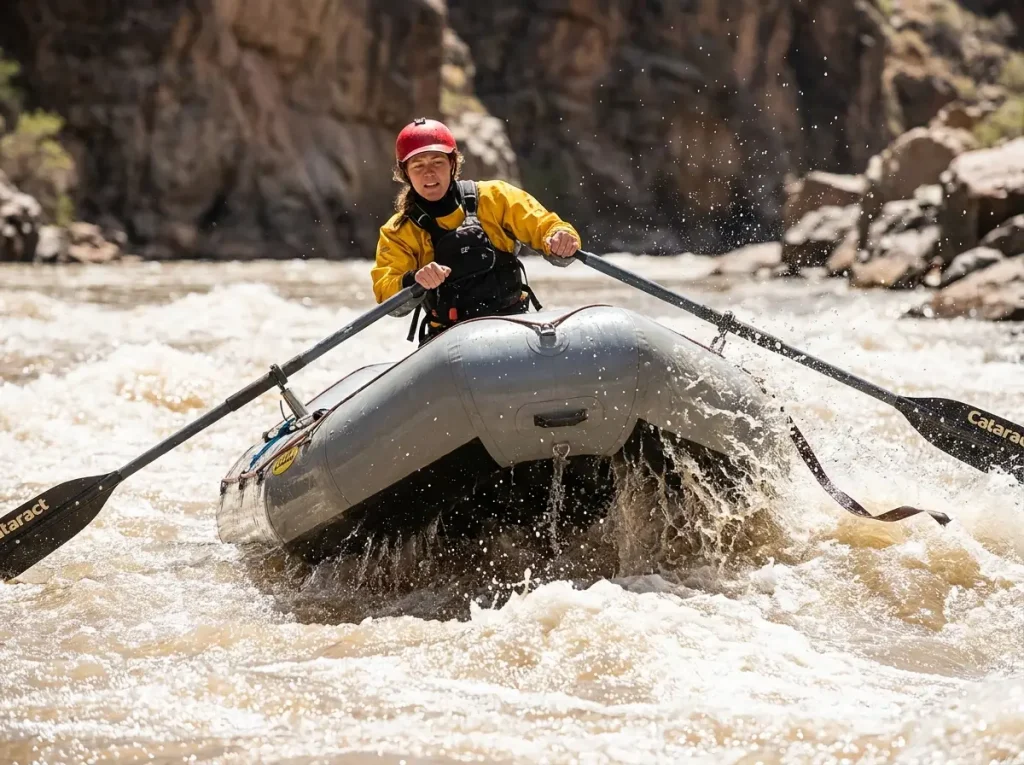
Watch a beginner row all morning and you can usually call the problem before lunch. They muscle every stroke with their arms, shoulders creeping up toward their ears, and by the time the water gets pushy they have nothing left in the tank. That is not a fitness problem. It is a mechanics problem, and it is the most common one on the water.
The fix every veteran rower repeats is the same: the oars are a lever, your body is the engine, and almost nobody runs that engine right at first. Get the mechanics sorted and rowing stops feeling like a fight. Here is what is actually happening in your muscles on every stroke, why pulling beats pushing, and how to row all day without cooking your shoulders or your lower back.
Why Most Rowers Fight the Oars and Lose
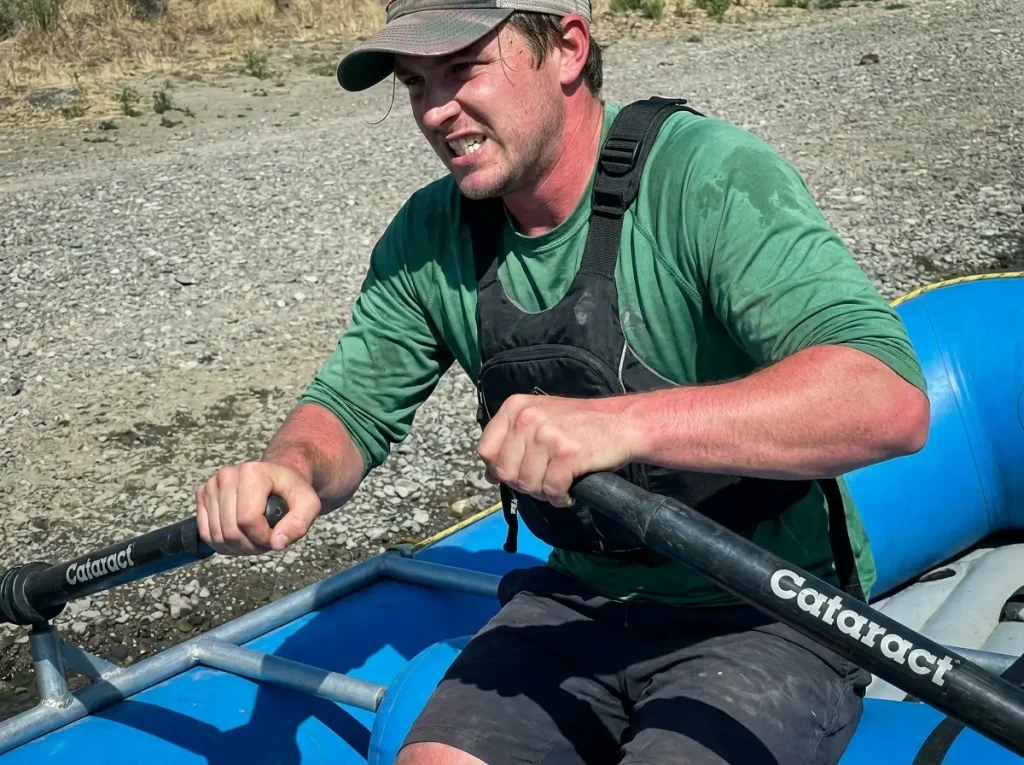
The picture is always the same. Someone climbs onto the rowing seat, grabs the oars like they are about to start a lawnmower, and powers through the first flatwater stretch on pure arm strength. It works for about twenty minutes. Then the forearms start to burn, the strokes get shorter and weaker, and the boat stops responding right when the current picks up.
The Arm-Rowing Trap
Arm-rowing is the number one mistake every guide and every rowing article names, and for good reason. Your arms hold some of the smallest muscles in the chain you are trying to use. Lean on them alone and they fatigue first, which means your strongest, freshest strokes are behind you before the real work begins. It is the same arm-first habit that wrecks paddlers’ forward strokes, just transferred to a longer lever. Plenty of rowers never connect the two, and they fall into the same mistakes that quietly sabotage forward strokes without ever naming the cause.
The cascade is predictable. Arm-rowing leads to fast fatigue, fatigue leads to weak strokes, and weak strokes lead to losing the boat in the rapid, exactly where a strong correction would have saved you. The rower who muscled the easy water has nothing left for the hard water, and the river does not wait.
What “Finesse, Not Muscle” Actually Means
There is an old line among boaters: it is finesse, not muscle, that makes you a skilled rower. You are not stronger than the current, and the moment you try to be, you lose. The skill is in working with the water instead of fighting it, and in letting the big muscles do the boat-moving so the small ones last all day.
Think of your arms as the cable, not the motor. They transmit force, they do not generate it. The generator is lower down, in the muscles you cannot see while you are rowing, and learning to fire them in the right order is what separates a rower who is fresh at the takeout from one who is wrecked by lunch. Building real rowing power across the whole chain matters far more than any single strong arm.
The Three Phases of Every Oar Stroke
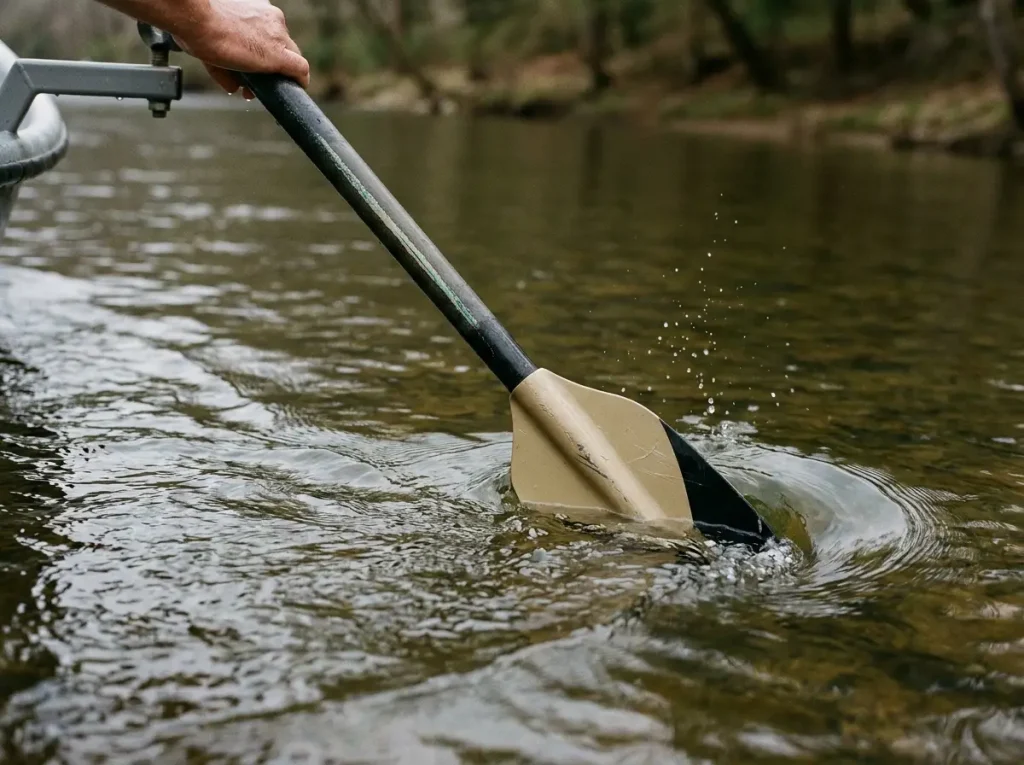
Every oar stroke, no matter how fancy, breaks into three beats: the catch, the drive, and the recovery. Plant the blade, move the boat, reset. One heartbeat of the stroke, repeated all day. Once you start feeling those three beats, sloppy strokes begin to bug you, which is exactly when you are getting better.
The Catch, Setting the Blade
The catch is where the blade enters the water, and it is where most power gets won or lost. Drop the blade in clean and bury it fully before you load it. Rush the catch with a half-submerged blade and you slip water, which feels like the stroke just spat at you. Blade surface area decides how much water you actually grab, which is why blade choice is not cosmetic. A bigger face like the Sawyer DyneLite oar blade bites more water per stroke, useful when you need grunt in big volume.
The Drive, Where the Boat Moves
The drive is the power phase, the part that actually moves the boat. This is where the chain fires and the lever does its work. Here it helps to understand what the oar even is: a Class 2 lever, with the water as the fulcrum, the oarlock as the load point, and your hands as the effort. That is not trivia. It is why blade depth and oarlock position change how hard you have to pull, and academic rafting-instruction material breaks the oar down as exactly that lever system. A standard private-boater setup like a Sawyer Polecat oar gives you a predictable lever to learn on, whether your shafts are wood, aluminum, or composite.
The Recovery, Reset Without Wasting Energy
The recovery is the blade exiting and resetting for the next stroke, and it should be rest if you let it be. Feather the blade so it slices flat back through the air, drop the dead weight, and reset without fighting your own oars. Rowers who keep muscling through the recovery never get the micro-break the phase is designed to give them. The oar and blade you put in the water shape every one of these phases, so it pays to understand how the right paddles and oars actually earn their keep before you spend big. These three phases are the skeleton under every named oar stroke you will ever learn.
Where the Power Actually Comes From
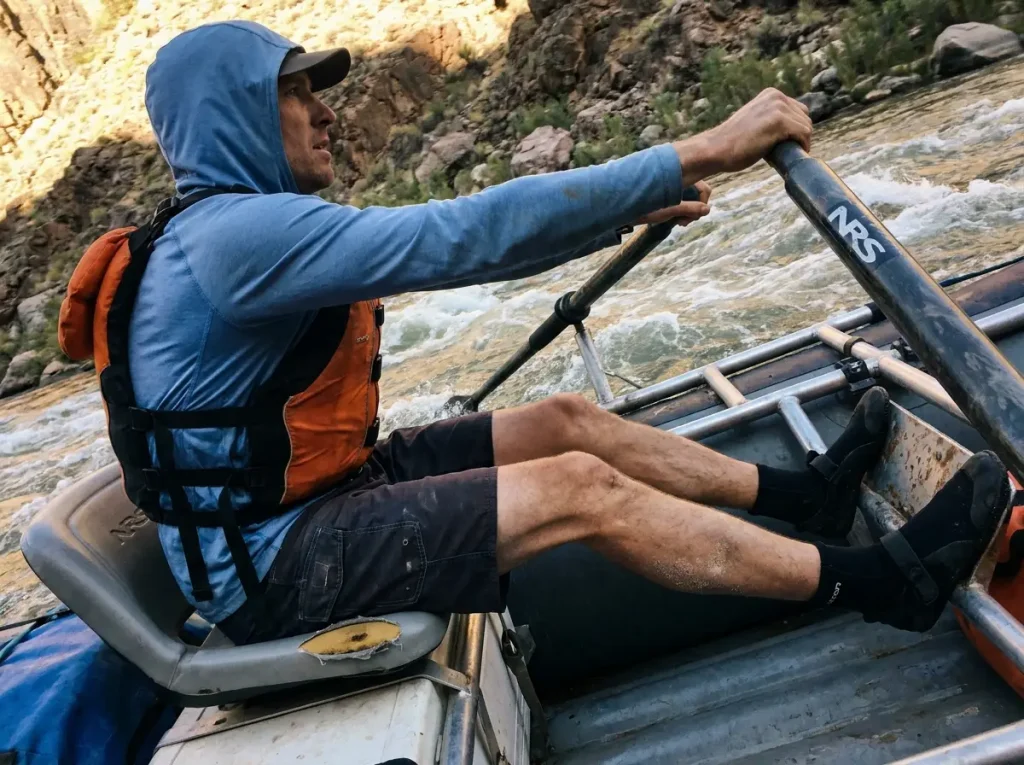
Here is the sentence that changes everything once it clicks: the power does not come from your arms. It comes from your legs and your back pushing the boat away from your hands. The day that lands, rowing gets quiet, because you stop straining and start driving.
Legs, Then Back, Then Arms
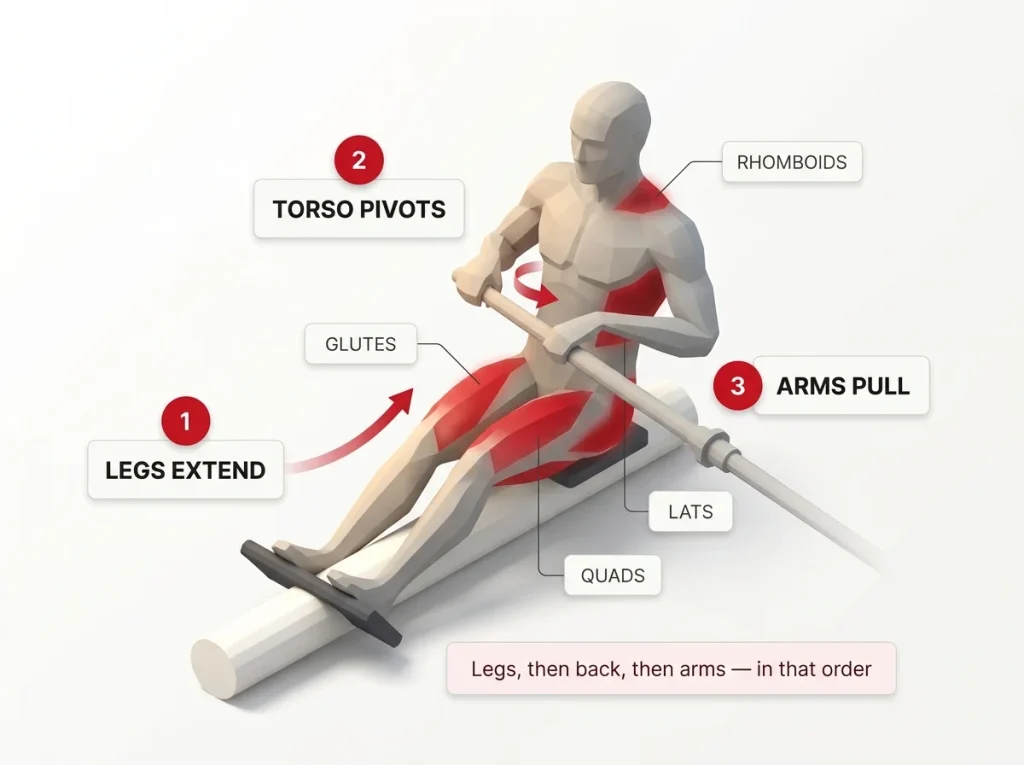
In the drive phase, the force is generated mostly by your glutes and quads, the gluteus maximus and quadriceps, the big muscles in your backside and thighs. This is your kinetic chain at work, and the whole chain moves together: legs, then torso rotation, then arms, in that order. Beginners do it backwards, yanking with the arms first while the legs sit idle. The fix is a sequence you can say out loud while you row: drive the legs to extension first, then pivot the torso open, then finally draw the arms to your chest. Legs, back, arms. Every stroke.
This is the heart of the biomechanics, and it is also where the named-stroke version of the full sit-and-row technique these muscles plug into comes from. It is the same core-first power that drives a strong forward stroke on a paddle raft, just delivered through a longer lever.
The Foot Brace Is Your Anchor
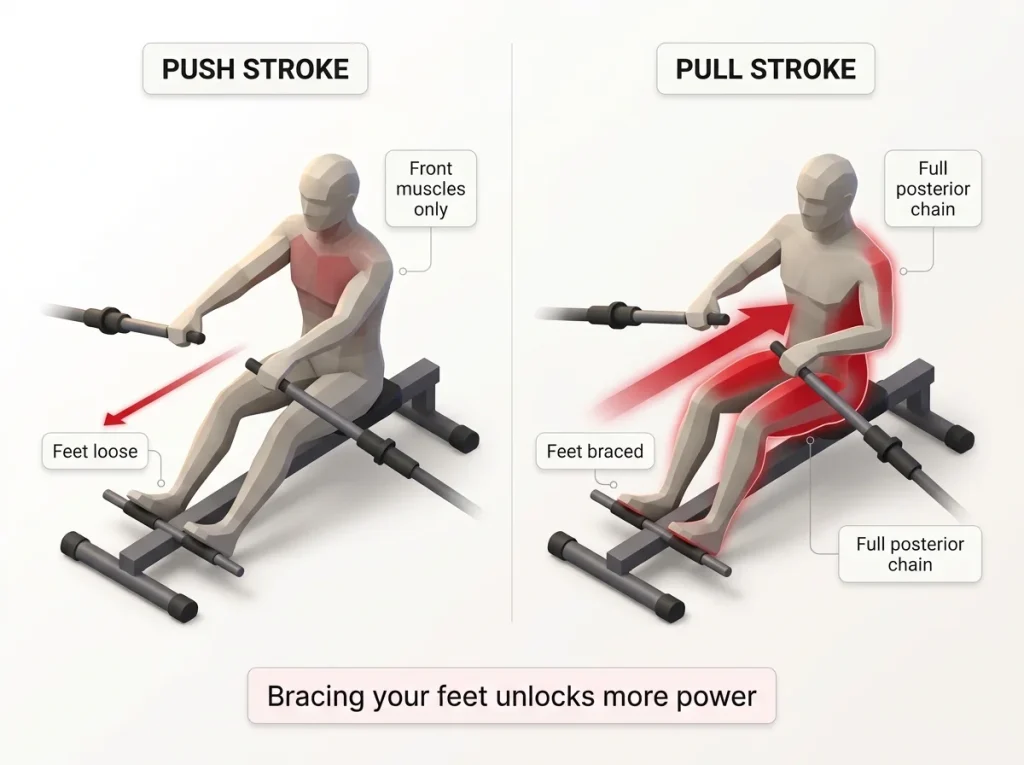
None of that leg drive happens without something to push against. Your foot bar, or foot brace, is the anchor that lets your legs load the stroke. Brace your feet, and a pull stroke becomes a near-squat, your whole body uncoiling against the water. Leave your feet loose and your legs disconnect from the chain, which drops you right back into arm-rowing without realizing it.
Keep the oar handles at roughly chest height through the stroke, not down by your knees and not up by your ears. Chest height is where your legs and back can actually transfer power into the handles. If you find yourself rowing from your lap or your chin, your seat or oarlock height is off, and you are leaking power every stroke.
Push vs Pull and Why the Back Stroke Wins
There are two ways to move a boat with oars, and they are not equal. You can push the handles away from you (the forward stroke) or pull them toward you (the back stroke). New rowers default to pushing because it feels natural to row “forward.” The pull is the stronger move, and the reason is pure biomechanics.
The Forward (Push) Stroke
The push stroke moves the boat forward, the way you instinctively expect rowing to work. The problem is that pushing cannot load your foot brace the same way. You end up leaning on the weaker muscles in the front of your torso and a lot of shoulder flexion, which means less power, faster fatigue, and more wear on the shoulder joint. Push has its place for short setup nudges and tight quarters, but it is not your workhorse.
The Back (Pull) Stroke
The back stroke is where the chain comes alive. When you pull, you brace your feet against the foot bar and recruit the full posterior chain: glutes and quads driving from the legs, plus the lats (your latissimus), rhomboids, traps, and rear delts hauling through the back. A good pull feels like it comes from your shoulder blades, not your hands. That is the whole body working as a unit, and it is why a braced pull moves dramatically more boat for the same perceived effort. The pull is also how you slow the boat down, which makes it the backbone of defensive rowing in pushy water.
Why Pull Recruits More Muscle
This is why experienced rowers set up facing the work and pull through the meat of a rapid. It is also the logic behind the classic “Powell Move,” facing backward and angling the boat downstream so you work with high-volume water instead of shoving against it head-on. You are not just choosing a direction, you are choosing which muscles get to do the job. The clip below lays the push-versus-pull difference out on real water better than any paragraph can.
Once the pull stroke is solid, it becomes the foundation for nearly everything harder. The advanced oar moves that string strokes together all assume you can already load a clean, braced pull on demand.
The Strokes That Steer, Turning, Ruddering, Ferrying
Moving the boat is only half the job. The other half is putting it where you want, and that is mostly small, mixed strokes rather than big muscle. Steering is where finesse beats brute force most obviously.
Turning and Pivoting
To turn, you run opposite strokes on each oar at the same time: push one, pull the other, and the boat spins around its own center. The harder and more equal the two strokes, the faster the pivot. Most course corrections, though, are far gentler than that, just a touch of one blade to nudge the bow back on line.
Ferrying Across Current
The ferry is the move that lets you cross a river without getting flushed downstream. You set the boat at an angle to the current and pull, and the water itself carries you sideways across the flow. Done right, setting a ferry angle and pulling across the current feels almost lazy, because you are borrowing the river’s energy instead of fighting it. Done wrong, you spin out and lose ground. The angle is everything, and the stroke behind it is the braced pull you already learned.
Keep It Simple Before You Add Hardware
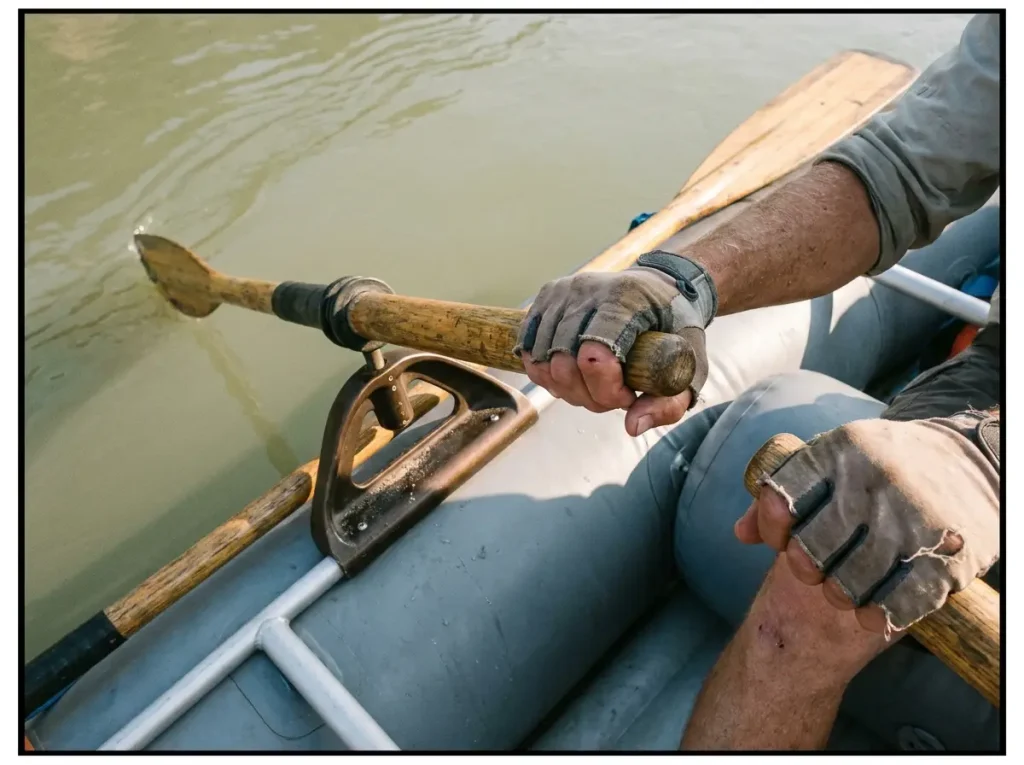
If you are starting out, resist the urge to buy a rack of hardware. Learn to row on open oarlocks before you add pins, clips, and oar rights. An open lock like the Sawyer Canyon oar lock lets the oar feather and rotate freely, so you build feel for blade angle instead of having it locked in for you. Less hardware to buy, less to fight, and you will be on beginner water anyway while you learn. One safety habit to add early, though: when you stop rowing, ship the oars by pulling them in across the boat. A loose downstream oar can catch a rock and kick the handle straight back into your ribs, and that oar strike ruins a day faster than almost anything else on the water.
Great rowers barely look like they are working, and it is not because they are stronger. They read the water far enough ahead to set one early, smooth stroke instead of three panicked correction strokes at the lip of the rapid. Plan the move before you get there, and you will spend a fraction of the energy.
Save Your Shoulders and Lower Back
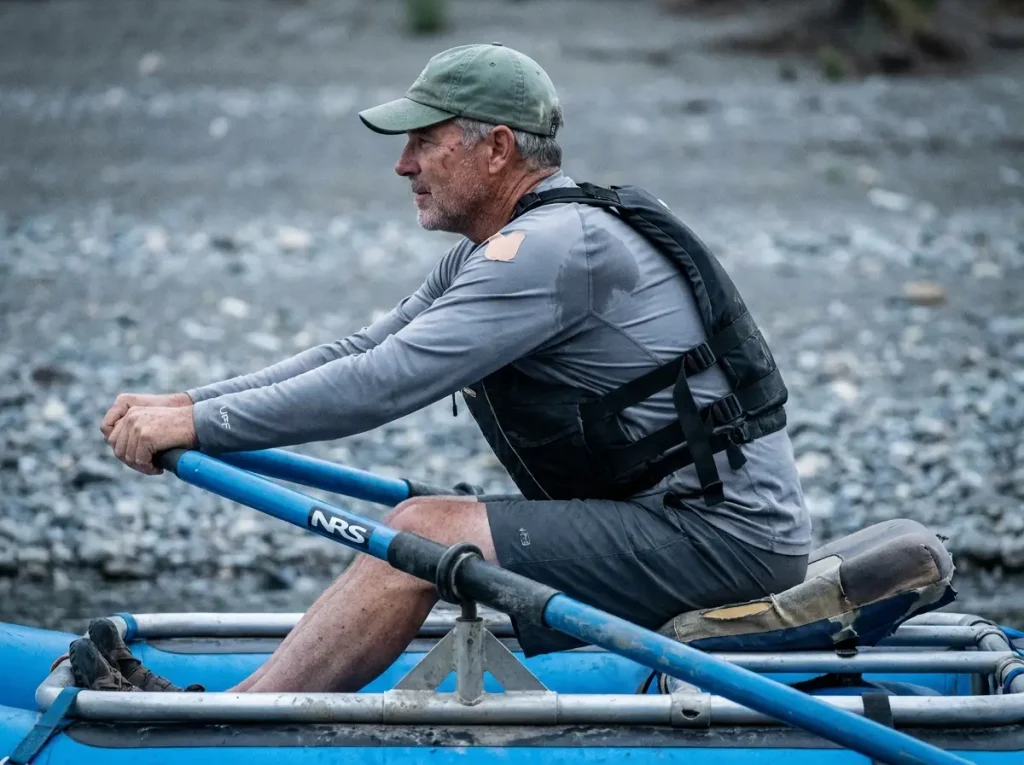
The part that hurts after a long day on the sticks is rarely bad luck. It is almost always the same two mistakes, repeated a few thousand strokes, in the two places rowers always feel it: the shoulders and the lower back. Both have a clear mechanism, and both have a clear fix.
The Chicken Wing That Wrecks Shoulders
The “chicken wing” is when you flare your elbows out past your ribs on the pull. It feels like nothing, but every rep narrows the space between the top of your shoulder and the rotator cuff tendon underneath, pinching that tendon and its bursa. Do it a few thousand times and you have an impingement that turns every stroke into a wince. The fix is small and free: keep your elbows tracking low and close, past your ribs rather than out to the sides, with the handles drawing in toward your torso. Elbows in, shoulders saved.
Protecting Your Lower Back
The lower back is the most commonly injured region in rowing, and the reason is load. Peak compressive forces on the spine during a hard stroke reach several multiples of your body weight, squeezing your discs on every rep. Do that with a rounded spine and you stack all of it onto the weakest position. The protective move is to hinge from your hips and keep a long, neutral spine, pelvis level rather than tucked under. Managing that lumbar load is the whole game. Rowers who stay pain-free keep a flatter low back and let the hips do the bending, while a systematic review of rowing-related low back pain found rowers sit in spinal flexion for roughly 70% of every stroke, which is exactly why posture under load matters so much here.
Why the Last Hour Is the Riskiest
Here is the part nobody warns you about: fatigue rounds your back for you. As you tire, your form quietly degrades, your spine flexes a little more at the catch, and the load stays just as high. That is why most rowers tweak something in the last hour of a long day, not the first. Tired equals rounded, and rounded under load is how backs go.
Run a quick form check every so often on a long day, especially when you are tired: elbows in, spine long, feet braced. Two seconds, that is all it takes. The rowers who do this keep their form when it counts, and the last hour of the day is exactly when it counts most.
Rowing All Day Without Burning Out
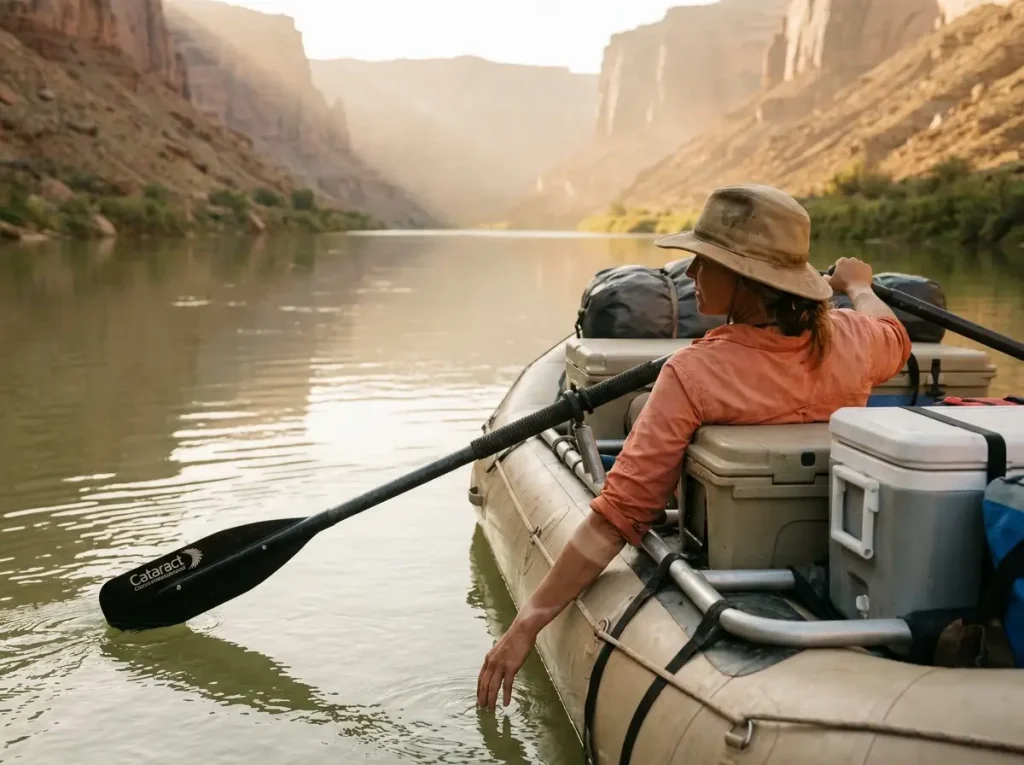
The best rowers on a multi-day trip look like they are barely trying, and that is the whole skill. Rowing efficiency is not laziness, it is how you keep good form alive once fatigue sets in. Since tired form is what hurts you, conserving energy is genuinely a safety habit, not just a comfort one.
Spend Less to Get More
Every stroke you do not have to take is a stroke that cannot round your back or burn your shoulders. The goal is the most boat control for the least energy, which means resisting the urge to row constantly. A lot of new rowers row the whole river out of nerves. Veterans drift, watch, and spend their strokes deliberately.
Read Water, Row Less
The single biggest energy saver is reading the water far enough ahead to row less in the first place. Set your angle early, let the current carry you, and you cut the number of hard strokes a day demands. This is its own deep skill, and learning to read the water so you row less and drift more will do more for your endurance than any amount of gym work.
A relaxed grip is a quiet endurance hack. Strangling the oars all day fatigues your forearms and feeds the chicken wing. Let your fingers stay loose between power strokes and let the oarlocks hold the oars, not your death grip. Your hands will thank you twenty miles in.
Let Your Gear Carry Some of the Load
Gear can shave real effort off a long day, and the honest standout here is counterbalancing. A counterbalanced shaft like the Cataract SGG oar with rope-wrap grip offsets the blade-end weight so your forearms are not lifting dead oar on every recovery. On a heavy multi-day rig, that adds up over thousands of strokes. It is an upgrade, not a beginner requirement, and the same payoff comes from balancing the whole rig so the oars do part of the work for you. Sort your geometry before you spend on fancy shafts.
Conclusion
Three things carry the whole sport. First, the engine is your legs and back, and the arms are just the cable that transmits the force. Second, the pull beats the push every time, because bracing your feet loads the strong posterior chain instead of the weak front of your torso. Third, protect the two weak links, the shoulders from the chicken wing and the lower back from rounding, and pace your energy so your form holds late in the day when it is most likely to fail.
None of this needs a gym membership or a thousand-dollar rig. It needs reps and attention. Pick one phase, the catch, the leg drive, the elbow line, and clean it up on a calm flatwater stretch before you bring it into current. That is how the mechanics become automatic, and how you end the day strong instead of wrecked.
Frequently Asked Questions
01What muscles do you use rowing a raft?
Rowing a raft is a full-body, posterior-chain effort. Your glutes and quads drive the power, your lats, rhomboids, and traps pull through the back, and your arms mostly transmit force rather than create it.
02Should you push or pull when rowing a raft?
Pull whenever you can. The back stroke braces your feet and loads your legs and back, so it moves more boat with less effort and less joint strain. Save pushing for short setup nudges and tight spots.
03Why do my shoulders hurt after rowing a raft?
Usually the chicken wing: flaring your elbows out past your ribs on the pull, which pinches the rotator cuff every stroke. Keep your elbows low and close, tracking past your ribs, and most shoulder soreness fades.
04How do you row a raft without hurting your lower back?
Hinge from your hips and keep your spine long instead of rounding it. Rounding under load stacks several times your body weight onto the discs. Brace your feet, drive with your legs, and check your posture as you tire.
05Why do beginner rowers get tired so fast?
They row with their arms instead of their legs and back. The small arm muscles fatigue first, so the strokes weaken fast. Driving from the legs and reading water to row less both stretch your energy much further.