

In this article
Walk down any boat ramp and you’ll hear it within five minutes: somebody insisting that Hypalon is the “real” raft material and PVC is the cheap stuff you buy when you don’t know better. I believed that too, right up until I watched a welded-PVC boat outlast a glued one in a guide fleet that got dragged over rock every single weekend. After years of rigging, paddling, and patching both kinds of tubes in camp, I can tell you the truth is messier and a lot more useful than the bumper-sticker version. This guide breaks down what actually separates the two materials, where each one earns its keep, and how to figure out which belongs under you.
Here’s the honest comparison at a glance, then we’ll get into each factor with the real-world trade-offs that decide it.
| Factor | PVC | Hypalon (CSM) |
|---|---|---|
| Cost | Budget-friendly | Roughly 50–60% more |
| Lifespan | About 10 years | 13–15+ years, often 20 |
| UV resistance | Good with modern coatings | Excellent, inherent |
| Field repair | Fast, forgiving cement | Slower two-part glue |
| Weight | Lighter | Heavier |
| Packs small | Bulkier rolled | Rolls tighter, no creasing |
| Best for | Budget, day trips, easy repair | Expeditions, longevity, cold water |
What’s the Real Difference Between PVC and Hypalon?
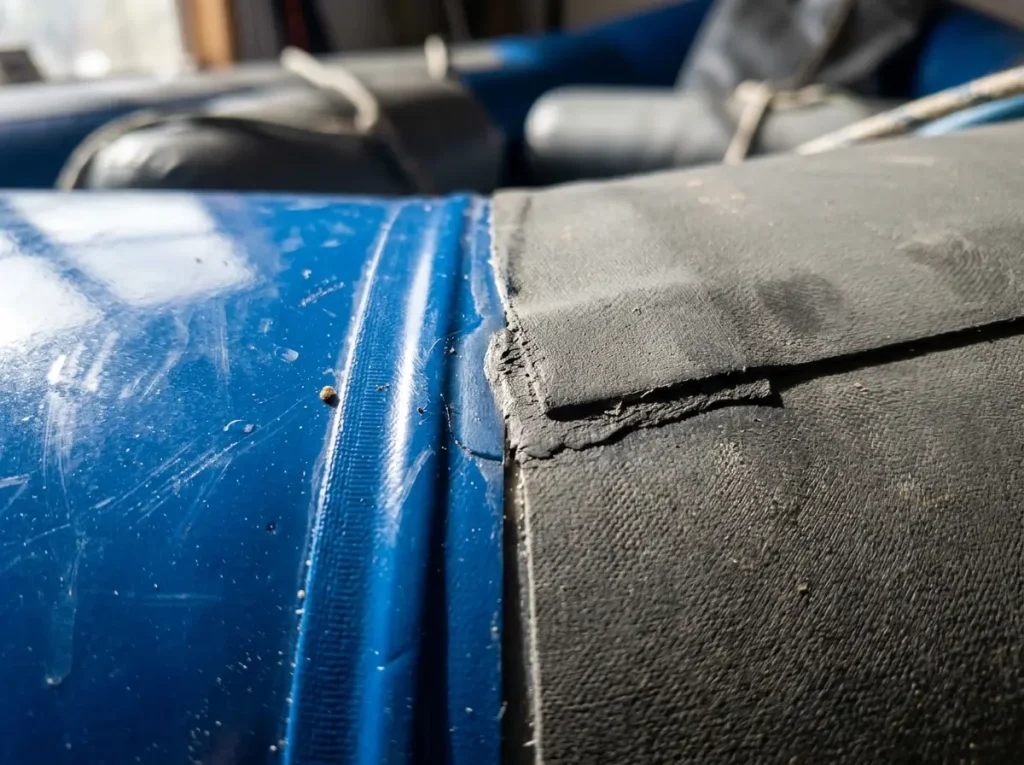
Point at two boats beached on the bar and ask a veteran what sets them apart, and they won’t start with chemistry — they’ll start with how the boats are built and how they feel. Both materials are a woven fabric scrim coated with something tough, and both make excellent rafts. What changes is what that coating is, how the seams get joined, and how the finished tube behaves after a few hard seasons.
PVC, Explained
PVC (polyvinyl chloride) is a synthetic plastic coating bonded to a polyester scrim, usually on both sides. The tubes are thermo-welded — heat-fused together rather than glued — which makes the seam itself one of the strongest parts of the boat. PVC is stiffer when you pump it up, cheaper to manufacture, and that rigidity is part of why a modern drop-stitch floor can hold 8 to 10 psi and feel like plywood underfoot.
If you want to understand how that rigid platform changes the way a boat tracks, our breakdown of raft floor construction and drop-stitch designs gets into the details. The short version: good PVC is a real boat, not a pool toy.
Hypalon (CSM/ORCA), Explained
Here’s a wrinkle most people miss: true DuPont “Hypalon” hasn’t been made since 2010. When somebody says Hypalon today, they mean CSM (chlorosulfonated polyethylene), a synthetic rubber coating — and the gold-standard version is ORCA fabric from Pennel & Flipo. It’s a rubber skin over a fabric scrim, the tubes are glued rather than welded, and the whole boat feels supple and a little soft compared to PVC.
That suppleness is the point. Rubber flexes, takes UV without complaint, and stays workable in cold weather where plastic stiffens up.
Welded vs Glued Seams — Why It Matters
This is where the bar-stool arguments get oversimplified. A welded PVC seam is generally stronger and more consistent than a hand-glued one, because there’s no adhesive bond to fail — the material is fused into a single piece. A glued Hypalon seam depends on the workmanship and can slowly let go over decades. So “welded is stronger” is true, at the seam.
But Hypalon’s rubber material outlasts PVC overall, so “Hypalon lasts longer” is also true, for the fabric. Both things are real at once, and the brands that pick a side are selling you something. Modern coated PVC from outfits like AIRE and Maravia has blurred this line even further.
Not sure which material you’re looking at? Check the finish. PVC reads glossy and reflective, and water beads up and rolls off it. Hypalon looks matte and a little chalky, and water soaks into the surface rather than sitting on top. You can usually call it from ten feet away before you ever touch the tube.
Durability & Lifespan: How Long Each Material Actually Lasts
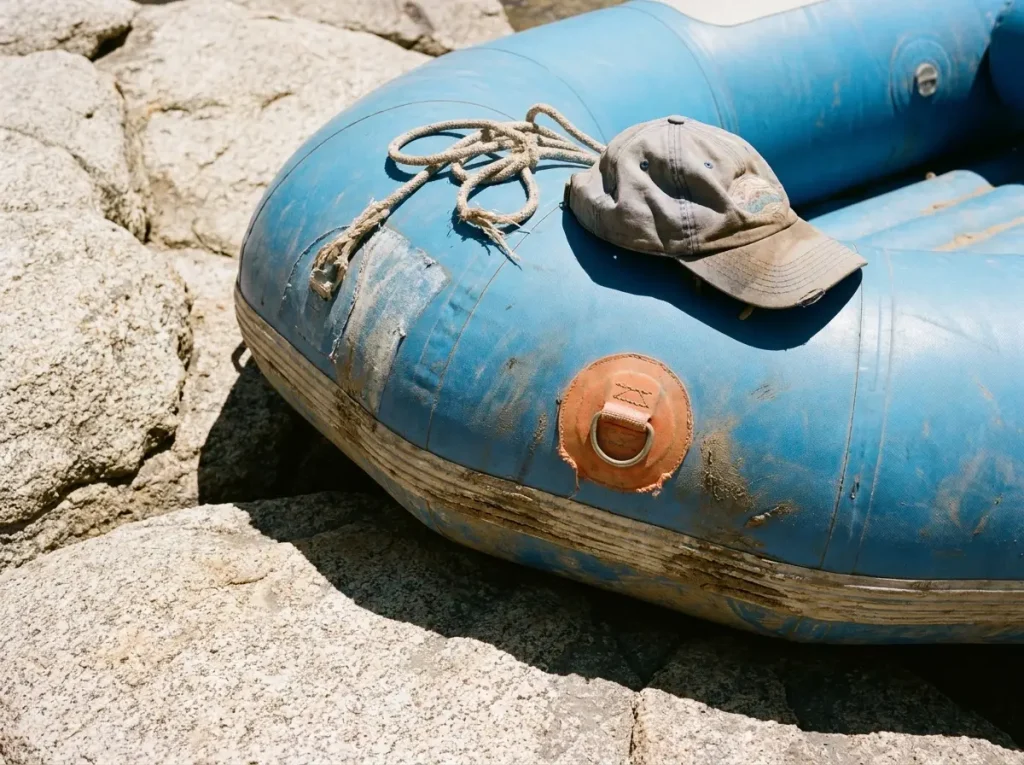
The boat that lives rigged on a trailer in the Arizona sun and the boat babied in a basement age completely differently, even if they rolled off the same line. Wear is about exposure as much as material. That said, the materials do have real, measurable differences in how they hold up, and this is where the Hypalon premium starts to make sense for some boaters.
Real-World Lifespan
A well-cared-for PVC raft gives you about 10 years of solid service before the material starts to chalk, stiffen, and lose air-holding. Hypalon routinely runs 13 to 15 years, and a pampered ORCA boat can push past 20. That’s not marketing — it’s the rubber coating shrugging off the sun and abrasion that slowly cooks plastic.
If you keep boats for a decade and replace them, PVC is fine. If you want one boat to hand down, Hypalon is built for it.
UV & Sun — the Real Enemy
Sunlight is what actually ages a raft, and this is Hypalon’s home turf. Rubber is inherently UV-stable, so a Hypalon boat can sit in the sun for years and barely care. PVC used to lose this badly — the old “PVC sun-rots fast” reputation was earned.
But that reputation is dated. Modern PVC with UV-inhibiting coatings has closed most of the gap, and a coated PVC boat that gets put away dry will hold up far better than the bargain plastic boats that gave the material its bad name. The difference is real, but it’s a gap now, not a chasm.
The single most common way people shorten a PVC boat’s life is leaving it rigged and inflated in the sun all season “so it’s ready to go.” That’s exactly the cooking cycle the material hates. Deflate a few psi on hot afternoons, throw a tarp over it, and store it out of direct sun. You’ll add years for free.
Abrasion & Cold
Abrasion is more of a draw than people think, and it depends on whether the tube is wet. Dry PVC dragged over sharp rock scuffs a little easier than rubber, but wet PVC is slick and slides over the same rock with less drag — Hypalon’s grippier surface actually catches more. So in real river use the abrasion difference is close to a wash.
Temperature is the clearer split: PVC stiffens and gets more brittle in genuine cold, while Hypalon stays supple across a much wider range. If you run cold shoulder-season water or fold your boat in freezing temps, that flexibility matters.
Cost vs Value: Why Hypalon Costs More (and When It’s Worth It)
This is the section that should actually drive your decision, and it’s the one competitors skip past with a single “Hypalon costs more” sentence. The real question isn’t the sticker — it’s what the boat costs you per season of use, and what it’s worth when you’re done with it. Run that math and the gap between the two materials shrinks a lot.
The Sticker-Price Gap
A Hypalon raft typically runs 50 to 60% more than a comparable PVC boat. That’s a consistent, real gap, and for a first-time buyer it’s the difference between getting on the water this season and waiting another year to save up. There’s no shame in that number deciding it for you — plenty of excellent boaters run PVC their entire lives and never feel under-equipped.
Resale Value — the Number Nobody Mentions
Here’s the part that flips the math. Hypalon holds its value in a way PVC simply doesn’t. A clean 10-year-old ORCA boat still sells for real money on the used market, because buyers know it has years of life left. A 10-year-old PVC boat is usually near the end of its road, and it sells like it — for scrap-floor money or not at all.
I’ve watched a twelve-year-old Hypalon cat boat change hands for more than half what it cost new. So when you buy Hypalon, part of that premium is money you can get back later. PVC depreciates toward zero.
Cost Per Season
Do the simple version in your head. Say a PVC boat costs you a set amount and lasts 10 seasons with no resale at the end — you eat the whole price. A Hypalon boat costs roughly half-again more, lasts 15 seasons, and returns a meaningful chunk when you sell it.
Spread across the years you actually paddle it, the cost-per-season gap is far smaller than the showroom difference, and for a high-mileage boater it can flip in Hypalon’s favor. The catch is simple: that only pays off if you keep the boat long enough to collect on the longevity and the resale. Buy Hypalon, plan to flip it in two years, and you just paid the premium for nothing.
Repairs & Maintenance in the Real World
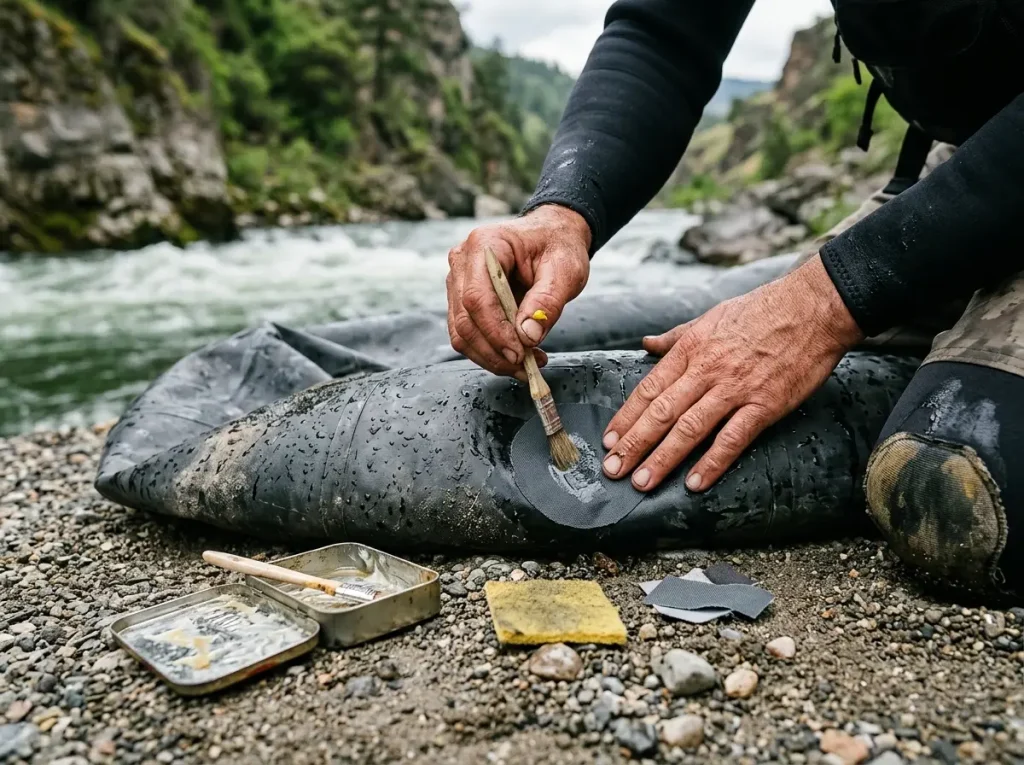
Picture day three of a self-support trip, miles from the takeout, and you hear that slow hiss from a tube. Which material do you want under you? This is where field repairability stops being a convenience question and becomes a trip-safety one, and it’s where PVC quietly wins for a lot of boaters.
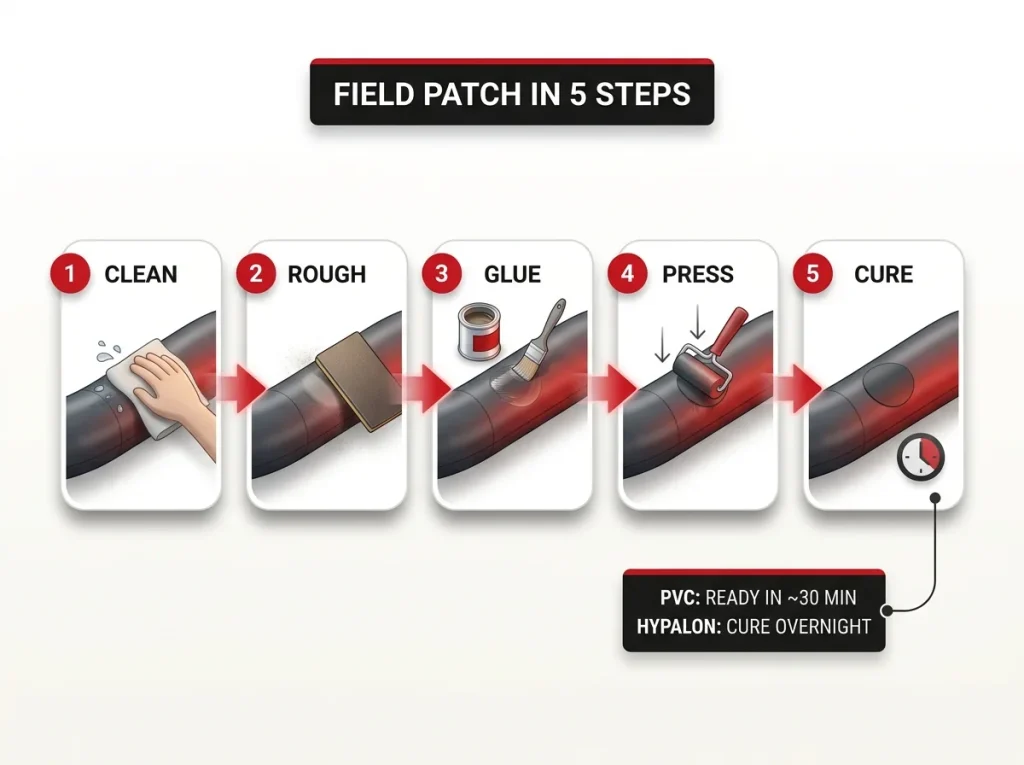
Field Repairs — PVC’s Big Advantage
A PVC patch is forgiving and fast. Clean the area, rough it up, brush on PVC cement, press the patch, and you can often be river-ready in about 30 minutes. The chemistry is simpler and the cure is quicker, which is exactly what you want when you’re kneeling on a gravel bar with a leak and daylight burning. For a beginner who’s nervous about ever having to fix a boat in the backcountry, that forgiveness is worth a lot of peace of mind.
Repairing Hypalon the Right Way
Hypalon patches permanently and beautifully — but it asks more of you. You need the correct two-part adhesive (not the PVC cement, which won’t bond to rubber), careful surface prep, and patience for a longer cure, ideally overnight before you trust it to real pressure.
Done right, the patch outlives the rest of the boat. Done in a hurry on a sandbar, it can fail. The non-negotiable part is using the right glue for the material, and that’s a different product than what a PVC boat needs.
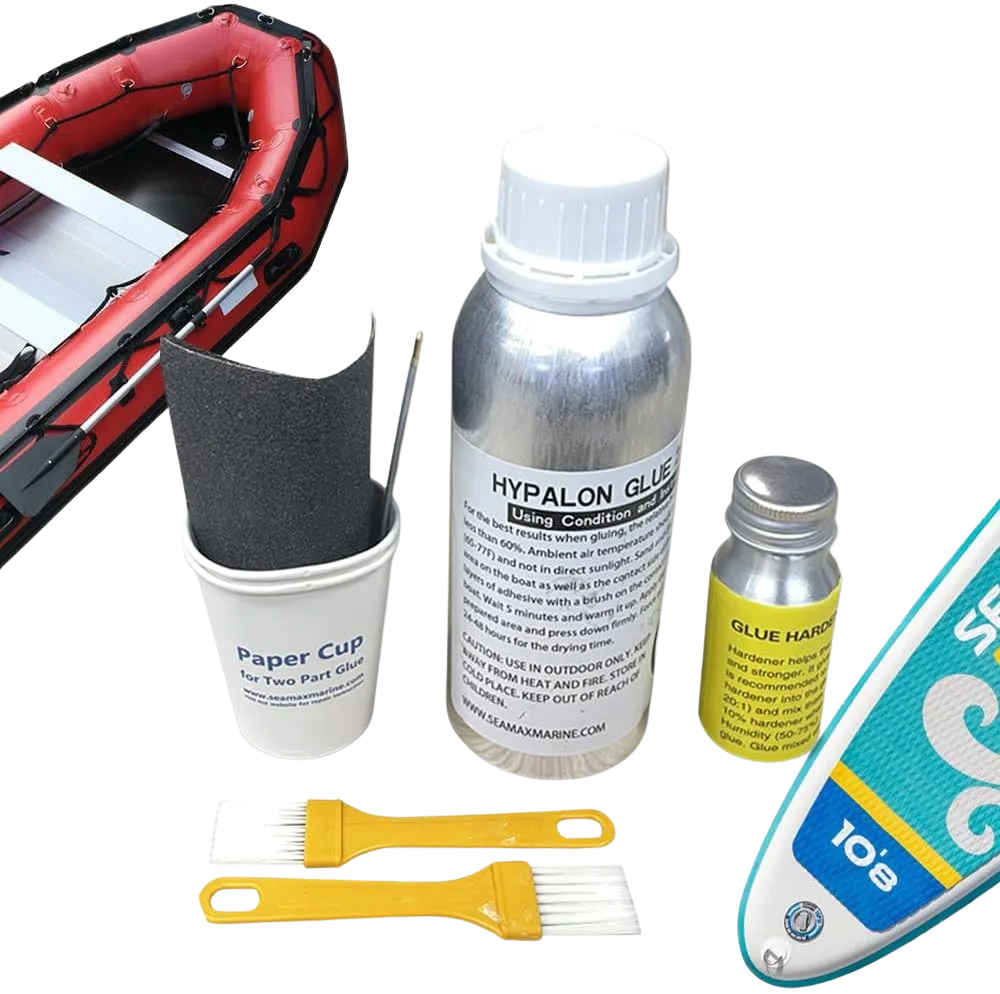
The reason this matters enough to call out: grabbing the wrong adhesive is the most common Hypalon repair mistake there is. PVC cement simply won’t hold on rubber, so a “fixed” tube lets go again the moment it gets stressed. Keep the right two-part kit with your boat, and walk through the whole process in our full Hypalon raft repair walkthrough before you need it for real.
Routine Care for Both
Maintenance is mostly the same for either material, and it’s not complicated. Rinse off sand and silt, dry the boat fully before storage so nothing molds in the rolls, and keep it out of constant sun. PVC benefits a little more from a UV protectant like 303 wiped on a few times a season, since it’s the more sun-sensitive of the two. Neither material needs babying — they just need to be put away dry and stored out of the heat.
Match your repair kit to your boat before any multi-day, not after the leak. Stash the right cement for your material, a roughing pad, and a couple of patches in a dry bag that lives with the boat. The number of trips I’ve seen saved by a 30-minute patch — and the number cut short because somebody packed PVC glue for a Hypalon boat — is not close.
Weight, Packed Size & Storage: Match the Raft to Your Climate

Where your boat sleeps matters almost as much as where it floats, and this is the deciding factor nobody puts on the spec sheet. Weight and packed size sound like minor details until you’re carrying a boat to a put-in or trying to store one in a small space — then they’re the whole game.
Weight & Packed Size
PVC is the lighter material, which is why almost every lightweight packraft you’ll find is PVC or TPU rather than rubber. If you cartop, hike to put-ins, or fly with your boat, that weight savings adds up fast. Hypalon is heavier, but it has its own packing trick: it rolls tighter and tolerates being cinched down hard, over and over, without complaint. For fly-in trips or storage-constrained boaters, that tight, repeatable roll is a real advantage.
Storage & Climate — the Hidden Decider
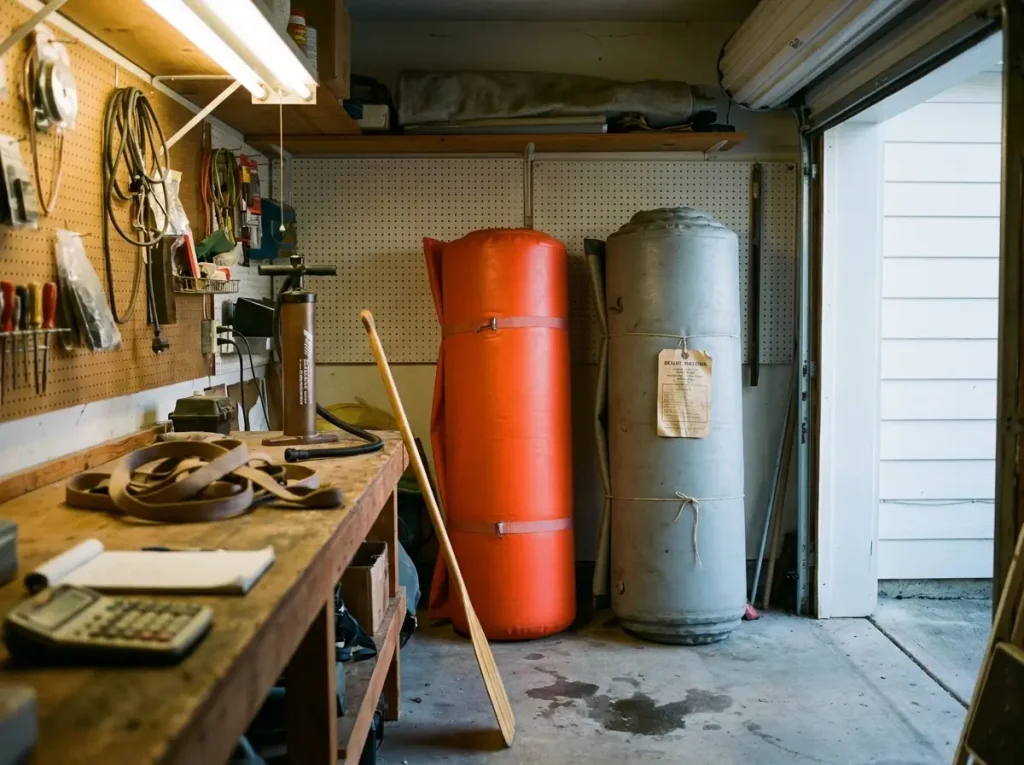
This is the variable that should weigh more in your decision than it usually does. A boat stored rolled tight in a hot, dry garage ages differently than one kept in a cool, damp shed — and the two materials handle those conditions differently. PVC, rolled very tight again and again in the cold, will eventually crease and crack along the fold lines.
Hypalon’s rubber takes that repeated tight rolling in stride. So your climate and your storage space genuinely point toward one material: hot-and-dry with limited space leans Hypalon, while a climate-controlled garage where the boat can stay loosely rolled makes PVC a safe bet for years.
Before you pay the Hypalon premium, ask where your boat is going to live. A boat stored rolled in a hot garage in Phoenix ages on a different clock than one in a damp shed in Oregon. Honestly answer that question first, and it’ll narrow the material choice faster than any spec comparison.
Transport & Cartopping
If you move your boat a lot — on a roof rack, in a truck bed, strapped to a trailer — the lighter PVC roll is simply easier to wrestle around solo. It’s not a dealbreaker either way, but a heavier Hypalon boat is one more reason to have a buddy at the ramp on loading day. Match the boat to how you’ll actually haul it, not just how it runs.
Which Should YOU Buy? A Simple Decision Framework
Forget which material is “better” in the abstract — there’s no winner in a vacuum. The right call comes down to a handful of honest questions about how you boat, where you store, and what your budget actually is. Here’s the trailhead verdict.
Buy PVC If…
Go PVC if budget is the main constraint, if you mostly run day trips and weekend water, if you want the lighter boat to cartop or carry, and if easy field repair gives you peace of mind. PVC also makes sense if you have decent storage where the boat won’t bake in the sun or get rolled brutally tight in the cold. For most first-time private boaters, a quality welded PVC boat is the smart, honest starting point — it gets you on the water without overspending.
Buy Hypalon If…
Go Hypalon if you’re running real expeditions and multi-day trips, if you want one boat for the next 15 to 20 years, if you paddle cold or shoulder-season water where suppleness matters, if resale value is part of your plan, and if you’re storage-constrained and need that tight, crease-proof roll. The premium pays off for high-mileage boaters who keep their gear a long time. If that’s you, the durability and the resale together make the math work.
Where to Start Looking (the picks)
One warning before the picks: skip the ultra-cheap “rubber-look” import boats that aren’t true CSM and aren’t quality welded PVC either. A bargain boat that lets a seam go on day two of a trip is the most expensive boat you’ll ever buy. Stick to known fabrics — quality 1100 to 2000 denier PVC, or genuine ORCA Hypalon.
On the PVC side, a boat like the AIRE Tributary 14′ HD is the proof that PVC done right is a serious river boat, not a budget compromise.
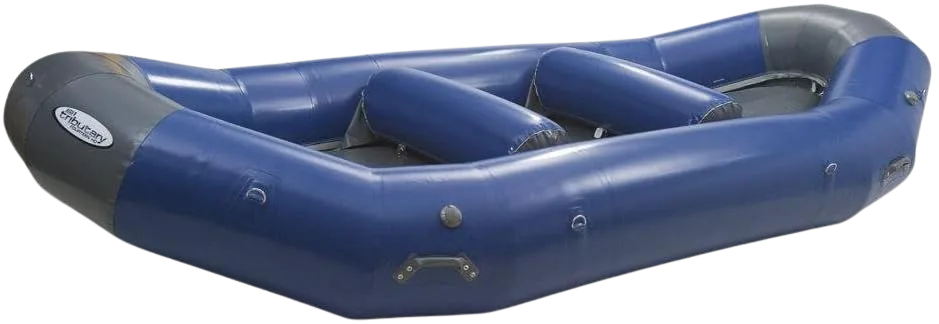
On the Hypalon side, the archetype is a boat like the NRS Otter or a Hyside built on ORCA fabric — but you won’t find true Hypalon whitewater rafts on Amazon. They ship direct from NRS and specialty dealers, so don’t go hunting for a deal that doesn’t exist there. For the full rundown of both materials in specific boats, our complete whitewater raft roundup compares the real models side by side, and the right raft size for your crew helps you land on the dimensions before you commit.
One honest note from the guide world: a lot of commercial outfitters run PVC on purpose. Welded seams, easy field repair, and lower replacement cost beat longevity when boats get thrashed every single day. That’s a use-case decision, not a prestige one — and it’s worth remembering when somebody tells you “real” boaters only run rubber.
Conclusion
Neither material wins outright, and anyone who tells you otherwise is oversimplifying. Quality welded PVC is a legitimate long-term boat in 2026 — lighter, cheaper, dead-easy to repair, and far better than its old reputation. Hypalon earns its premium when you keep a boat a long time, paddle cold water, or need it to hold its value. The right material is the one that fits your water, your wallet, and where your boat lives.
So answer those three honestly before you spend a dollar. If you’re a budget-minded weekend boater with decent storage, a good PVC boat will serve you for years without a second thought. If you’re building an expedition kit you’ll keep for a decade-plus, the Hypalon math works. Either way, get the boat that matches your reality — then grab everything else you’ll want before launch day and go run something.
Frequently Asked Questions
01Is Hypalon really better than PVC for rafts?
Not better, just different. Hypalon lasts longer and holds value, while PVC is cheaper, lighter, and easier to repair in the field. The right material depends on your budget, your water, and how long you plan to keep the boat.
02How long does a PVC raft last compared to Hypalon?
A well-cared-for PVC raft lasts about 10 years, while Hypalon routinely runs 13 to 15 years and often longer. Sun exposure and dry storage matter more than the material alone — a baked PVC boat fails far sooner than a sheltered one.
03Are PVC rafts easy to repair in the field?
Yes. PVC is the more forgiving material to patch on the water — clean, rough, glue, press, and you can be river-ready in about 30 minutes. Hypalon patches permanently too, but needs a two-part adhesive and a longer cure time.
04Why are Hypalon rafts so much more expensive?
Hypalon costs roughly 50 to 60% more because the CSM rubber fabric is pricier to make and the tubes are hand-glued rather than welded. Part of that premium comes back later, though — Hypalon holds resale value where PVC depreciates toward zero.
05Can you safely leave a PVC raft in the sun?
Briefly is fine, but constant sun is what ages PVC fastest. Modern UV-coated PVC handles it far better than older boats, yet the smart move is still to store it shaded and dry. A UV protectant a few times a season adds real life.