


In this article
You find a clean set of cataraft tubes online for two grand and start doing the math on finally owning your own rowing rig. Then you read the fine print: the frame that actually makes it row is sold separately, and a decent one costs about as much again. That gap between the sticker and the rowable boat is the single most misunderstood thing about these boats, and almost nobody spells it out before you’ve already fallen for the tubes. Ask anyone who’s rigged one and you’ll hear the same story. This guide covers what a cataraft really is, what it actually costs all-in, how to size and rig one, who should skip it, and the specific boats worth knowing by size and budget.
What a Cataraft Actually Is
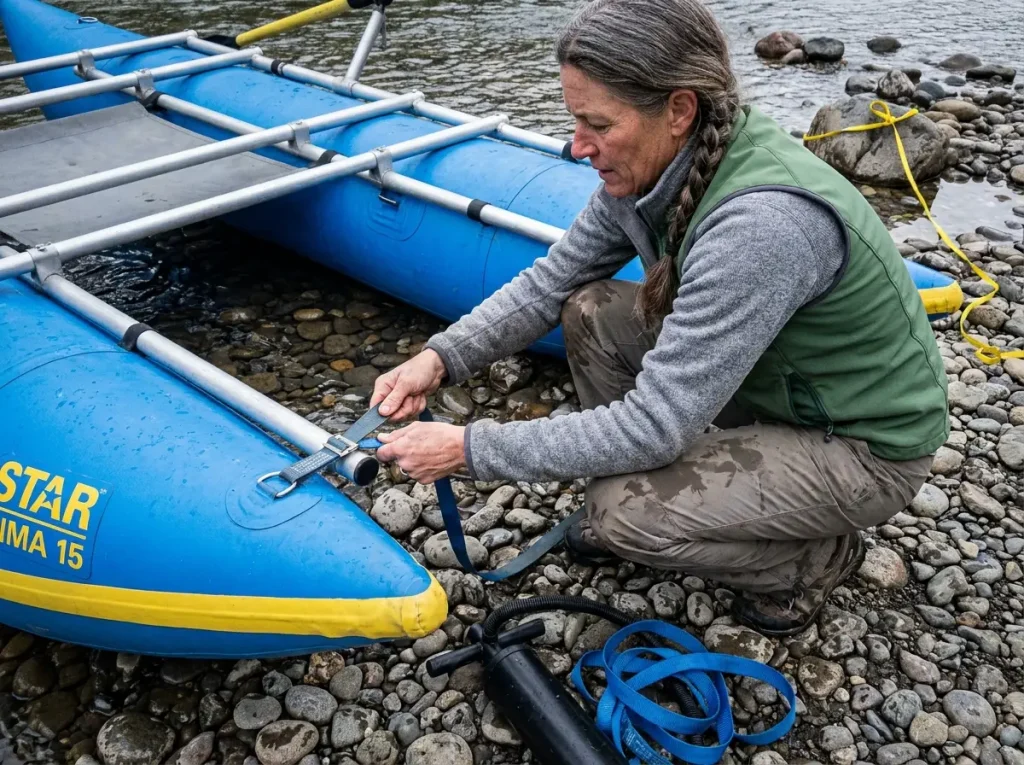
Stand next to a cataraft on the ramp and the first thing you notice is daylight. There’s open space right down the middle of the boat where a regular raft would have a floor. That gap is the whole idea, and it changes how the boat runs, hauls, and keeps you safe.
The catamaran-meets-raft design
The name is a mash-up of catamaran and raft, and it’s literal. A cataraft is two inflatable pontoons held parallel by a metal frame, with nothing slung between them. Think of it as a twin-hull built for moving water instead of a single round tube wrapped around a floor.
That layout buys you two things a round boat can’t match. The boat sits on two narrow hulls instead of one wide one, so it slices and pivots instead of plowing. And because the hulls are long and skinny, a cat usually takes a longer frame than a raft of the same length, which means more usable gear room per foot of boat.
Two tubes, a metal frame, and no floor
The pontoons carry the air and the load. The frame ties them together and gives you somewhere to mount oars, a seat, a cooler, and dry bags. Pull the frame off and you’ve got two tubes that can’t do anything; bolt it on and you’ve got a rowing machine. That separation matters more than it sounds, and it’s the root of the cost surprise we’ll get to shortly.
There’s no floor, so there’s nothing holding water in and nothing holding your gear in either. Everything that rides on a cat rides on the frame, lashed down, with current sliding by underneath.
Why a cat is self-bailing by nature
A round boat has to be built self-bailing on purpose, with an inflated floor and drain holes. A cat is self-bailing for free, because there’s no floor to trap water in the first place. Waves wash straight through the gap and keep going. You never sit in a cold puddle, and you never stop to bail, which is a bigger deal than it sounds on a long cold day. If you want the full picture of how that compares to older designs, our breakdown of self-bailing versus bucket boats lays out why almost nobody runs a bucket boat anymore.
Before you ever rig the frame, both pontoons have to be inflated to matching pressure, or the boat sits crooked and rows like a shopping cart with a bad wheel. This short clip walks through the inflate-and-balance sequence better than any paragraph can.
Cataraft vs a Regular Raft
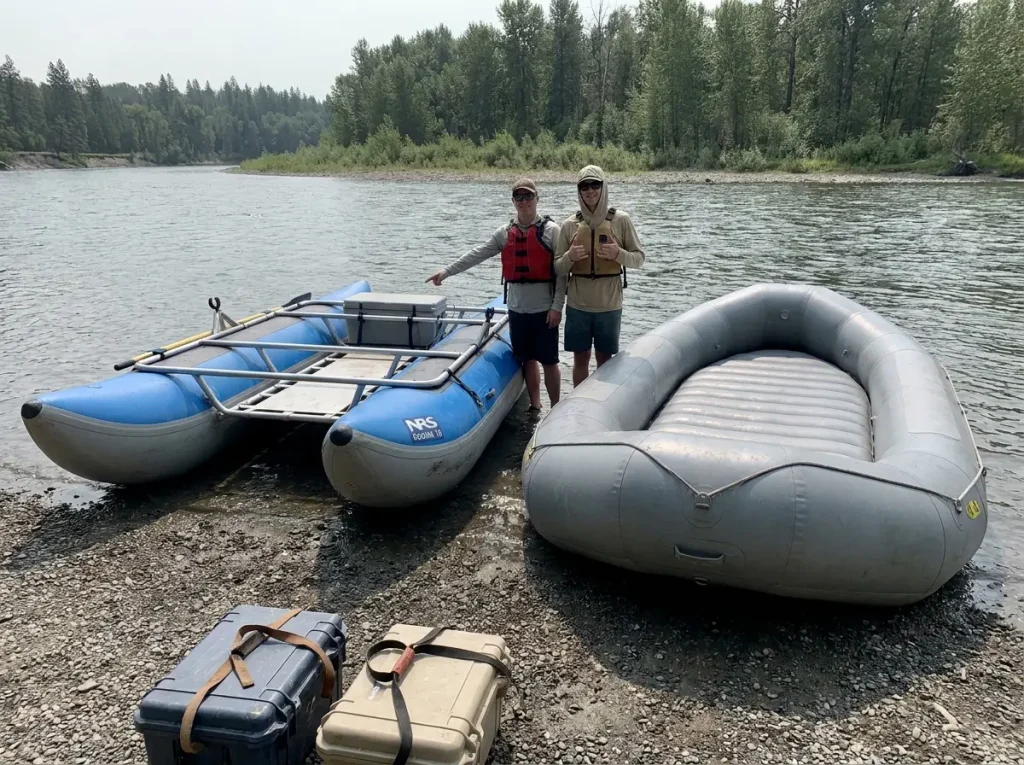
Neither boat is better. They’re built for different days, and the honest answer to “which should I buy” depends entirely on who’s going and what you’re hauling. Here’s where each one wins.
Where a cataraft beats a round boat
A cat is more maneuverable, full stop. Two slim hulls pivot faster than one fat tube, so you thread technical lines a round boat has to muscle through. It’s self-bailing without the floor, it carries more gear per foot, and it catches less wind on a long flatwater slog because there’s less boat for a headwind to push on.
The gear-room edge is real, and it’s also a trap. A 14-foot cat can out-haul a 14-foot raft, which is exactly why people pile too much on and turn a quick boat into a slug. More on that in the sizing section.
Where a round boat beats a cataraft
A round boat keeps things inside. Kids, dogs, coolers, and the one paddler who keeps dropping stuff all stay in the tub instead of perched on a frame over open water. For a family or a paddle crew, that containment is worth more than any maneuverability gain.
A raft is also faster to launch. It’s pump-and-go, while a cat is assembly first. And if your reference point is the round boats most outfitters run, our look at how the major raft brands stack up is a good companion read before you cross-shop.
The open deck and what falls through
This is the tradeoff people underestimate. On a cat, anything not clipped down can drop straight through the gap into the current. A loose dry bag, a water bottle, a sandal left on the frame, gone. Experienced cat boaters strap everything, every time, because the boat gives a careless mistake nowhere to land but the river.
The Real Price No One Quotes
Here’s where most buyers get burned, and it’s the reason this guide exists. The number on the listing is almost never the number it takes to put a rowable boat on the water.
The sticker price is just the tubes
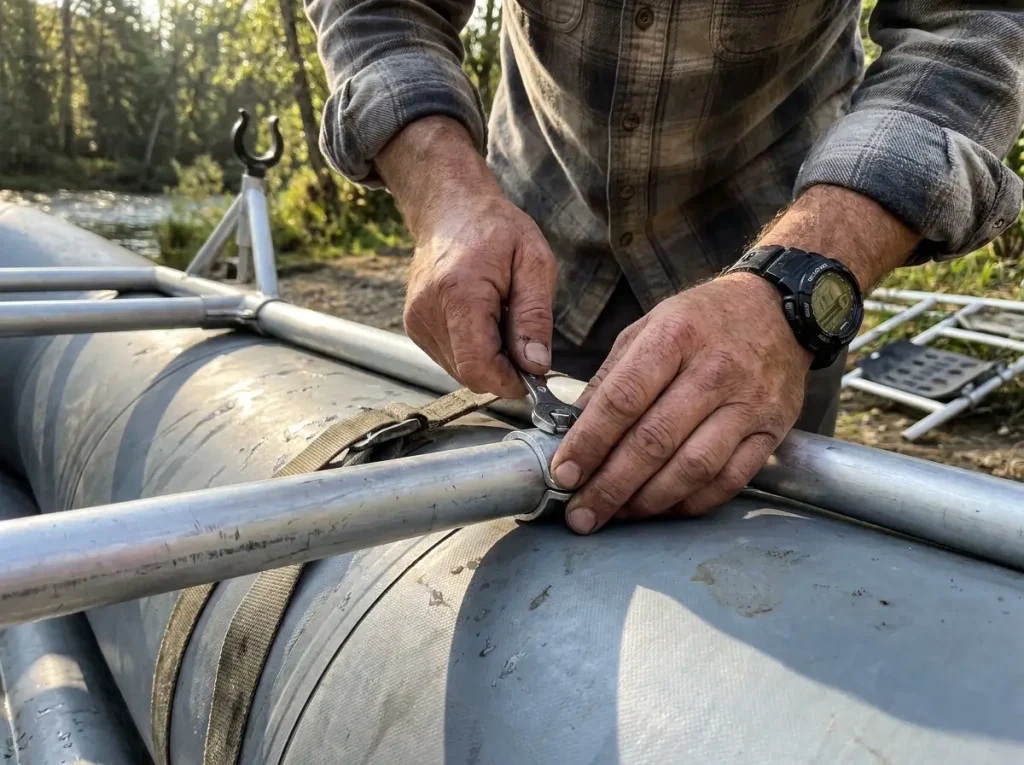
When you see a cataraft advertised, you’re usually looking at the price of the pontoons alone. The tubes are the part that floats. They are not the part that rows. To actually row the thing you need a frame, oars, oarlocks, and a seat, and those are separate lines on the receipt that rarely show up in the headline price.
This isn’t a scam, it’s just how the category is sold. Tube makers sell tubes; frame builders sell frames. But it means the mental math you do on a listing is wrong by a wide margin before you’ve even started.
What a frame actually costs
A dedicated cataraft frame is its own purchase, and it is not a cheap one. A light, simple custom frame tends to cost about as much as a budget set of tubes. A welded three-to-four-bay frame built for big-water hauling can cost more than the pontoons it carries. That’s the line item nobody quotes you up front, and it’s where a “two grand cataraft” quietly becomes a much bigger boat. The different raft frame types and what drives their cost is worth reading before you commit, because the frame decision shapes both your budget and how the boat rows.
The honest all-in numbers
Add it up honestly and the rowable price is well above the tube sticker, often roughly double once you’ve covered frame, oars, and rigging. The strange part is that tubes-plus-frame can still come in under a comparable round-boat-plus-frame of the same capacity and quality. So a cat can genuinely be the cheaper path into a rowing rig. The point isn’t that catarafts are overpriced. The point is to budget for the whole boat so you’re not stranded with floating tubes and no way to row them.
When you price a used cataraft, ask the seller two questions before anything else: is the frame included, and does it come with oars. A tube-only deal that looks like a steal can cost you the same again before it floats you down anything. The frame is the real money.
What Size Cataraft You Need

The most common sizing mistake is buying big. People picture the gnarliest trip they might someday run and buy for that, then spend every normal day fighting a boat that’s too much. Buy for the trip you actually run.
11 to 13 feet, the play and solo end
Short cats are the playful end of the range. An 11 to 13-foot boat has a shallow draft, threads technical lines, and is light enough to deal with solo. This is the day-trip and skinny water boat, the one that straddles rocks you’d otherwise hang up on at low CFS. It’s also the size that makes the most sense for fishing and for one person who wants to row their own.
14 feet, the do-everything middle
Fourteen feet is the honest do-everything length. It adds real carrying room and stability while staying lively enough to be fun in technical water. For two people running day trips and the occasional overnighter, a 14-footer is the size that rarely leaves you wishing for more boat or cursing too much of it.
16 to 18 feet, big water and multiday hauling
Above 14 feet you’re buying load capacity, not fun. A 16 to 18-foot cat is a gear hauler for big water and bigger crews, the kind of boat that carries three or four people and a week of food down Class IV and Class V water on a Grand Canyon-scale trip. That extra payload is the right tool for that job and overkill for almost everything else.
Why bigger turns your cat into a pig
Oversize the boat and you create two problems at once. An empty big cat is a sail in the wind and a chore to car-top, and a loaded one gets, in the words boaters actually use, piggish. It quits turning, quits responding, and makes easy water feel like work. The extra room tempts you to fill it, and a full boat is a slow boat. Match the length to your real trips, and if you’re torn between boat types entirely, our raft size guide for every river and crew maps crew size to length across the board.
If you mostly run two-up day trips with a multiday a couple times a season, size for the day trips and pack lean for the big ones. A 14-foot cat you can actually maneuver beats an 18-footer you can barely turn, even on the trips where the bigger boat sounds tempting.
Rowing Cat, Paddle Cat, or Frameless
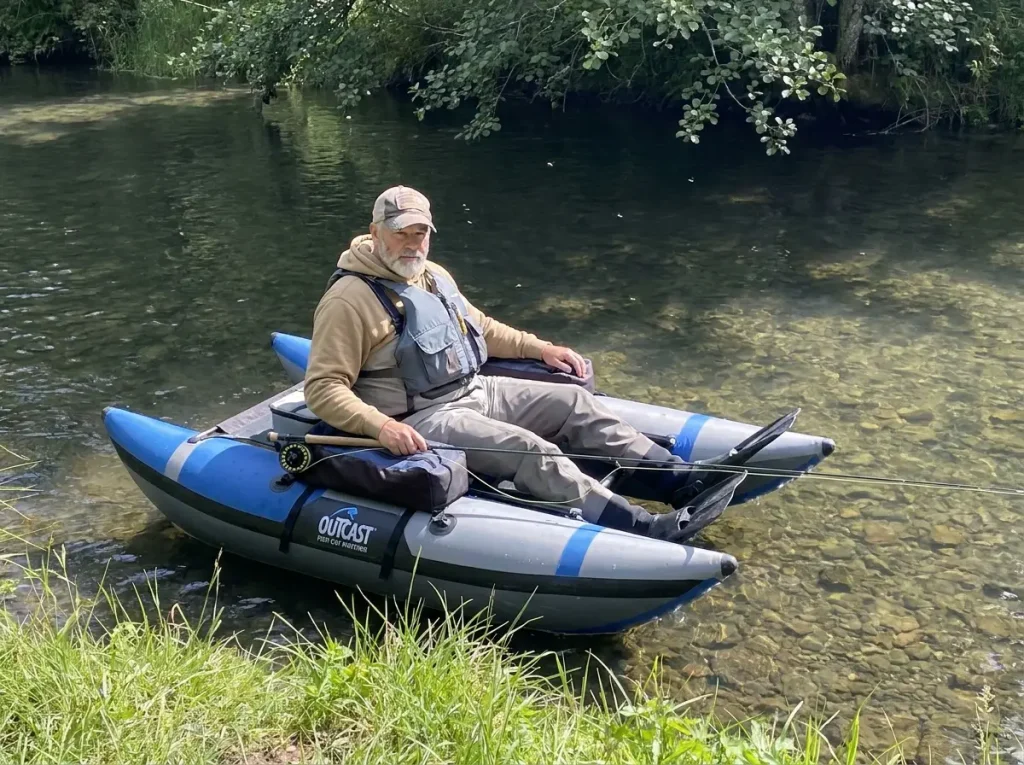
Three boats wear the same twin-hull name, and they ask for different skills, budgets, and days on the water. Sort out which one you’re actually buying before you shop.
The rowing cat (oar rig)
The rowing cat is the standard image: a full frame, a center seat, and a set of oars you pull from the middle of the boat. This is the gear-hauling, multiday workhorse, the configuration that gives one person the most control and the most capacity. It’s also the one that needs the full frame budget from the cost section.
The paddle cat
A paddle cat is powered like a small raft, with a crew or a solo paddler using a paddle instead of oars. It’s nimble and fun on day water, and it’s a genuinely different skill from rowing. The catch shows up when people try to run a small paddle cat solo for fishing, where boat control and casting fight each other. The paddle-versus-oar decision here mirrors the same tradeoff on a regular raft, and it’s worth thinking through before you pick a hull.
The frameless cat, the cheapest way in
The frameless cat skips the metal frame entirely. These are the one-person fishing pontoons that pack to a bag, set up in minutes, and cost a fraction of a rigged rowing cat. You give up capacity and rowing control, and you gain portability and a price that doesn’t require a second mortgage. Above the simple fishing pontoons sit purpose-built frameless catarafts like the AIRE Sabertooth and the RMR PaddleCat, which keep some rowing ability without a rigid frame. For a solo angler on low water, the frameless route is the most honest budget entry into the twin-hull idea, and almost nobody writing about catarafts bothers to explain it as its own category.
Getting the Trim Right
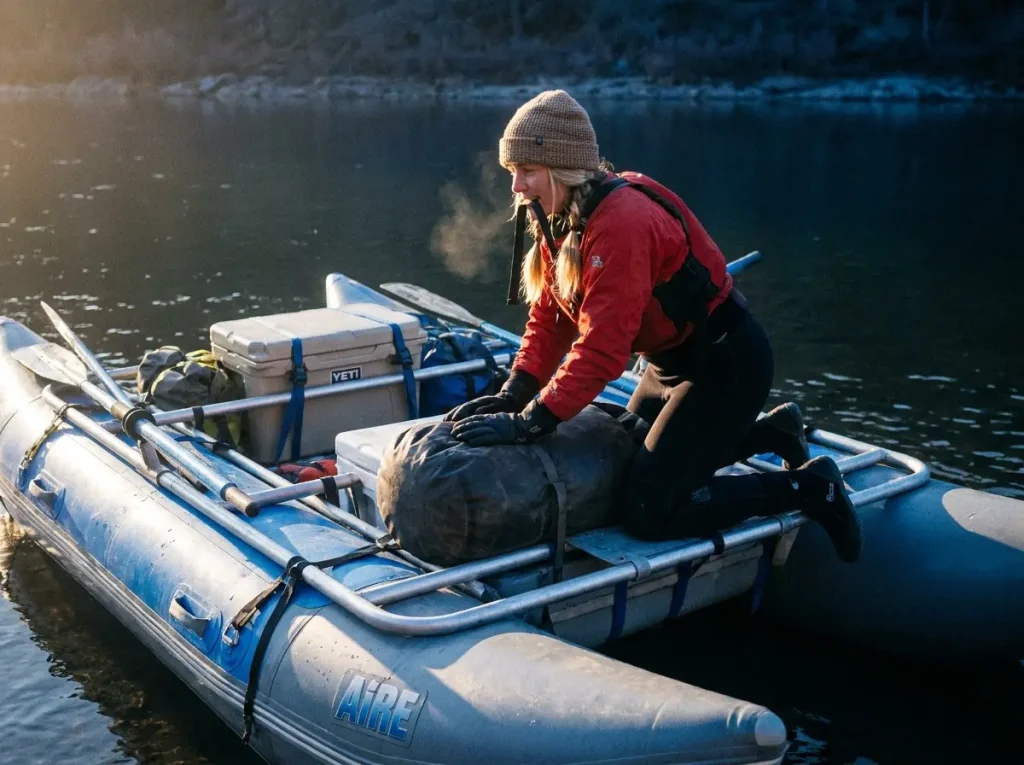
A cat rewards careful loading more than a round boat does, and punishes lazy loading just as hard. Getting the frame dialed is most of the battle, and most of the fun once you do.
Why weight distribution matters more on a cat
On a round boat, weight sloshing around is forgiving. On a cat, weight distribution fore and aft is the difference between a boat that behaves and one that fights you. The hulls are narrow and the load rides up on the frame, so a high-rocker cat will rock and shift as a passenger moves. Where you put the heavy bags isn’t an afterthought, it’s part of how the boat handles.
What blowing the trim actually does (won’t turn or pearls)
Get it wrong and the boat tells you immediately. Load it tail-heavy and it won’t turn, the bow wandering while the stern drags. Load it bow-heavy and it pearls, the front diving into waves instead of riding over them. Keep the weight low in the frame bays and trimmed front to back, and a lightly loaded cat comes alive. If you want the step-by-step, how to balance an oar rig walks the whole process.
Plan for the rigging time
A cat is not a grab-and-go boat. Budget about 30 minutes to rig, with six to eight straps and a one or two-piece frame to assemble and lash down. The round-boat crowd is on the water while you’re still threading straps at the dawn put-in, and that’s just the deal you signed up for. Build the setup time into your morning so you’re not the reason the trip launches late.
Walk every frame clip and strap as your last move before launch. The classic cat mistake is a buckle knocked half-open during loading that lets the frame shift the first time you hit a wave. Ten seconds of checking beats a frame coming loose mid-rapid.
The Open-Deck Safety Reality
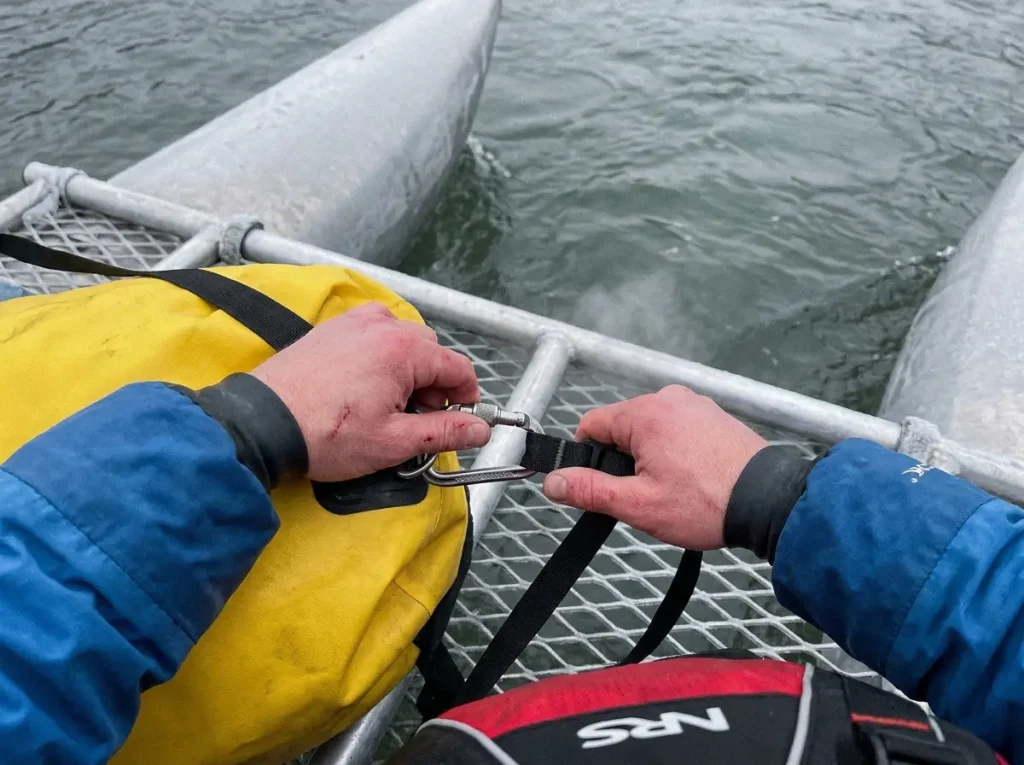
The boat itself isn’t the hazard. The swim is. A cat’s open layout puts a few non-negotiables in front of you, and they’re the part outfitter copy never mentions.
Clip everything, the deck won’t hold it
Say it again because it’s the one that bites people: there’s no floor, so nothing stays aboard unless you secure it. Every dry bag, every loose piece of kit, every water bottle gets clipped or strapped before you launch. The open deck that makes a cat self-bailing is the same open deck that swallows anything you set down and forget.
Foot entrapment and the open frame
On a cat you stand on and around an open frame in moving water, and that’s exactly the setup for the worst kind of accident. Foot entrapment is one of the leading causes of swiftwater fatalities, and the accident database that boaters still reference traces back to a 1975 entrapment incident. The rule is simple and absolute: never put your feet down in current. The self-rescue position if you’re out of the boat is feet up and pointed downstream, so you float over hazards instead of standing into them.
Cold water is the real risk, not the boat
Cold water disables a swimmer faster than most people believe. The first response to a cold water plunge is an involuntary gasp and a fast loss of motor control, and that happens well before hypothermia is even on the table. A PFD keeps you floating, but it can’t keep your head clear in pushy current once the cold has taken your coordination. Dress for the swim, not the air temperature, and read what cold-water immersion actually does to you before you launch on anything cold. The authoritative source here is American Whitewater’s river safety guidance, and it’s worth a read no matter how long you’ve been boating.
Run a clip-check the same way every launch, bow to stern, touching each strap as you go. On an open boat the gear you forget to secure isn’t just lost, it becomes a snag hazard in a swim. Make it a ritual and you stop relying on memory.
Who Should Skip a Cataraft
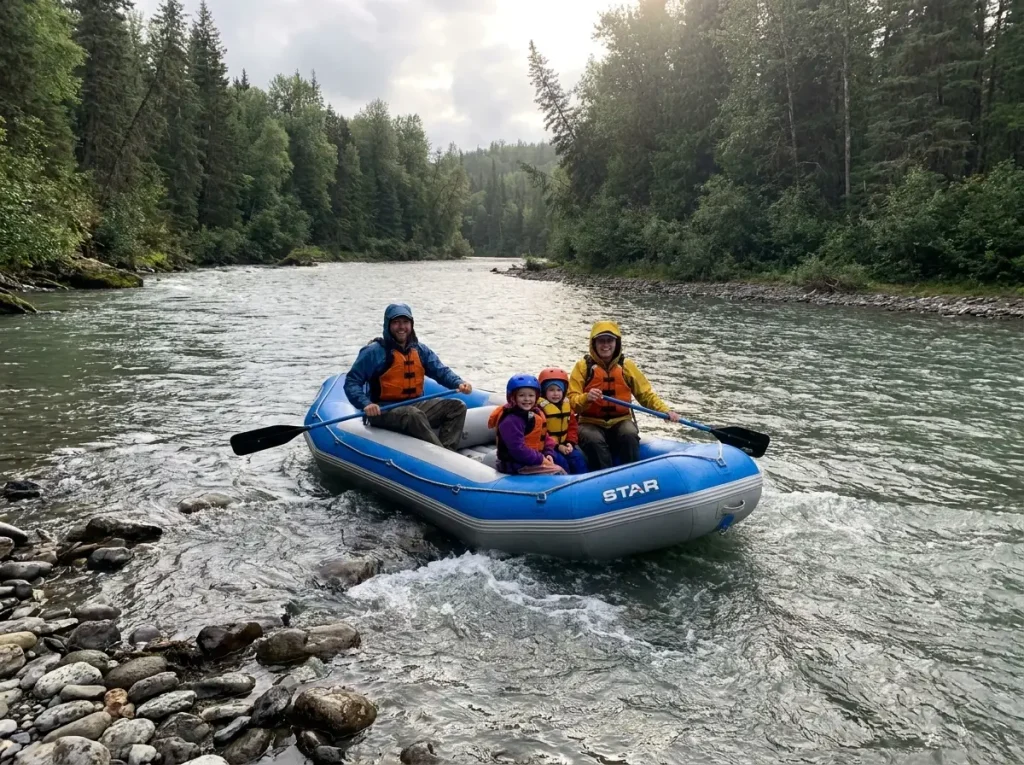
Sometimes the honest answer is that a cat is the wrong boat for you, at least for now. Here’s who’s usually happier in a regular raft.
Families and passenger trips
If you’re hauling kids, casual friends, or anyone who isn’t dialed in on a boat, a cat’s open frame works against you. There’s no inside to keep people in and no easy way to corral a crew over open water. A round boat keeps everyone in the tub, and for family trips that containment beats any handling advantage a cat offers.
Beginners who want a forgiving paddle boat
A cat can be forgiving and easy to learn on for a solo rower, especially for fishing, so this cuts both ways. But if what you want is a forgiving paddle boat to learn whitewater in with friends, a self-bailing raft is the better first boat for most people. The learning curve and the rigging commitment on a cat are real, and there’s no shame in starting on a raft. Our ranking of the best whitewater rafts for beginners is the right next stop if that’s you.
When a regular raft is the smarter buy
Buy a cat if you’re a solo or two-person rower, a multiday gear hauler, or a low-water angler who values that shallow draft. Skip it if you’re outfitting a crew, learning on a budget, or know you’ll overload whatever you buy. The genuinely good fit is narrower than the marketing suggests, and matching the boat to your real days is the whole game.
The Best Catarafts by Size and Budget
Here’s what’s worth knowing by size and budget. A heads-up on how this list works: the full rowing catarafts below are the boats to know, but they’re sold through specialty dealers rather than the everyday online channels, so they’re listed as picks rather than buy buttons. The two frameless boats at the end are the ones you can actually grab online today.
The rowing cats worth knowing
A cataraft is one boat type in a much bigger world; for the full lineup of round boats too, our guide to the best whitewater rafts is the parent to this one. Among dedicated rowing cats, four cover the range from playful to big-water hauler.
| Cataraft | Length | Best For | Honest Note |
|---|---|---|---|
| Star Kima 15 | 15 ft | Two-person multiday value | NRS-grade build at a gentler price |
| AIRE Wave Destroyer 15 | 15 ft | Big hits and steep drops | Bombproof bladder, long no-fault warranty |
| NRS Kodiak 18 | 18 ft | Big-water hauling, 3 to 4 people | A lot of boat to car-top and rig |
| Star Slice 11 | 11 ft | Agile paddle and play days | Tough to row solo for fishing |
The Star Kima 15 is the value pick, a Star build that runs close to NRS quality for a friendlier number, ideal for a two-person rower doing the occasional multiday. The AIRE Wave Destroyer 15 is the bombproof tier, with bow and stern rocker, an AIREcell bladder, and a warranty that signals how long AIRE expects it to last; it’s more boat than a beginner needs. The NRS Kodiak 18 is the big-water hauler for three or four people and a week of gear, the flagship cat for Grand Canyon-scale trips. The Star Slice 11 is the play end, a nimble paddle cat that shows off the agile side of the design.
The frameless budget picks
If a rigged rowing cat is more boat and more money than you need, the frameless route is the honest budget entry, and these two are the ones you can actually buy online.
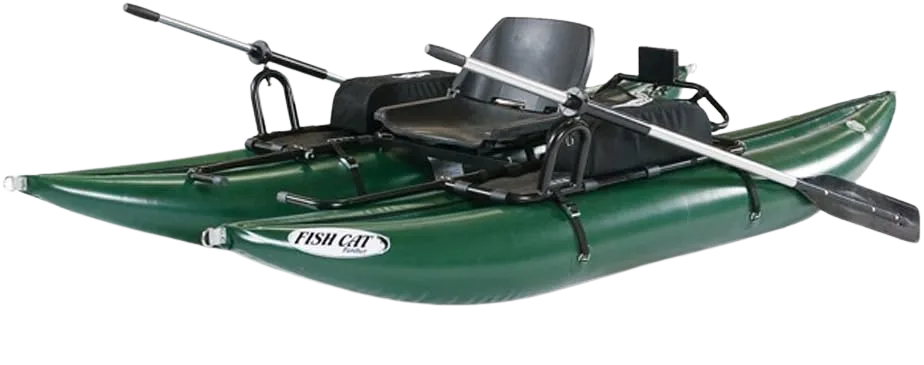
The Outcast Fish Cat Panther is the boat for one person who fishes low, clear water and wants to row or fin themselves into spots a bigger boat can’t reach. You’re paddling or finning rather than rowing from a frame, so it asks for calm to moderate water and a fisher who’s content going light. What you get back is the shallow draft and rock-straddling ability that make a cat fun, at a fraction of the cost and setup of a rigged boat.
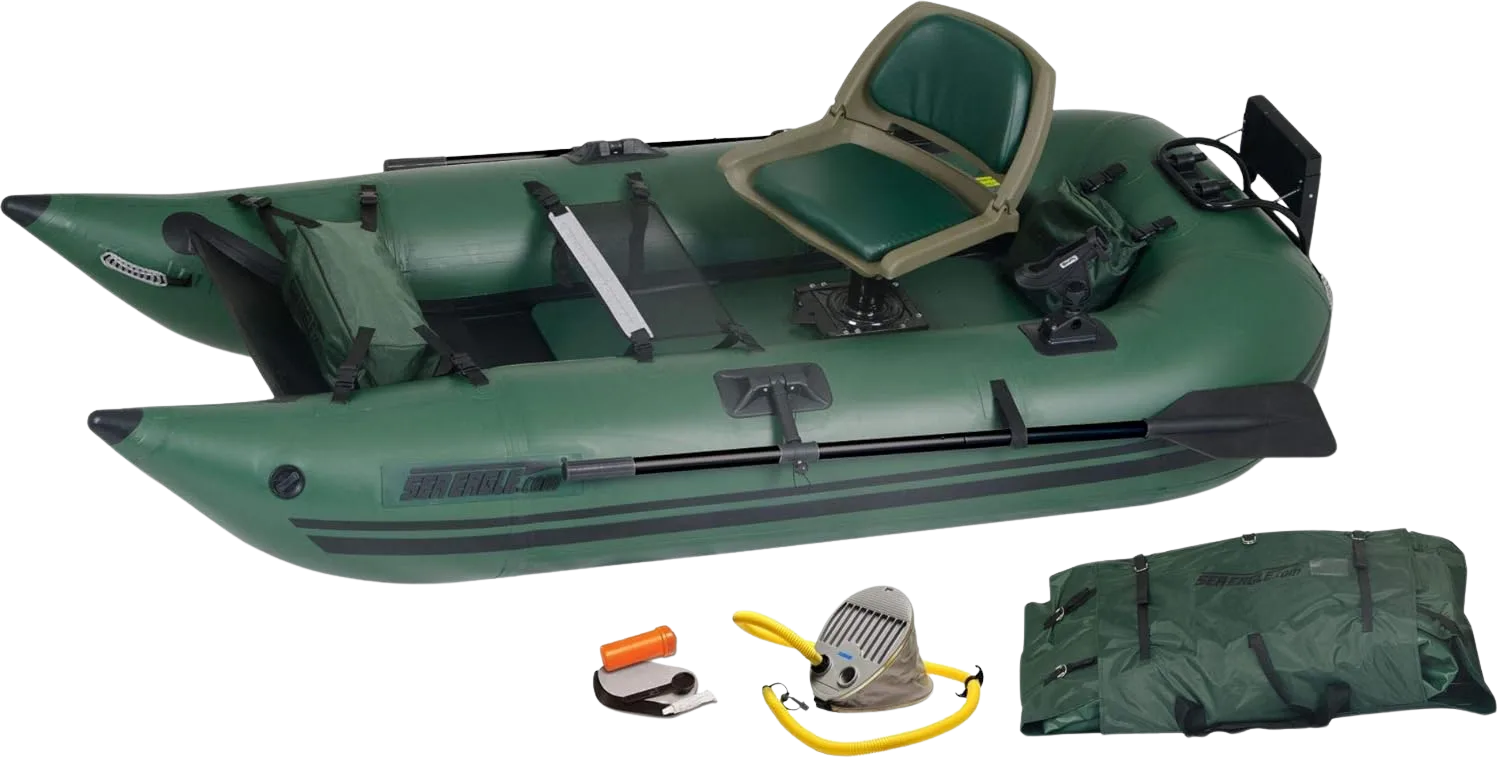
The Sea Eagle 285 Frameless Fishing Pontoon trades capacity and rowing control for portability and a budget-friendly price. It won’t haul a multiday load or punch through big water, and it isn’t trying to. For a solo angler on low flow who wants a packable boat that’s ready in five minutes, it’s the most accessible twin-hull on this list and a sensible way to find out whether the cat concept suits you before you commit to a rigged boat.
What separates AIRE, Star, and NRS
Brand differences on catarafts come down to bladder construction, material, and warranty. AIRE builds around an internal AIREcell bladder wrapped in a tough outer shell, backed by a 10-year no-fault warranty, which is why AIRE boats carry the bombproof reputation. Star delivers a build that runs close to NRS quality at a more approachable price, making it the value-minded choice, while NRS sits at the big-water, flagship end. Rocky Mountain Raft (RMR) and Maxxon round out the field as solid tube makers worth a look. On material, most modern tubes are PVC or urethane, and a higher denier count means a thicker, tougher fabric; the bladder design and the warranty tell you more about a boat’s lifespan than the raw material spec does.
Conclusion
A cataraft is a twin-hulled, floorless, self-bailing gear machine that rewards the right owner and frustrates the wrong one. It’s a great solo or two-person rowing boat and a poor family hauler, and knowing which camp you’re in is most of the buying decision.
Three things to carry with you. The sticker is never the rowable price, so budget the frame as a real second purchase before you fall for a set of tubes. Buy for the trip you actually run, because an oversized cat turns into a slug. And respect the open deck, which means clipping every piece of gear and dressing for the swim every time.
Before you spend the money, go rig or row someone else’s cat for a day. The frame, the trim, and the half-hour of rigging tell you more about whether this is your boat than any spec sheet ever will.
Frequently Asked Questions
01How much does a cataraft cost all-in?
Plan for two purchases, not one: the tubes and a separate frame. The frame often costs about as much as the tubes, so a complete, rowable cataraft usually lands well above the bare-tube sticker that first caught your eye.
02Are catarafts good for fishing?
Yes, especially frameless pontoon cats for solo anglers. A cat straddles rocks you might not see and stays forgiving in skinny water, which is why frameless fishing cats like the Outcast Fish Cat Panther are popular with one-person crews.
03Do you need a frame for a cataraft?
For a rowing cataraft, yes. The frame holds the oars, seat, and gear and is what makes the boat rowable. Frameless fishing cats are the exception: they are paddled or finned and built without a metal frame.
04Are catarafts more stable than rafts?
In a straight line and in waves, the twin hulls feel stable and predictable. But a cat is more sensitive to load placement, so poor trim makes it rock and refuse to turn. It rewards careful rigging more than a round raft does.
05How long does it take to rig a cataraft?
Budget about 30 minutes. A cat typically takes six to eight straps and a one or two-piece frame to assemble, versus a pump-and-go round boat. Factor that setup time into a dawn put-in so you launch on schedule.