


In this article
Picture yourself in the gear shop staring at a wall of paddles, half of them priced like a second tent, while a sales tag points you toward the carbon guide stick everyone calls the best. Here is the honest answer most buyers never hear: the best raft paddle brand for you depends entirely on where you sit in the boat, and for the majority of rafters reading this, the right paddle costs about fifty bucks. Outfitters figured this out years ago. They hand their paying crews tough aluminum sticks and save the pricey gear for the person steering from the stern. Match the paddle to your seat first, then the brand and the model fall right into place.
Here is how the main brands line up once you sort them by the job they actually do.
| Brand | Best For | Signature Model | Key Strength |
|---|---|---|---|
| Carlisle | Crew, budget builds | Standard 57″ | Tough poly, safe length |
| Carlisle | Taller crew, big tubes | Outfitter 60″ | Reach without the cost |
| Werner | Stern guiding | Guide Stick | Feather-light swing weight |
| Sawyer | Multi-day guiding | Canyon Guide Wood 62″ | Wood flex, Dynel tip |
| Aqua-Bound | IKs and travel | Shred 4-Piece | Packs down, light |
| Carlisle | Heavy-duty abuse | Guide HD 72″ | Bombproof, but heavy |
Your Seat Decides the Best Raft Paddle Brand, Not the Logo
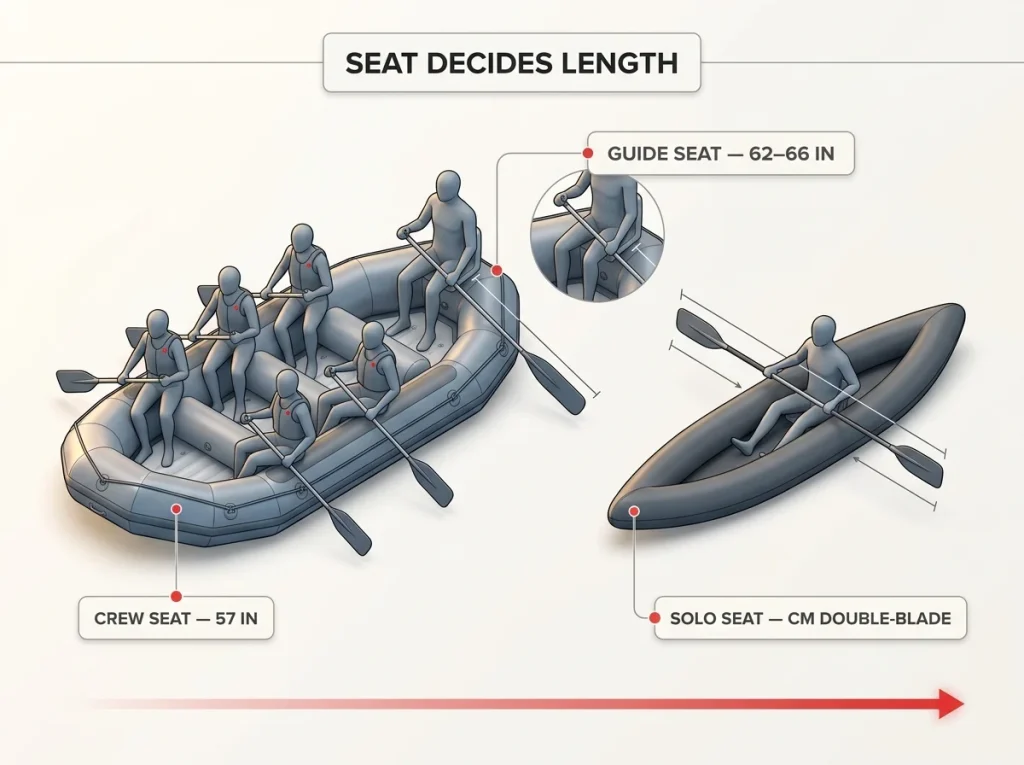
Walk up to any commercial put-in and watch what the guides hand out. The eight people in the paddle crew get tough, plain sticks. The guide on the stern holds something lighter and longer. Same boat, two completely different paddles, and nobody is getting shortchanged. That split is the whole secret to buying right.
A raft paddle does one of three jobs, and each job wants a different tool. Crew paddlers in the bow and middle supply raw power on command, so they want a shorter, tough paddle that survives abuse. The guide on the stern needs reach and fine control to steer a loaded boat, which is where the longer guide stick earns its keep. And a solo paddler in an inflatable kayak or packraft needs a light double-blade measured in centimeters, a different animal entirely.
The Crew Seat (Bow and Middle)
Most rafters are crew, full stop. You sit up front, you dig when the guide calls it, and you brace when the boat hits a wave train. You do not need a featherweight carbon wand for that. You need something that bites water, shrugs off rock, and floats when it gets loose. This is why the cheapest paddle on the boat is often the right one, and why Carlisle dominates this space.
The Guide Seat (Stern)
Steering from the back is a different game. You are making constant small corrections, prying and drawing to hold a line, often for hours. Here, weight matters because you swing the paddle thousands of times a day, and reach matters because you sit higher on the stern. This is the only seat where spending real money on Werner or Sawyer pays you back.
The Solo Seat (IK and Packraft)
If you are paddling your own inflatable kayak or packraft, throw out everything about T-grips. You want a long double-blade paddle sized in centimeters, and swing weight becomes critical because you are the only engine, stroking continuously. A light breakdown paddle like the Aqua-Bound Shred fits this perfectly.
The mistake that shows up constantly is the crew member who “upgrades” to a 64-inch guide stick and spends the whole trip cracking the person beside them on the back of the head every time they switch sides. Buy for your seat, not for the spec sheet. If you want the wider view of paddle selection without overpaying, our full breakdown of the best rafting paddles walks through it tier by tier, and if you are still deciding between a paddle crew and an oar rig, start with whether you even need a crew paddle or an oar setup.
Shaft and Blade Materials That Actually Change How a Paddle Feels
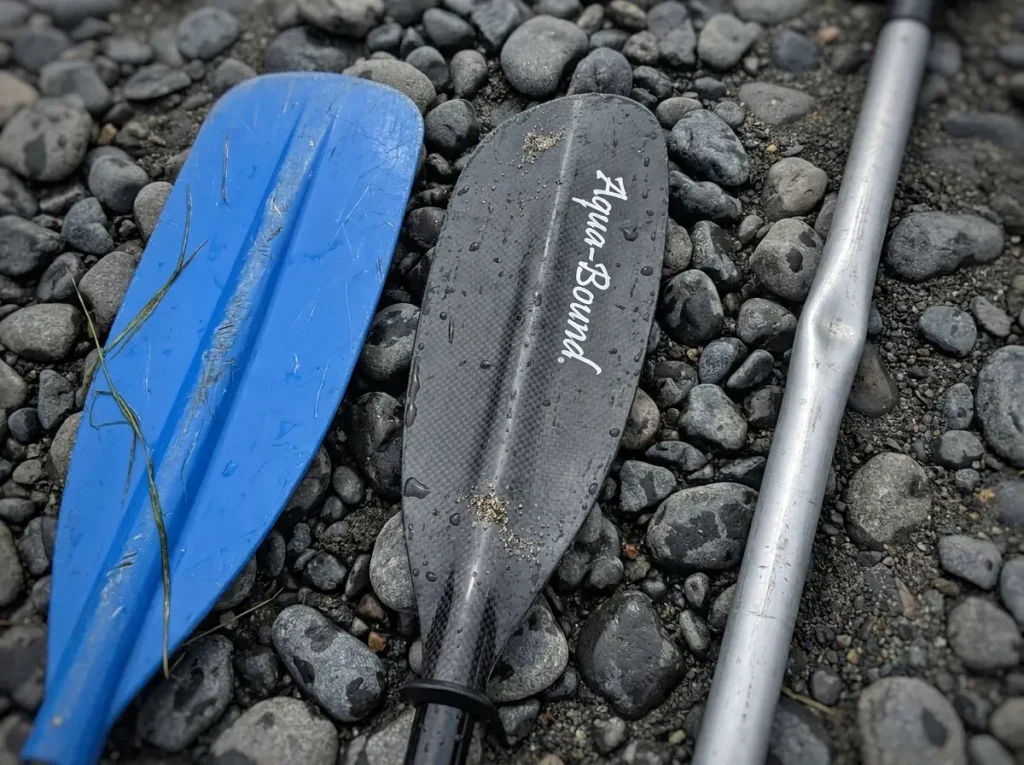
Pick up two paddles that look identical and you will swear they are the same. Then paddle a Class III run with each and your shoulders will tell you the truth by lunch. The difference is what the paddle is made of, and almost no brand explains how that plays out on real water.
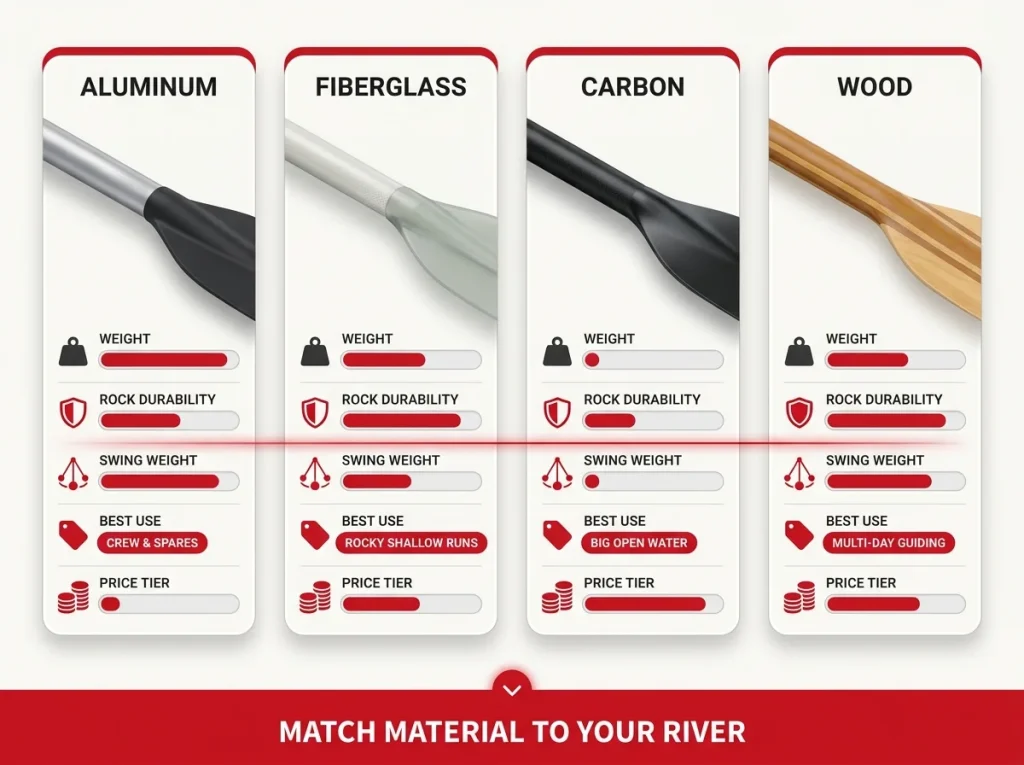
Start with the shaft. Aluminum is heavy and a little floppy, but it is tough and cheap, which makes it the honest choice for crew and spares. Fiberglass is the durable middle ground, and here is the part nobody tells you: a fiberglass shaft handles abuse and low-water rock better than carbon does. Carbon fiber is the lightest and stiffest, but it goes brittle on a sharp rock strike, so saving those ounces can cost you a paddle on a bony run.
The blade follows the same logic. A high-impact polypropylene blade survives scraping rock and getting used as a push-pole without complaint, which is exactly why the cheap crew blade is the tough one. Fiberglass and wood blades are stiffer and lighter, but they chip when you grind them across granite all day.
Shaft Materials, Ranked by River
There is no single best shaft, only the best one for your water. Match it like this: fiberglass or aluminum for shallow rocky runs where you smack rock constantly, carbon for big open water where the weight savings actually pay off, and plain aluminum for the spare you leave strapped to the frame. Buy the material your river demands, not the one with the highest price tag. The same wood-versus-carbon argument plays out with oars too, which we cover in the rafting oars guide.
Swing Weight, the Spec Nobody Prints
Here is the number that matters most and never appears on a single hang tag: swing weight. It is not how much the paddle weighs in your hands at rest, it is how heavy the blade feels when you swing it on a long shaft, stroke after stroke. A heavy blade way out on the end of a long stick is what wrecks your arms, which is how a “tough” guide paddle ends up being the most tiring one in the boat. When you compare two paddles, swing each one twenty times before you judge it.
Why Wood Still Earns a Spot
Wood sounds old-fashioned until you spend a long day rowing or guiding with it. Laminated wood flexes under load and absorbs the shock that jars your wrists and elbows, which is the real reason Sawyer guide paddles still show up on multi-day expeditions. It is not nostalgia. It is joint preservation on day five.
Before you buy any paddle, swing it like you are mid-stroke, not like you are weighing a tomato in the produce aisle. Hold the grip, plant an imaginary blade, and pull twenty times fast. The one that feels good at stroke twenty is the one that will not quit on you at rapid five.
The 57-Inch Rule Is a Safety Call, Not a Power One
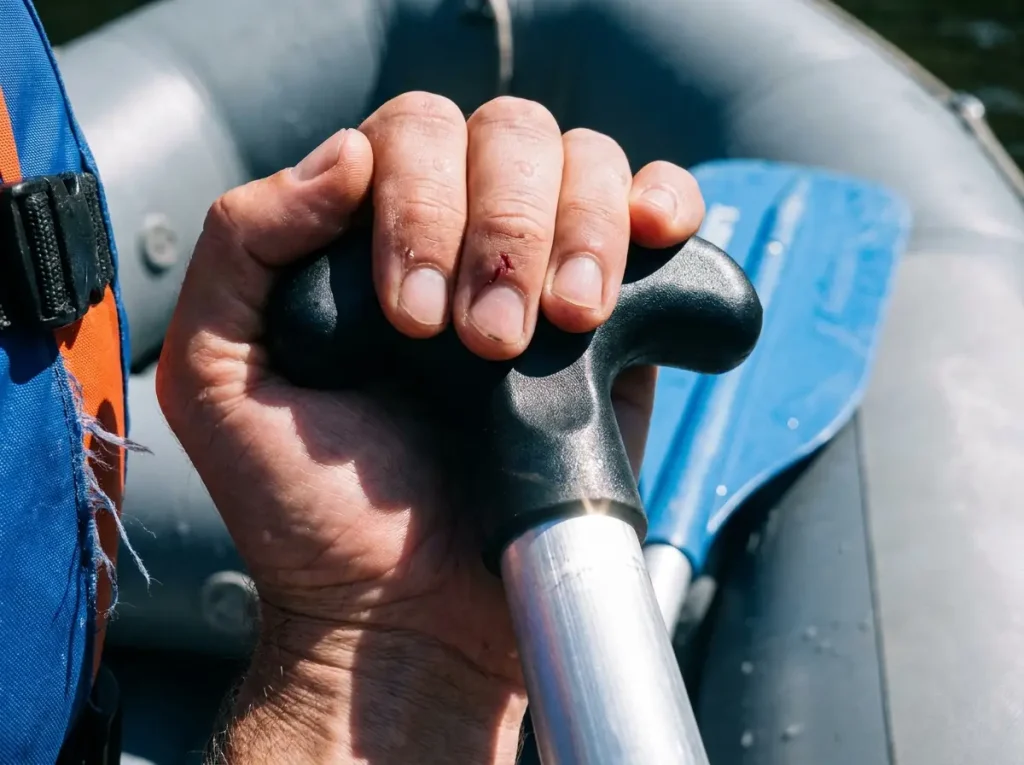
Remember your first guided trip, when the guide handed you a paddle that felt almost stubby? That was not a mistake or a beginner downgrade. The short paddle is the safe one, and the reason is the hard plastic T-grip on top.
Commercial outfitters standardized on the 57-inch guest paddle, down from the old 60-inch standard, for one reason: the shorter stick puts that T-grip lower, where it is far less likely to catch the crewmate in front of you in the face. Commercial raft tubes run 19 to 22 inches in diameter, and on a smaller tube you sit closer to the water, so the grip rides higher and more exposed than you would expect. Tube size and seat position drive the length, not how tall you are.
The control habit that goes with it is the hand-over-grip rule: your top hand stays capped over the T-grip at all times. It keeps you in control of the blade, and it is the main thing standing between that hard grip and someone’s nose when a wave knocks your stroke loose. T-grip injuries to the face are a documented hazard, not a freak event, as a peer-reviewed survey of common whitewater rafting and kayaking injuries lays out.
So when does a longer paddle make sense? If you are tall, sitting on a big-diameter tube, or perched higher than usual, 60 inches can be the right call. Guide sticks of 62 to 66 inches belong on the stern and nowhere else. The most common sizing error is picking a paddle by your height instead of your seat and the boat’s tube size. Our full rafting paddle length guide walks through sizing by seat if you want the deep version, and since the boat itself drives the call, it helps to know your raft’s tube diameter before you buy.
If you are buying one paddle for a mixed crew of different heights, size it to the boat, not the tallest person. A 57-inch paddle works for almost everyone in a guest seat, and the shorter grip keeps the whole crew safer when the stroke gets sloppy in a rapid.
Best Crew Paddle Brand the Fifty-Dollar Carlisle Most Rafters Need
Here is the takeout truth that the gear wall will never tell you: the first-timer holding a fifty-dollar aluminum Carlisle out-paddles the guy who spent five times that, because the boat does not care what your paddle cost. For crew seats, the budget paddle is not a compromise. It is the correct answer, and these two cover almost everybody up front.
Best Crew Paddle: Carlisle Standard 57″
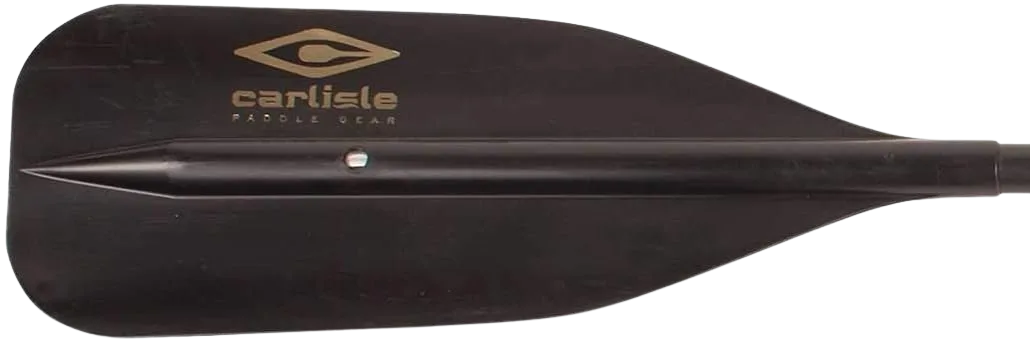
This is the paddle I point first-timers and weekend crews toward without hesitation. The Carlisle Standard 57″ does everything a guest seat asks and nothing it does not. You are supplying power on command, not finessing a loaded boat down a technical line, so the extra stiffness of carbon buys you nothing. What you get instead is a paddle you will not cry over when it bangs a rock or floats away in a flush.
Best for Bigger Tubes: Carlisle Outfitter 60″

Reach for the Carlisle Outfitter 60″ if you are tall or your boat runs big tubes. Those three inches keep your top hand from dropping too low and your stroke from going shallow, and you pay almost nothing for them. For a shorter or lighter crew, stick with the 57. There is no prize for a longer paddle when a shorter one keeps everyone safer.
Guide Sticks Worth the Money and the One That Wears You Out
This is the section the title promised. Guide sticks are real tools for the stern, and a good one is worth every dollar if you steer your own boat. But the heaviest one on the shelf can punish you, and knowing the difference is what separates a smart buy from an arm-killer. The thing that matters here is swing weight, not blade size or price.
Best Guide Stick: Werner Guide Stick

If you guide your own boat, the Werner Guide Stick is the one to beat. It moves a loaded raft as well as anything, but the light swing weight is what you feel on day two, when your shoulders are still working instead of screaming. Guides recommend it over the heavy alternatives for exactly that reason.
Best for Multi-Day: Sawyer Canyon Guide Wood 62″

For multi-day trips where you are rowing or guiding day after day, the Sawyer Canyon Guide Wood is worth the splurge. The wood flex is not a marketing line, it is the thing that keeps your wrists and elbows working on day five, and the Dynel tip means you can push off a rock without watching the blade come apart.
The Honest Heavyweight: Carlisle Guide HD 72″

I am including the Carlisle Guide HD because plenty of people buy it for the wrong reasons. It is genuinely tough, and for short, heavy-duty jobs or a beater spare it does the work. But the forums nicknamed it the boat anchor for a reason: that big face and thick shaft create torque that chews up your elbow and shoulder over a full day. If you are guiding long days, the Werner or the Sawyer will be far easier on your shoulders and elbows. The same shoulder-saving mechanics show up when you row, which we break down in our piece on oar stroke biomechanics, and if you want the engine to match the gear, here is how to go about building the paddling endurance to back it up.
A heavy guide paddle does not feel heavy in the shop. It feels heavy at the end of a long day, around the thousandth stroke, when your shoulder starts barking. If you are going to guide more than a few hours at a stretch, pay for the lighter swing weight up front. Your joints will collect the difference.
Best Paddle for IKs, Packrafts, and Travel
If your boat is an inflatable kayak or a packraft, the whole T-grip conversation goes out the window. You are the only engine, stroking continuously, often for hours, so swing weight is not a nice-to-have here, it is the difference between a fun day and dead arms. You also want something that breaks down to fit in a duffel or a backpack.
Best for IKs and Travel: Aqua-Bound Shred
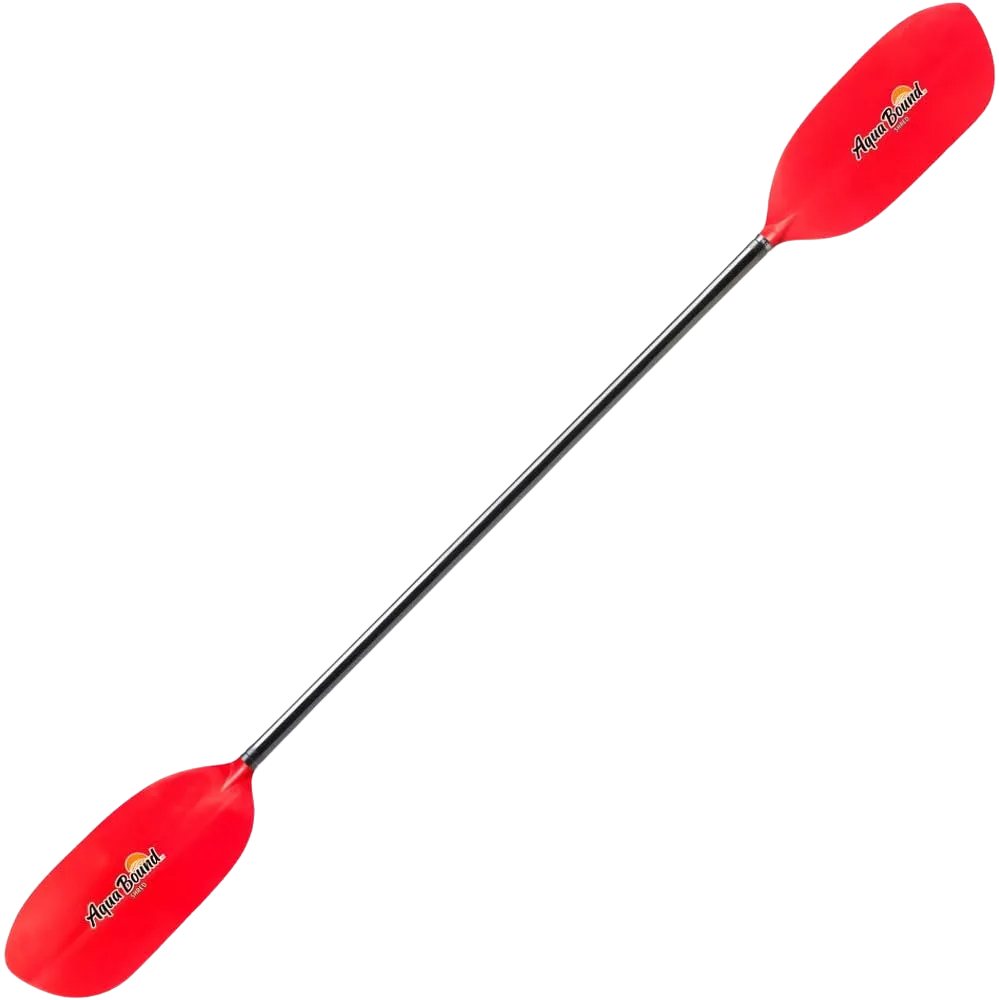
The Aqua-Bound Shred is the right tool when you are powering a boat solo. The light swing weight matters more here than anywhere else, because nobody else is sharing the work, and the four-piece breakdown means it travels in a duffel and stows clean on a multi-day raft as a backup. One thing to know: IKs and packrafts use centimeter-measured double blades, a different sizing system than the T-grips up to this point, so check your boat width before you pick a length.
What You’re Actually Paying for With a Premium Brand

So did you cheap out by grabbing the fifty-dollar Carlisle? No. You bought the right tool for your seat. But it is worth knowing exactly what the premium price buys, so you can tell when it is your turn to spend more.
What you pay for at the top end is real: lower swing weight, stiffer power transfer, and a better strength-to-weight ratio. Those are genuine benefits, and they add up for someone paddling or guiding hard, all day, every day. The question is never whether premium paddles are better. It is whether your seat and your river actually cash in those benefits.
Here is who should pay up: full-season guides, multi-day expedition rowers, and big-water crews logging long days where every ounce of swing weight compounds. And here is who should not: weekend crews, family floats, and anyone rigging a first raft. For them, a tough aluminum stick does the job and leaves money for the gear that actually changes their trip.
It helps to know where each brand lives. Carlisle owns the tough-and-affordable end. Aqua-Bound owns light and packable. Werner and Sawyer are the premium guide-grade names. Cataract and NRS make excellent specialty paddles, though many of their guide models sell direct rather than on the open market, so they are harder to grab in a hurry. None of that ranking changes the core rule: the most expensive paddle is rarely the right one unless your seat and your water demand it. And whatever you buy, the handling mistakes that wreck paddles faster than any brand difference will cost you more than choosing the “wrong” logo ever could.
One last myth worth killing: carbon is not automatically better. A carbon shaft goes brittle against sharp rock, while a fiberglass shaft survives the bony low-water run that would crack it. Better is the paddle that fits your water, not the one with the fanciest material.
One Spare Paddle Per Boat the Buy Nobody Regrets
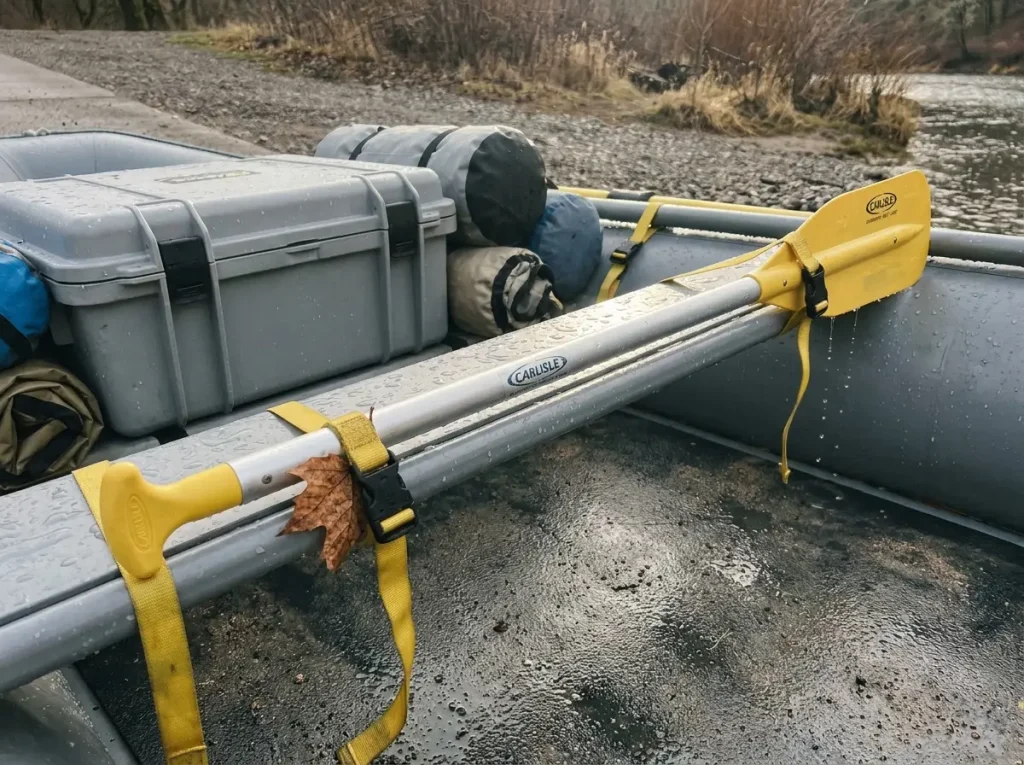
Watch what happens the moment a paddle goes overboard in a rapid. The boat suddenly has one fewer engine, right when it needs every one, and everybody learns why the spare strapped to the frame is the cheapest insurance on the river. One spare paddle per boat is non-negotiable on anything past Class II and on every multi-day trip.
The good news is that the ideal spare is also the cheapest paddle on this whole page. A plain aluminum poly paddle is tough, it floats, and it costs almost nothing to leave lashed to the frame all season. A breakdown paddle like the Aqua-Bound earns its keep here too, since it stows small and still works when you need it. You do not buy a spare for yourself. You buy it for the boat.
Rig it where it is reachable but out of the way: blade tucked under a cam strap, shaft running along a thwart, within the guide’s reach without fishing for it. Carrying backup gear is standard practice, the kind of thing American Whitewater’s rafting safety guidance treats as baseline trip prep. A field fix can buy you time when a blade cracks, and we cover those in our rafting paddle repair guide, but a ready spare is always faster. If a paddle does go for a swim, knowing what to do the moment a paddle goes overboard keeps a small problem small.
Bringing It Home
Pick your seat first, and the rest of the decision makes itself. Crew, guide, or solo IK each points to a different length, a different weight, and a different brand, and once you know your seat, the wall of paddles stops being intimidating.
For most rafters, the fifty-dollar Carlisle 57-inch is the correct crew paddle, not a compromise. Premium guide sticks like the Werner and Sawyer earn their price only at the stern or on long days, and the heavy Carlisle Guide is a tool for specific jobs, not a default. And whatever you run up front, carry a spare, because the cheapest paddle on the boat is the one you will never regret buying.
Before your next trip, check your seat and your raft’s tube size, then size your paddle to the boat instead of to the most expensive thing on the rack.
Frequently Asked Questions
01What size raft paddle do I need?
For a crew or guest seat, 57 inches is the modern standard, with 60 inches for taller paddlers or bigger tubes. Guide sticks run 62 to 66 inches for the stern only. Size to your seat and the raft’s tube diameter, not your height.
02Is a carbon raft paddle worth it?
Only if you paddle or guide hard all day on big water, where the weight savings pay off. Carbon is light and stiff but goes brittle on sharp rock. For shallow rocky runs and weekend use, fiberglass or aluminum lasts longer and costs far less.
03What is the difference between a crew paddle and a guide stick?
A crew paddle is shorter, 57 to 60 inches, tougher, and cheaper, built to supply power on command from the bow or middle. A guide stick is longer, 62 to 66 inches, for reach and control from the stern. Buying a guide stick for a crew seat is the most common mistake.
04Do I need a guide-grade paddle for my own raft?
Not for crew seats. If you row or guide from the stern of your own boat, a lighter guide stick like the Werner saves your shoulders over a long day. For everyone paddling up front, a tough aluminum T-grip is the honest answer.
05Why does paddle length matter for safety?
A longer paddle puts the hard T-grip higher, where it can catch the crewmate in front of you during a wild stroke or a flip. Outfitters moved to 57-inch guest paddles specifically to lower that risk. Keep your top hand over the grip at all times.