

In this article
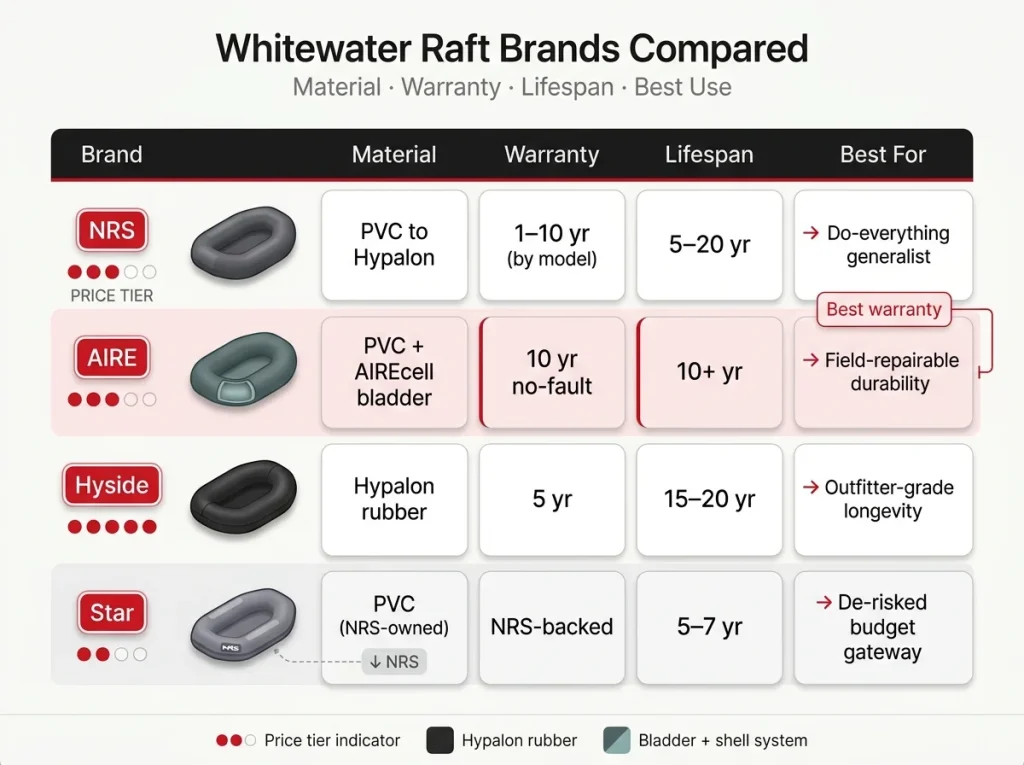
You are about to spend serious money on a raft, four browser tabs open, and NRS, AIRE, Hyside, and Star are all swearing theirs is the one boat you need. Here is the part nobody at the gear shop says out loud: the people who actually run these boats season after season sort the four brands faster than any spec sheet, and it comes down to three things, not marketing copy. This is the brand-by-brand verdict the shop won’t give you, who is premium, who is budget, who actually owns whom, and which whitewater raft brand deserves your money. No brochure adjectives, just material, warranty, and real on-water behavior, plus the honest part about what you can skip. Here is the fast version before we get into the why behind each call.
| Brand | Material | Warranty | Lifespan | Best for |
|---|---|---|---|---|
| NRS | PVC to Hypalon (varies by model) | 1 to 10 yr by model | 5 to 20 yr | The do-everything generalist with the deepest parts and support network |
| AIRE | PVC shell + AIREcell bladder (Tributary = thinner PVC) | 10 yr no-fault (Tributary 5 yr) | 10+ yr | Field-repairable durability and the most generous warranty in the category |
| Hyside | Hypalon (synthetic rubber) | 5 yr | 15 to 20 yr | Outfitter-grade longevity in sun and hard use |
| Star | PVC (NRS-owned) | Backed by the NRS network | 5 to 7 yr | The de-risked budget gateway for a first private boat |
How to Actually Compare Raft Brands (Material, Warranty, Price)
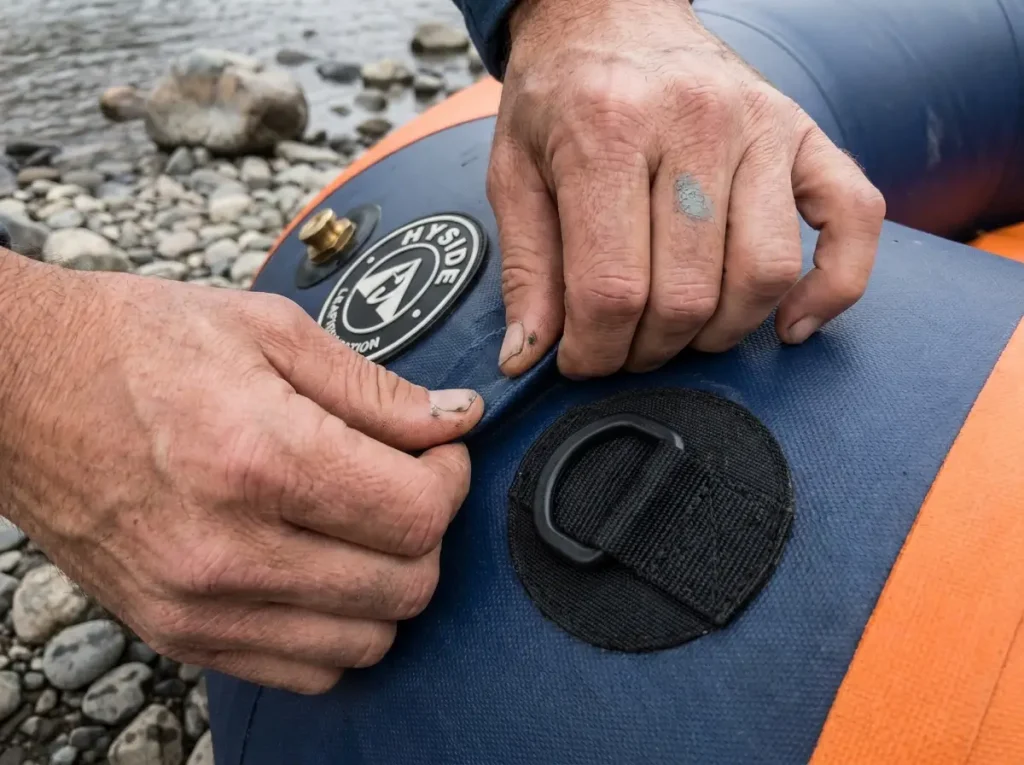
Forget the logos for a minute. Every argument about raft brands at the boat ramp eventually collapses into three questions, and once you can answer them, the brand names sort themselves out. What is the boat made of, what does the company promise when it breaks, and what tier of money are you actually in. Get those three straight and the rest is noise.
Material is the first fork, Hypalon vs PVC vs urethane
The single biggest divider between these boats is the material, because it drives durability, weight, cold-weather behavior, and price more than any badge. Hypalon is a synthetic rubber, technically chlorosulfonated polyethylene, a synthetic rubber originally developed by DuPont, and it shrugs off sun better than anything else on the water. PVC is the budget-to-midrange workhorse, lighter on the wallet and lighter to carry, but it does not love the sun or the cold the way rubber does. Urethane (polyurethane), the stuff Maravia and SOTAR build with, is the premium-above-premium tier, bomber and cold-tolerant, and genuinely overkill for a first private boat.
Here is the trap first-timers fall into. People assume all PVC is pool-toy garbage, then turn around and assume any rubber-looking import is bomber. Neither is true. AIRE’s PVC-with-a-bladder system rivals rubber for toughness, while a no-name 15 ft import like the BRIS BRF450 is fine for flatwater and mild stuff but is not in the same conversation as a branded boat once you add real whitewater and years of UV. If you want the full material breakdown, our guide to PVC vs Hypalon rafts by river class and material goes deeper than I can here.
Warranty is the brand betting on its own boat
A warranty is the manufacturer telling you, in writing, how much it trusts its own glue and fabric. AIRE backs its boats with a 10-year no-fault warranty. Hyside runs five years. NRS is all over the map, anywhere from one to ten years depending on the model and the material, which tells you something about how broad its lineup is. Read the warranty before you read the marketing, because the warranty does not lie about expected lifespan the way a product page does.
Price tiers and the per-season math
Money sorts into three honest tiers. There is the budget gateway (Star and AIRE’s Tributary line), the mid tier (Hyside and most of AIRE’s main line), and the premium tier (NRS Hypalon boats and full frame packages, plus the urethane brands above all of them). The number that matters is not the sticker, it is the cost per season.
A budget PVC boat lasts roughly five to seven years of regular use. A Hypalon boat under the same abuse lasts fifteen to twenty. So rubber costs about twice as much up front and lasts about three times as long.
If you boat hard and leave the boat rigged in the sun, the per-season math quietly favors Hypalon. If you boat a handful of weekends a year, cheap PVC is the rational call and nobody should make you feel bad about it. For the complete buying framework across every boat type, start with our full whitewater raft buyer’s guide.
It also helps to see the boats side by side before you commit, because tube feel and drainage are hard to picture from text.
NRS, the Do-Everything Generalist
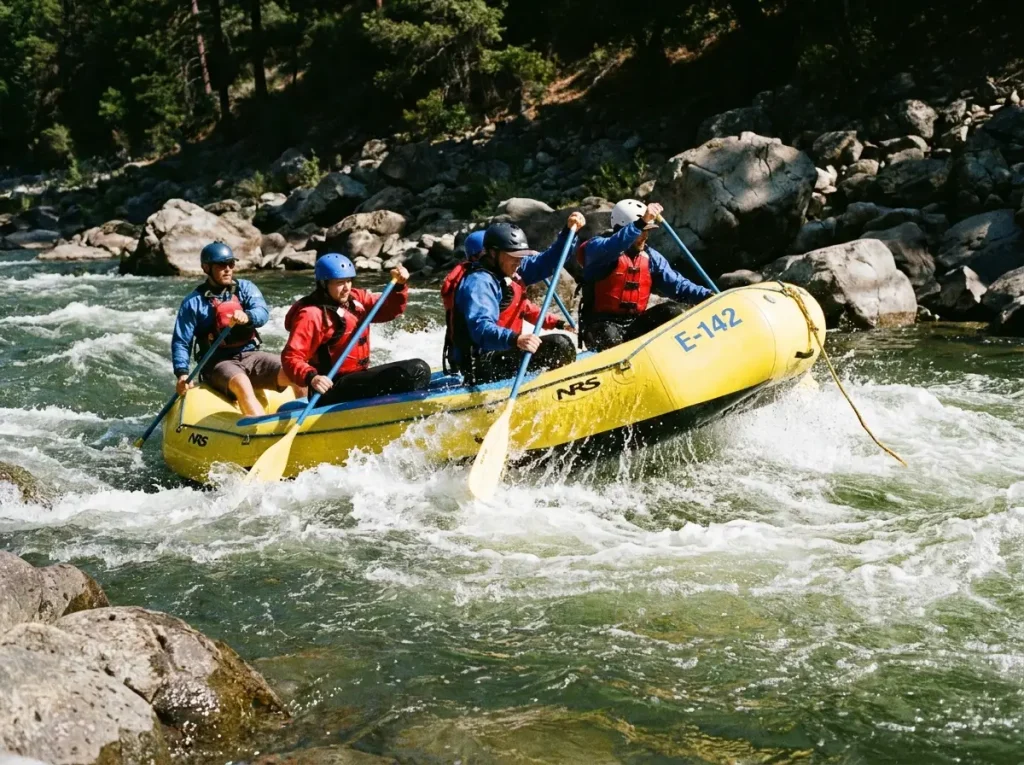
If you do not yet know exactly what you want, you will not go wrong starting with NRS. Not because any single NRS boat is the best raft you can buy, but because the lineup and the support network behind it cover almost everyone who walks in the door.
Who NRS is and the ecosystem advantage
NRS, short for Northwest River Supplies, is the brand whose catalog half the sport already shops from. The real advantage is not one boat, it is the ecosystem: the deepest parts inventory, the widest repair support, and the most reachable warranty channel in whitewater. When you need a Leafield valve, a replacement thwart, or a straight answer about a fix, NRS is the company you can actually get on the phone. That matters more two years into ownership than any spec on the box.
The lineup, low to high, Outlaw to Otter and E-series
NRS spans the whole range, which is exactly why its warranty is not a single number. At the budget end the Outlaw is PVC. Step up and you get Hypalon in the Otter and the expedition-grade E-series. The NRS E-142 is the kind of expedition workhorse you picture at the top of the line, a 14-plus-foot self-bailing boat built to carry a heavy multi-day rig. It is a lot of boat, in the best and the most expensive sense.
Where NRS fits you (and where it is more boat than you need)
For most private boater owners, the sweet spot is not the E-series at all. The E-series is genuinely more raft than a home Class III run requires, and you pay for that in both weight and money.
The NRS Otter is the quiet sweet spot for private boaters. You get Hypalon durability and a real warranty, but it runs around 25 pounds lighter and a good bit cheaper than the equivalent E-series, and it still carries a family gear rig or a six-person paddle crew. Most people who buy the expedition boat first wish they had bought the Otter.
AIRE, the Repairable Premium
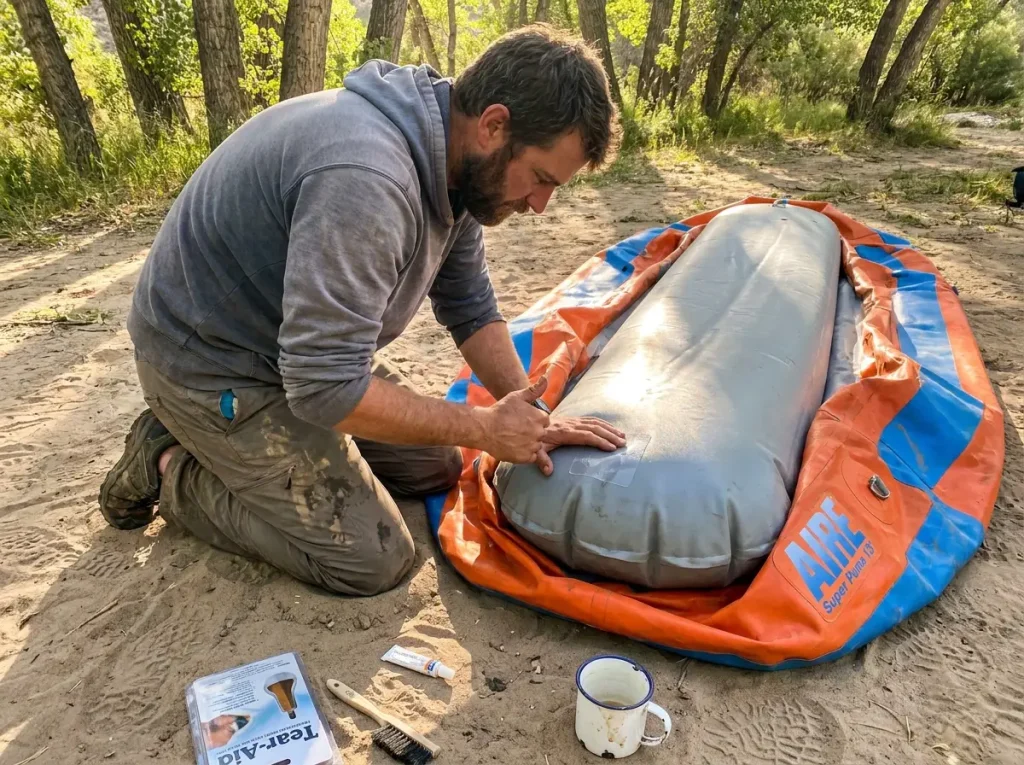
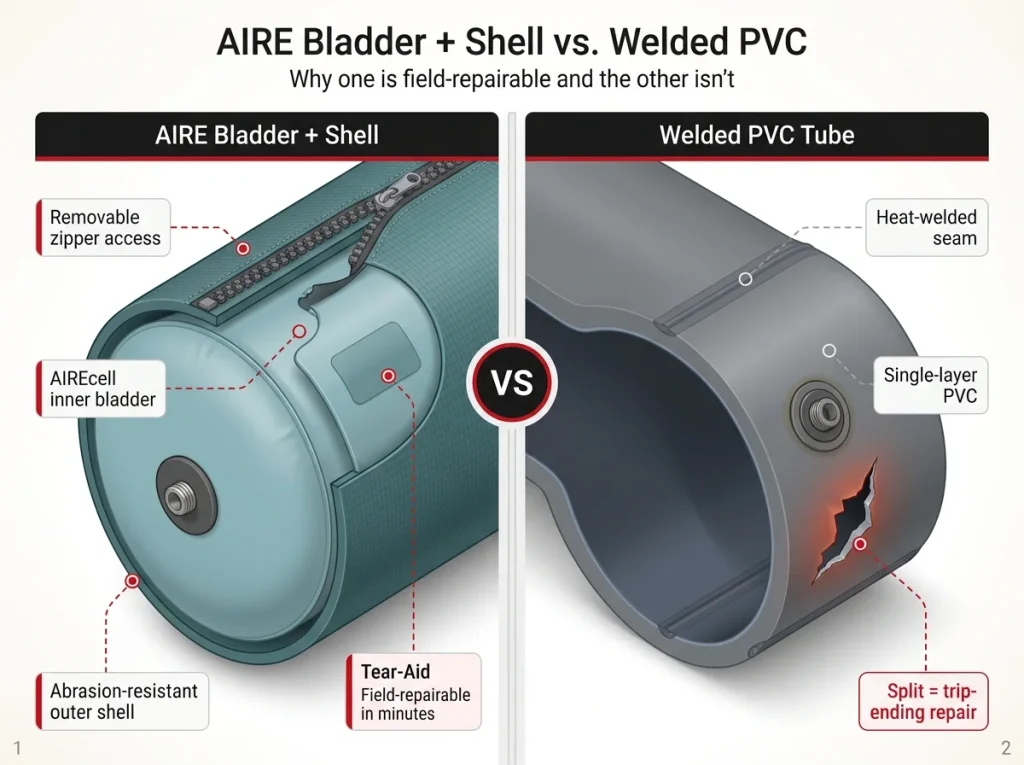
AIRE’s edge is not a single number on a spec sheet. It is what happens three days into a multi-day trip when a tube tears on a rock. The AIRE owner pulls a bladder, patches it, and keeps going. The welded-seam owner is on the sat phone arranging a shuttle. That difference is the whole pitch.
The bladder-and-shell system, why a torn tube isn’t trip-ending
AIRE builds every boat as two parts: an airtight inner bladder called the AIREcell and a separate outer abrasion shell that takes the beating. When you tear a tube, you do not patch a pressurized welded chamber on the bank. You pull the AIREcell out, patch it with a Tear-Aid patch like you would a bike tube, slide it back in, and reinflate. That is field-repairable in a way a single-layer boat simply is not, and it is exactly why AIRE owners are calm about rocks that make other boaters wince.
AIRE rafts drain fast and roll down tight, and that handling is a real selling point, not just the warranty. A boat that sheds water quickly in a wave train sits higher and tracks better, and one that packs small is one you will actually load in the truck for the spur-of-the-moment run. Durability gets the headlines, but on the water the drainage is what you feel.
The 10-year no-fault warranty, the most generous in the category
The warranty is where AIRE stops being subtle. Its no-fault 10-year warranty, in their own words, covers defects and accidental or user damage across the whole system, tubes, AIREcells, valves, zippers, and D-rings. Read that again. They will fix the boat even if you wrapped it on a rock and the wrap was your fault. Nothing else in this comparison comes close, and on a boat you plan to keep for a decade, that coverage is worth real money.
Super Puma at the top, Tributary as the gateway
The model to picture at the premium end is the AIRE Super Puma 13′, a PVC-and-bladder boat with the full 10-year coverage that runs anything from R2 paddling up to a loaded R4. It is sold through specialty retailers rather than Amazon, so you order it from a shop, not a cart. At the other end, the Tributary line is AIRE’s budget gateway, the same design thinking on thinner PVC with a five-year warranty, and it is the honest way into the brand without the premium spend. On a self-supported trip where a repair is the difference between finishing and walking out, that repairability earns its keep, which is also why it is worth reading up on planning a multi-day where a field repair matters before you pick a boat.
Hyside, the Outfitter Hypalon Workhorse

Walk into any commercial outfitter’s boat yard and look at the rafts that have been beaten for a decade and still hold air. A lot of them are Hypalon, and a lot of those are Hyside. That is not an accident, and it tells you most of what you need to know about the brand.
Why outfitters run Hypalon, the 15 to 20 year fleet life
Hyside builds Hypalon boats overseas, unlike the American-made AIRE and NRS, backs them with a five-year warranty, and has spent decades earning a reputation among commercial outfitters for surviving abuse. Hypalon outlives PVC in the sun, fifteen to twenty years against five to seven for budget PVC under the same use, which is precisely why outfitters in hot, sunny climates run rubber even though it costs more. A rental fleet has to last. Hyside lasts.
Boaters who have run both will tell you Hypalon just feels better on the water, a little softer off the rocks and quieter in a wave train. It is hard to quantify and easy to dismiss until you have spent a season on rubber. Outfitters do not run it for the feel, though. They run it because it survives years of rental abuse and still holds shape.
The repair tradeoff, glued seams, delamination, and easy punctures
Hypalon has its own failure profile, and it is worth understanding before you fall in love. The seams are glued rather than welded, which means they are field-repairable, but over many years a glued seam can delaminate and need a real re-glue. The flip side is that punctures in the fabric patch easily and hold. If you want to know what fixing one actually involves, our walkthrough on how to repair a Hypalon raft in the field covers the glue, the prep, and the patience it takes.
Pro 13 and Mini-Max, who the workhorse is really for
The models to picture are the Hyside Pro 13 and the Outfitter 10.5 Mini-Max, the Hypalon boats that built the brand’s name with guides. These are sold through specialty retail, not Amazon, and they are aimed at the buyer who runs hard, runs often, and wants a boat that will still be on the water when the budget PVC crowd is on their second replacement. If that is not you yet, that is fine. It is good to know what the workhorse is, even if you do not need one this year.
Star, the NRS-Backed Budget Gateway
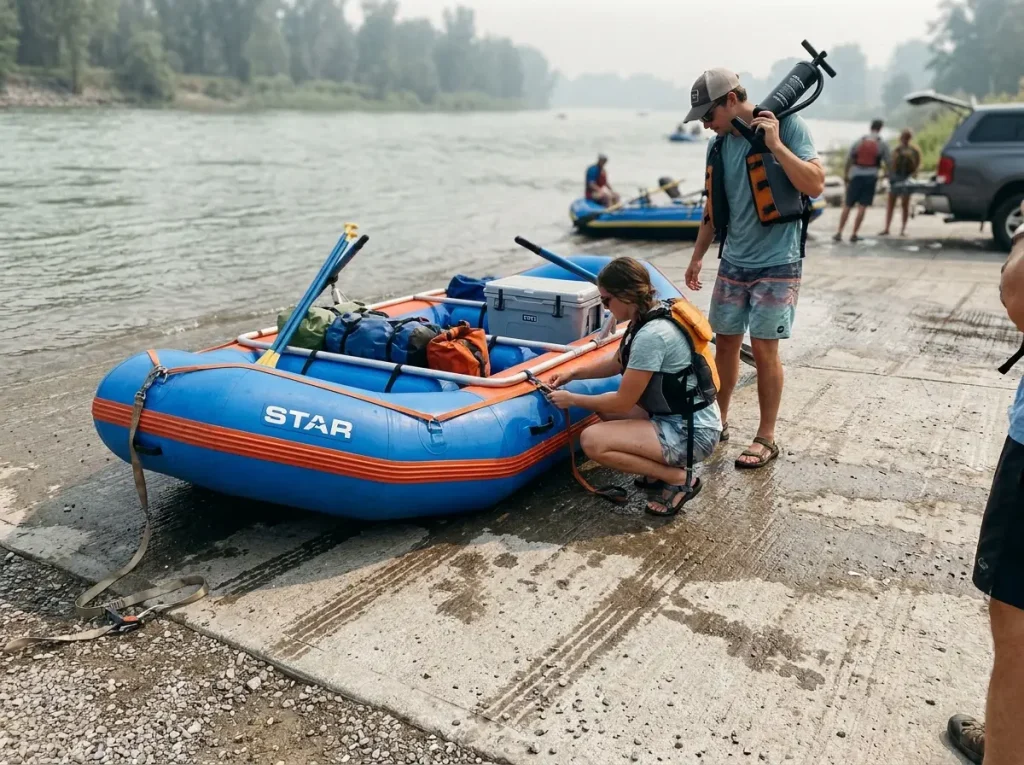
Here is the thing almost nobody explains to a first-time buyer, and it changes the whole budget conversation. That affordable Star raft you keep seeing? It is NRS under the hood. You are not buying an orphan import, you are buying into the same network as a full-price NRS boat, for a lot less.
The Star = NRS truth (acquired 2017), what the badge really is
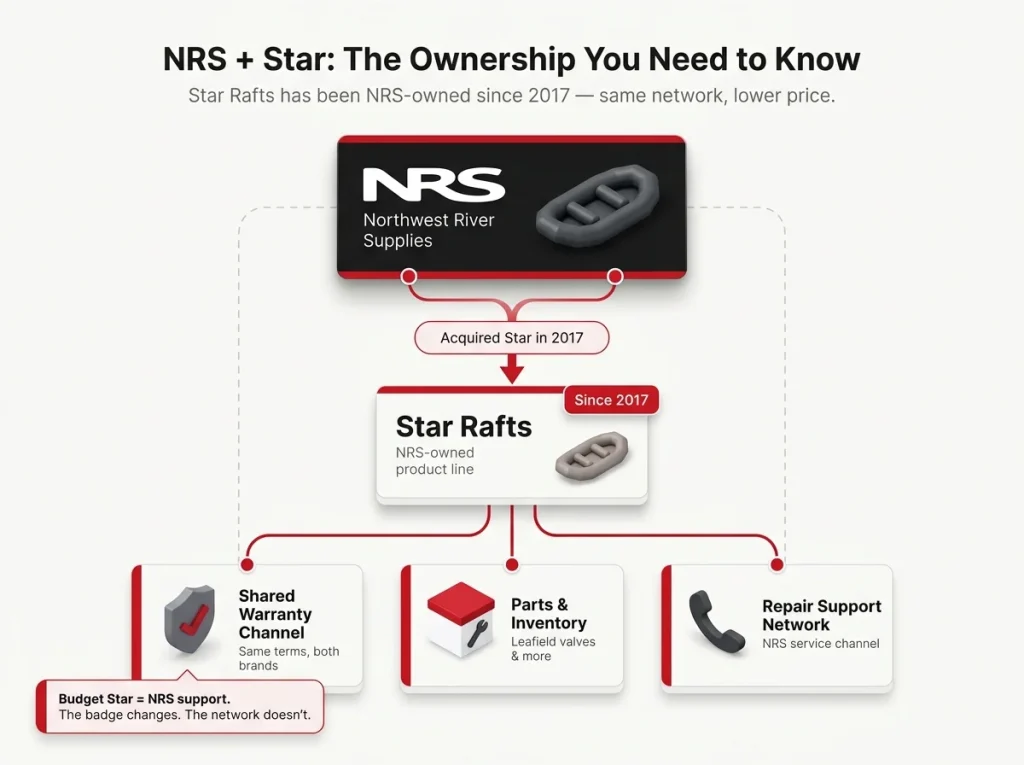
NRS acquired the Star brand back in 2017, so Star is now an NRS-owned product line, sold through NRS and backed by the NRS parts, support, and warranty network. That single fact is the most useful piece of buying knowledge in this whole comparison, and most gear pages skip it entirely. The badge on the tube says Star. The support behind it says NRS.
What a de-risked budget boat means for you
A budget boat usually comes with a quiet gamble: when something fails, are you on your own? With a Star, you are not. Same warranty channel, same parts shelf, same repair support as an NRS owner, just at entry pricing. That is what a de-risked budget boat means in practice, and it is the difference between a smart first purchase and a cheap one you regret.
An NRS-backed Star also holds its value better than a no-name import when you go to sell. Buyers in the used market know the support network is real, so a clean Star moves fast and for more money. A mystery-brand boat with no parts channel sits for weeks at a discount. The badge is part of the resale.
High Five vs a no-name import, same price, different safety net
The headline Star model is the High Five, a self-bailing boat at genuine entry pricing that is a real river raft, not a pool toy. Set it next to a true import like the Saturn 13 ft whitewater raft and the prices look similar, but the safety net does not. Both are budget, both will get you down the river, and the Saturn is a perfectly honest cheap boat.
The Star just comes with NRS standing behind it. If budget is your whole world right now, our roundup of the best budget whitewater rafts lines up the real contenders.
Which Brand Is Right for You (By Use and Size)
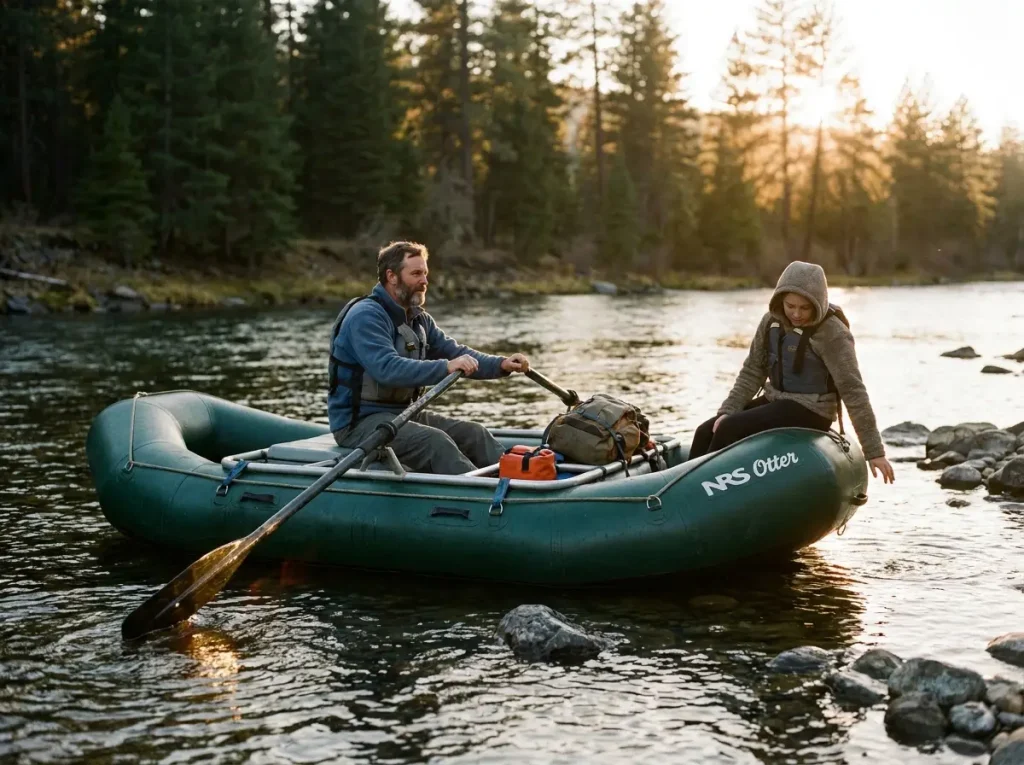
Tell me what you run and who is in the boat, and I can usually point you at the right brand before you finish the sentence. The four brands are not really competing for the same buyer once you get specific about use and size.
Beginner/private vs commercial vs technical, match the brand to how you boat
Match the brand to how you actually boat, not to the gnarliest thing you hope to run someday. A beginner or weekend private boater wants forgiving and affordable, which points at Star, AIRE’s Tributary, or a value brand like Rocky Mountain Rafts (RMR). A commercial operation wants durability and warranty above all, which points at Hyside Hypalon or AIRE.
The technical and big-water crowd is the only group that should even be looking at premium urethane from Maravia or SOTAR, and even then, most do not need it. Buying for your aspirations instead of your home run is the most expensive mistake in the sport.
Sizing the boat to your crew and your water
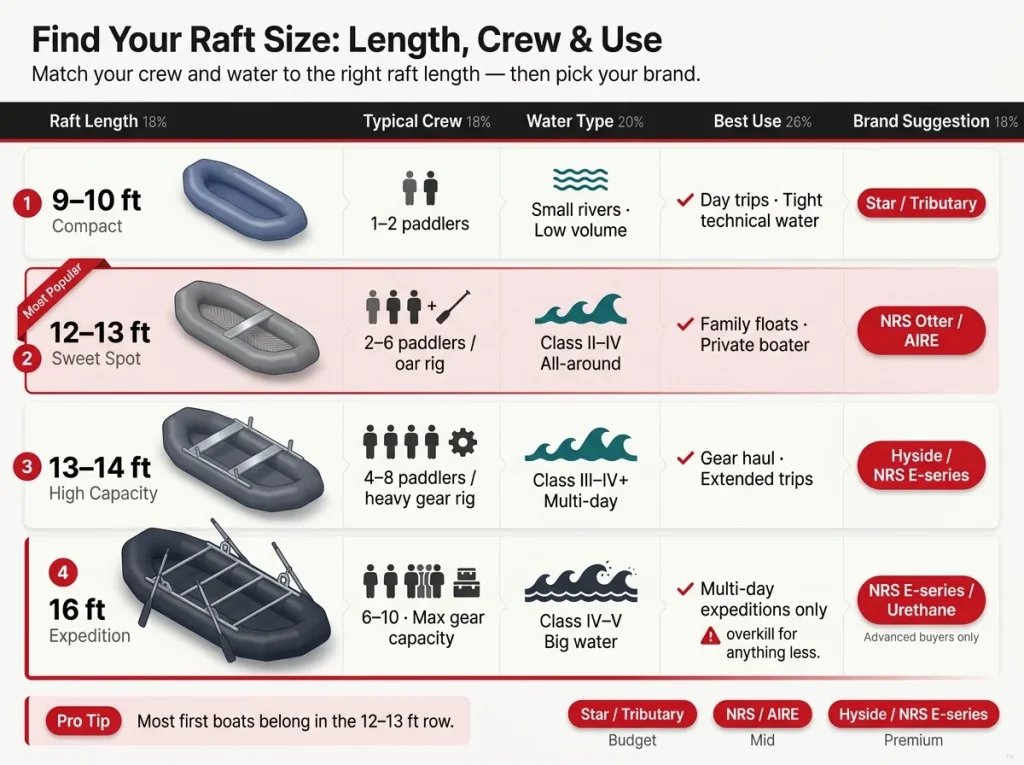
Size sorts almost as cleanly as brand. A 9 to 10 ft boat suits small crews and tight, low-volume rivers. A 12 to 13 ft raft is the do-it-all paddle or oar boat for most people. A 13 to 14 ft boat steps up the carrying capacity for family rigs and serious gear, and a 16-footer is for big-water multi-day expeditions and not much else.
A compact boat like the Saturn 9.6 ft mini raft is the picture of the smallest tier, right for a couple of people on a smaller river. To dial the length in against your crew and water, our raft size guide lays out the tradeoffs by foot.
Matching a brand to your home run
Put it together and the verdict gets personal. For a first boat on local Class III, look at Star or Tributary and stop overthinking it. For the private boater who wants one boat for years, the NRS Otter is the sweet spot. For boating hard every season, Hyside or AIRE earn the premium. The right boat is the one that fits your water and your crew, and only then your budget.
The Honest Part, What You Can Skip (and the Cold-Water Catch)
Now the part the gear shop will never tell you, because the gear shop sells boats. You almost certainly need less raft than you think. There is exactly one place where going too cheap stops being a money question and becomes a reliability and safety question, and it is not the one most people worry about.
You don’t need a 16′ urethane to run Class III
You do not need a 16 ft SOTAR urethane, or even an NRS E-series, to run your local Class III. A Star High Five or an AIRE Tributary is genuinely enough boat for that water, and stepping up to premium does not make a Class III run safer or more fun, it just makes it more expensive. This is the de-escalation gear shops avoid, because there is no commission in telling you the cheaper boat is fine. If forgiving and beginner-friendly is the goal, our picks for the most forgiving whitewater rafts for beginners are built around exactly that.
The cold-water material trap, when cheap PVC becomes a reliability problem
Here is the one corner you should not cut. PVC gets brittle at or below room temperature. It can crack when you roll it cold, and it stiffens up so much after a frosty late-season run that it fights you the whole time you are trying to fold it into the bag.
On cold, splashy water, a late-season Pacific Northwest run for example, that turns material into a reliability and safety decision, not just a budget one. A boat that stiffens and weeps cold water on you stacks a hypothermia risk onto an already cold day, and that margin matters far more on pushy Class IV and Class V water than on a mellow afternoon float.
Hypalon and urethane stay flexible in the cold, so if your season runs late and frosty, that is a real reason to lean rubber over the cheapest PVC you can find. When you run matters as much as what you run, which is why our guide to the best time to go rafting by season and water level is worth a read before you buy for a cold-weather season.
The “enough boat” pick
If you want one honest budget recommendation to start with, this is it.
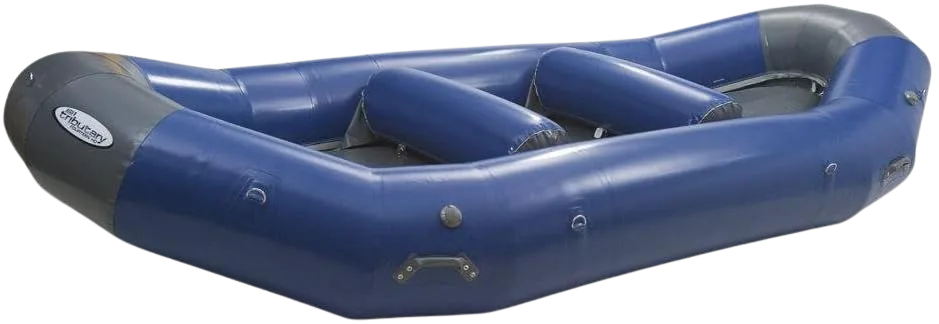
The Tributary 14′ HD earns the pick because it splits the difference honestly. It carries the AIRE name and the AIRE support channel, so it is not a gamble, but it sits on heavier-duty PVC at a price a first-time buyer can actually stomach. You give up the AIREcell bladder system and the 10-year no-fault coverage of the main AIRE line, and that is a fair trade at this budget. For a home Class III run and the occasional family float, it is more boat than most beginners give it credit for, and a far smarter buy than chasing a premium boat you will not grow into for years.
Conclusion
Strip away the brand loyalty and the decision is simple. The raft you buy comes down to three axes, material, warranty, and price, not the logo printed on the tube. The flat verdict is this: AIRE and Hyside are the durability buys, NRS is the do-everything generalist with the deepest support network, and Star is the de-risked budget gateway that happens to be NRS underneath. Most first-timers can skip the premium tier entirely and run their home water happily, with one caveat, do not cheap out on cold-water material if your season runs late and frosty.
Match the brand to your water and your crew before you match it to your wallet. Then go rig it and run something.
Frequently Asked Questions
01Is Star the same as NRS, and who makes Star rafts?
Yes. NRS acquired the Star brand in 2017, so Star is now an NRS-owned product line sold through NRS and backed by the NRS parts, support, and warranty network. That makes a budget Star a de-risked boat rather than a no-name import gamble.
02How long does a whitewater raft last?
A budget PVC boat lasts roughly five to seven years of regular use, while a Hypalon raft lasts fifteen to twenty under the same abuse. Hypalon costs about twice as much up front but often wins the per-season math if you boat hard and leave it in the sun.
03Is Hypalon or PVC better for a whitewater raft?
Neither wins outright. Hypalon lasts longer and resists sun and cold, while quality PVC is lighter and cheaper and plenty durable for occasional use. Choose Hypalon if you boat hard in hot or cold conditions, and choose PVC if you boat occasionally or want in for less.
04What size raft should a beginner private boater buy?
For most first private boats, a 12 to 14 ft self-bailing raft hits the sweet spot, big enough for a paddle crew or a family gear rig and small enough to handle and store. Go smaller for tight rivers and small crews, and only step up to 16 ft for big-water multi-day trips.
05Can you repair a torn raft tube in the field?
Sometimes. An AIRE bladder-and-shell boat lets you pull the inner AIREcell, patch it, and reinflate to finish a trip, and glued Hypalon seams can be field-patched too. But a split welded seam on a PVC boat usually needs heat-welding equipment, which makes it trip-ending in the backcountry.