


In this article
Hand the same brand of paddle to two people and you get two different stories. A guide’s fiberglass stick shrugs off a full season of controlled strokes, while the identical-brand carbon paddle handed to a first-timer snaps on day one, jammed against a rock during a panic brace. Same river, wildly different outcome, and the thing that broke it wasn’t the paddler’s strength but the abuse the shaft was never built for. That’s the gap in every paddle shaft material guide floating around, because almost none of them are written for a raft. Here’s what the choice actually means once you account for how a raft paddle really gets used, starting with how the four materials compare at a glance.
| Material | Weight | Rock durability | Feel & fatigue | Best for |
|---|---|---|---|---|
| Carbon | Lightest | Snaps on sharp impact, no warning | Very stiff, more shock to hands | Skilled guides chasing low weight |
| Aluminum | Heaviest | Bends and dents, rarely breaks | Stiff but cheap to replace, conducts cold | Crews, beginners, budget buyers |
| Wood | Heavy | Solid with a reinforced edge, splinters without | Natural spring, warm grip, easy on joints | Traditionalists who want comfort |
| Fiberglass | Mid | Flexes and absorbs rock hits | Flex cuts fatigue, moderate weight | The all-around middle ground |
What Each Paddle Shaft Material Actually Does on the Water
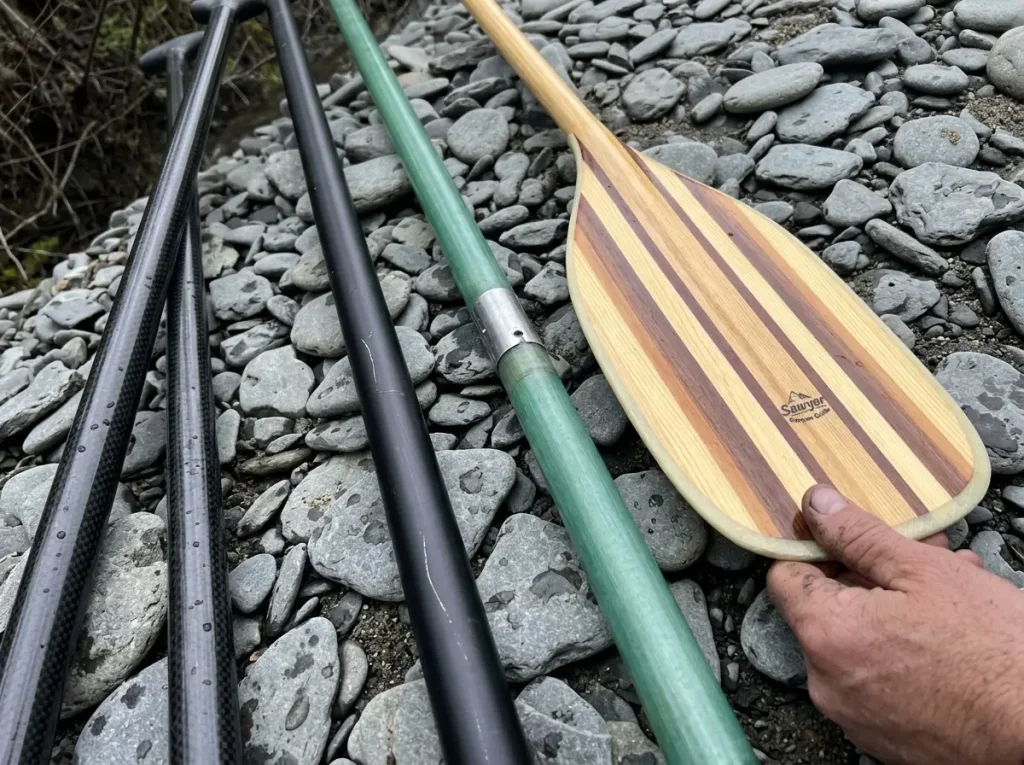
Forget the marketing for a second. A paddle shaft does two jobs on a raft: it transfers your stroke into the water, and it survives everything else that happens to it. Every material handles those two jobs differently, and the differences only matter once you know which one you’ll lean on more.
Carbon — Light, Stiff, and Unforgiving
Carbon fiber is the lightest and stiffest option, with the best weight-to-strength ratio of any shaft, and that stiffness is the whole pitch. More of your stroke goes straight into moving water instead of bending the shaft, so a carbon paddle feels crisp and efficient. The catch is that stiffness has nowhere to go when the shaft takes a hard, focused hit. It doesn’t flex out of trouble the way softer materials do, and that changes how it fails.
Aluminum — Heavy, Cold, and Nearly Unbreakable
Aluminum is the opposite personality. It’s the heaviest of the common shafts and it conducts cold straight into your palms, but it is ductile, which means it bends and dents long before it ever breaks. Jam an aluminum shaft against a rock and you’ll usually bow it, not snap it, and a bowed paddle still gets you to the takeout. That forgiveness is why it ends up in most crews’ hands.
Wood and Fiberglass — The Flex Nobody Talks About
Wood carries a small amount of natural spring, and that spring does something the spec sheets ignore: it softens the jolt of hard, repeated strokes so your hands and forearms take less of a beating over a long day. Fiberglass sits in the middle, flexing enough to absorb rock impact while staying lighter than aluminum. A four-piece breakdown like the Aqua-Bound Shred Fiberglass shows the appeal, its ferrule joints letting the shaft pack down for travel while keeping that forgiving flex. That flex-versus-stiffness trade is a fatigue factor completely separate from raw weight, and it’s half the reason wood and fiberglass still sell. Material is only one of two big paddle decisions, so nail the paddle sizing too by matching the right paddle length for your boat and torso before you buy.
Why Whitewater Breaks Paddles Differently Than Flatwater
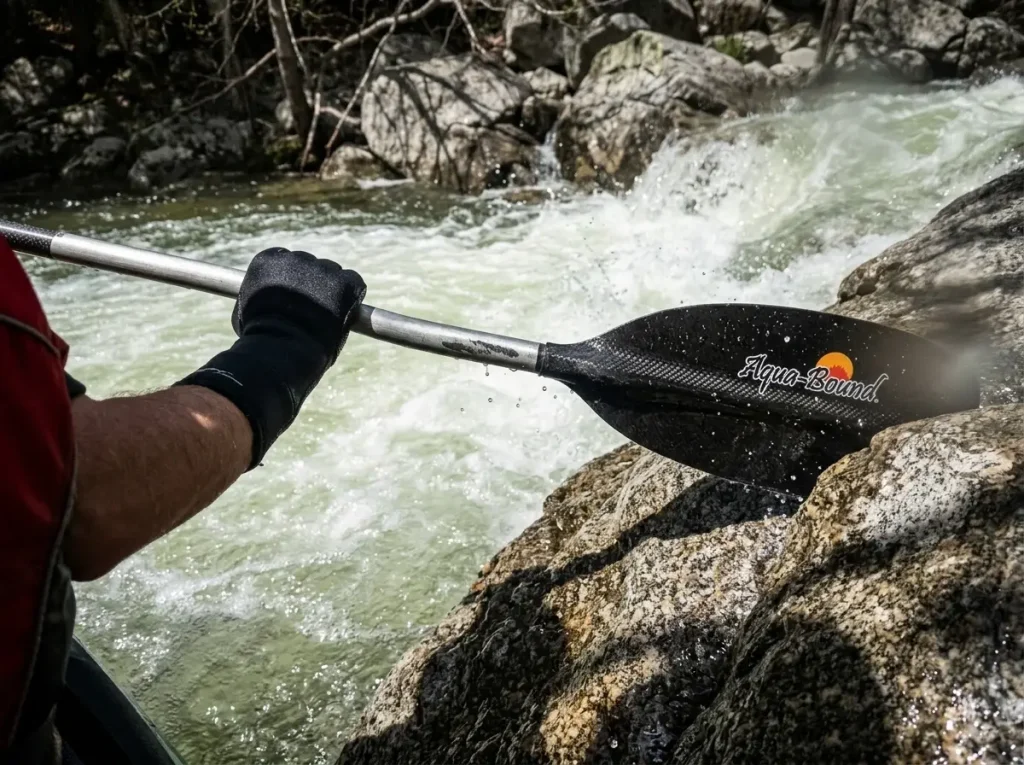
Here’s where most guides get it wrong. They read a paddle-shaft article written for a touring kayak or a stand-up board and assume it applies to a raft. It doesn’t, because a raft paddle lives a harder life than any of them.
Your Paddle Is a Brace and a Lever, Not Just a Blade
On flatwater, a paddle strokes. On whitewater, a single-blade T-grip raft paddle also braces against holes, pushes off boulders, catches gunwales, and gets stepped on in the boat. The moment that defines the difference is a crew paddler jamming the blade into a rock garden while bracing, not stroking, the kind of sideways load a Class III or Class IV line delivers that a touring blade never sees. That single stress case is why raft-paddle durability is its own conversation.
How Each Material Fails Under a Rock Strike
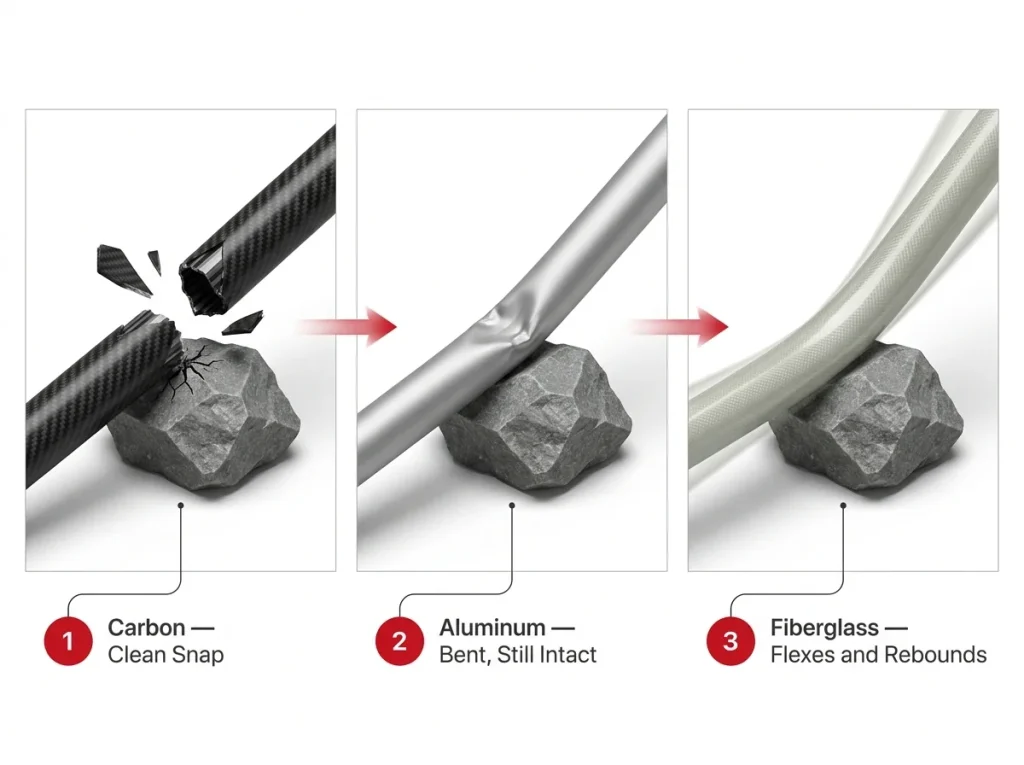
Under that sharp, focused rock strike, the three materials part ways hard. Carbon fails by snapping, suddenly and completely, with no warning bend to tell you it’s coming. Aluminum bends or dents and keeps working, so its ductility is really a safety trait as much as a durability one. Fiberglass flexes to absorb the hit and springs back, which is exactly why it’s the go-to for rocky, low-water runs where contact is constant, not the deep big-water lines where nothing touches your shaft. If you’re weighing a carbon paddle for that kind of water, the honest counterpart is the Aqua-Bound Shred Carbon, the same line as the fiberglass version so you can feel the stiffness jump within one brand before you commit to the brittleness that comes with it.
Not All Carbon Is the Same Carbon
The detail no raft-specific guide bothers to draw: carbon layups behave differently. An aramid or Kevlar-blend carbon has the best impact resistance and lasts the longest, while a stiff 3K racing layup chips and cracks on rock contact. A guide buying carbon for a low-water home river wants the impact-tolerant blend, not the lightest racing shaft, and the listing rarely makes that obvious.
Before you push off, grab the shaft at both ends and flex it hard, then hold it to your ear and listen. A faint tick or rattle inside a composite shaft means internal delamination or a hairline crack, and that paddle is one hard brace from letting go. Boaters call it ticking, and it’s the thirty-second field test that beats any spec sheet.
Once a shaft ticks, the next question is whether it’s worth saving, and that depends on the material and the break, which is its own call worth reading up on before you decide whether a cracked shaft is worth repairing.
Crew Paddle vs Guide Paddle and Why the Material Should Differ

Watch a commercial trip load up and you’ll notice something. The guide hands out matching aluminum paddles from the gear pile, then reaches for a different stick for themselves. That’s not a status move. It’s an engineering call, and it’s the distinction almost no general paddle-sport site knows to make.
The Crew Paddle Takes More Abuse Than You Think
A crew paddle absorbs more incidental abuse per hour than a guide’s ever will. Crew members brace in a panic, catch rocks they didn’t see, clunk the shaft on the raft tube, and grip too hard through every strokes-per-minute they can manage. That’s why aluminum gets called the workhorse of the outfitter world. It isn’t the budget leftover, it’s the right tool for how a crew paddle actually gets used and abused.
Why Guides Carry Something Different
A guide paddles skillfully, reads the water early, and rarely panic-braces, so the abuse math flips. With controlled strokes, a guide can justify the fatigue-reduction upgrade to a fiberglass or composite guide stick and actually feel the benefit over a long day. The word guide stick just means a guide’s personal, better paddle, as opposed to the generic ones handed out from the pile.
What a Guide Stick Actually Buys You
The classic example is the Werner Guide Stick, the fiberglass benchmark nearly every competitor points to. What you’re paying for is lower swing weight, the sense of how heavy the paddle feels in motion rather than on a scale, plus the flex that saves your forearms. For a crew member, none of that pays back. For someone steering hours a day, it does. If you’re outfitting paddlers on a budget, it’s worth understanding why a cheaper paddle often beats the pricey guide stick for most seats in the boat.
Buying paddles for a whole crew? Skip the temptation to spec everyone a matching carbon set. Put aluminum or composite shafts in crew hands and save the light stuff for whoever guides. The person taking the most incidental hits should be holding the most forgiving shaft, not the most expensive one.
The Price-to-Performance Reality Check
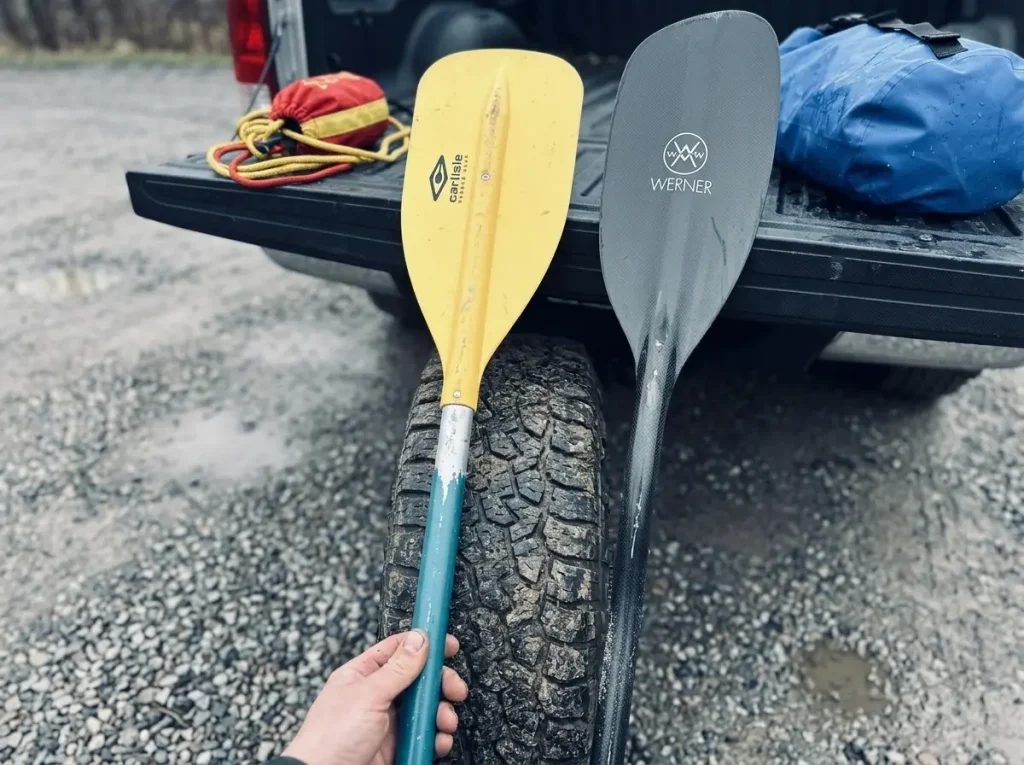
Stand in the shop with a budget aluminum paddle in one hand and a premium carbon one in the other, and the only honest question is whether you’ll ever feel the difference. Most rafters won’t, and nobody selling paddles wants to say it out loud.
What the Money Actually Buys
The jump to a premium fiberglass or carbon paddle buys two real things: less fatigue over a full day and better power transfer per stroke. Those gains are genuine. But they compound with stroke volume, which means they matter most to someone putting in thousands of refined strokes a day and barely register for someone paddling a few hours on a weekend.
Who Feels the Upgrade and Who Doesn’t
This is the honesty gap in every SUP-oriented guide, which leans toward “carbon is worth it” because that’s where the margin lives. The budget aluminum Carlisle Outfitter is genuinely fine for how a private boater or crew member actually paddles, not a compromise you settle for. A full-carbon bent shaft like the Werner Sherpa Carbon is a real upgrade at the other end, but its ergonomics only pay back for a paddler with the stroke volume and technique to exploit them. As NOLS teaches in its whitewater risk-management curriculum, matching gear to conditions rather than chasing the lightest spec sheet is the core of responsible river preparedness, and that applies to paddles as much as anything.
The Honest Verdict for Most Rafters
Buy for how you paddle, not for the number on the scale. If you paddle occasionally or ride as crew, aluminum is the right answer and carbon won’t survive a rock garden any better than it does. If you want the full rundown of specific picks by budget, our breakdown of the best rafting paddles without overpaying for carbon sorts them out by who’s actually holding them.
The fastest way to waste money on a paddle is to buy the material before you count your paddle days. Add up the hours you actually spend stroking in a season. Under a couple dozen days, put the savings toward a spare aluminum paddle strapped to the frame instead. A backup on the boat outperforms a fancy shaft you snapped with no replacement.
The Hybrid Middle Ground of Composite and Wood-Carbon Blends
The three-material framing is tidy, but the shafts actually worth buying often live between the categories. This is the same honest ground our wood-versus-carbon breakdown on the oar side covers, and it applies just as much to hand paddles.
When Wood Isn’t Really Wood
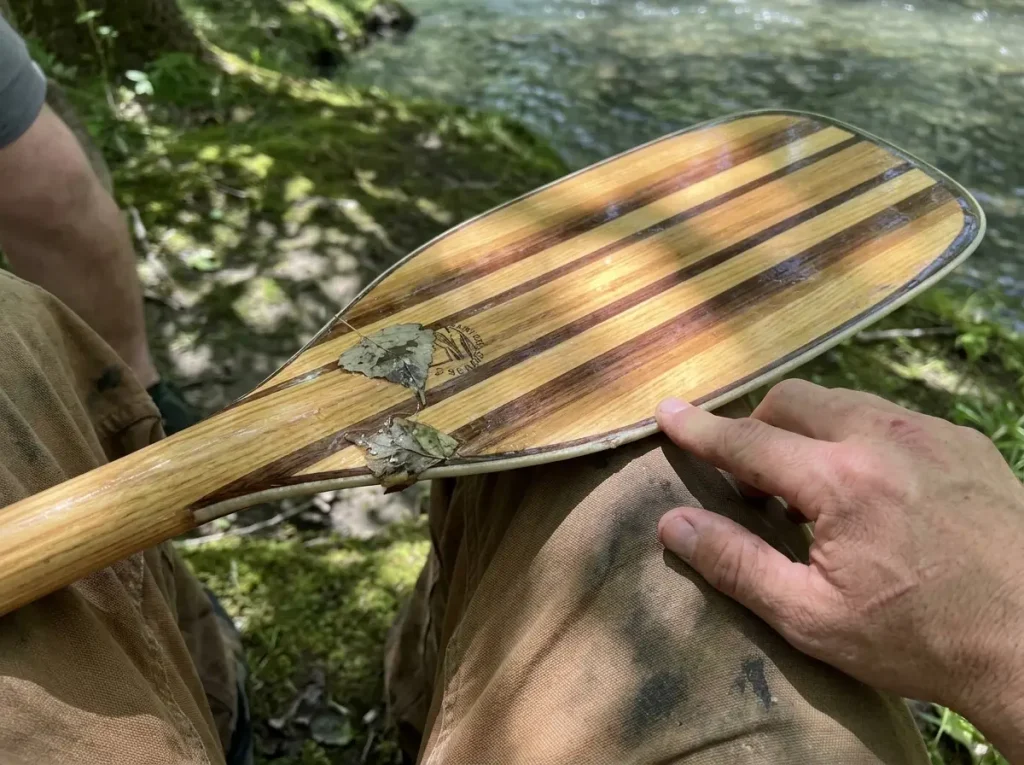
Plenty of “wood” performance shafts sold today are wood-carbon composite hybrids, not solid timber, and the marketing copy blurs it. If a wood paddle’s spec sheet also lists a carbon layer or resin composite, you aren’t buying the pure flex-and-warmth feel, you’re buying a hybrid with its own failure behavior. Read the full spec, not the headline material.
Composite Shafts Split the Difference
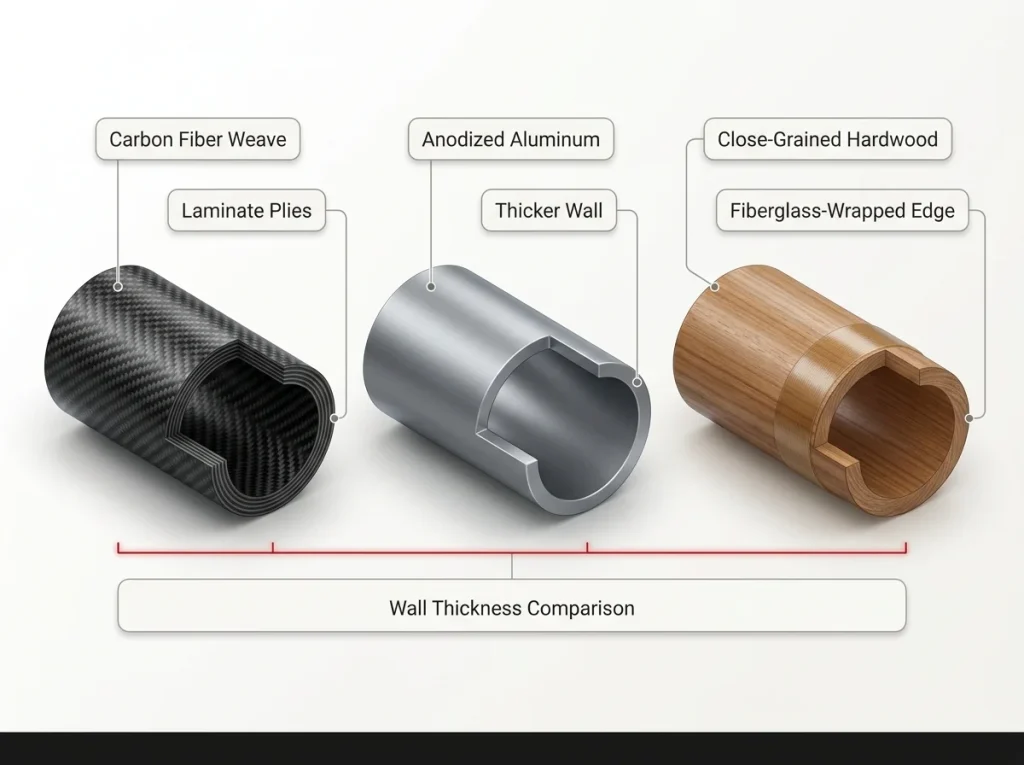
A whitewater-rated wood paddle also isn’t the same product as a flatwater one. It uses close-grained hardwood with the blade edge wrapped in fiberglass so it survives rock contact, where a raw wood edge would splinter. The Sawyer Canyon Guide Wood is the whitewater-built version of that idea, reinforced edge and all, rather than a pretty touring paddle that dies on the first strike. Xenoy and ABS thermoplastic composite shafts push the same middle path from the other direction, giving you much of aluminum’s durability with less cold conduction and less weight.
What You Gain and What You Give Up
The trade is simple. A hybrid or composite shaft hands you predictable durability and a warmer, lighter grip than aluminum, but you give up the pure all-wood spring that traditionalists chase and the raw low weight of full carbon. For a lot of boaters that’s the smartest compromise on the rack, which is exactly why the category deserves more than the footnote it usually gets.
Cold Hands, Cold Water, and the Safety Angle Nobody Mentions
Every paddle guide treats material as a comfort-and-performance question. On a cold-water trip it’s also a grip question, and grip is a control question. Nobody connects those dots, so here it is.
Aluminum Conducts Cold, and Your Hands Pay for It
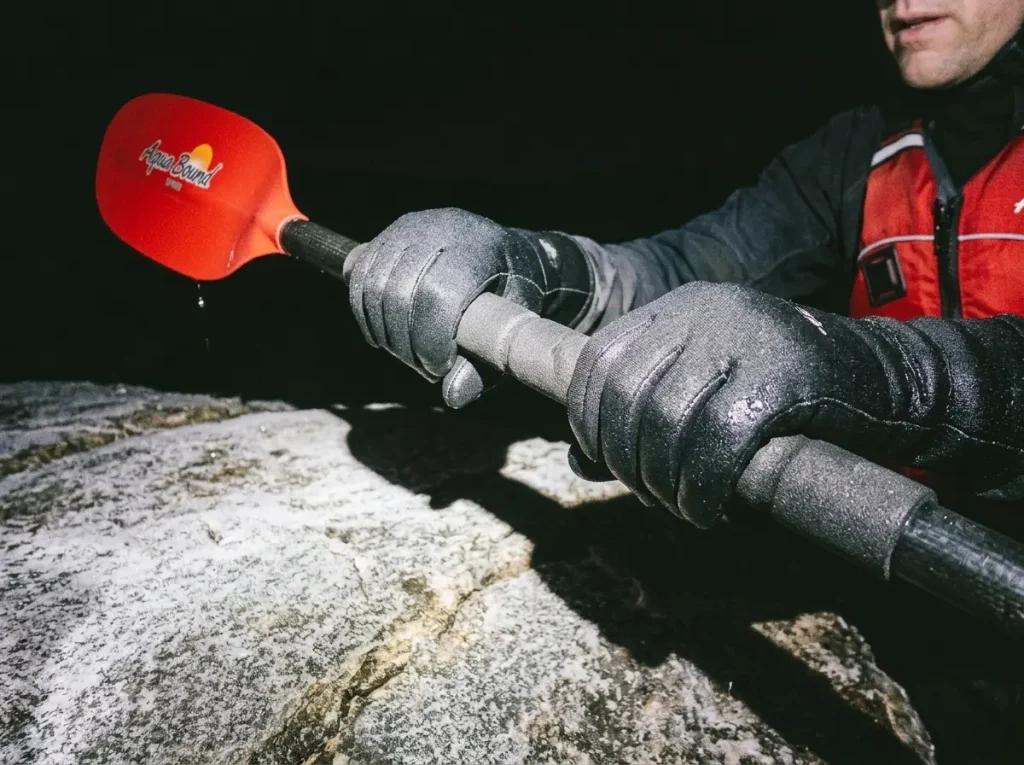
Aluminum conducts cold and stays cold in low air and water temps, while wood and foam-wrapped composite grips stay comparatively warm. Six hours gripping a cold aluminum shaft with wet gloves on an April runoff trip is a real hand-numbness problem, not a minor gripe. On that kind of day, shaft material drives hand comfort almost as much as your gloves do.
Numb Hands Are a Grip Problem, Not Just a Comfort One
Here’s the part that crosses into safety. Numb, cold-stiffened hands grip worse, and a weaker grip means less control of the paddle exactly when a cold-water swim demands the most from you. The American Whitewater Safety Code puts maintaining control of your craft above nearly everything else, and a shaft that helps your hands quit early works against that. It’s a small factor, but it stacks with every other cold-water stressor.
The Fix Without Buying a New Paddle
You don’t have to re-buy your whole setup. A foam-gripped composite shaft, or wood, sidesteps the cold-conduction problem where bare aluminum can’t, and even a section of grip tape helps on a metal shaft you already own. Pair whatever you’re holding with the right gloves for cold-water paddle control, because shaft and gloves work the cold problem together rather than either one alone.
On early-season cold water, wrap a strip of grip tape or a foam sleeve around the choke points where your hands live on the shaft. It cuts the cold conduction on an aluminum paddle for a couple of dollars, and it gives numb, gloved hands something grippier to hold when the water goes over the tubes.
The Bottom Line on Shaft Material
Material is about how a paddle fails and how it fatigues you, not just what it weighs. Carbon snaps without warning, aluminum bends and keeps going, and wood and fiberglass flex enough to save both the shaft and your forearms. Match the stick to how you actually paddle: crews and occasional boaters are right to run aluminum, and guides earn the fiberglass or composite upgrade through the strokes they put in. Most rafters don’t need carbon, and paying for it won’t make a paddle survive a rock garden any better.
Next time someone hands you a paddle off the gear pile, flex the shaft and listen for a tick before you push off. Thirty seconds tells you more than any spec sheet on the wall.
Frequently Asked Questions
01Is carbon fiber better than aluminum for a paddle shaft?
For most rafters, no. Carbon is lighter and stiffer, but a raft paddle takes rock strikes and hard braces where aluminum’s bend-don’t-break durability matters more than saved ounces. Carbon only pulls ahead for skilled, high-volume guides.
02What is the best material for a whitewater raft paddle?
For crew and occasional paddlers, aluminum. For a guide’s personal paddle, fiberglass or a composite guide stick. Full carbon is worth it only if you paddle for hours with a refined stroke and rarely panic-brace.
03Do carbon paddles break easily?
Not from normal paddling, but they fail suddenly. A sharp, focused rock impact can snap a carbon shaft with no warning bend, where aluminum would only dent. A ticking rattle in a carbon shaft signals a hairline crack before it lets go.
04Is an aluminum paddle shaft good for beginners?
Yes, it’s the best beginner choice. Aluminum forgives the incidental abuse new paddlers put a shaft through, costs the least, and bends instead of snapping if it takes a hard hit. The added weight is a fair trade for that durability.
05Do wood paddles hold up in whitewater?
A whitewater-rated wood paddle does, because it uses close-grained hardwood with a fiberglass-wrapped blade edge for rock contact, unlike a flatwater paddle. Many wood performance shafts are actually wood-carbon hybrids, so read the full spec before buying.