
In this article
Almost every “best rafting gloves” list you’ll find is really a kayaking-glove list wearing a rafting hat, written for the straight push-pull of a paddle, not the twisting friction of an oar rolling in its lock or the half-second a cold hand has to find a throw rope after a flip. Those are different jobs, and the gloves that win one don’t automatically win the other. What follows sorts real picks by the two things that actually decide it on the water, grip and warmth, then matches them to how you boat, guide-grade down to budget. Think of it as one piece of the bigger question of what to wear on the water.
How to Choose Rafting Gloves Before You Look at Brands
Before you spend a dime, four things decide whether a glove works on a raft: neoprene thickness, palm grip, finger coverage, and fit. Get those right and almost any brand will do. Get them wrong and the most expensive glove on the shelf still fails you. Here’s where each one matters, and where the standard kayak advice steers rafters wrong.
Match Neoprene Thickness to the Water You’re Actually Rowing
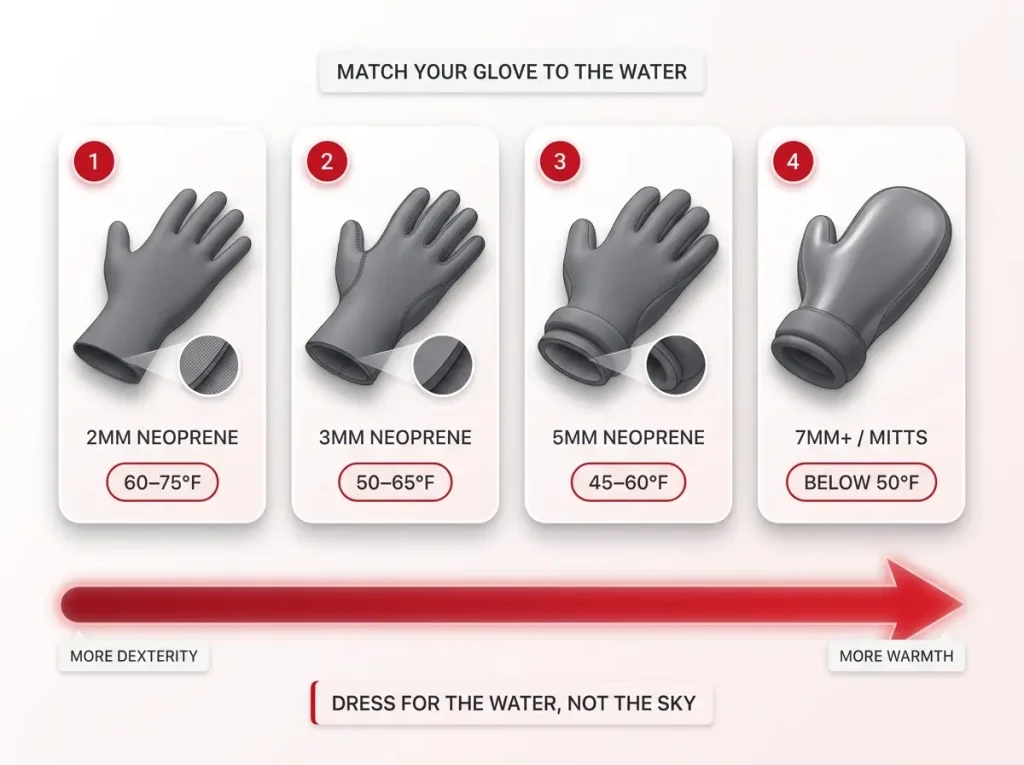
The mistake almost everyone makes is buying for the air temperature at the put-in instead of the water temperature. A warm morning means nothing when the river is 48 degrees and your hands are in and out of it all day. As a rough map, 2mm neoprene suits water around 60 to 75°F, 3mm covers roughly 50 to 65°F, 5mm handles 45 to 60°F, and you’re into 7mm territory below 50. That relationship between neoprene thickness and water temperature is the whole game.
Here’s the trade nobody tells beginners: the warmer the glove, the less you feel the oar. Go too thick for the conditions and you’ll spend the day fighting to sense the blade angle, which is worse than being a little cold. If you’re still working out how to dial in the rest of your cold-water layers, the same rule applies, dress for the water, not the sky.
Grip and Palm, Built for an Oar, Not a Paddle
This is the part kayak-glove reviews get wrong for rafters. A kayak paddle is a straight push and pull against your palm. An oar is different: the shaft rotates inside the oarlock every stroke, and it grinds a specific wear pattern into the palm that a paddle never touches. That rotating friction is why cheap palms slick out and blow through faster on a raft than they ever would in a kayak.
Look for a real grip material, Amara synthetic leather, a silicone grip print pattern, or a seamless palm that won’t chafe. It’s also worth checking how the palm is built: glued construction with sewn seams reinforcing it lasts longer than stitching alone, which pulls apart under load. The palm is the part that dies first, so it’s the part worth paying for. When you’re gripping the oar shaft itself hour after hour, a slick or thin palm turns into blisters, calluses, and lost control at exactly the wrong moment.
Fingerless vs Full-Finger (Dexterity vs Warmth)
Open-finger gloves win on dexterity: tying knots, cinching straps, digging a carabiner out of a jumble. Full-finger gloves, sometimes sold as closed-finger gloves, win on warmth and cover your fingertips from sun and blisters on long days. On bright, hot water, a thin pair of UPF sun gloves built for UV protection is a different tool again, made for burn protection rather than warmth. Neither is “better,” they’re answers to different days.
On hot, sunny rigging days, plenty of guides skip dedicated paddling gloves entirely and run a thin liner or a grippy garden glove. It protects your hands from blisters and sun without cooking them, and it costs almost nothing. The fancy neoprene stays in the dry bag until the water gets cold.
Fit and Sizing, Why Second-Skin Matters
Fit isn’t comfort, it’s function. A glove with extra material flushes cold water through with every splash and rubs a blister where it bunches. Too tight and it cuts circulation on a long row day, which leaves your hands colder than no glove at all. You want a second-skin fit, snug everywhere, no loose fabric at the fingertips or across the back of the hand.
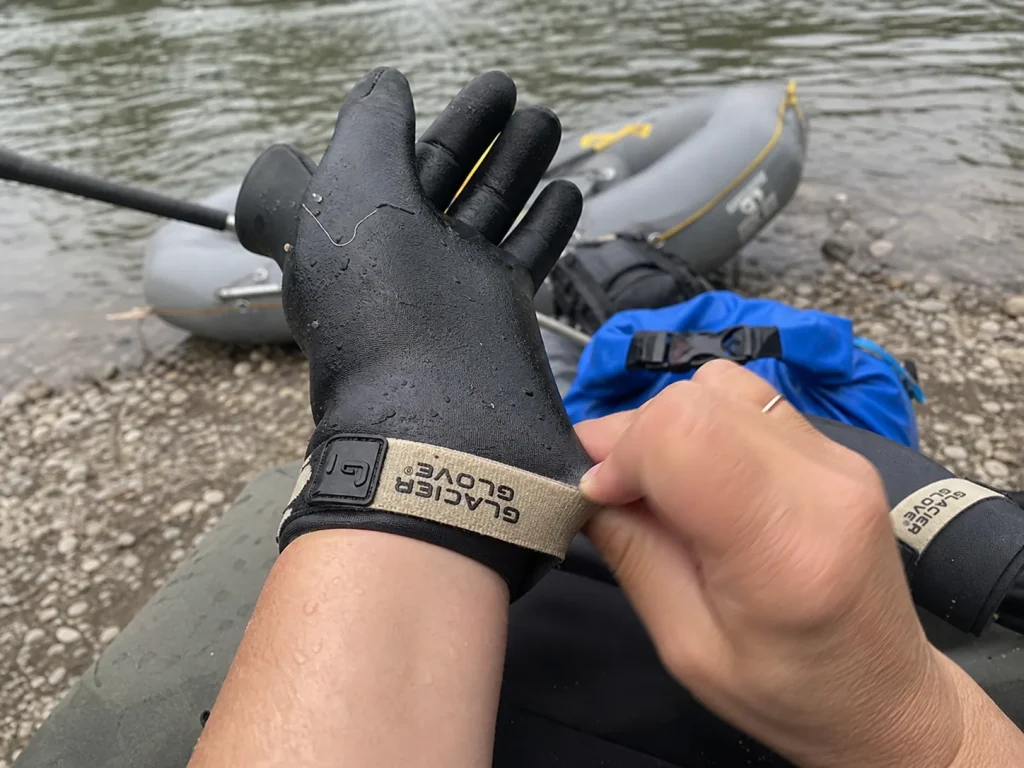
Check the wrist closure too. A hook-and-loop closure that gives you a real cuff seal keeps cold water from flushing up your sleeve, which matters as much as the fit across your palm.
The catch is that neoprene gives a little once it’s wet, so a glove that feels barely snug dry is often right on the water. When in doubt between sizes, size down. A glove you have to actively grip to keep on will wear you out by lunch.
Why Glove Dexterity Is a Rescue Issue, Not Just Comfort
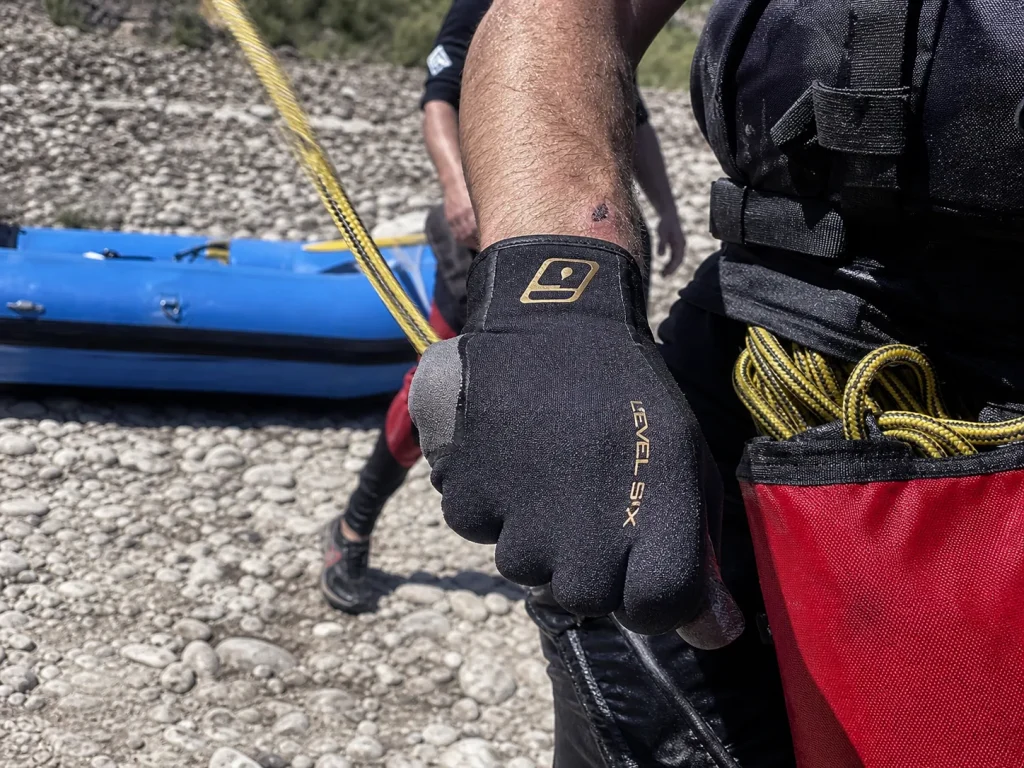
Here’s the part that separates a rafting glove from a kayak glove: on a raft, your hands are your rescue tools. The thing that gets people in cold water isn’t the cold they feel, it’s what their hands quietly stop being able to do. And it happens faster than almost anyone expects.
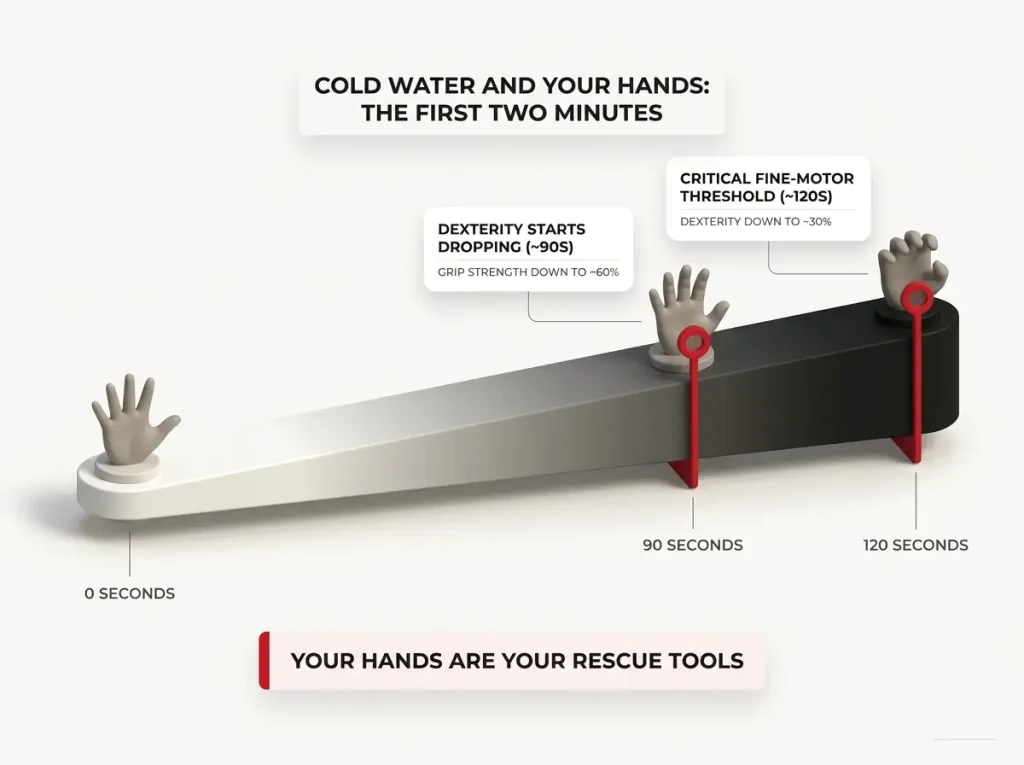
In cold-immersion research, grip strength drops by as much as 60 percent and manual dexterity by roughly 30 percent, and the fine-motor loss starts within about 90 seconds of hitting the water, with a real function threshold crossed near two minutes. You don’t get a warning window. Worse, you don’t need glacial melt for it: NOAA’s cold-water hazard guidance notes hands begin losing dexterity around 59°F, an ordinary spring or fall temperature. Line that up with the National Center for Cold Water Safety’s survival estimates and the picture is clear: the “swim to shore” plan asks a lot of hands that are already failing.
So the real test of a glove isn’t just whether it keeps you warm between rapids. It’s whether it lets you deploy the throw bag you’re trusting to save a swimmer, work a knot, and clip into the rest of your safety kit with numb fingers. A glove that’s toasty but bulky, or one that’s air-filled and loose, measurably slows all of that down. Fit and dexterity are safety specs, not luxuries. You’re not really buying gloves for the calm water. You’re buying them for the two minutes you hope never happen.
Do the throw-bag test at home. Put the gloves on, wet them, and see if you can pull the bag out and grip the rope fast. If the gloves fumble the grab in your living room, they’ll fumble it worse on a cold river. Treat glove fit like you’d treat a PFD buckle, it either works when you need it or it doesn’t.
NRS Boater’s Gloves, Best Overall for Oar Grip and Dexterity
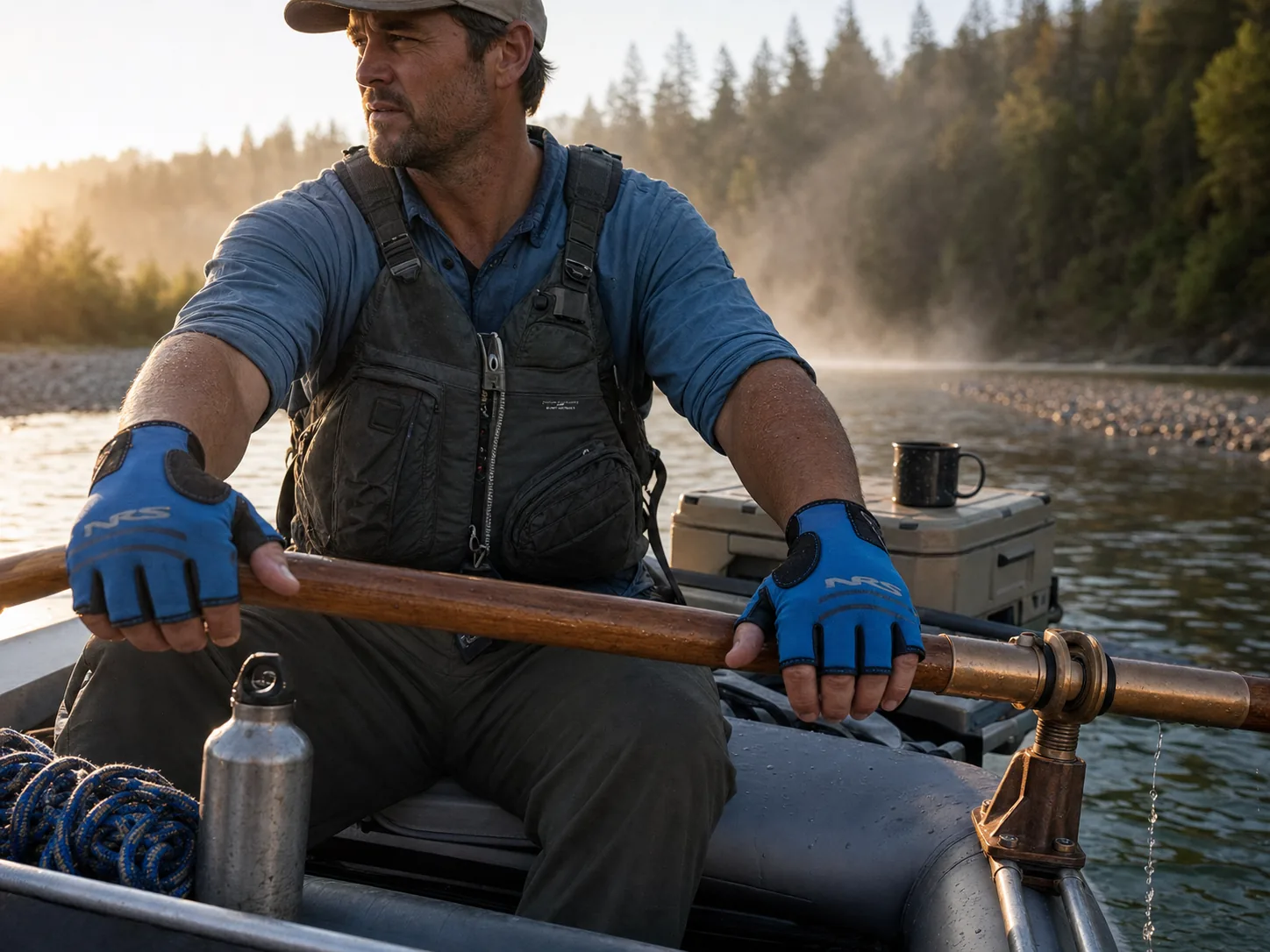
If you want to buy one pair and stop thinking about it, this is the pair. The Boater’s Glove is the default recommendation that keeps coming up on private-boater threads, and for good reason: it’s fingerless, so you keep the dexterity for knots and rigging, but the Amara synthetic-leather palm is built to survive the oarlock friction that chews up cheaper gloves.
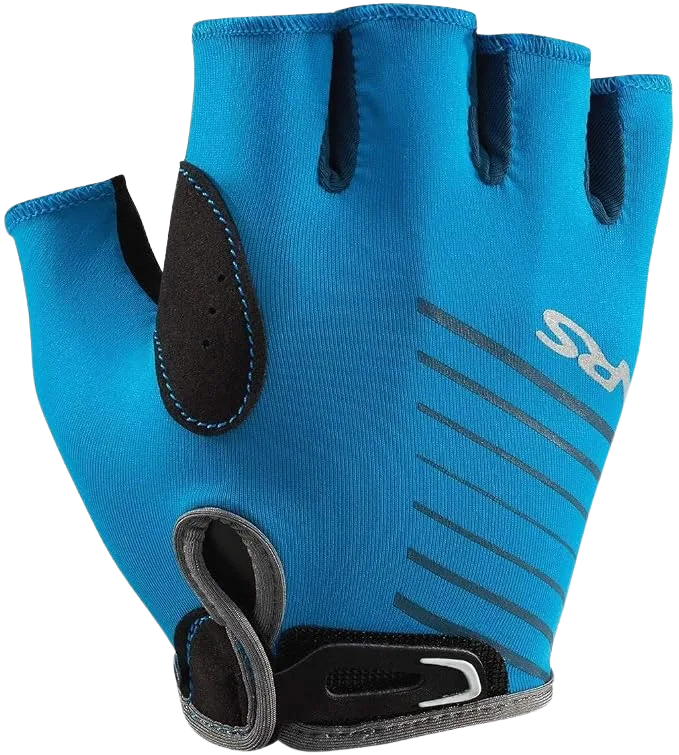
The honest caveat: fingerless means cold fingertips, so this is a three-season glove, not a January one. And if you only raft a couple of weekends a summer, it’s more glove than you need, jump to the budget pick below. But for anyone rowing regularly through spring, summer, and fall, this is the one that just works. It comes in men’s and women’s sizing, and the fit really does differ, so grab the one that matches your hand. Once you understand how you actually work the oars, you’ll appreciate why the palm and the open fingers matter more than any spec sheet.
NRS HydroSkin Gloves, Best for Three-Season Cold Water
When bare hands are too cold but a winter mitt would deaden your feel, the HydroSkin is the answer. It’s a full-finger glove built from roughly 1.5 to 2mm bonded neoprene with a brushed interior, so it adds real warmth without the bulk that makes you fight the oar.
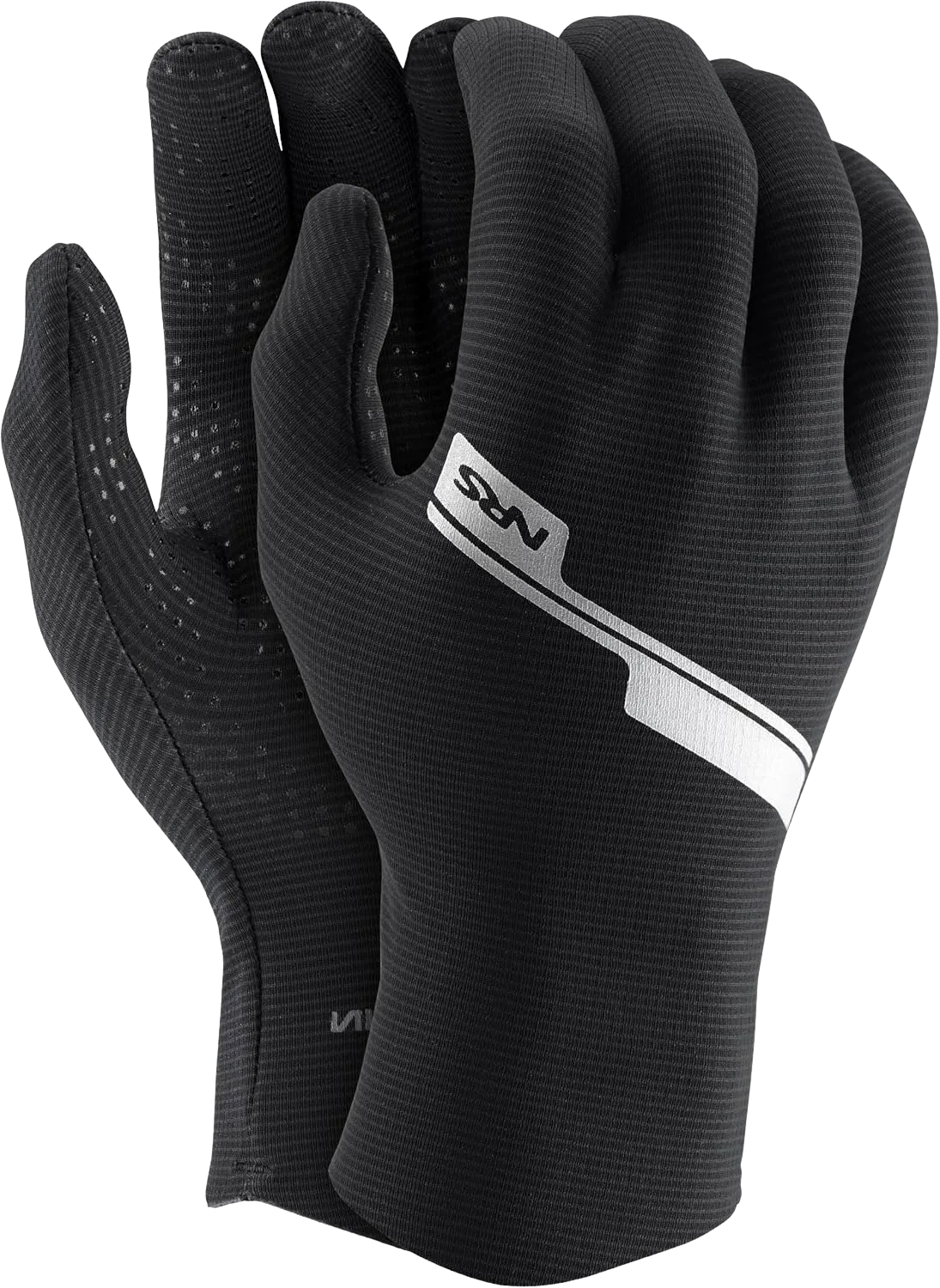
The brushed interior acts like a light fleece lining, adding a bit of thermal insulation without the bulk that kills feel. Trade-off honesty: you give up some fingertip dexterity compared to the fingerless Boater’s, so knot work is a touch clumsier. That’s the deal you make for warm fingers. Think of it as the glove that bridges the gap between summer and winter, and pair it with a sensible read on how you’re dressing for cold water overall, because gloves alone won’t save a badly-dressed swimmer.
NRS Half-Finger Guide Gloves, Best for Rescue-Ready Dexterity
Remember the rescue section? This is the glove that answers it. The Half-Finger Guide Glove is open-fingered on purpose, built for people who need full sensation to deploy a throw bag, tie a knot, or run a Z-drag while the clock is ticking. It’s guide-grade, meaning it’s made to survive a full season of daily abuse, not a handful of trips.
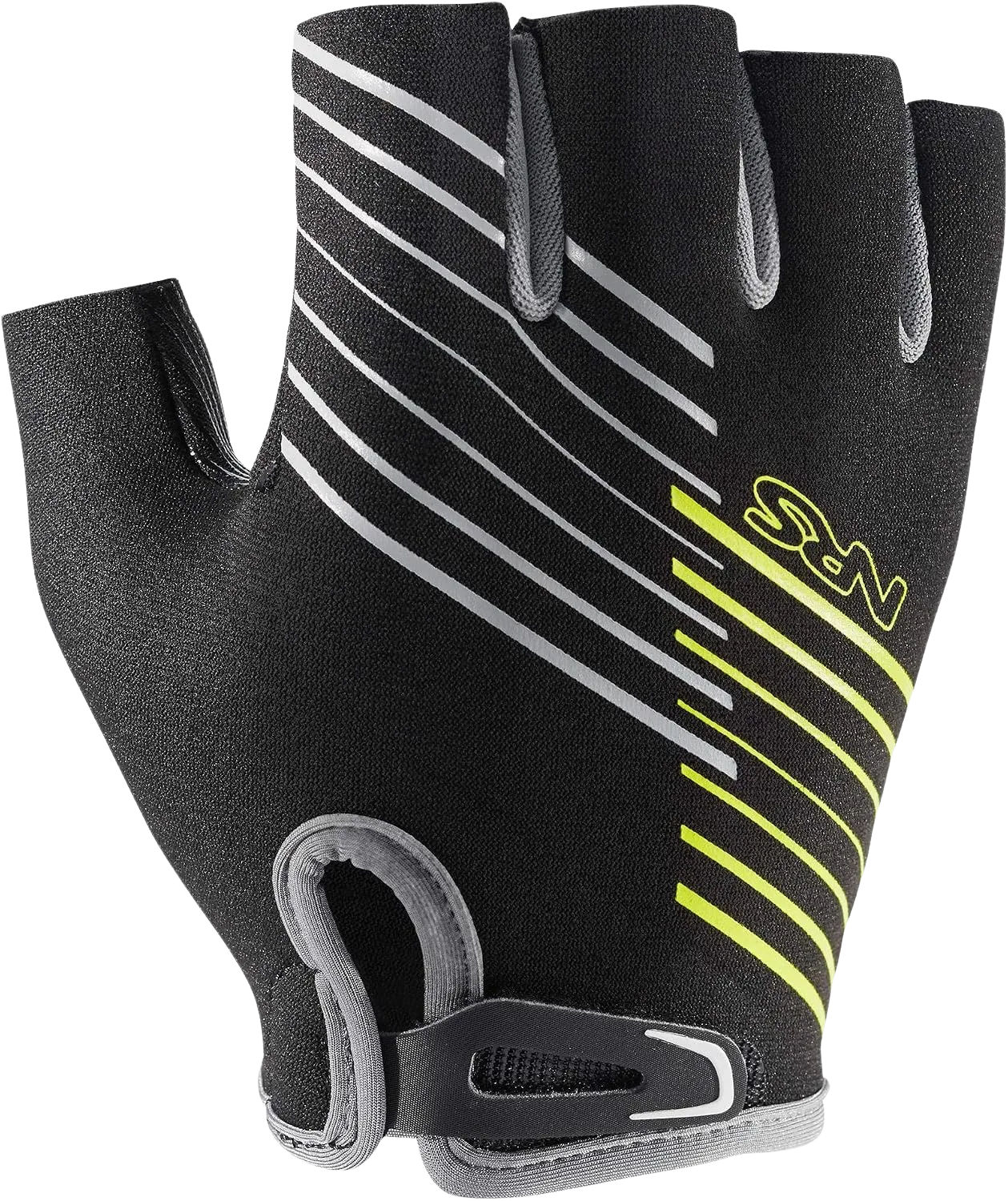
If you row safety, run trips, or just take swiftwater rescue seriously, the extra durability earns its keep. For a weekend boater who rarely handles rescue rope, it’s probably more glove than the day calls for, and the Boater’s covers you fine. But when your hands are the difference between a clean rescue and a bad one, this is the glove that doesn’t cost you seconds.
Outdoor Research Granite Gloves, Best for Rigging and Rope Work
Here’s a pick the kayak roundups never surface: a full-leather glove borrowed from the rope-work world. The OR Granite uses a full goat-leather palm with Kevlar stitching and a harness clip loop, which makes it the best of this bunch for the boater who does as much rigging, lining, and rope handling as actual rowing.
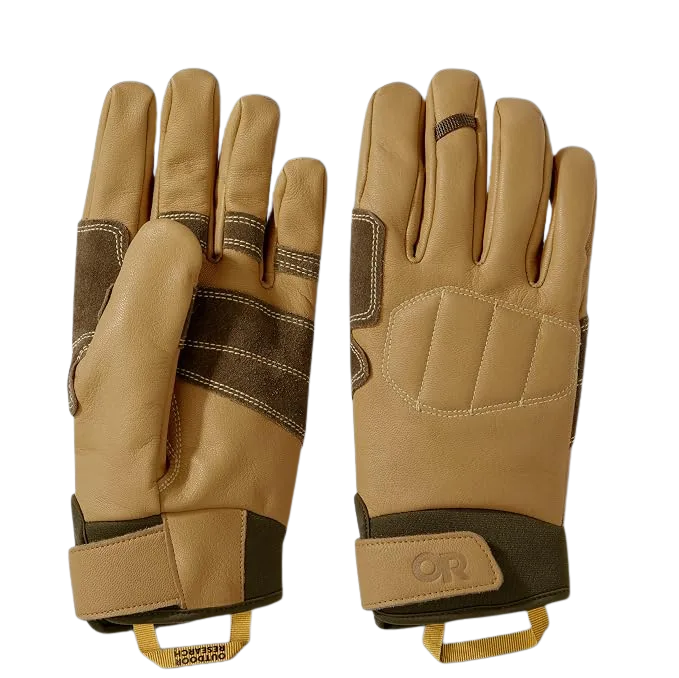
Know what it isn’t: leather is a poor choice for cold-water warmth, and it takes time to dry once soaked. This isn’t the glove for a January row. But for hauling a loaded raft up a boat ramp, cinching down a raft rig, and doing the endless rope chores of a multi-day trip, nothing else here holds up like it.
Level Six Granite Gloves, Best for Oarlock Grip in Cold Conditions
This is the most direct answer to the oar-grip problem we opened with. The Level Six Granite uses a textured synthetic-leather palm engineered specifically for a powerful, non-slip hold on a wet, rotating shaft, which is exactly the demand an oar makes and a dry-land paddle grip doesn’t.
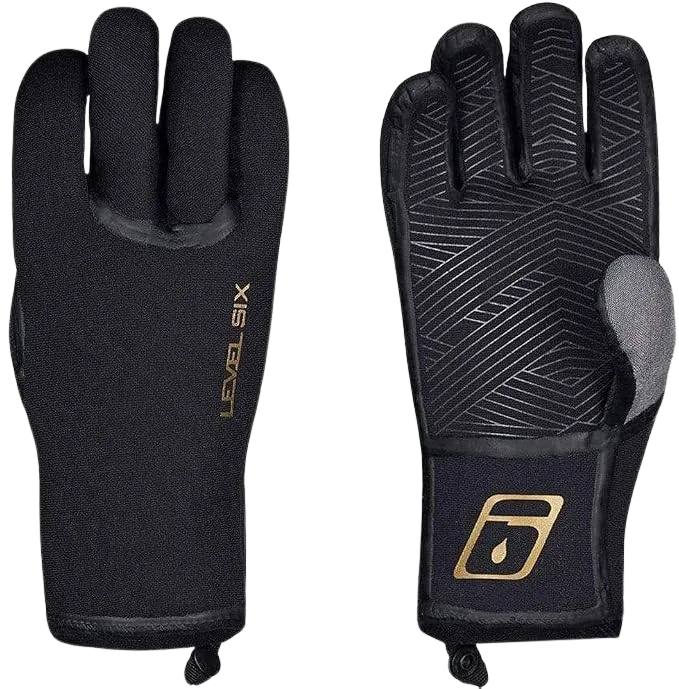
If your main complaint has ever been that your oar wanders in your grip once everything’s wet and your hands are cold, this is the pick that targets it directly. It’s a solid all-arounder too, but the grip is what earns it a spot on this list.
Glacier Glove Perfect Curve, Best Budget Pick
Not everyone needs a guide glove. If you raft a handful of times a summer, the Glacier Glove Perfect Curve gives you a real grip palm and a genuinely good fit for the least money. It runs 2mm neoprene with pre-curved fingers and a textured palm, and it punches well above its price.
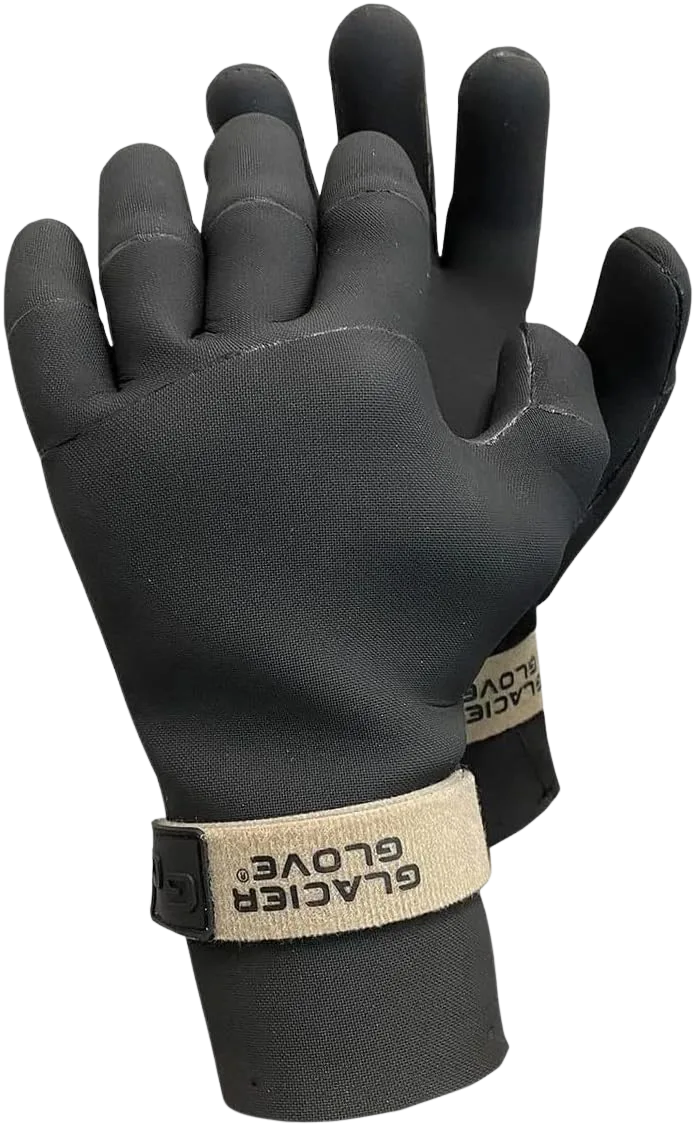
It won’t survive a 100-day season the way the guide gloves will, and the 2mm neoprene tops out before truly cold water. But for the boater matching gear to a few trips a year, paying guide-glove money would be the actual mistake. This is the honest pick for most weekend rafters.
NRS Toaster Mitts, Best for Winter and Multi-Day Cold Expeditions
Once you cross into real winter water, gloves stop cutting it and you switch to mitts. The Toaster Mitt trades finger independence for a genuine warmth jump: 3.5mm neoprene, a titanium-laminate exterior that reflects heat back, a RawHide grip palm, and liquid-sealed seams that don’t leak.
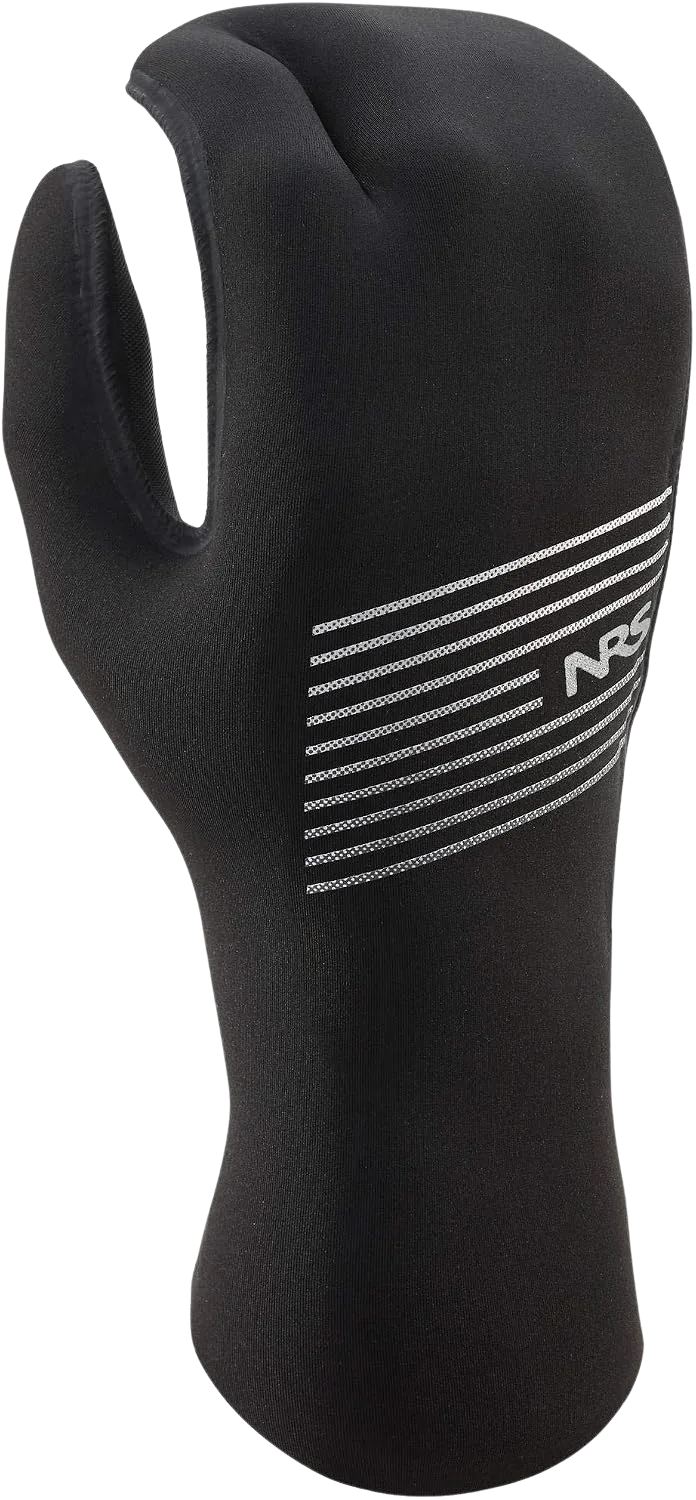
The obvious trade is dexterity, mittens make knot work and fine tasks clumsy, so keep a thin glove in your kit for rigging chores. There’s also a quiet multi-day benefit: fully covered hands take less cumulative sun and water exposure across consecutive days than thin gloves do, which matters more than people expect on a long trip.
NRS Mamba Pogies, Best for Hard Whitewater in Cold
For rowers who refuse to give up bare-hand feel even when it’s cold, the answer is pogies. Instead of covering your hand, the Mamba Pogie attaches to the oar or paddle shaft itself and your bare hand slides in, so your skin stays in direct contact with the shaft with a 5mm neoprene warmth buffer wrapped around it.
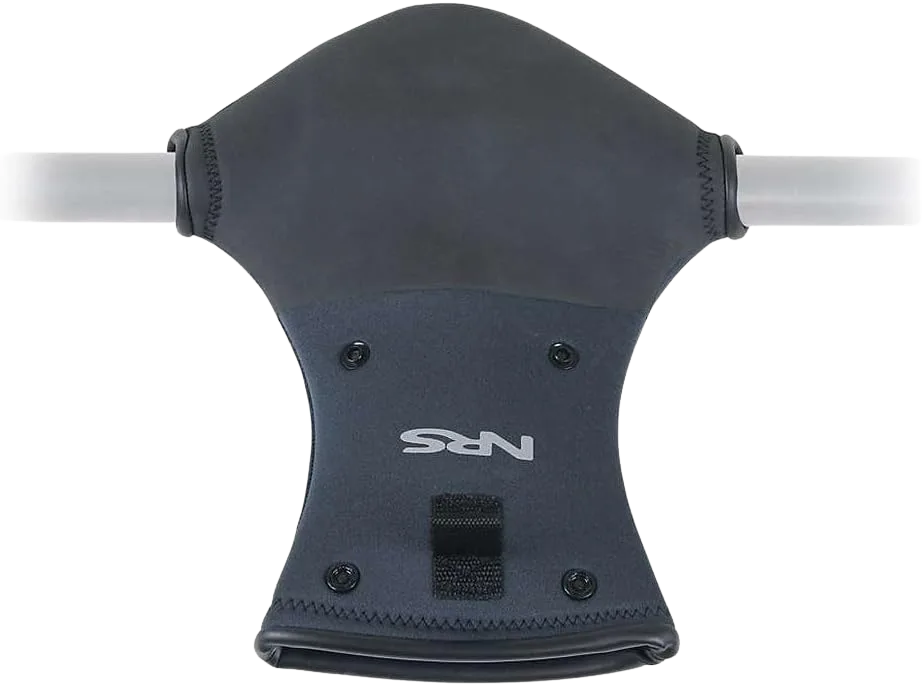
Here’s the field rule for the cold-water choice: run mitts on days where you flip and swim a lot, when max warmth beats precision and you might be out of the boat. Run pogies on hard whitewater where you need instant bare-hand access to the oar and can’t afford a fumbled grip between rapids. They solve the same problem from opposite directions.
Matching Gloves to How Often You Actually Boat (and Caring for Both)

The last question isn’t which glove is best, it’s which glove is right for you. And that comes down to how often you’re actually on the water, plus a couple of hand-care habits that make any glove last longer.
Weekend Boater vs. Guide, What You Actually Need
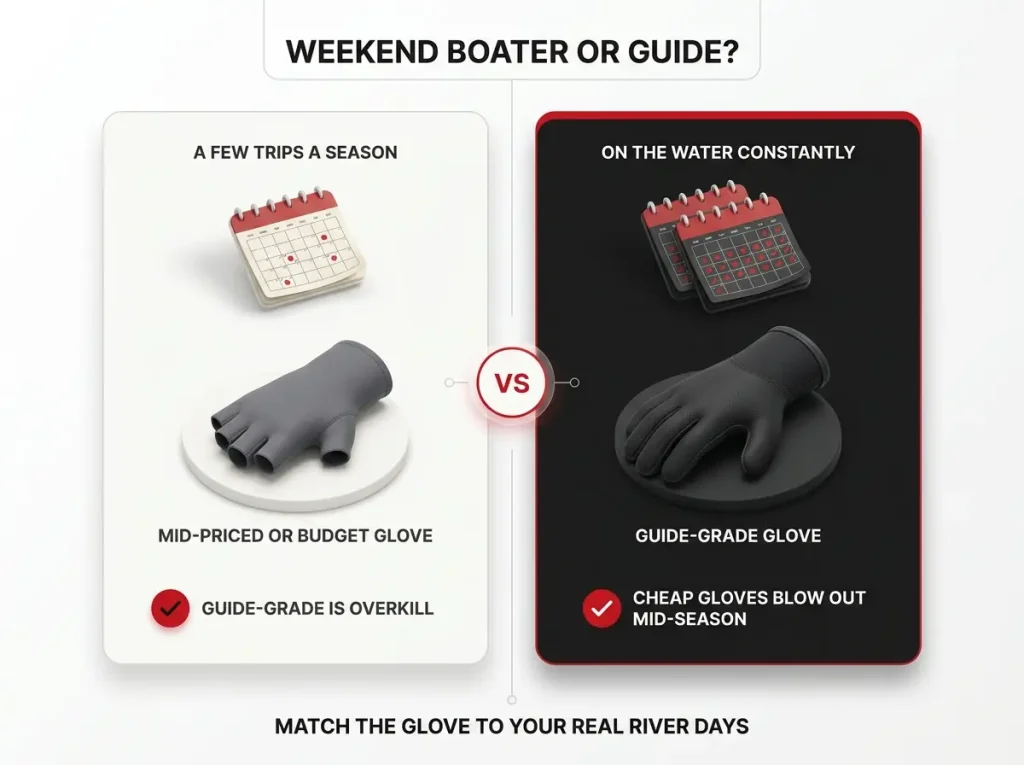
The math is different for different boaters. If you run a few trips a season, a mid-priced or budget glove is the honest call, and buying guide-grade gear you’ll use six days a year is just spending money to feel prepared. If you’re on the water constantly, though, the cheap glove is the false economy, it can’t take the wear and tear and blows out mid-season, so you rebuy twice and spend more than premium gloves would have cost. Match the durability to your real river days, not to the glove that photographs best.
On multi-day trips, river silt and clay act like a desiccant and dry your skin out fast. Veteran boaters smear on a heavy moisturizer, Aquaphor, Bag Balm, or plain thick lotion, before they glove up in the morning. It sounds fussy until day three, when your cracked knuckles disagree.
Hands and Gloves on a Multi-Day Trip
Two habits save a trip. First, break new gloves in before a big run, showing up with fresh, stiff gloves and no wear-in is how people finish day one with blown seams and blisters anyway. Second, care for the gloves themselves: rinse them after each day, and dry them out of direct sun so the neoprene doesn’t bake and crack. That kind of small routine is the same logic behind keeping your gear alive between trips, a little attention now buys you seasons later.
Conclusion
Three things carry the whole decision. Match glove thickness to the water temperature you’re actually rowing, not the air. Treat fit and dexterity as safety specs, because a glove that fumbles a throw bag is a liability no matter how warm it is. And buy for how often you really boat, not for the guide fantasy.
Before your next run, check the water temp first. Then pick the glove that fits that day, not the warmest or most expensive one on the shelf. Your hands will tell you at the takeout whether you got it right.
Frequently Asked Questions
01Do you actually need gloves for rafting?
Not always. On warm water, gloves are mostly about blister and sun protection, and you can skip them. In cold water they become real safety gear, keeping your hands working well enough to grip a rope or clip a buckle.
02What thickness of neoprene glove is best for rafting?
Match it to water temperature: 2mm for roughly 60 to 75°F, 3mm for 50 to 65°F, and 5mm for 45 to 60°F. Below 50°F, most boaters move to 7mm neoprene or switch to mitts for the warmth.
03Are fingerless gloves better than full-finger for rafting?
Neither is universally better. Fingerless gloves win on dexterity for knots, rigging, and rescue, while full-finger gloves win on warmth and sun protection. Pick fingerless for warm, hands-on days and full-finger when the water turns cold.
04How do you keep your hands warm rafting in cold water?
Move up in thickness and coverage: a 5mm full-finger glove, thick neoprene mitts, or pogies that mount on the oar shaft. Mitts and pogies keep the most heat because they limit exposure and hold warmth around the whole hand.
05Can you just wear work or garden gloves for rafting?
On warm, sunny rigging days, yes, plenty of guides run a thin grippy garden glove for blister and sun protection. Just don’t rely on them in cold water, since they offer no real warmth and soak through fast.