

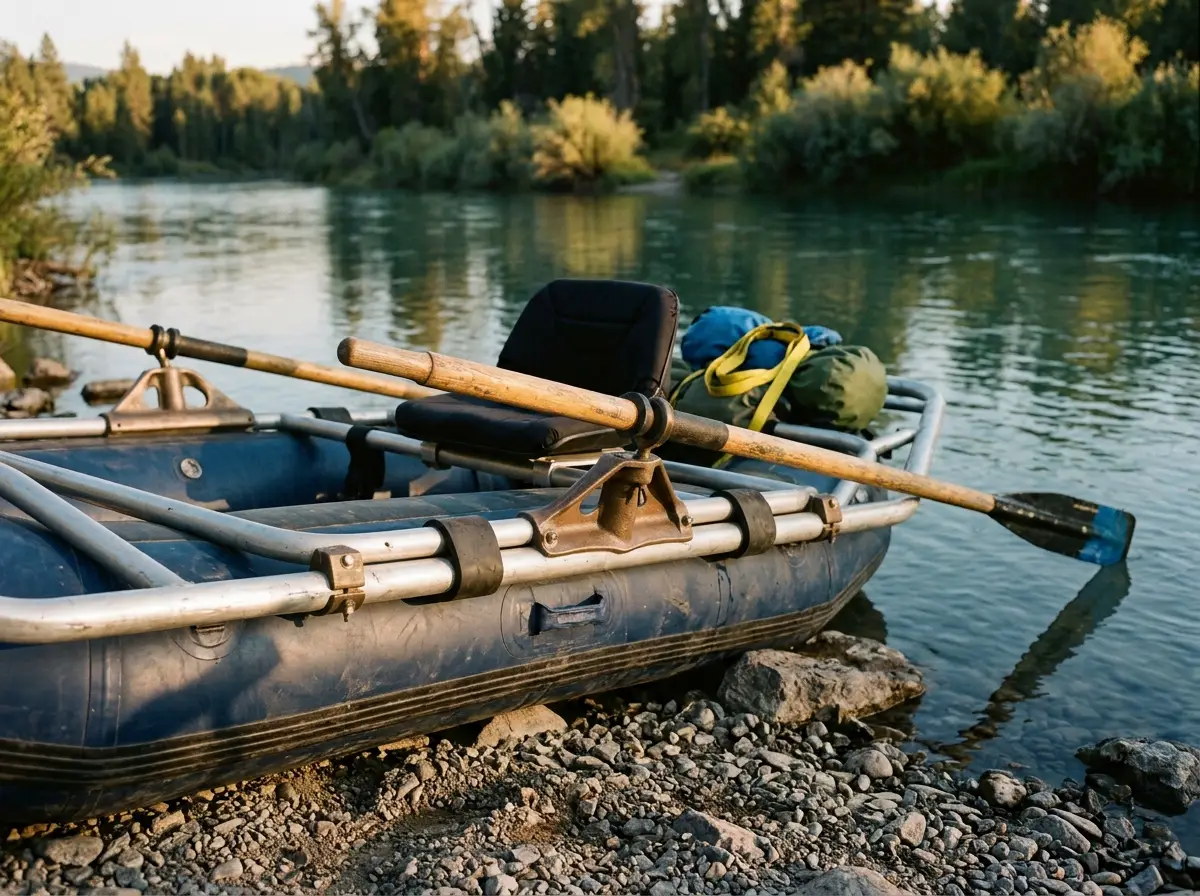
In this article
You’ve stopped renting and started rigging your own boat, and now you’re standing over a pile of parts: an oarlock, a couple of towers, maybe an oar right somebody at the ramp told you to grab. The catch is that nobody sells them as a set, and no single page tells you whether the pieces even work together. That’s the gap this guide closes, in the order you actually buy it. Pick your oarlock, set your tower height, then decide on oar rights, checking that each part fits the last before you spend a dollar or drill a hole.
How Oarlocks, Towers, and Oar Rights Work as One System
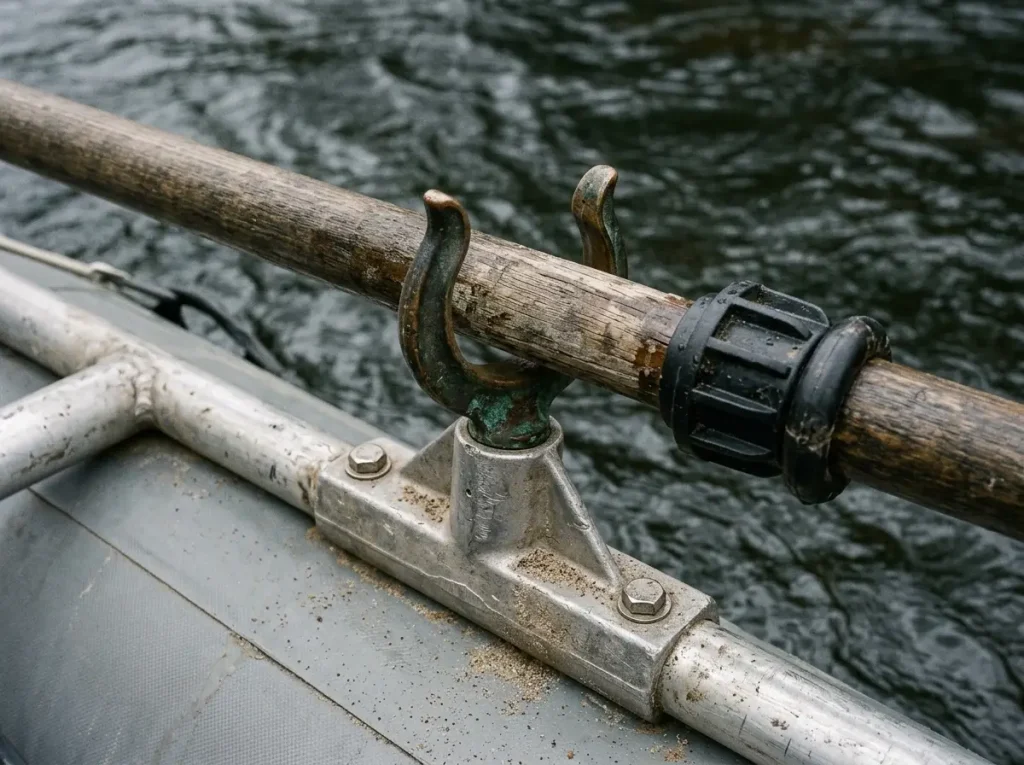
The Three Parts of One Rowing Station
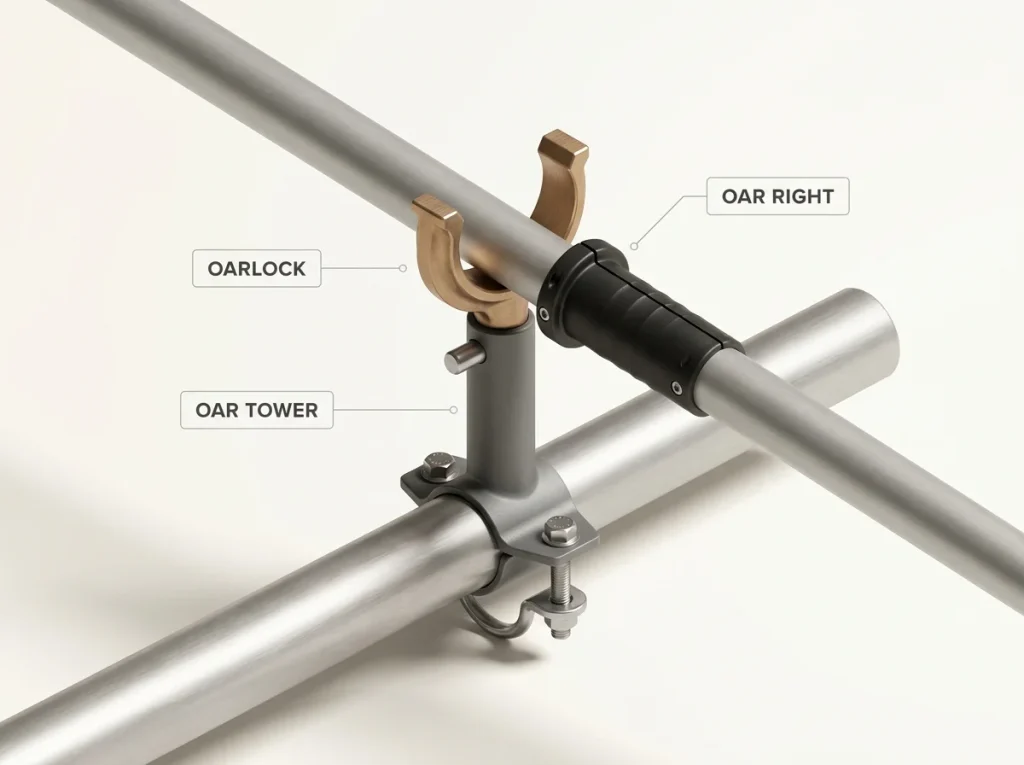
Most guides treat these as three shopping trips. On the water they’re one motion. The oarlock is the pivot your oar swings through, the oar tower sets how high that pivot sits above the frame, and the oar right decides whether the blade stays squared or spins free in your hand. Get one wrong and the other two fight you the whole trip.
That connection is the whole reason to read this before you buy. A tower that’s too short drops the oarlock into your knees no matter how good the lock is. An oar right cut for one brand of lock won’t seat on another. These parts exist to move the oars you’ll actually be pulling, so it helps to picture the full station before you pick any single piece.
Why the Buying Order Matters
Buy in the wrong sequence and you’ll re-buy. The lock comes first because its size and horn shape decide which oar rights will fit and how the oar loads. Tower height comes second, since it’s set by your seat and your body, not by the lock. Oar rights come last, once you know what you’re rowing and how the stroke actually loads the lock. Work that order and every choice narrows the next one cleanly.
Oarlock Types and How to Choose
Bronze vs. Aluminum
Two materials cover almost every raft oarlock, or rowlock if you learned the British term, on the market. Bronze is the heavier, smoother-pivoting option, and the best locks use a high-strength Mag 70 bronze alloy with real corrosion resistance, so it wears in rather than out. Hot-forged aluminum is lighter and easier on the wallet, and it has one underrated trick: spring it against a rock and it usually bends rather than snapping, so you can tune it back true.
Design matters as much as metal. The wide-horn Cobra pattern, sold by both Sawyer and NRS, opens up more room for the oar to travel. If you want that geometry at a friendlier price than the flagship, the NRS Cobra Oarlock, Standard is the middle rung, and the Sawyer Cobra Scull Oarlock is the closed-top variant worth a look if you scull. Sawyer’s own mid-tier Canyon Oar Lock rounds out the honest alternatives. Which metal and shape you land on ties straight into the oar material you pair with the lock.
The Premium Pick for Technical Whitewater
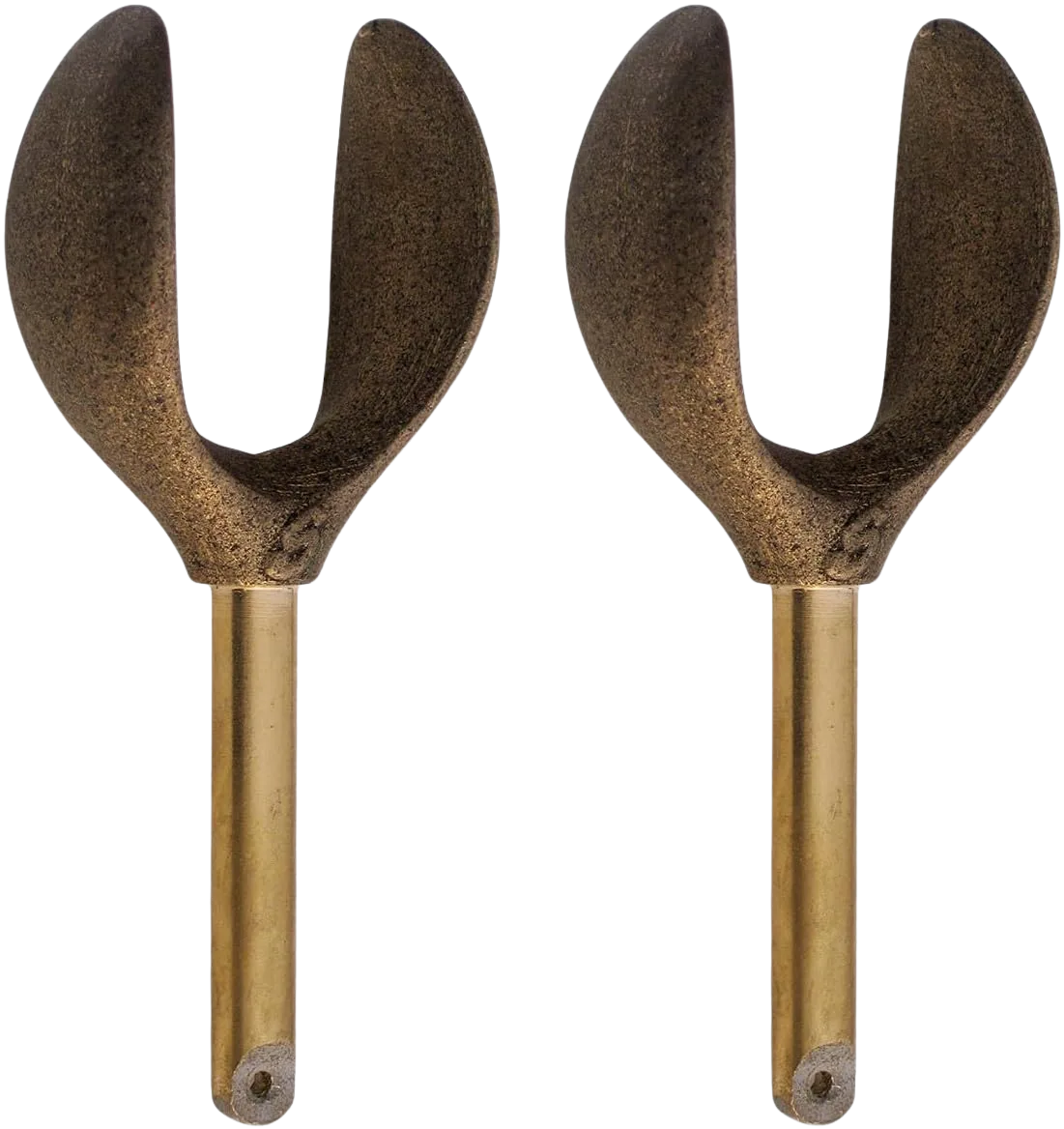
The Sawyer Cobra earns its price on pushy, technical water, the kind of Class IV and Class V whitewater where a deep, powerful blade matters. That extra 10 to 15 degrees of vertical range is what lets you set the blade deep and still clear a rock on the recovery. If you row Class III and up regularly, this is the upgrade you feel on every hard stroke. The one honest caveat lives in the next section, because that deep swing isn’t always your friend.
The Budget Pick That’s Genuinely Fine
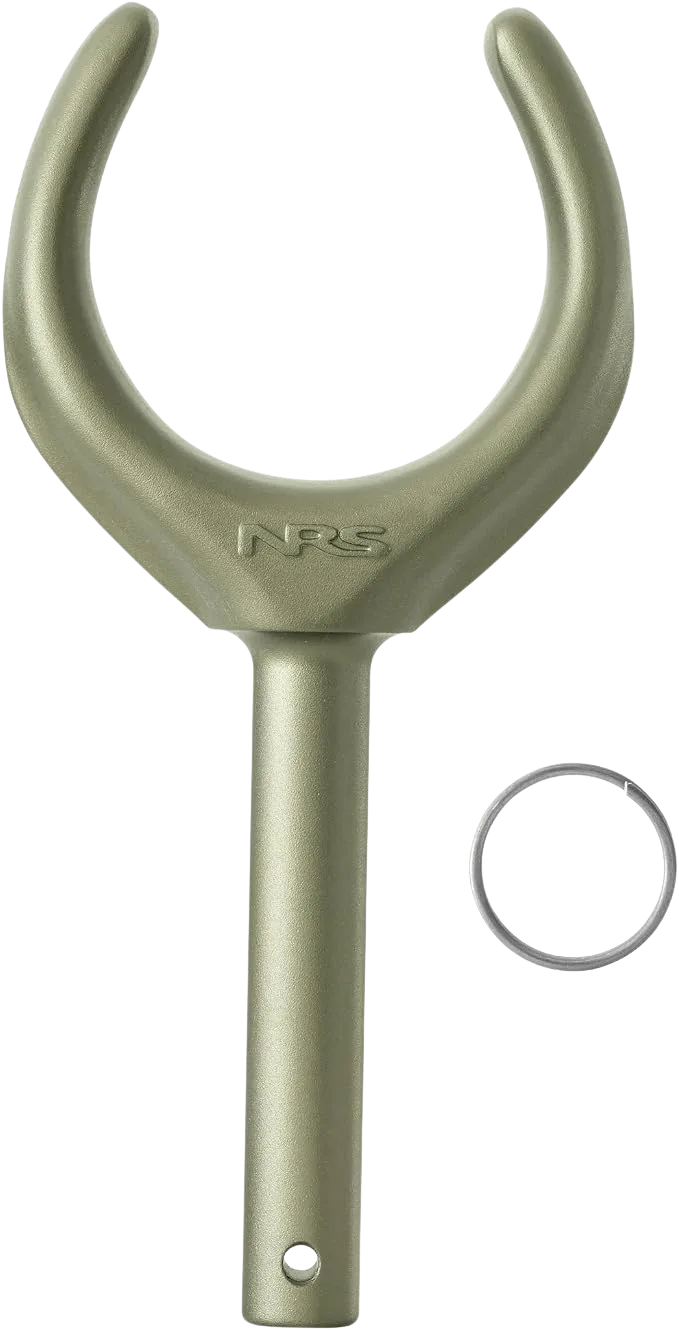
Here’s the part no competitor prints: the Cobra’s biggest advantage is a liability on shallow, rocky rivers. That deep vertical swing dives the blade far enough to catch a submerged rock in skinny water, which is exactly why plenty of fishing and day-trip rowers prefer a plainer lock like the NRS Atomic. For a first frame on friendlier flows, the Atomic is not a downgrade in materials, it’s the right tool. Buy the Cobra when your water demands it.
Choosing Oar Tower Height (6″, 8″, or 10″)
Size to the Seat, Not the Boat
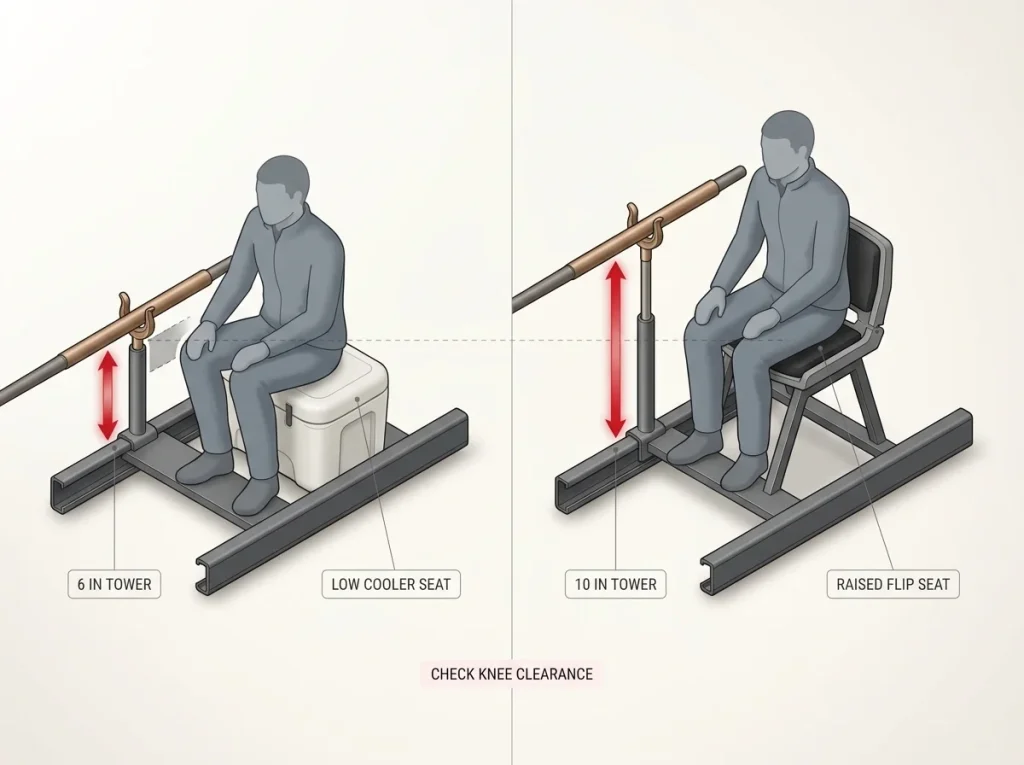
The most common tower-height mistake is shopping by boat length. Height is driven by your seating position and your body, not the raft’s spec sheet. A 5’3″ rower on a low cooler can run short towers where a 6’1″ rower in a flip seat on the identical boat will bang their knees every stroke.
The heights break down cleanly. Six inches suits small boats in the nine-to-twelve-foot range and low seating, and comes as a single mount or a pair for a full build. Ten inches, sold as a pair, is for raised captain’s chairs, flip seats, or tall rowers who need clearance for a full sweep. All of it clamps to the frame rail your towers bolt to with a U-bolt, so confirm your rail diameter before ordering.
If your knees or thighs keep clipping the oar shaft mid-stroke, your towers are too short. Don’t fight your seat by hunching, go up a size. That single clearance check tells you more than any height chart.
The Height That Fits Most Rowers
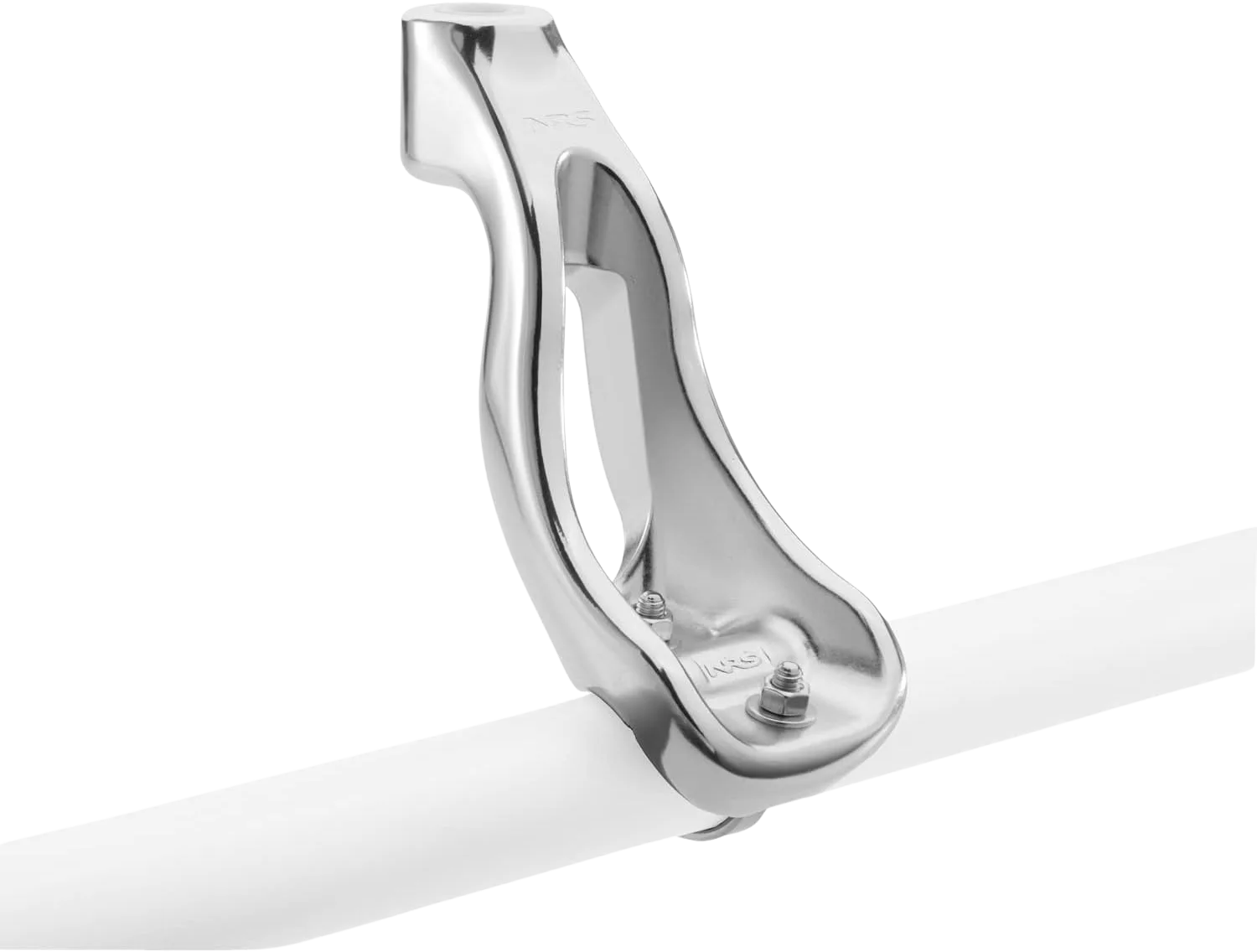
When you’re unsure, start at eight. The NRS 8 Inch Oar Mount is the height that suits the most rowers and the most seats, and it’s the one I’d point any first-time rigger toward. Set it, row a stretch of flatwater, and you’ll know within a mile whether you want to go up or down. Adjusting later is a small job; guessing wrong on a ten-mile day is a sore back.
Where to Mount Your Towers on the Frame

Find the Pivot Point First
Placement is what separates a boat that spins on command from one that plows. Set your towers within roughly 12 to 18 inches of the raft’s true pivot point, which sits near the waterline center. Mount them too far off and the swing weight climbs, so every turn feels like you’re dragging an anchor. A good starting mark is 9 to 11 inches forward of the crossbar of the bay you sit in.
This is where new private boaters go wrong. They bolt the towers where the frame looks centered on the tubes, then wonder why the raft turns like a barge. The fix is to measure the actual pivot point and move the mounts, sometimes eight or ten inches from where they eyeballed it.
Dry-Fit Before You Drill
Set the whole rowing position up on the lawn or garage floor before anything is permanent. Frame, seat, and a set of oars with the blades off, then sit and row the air. Check that the sweep clears your knees and the handles land near shoulder height. Ten minutes here saves a season of regret.
Seeing the motion beats trusting the numbers. Watching the video below and then mocking up your own station on flat ground catches the problems a tape measure hides. When you’re ready to bolt it all up, the full frame setup walks the assembly end to end.
Match Your Oar Length to the Setup
Tower spacing feeds straight into oar length, so size them together. The quick field math is the Rule of Thirds, the oar length formula most riggers use: measure your lock-to-lock width, divide by two, subtract two inches, then multiply by three for an approximate oar length in inches. That keeps you at roughly one-third of the shaft inboard and two-thirds outboard of the lock. A blade like the Cataract Standard Oar Blade on a counterbalanced Cataract SGG Oar Shaft sizes cleanly to that formula. If your number lands between sizes, run the full oar-length math before you commit.
Oar Rights and Whether You Need Them
What an Oar Right Actually Does
An oar right is the collar or spline that fits on the shaft between the oarlock horns. It fixes the blade angle so the oar enters the water squared every stroke, and it keeps the oar from feathering loose or popping out of the lock. That’s the whole job: consistent pitch, and retention.
The Decision Rule
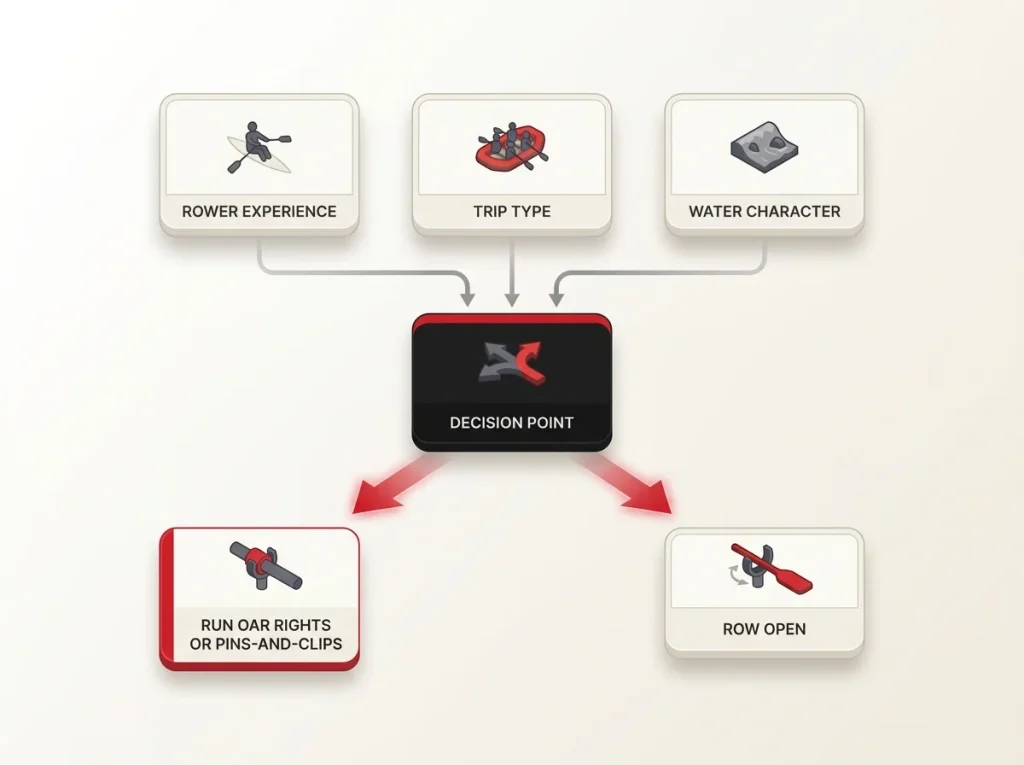
The forums argue this one endlessly without ever settling it, so here’s a flat rule you can actually use. Run oar rights, or pins-and-clips, if you’re a newer rower, on a commercial or big-volume trip, or reading big pushy water where a squared blade every stroke matters and a popped oar is a real problem. Skip them and row open if you’re an experienced rower who feathers constantly and reads technical, rocky water where you want the freedom to adjust blade angle on the fly.
The safety side is worth naming plainly. Without retention, an oar can get torn out of the lock or pulled under the raft in a hit, and a rower reaching for a lost oar in a rapid is a rower not running the boat. It’s a gear-performance issue that shades into a swim risk, which is why American Whitewater’s decades of accident analysis treats gear retention as part of the bigger picture. If you’re on the fence, the NRS Convertible Oar Right lets you test rights and switch back to open rowing without buying twice.
The Retention Pick
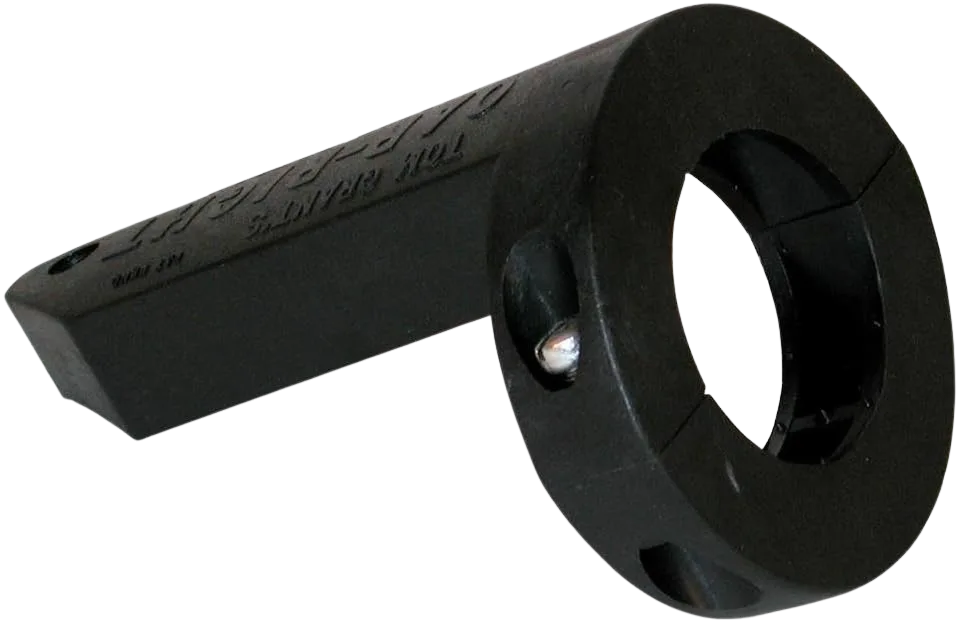
If your decision landed on running rights, the NRS Oar Right, Large Single is the straightforward pick that’s actually in stock on Amazon. It holds the blade squared through the whole stroke, which is a real confidence boost for a rower still building muscle memory. One catch to carry into the next section: it clamps to a sleeve, and the sleeve has to match your shaft.
Oarlocks vs. Pins-and-Clips
Feathering Freedom vs. Locked Pitch
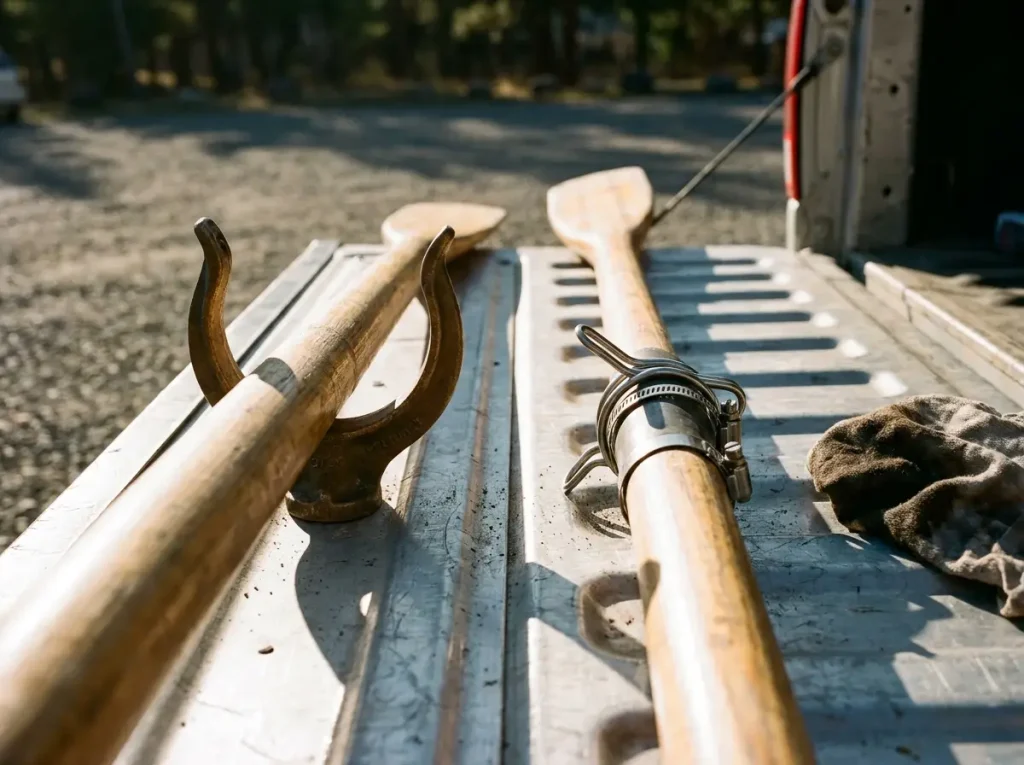
Pins-and-clips is the other retention system, and it’s a genuine fork, not a lesser choice. An open oarlock lets you feather the blade to cut a headwind and adjust angle stroke to stroke, which is why multiday and high-volume guides who row all day tend to prefer it. Pins-and-clips locks the blade perpendicular every time, which is easier for a novice to trust and popular on shallow rocky rivers where a consistent angle keeps the blade off the rocks.
What Actually Decides It
Your technique and your water pick the winner, not a spec sheet. If you already feather by feel and want maximum control, open oarlocks win. If you want the boat to do one thing predictably while you learn to read the water, pins-and-clips win. One field note the guides leave out: the hose clamps on a pins-and-clips setup can work loose mid-rapid, so a quick clamp check belongs in your pre-launch routine.
Compatibility Gotchas and Budget vs. Premium Picks
What Fits What
This is where the title earns out, because not every part fits every other part. Oar rights seat reliably on NRS locks and Sawyer Cobras, but some third-party locks are machined too tight at the top for the tenon to drop in, with Rowframe-brand locks named specifically in the community. Confirm your oar right is rated for your exact lock before you order, because this warning appears almost nowhere outside forum threads.
The sleeve is the second trap. Fitting an NRS oar right onto a Carlisle or Cataract shaft needs the NRS Molded Oar Sleeve as an adapter, and it’s the part first-time buyers forget until the right won’t clamp. If you’re running Cataract shafts and want a simpler stop instead of a full right, the Cataract SGG/SGX Oar Stop slips over the shaft and keeps the oar from sliding through the lock.
Fixing What Breaks in the Field
Bent or splayed oarlock horns after a rock strike aren’t a reason to buy new. Pull the lock, insert the oar shaft as a spacer, and gently squeeze the horns back true in a bench vise or with a hammer. The shaft stops you from over-closing. Most boaters do this in the driveway.
Knowing the failure modes before they happen is half of rigging well. Locks get knocked out of true on cobbles, hose clamps loosen, and an oar left free can float off in a flip. A cheap NRS Oar Tether is honest insurance against losing an oar entirely when the boat goes over. For the rest, a little know-how covers most of it, and the same instinct carries into other field repairs that save a trip.
Where to Spend and Where to Save
Here’s the budget-honest verdict every other guide skips. A perfectly good starter station is an aluminum lock, a pair of eight-inch towers, and no oar rights yet, rowed open on friendly water while you learn. That setup will not hold you back. Spend the upgrade money later, and spend it where it pays: Cobra locks once you’re rowing technical whitewater, oar rights once you’re on bigger trips or teaching a newer rower. Once the whole rig is dialed, strap the rig down right so none of it walks off between the put-in and the take-out.
The Bottom Line
Build the station as one decision, not three. Pick the lock for your water and budget, set tower height off your seat and body, then decide on oar rights by who’s rowing and what they’re running, checking fit at every step. Start honest and start cheap if you’re new, an aluminum lock and eight-inch towers row real rivers just fine. Upgrade when the water, not the catalog, tells you to.
Frequently Asked Questions
01Will an NRS oar right fit a Sawyer Cobra oarlock?
Yes. Oar rights seat reliably on both Sawyer Cobra and NRS oarlocks. The fit problems show up on some third-party locks, like Rowframe, that are cut too tight at the top, so always confirm compatibility with your exact lock brand before ordering.
02What is the difference between an oar right and an oar stop?
An oar right squares the blade angle and retains the oar in the lock. An oar stop mainly keeps the oar from sliding through the lock. The names also vary by brand, NRS says oar right where Cataract says oar stop, which causes a lot of confusion on mixed-brand builds.
03Can you fix a bent oarlock, or do you need to replace it?
You can usually fix it. Pull the lock, slide the oar shaft in as a spacer, and gently squeeze the splayed horns back true in a bench vise or with a hammer. Aluminum locks in particular bend back rather than snapping, so a rock strike rarely means buying new.
04How tight should an oarlock fit in the tower?
Snug enough to pivot freely without sloppy play. A little rotation is normal and lets the oar feather. If the lock squeaks or rattles in the tower, boaters commonly quiet it with a spring or a washer rather than a tighter fit.
05Do I need oar rights on flatwater, or just whitewater?
On flatwater they are optional and mostly help newer rowers keep a consistent blade angle. They matter far more on bigger pushy whitewater, where a squared blade every stroke and a retained oar are worth the loss of feathering freedom.