


In this article
Two boats push off the same ramp into the same rapid. One has six people paddling on a guide’s count; the other has one person on a frame, leaning into a pair of nine-foot oars. By the bottom they’ve both styled the line, they just got there in completely different ways. We don’t sell trips here, so the honest answer to which rig you want can be the boat you already own. What follows is what each setup actually does, and how to match a paddle raft, an oar raft, or an oar/paddle combo to your water, your crew, and your plans.
Here’s the quick version before we get into why each one earns its place.
| Rig | Who’s Driving | Best Water | Gear & Multi-Day | Best For |
|---|---|---|---|---|
| Paddle Raft | Whole crew paddles, guide steers from the stern | Low-volume, technical rivers with tight moves | Light loads only, little to strap gear to | Active crews and hands-on day trips |
| Oar Raft | One rower on a frame, no crew needed | High-volume big water and long flat pools | The gear boat, hauls a kitchen and a week of food | Multi-day trips and small crews |
| Oar/Paddle Combo | Rower on the frame plus a paddle crew up front | Hard, pushy water where you want full control | Carries gear and adds paddle power | Experienced crews on demanding runs |
The Paddle Raft and What It Shines At
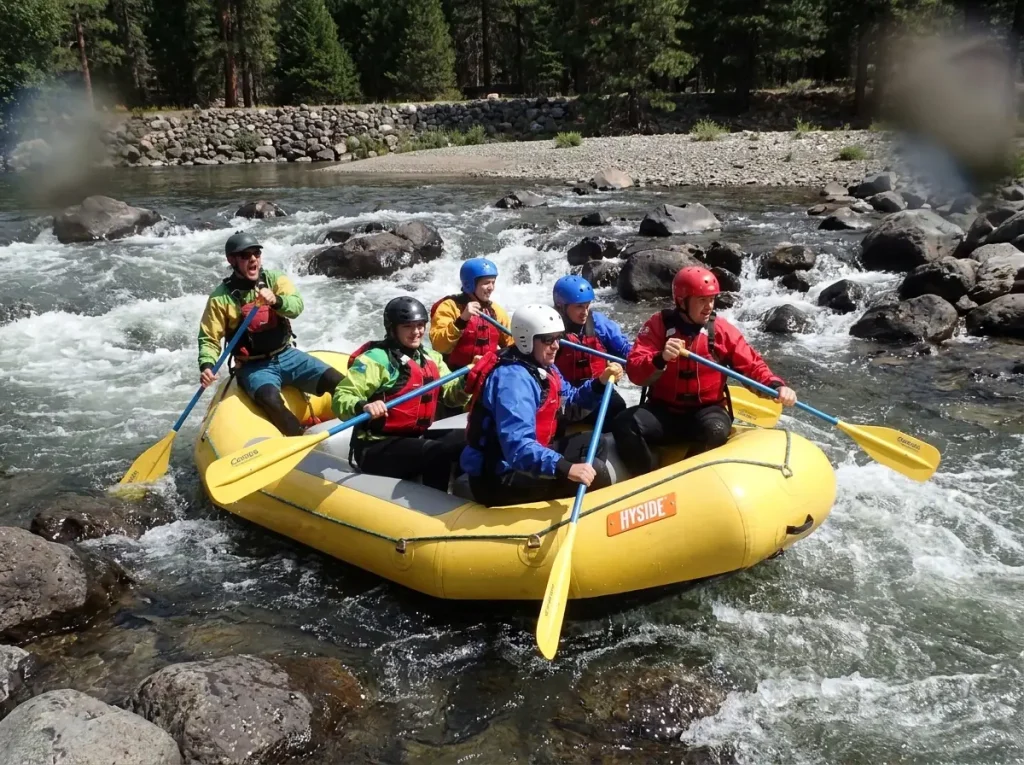
The paddle raft is the boat almost everyone meets first. It’s the commercial trip where the guide calls “all forward” and six near-strangers learn to move a boat together by the second rapid. Simple, social, and a lot of fun when the water suits it.
Who Drives a Paddle Raft
In a paddle raft, the whole crew is the engine and the guide is the steering. Everyone paddles on command while the guide sits in the stern, throwing in rudder strokes and calling the moves that line the boat up. The catch is that the boat only goes where the crew makes it go, so one blown stroke at the wrong second can botch an otherwise easy line. That teamwork is the whole appeal and the whole risk at once. If you want to understand the calls a guide is actually making back there, it’s worth learning the paddle commands that move the boat before your next trip.
The Hardware Behind a Paddle Raft
A paddle raft is light on gear and light on cost. Each paddler swings a roughly five-foot T-grip paddle, and the boats themselves usually run 12 to 16 feet. There’s no frame, no oar towers, none of the heavy hardware an oar rig needs. A plain, inexpensive blade like the Carlisle Standard Canoe Paddle is the kind of no-drama paddle a crew can hand out without thinking twice about it. Cheap to equip, easy to replace, nothing precious.
Where a Paddle Raft Is the Right Call
This is the rig for low-volume, technical rivers where you thread rocks and slip through tight slots. On a run like the South Fork American, a nimble paddle crew can pivot and grab a slot that a wide oar frame simply can’t squeeze the blades into. A small paddle raft is the local-creek favorite for boaters in places with limited big water. The pattern private boaters repeat is the same one over and over: match the rig to the water in your backyard, not to the spec sheet that sold it.
The Oar Raft and What It Hauls
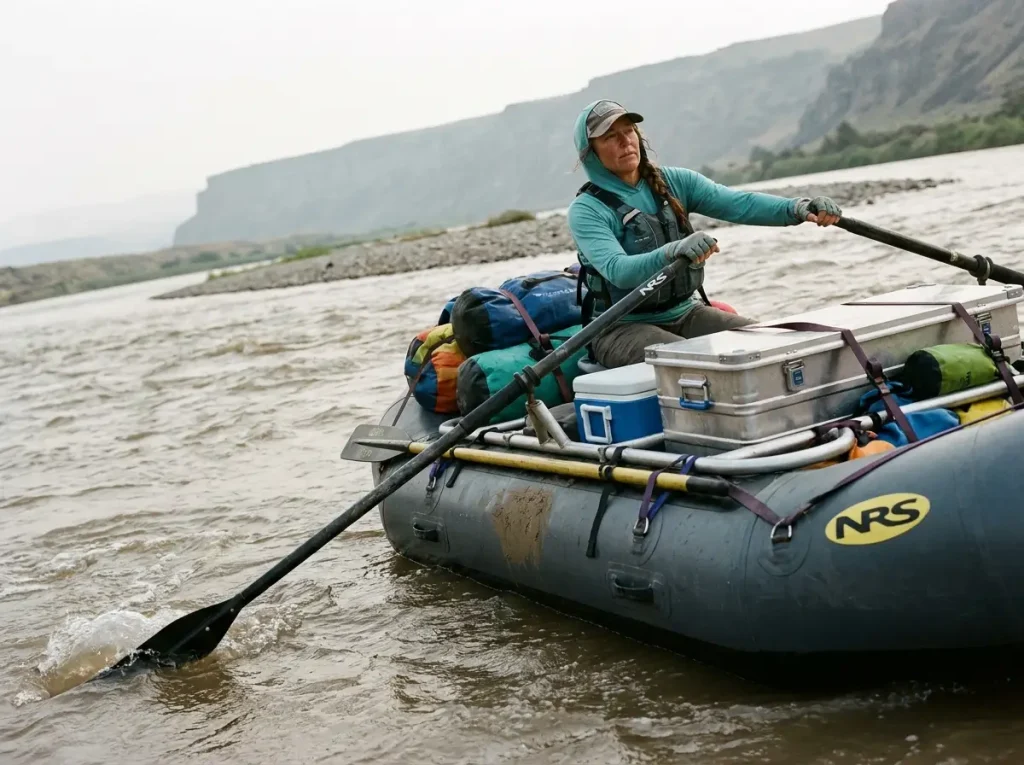
If the paddle raft is the party boat, the oar raft is the workhorse. One person quietly runs the whole rig while everyone else holds on and enjoys the ride. It’s also the only boat that can strap a week of food and a full camp kitchen to the frame.
One Person, One Frame
An oar raft is controlled by a single rower seated at an oar frame, pulling on two long oars. No crew coordination, no commands, just one person reading the line and moving the boat. That independence is the draw. It’s also a different skill set than paddling, and if you’ve never done it, learning to actually row a raft is its own season of practice before it clicks.
The Gear Boat That Hauls Everything
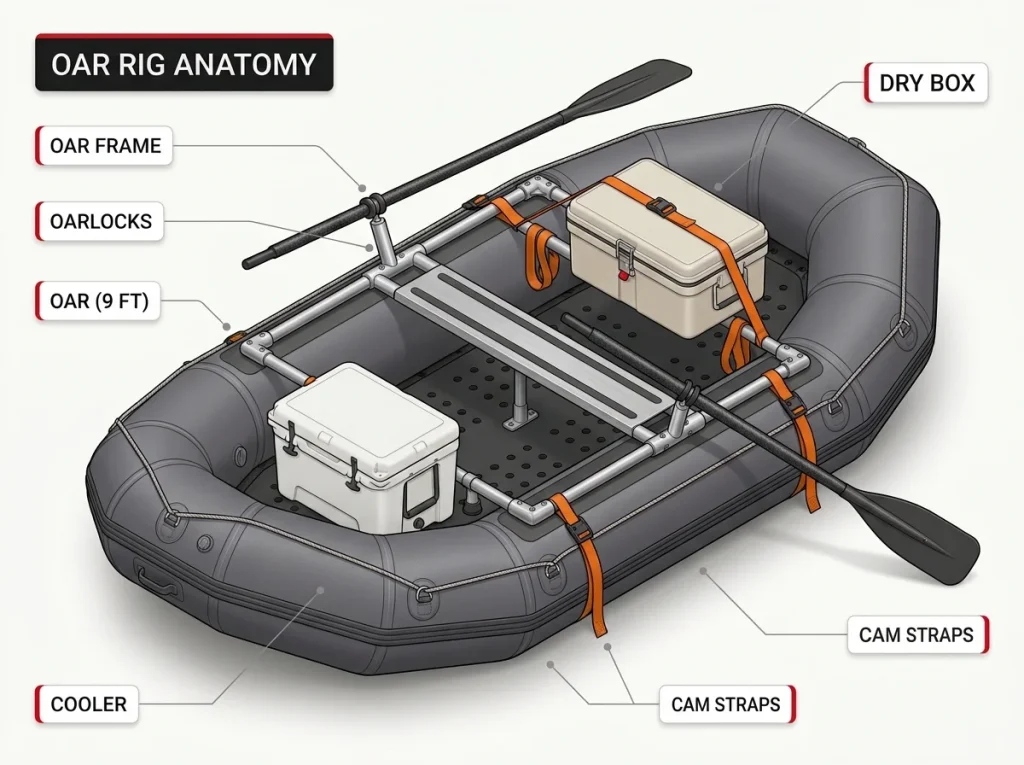
This is the gear boat, the one that earns the nickname “kitchen sink.” Dry boxes, coolers, ammo cans, sleeping kits, a week of groceries, all of it cinches down to the frame under cam straps. Loaded rigs can weigh well over a thousand pounds. If you’re running anything multi-day, from a weekend overnight to a Grand Canyon trip, the math almost always points at an oar rig, because the frame is what lets you carry a real camp. That same frame is the heart of the whole setup, the single most important piece you’ll buy after the raft itself.
The Leverage Advantage on Big Water
Oars give you leverage a paddle can’t touch. A nine-foot oar moves far more water per stroke than a five-foot paddle, so on long flat pools between rapids the rower keeps the boat moving while a paddle crew would be burning out. On high-volume big water, that same leverage lets one rower power a heavy boat through pushy waves that would gas a crew. The rower also reads the line and pivots the boat, leaning into a backstroke to slow down and set up, a quieter style that’s easier on your shoulders over a ten-hour day.
The Oar/Paddle Combo, the Best of Both and the Catch
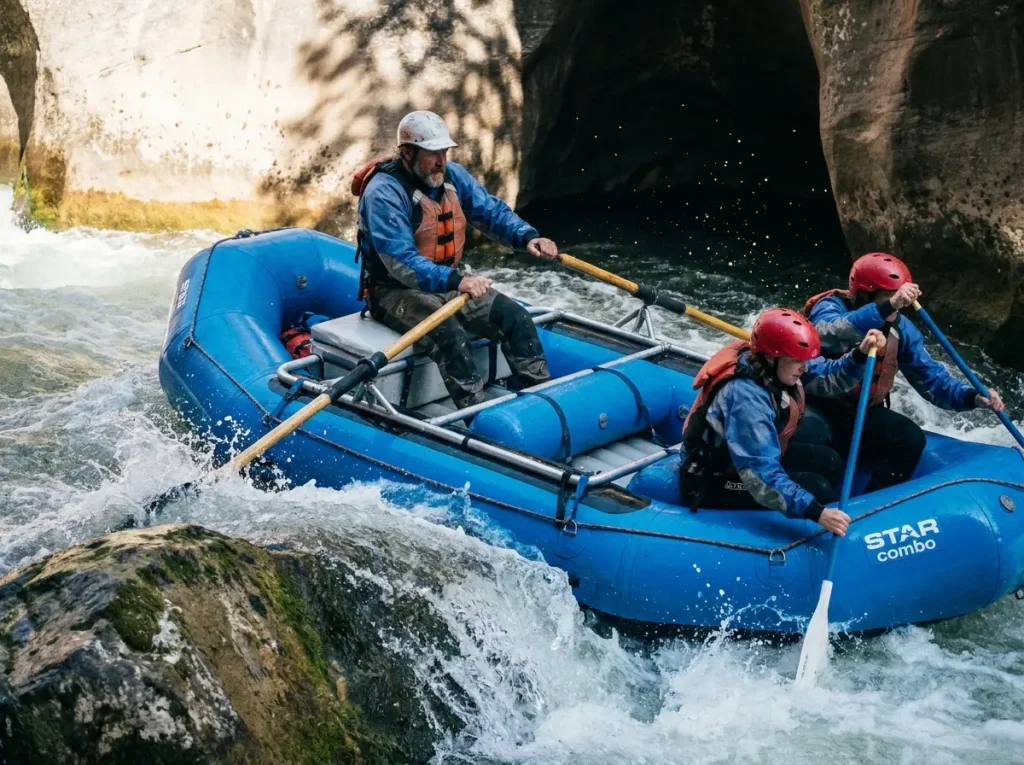
The oar/paddle combo, sometimes called a hybrid raft, is the rig guides reach for when the water gets serious. One person rows the frame for control while a paddle crew up front adds muscle. Powerful, flexible, and not without a cost.
How a Combo Rig Runs
In a combo, the rower works a center frame while two to four paddlers dig in on command. You get the rowing control of an oar rig plus the extra punch of paddle power exactly when you need it through a move. On hard water that combination is hard to beat, which is why so many big-water guided trips run this setup through the meat of the rapids.
Where the Combo Wins
The combo shines on pushy water where you want maximum control and every bit of power you can get. The rower can hold a line and pivot, the crew can drive the boat forward through a hole, and together they can muscle a loaded boat through Class IV and Class V water that would overwhelm either approach alone. It’s efficient on the flats too, since the rower can keep things moving while the crew rests.
The Catch With Running a Combo
Here’s the honest part. A combo asks for coordination between the rower and the crew, it’s heavier and more complex to rig, and on mellow water it’s just more boat than the day needs. You also don’t need a six-person crew to run real water. One or two people on an oar rig or a small combo can handle plenty, the setups boaters call R-2 and R-3, and if it’s truly just you, a small inflatable kayak might be the simpler one-person answer than rigging a full boat. Most beginners shouldn’t start here.
Oars vs Paddles, and How to Pick by River and Flow
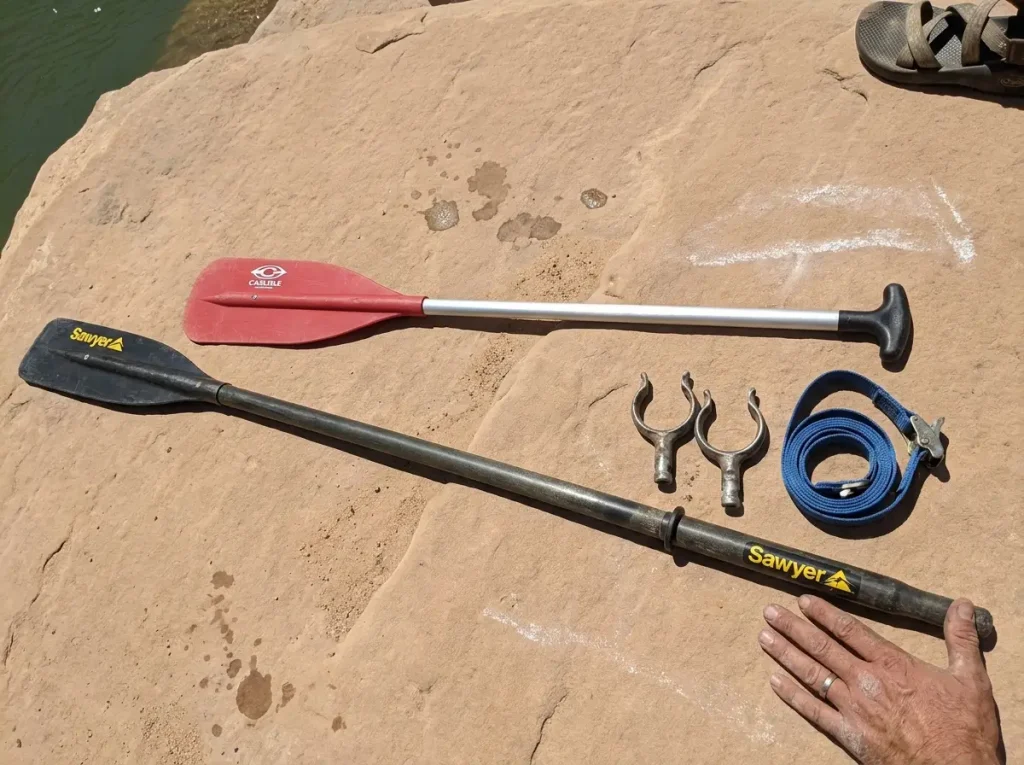
Set a nine-foot oar next to a five-foot paddle on the rocks and the whole debate makes sense in about one second. Then tie that hardware to the only thing that really decides your rig: your river and its flow.
The Hardware Gap Between Oars and Paddles
Oars run roughly 7 to 11 feet, most commonly 8 to 11, while a raft paddle is about 57 inches, call it five feet. Oars are roughly twice as long, and that length is exactly why they move so much more water per stroke. An oar is a system, not a stick: a durable example like the Sawyer Polecat oar with a Duramax blade is the kind of real, well-built oar that goes on a first rig. If you’re sizing a set, the rule of thumb is half your frame width lock-to-lock, times three. A 72-inch frame lands around nine-foot oars, and picking the right oars for your frame is worth getting right the first time. On the paddle side, a solid raft paddle costs a fraction of that and weighs almost nothing.
Reading the Flow Before You Pick
Water type decides more than the spec sheet does. Low and bony water, shallow and rocky and running thin, rewards the maneuverability of a nimble paddle crew that can pick a slot. Pushy, high-CFS big water rewards the leverage and capacity of an oar rig. The same river can flip the answer on you depending on the season: at 3,000 CFS a run might be pushy but forgiving, and at 6,000 it’s a different river with a different right rig.
Don’t guess oar length. Measure your frame lock-to-lock, halve it, multiply by three, and buy to that. Too-long oars on a short technical boat is the single most common first-rig regret, and a high seat can make a set that fit last year feel too short this year.
A Simple Rule for Picking by Water Type
Boil it down and the call gets easy. Technical and low-volume water leans paddle raft. Big-volume water, gear, and distance lean oar raft. The hardest water with a capable crew leans combo. Everything else is detail. Pick the rig that fits the water you run most weekends, not the one big trip you daydream about.
Buying Your First Rig and What Each Setup Really Costs
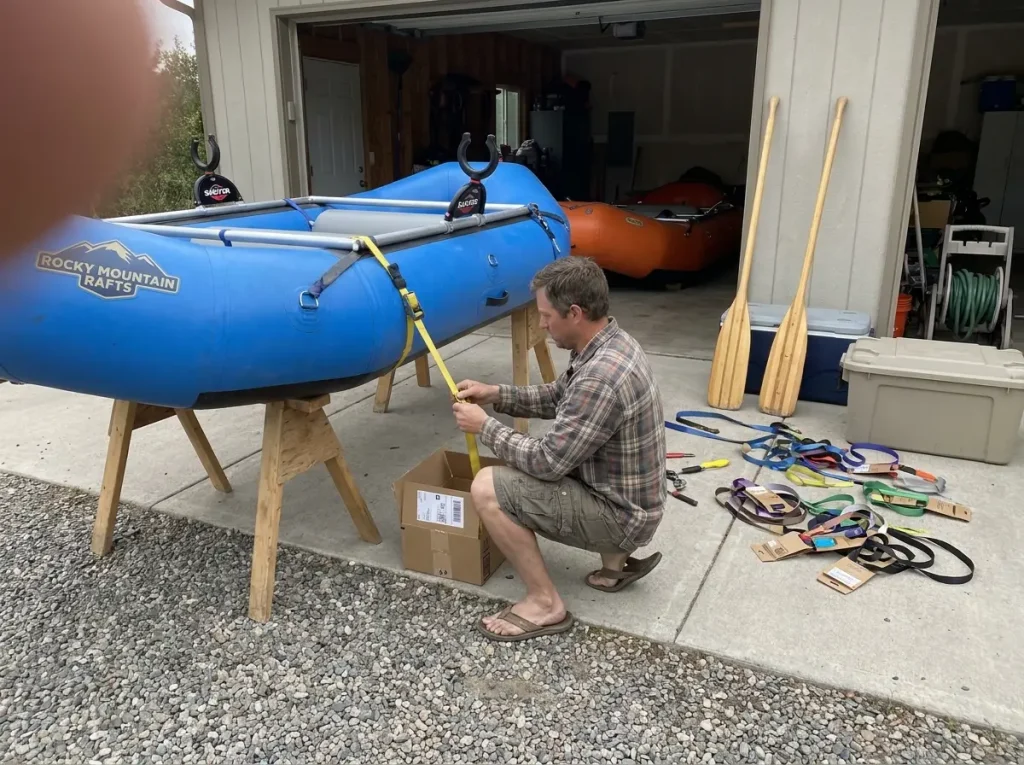
Here’s the part the outfitters ranking for this topic never write, because they’re selling you a seat, not a boat. If you’re building your own setup, the costs and the shopping list matter more than any rig debate. This is the section with no agenda.
The Real Price Tags
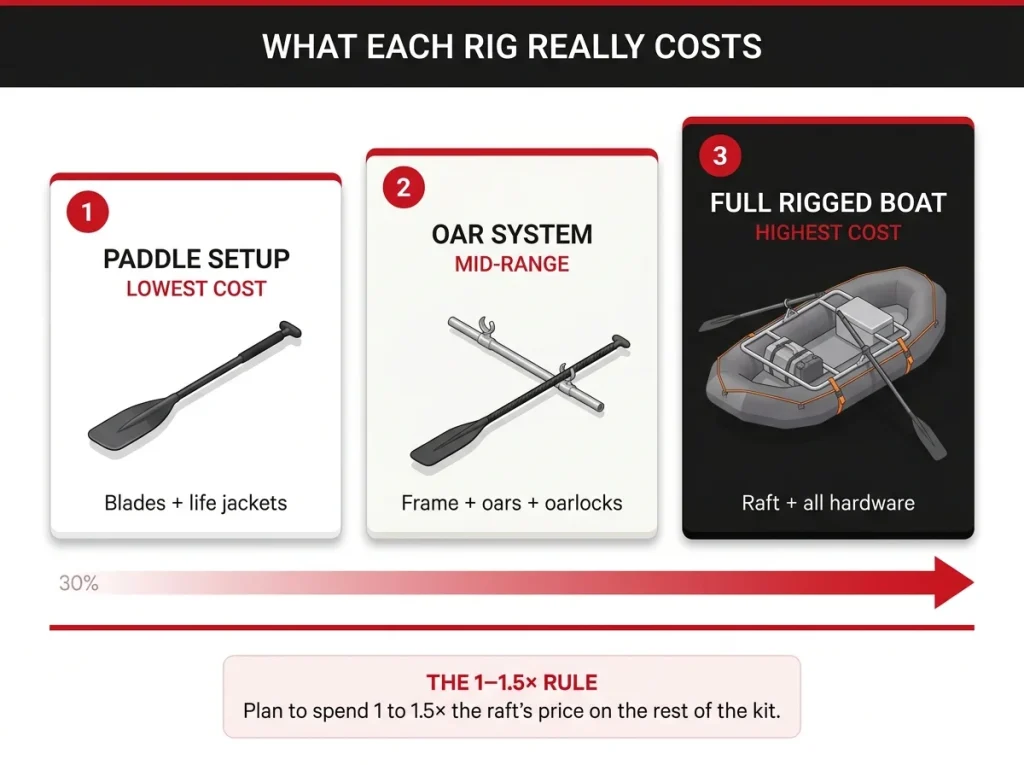
A paddle setup is cheap to equip: basic paddles start around the price of a nice dinner out per blade. An oar setup with the hardware is a real purchase, landing in the mid-hundreds to low thousands once you’ve got oars and oarlocks. Outfit a full rig with everything it needs and you’re looking at a serious chunk of change, and a good rule is to plan on one to one and a half times the raft’s price for the rest of the kit. The boat is only half the spend. Remember that picking the actual raft is its own decision, and it’s the first big choice in the chain.
What You Actually Need to Buy
The frame and oars get all the attention, but the small parts are where beginners get caught short. You need a frame, oars, oarlocks, dry boxes, and a pile of cam straps before the rig actually floats a trip. The cheap-but-essential piece people forget is the oarlock itself: a set like the Sawyer Canyon oar locks is what keeps your oar attached to the boat, and it’s the part behind the classic rookie scramble when an oar pops out mid-rapid. Once the parts are in the garage, rigging the frame the right way is its own learning curve worth doing carefully.
The Smart-Money Move
Buy the oar system used. Aluminum frames hold their value and can last basically a lifetime, and a used frame-and-oars setup from a name like AIRE, NRS, or Hyside often sells well below new, so the most expensive part of the rig is also the smartest secondhand buy. If you’re still shopping the boat, a budget boat that isn’t a pool toy gets you on the water without overspending. And you don’t have to choose forever on day one.
Start as a paddle raft and bolt on a frame later. The same boat converts to an oar rig as your skills and budget grow, so you’re not buying two boats. Plenty of private boaters run a paddle setup for a season or two, then add the frame when they’re ready for multi-day water.
Where People Pick the Wrong Rig and Regret It
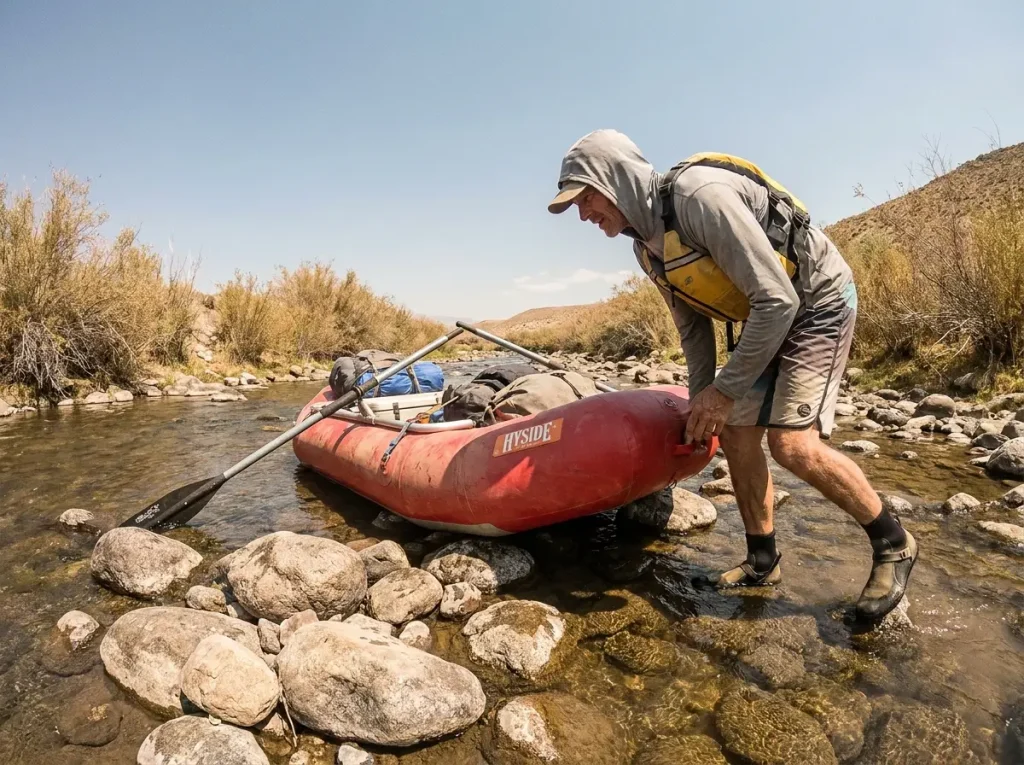
Nobody likes to admit they bought the wrong boat, but the wrong-rig-for-the-water story shows up at every takeout and in every late-night forum thread. These are the mistakes that cost real money, and they’re easy to avoid once you know the pattern.
The Oar Frame on a Tight Technical Creek
Put a wide oar frame on a tight, rocky creek and the frame becomes the problem. You literally can’t get the blades in the water around the rocks, and the boat that was supposed to give you control just gets hung up. The boater who buys a 16-foot gear boat for bony home creeks learns fast that it’s the wrong tool for that water. Before you size anything, match the raft size to the water you run so the boat fits the river instead of fighting it.
The Paddle-Only Boat on a Multi-Day
The mirror-image mistake is running a paddle-only boat on a multi-day trip. Suddenly there’s nowhere to strap a week of gear, and if your crew falls through, there’s no way to drive the boat solo. A paddle raft is a day-trip animal. Ask it to haul a camp or run with two people and it can leave you stuck.
Wrong Oar Length and Gear That Fights Your Water
Even with the right kind of rig, the wrong oar length ruins the day. Too-long oars on a short boat, or a seat so high your oars suddenly feel too short, top the list of first-rig regrets. The fix is to size carefully and buy for the water you actually run. If you’re brand new to this, starting on a forgiving boat beats buying the most boat you can afford and discovering it doesn’t fit your river.
Buy for your home river, not your dream trip. Most rig regret comes from buying the boat for one imagined big-water week instead of the fifty days you’ll actually spend on the run near your house. Rig for the water you see most, and rent or borrow for the once-a-year trip.
Safety, Swims, and the Loose-Hardware Problem per Rig

This is the part no trip brochure includes. Whatever you’re running, the river stops caring which rig you chose the moment you’re in the water, but the loose hardware around you cares a lot. Everyone goes for a swim eventually. What separates boaters is swimming smart.
The Swim Floor Is the Same on Every Rig
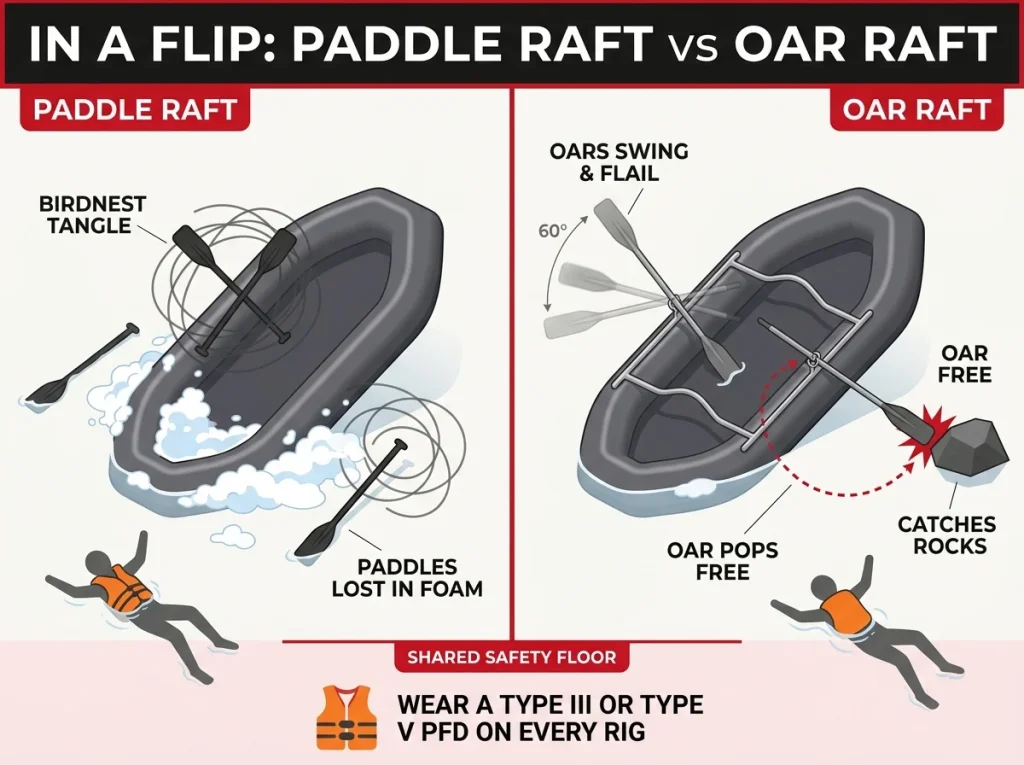
Your PFD doesn’t change with the boat. Paddle, oar, or combo, the swim-safety floor is identical: wear a Type III or Type V whitewater life jacket with real flotation, and lean toward a high-float rescue PFD for pushy water. Something like the NRS Big Water V rafting PFD is a high-float Type V example that rides high enough it won’t shove up over your chin in a swim. The boat type is irrelevant to that rule, and you can sanity-check the rest of your kit against a full gear checklist by river class.
Loose Paddles and Long Oars in the Carnage
Each rig brings its own loose-hardware problem when things go sideways. In a paddle raft, loose paddles birdnest and get lost in the foam. In an oar rig, those nine-foot oars become flailing hazards in a hole, pop out of the oarlocks, and catch on rocks, which is why a lot of rowers run an oar leash to keep a popped oar from getting away. The popped-oar scramble, chasing a runaway oar through a rapid while fumbling for the spare, is a first-season rite of passage for new rowers.
Carry a spare oar rigged where you can grab it, not buried under the load. You will pop an oar in your first season, and the difference between a quick recovery and real trouble is whether the spare is reachable in two seconds or strapped down under the cooler.
Cold Water and Swiftwater Respect
None of this is about fear, it’s about respect. Cold water and swiftwater hurt people through cold and entrapment, not bad luck, and that’s true in every rig. Dress for the swim, not the air temperature, scout the horizon lines you can’t see over, and know the basics of swiftwater self-rescue: when you do swim, get your feet up and your nose downstream and breathe in the troughs. For the bigger picture, the national river-safety standards from American Whitewater are the reference worth knowing before you push off. No rig keeps a swimmer safer by itself. Your life jacket, your skills, and how you rig your hardware decide your swim.
The Bottom Line on Picking Your Rig
Three boats, three jobs. A paddle raft is teamwork and nimble fun on technical, low-volume water. An oar raft is one driver, big water, and the gear hauler that makes multi-day trips possible. A combo is maximum control when the water’s hard and you’ve got a crew to run it.
The river and its flow decide more than any spec sheet, so match the rig to the water you actually run, not the biggest day you can imagine. And the oar system is the real spend, so buy used when you can and remember a paddle raft can grow into an oar rig later.
Before you drop a dime, go run your home river a few more times and pay attention to what it actually asks for. Then buy the rig that fits that water. The boat you’ve got is probably fine for now.
Frequently Asked Questions
01Is it harder to row or paddle a raft?
Rowing has the steeper learning curve, but it’s easier on you over a long day. Paddling is simpler to pick up and efficient over short, fast stretches, which is why most beginners start with a paddle raft and add rowing later as their skills grow.
02How long are raft oars compared to paddles?
Raft oars typically run 7 to 11 feet, most commonly 8 to 11, while a raft paddle is around 57 inches, roughly 5 feet. Oars are about twice as long, which is exactly why they move so much more water per stroke.
03What is an oar-paddle combo (hybrid) raft used for?
A combo rig lets one person row the frame for control while a paddle crew adds power on command. It’s used on harder, bigger water where you want both rowing control and extra paddle muscle through a move, and it stays efficient on the flats.
04Can one person run an oar raft solo?
Yes. A single rower on a frame is the whole point of an oar rig, and one or two people can run real water without a full paddle crew. That independence is a big reason private boaters lean toward oars as they get more experience.
05Which is better for whitewater, a paddle raft or an oar raft?
It depends on the water. Low-volume, technical rivers favor a nimble paddle crew, while high-volume big water and multi-day gear trips favor an oar raft’s leverage and capacity. Match the rig to the river and the flow rather than chasing a single best label.