


In this article
You are staring at a search bar, three brand names lined up, about to drop the price of a used kayak on an aluminum frame that has to survive years of big water. Here is the thing nobody tells you before you spend that money: one of those three names does not build the product you are shopping for. This is the comparison boaters actually argue out in Mountain Buzz threads, not the polished version on a manufacturer page. So we will sort out what each brand really makes, how NRS and DRE frames differ in metal, weight, and money, where you can actually buy each one, and which frame fits the water you run.
Here is the fast version before we get into the weeds.
| Brand | What It Builds | Where You Buy It | Best For |
|---|---|---|---|
| NRS | Off-the-shelf aluminum raft frames | Amazon or NRS direct, in hand in days | Day trips, modular builds, buying tonight |
| DRE | Custom build-to-order frames | Direct from DRE or specialty river shops | Big water, heavy expedition loads, custom rigs |
| Cataract | Oars and blades, not frames at all | Amazon, but only its oars | Pairing with whichever frame you choose |
What Cataract, NRS, and DRE Actually Make
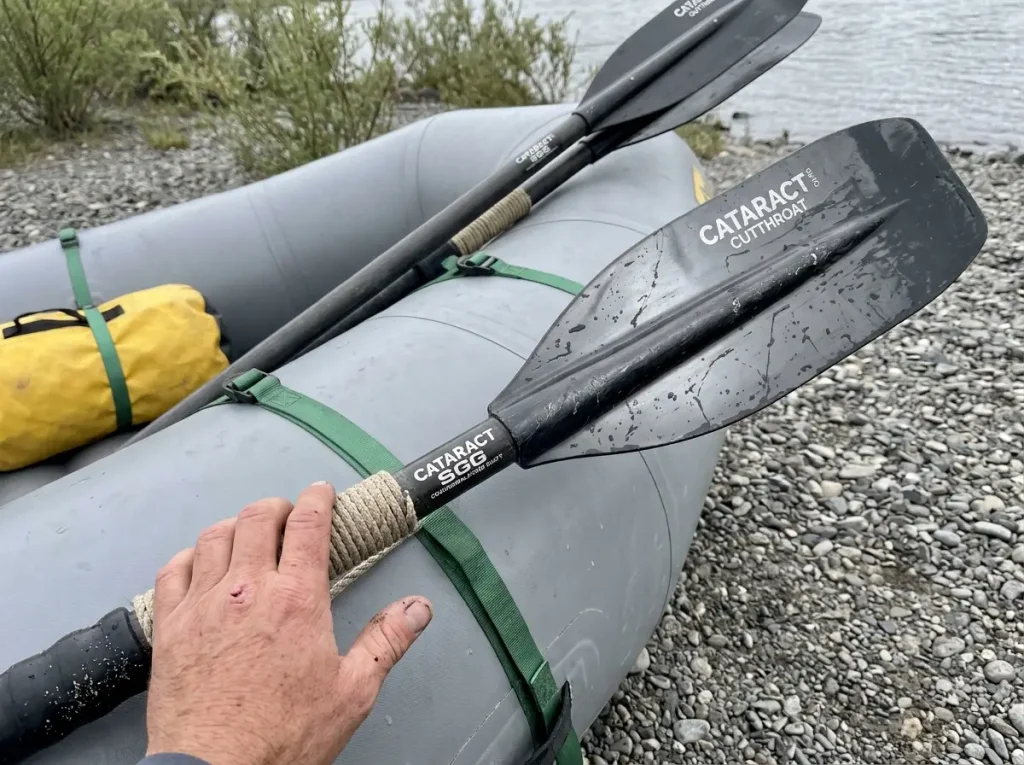
Start here, because half the confusion in this comparison lives in the third name. Cataract Oars does not make raft frames. It never has. The company has built composite oar shafts and blades in Salt Lake City since 1983, under a parent company that does aerospace and military composites, and its entire catalog is oars, blades, shafts, and the hardware that goes with them. There is no Cataract frame category because there is no Cataract frame.
So if you have been typing “Cataract raft frame” into search and coming up empty, that is not a hole in your research. The product does not exist. You were pattern-matching a respected river brand onto the wrong piece of gear, which is easy to do when the name shows up on so many boats. What sits on those boats is Cataract’s oars, threaded through oarlocks that bolt to a frame built by someone else.
Cataract makes the oars, not the frame
Think of it as two separate purchases that happen to ride on the same boat. The frame is the aluminum skeleton you row from and strap gear to. The oars are what you actually pull. Cataract is one of the strongest names in that second category, and its blades are the Amazon-buyable part of the brand. The Cataract Oars Cutthroat Oar Blade(see it on Amazon) is the flagship most private boaters recognize, a composite blade that pairs with a counterbalanced shaft like the Cataract SGG Oar Shaft(shaft here). Neither one is a frame. Both are what you clip into the frame you choose. If you are still sorting out blades and shafts, that decision runs deeper than this article, and the oars you pair with your frame is its own rabbit hole worth reading before you buy.
NRS and DRE are the real frame builders
That leaves two actual frame companies. NRS (Northwest River Supplies, out of Moscow, Idaho) builds complete, ready-to-buy aluminum frames plus a deep bin of separate fittings and accessories. You can add one to a cart and have it on the garage floor this week. DRE (Down River Equipment, out of Denver) works differently, building frames to order around your exact boat and trip. Same product category, two completely different ways of buying it, and we will get to why that matters when the money comes up. For now, hold onto the simple version: NRS and DRE make frames, Cataract makes oars.
Construction and Materials Compared
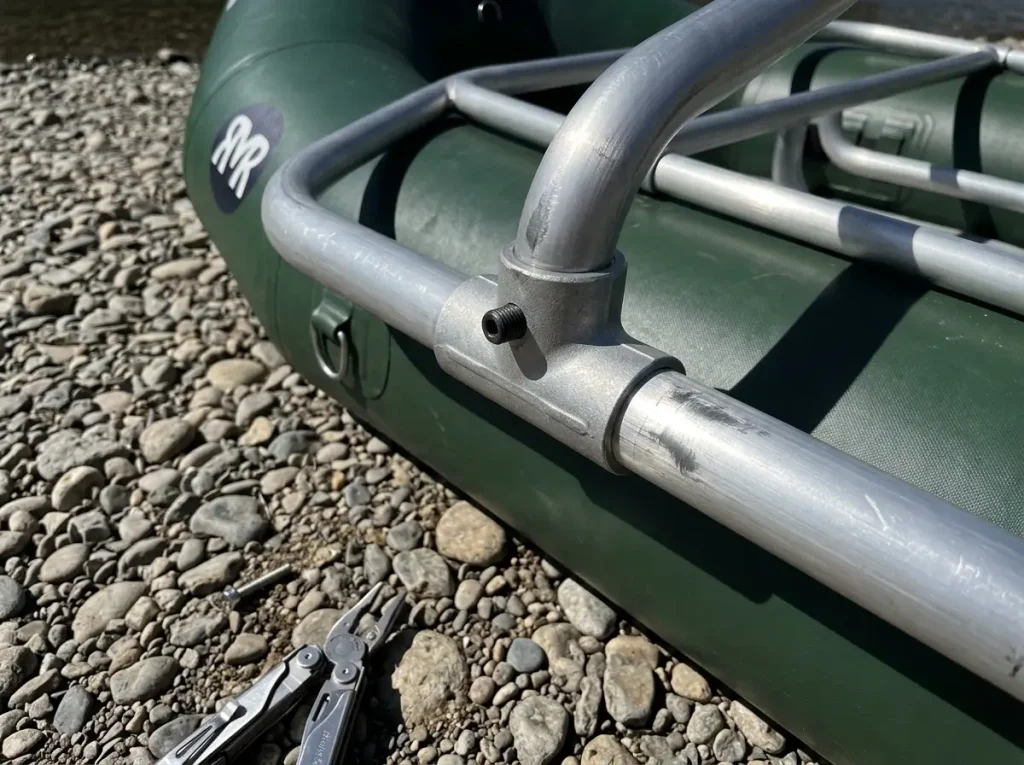
Pick up an NRS frame in one hand and a DRE frame in the other, and you feel the argument before you read a single number. One is the lighter tube you can rig by yourself at a lonely put-in. The other is the fatter pipe that shrugs off a rock you wish you had not hit. Here is what is actually different underneath the anodizing.
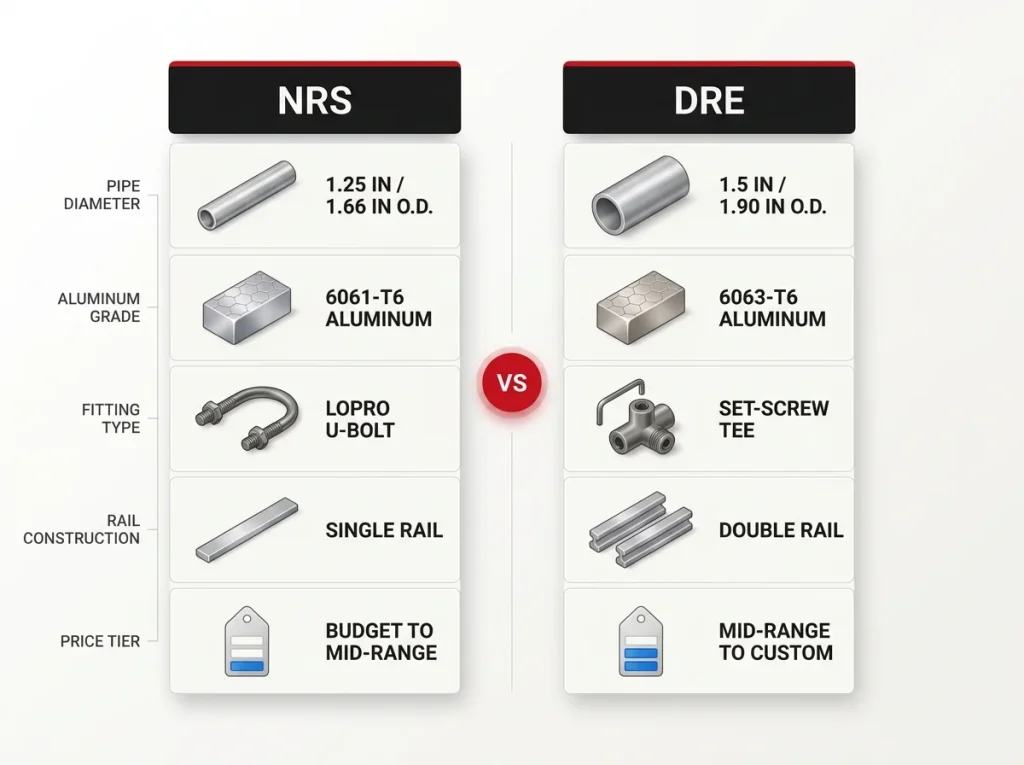
NRS builds from nominal 1.25-inch schedule 40 pipe (about 1.66 inches outside diameter) in 6061-T6 aluminum, joined with hot-forged LoPro fittings and stainless U-bolts. DRE runs a fatter nominal 1.5-inch pipe (about 1.90 inches outside diameter) in 6063-T6 aluminum on its standard LD line, with the heavier XD line adding a diamond-plate build, all clamped with set-screw Tee fittings. Both run anodized aluminum that shrugs off river grit without corroding, and most NRS frames use a single-rail layout while DRE’s heavier XD builds step up to a double-rail deck for stiffer cargo support. Those are not trivial spec differences. They are the whole personality of each frame.
Aluminum grade and pipe diameter
The alloy choice is the quiet story here. 6061-T6 (NRS) is stiffer and lighter, but stiff aluminum cracks when it finally gives. 6063-T6 (DRE) bends a little more under the same hit and is far less likely to crack, which is exactly where the “bomber” reputation comes from. Combine that softer alloy with the fatter 1.5-inch tube and you get a frame that flexes and returns instead of snapping. It weighs more. That is the trade, and it is a real one, not marketing.
Fitting systems and why they matter
The joints tell you how each frame lives over years of trips. NRS U-bolts either hold firm or sit visibly loose, so a ten-second walk-around before launch tells you everything. DRE set-screw Tees bite into the pipe with an Allen screw, which holds beautifully when it is set right and works loose when it is not. Neither is better in a vacuum. They just fail differently, and knowing how yours fails is half of owning it.
One hard rule falls out of all this: NRS and DRE pipe diameters do not cross without adapters. You cannot drop a DRE crossbar onto an NRS frame and expect it to clamp. Try to mix brands and you end up with what the forums lovingly call a Franken frame, a rig cobbled from parts that never quite fit. Buy into one brand’s fitting ecosystem and stay there.
Seeing the assembly makes the fitting difference obvious in a way text cannot, so it helps to watch a frame go together before you buy one.
Weight vs Durability, the Real Tradeoff
Every frame argument on the water eventually lands on the same forum story. Two boaters, an NRS frame and a DRE frame, both slam the same canyon wall on the same bad line. The NRS frame comes off the rock visibly bent. The DRE frame comes off it fine. That is the trade in one ugly image, and it is worth understanding before you decide which side of it you want to be on.
Lighter NRS tubing flexes under a fully loaded expedition frame setup, which you notice most on big water when the boat is heavy with gear. Heavier DRE tubing stays rigid under that same load. On a light day boat, the flex barely matters and the weight savings is a gift. On a ten-day trip with three coolers and a groover, that rigidity is the difference between a frame that holds its shape and one that works you all week. Neither is wrong. They are built for different jobs.
The bomber reputation, earned and overrated
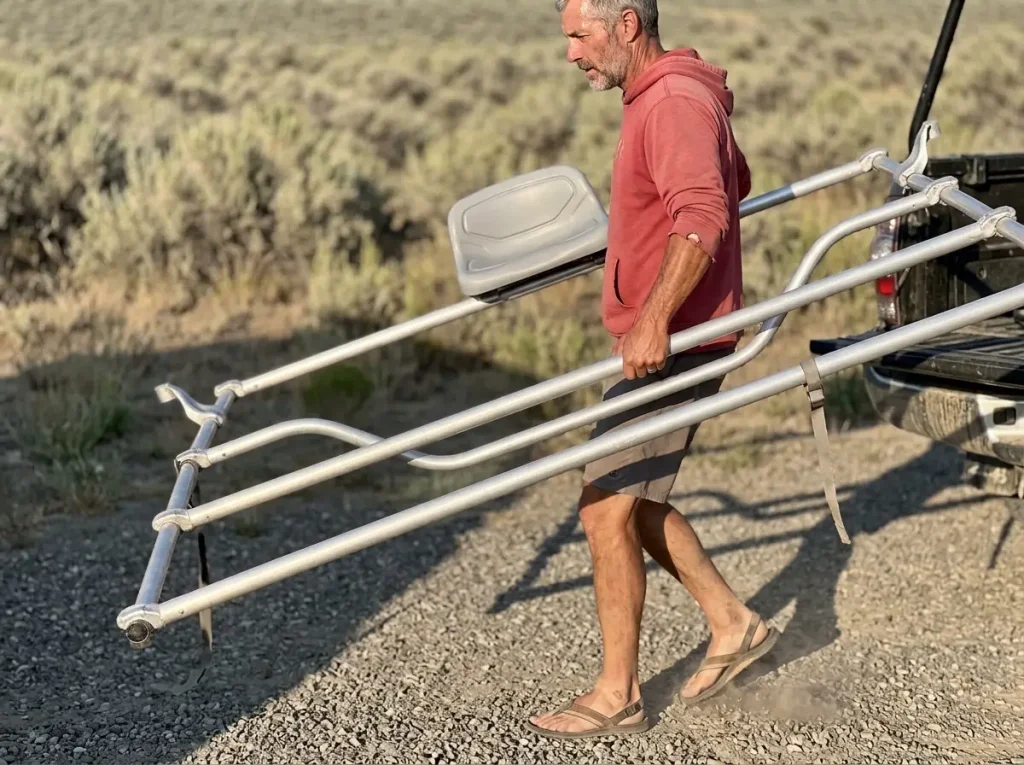
DRE’s “bomber” name is real, but it is not free. That durability shows up as pounds. A lighter NRS day-tripper frame is a genuine one-person lift onto a truck rack at a dark put-in. A loaded DRE expedition frame is a two-person job, every time. If you boat solo a lot, that weight is not an abstract spec, it is your shoulder at 6 a.m. Plenty of private boaters buy the bomber frame for water that never asks for it, then curse the weight on every shuttle.
The fitting failure mode nobody prints
Here is the field detail that never makes it onto a manufacturer page. DRE’s set-screw Tees need a real tightening routine, not a one-and-done crank. Set them wrong and they walk loose by day three of a trip, which is exactly the complaint that fills those forum threads. It is not a defect. It is a maintenance habit that comes with that fitting style, and once you know it, the fittings stay put.
On DRE set-screw Tees, tighten firmly, back off a half turn, then repeat seven to ten times before a trip so the screw teeth actually bite into the pipe. That patient little ritual is the whole difference between a fitting that stays snug through big water and one that rattles loose by camp two.
There is a safety layer under all of this too. A frame that flexes hard or a fitting that walks loose means gear shifting when you least want it, mid-rapid, when your hands are full. That is not a reason to panic-buy the heaviest frame. It is a reason to match the frame to the load and check your fittings like you check your straps.
Customization and Modularity

The real question under “which brand” is often “how much do you want to tinker?” NRS and DRE answer that in opposite ways, and either answer can be the right one depending on how your setup evolves.
NRS treats a frame like a kit you grow into. The LoPro fitting system lets you buy tubing and fittings separately and build your own configuration, then add a bay or a mount next season when the budget comes back. It is the friendlier path for a private boater who wants to start simple and expand. DRE treats a frame like a tailored suit, built to order with your bay count, sizing, towers, and seats dialed in from the start. You commit to the config up front and wait for it, and what you get back fits your boat exactly.
The NRS Universal Frame and buy-once math
One NRS piece deserves its own mention because it quietly solves a two-boat problem. The NRS Universal Raft and Cataraft Frame(check it on Amazon) converts between a raft frame and a cataraft frame using breakdown side rails. If you own or plan to own both a raft and a cataraft, one purchase covers both instead of buying two dedicated frames. That is real money saved, not a gimmick, and it is the strongest “buy once” case in the NRS lineup. If you are still deciding whether a second hull is in your future, if you’re weighing a cataraft too is worth a look before you spend.
The ecosystem trap
Modularity has a catch, and it circles back to the fitting rule. Every accessory you add, oar mounts, oar towers, thigh bars, clamps onto your frame’s fitting system. Commit to NRS LoPro or DRE Tee early, because the oar mounts and towers that bolt to it are priced and shaped around one system or the other. Mixing brands as you expand gets expensive and fiddly fast. Pick your ecosystem before you pick your third accessory.
Price and Where You Can Actually Buy Each
This is where the three names stop being equals, and it is the part most comparisons quietly skip. One of these you can buy tonight. One you order and wait for. One is not in the frame aisle at all. Getting this map right saves you more grief than any spec.
NRS frames sell off-the-shelf, on Amazon and through NRS directly, with no lead time and delivery in days. They sit in the budget to mid-range tier, which makes them the default first frame for most private boaters. DRE is build-to-order only, sold through downriverequip.com and a short list of specialty river shops like Utah Whitewater Gear and Colorado Kayak Supply. No complete DRE frame ships from Amazon, so treat DRE as an order-direct decision, not an add-to-cart one. And Cataract, again, is not a frame purchase at all. Its oars are the Amazon-buyable part, covered up top.
Here is the surprise that flips the usual assumption. DRE is not automatically the expensive option. Its entry-level Gunnison LD line starts close enough to NRS’s mid-tier frames that the “custom means pricey” reflex is just wrong at the bottom of the range. The cost climbs steeply once you move to the XD and fully custom Colorado builds, but the door into DRE is lower than most people expect. If you assumed custom meant out of reach, price the entry line before you rule it out. It is also worth knowing how NRS stacks up as a raft brand if you are outfitting a boat and a frame in the same season.
Both brands stand behind their frames with solid warranty coverage, which is part of why a good frame is a buy-it-once piece of kit rather than a yearly replacement. That longevity is also the argument against overspending. If you already own a frame that still rows straight and clamps tight, the smartest money is often no money. Keep rigging the one you have and put the cash toward oars or a trip. A marginal upgrade is rarely worth a fresh spend.
Best off-the-shelf starter, NRS Bighorn I
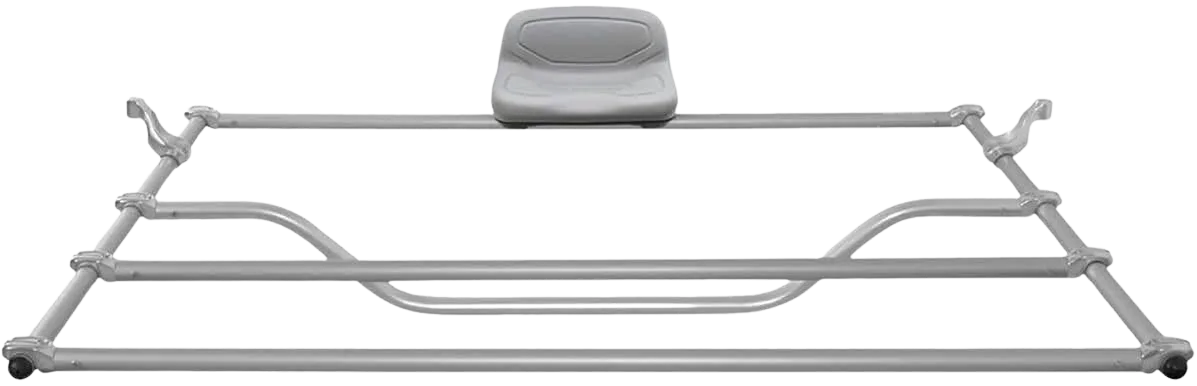
The Bighorn I is the frame to buy when you want to be on the water this month, not next quarter. It carries the light 1.25-inch tubing that makes solo rigging realistic, and because it lives in the LoPro ecosystem, you can bolt on a cooler bay or a dry box mount down the line instead of buying a whole new frame. For a first-time buyer sorting out what they even need, starting here and growing beats guessing at a maxed-out rig on day one.
Expedition-lite step-up, NRS Bighorn II
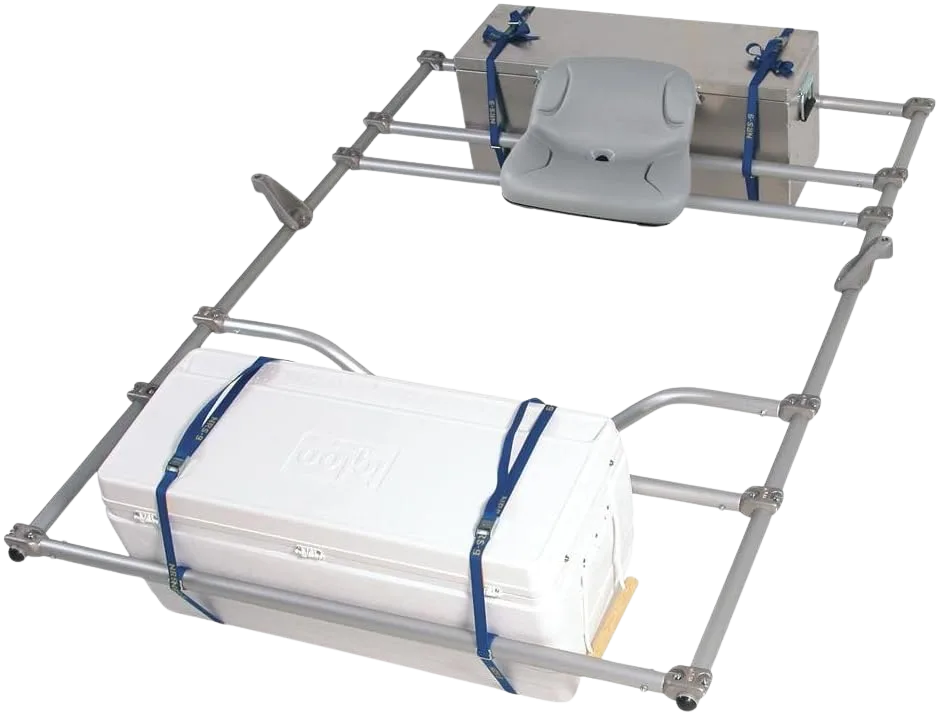
When your trips start including a night on a beach, the Bighorn II is the honest next rung. It gives you the cargo room and the strap-down points an overnight demands while staying inside the off-the-shelf world, so you skip both the custom lead time and the custom price. For the boater who is past day trips but not ready to commit to a bomber DRE expedition build, this is the frame that fits the in-between.
Matching the Frame to Your Trip Type

Forget “which brand is best.” The better question is which frame fits your water, and that answer changes with the trips you actually run. Read the room before you read the spec sheet.
If you mostly run technical Class II to III day water, you want a lighter frame with fewer bays for maneuverability, and the Bighorn I is squarely that. If your calendar has big water and heavy multi-day loads on it, you want rigidity and cargo room, which points to the Bighorn II or a DRE Gunnison XD custom. If you run both a raft and a cataraft, the NRS Universal Frame’s convertibility is the buy-once answer. And if you are a first-timer on a budget, start with NRS’s modular path and build up instead of buying a maxed frame you have not learned to use yet. Before you lock any of that in, the frame types broken down before you overbuy is the pillar to read, because trip type and frame type are the same decision wearing two hats.
Day-tripper vs expedition setups
A day boat wants to feel quick and light in your hands. An expedition boat wants to hold a week of gear without twisting. Those are opposite goals, and one frame rarely nails both. This is where boaters talk themselves into trouble, buying up “to be safe” and ending up with a barge on water that wanted a dart.
Oversizing is the number one frame mistake. Buying a full expedition cargo frame for solo day trips does not make you safer, it makes the boat harder to handle on the technical water you run most. Buy for the water you paddle ninety percent of the time, not the trip you take once a year.
Rigging for the big trips
Once you move up to an expedition frame, the frame becomes a cargo platform, and the cargo game has its own skills. Dry boxes, coolers, and drop bags all live in the bays and all need to survive a flip. If a long trip is on your horizon, rigging a dry box into the cargo bays is the next thing to get right, because a frame is only as good as the load strapped to it.
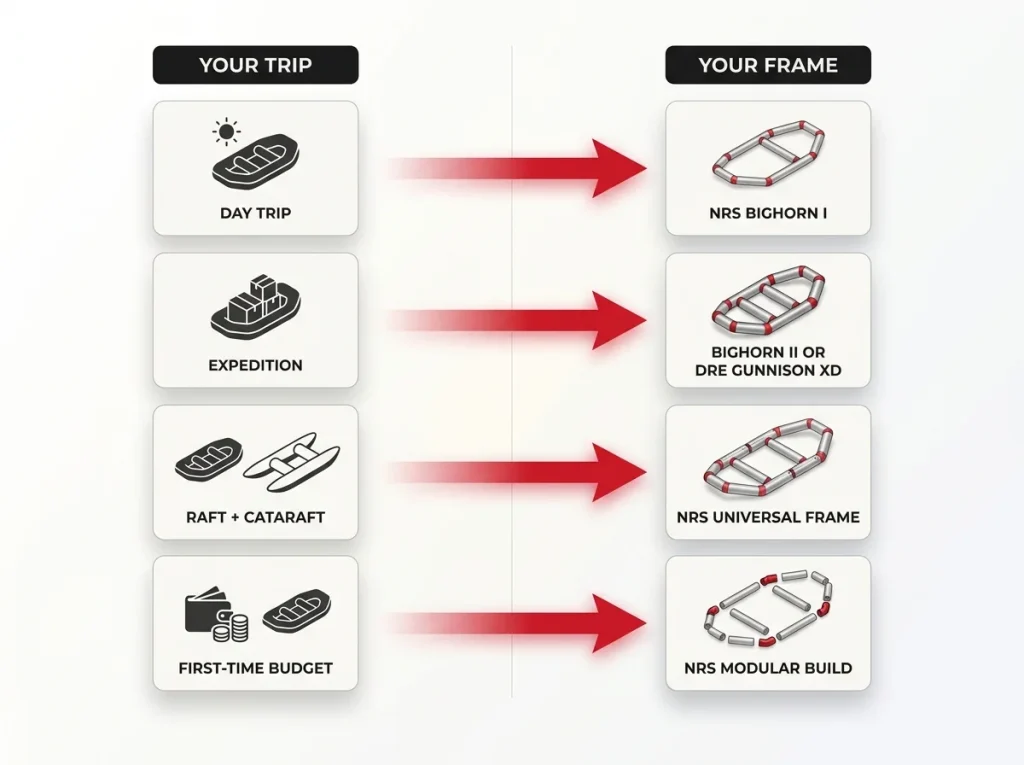
If you want to see the matching process in real time, this walkthrough runs through sizing and bay layout against a specific boat and trip.
Sizing Basics That Apply to Any Brand
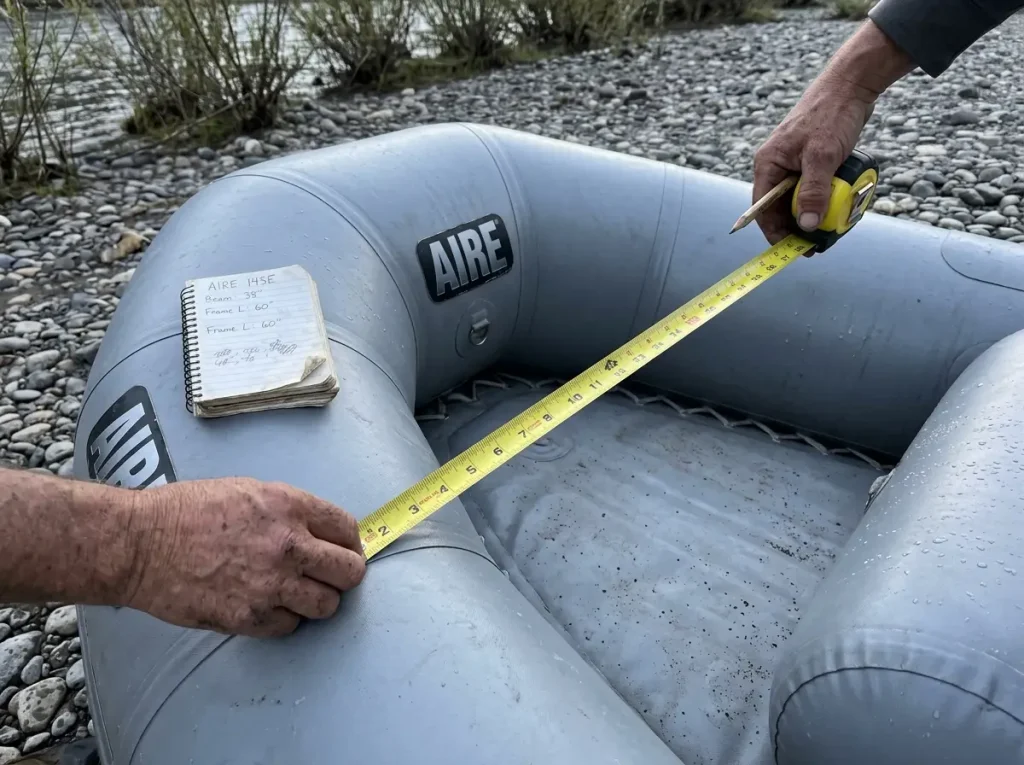
Pick the wrong size and the best brand on the water will not fit your boat. Two measurements decide the whole thing, and both come off the actual tubes, not the number on the raft’s hang tag. Get these first, then compare brands second.
The first is center-to-center width, which is your raft’s interior tube-to-tube width plus one tube diameter. The frame should sit at or slightly beyond that number, never under it. The second is flat length, measured along the flat top surface of the tubes, which is always shorter than the raft’s overall length because the upturned bow and stern eat the difference. Cut a frame to the boat’s total length and it will jam into those upturns and load stress where you do not want it. These formulas apply no matter which brand you land on, and the center-to-center and flat-length math every brand uses is laid out in NRS’s own reference if you want the manufacturer version.
Center-to-center and flat length
The reason these two numbers matter more than brand is simple. NRS frames run roughly 66 to 88 inches depending on model, and DRE cuts to your measurement, so both brands are fed by the exact same math. Your raft’s dimensions set the target, and your raft’s size sets the frame math before any logo enters the picture. Nail the numbers and the brand choice gets easier, because half the options size themselves out.
Measure center-to-center width and flat length off your real tubes, not the advertised raft size. The number on the tag always overstates usable flat length, because it counts the upturned bow and stern you cannot actually put a frame on. Tape the boat, trust the tape.
From sizing to securing
Once the frame is sized and it drops onto the tubes clean, the last job is holding it there. A correctly sized frame still needs to be strapped down so it does not shift under load or in a flip, and strapping the frame down once it’s sized is the step that turns a good fit into a rig you can trust. Sizing gets the frame on the boat. Straps keep it there.
The Bottom Line on Three Brands That Are Really Two
Strip away the confusion and the choice gets clean. Cataract makes oars, not frames, so your real decision is NRS versus DRE. NRS is the lighter, modular, buy-tonight frame that fits day trips and grows with you. DRE is the heavier, bomber, order-direct frame built for big water, with an entry price that sits closer to NRS than the “custom is expensive” reflex suggests. Both are fed by the same two numbers.
So before you shop another spec, go tape your boat. Measure center-to-center width and flat length off the real tubes, write them down, and watch a confusing three-brand search collapse into a short, confident shortlist. The frame that fits your water is usually obvious once the numbers are in your hand.
Frequently Asked Questions
01Does Cataract Oars make raft frames?
No. Cataract Oars makes composite oar shafts and blades, not raft frames, and never has. In a Cataract vs NRS vs DRE frames comparison, only NRS and DRE actually build frames. Cataract is the oar brand you pair with whichever frame you choose.
02What is the difference between NRS and DRE frames?
NRS frames use lighter 1.25 inch 6061-T6 aluminum with LoPro U-bolt fittings and sell off-the-shelf. DRE frames use heavier 1.5 inch 6063-T6 aluminum with set-screw Tee fittings and are custom built to order. NRS is lighter and modular, DRE is more rigid and bomber for big water.
03What is a raft frame made of?
Almost always anodized aircraft-grade aluminum pipe, either 6061-T6 on NRS frames or 6063-T6 on DRE frames, in schedule 40 tubing joined with LoPro or set-screw fittings. Aluminum gives the strength-to-weight rafters need without rusting on wet multi-day trips.
04Do river rafts come with frames?
No, rafts and frames are sold separately. The raft is the inflatable hull, and the frame is the aluminum structure you rig on top for rowing, seating, and cargo. You size the frame to your specific boat before buying it.
05How much do raft frames weigh?
It depends on size and brand, but a lighter NRS day-trip frame can be rigged solo while a heavier DRE expedition frame is a two-person lift. Weight tracks tube diameter and bay count, so more bays and fatter pipe mean more weight but more rigidity.