
In this article
You are standing at the put-in with everything dialed. The groover is checked off, the wag bags are counted, the PFDs are laid across the tubes, and then the ranger walks over with a tape measure and puts it across your brand-new fire pan. Ask around any boat ramp and the same story comes back: the pan was bought off a product page promising it meets Forest Service regulations, and that phrase does not name a single river. The best fire pans for river trips are the ones that clear the numbers printed on your permit, which is a different question than which pan looks good on a sandbar. What follows is what a ranger actually measures, why three agencies publish three different numbers for the same piece of gear, and which pans clear which rivers, from a galvanized utility pan to a folding stainless firebox.
Here is how the four pans worth arguing about compare before any of the rules get explained.
| Pick | Burn Area | Weight & Build | Clears Which Rule |
|---|---|---|---|
| Fireside Outdoor Pop-Up Fire Pit 24 inch Ultra Lite | 576 sq in (24 x 24) | 3.2 lb, aluminum frame + steel mesh | Grand Canyon wood-fire standard and everything below it |
| Fireside Outdoor Trailblazer 12 inch x 12 inch | 144 sq in | ~3.8 lb, packs to 14 in | Middle Fork Salmon and most BLM stretches, not the Grand Canyon |
| Snow Peak Pack and Carry Fireplace M | ~189 sq in | Stainless steel, folds flat | Middle Fork and BLM minimums, under the Grand Canyon threshold |
| Behrens 2168 Galvanized Steel Utility Pan | 3 gal pan with deep sidewalls | Steel, no factory legs | The common BLM 12 x 12 with a lip, where legs are not required |
What the Best Fire Pans for River Trips All Have in Common
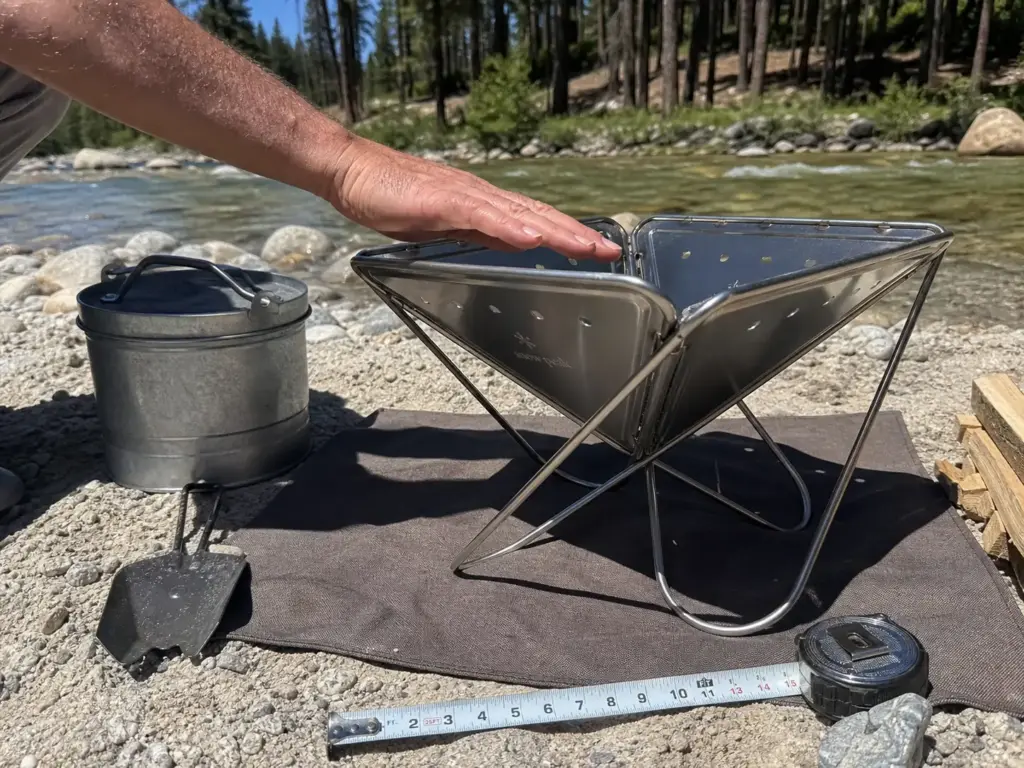
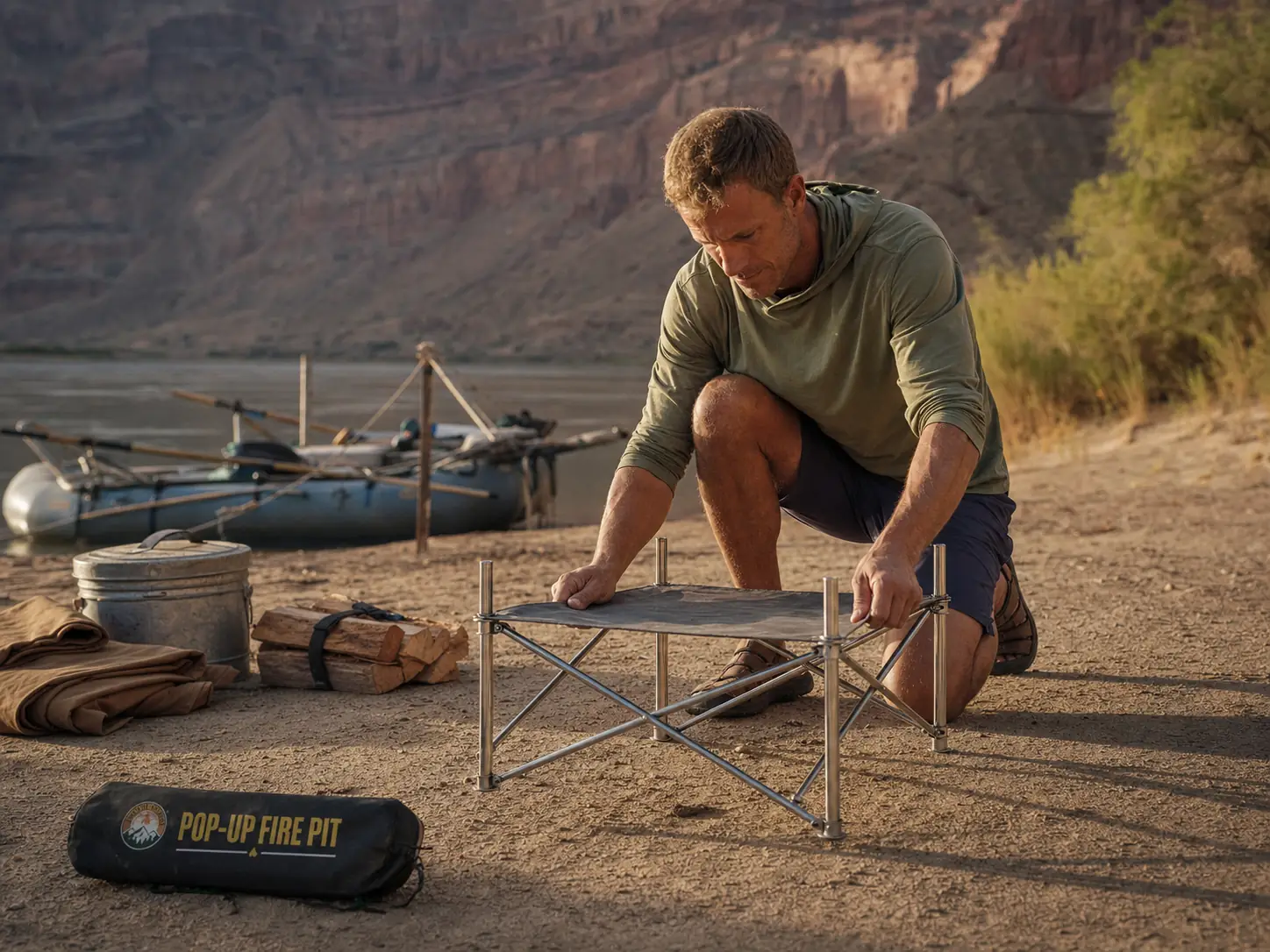
Nobody at the put-in asks what brand your pan is. They look at it, sometimes they measure it, and they check five things: burn area in square inches, lip height measured up from the base, how the pan gets elevated off the sand, whether a fire blanket sits underneath it, and whether you have a sealed ash container for what is left in the morning. Learn those five and a shopping problem turns into a checklist.
The baseline most stretches start from is written down and public. The BLM River Use Stipulations handed to every private boater at the permit desk set the entry standard, and BLM’s own permit regulations checklist defines an approved fire pan as metal, 12 by 12 inches minimum, with a lip of roughly 1.5 to 3 inches depending on the district. That is the floor, not the ceiling, and plenty of rivers ask for considerably more.
The word choice matters too, because it tells a ranger whether you have read the sheet. In a permit context it is a fire pan, not a fire pit, and the regulatory idea behind it is the off-ground fire: no flame, no coal, and no ember ever touches soil or sand. The pan is the tool; the off-ground fire is the requirement.
Here is the part most product pages leave out. On any multi-day trip the pan is one component of a required system, not a standalone purchase, and it sits alongside the camp and kitchen gear your permit actually requires on the same stipulation sheet. On the Middle Fork Salmon you can show up with a perfectly compliant pan and still fail the check because nobody brought a sealed ash can.
The most common mistake in this whole category is buying the pan before reading the stipulation sheet. “Meets Forest Service regulations” is a marketing checkbox written by a copywriter; the number on your permit is the rule a ranger enforces. One of those two things has a tape measure behind it.
Why “Meets Forest Service Regulations” Is Not a Spec
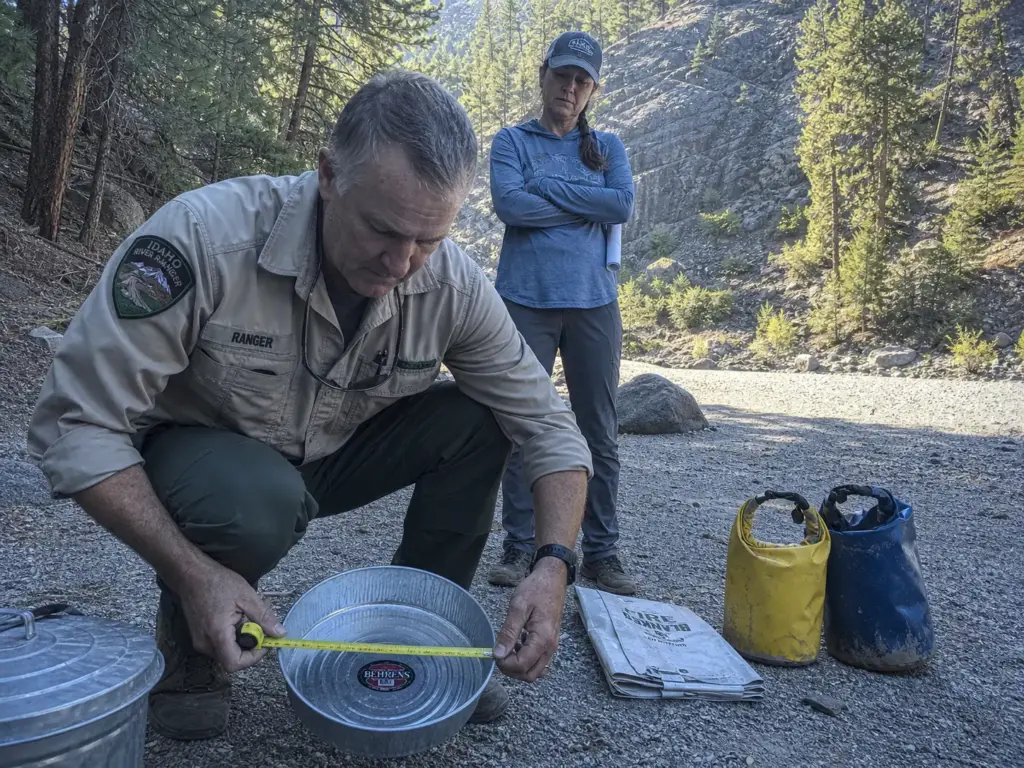
The rules do not simply vary in strictness. They contradict each other, and the workaround one agency recommends in writing is a written violation on another river. Once you see that, the phrase on the product page stops sounding like a certification and starts sounding like what it is: a claim about an unnamed river.
Start with the strictest published standard in the country. For wood fires, the Grand Canyon’s noncommercial river trip regulations spell out the 300-square-inch pan and 3-inch lip in writing, and they require the pan to be elevated on manufactured legs, specifying “not rocks, empty cans, etc.” A 12 x 12 pan is not permitted there for wood, no matter what the box says. If you are planning a Grand Canyon private trip, that 300-square-inch number is the one your purchase has to answer to.
Then, on the same beach, the same agency runs a second rule. Charcoal briquettes may be contained in a pan as small as 12 x 12 x 3 inches. Add one stick of driftwood to that pan and the 300-square-inch standard takes over. Two rules, one camp, one fire.
Now go north. The Salmon-Challis National Forest sets the Middle Fork’s firepan minimum at 144 square inches with 2-inch sides above the base, which is less than half the Grand Canyon requirement for the same activity. A pan that gets you turned around in Arizona is entirely legitimate in Idaho.
And then there is generic BLM, where the contradiction gets sharp. The written standard is 12 x 12 minimum with a 1.5 to 3 inch lip, and several districts add a line telling boaters that if the fire pan does not have legs, they should place rocks underneath the corners. That is the precise act the Park Service prohibits by name. Two federal agencies, one piece of gear, opposite instructions.
Buy the pan for your hardest permit, not your usual one. A 300-square-inch pan with a 3-inch lip and factory legs is welcome on every permitted river in the country; a 144-square-inch pan is welcome on Idaho stretches and turns you around in the Canyon. One pan, one purchase, no second shopping trip the week a hard permit finally hits.
So the action step is not “buy a good pan.” It is to pull the stipulation sheet for the river you drew, or call the permit office directly, and understand how river permits are issued and where the stipulation sheet comes from so you know which document governs. Write down four numbers before you open a product page: minimum burn area, minimum lip height, elevation method allowed, and ash container capacity. Every purchase decision in this article falls out of those four numbers.
Heavy Steel vs Pop-Up Pans and What the Weight Really Costs
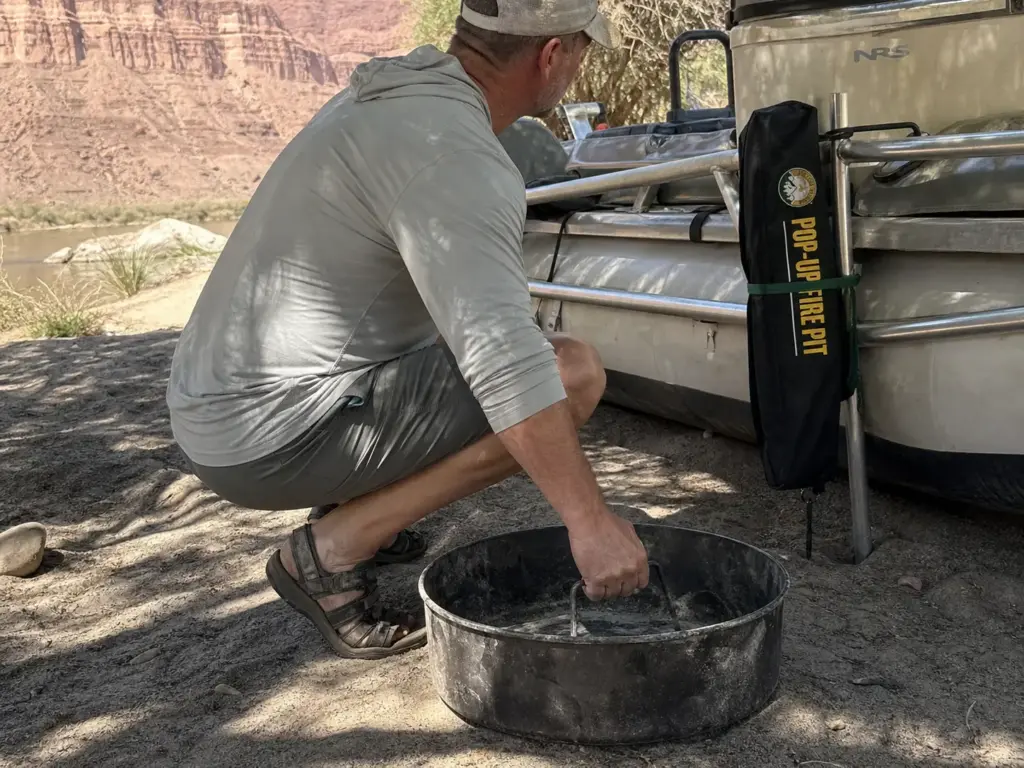
A fire pan gets used for two hours a night and occupies frame real estate for the entire trip. That is the tradeoff nobody frames honestly, because the shop selling you a 25-pound pan has no reason to mention that a lightweight fire pan clears the same written standard at 3 pounds. The light pans have real weaknesses, though, and a friend would name both sides.
What a traditional steel pan weighs and where it lives on the boat
A heavy steel fire pan runs about 25 pounds bare. Add a lid and the common steel rafting pans land somewhere between 37 and 50 pounds. Partner Steel’s mini sits around 15 pounds and collapses, which is about as light as the traditional class gets.
NRS “The Fire Pan” is the product that defines this category, and every roundup on the internet uses it as the reference point whether or not it names it. It is heavy-gauge steel, roughly in that 25-pound class, and it is genuinely bombproof in a way no folding pan is. It is also the reason the phrase “clunker steel firepan” exists, said dismissively by the same boaters who say “bombproof” admiringly about the identical object.
The real cost is spatial, not muscular. A 25-pound steel pan becomes a permanent fixture strapped to the frame for the whole trip, while a 3-pound folding pan lives inside the kitchen box and costs zero boat space. Before you commit, it is worth knowing how much frame real estate you actually have to give away, because on a small rig that pan is displacing something you also want.
What you actually give up going lightweight
The full-size 24-inch pop-up fire pit runs about 8 pounds in the heat shield configuration and 3.2 pounds in the Ultra Lite build. The 12-inch model comes in around 3.8 pounds and packs down to 14 inches, roughly the footprint of a tent pole bag. Both are an aluminum fire pan at heart, a folding fire pit built from a frame plus a mesh floor, and both drop into a carrying case that stows flat against the kitchen box.
The catch is that the mesh base is a consumable, not a permanent part. It is guaranteed for 50 fires or one year, and a replacement mesh costs a small fraction of the pan and weighs nothing. Budget a spare per season the way you budget spare cam straps, because a torn mesh on day two of a six-day trip means no legal fire for the rest of the trip.
There is a cooking penalty too. Pop-up pans burn wood down almost completely, which is excellent for a clean ash pack-out and poor for Dutch oven work, because there is no coal bed left to shovel onto a lid. If your menu leans heavily on cast iron, that limitation is going to show up on night two.
Sand is what finishes off a pop-up pan, not fire. Repeated desert trips work grit into the folding joints and warp the side panels and legs over a few seasons. Break the pan down clean at take-out, knock the sand out of the hinges, and never force a fold that does not want to go.
The difference shows up hardest at ash time. Boaters describe dumping a loaded traditional steel pan as a three or four person job, with everyone shuffling sideways toward the can and nobody enjoying it. The pop-up version is one person pulling the mesh, folding it in half, and pouring.
Match the Pan to Your Rig, Not to the Roundups
Two boaters can read the same roundup and both make the wrong call, because a stripped paddle raft and a fully framed oar rig with a kitchen box have nothing in common except the river. The useful question is not which pan is best. It is where this thing rides, and who carries it up the beach at the end of a long day.
On a paddle raft with a minimal frame, or any self-support trip, packed size decides everything. A compact fire pit that collapses to 14 inches is realistically the only workable option, and you accept the legality ceiling that comes attached to it. Anything larger has nowhere to live except lashed on top of the load, where it flops and catches water.
A private oar rig with a full frame and a kitchen box has more room and a better answer. A 24-inch pop-up pan or a folding stainless firebox rides flat against the dry box the pan is going to live against, gets a strap over it, and stays there. The rule is that it gets strapped, never stacked, because a pan that shifts under a load turns into a saw.
Big groups doing serious Dutch oven cooking should skip the single-pan thinking entirely and run two: one wood-burning pan, one dedicated to charcoal. The mesh base burns wood down too completely to leave a usable coal bed, and two pop-up pans still weigh less and cost less than one traditional steel pan. That is the setup that keeps the kitchen moving while the fire is still going.
There is a storage question hiding inside the legs, too. A pan with factory legs stores as one object, while a legless pan that needs a stand to satisfy an elevation rule is really two objects sharing one strap, and the stand is the piece that goes missing at the third camp. Anything you have to assemble in the dark after a long day is a candidate for being left behind at a scout, so the pan that folds into itself has an advantage that never shows up in a spec comparison.
There is also a crew math nobody publishes. Burn area is not a comfort number, it is a cooking number, and a group of eight running two Dutch ovens plus a coffee pot needs more usable surface than the 144-square-inch minimum leaves you. The practical rule boaters land on is that anything past six people wants the full 24-inch footprint whether or not the permit demands it, because the permit is setting a ceiling on impact, not a floor on dinner.
One more input that never makes the spec sheet: whoever carries it. A 25-pound pan is a two-hand carry up a soft sand beach after eight hours on the oars, and then again in the morning, every day of the trip.
A pan with legs doubles as a drying rack. The elevation you are legally required to have leaves a warm gap underneath after the fire burns down, and wet gloves, socks, and river shoes parked in that gap overnight come out usable instead of clammy. Just keep synthetics far enough back that they are drying, not melting.
The Best Fire Pans for River Trips, Compared
Nearly every page ranking for this search sells its own house inventory, which means it recommends the pans it stocks and stays quiet about where they fail. This is the cross-brand version, and more to the point, it says out loud which pan will get you turned around at which put-in. That honesty is the entire value here.
Fireside Outdoor Pop-Up Fire Pit 24 inch Ultra Lite — the one that clears every rule
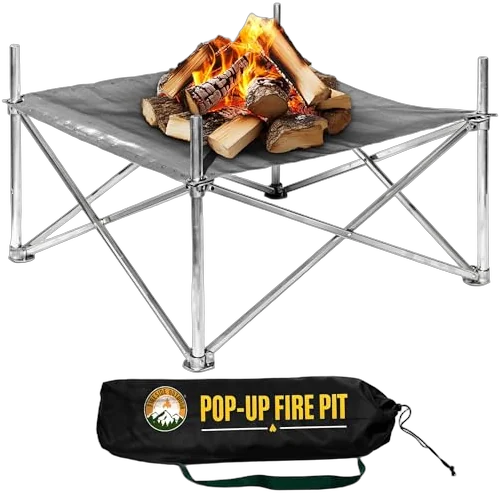
The math on the Fireside Outdoor Pop-Up Fire Pit 24 inch Ultra Lite is hard to argue with. The full 24 x 24 footprint delivers 576 square inches of burn area, nearly double the Grand Canyon threshold, and it does it at 3.2 pounds. Nothing else in the category comes close to that ratio.
The legs matter as much as the area. Because the pan arrives with its own manufactured legs, it answers the elevation question on the rivers where propping on rocks is a written violation, and it answers it identically on the rivers where rocks are fine. You stop having to check that box per permit.
The mesh pour-out is the feature that changes camp life. Pull the mesh, fold it in half, aim it at the open ash can, and pour, which is a one-person job that takes about thirty seconds instead of a four-person shuffle with a loaded steel tray.
The caveat is real and worth planning around. The mesh is rated for 50 fires or one year, replacements are cheap and weigh nothing, and a tear on day two of a long permit means no legal fire for the rest of the trip. Carry a spare in the kitchen box and the problem never exists.
Fireside Outdoor Trailblazer Pop-Up Fire Pit 12 inch x 12 inch — the compact call
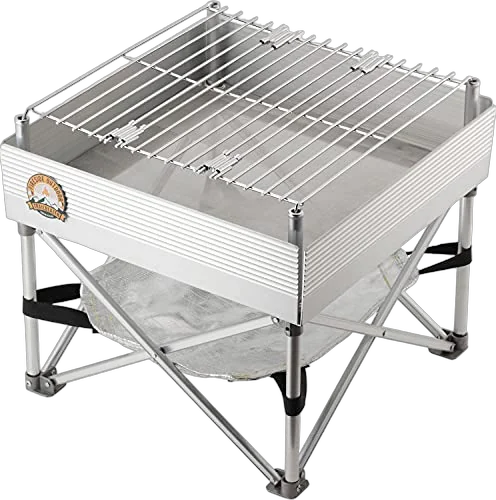
The Fireside Outdoor Trailblazer exists for the boat that has no room. At 144 square inches and about 3.8 pounds, packing to 14 inches long, it disappears into a thwart bag on a paddle raft where a 24-inch pan simply has nowhere to go.
Now the limitation, stated plainly rather than buried. Those 144 square inches match the Middle Fork’s 144-square-inch standard and satisfy most BLM stretches, and they are below what the Grand Canyon requires for wood fires. Buy this pan understanding which rivers it takes off your list, and it is a good purchase. Buy it because a roundup called it the best fire pit and you will find out at a put-in.
Snow Peak Pack and Carry Fireplace M — the buy-it-once option
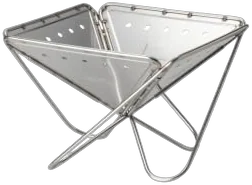
The Snow Peak Pack and Carry Fireplace M is the premium answer for boaters who are tired of replacing things. Roughly 189 square inches of stainless with no mesh in the system means there is no annual consumable and no failure mode that ends your fire mid-trip.
Durability is the argument. Sand works its way into everything on a desert river, and stainless takes that abuse far better than the folding aluminum frames it competes against. It also holds a real coal bed, which the mesh pans do not, so Dutch oven cooking stays on the table.
The limitation is the same one the Trailblazer carries, and it deserves the same sentence: 189 square inches clears the Idaho minimum comfortably and falls short of the Grand Canyon’s 300-square-inch wood-fire threshold. Folded flat against a dry box wall is where it will live, and it will still be living there in ten years.
The Cheap Pan That Passes Most Ranger Checks
This is the section a retailer cannot write. On a river with a 12 x 12 and 1.5-inch-lip rule, a galvanized utility pan from the hardware aisle and a boutique river pan pass the identical check. The premium buys you weight savings, factory legs, and a cleaner ash system. It does not buy legality, because legality is a number.
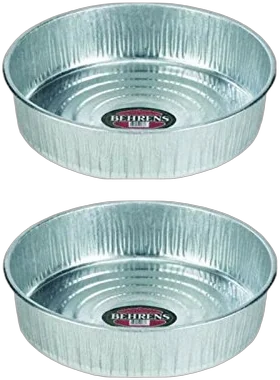
The Behrens 2168 3 Gallon Galvanized Steel Utility Pan is a genuine steel pan with deep walls at a fraction of what a dedicated river pan costs. On stretches where the written standard is a 12 x 12 metal pan with a lip, a ranger looking at this sees a compliant pan, because that is what it is.
Caveat one is a health matter and it is not optional. The galvanized coating gives off zinc fumes the first time it gets seriously hot, so burn it off outdoors at home, well upwind, before it ever goes near a camp kitchen. After that first burn-off it behaves like any other steel pan.
Caveat two is where it fails. It has no legs. On rivers that require manufactured legs, including the Grand Canyon, a legless pan does not comply no matter how good the lip is, and propping it on rocks is the specific workaround those rules prohibit.
The DIY fire pan that rangers actually reject is the other one people build. An 18 x 18 inch sheet of 0.024 inch 304 stainless weighs about two pounds and costs almost nothing, and it has no lip at all, which means it fails nearly every written stipulation in the country. The reason the oil drain pan hack works and the flat sheet does not is that a drain pan already has walls.
There are boaters who have run a galvanized utility pan for four seasons and never gotten a second look, because their home river’s rule is 12 x 12 with a lip and they meet it every time. That is a legitimate outcome, not a loophole. The gap between a budget fire pan and a boutique river pan is roughly tenfold, and on a lot of permits both pass the same check.
Fire Blankets Are Required Gear, Not an Upsell
The blanket looks like the accessory the store adds to your cart at checkout. On the Grand Canyon it is written into the regulation, and it is also the difference between a clean beach and a scorch ring that the next group has to camp on.
What the blanket is for and how big it needs to be
Grand Canyon regulations state that fire blankets are required underneath wood fires and charcoal pans. A fully compliant pan sitting on bare sand is still not compliant, which surprises people who spent a long time choosing the pan.
Functionally, the blanket catches spilled ash and the embers that pop out of the pan, and that is what makes a complete ash pack-out possible. Anything that lands on the mat gets rolled up and comes home with you instead of staying in the sand.
Size it to the pan plus the ember spread zone, not to the pan alone. A 67 x 60 inch mat covers a 24-inch pan with real margin on every side, which is what you want when the wind comes up at dinner.
The Fireside Outdoor Ember Mat is the straightforward answer for anyone running the 24-inch pan, since it was sized for exactly that pairing. Under five pounds and folding small enough to ride inside the kitchen box, it costs you nothing in space and settles a regulatory requirement permanently.
The blanket that doubles as a cover
A heavy-duty blanket with an adjustable vent does two jobs instead of one. It works as the ground cloth underneath the pan, and it is also something you can throw over the pan when the wind picks up at camp or when a Stage II fire ban drops mid-trip and the fire needs to be out now rather than in twenty minutes. Read the order itself before you assume the evening is over, because a propane campfire with a shutoff valve is frequently still permitted under a restriction that closes down wood.
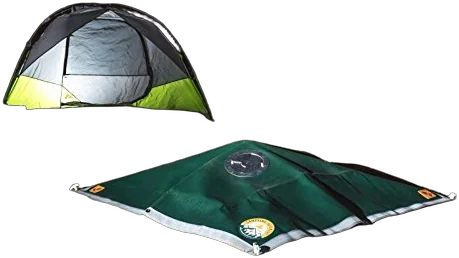
Worth knowing before you compare the two: Campfire Defender Protect Preserve is the parent brand behind the Fireside Outdoor pop-up pit line, so these are two products from one family rather than two competing companies. Choosing between them is a question of whether you want the dedicated ground mat or the heavier dual-purpose blanket, not a brand loyalty decision.
The mistake that shows up over and over is assuming the pan replaces the blanket. It does not. On the Grand it is a written violation, and everywhere else it is the reason a camp ends up with a scorch ring in the sand.
Packing Out Ash Without Making a Mess of the Boat
The pan gets all the attention and the sealed ash can is the thing people show up without. Ash disposal is also where an otherwise compliant setup quietly falls apart, because tossing the ash into the current is not a shortcut around the problem: it is a violation and it lands on somebody else’s beach.
Why the ash goes home with you
Inside the Middle Fork’s quarter-mile-wide river corridor, all waste including ash has to be packed out. On a six-day permit that means the ash rides in the frame from the first camp to the take-out, and there is no intermediate place to get rid of it.
Grand Canyon guidance is blunt about the reason. Do not throw ash in the river: submerged ash rehydrates, forms a grey slick, and settles out on the next camp’s beach downstream. That is the mechanism behind Leave No Trace on a whitewater trip in a corridor where every group camps in the same handful of spots.
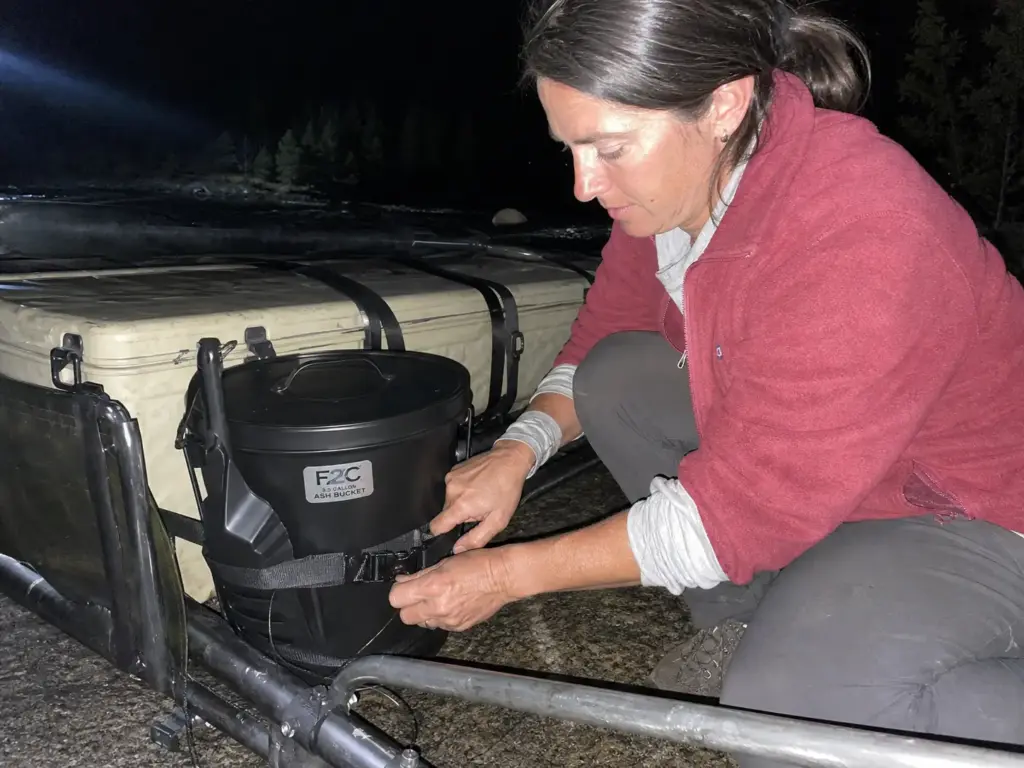
The field procedure has a right order and a common wrong one. Check the ash with the back of your hand held above it, and if there is any warmth left, add water and stir it in the pan, not in the can. Then transfer cold ash to the sealed container, close it, and strap it down like everything else on the frame.
That last step is not fussiness. A can of cold ash that works loose and tips inside a frame redistributes itself across every dry bag you own, which is a thing you only let happen once.
What counts as a legal ash container
The Middle Fork specification is concrete: a container of metal or hard plastic, with a waterproof seal, holding at least 300 cubic inches. BLM’s fire pan and portable toilet brochure for the South Fork frames the ash container and the toilet system as one pack-out requirement rather than two optional accessories, which is exactly how a ranger reads your load.
That framing is worth taking seriously, because the ash can and the groover system riding on the other side of the frame are the two things on a river trip that are required rather than nice to have, and both get checked at the put-in.
A gallon paint can is an accepted ash container on most stretches and hits the 300-cubic-inch spec without buying anything river-branded. A 20mm rocket box does the same job with far more capacity and a lid that already seals. Check your own stipulation sheet first, then decide whether you need to spend anything at all.
Group size is what decides the can, and for a full week capacity beats cleverness. A 5.5 gallon can holds roughly 1,270 cubic inches, which covers a large crew for a long permit without anyone rationing ash space, and a lid plus a shovel means the cold ash stays where you put it.
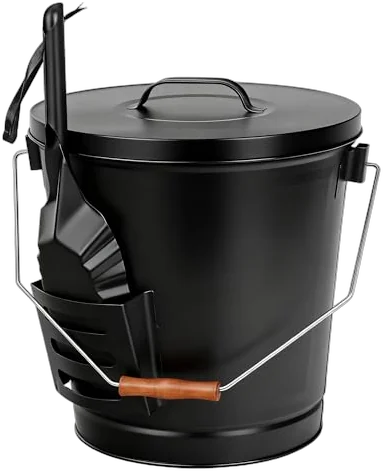
The F2C 5.5 Gallon Ash Bucket solves the capacity question once for a full crew, and the shovel matters more than it sounds like it should. Scooping cold ash out of a steel pan with a coffee cup is how ash ends up on everything within six feet of the kitchen.
Turning the Fire Pan Into the Camp Grill
The pan already eats frame space every day of the trip. If it can also be the cook surface, the math on carrying it changes considerably, and grate compatibility is the detail people discover at camp rather than at home.
A folding grill grate sized to your pan turns the fire into the grill, which means one object doing two jobs instead of two objects competing for the same strap. That is the entire argument for a pan that occupies space whether you cook on it or not.
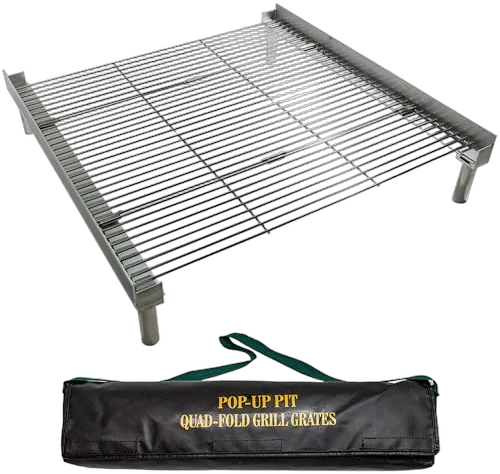
Match the grate to the pan you actually own, not to the pan in the photo. The Pop Up Pit QuadFold grates are cut for the 24-inch pan and will not span a 12-inch one, and the compact pans generally ship with a grill of their own anyway.
The one cooking mistake worth naming again here is running a pop-up pan when the menu is built around Dutch ovens. The mesh burns wood down almost completely, which is wonderful for cleanup and useless when you need a bed of coals to shovel onto a lid. If cast iron is the plan, carry a second pan for charcoal or start the burn-down a full hour earlier than feels necessary.
There is a quiet compliance benefit too. Cooking over the pan keeps every ember inside the pan, which keeps the ash pack-out complete and the beach clean without anyone having to think about it.
Conclusion
Read the stipulation sheet before you read a product page. Burn area, lip height, elevation method, blanket, ash container: four numbers and one yes or no, and every purchase decision falls out of them.
Buy for your strictest permit, not your usual one. A 300-square-inch pan with a 3-inch lip and factory legs is welcome on every permitted river in the country, while a compact pan is welcome on some and turns you around on others.
The pan is a system, not an object. A compliant pan with no blanket underneath it and no sealed can for the ash still fails the check at the put-in, and it fails it for a reason that has nothing to do with the pan.
Before the next permit lands, pull up the stipulation sheet for the river you actually run and write those four numbers on a strip of tape stuck to the pan itself. It costs nothing, it takes two minutes, and it settles the argument at the put-in before anyone starts it.
Frequently Asked Questions
01What is the best pan for campfires on a permit river?
The safest single answer is a pan with at least 300 square inches of burn area, a 3-inch lip, and manufactured legs, because that specification is accepted on every permit river in the US including the Grand Canyon. Smaller pans work on many stretches, but buying to the hardest standard means one purchase instead of two.
02What are the different types of fire pans?
River fire pans fall into three practical classes: heavy-gauge steel pans in the 25 to 50 pound range, lightweight pop-up pans with a replaceable mesh base at 3 to 8 pounds, and folding stainless fireboxes between the two. A fourth budget class exists in the field, the galvanized utility and oil drain pans, which work because they already have real sidewalls.
03Do all fire pans for river trips need legs?
No, but the strictest permits require them. The Grand Canyon specifies manufactured legs and prohibits propping a pan on rocks or cans, while several BLM districts recommend placing rocks under the corners of a legless pan. That contradiction is why the elevation method belongs on your pre-trip checklist next to the pan dimensions.
04What is the best fire pit for camping versus a river trip?
A car-camping fire pit is chosen for looks and heat output; a river fire pan is chosen to pass a written specification and survive being strapped to a frame. The overlap is real, since a folding stainless firebox works in both settings, but a pit with no measurable lip, no legs, and no flat pack profile fails on the river.
05Do you have to pack out fire ash on a river trip?
On most permitted river corridors, yes. The Middle Fork Salmon requires all waste including ash to be packed out of the quarter-mile corridor, and Grand Canyon guidance directs boaters to keep ash out of the river entirely. Plan on a sealed metal or hard-plastic container holding at least 300 cubic inches.