
In this article
It is 72°F and sunny at the put-in, so the wetsuit sitting in the gear bin feels like overkill. That feeling holds right up until you are in 46°F snowmelt and your chest locks up so hard you cannot pull a full breath. Air temp fools more rafters than any spec sheet ever will, and trip leaders on glacial-melt rivers get strict about suits for one reason, and it is not comfort. This guide covers what a wetsuit and a drysuit actually do, how to pick by water temp and trip length, what the outfitter hands you and whether to trust it, and whether the drysuit price jump is worth it for a private boater.
Here is how the two suits stack up on the things that actually decide a cold-water rafting day.
| Factor | Wetsuit | Drysuit |
|---|---|---|
| Water temp range | Roughly 50–60°F and up | Below ~45°F and shoulder-season cold |
| How it warms you | Traps a thin layer of water your body heats | Seals water out; warmth from layers underneath |
| Mobility | Snug but free-shouldered in the Farmer John cut | Roomier, but bulk depends on layering |
| Cost tier | Mid-range | Premium |
| Overheating risk | High when rowing hard, no way to vent | Lower, you can shed layers underneath |
| Best for | Warm-season cold water, guided-trip renters | Multi-day, spring runoff, frequent cold water |
Why the Water Decides This, Not the Weather
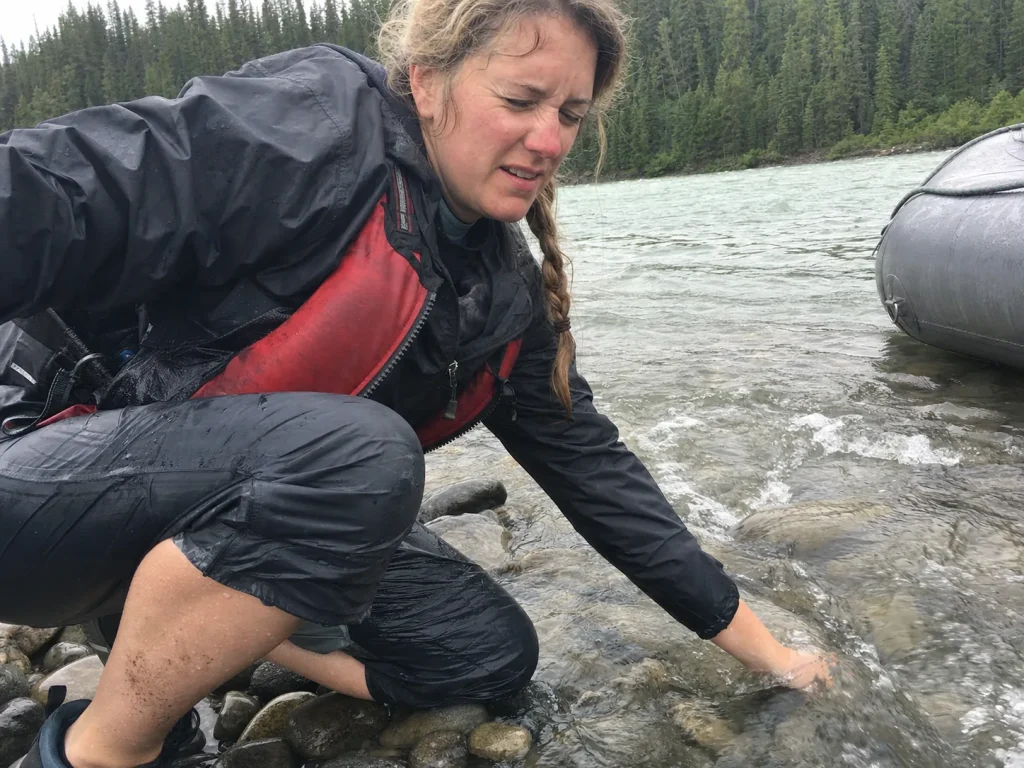
The single biggest mistake at the put-in is dressing for the parking lot. Your body loses heat up to 25 times faster in water than in air of the same temperature, so a warm afternoon tells you nothing about what the river will do to you the second you go in. Suit choice is one piece of the larger question of what to wear rafting, and it is the piece that keeps you functional in a swim.
Cold shock is the first thing that hits you. That gasp-and-hyperventilate reflex can trigger in water below 77°F and peaks between 50 and 59°F, which means water that feels barely cold can still knock the wind out of you on sudden immersion. This is not only a glacial-melt problem, and what cold water immersion actually does to your body is worth understanding before you decide a suit is optional. NOAA’s cold water hazard guidance backs up how fast that heat loss stacks against you.
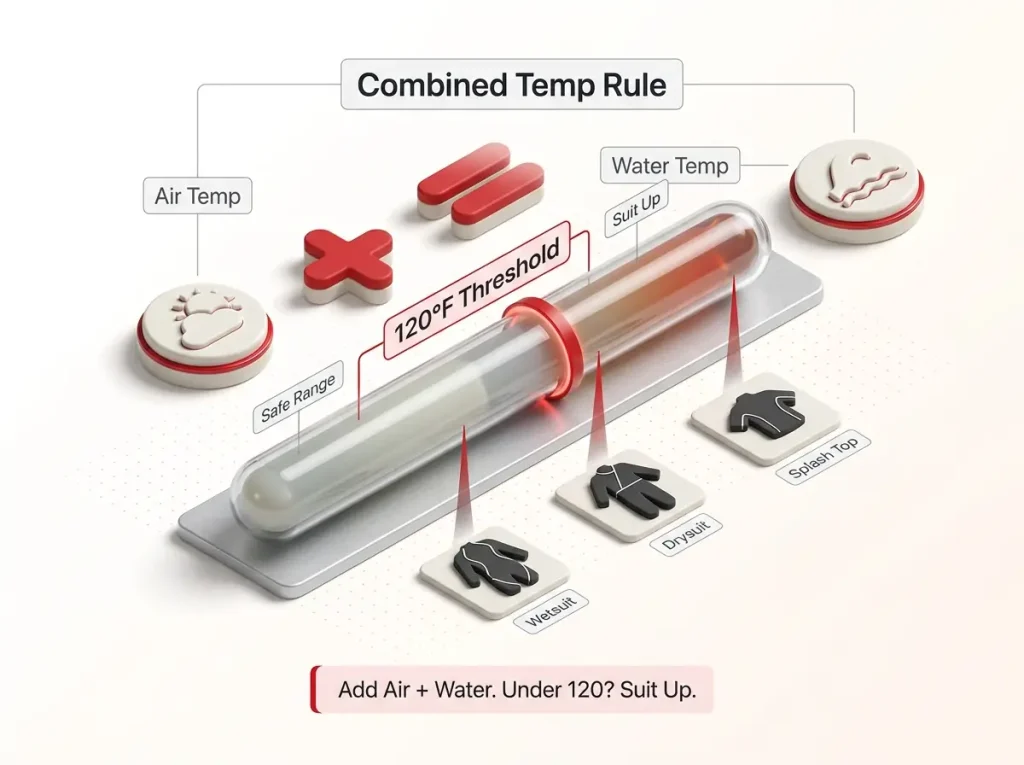
There is a clean way to decide. Add the air temperature and the water temperature in Fahrenheit, and if the combined number falls under 120, you need real thermal protection and not just a splash top. That threshold comes straight from the American Canoe Association’s cold water survival guidance. Hypothermia onset begins once your core drops to 95°F, and a few degrees of evaporative cooling in wet gear is enough to start the slide.
Run the combined-temp number before you leave the truck, not after you are cold. Air plus water under 120 means the suit goes on, even if the sun says otherwise. It takes ten seconds and it settles the argument every group has at the put-in.
What a Wetsuit Actually Does on the Water
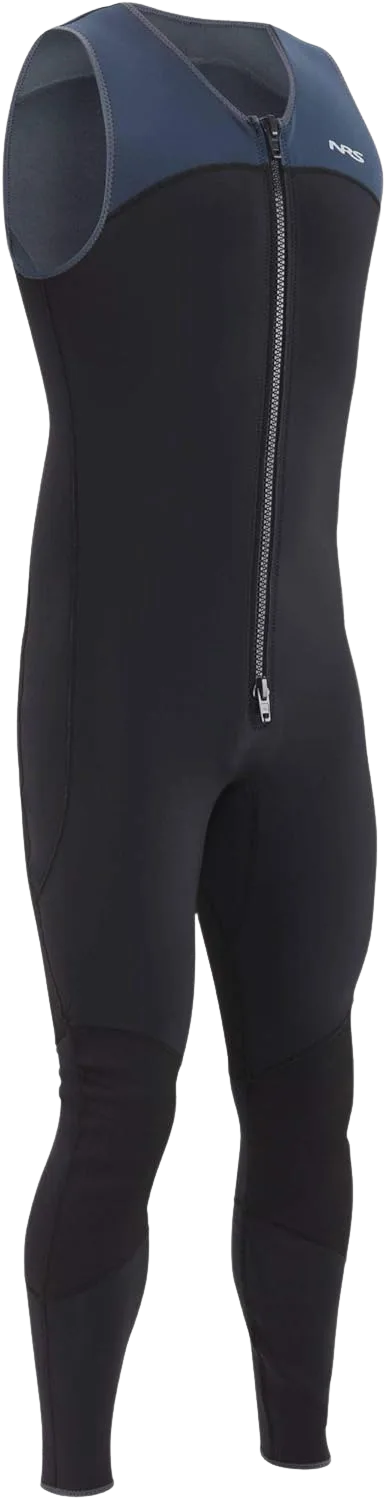
A wetsuit does not keep you dry, and it is not supposed to. The neoprene traps a thin layer of water against your skin, your body warms that layer, and the snug fit keeps it from flushing out. That is the whole mechanism, and it works well in the temperature band where most warm-season cold water lives.
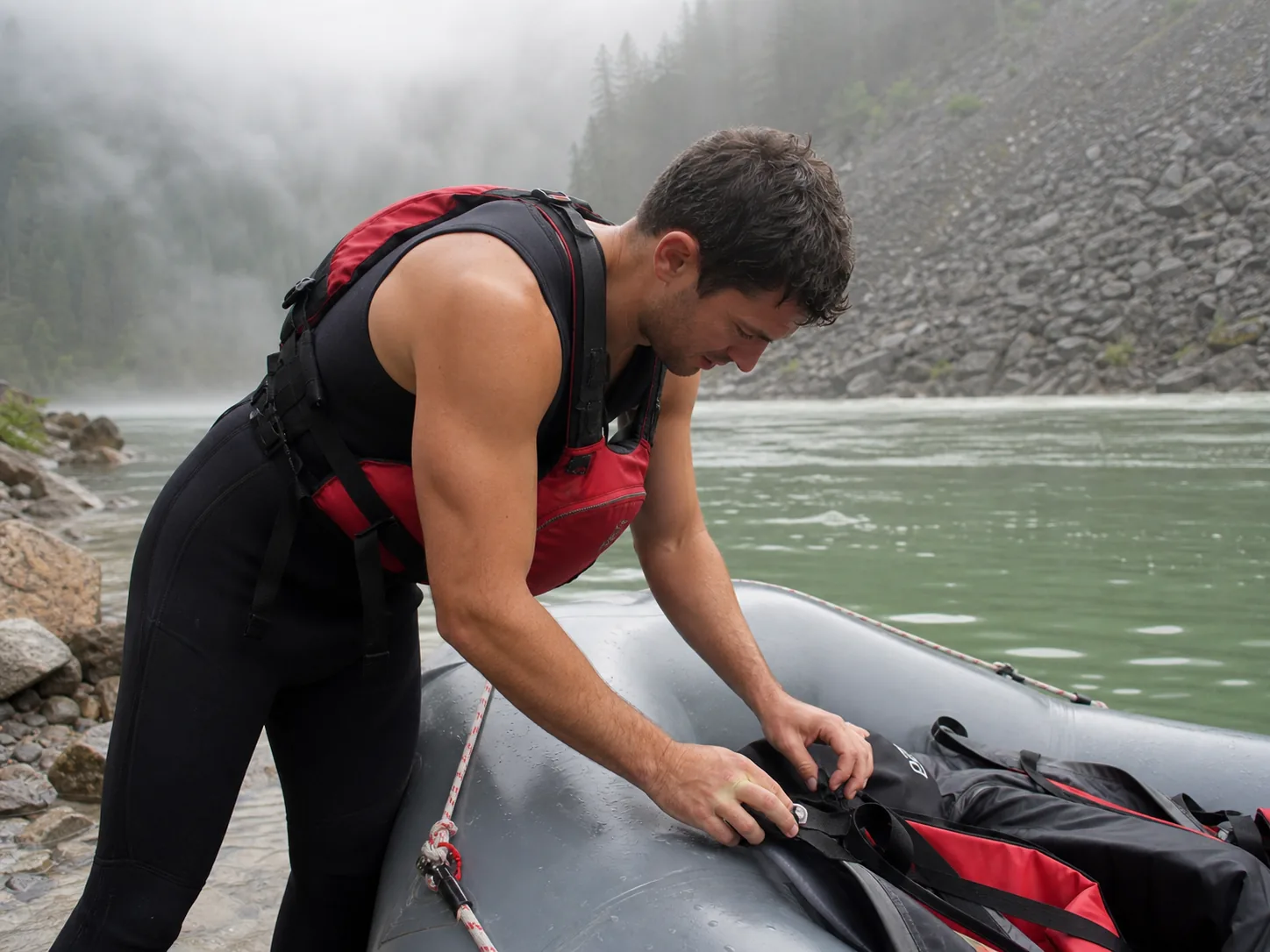
Notice that the rafting version has no sleeves. The Farmer John and Farmer Jane cut is the industry standard on rivers because it leaves your shoulders completely free to row and paddle. A full-sleeve surfing wetsuit binds your stroke, which is why the gear bin is stocked with the sleeveless version. Wetsuit sizing matters more than anything here. It should be snug against bare skin, because gaps let cold water flush through and wipe out the warming layer you just built.
Layering with a wetsuit runs skin-out, meaning the neoprene sits against your body and any thin wool or poly top goes over it, not under. If you want the full system, how to layer for cold water rafting walks through the order. The catch with a wetsuit shows up on a warm afternoon, when you are working hard and there is no zipper to vent, which sets up the rower-versus-paddler question later.
What a Drysuit Actually Does
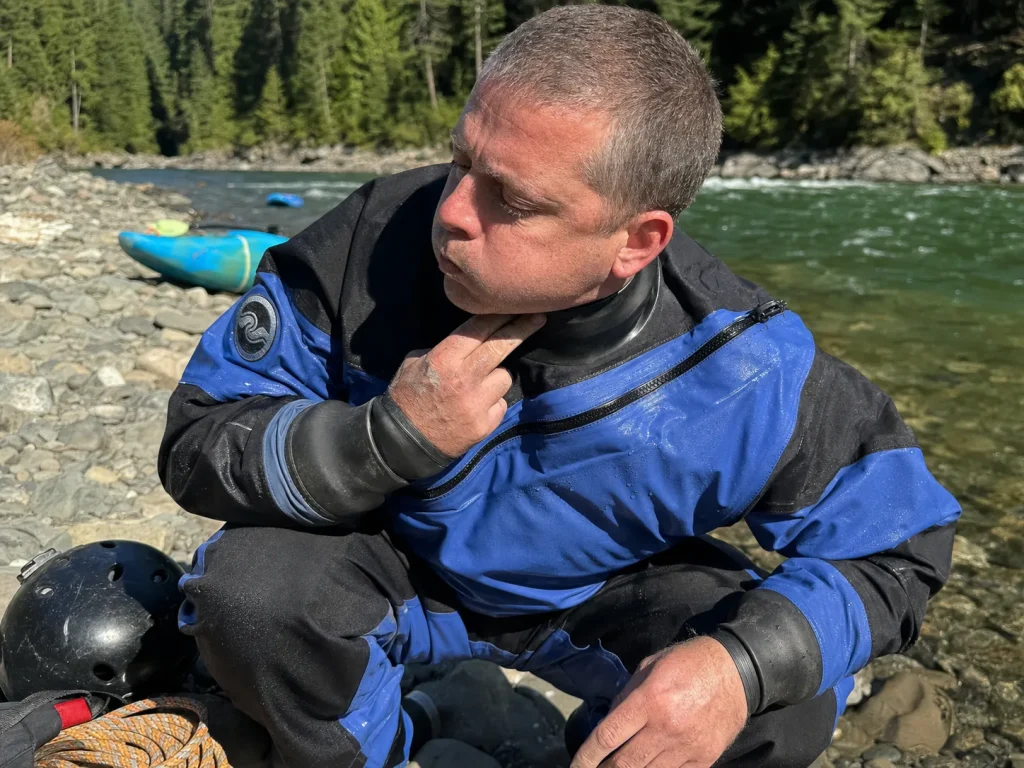
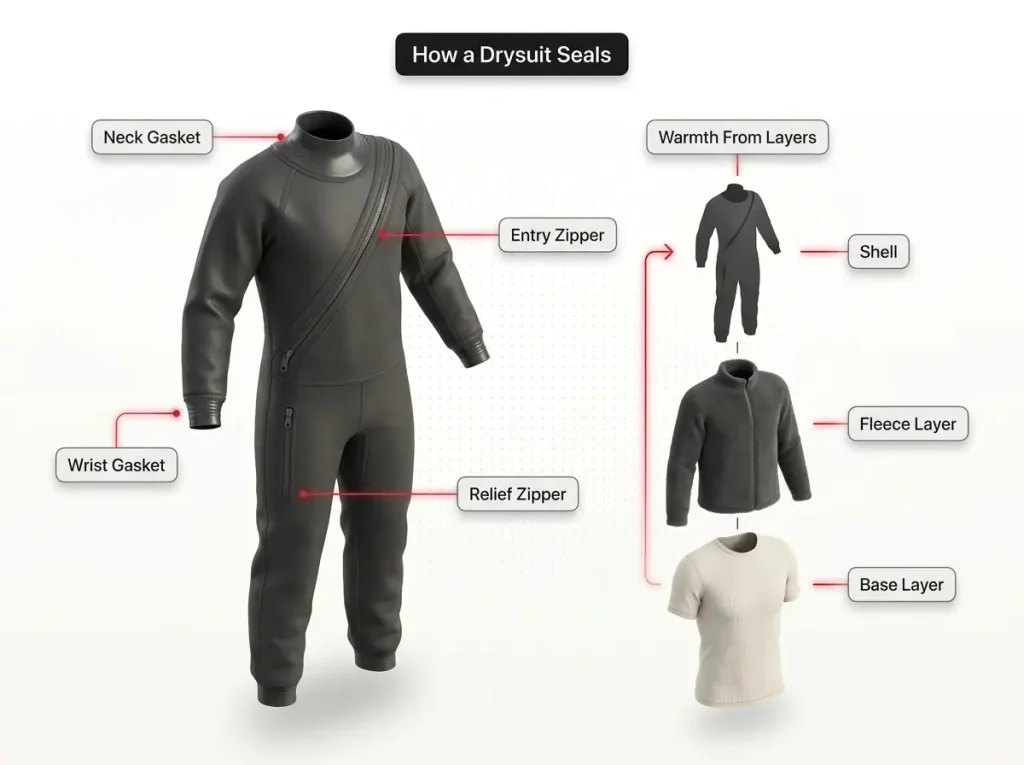
A drysuit works the opposite way. A waterproof shell, usually Gore-Tex or a similar laminate, seals out the river entirely with latex gaskets at the neck and wrists, and all your warmth comes from the base layer you wear underneath, usually a fleece layer or a wool layer. Stay dry, control your own insulation, and the temperature ceiling climbs well past what a wetsuit can handle.
There is a learning curve nobody warns first-timers about. A new neck gasket fits tight enough to redden your face on day one, and that is expected behavior, not the wrong size. It loosens with normal use. Drysuit sizing should be snug with just enough room to layer, because a baggy suit traps unheated air the paddling world calls dead air, and dead air runs colder, not warmer. Buying a size up to feel safe backfires every time.
The most useful trick with a drysuit is burping it. Before you get in the boat, squat down after zipping in to push trapped air out through the neck gasket, so the suit does not balloon and fight your movement. Relief zippers and drysuit booties are the practical details that make a multi-day trip livable, and if you are weighing a full drysuit against lighter options, a splash or dry top covers the warmer end of the range.
Burp the suit every single time before you launch. Zip in, squat down, and let the trapped air hiss out the neck gasket. Skip it and you will spend the first mile fighting a suit puffed up like a pool toy.
The Guided-Trip Reality Nobody Tells You
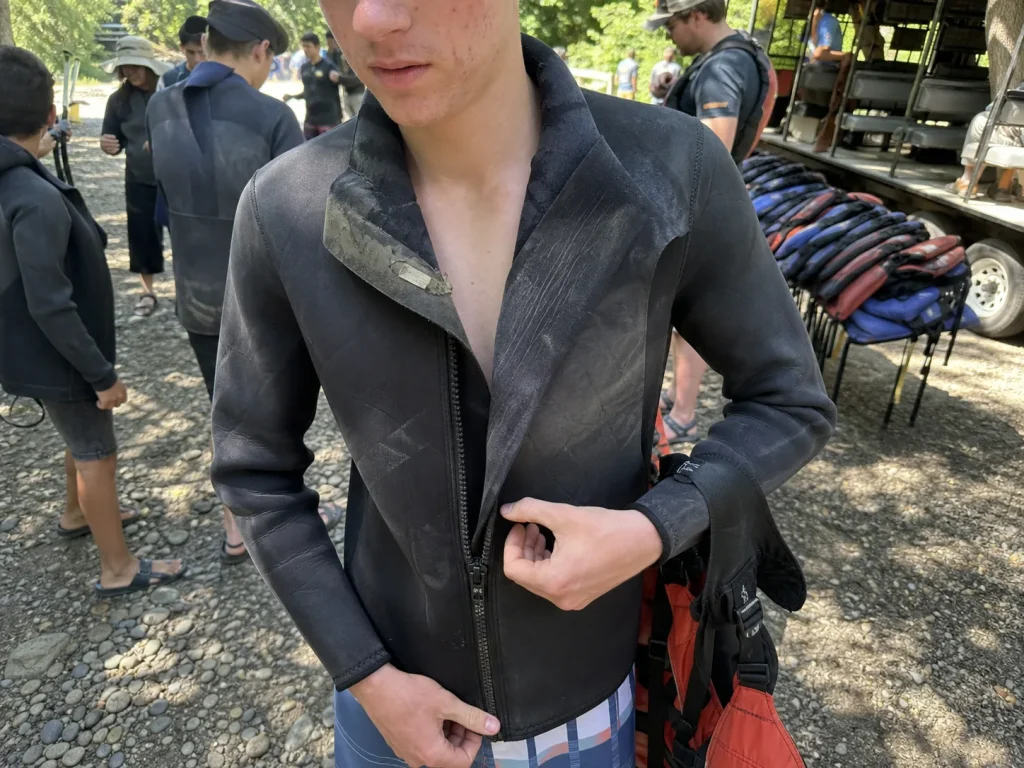
Most first-timers never choose a suit at all. You show up, the outfitter hands you a Farmer John from a bin that has cycled through hundreds of trips this season, and you wear what you are given. Every other guide on this topic writes as if you are shopping, and that leaves out the majority of people actually reading it.
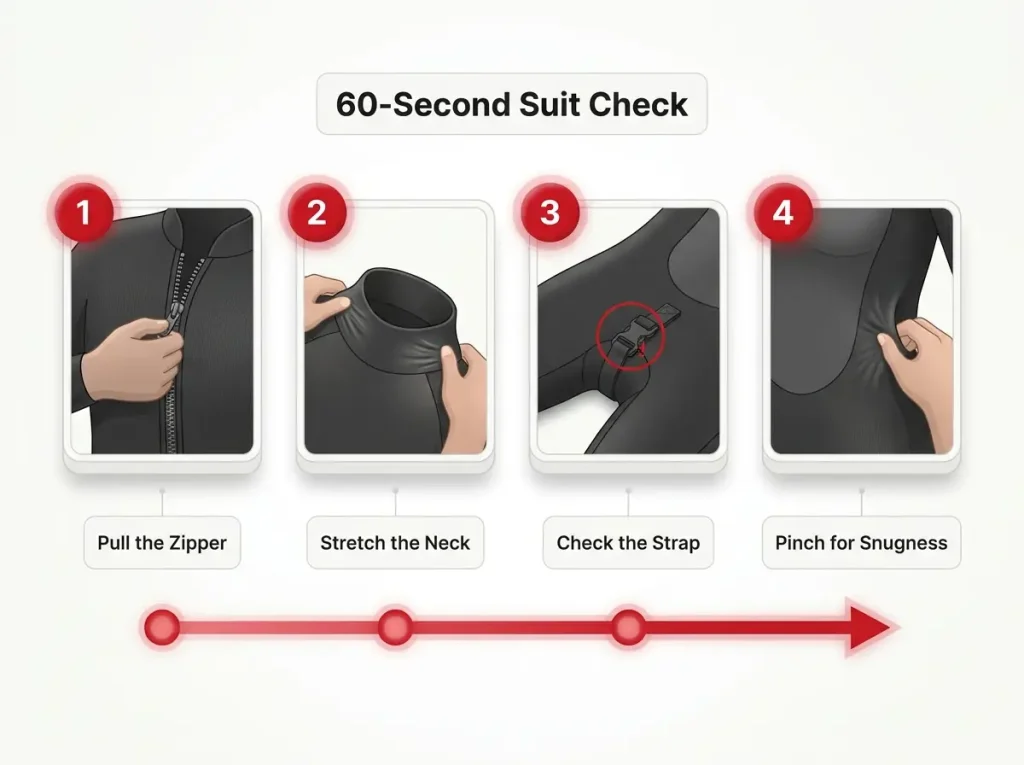
Here is what matters with a rental. A zipper that barely closes is a known wear point on fleet gear, not a red flag unique to one bad outfitter, but it is worth a quick check before you launch. Give the suit a sixty-second look, and know what your river class actually calls for from the rafting gear checklist by river class:
- Pull the main zipper all the way and make sure it fully seats
- Stretch the neck and wrist openings and look for cracks or dry rot
- Check for gaps at the crotch strap that would flush water
- Confirm it is snug, not baggy, so the warming layer works
That decade-old rental will feel alarmingly snug and smell like a hundred other river trips, and both of those are normal. The snugness is the suit doing its job. When it is worth bringing your own instead is a real question, and the answer is yes for cold shoulder-season trips, or once you run enough cold water that the gear-bin lottery stops being worth it.
Rower or Paddler Changes the Whole Equation
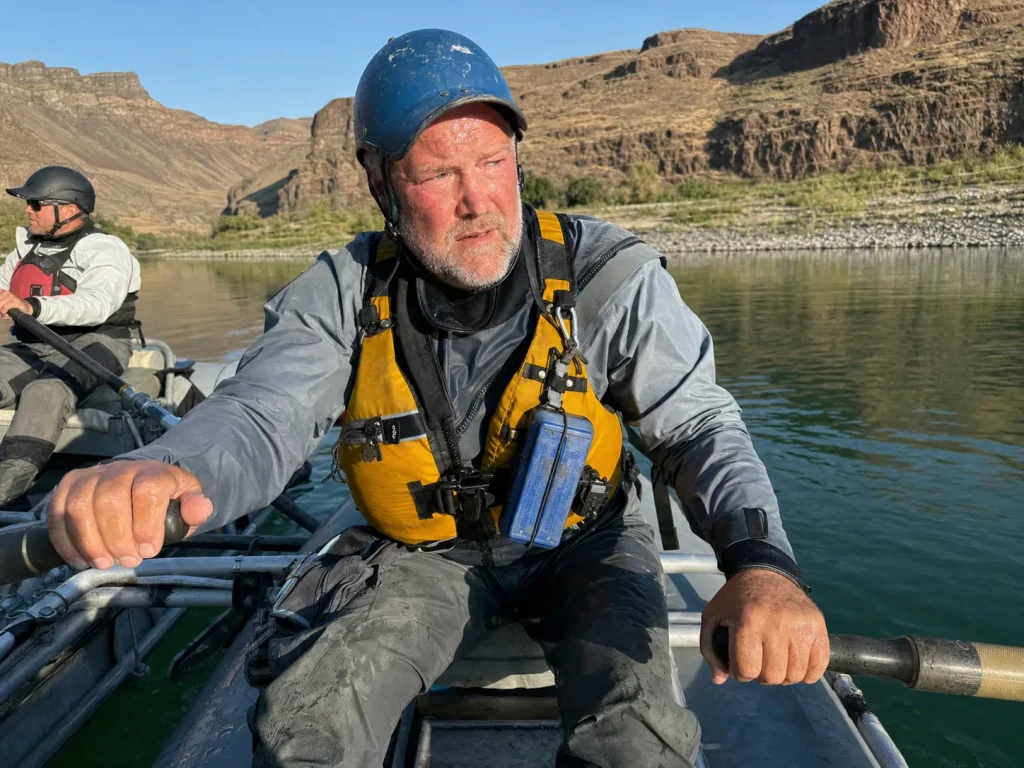
Your job in the boat changes the whole warmth calculation, and no gear-shop comparison mentions it. Rowing a frame is sustained, heat-generating work. On a sunny flat stretch a full wetsuit with no way to vent can genuinely cook you, and there is nothing you can do about it mid-river.
Paddlers live differently. They cycle between hard exertion and sitting still and cold, and a drysuit with a drytop over layers lets them add or shed insulation a wetsuit cannot. The flexibility argument for a drysuit is really an exertion argument dressed up as a warmth one. Front-entry drysuits also ease the tradeoff between layering and self-rescue, which is a real design difference rather than marketing. The NRS Jakl and Foray front-entry drysuits (men’s · women’s) are built around exactly that, prioritizing getting back in the boat quickly, and getting back in the boat fast is a skill worth pairing with the gear.
If you are rowing the gear boat all day, lean toward a drysuit and layers you can dial back, not a full wetsuit. The paddlers can afford to run a little warm. The rower sweating through neoprene on a sun-baked afternoon cannot dump the heat.
What Your Suit Does the Moment You Swim
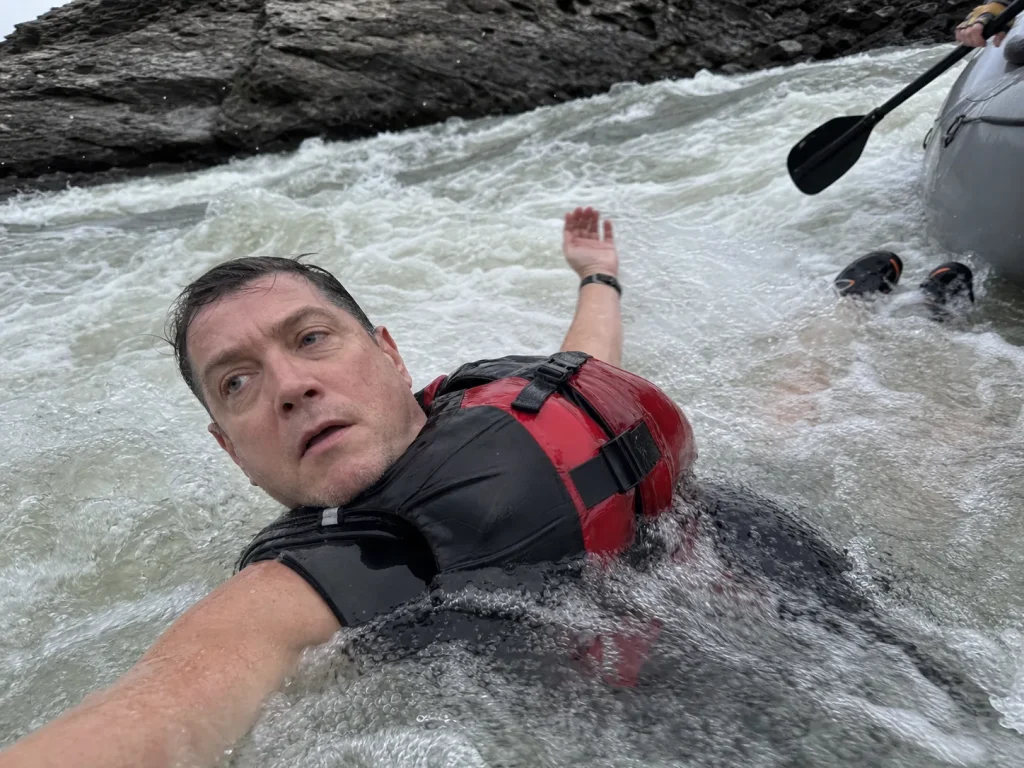
Everyone goes for a swim eventually. What separates a scary swim from a bad one is partly what you are wearing, and this is where suit choice stops being about comfort. Swimming failure, the loss of muscle coordination that makes self-rescue impossible, sets in within about 30 minutes of cold-water entry, so the suit’s real job during a long swim is buying you those minutes. That figure comes from the 30-minute swimming-failure window documented in wilderness medicine research.
A wetsuit adds a little buoyancy and keeps its warming layer working through a long swim, which is a genuine assist. A drysuit that is poorly fitted or flooded can take on water weight, which is exactly why burping it and keeping a good gasket seal matter beyond dry comfort. This is the same reason swimming out from under the boat is harder in a ballooned suit.
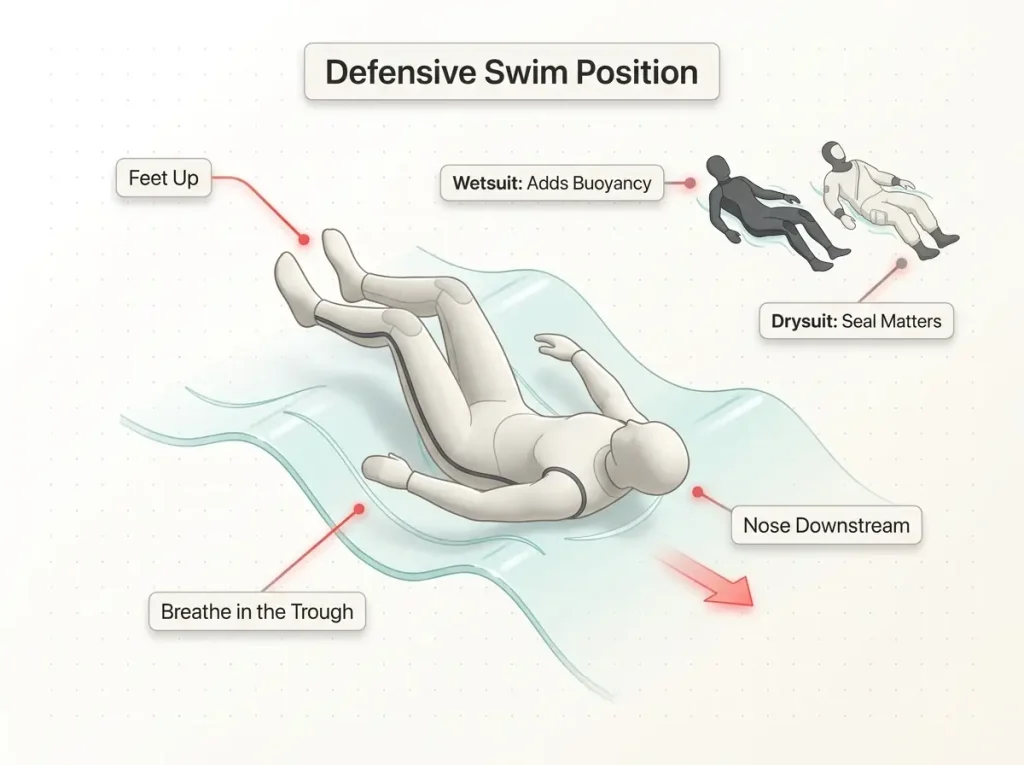
Regardless of what you wear, swim smart. Get your feet up and pointed downstream, keep your nose toward the sky, and time your breathing for the troughs between waves, not the crests. The defensive swim position is a skill every rafter should drill cold. Swimming failure in moving water is what makes cold-water regions so unforgiving, and the fatality math shows it, with Alaska running roughly ten times the national boating fatality rate.
Should You Actually Buy a Drysuit
Before you drop serious money, have the honest talk. A well-maintained quality drysuit lasts 15 to 20 years, so the upfront cost amortizes over more than a decade for someone who runs cold water every season. That lifespan is what changes the math from splurge to sensible.
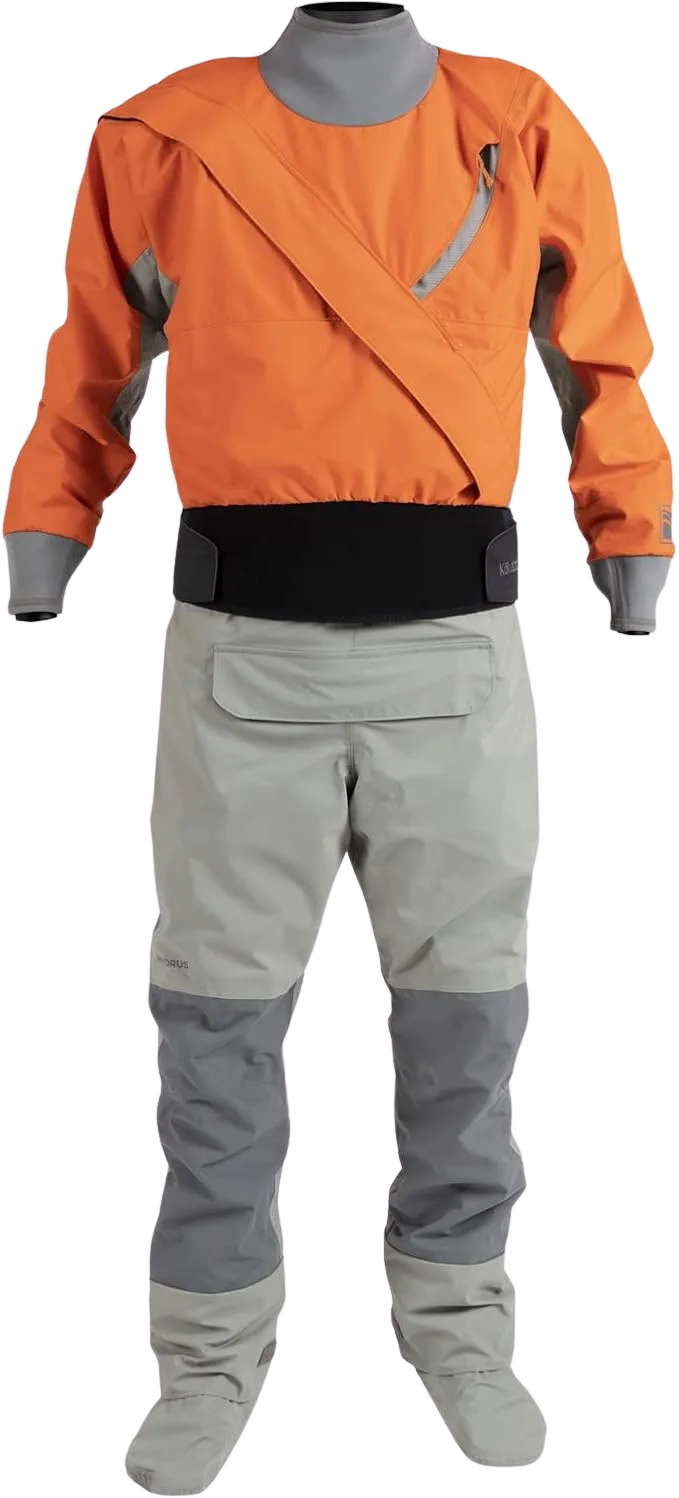
Run the decision on three axes. Are you a multi-day boater or a day-tripper, do your seasons regularly drop water below about 45°F, and how often will you honestly be on cold water. If you mostly do occasional warm-season day trips, talk yourself out of it, because a Farmer John and a drytop cover that just fine. What the premium tier actually buys is a durable Gore-Tex Pro shell, better gaskets and zippers, and the build quality that makes the 15-to-20-year lifespan real. Keeping that investment alive comes down to regular gasket and zipper care.
Where These Suits Fail in the Field
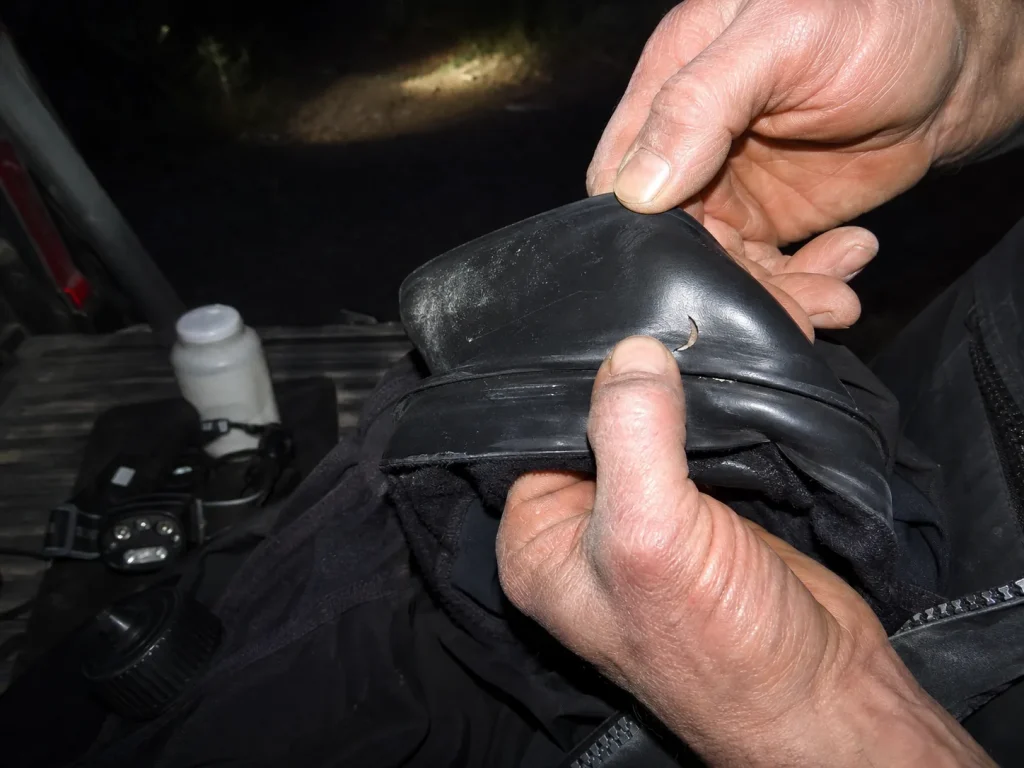
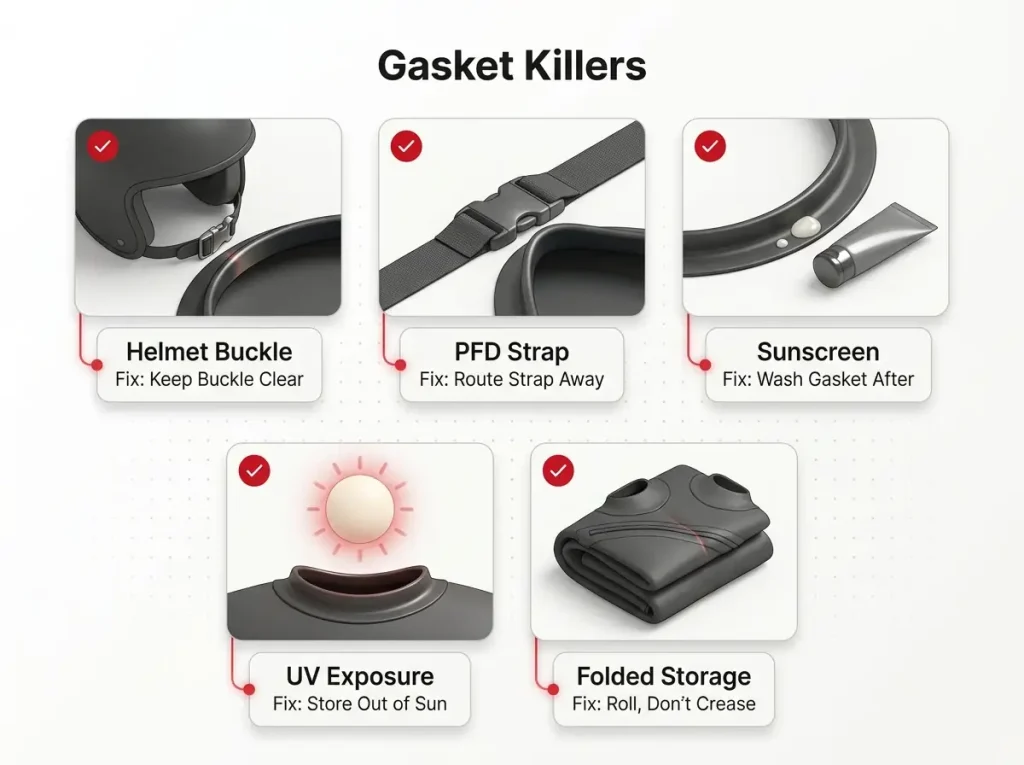
The failures that end trips are rarely dramatic. They are a nicked gasket you never noticed until day two. A neck gasket or wrist gasket gets nicked by a helmet buckle or a PFD strap during a self-rescue scramble, the cut is small enough to miss, and then it blows overnight on a multi-day. A helmet buckle sitting against a gasket is a genuine wear point worth watching.
Sunscreen and lotion are the quiet killers. Latex hates them, and river days mean reapplying sunscreen constantly, so gasket-adjacent skin is an easy spot to forget. Real gasket care is a ten-second conditioner habit after every take-out, not a once-a-year deep clean, and that one habit is the single biggest lever you have over gasket life. Rental wetsuit zippers are the other common failure, so basic zipper maintenance and that pre-launch spot-check earn their keep.
If a new gasket is too tight, trim it the cut-and-check way. Snip a little, try the fit, snip a little more. You can always take more off, but you can never put latex back, and a gasket cut too big in one pass is a ruined gasket.
The Bottom Line
Pick your suit by the combined air-and-water temperature, not the weather in the parking lot. If you are a renter, spot-check the bin suit before you launch, and if you are a private boater, let trip length and how often you run cold water decide whether the drysuit jump makes sense. Remember that the suit’s real job shows up in a swim, so fit and maintenance are never optional details.
Before your next cold-water trip, run the combined-temp number and match your suit to it. That one habit does more for your safety than any single piece of gear on the boat.
Frequently Asked Questions
01Is it better to wear a wetsuit or drysuit for rafting?
It depends on water temp and how much time you spend in the water. A 3mm wetsuit covers most warm-season cold-water days, while a drysuit wins once water regularly runs below about 45°F or you are on multi-day trips where staying fully dry matters.
02What water temperature means you need a wetsuit or drysuit?
Use the combined-temperature rule. Add air and water temp in Fahrenheit, and under 120 means you wear thermal protection. Water below 60°F calls for a suit on its own, and drysuits become the practical pick once water drops under about 45°F.
03Can you rent a wetsuit for a rafting trip?
Yes. Most guided outfitters issue a Farmer John or Farmer Jane wetsuit at the put-in as part of the trip. Spot-check the zipper and gasket fit before you launch, since rental suits see heavy seasonal use across hundreds of trips.
04Do rafting guides wear wetsuits or drysuits?
Both, depending on the water. Guides on warmer runs often wear the same Farmer John wetsuit clients get, while on cold snowmelt or shoulder-season trips many switch to drysuits for the extra thermal margin across a long day.
05How do you know if a drysuit fits right?
Snug with just enough room to layer underneath, not a size up to be safe, because extra interior air runs colder. A new neck gasket that reddens your face is normal and loosens with use.