
In this article
You’re standing on a granite shelf above a horizon line, looking at a drop nobody in your group has run, and the half-cut that felt fine all season suddenly feels like a decision you made without thinking. That moment is what this article is about, because the river doesn’t care which brand is trending. It cares which class you’re running and how likely you are to swim. Virginia Tech’s helmet lab has quietly run two dozen whitewater helmet models through six impact tests each, and almost nobody in the search results will tell you what the score means. Here’s the framework the gear shops skip: which cut stops being optional at which class, what the certification on the box actually covers, and which rafting helmet is worth your money at each tier.
Start here, then read the reasoning below.
| River Class | Cut You Want | Why It Stops Being Optional | Our Pick |
|---|---|---|---|
| Class I-II | Half-cut | Swims are unlikely and forgiving. Hearing and airflow are worth more than ear coverage you won’t use. | OutdoorMaster Kayak Helmet |
| Class III-IV | Full-cut | Swims stop being hypothetical. Ear and back-of-skull coverage is the whole reason the cut exists. | WRSI Current |
| Class IV-V | Full-face | Boof-heavy, pinning-prone lines put your jaw first. The chin bar is cheap insurance. | Full-face (WRSI Moment class) |
The Three Rafting Helmet Types and What Each One Covers
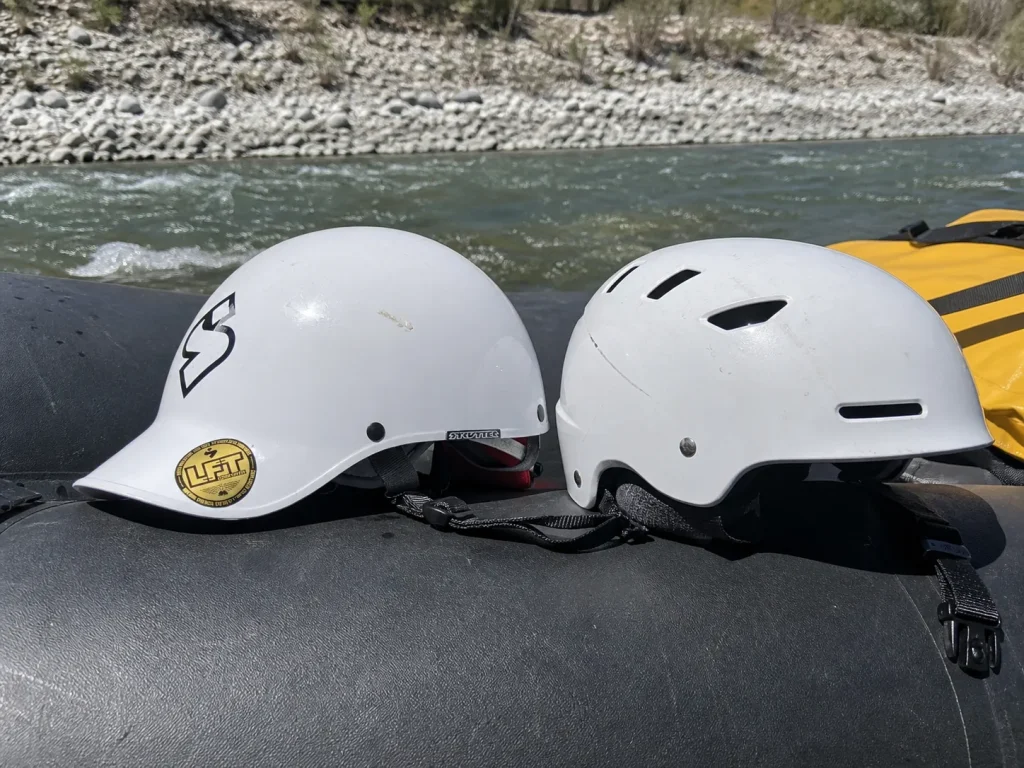
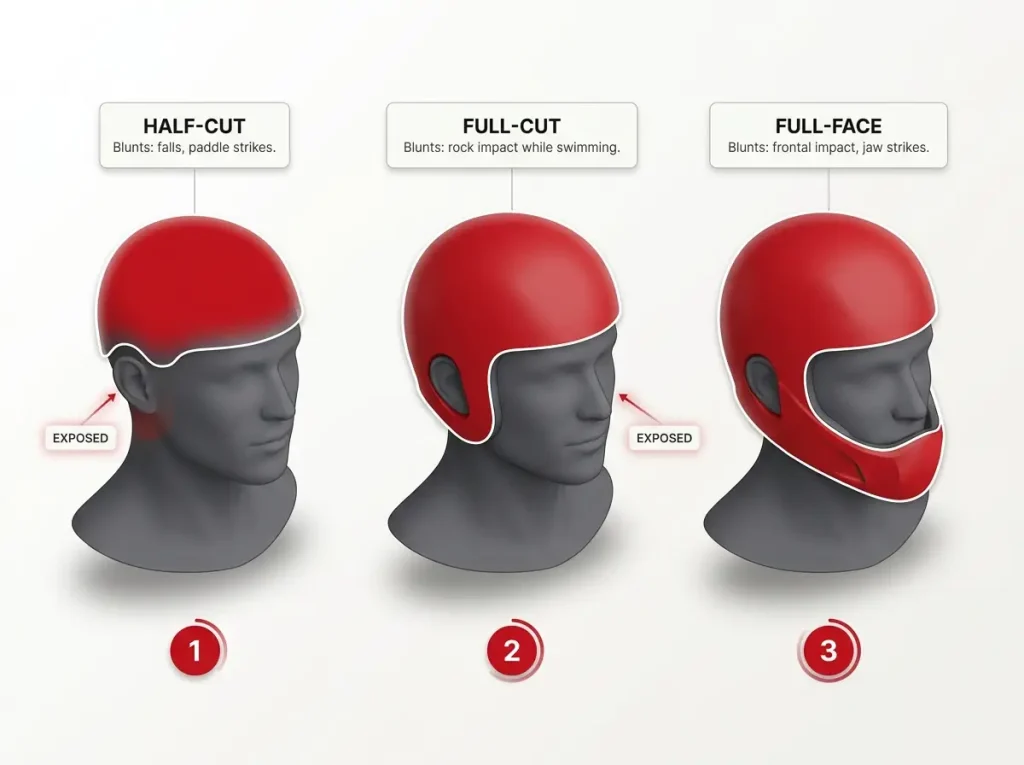
Watch a put-in on a busy Saturday and you’ll see someone pull a half-cut helmet out of a dry bag while the boater ten feet away is buckling a full-face helmet. Both of them are right. They’re running different water, and the shell on your head should follow that water, not your budget or the sticker on the box. The three cuts aren’t a good-better-best ladder. They’re three different answers to the question of where your skull is likely to meet rock.
The Half-Cut and What It Leaves Open
A half-cut covers the dome of your skull and stops above the ear line. It’s the lightest option, the coolest on a hot canyon day, and the best of the three for actually hearing your guide over moving water. That last one matters more than people admit until they’ve missed a command in a wave train.
What it leaves open is your ears and the back of your head. On mellow water that’s a fine trade, because the impacts you’re likely to take are a stray paddle or a bump against the tube, and the dome handles those. The moment swims get likely, the math flips.
The Full-Cut and Where the Extra Coverage Earns Its Keep
A full-cut helmet wraps down over your ears and the occipital ridge at the back of your skull. That’s not decoration. When you’re swimming feet up and nose downstream through a rock garden, the part of your head aimed at the hazard is the back of it, and a half-cut leaves that bare.
The trade is a little weight, slightly muffled hearing, and less airflow. Nobody who’s taken a real swim in a rock garden thinks it’s a bad deal. This is the same logic that drives PFD choice for rafting: the gear scales with how much the river is likely to ask of it, not with how the day looks from the parking lot.
The Full-Face and the Chin Bar Question
A full-face helmet adds a chin bar. It buys you a jaw and a set of teeth on water where you’re getting thrown forward, and it costs you peripheral vision and airflow. That cost is exactly why nobody straps one on for a mellow float. It’s also why the boaters who own one own it for specific runs, not for every day.
If you’re new to any of this, the honest first step isn’t a helmet at all. It’s understanding the kind of rafting you’re actually doing, because the answer decides everything downstream of it.
What CE EN 1385 Actually Certifies (and What It Skips)
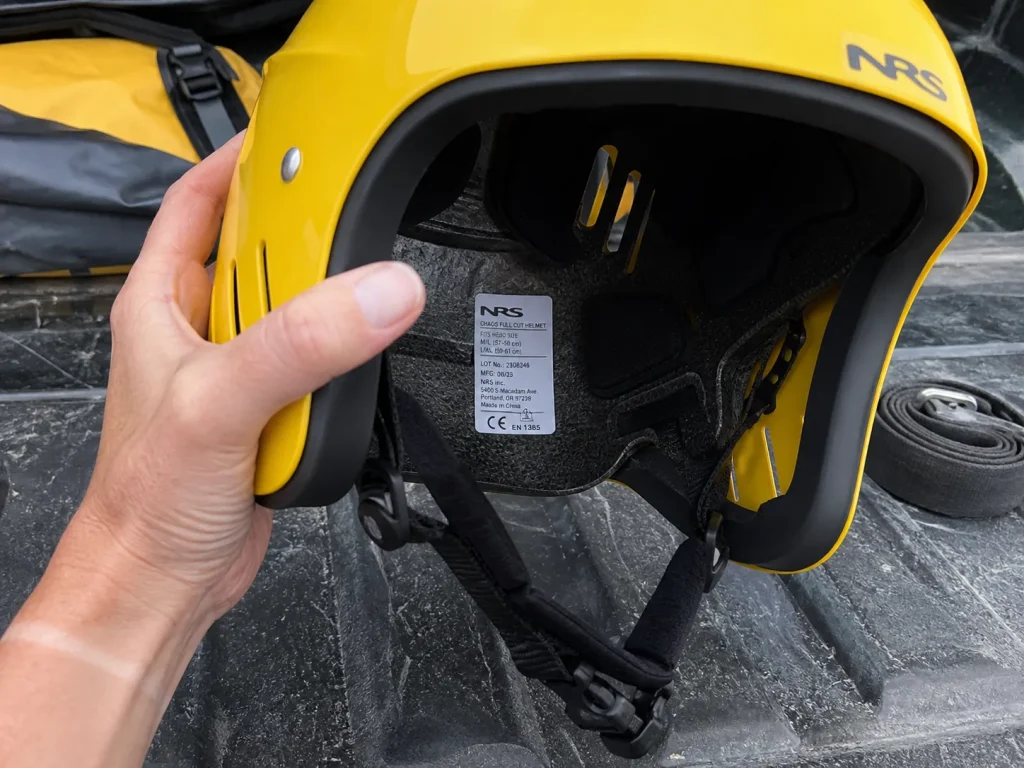
Everyone treats the CE sticker as pass or fail. Safe, or not safe. It’s neither. CE EN 1385 is a floor, and the standard is unusually honest about where that floor ends, if you go read it instead of trusting the marketing copy wrapped around it.
The Three Things the Standard Actually Tests
First, impact protection: the helmet has to absorb at least 15 joules of impact energy and keep headform deceleration under 250 gn. That’s the actual bar the sticker clears.
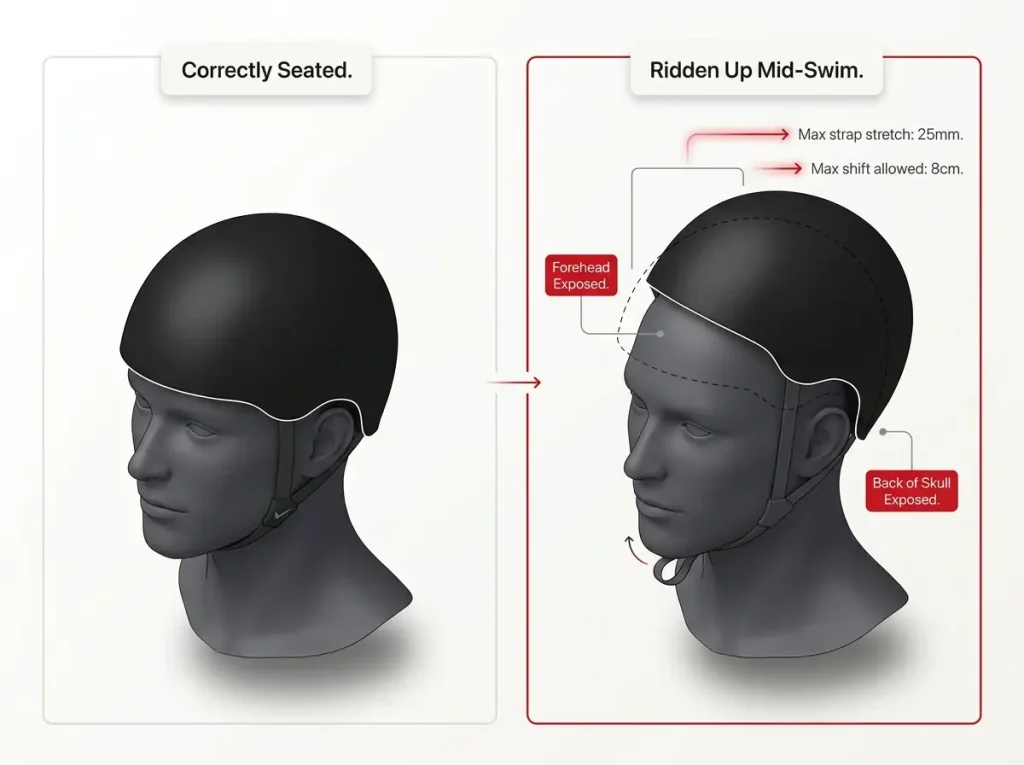
Second, retention. The retention system can’t stretch past 25mm under load, and the helmet can’t shift more than 8cm on the head during the test. That’s the technical version of the snug fit check a guide does by hand at the put-in, written into a standards document.
Third, flotation. Four hours of minimum buoyancy is part of the certification, which tells you the people who wrote it were thinking about swims. A helmet that sinks off your head mid-swim isn’t just annoying. It fails the standard it claims to hold.
Where the Certification Quits on Class 5 and Concussion
Here’s the part nobody puts in a product description. EN 1385 explicitly does not cover Class 5+ whitewater, and it does not measure rotational acceleration or concussive energy transfer at all.
Sit with that for a second. The one certification the entire industry leans on was never written for the hardest water people actually run, and it doesn’t measure the injury type that does the most lasting harm. It measures whether the shell survives a linear whack and stays on your head. Those are worth measuring. They’re just not the whole picture, and the gap is exactly why Virginia Tech’s independent whitewater helmet lab, which runs six separate impact tests per helmet, exists at all.
You’ll occasionally see ASTM F2444 stamped as a secondary mark. It’s real, it’s less common in this category, and it doesn’t close the gap above. Don’t let either mark end your thinking. If you want the honest version of how the stakes scale, how risk actually shifts from Class I to Class V is the context this certification is missing.
Why a Bike Helmet Fails the Water Test
People show up with bike helmets. Skate helmets. A hockey combo somebody had in the garage. They look tough and they cost nothing, and they fail this category on three counts at once: they don’t drain, they aren’t buoyant, and they were never tested against water impacts.
A foam-and-shell helmet built for pavement holds water, gets heavy, and floats off your head when you need it most. The certification isn’t bureaucratic box-ticking. It’s the difference between headgear and a whitewater helmet.
Fit, Retention, and Why Head Shape Beats Brand
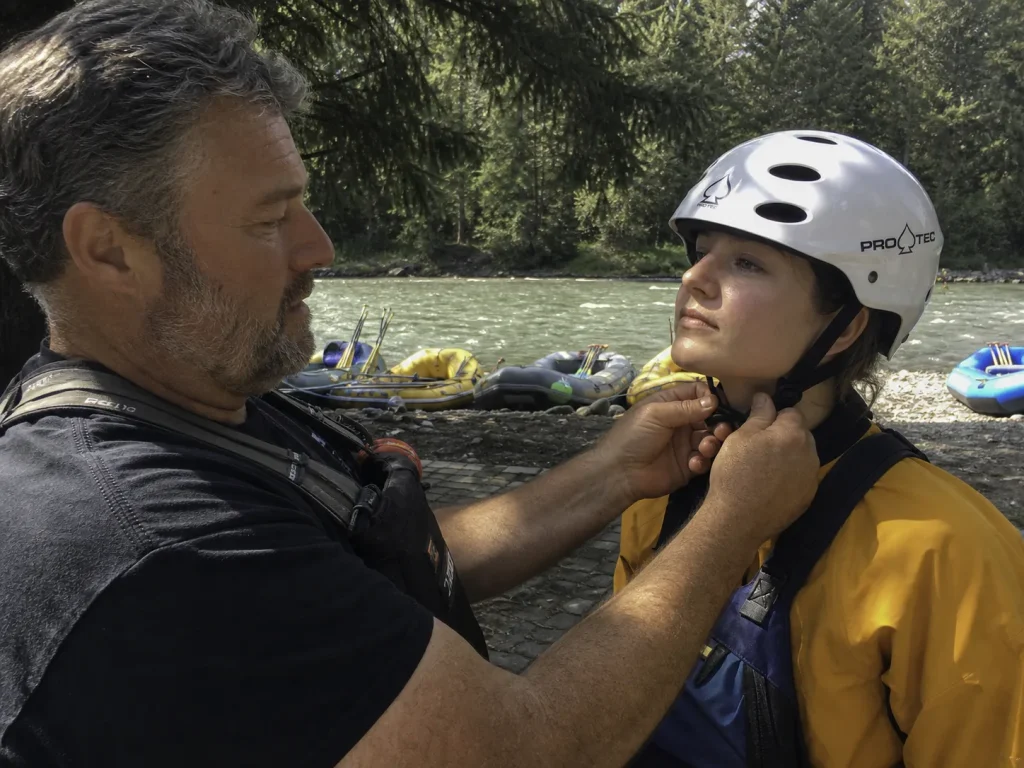
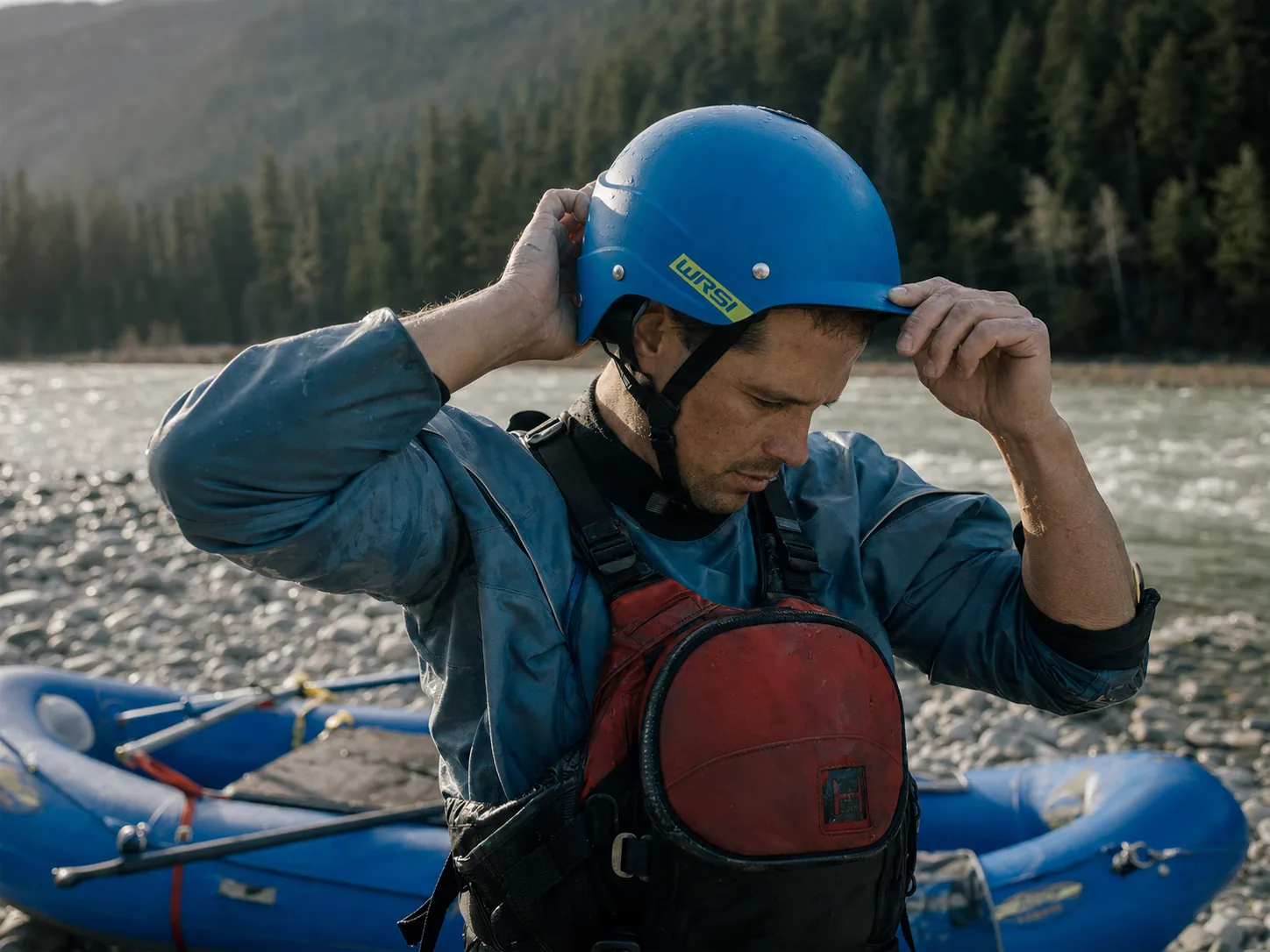
Watch the last ninety seconds of the put-in safety talk before a commercial rafting trip launches. The guide walks the line and pinches every client’s chin strap with two fingers, checking slack. Thirty seconds per person. Most private boaters have never had that check run properly on their own helmet, which is how people end up owning a well-reviewed helmet that doesn’t fit them.
This is the part where what actually happens at the put-in on your first trip turns out to contain the single most useful gear lesson of the day.
The Shake Test Guides Actually Use
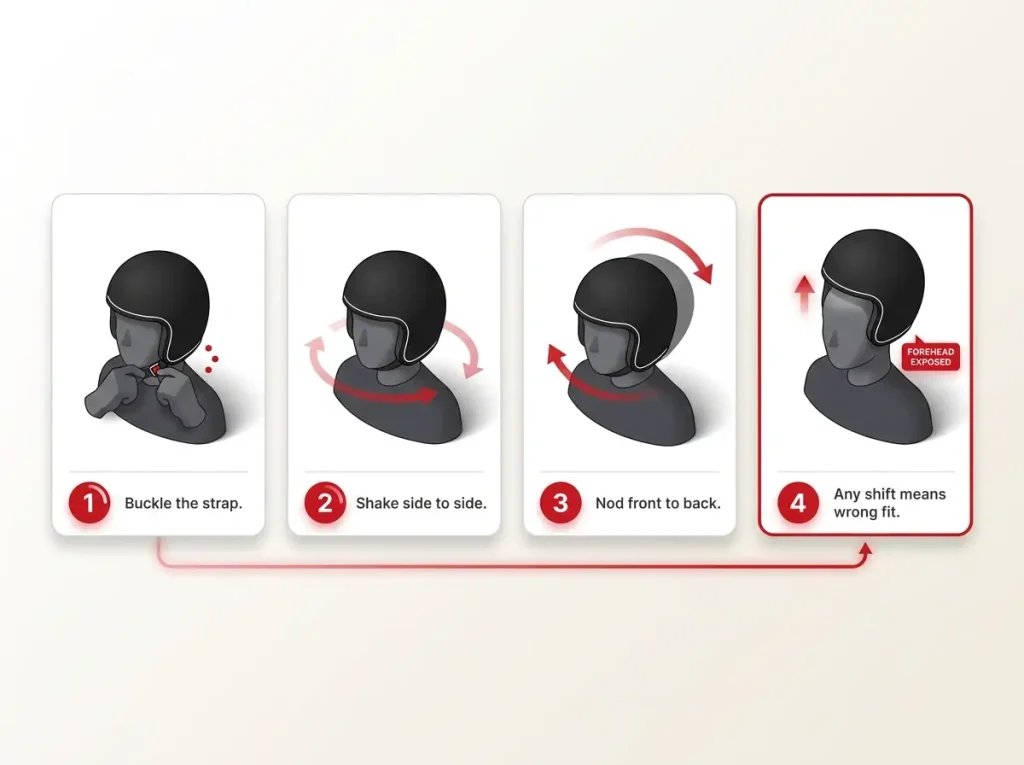
Buckle the chin strap. Shake your head hard, side to side, then front to back. Any shift means the wrong size or an unadjusted retention system. That’s the whole test.
If the helmet rides up on your forehead when you nod, it will do the same thing with water pushing on it, only harder. If it rotates when you shake, it will rotate against a rock. You don’t need a lab for this one. You need thirty seconds in a store aisle before you buy.
Run the shake test wearing whatever’s actually going on your head that day. A skull cap in cold season, wet hair in summer. A helmet dialed on a dry bare head in October is a different helmet in June with a soaked liner and a beanie under it.
Dial-Fit Systems and What They Buy You
A dial-fit system (a BOA dial, an Occigrip Turn-dial, or a plain ratchet) lets one shell cover a range of heads. Turn it down, it cinches. That’s genuinely useful, especially if you lend gear out or your head size changes with a hood.
The trade is one more mechanism that can loosen when it’s cold and wet and your hands aren’t working well. It’s not a reason to avoid them. It’s a reason to check the dial after every swim instead of assuming it held.
The Head-Shape Problem Nobody Prints on the Box
Head shape is the variable that decides everything and appears nowhere in a spec sheet. Sweet Protection runs narrow. WRSI fits a wider range of shapes. Neither fact is a criticism, and neither is on the label.
The best evidence for this comes from the people ranking the helmets. Virginia Tech’s own study notes that its top-scoring Sweet Protection models run small and fit especially tight around the temples. Read that again: the lab that crowned them also warned you about them. According to the American Canoe Association’s own review of the Virginia Tech concussion-risk findings, that caveat travels with the ranking.
Which means a top-rated helmet you never fitted is a worse helmet than a mid-tier one that’s dialed. Buying by reputation is the most common mistake in this category, and the data itself says so.
Brims, Vents, and the Comfort Features That Actually Matter
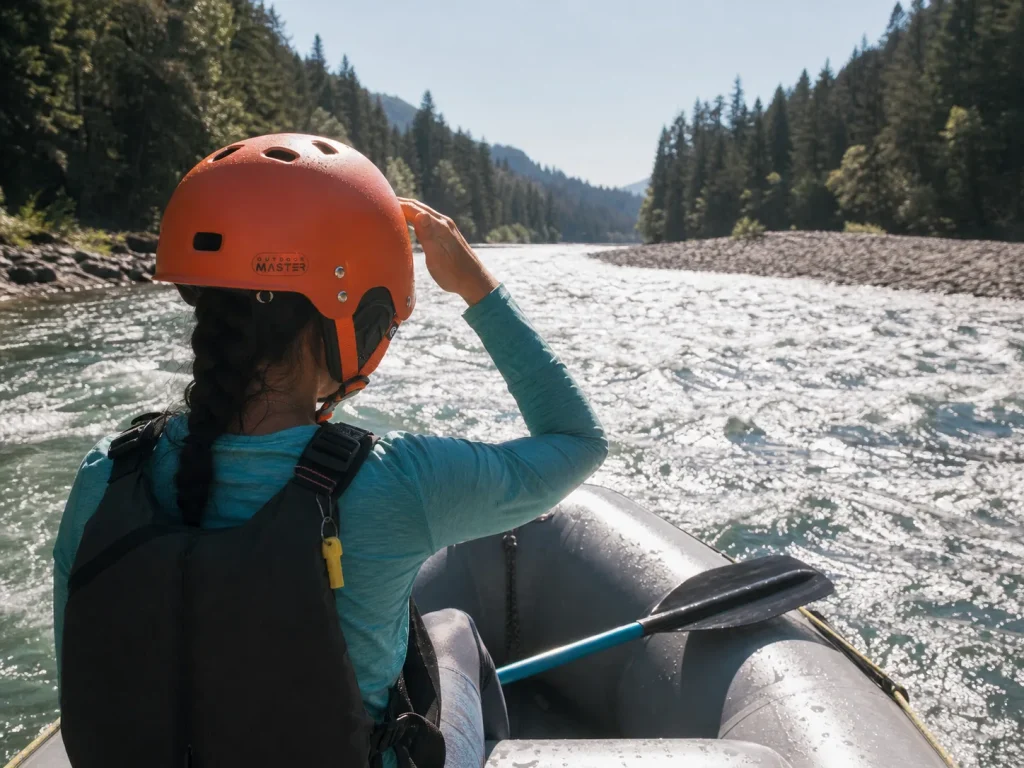
Comfort sounds soft until hour six of a sun-blasted canyon day, when the helmet you can’t stop adjusting becomes the helmet you stop wearing properly. That’s the real stake here. Comfort features aren’t about pleasure. They’re about whether the thing is still doing its job at the takeout.
The Brim Is a Safety Feature, Not a Style Choice
A brim is the one comfort feature with a straight safety payoff. Glare off moving water is a vision problem, and reading water you can’t see is guessing. Cutting that glare while you’re picking a line is worth more than any vent count on the box.
It also changes how you set up for the day. A brimmed shell interacts with your whole sun setup for a long day on the water, and it works best paired with polarized lenses rather than instead of them.
Drainage, Venting, and the Saturated-Liner Problem
Drainage holes and ventilation do two jobs. They keep your head from cooking, and they let water leave. The second one is the one nobody markets. A helmet that holds water gets heavy on your neck all day, and a soaked liner is a real thing, not a spec-sheet talking point.
Shell weight compounds the same way. A few ounces you don’t notice at the put-in is a sore neck by the takeout on a long day, and a sore neck is how people start taking the helmet off in flatwater sections.
What’s Marketing and What Isn’t
Here’s the anti-sell part. The feature list is where helmets pad their price. Vent count is not a safety metric. A helmet with twelve vents is not twice the helmet of one with six, and no amount of copy about airflow architecture changes what the shell does when it hits rock.
Shell material is the other upsell. You’ll see fiberglass shell construction, Kevlar weave, a polyurethane sub-shell, and carbon laminate all pitched as reasons to spend more. Some of that is real engineering and some of it is a spec to print. None of it outranks two things you can check yourself for free: whether the shell carries the certification, and whether it moves on your head.
You know a helmet fits and vents right when you stop noticing it’s there. Until then, you’re touching it every rapid, and a hand on your helmet is a hand not on your paddle.
The Virginia Tech STAR Rating Nobody Translates for You
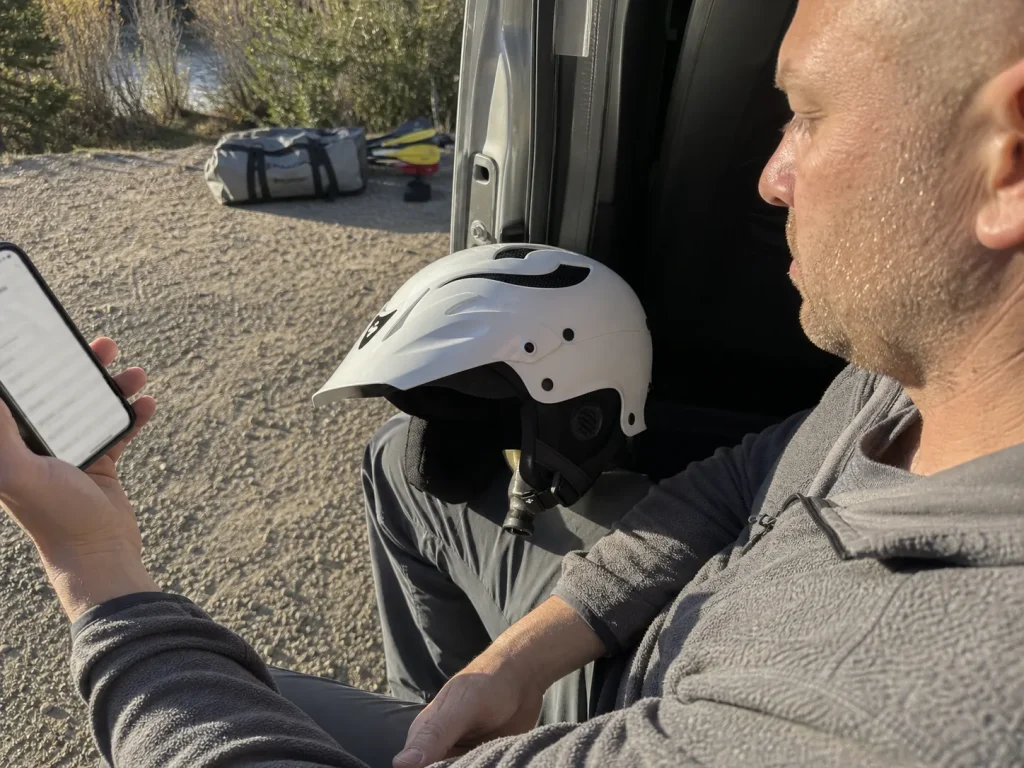
There is an independent lab publishing exactly the data every helmet buyer wants, for free, and the gear sites either ignore it or cite rank numbers without explaining what they mean. This is the most useful thing in this article, so it gets the most room.
How the Lab Actually Tests a Helmet
The Virginia Tech STAR rating comes from six impact tests per helmet, delivered by a pendulum impactor test rig: three locations (front, side, back) at two severity levels. Each test measures both linear acceleration (the straight-line whack) and rotational acceleration (the twist that rattles your brain inside your skull).
That second measurement is the whole point. Rotational energy is what EN 1385 skips entirely, and it’s the mechanism behind most concussions. Virginia Tech is the only independent, non-manufacturer-funded lab measuring concussion risk for paddling helmets. Nobody is paying them to like a product.
If you want to picture where a rotational hit actually happens, it’s not a clean vertical bonk. It’s the swim scenarios where you’re tumbling and your head catches an edge at an angle.
What the 2022 Whitewater Results Showed
The 2022 study put 24 whitewater paddling helmets through that protocol. The top five were all made by Sweet Protection, all using MIPS-style liners.
That’s worth stating flatly, premium price tier and all, because it’s the kind of finding that gets softened into mush everywhere else. It doesn’t mean everything else is unsafe. It means that if lowest concussion risk is your single priority, the data currently points at one brand’s top shelf, and you should know that before someone talks you into something else.
The Number to Look For and Its Limit
Here’s the translation nobody gives you: pull up the ratings and target a 4- or 5-star helmet. That’s it. That’s the number. The lab publishes every whitewater helmet’s star count publicly, so you never have to trust “advanced impact protection” language printed on a box.
Now the limit, straight from the study that produced the ranking: those top-scoring models run small and fit tight around the temples. A 5-star helmet that shifts on the shake test is protecting a hypothetical head, not yours. The star count tells you what a helmet can do. Only the shake test tells you what it will do on you.
Check the star rating before you go to the store, not after. Walk in with two or three 4-star-and-up models on your phone, then let the shake test pick the winner among them. Rating narrows the field. Fit makes the call.
Why Helmets Actually Fail on Real Water
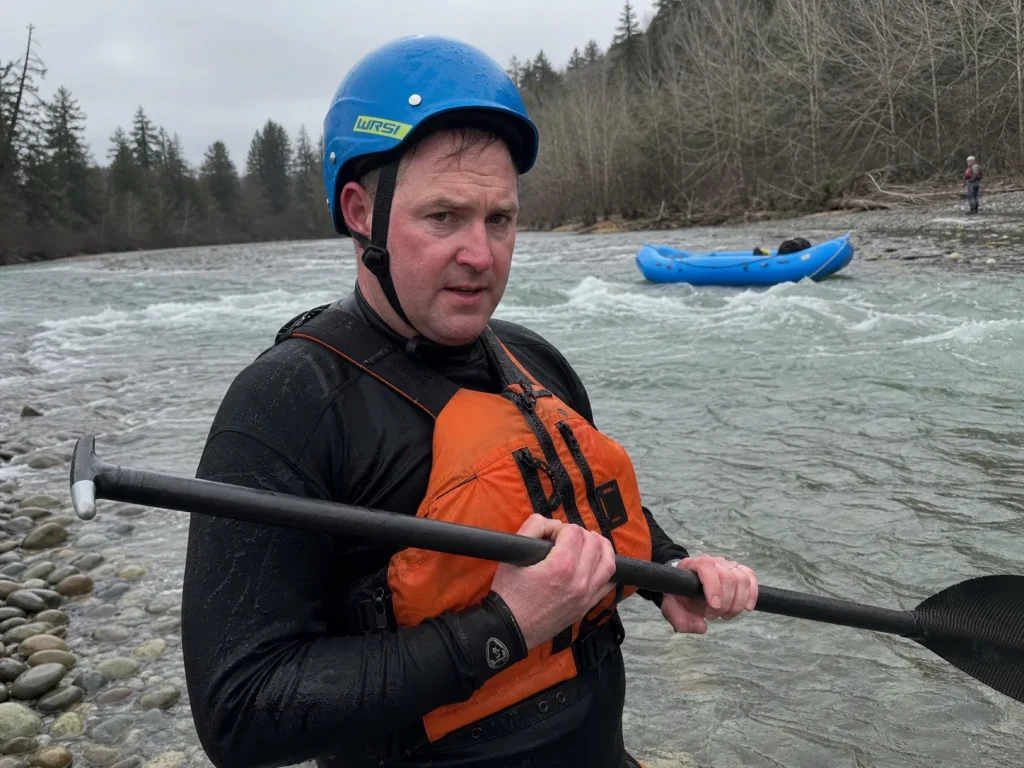
Helmets rarely fail by cracking open. That’s the version in your head from car-crash footage, and it’s wrong. On a river, helmets fail by moving. This is the section the gear shops will never write, so it gets the second-most room in the article.
Retention Failure, the Helmet That Moves
The failure mode nobody sells against is a retention system that lets the shell spin or ride up mid-swim. You can tell how seriously the standards organization takes it by what they wrote into the certification: 25mm maximum strap stretch, 8cm maximum shift. Those numbers exist because retention is the thing most likely to go.
Water is the reason. Swimming face-down at speed, the current pushes up and back on the shell, and a strap with any slack lets the helmet climb your forehead. Now the certified shell is sitting on the back of your head and your face is what’s exposed.
The Interconnect Retention System on premium models is the direct engineering answer. It’s built so that upward water pressure during a swim self-tightens the strap against the back of your head. The water that used to push the helmet off is what holds it on. Cheaper retention doesn’t do this, and no spec sheet frames it this clearly.
If your helmet has ever ridden up on you during a swim, stop shopping by star rating and go look for a self-tightening retention system by name. That complaint has a specific engineering fix, and most buyers never learn it exists.
Saturated Liners and Straps That Loosen Cold
EPS foam and EPP foam liners that don’t drain get heavy, and weight sits on your neck for the rest of the day. Worse, repeated cold-water dunks work a strap looser than you’d expect, a few millimeters at a time, and cold fingers are terrible at noticing.
This is why the strap check isn’t a one-time event at the put-in. It’s a thing you do after every swim and every lunch stop, the same way you’d check anything else that has to work before you swim, not after.
The Impact You’ll Probably Actually Take
Now the number that recalibrates this whole topic. Rafting injury rates run roughly 0.26 to 2.1 per 100,000 user days, and 51.3% of documented injuries come from collisions among passengers or getting struck by a paddle.
Read that percentage again. More than half. The impact you’re most likely to take isn’t a rock at all. It’s your buddy’s paddle shaft on a botched high-side, or their skull meeting yours when the boat drops into a hydraulic and everyone lands in the same corner. That’s an argument for wearing a certified helmet on water that looks too mellow to need one, and it’s an argument against believing that helmet choice is only about the scary rapids.
It’s also a reminder that a helmet is one piece of a swiftwater safety system, not a solution on its own. The whistle that gets attention on the swim and the throw bag that gets you out of it are doing the other half of the work.
Matching the Cut to the Class You Run
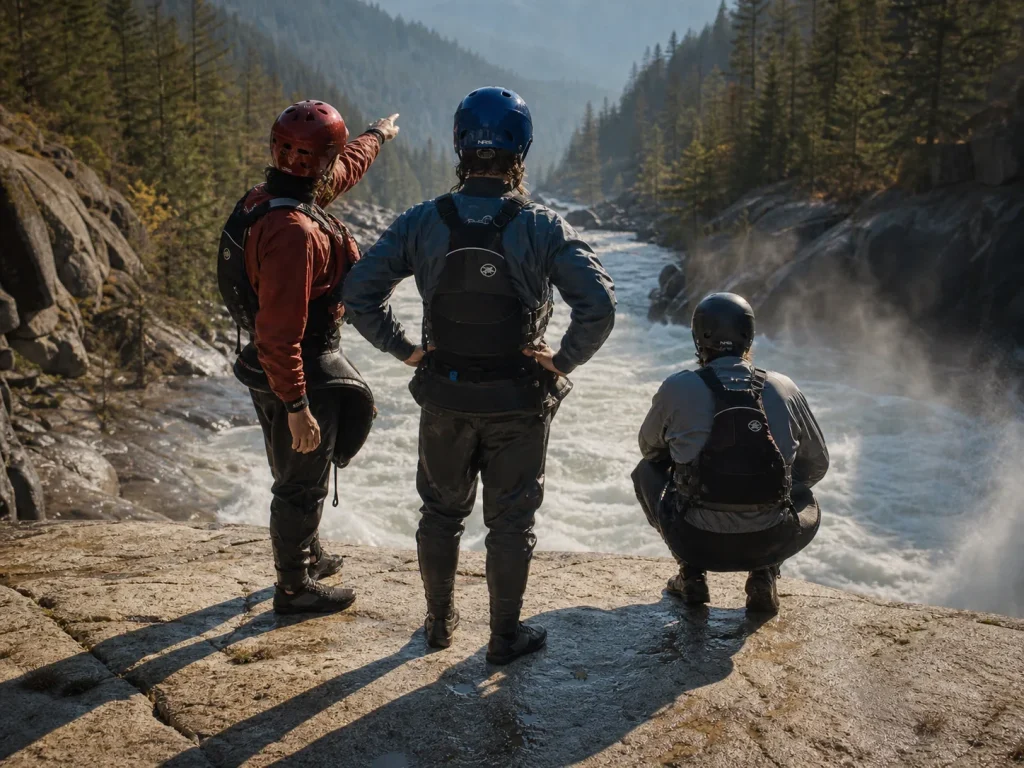
This is the framework the article exists to deliver, and it’s the thing no competitor organizes around. They sort by brand. They sort by price. The river sorts by class, so we will too.
Class I-II, Where a Half-Cut Is Genuinely Enough
On Class I and Class II, a half-cut is honestly enough. Swims are unlikely. When they happen, the water is forgiving and shallow-hazard density is low. The hearing and airflow you get back are worth having, because you’ll spend the day talking to people and cooking in the sun.
The honest answer here is the anti-sell one: don’t buy more helmet than the water is asking for. A budget certified half-cut on a Class II float is not a compromise. It’s the correct tool. If you’re still building out that first kit, the beginner-friendly boats are a bigger decision than the helmet is.
Class III-IV, Where Full-Cut Becomes the Floor
At Class III and Class IV, the full-cut becomes the sane floor. This isn’t caution creep. Swims stop being hypothetical at Class III, and once you’re actually in the water at speed, the ear and occipital coverage is the entire reason that cut was invented.
If you run Class III regularly and you’re still in a half-cut because it’s what you bought when you started, that’s the upgrade to make before any other gear purchase you’re considering.
Class IV-V, Where the Chin Bar Stops Being Optional
At Class IV and Class V, the full-face stops being a debate the moment you’re scouting a horizon line on a boof-heavy, pinning-prone run. Boaters treat it as cheap insurance against a dental bill or a broken jaw. That’s not drama. It’s arithmetic.
Now the caveat that keeps this from being a law. Class is a proxy for swim probability and impact type, not a rule handed down from the river. A pushy Class III at high water can ask more of your gear than a technical Class IV at low flow. Use the class as your starting point and adjust for what’s actually in front of you, which is exactly the same threshold logic that decides wetsuit versus drysuit. The rest of your kit scales this way too, which is why the gear checklist is organized by class in the first place.
The Picks, Helmets Worth Buying at Each Class
Every pick below ties back to the class threshold above, not to a brand ranking. Budget option first at each tier, and where a premium helmet isn’t worth it for you, we say so.
Class I-II Picks for Half-Cut Territory
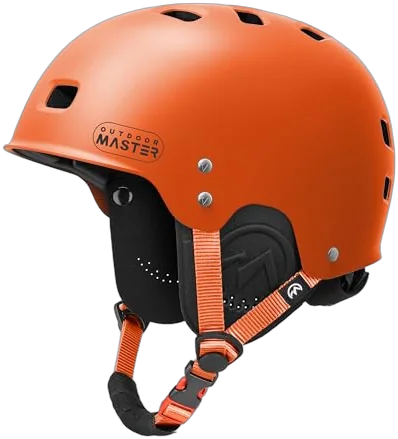
The OutdoorMaster Kayak Helmet is the honest entry point, and we’re not going to pretend otherwise. It’s a budget helmet. The dial-fit is basic, the shell is unremarkable, and you’re not buying it for a lab score. You’re buying it because a certified entry-level helmet on a Class II float is the right amount of helmet, and because the alternative most first-timers reach for is a skate lid that fails every water test in this article.
Where it stops making sense: the day you start running Class III with any regularity. That’s not a knock on the helmet. It’s the framework working as intended.
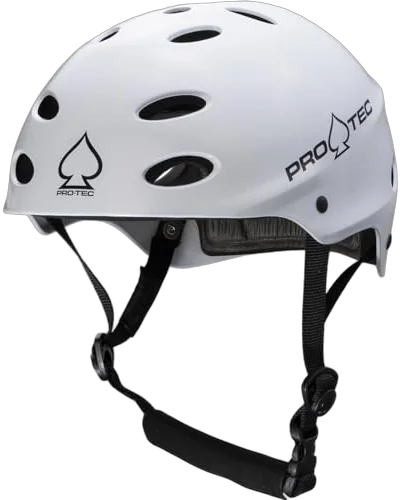
The Pro-Tec Ace Water Helmet is the option worth trying when the narrow premium half-cuts squeeze your temples and you don’t want to move up a price tier. Take that as a starting point rather than a promise: run the shake test on it yourself, because we can’t tell you whose skull it suits any more than a spec sheet can.
The honest limit is its design brief. It’s a multi-sport water helmet rather than a whitewater-specific shell, so treat it as Class I-II gear and don’t stretch it further than that.
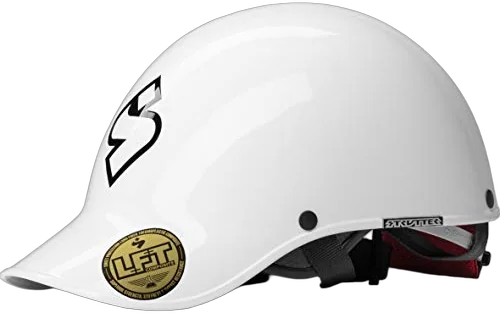
The Sweet Protection Strutter is the premium helmet in half-cut territory, with a carbon-composite shell and the fit-and-finish that comes with the price. Here’s the honest framing though: on Class I-II water, the OutdoorMaster protects you against the impacts you’re actually likely to take. The Strutter buys you comfort, durability, and a shell that vanishes on your head, not a different safety outcome on mellow water.
Buy it if you’re on the water constantly and the comfort compounds. Skip it if you float three weekends a summer. And whichever way you go, remember the sizing note from the fit section: Sweet Protection runs narrow around the temples, and that’s from the lab that ranked them first.
Class III-IV Picks for the Full-Cut Floor
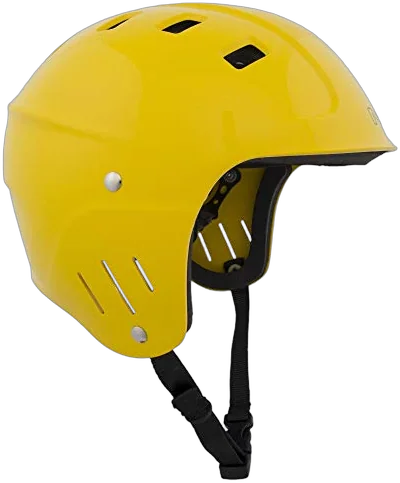
If there’s one purchase in this article that changes a person’s actual risk, it’s this one: moving from a half-cut to the NRS Chaos Full-Cut when you start running Class III. Dual-density foam, an ABS shell, and the coverage that matters, at the tier where nobody has to think hard about it.
It’s not the most refined helmet here. The dial is functional rather than lovely and the shell is a little chunky next to the premium options. None of that matters against the fact that it covers your ears and the back of your head on water where you’re going to swim eventually. The kit gets serious around here in general, which is why the river knife that belongs on the same PFD tends to show up in the same shopping trip.
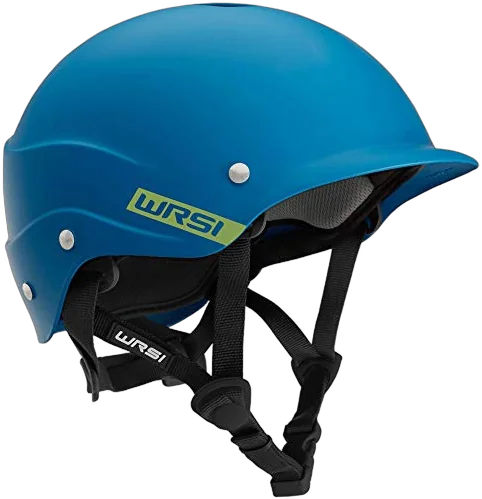
The WRSI Current is our overall Class III-IV pick, and the reason is fit rather than any headline spec. Go back to the head-shape problem: the highest-rated helmets in the independent testing run narrow, and a helmet that doesn’t fit your skull isn’t protecting it. WRSI’s shape covers a wider spread of heads, which for a lot of readers is the difference between a helmet they wear correctly and one they keep pushing back off their forehead.
WRSI is also one of the brands whose product documentation describes the self-tightening retention approach from the failure section above, which is the specific fix for the ride-up problem. If your last helmet moved on you in a swim, that’s the feature to confirm on the listing before you buy.
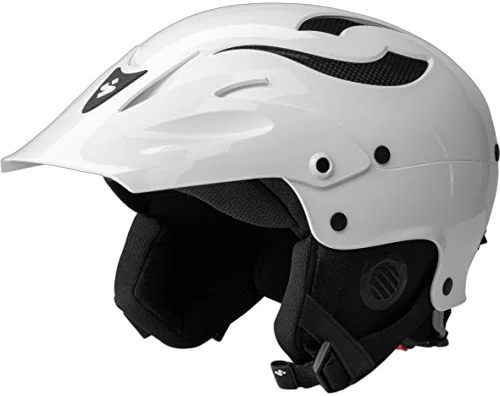
The Sweet Protection Rocker is the data pick, with a multi-impact liner and a place in the top tier of the only independent concussion testing this category has. If concussion risk is the thing you optimize for, buy this and stop reading.
Two honest caveats, because this is where a lot of guides would slow you down. It’s a premium helmet and the price reflects it. And it runs narrow, per the study’s own note, so if it pinches your temples in the store, walk away and take the WRSI. A 5-star helmet you keep adjusting is worse than a 3-star helmet that sits still.
Class IV-V and the Full-Face Gap
Here’s where we have to be straight with you instead of selling you something.
The full-face model that defines this category is the WRSI Moment. Every roundup names it, and for good reason: it’s the one most Class IV-V boaters point to when the conversation turns to chin bars. At the time of writing, we couldn’t find a live Amazon listing for it, and we’re not going to hand you a link to a different full-face just to have something to link. That’s how you end up with a helmet chosen by our affiliate convenience instead of by your river.
So the honest guidance is this. If you’re running Class IV-V regularly, a full-face is the standard, and the WRSI Moment is the reference point to measure others against. You’ll have to hunt for stock yourself, whether that’s a paddling shop, the manufacturer, or a secondhand find from someone who bought the wrong size. It’s worth the hunt. The chin bar is the cheapest jaw insurance in the sport, and this is the one gap in this article we can’t close for you.
Guide-Grade Gear vs. What a Private Boater Should Buy
Hand a first-timer a scuffed, universal-fit helmet at the put-in and they assume the outfitter is cheaping out. They aren’t. That helmet is solving a problem your personal helmet never has to solve, and understanding the difference is part of the wider guide-versus-private-boater divide that shapes a lot of gear opinions in this sport.
What a Rental Fleet Actually Demands from a Helmet
A livery helmet gets re-fitted to a different head every single trip. Different circumference, different shape, different hair, wet, twice a day, all season. That’s a durability and hygiene demand a personal helmet faces exactly never.
The design answer is a ratchet dial-fit system with a wide range in one shell. One helmet, dozens of strangers, no sizing conversation at the ramp. It’s not a worse helmet. It’s a helmet optimized for a variable your own helmet doesn’t have.
When a Livery Helmet Is the Right Buy for You
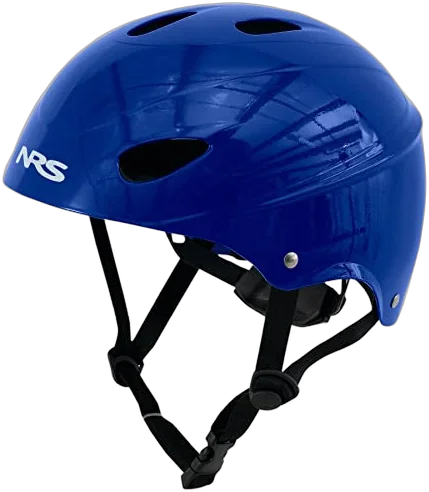
The NRS Havoc Livery makes the list because the guide-grade helmet logic applies to more private boaters than you’d think. If you’re the person in your group with the spare gear, whose boat fills with rotating friends and cousins and coworkers who’ve never rafted, a 53 to 62cm ratchet range is the entire feature set you need.
The buying lesson runs both directions. Don’t assume the rental fleet’s gear is the benchmark once you’re buying your own, because it’s built for a problem you don’t have. And don’t assume it’s junk, because if you do have that problem, this is the correct answer to it and everything else is a worse fit.
When to Retire a Helmet
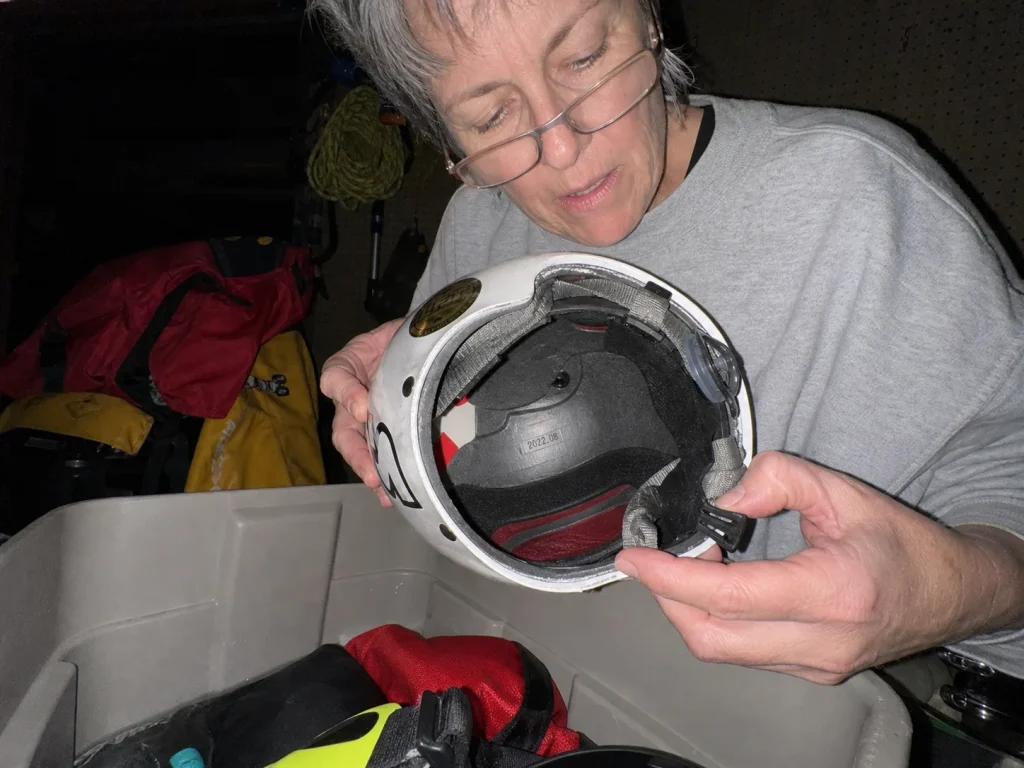
The helmet that saved you once is the helmet most likely to be on your head next season. That’s the problem this section exists to solve, and it’s the one no competitor gives a dedicated home.
The 3-to-5-Year Rule and Why It Isn’t Marketing
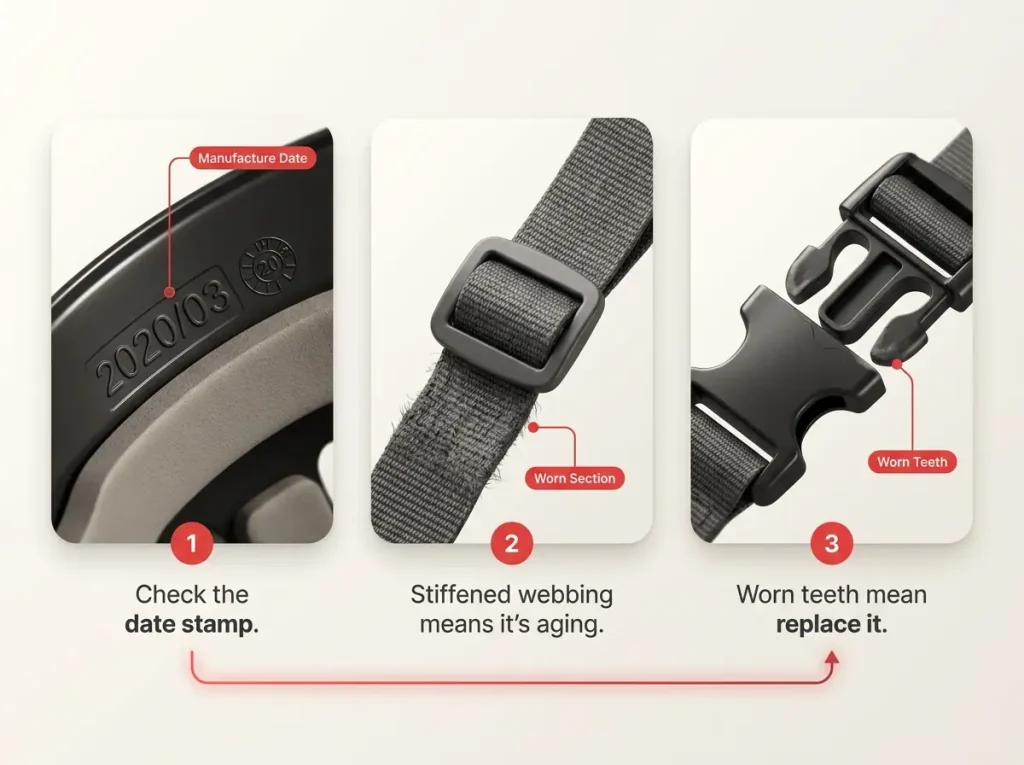
The industry-standard helmet lifespan is 3 to 5 years from the manufacture date, even with zero visible damage. That sounds like a sales tactic until you look at what’s actually happening: foam liners, shell material, strap webbing, and buckles all degrade independently, on their own timelines, mostly invisibly. The cross-industry replacement guidance on foam liner degradation is consistent about this across every helmet category, not just ours.
The tell isn’t the shell. It’s the strap. Webbing that’s gone stiff and a buckle that’s lost its bite are telling you the helmet has been through more seasons than you remember, and that the retention system, which is the thing most likely to fail anyway, is the part aging fastest.
After a Real Impact, One Hit and It’s Done
Replace immediately after any real impact, regardless of how it looks. This is the rule people break most, and the reasoning is worth understanding rather than memorizing.
EPS foam and EPP foam crush microscopically to absorb energy. That crush is the mechanism. It does not reset. The helmet that just saved you from a rock strike spent its one good hit doing it, and the shell looking fine from the outside tells you nothing about the foam underneath, which is where the protection lived.
So the practical version: check the manufacture date stamped inside the shell, not your memory of when you bought it. Nobody remembers accurately, and the stamp doesn’t lie. It’s the same off-season check the rest of your kit needs anyway, and a good moment for auditing your rescue kit while everything’s out of the tote.
The Short Version
The class you run picks the cut, not the brand. Half-cut through Class II, full-cut as the floor at Class III-IV, full-face once you’re scouting a real horizon line.
The CE sticker is a floor, not a verdict. It skips Class 5+ and rotational energy entirely, which is exactly why the Virginia Tech star count is the number worth checking before you buy anything.
Fit beats rating. Every time. A 5-star helmet that shifts on the shake test is protecting a headform in a lab, not you.
Go pull your current helmet off the shelf right now. Find the date stamp inside, and run the shake test on it. Two minutes tells you whether you’re shopping or already sorted. While you’re in there, the pin kit that rides with it deserves the same look, and if you’re assembling a full setup from scratch, where the helmet sits in the wider rescue picture is the context that makes the rest of the purchases make sense.
Frequently Asked Questions
01What is the difference between a whitewater helmet and a bike or climbing helmet?
A whitewater helmet is built to drain, float, and take repeated water impacts. A bike or skate helmet does none of those things. CE EN 1385 requires four hours of buoyancy and tests retention under load, which pavement helmets are never designed for.
02Do you need a full-face helmet for Class IV or Class V rapids?
Once you are scouting a genuine Class IV-V horizon line, yes. Boaters treat a full-face as cheap insurance against a broken jaw on boof-heavy, pinning-prone water. The trade is reduced peripheral vision and airflow, which is why nobody wears one on a Class II float.
03What does the Virginia Tech STAR rating mean for a paddling helmet?
It is an independent concussion-risk score from six impact tests per helmet, measuring both linear and rotational acceleration. Target 4 or 5 stars. It is the only non-manufacturer-funded testing in this category, and it measures the rotational energy CE EN 1385 skips.
04Do Sweet Protection helmets run small?
Yes. Virginia Tech’s own study notes that its top-ranked Sweet Protection models run small and fit especially tight around the temples. Try one on before you buy, even if the star rating is what brought you there. If it pinches, the WRSI Current fits a wider range of head shapes.
05How often should you replace a whitewater helmet?
Every 3 to 5 years from the manufacture date, even if it looks fine, and immediately after any real impact. Foam, webbing, and buckles degrade invisibly, and EPS foam crushes permanently to absorb a hit. Check the date stamp inside the shell rather than trusting your memory.