
In this article
You go over in a rapid, and before the cold even registers, water is pouring in through the neck of the jacket you bought specifically to keep it out. That gap between waterproof fabric and actually staying dry is where most people misunderstand what a splash jacket is for. The honest version, the one nobody selling you gear leads with, is that the best splash jacket for your trip depends entirely on the water you’re running and how likely you are to be swimming in it. This isn’t a roundup of ten jackets. It’s the decision a private boater actually has to make at the put-in, then one honest pick to build around.
Here’s how the three tiers of paddle tops stack up before we get into which one your river calls for.
| Jacket Type | What It Actually Is | When It’s the Right Call | Our Take |
|---|---|---|---|
| Splash Jacket / Top | Non-watertight shell with neoprene and hook-and-loop closures | Warm 3-season boating, wind and spray, staying upright | The versatile default for most river days |
| Semi-Dry Top | Neoprene neck plus latex wrist gaskets | Colder water or bigger swim risk while staying upright | The rafter’s honest sweet spot |
| Dry Top | Latex gaskets at neck and wrist, double-tunnel waist | Cold water, high-consequence runs, kayakers who roll | Often more jacket than an upright rafter needs |
What a Splash Jacket Actually Is (and Isn’t)
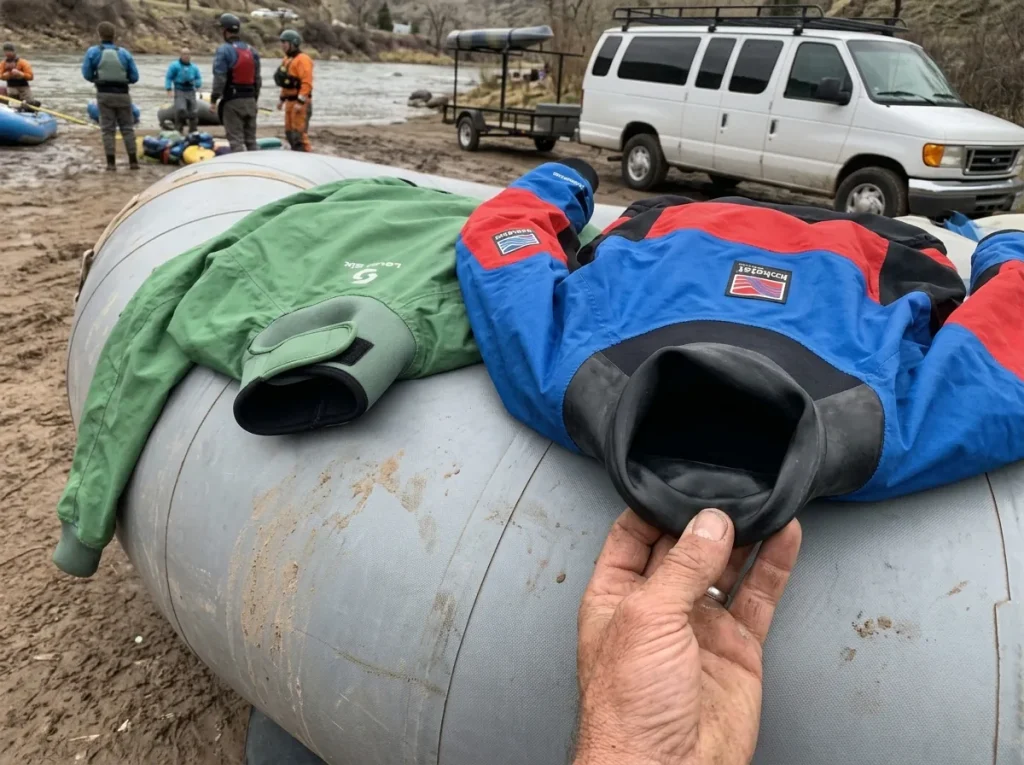
Start with the honest definition, because it’s the one the spec sheets bury. A splash jacket is a windbreaker with benefits. It sheds wind, spray, and rain while you’re sitting upright in the boat, and that covers the vast majority of what a warm-weather river day throws at you. What it does not do is keep you dry once you’re actually in the water.
Splash Top, Semi-Dry, Dry Top — The Real Difference
The whole category comes down to how the openings are sealed. A splash top uses single-tunnel construction with soft neoprene or hook-and-loop closures at the neck and wrists and a cinch or bungee hem at the waist. A semi-dry top upgrades to a neoprene gasket at the neck and latex gasket seals at the wrists. A full dry top runs latex gaskets at both neck and wrist and adds a double-tunnel waist that mates to your sprayskirt or drysuit. The construction terms map directly to how much water the garment keeps out, so once you learn to read the closures, you can price out the protection at a glance.
The Closures That Define the Category
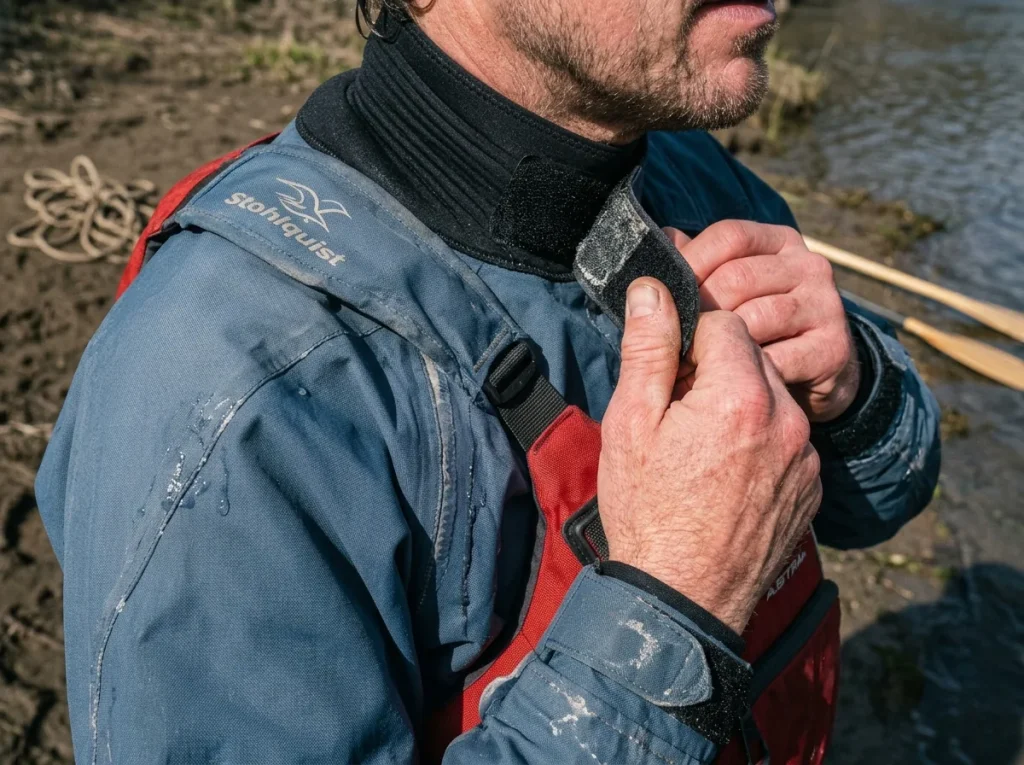
Neoprene seals are comfortable and forgiving. They flex with your neck, they don’t pinch, and you can wear one all day without thinking about it. Latex gaskets seal far better but grip tighter, and after six hours on the water a lot of rafters are done with that latex neck ring. That trade between comfort and dryness is the entire decision, and it’s why there’s no single best answer for everyone.
What “Waterproof” Actually Means Here
This is the part competitors skip. The fabric can be fully waterproof-breathable and the garment can still flood the instant you’re submerged, because the water doesn’t come through the fabric, it comes through the open neck and cuffs. As the National Center for Cold Water Safety is blunt about it, a paddling jacket is not watertight. Treat a splash jacket like a shell that buys you comfort while you’re upright, not a layer that fights for you once you go in.
The Features That Actually Matter
Once you know what a paddle jacket is, picking one comes down to three things that change real on-water performance and a lot of spec-sheet noise you can ignore.
Neck and Wrist Closures
You already know the neoprene-versus-latex trade at the neck. At the wrists, hook-and-loop tabs are adjustable and easy to live with, but they lose grip over a season and let a trickle in on a hard brace. Latex wrist gaskets seal better and are the reason a semi-dry top feels so much drier than a splash top in real waves. Decide how much water resistance you actually need at each opening, because that’s what separates the tiers, not the brand name on the chest.
Fabric, Seams, and Breathability
Every serious jacket uses a waterproof-breathable shell with taped seams, whether it’s HyproTex, Hydrus, or a Gore-Tex family fabric. On an upright, working raft day, breathability matters more than chasing a bigger waterproof rating, because the sweat you trap is the moisture you’ll actually notice. A jacket that seals like a submarine but breathes like a garbage bag will leave you clammy long before a wave does.
Fit Over a PFD and Your Layers
Fit is the thing beginners get wrong. A splash jacket has to close fully over a farmer john wetsuit and still let you reach across the boat without riding up, and it has to work with your life jacket, since the jacket has to close over your PFD every single trip. A paddler’s cut with articulated sleeves is what lets you reach across the boat without the hem climbing your ribs, so buy your size and move your arms through a full stroke before you trust it. If you’re rigging for cold water, remember that building a layering system for cold water is its own thing, and the jacket is just the outer shell of it.
Test-swim your setup in a calm eddy before you trust it on a real run. Most boaters never do, then get surprised by how fast a splash top floods and how cold that first breath is. Ten minutes of controlled swimming tells you more than any spec sheet.
When a Splash Jacket Is Enough (and When You’re Kidding Yourself)

This is the section every competitor replaces with vague talk about cold weather versus warm weather. The real question is a number, and it starts with the whole rule of dressing for the water temperature, not the air. Get that backward on a sunny day over cold snowmelt and the jacket you picked won’t matter.
The Water-Temp Line Nobody Gives You a Number For
Here’s the line to check against today’s flow. Water temperature below roughly 60°F is where cold shock, the involuntary loss of breathing control, peaks, and the cold-water threshold paddling clubs borrow from the American Canoe Association is water under 60°F or a combined air-plus-water total under 120°F. Under that line, a splash jacket by itself is the wrong tool, full stop. Above it, in warm 3-season water where a swim means being cold and annoyed rather than in trouble, a splash top covers you fine. Water temperature sets the floor, but the flow matters too. A pushy, high-CFS day on a higher class rating run means more swims and longer ones, which nudges you toward more protection even when the water isn’t frigid.
When to Step Up to a Semi-Dry Top
Cross that temperature line but stay upright in a raft, and a semi-dry top is the honest sweet spot. You get real water resistance from the latex wrists and a snug neoprene neck for the bigger waves and the unexpected swim, without committing to a full dry top’s latex neck ring for eight hours. NRS builds this tier in its semi-dry line, and the women’s NRS Stratos Semi-Dry is the one to look at for a raft-friendly cut that seals without strangling you. It’s the upgrade that makes sense for most people who’ve decided a splash top isn’t quite enough for their season.
When You Actually Need a Dry Top
For genuinely cold water or a higher-consequence run where maximum margin matters, that’s where a dry top earns its keep, and honestly that’s the wetsuit-or-drysuit conversation more than a splash-jacket one. The Kokatat Hydrus Stoke (men’s or women’s) is a clean example, with a Hydrus 3.0 shell and an adjustable neoprene outer neck skirt. Just know that full dry tops are built for kayakers who expect to roll upside down, so for an upright rafter it’s frequently more protection and more discomfort than the day calls for. The clock is the reason all of this matters: hypothermia onset starts around 30 minutes into cold water immersion, but the first five minutes are a gasp-reflex and PFD problem, not a shell problem, and researchers who study this caution that survival-time charts oversell how predictable immersion really is. Understanding what actually happens to you in cold water is what turns this from a gear question into a safety one, and it’s worth matching your gear to the river class you’re running before you launch.
Don’t run the math on air temperature alone. A 75°F afternoon over 48°F snowmelt still puts you well under the combined-temperature line, and that sunny forecast is exactly what talks people into underdressing for the water they’re actually floating on.
Where Splash Jackets Wear Out
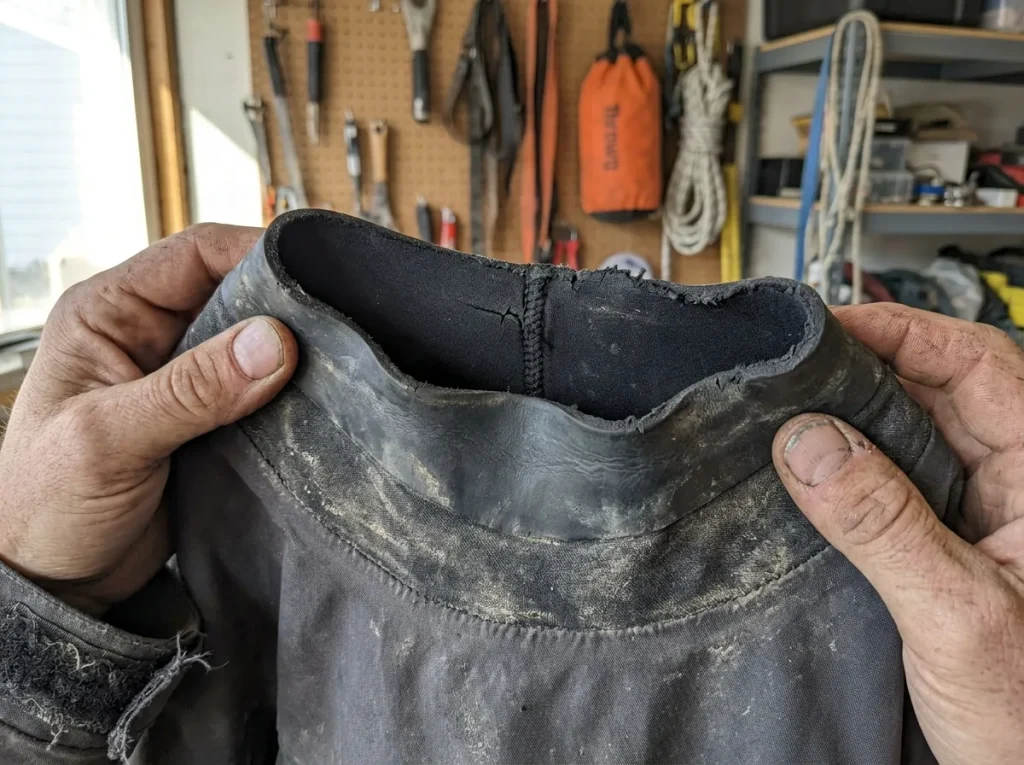
Nobody selling you a jacket mentions that it has a shelf life. Every closure and coating on it degrades with use, and knowing what goes first saves you from trusting a seal that already quit.
The Neck Gasket Is the First to Go
Neoprene neck gaskets stretch out with repeated use, and once one is truly stretched past its spring-back it stops sealing at all. A neck that’s just gotten loose can sometimes be revived, but a blown one gets replaced, not babied. Budget for that swap after a season or two of hard use, because a gasket that’s failed once will fail again at the worst moment.
DWR Doesn’t Last Forever
The durable water repellent finish, the DWR coating that makes water bead and roll off the shell, washes out after a handful of trips and a few machine washes. When it’s gone, the face fabric wets through and clings cold against your arms even though the jacket isn’t technically leaking. The fix is a wash-in or spray-on re-treatment, not a new jacket, so don’t retire a shell just because it stopped shedding water.
Making a Jacket Last (Storage and Care)
A jacket packed away damp is a jacket that fails early, growing funk in the neoprene and breaking down the seam tape from the inside. Rinse the river off, hang it until it’s bone dry, and store it loose rather than stuffed. The same care routine that keeps the rest of your kit alive applies here, and it’s the cheapest way to double the life of any paddle top.
A stretched neoprene neck can buy another season if you soak it, work it back down, and size smaller on your next buy. But the day it stops springing back, stop trusting it. A seal that’s already blown once is not the thing to gamble a cold swim on.
The Splash Jacket Worth Buying
After all the theory, here’s the one honest pick to build around if you want a single jacket that covers most private-boater river days without overpaying.
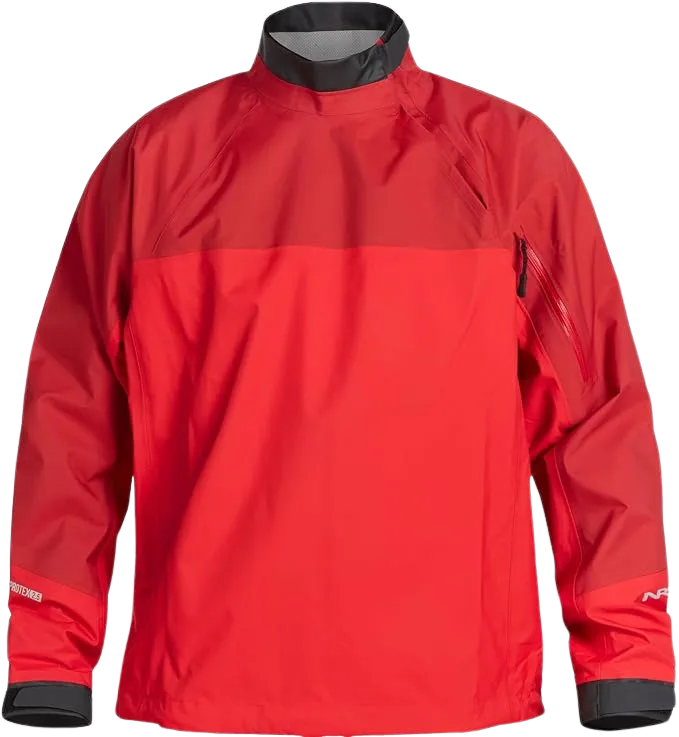
The reason this is the pick and not a pricier cold-water top is honesty about what most people need. A splash jacket handles the bulk of 3-season boating, and the Endurance does it in a well-reviewed, entry-friendly package that shows up on more than one competitor’s list for good reason. It’s a splash top, so the whole “when it’s not enough” framework still applies, and you should buy it for exactly what it is. This is the same no-hype read we give the big raft brands, and the men’s and women’s cuts fit differently, so grab the one that matches your frame rather than defaulting to the men’s.
Don’t Overbuy Your First Jacket
The upsell on paddle tops runs the same direction it always does, toward the most expensive option “just to be safe.” For a rafter, that’s usually the wrong move.
Buy the Tier Your River Needs, Not the Top Shelf
Full dry tops are built for kayakers who roll, and for an upright rafter that level of protection is often unnecessary discomfort and cost. The regret story is always the same shape: someone buys the top-tier top for their first trip, wears it once on a warm July afternoon, and spends the day sweating and leaving it unzipped. The gear that’s too much jacket for the day gets left in the truck, and gear in the truck protects nobody. Match the tier to the water, and for most 3-season private boater trips a semi-dry top is as far up the ladder as you need to go.
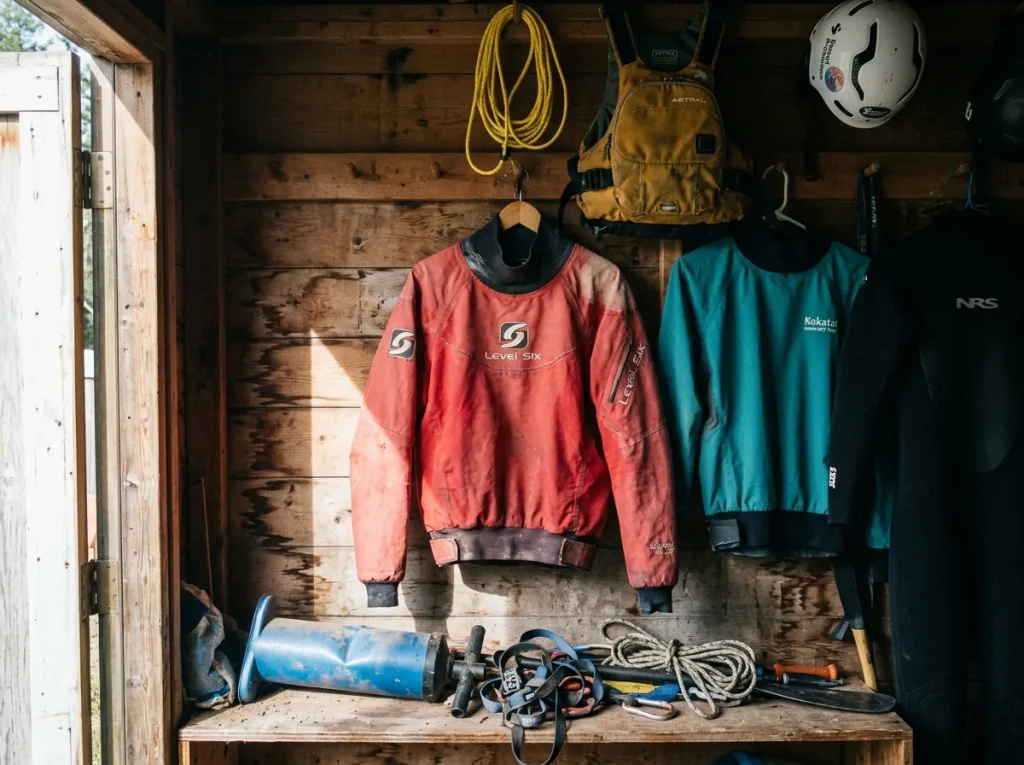
Why the Old Jacket Stays in the Gear Shed
Here’s the part that argues against overbuying from the other direction. Even after you upgrade, the old splash jacket earns a permanent spot on the wall, as a spare, a loaner for a friend who showed up underdressed, or the right call for a warm day when a semi-dry is more layer than the water demands. That’s just the way private boaters actually build a kit over time, one honest layer at a time rather than one big-ticket buy. Your first jacket doesn’t need to be expensive, and it rarely gets thrown away.
Keep the old splash jacket even after you move up to a semi-dry. A warm-water day, a guest who forgot their layers, or a shakedown float you don’t want to trash your good top on are all reasons a beat-up backup keeps earning its peg.
Conclusion
A splash jacket is a windbreaker with benefits, so buy it for wind and spray, not for a swim. Check the water-temp line before you check the price tag, because under roughly 60°F or a real swim risk you want a semi-dry top or a dry top, not a shell alone. And don’t overbuy, since the right tier beats the top shelf every time and the old jacket still earns its keep. Before your next trip, look up your river’s water temperature, run it through the framework above, and dress for the water instead of the forecast.
Frequently Asked Questions
01Are splash jackets actually waterproof?
The fabric is waterproof, but the garment is not watertight. A capsize floods it through the open neck and wrist closures. A splash jacket is built to shed wind, spray, and rain while you stay upright, not to keep you dry in a swim.
02What is the difference between a splash jacket and a dry top?
It comes down to the closures. A splash jacket uses neoprene and hook-and-loop seals for comfort, while a dry top uses latex gaskets at both neck and wrist plus a double-tunnel waist to seal water out. A semi-dry top sits between the two.
03Do I need a splash jacket for whitewater rafting?
For 3-season boating in moderate, warmer water, yes, since it is the most versatile shell for wind and spray. For cold water under roughly 60°F or high-swim-risk runs, a splash jacket alone is not enough, and you want a semi-dry or dry top.
04How should a splash jacket fit over a PFD and wetsuit?
It should close fully over your layers and your PFD without riding up or binding your paddle stroke. Buy the paddler’s cut in your size, men’s or women’s, and test your full range of motion before a real run.
05When do I need a semi-dry top instead?
When you cross the cold-water line but still stay upright in a raft. A semi-dry top adds real water resistance from its latex wrist gaskets for bigger waves and unexpected swims, without the all-day discomfort of a full dry top’s latex neck seal.