
In this article
You’re packing for the family’s first trip on your own raft, staring at a listing for a kids rafting paddle, and none of these seem built for the boat sitting on your trailer. Here’s the part nobody searching that phrase gets told up front: the paddle your kid needs probably isn’t a rafting paddle at all. It’s the single most common mix-up private boaters hit when they start outfitting their kids, and it’s why half the gear sold as a kid’s paddle is the wrong tool for a family river day. This guide sorts out the kayak paddle versus raft paddle question, sizes one to your child’s real height and hands, flags a safety issue nobody connects to kids, and gives you honest picks by age and budget.
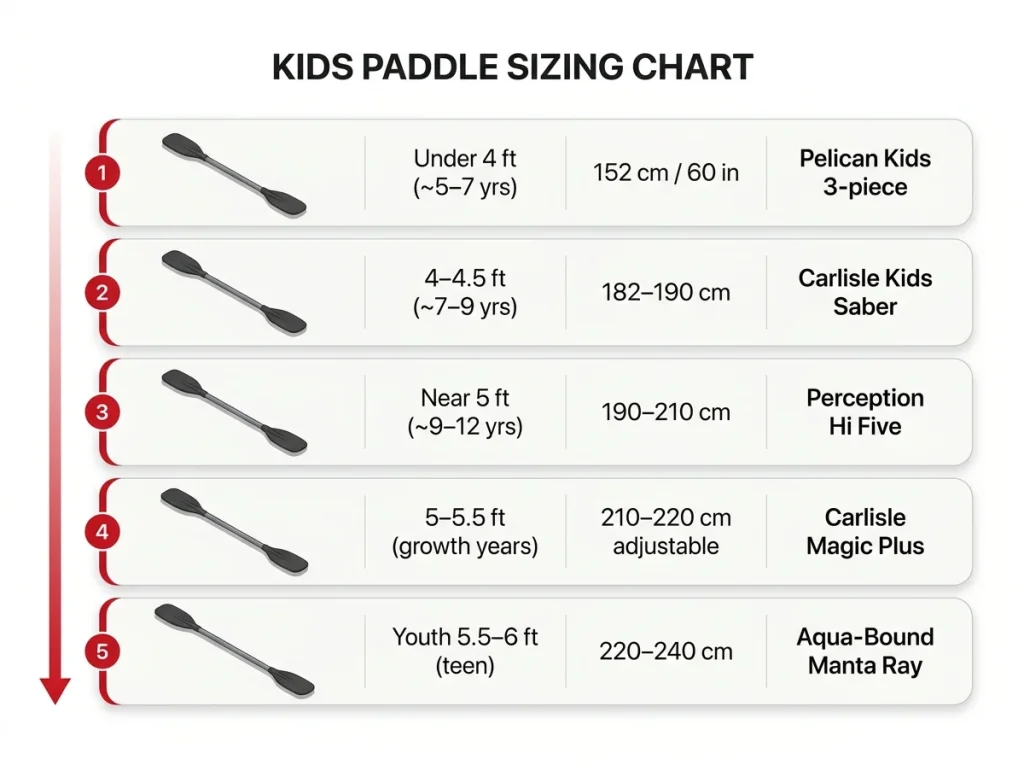
Match your kid’s height to the right paddle length before you buy anything, then pick from there.
| Child Height & Age | Paddle Length | Best-Fit Pick |
|---|---|---|
| Under 4 ft (~5–7 yrs) | 152 cm / 60 in | Pelican Kids 3-piece |
| 4–4.5 ft (~7–9 yrs) | 182–190 cm | Carlisle Kids Saber |
| Near 5 ft (~9–12 yrs) | 190–210 cm | Perception Hi Five |
| 5–5.5 ft (growth years) | 210–220 cm adjustable | Carlisle Magic Plus |
| Youth 5.5–6 ft (teen) | 220–240 cm | Aqua-Bound Manta Ray |
Kayak Paddle or Raft Paddle? Why the Difference Matters for Your Kid
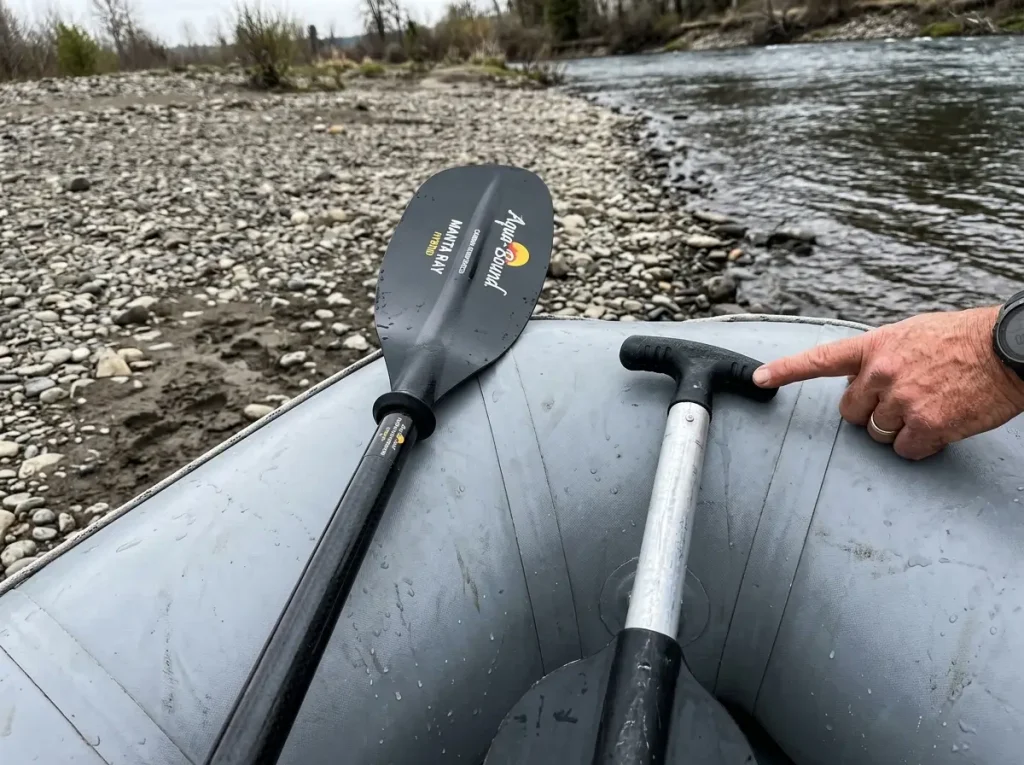
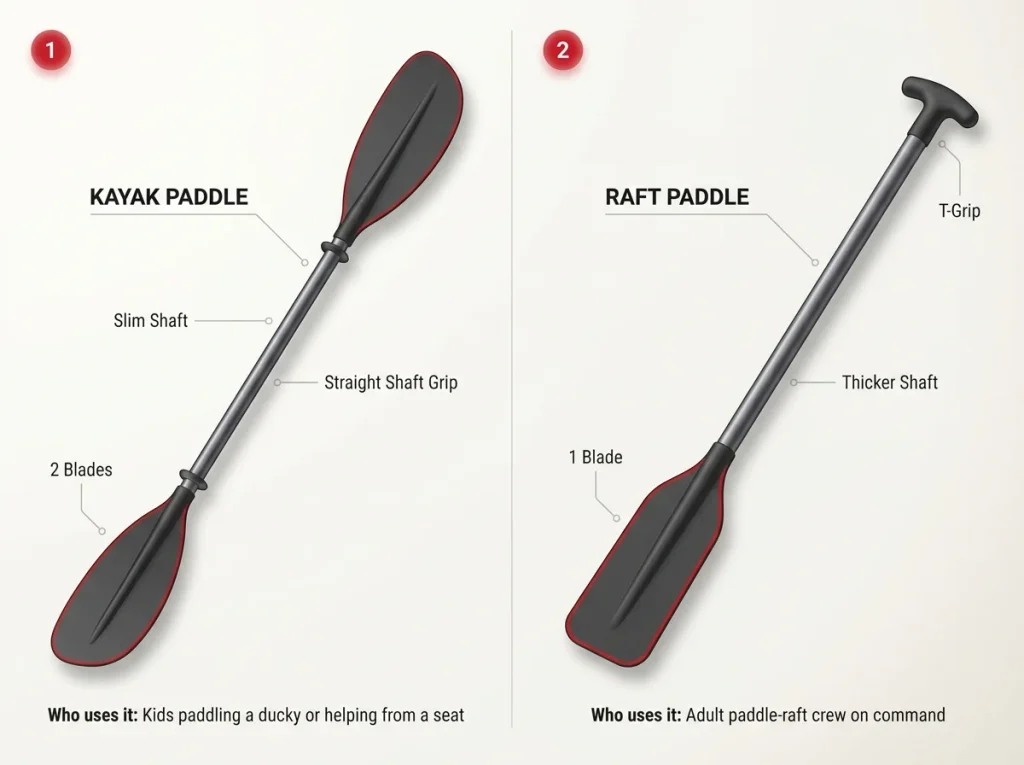
Start here, because getting this wrong costs you money and hands your kid the wrong tool. A raft paddle is a single blade with a T-grip on top, the kind a paddle-raft crew swings on the guide’s command. A kayak paddle has two blades on one shaft, and it’s what a kid actually uses to move a boat or help from a seat. For nearly every rafting-family scenario, your kid wants the double-blade kayak style, not the T-grip raft paddle.
The confusion is baked into the search itself. Type “kids rafting paddle” and you get kayak-paddle listings wearing a rafting title, and none of them stop to say so. Ask any private boater who’s rigged for a family trip: the wrong assumption here is treating the two as interchangeable, then handing a seven-year-old a heavy single-blade paddle built for an adult crew.
There’s a practical reason beyond size. A double-blade paddle in a paddle-raft crew seat tangles with the stroke of whoever’s next to your kid, and now you’ve got two paddlers fighting instead of moving the boat. The T-grip that pros call a guide stick belongs in adult hands running a real line. Your kid, paddling a duckie off the back of the group raft, wants the two-blade paddle that lets them dig without clocking a sibling.
So map your boat to the tool before you shop. If you’re running a paddle raft or an oar rig, our breakdown of how paddle rafts, oar rafts, and hybrids each fit a river shows where a kid actually sits and what they’d hold. In almost every case, that’s a kayak paddle.
How to Size a Paddle to Your Kid’s Height and Age
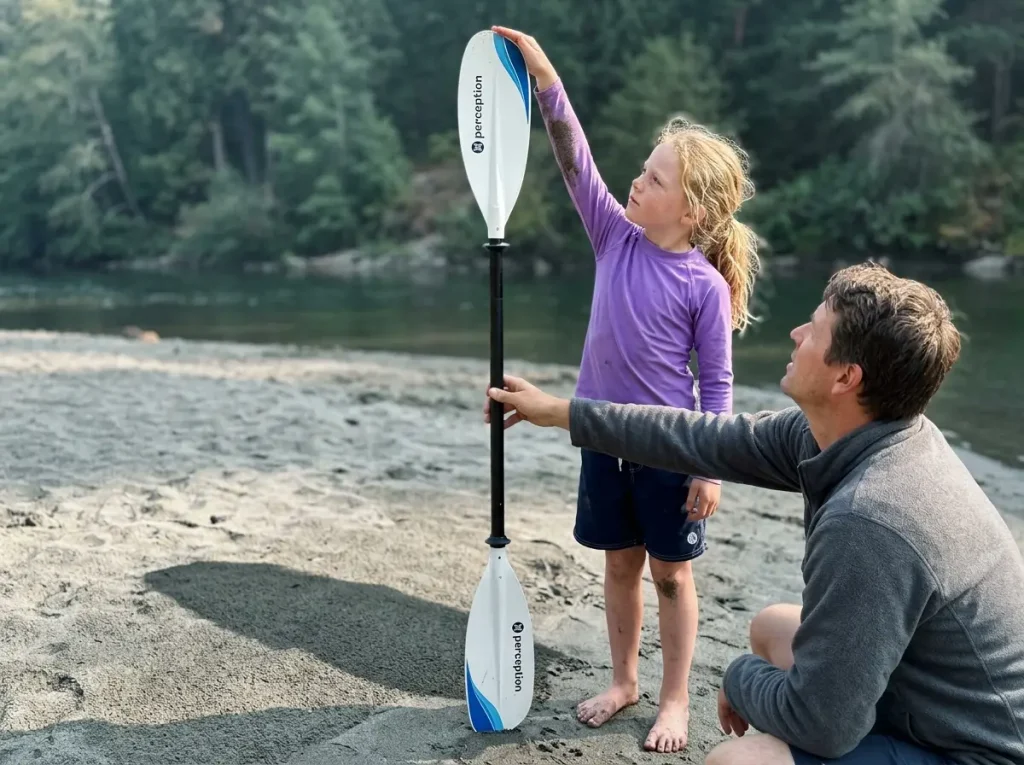
Here’s where most parents go wrong: they buy long, figuring the kid grows into it. An oversized paddle rides high, forces a young paddler to over-rotate to reach the water, and builds the exact ragged stroke you’re trying to avoid. Size to the kid you have today.
The rule tracks height more than age. A child under 4 ft stays under about 182 cm. From 4 to 4.5 ft, look at 182 to 190 cm. A kid near 5 ft fits 190 to 210 cm, and if that same kid is in a narrow boat, bump toward 210 or 220 cm. Taller youth in the 5.5 to 6 ft range need 220 to 230 cm, same as a smaller adult.
Watch the units, because they’ll trip you up in a listing. The box often reads in inches while the shaft is marked in centimeters: 60 in is 152 cm, 72 in is 182 cm, 75 in is 190 cm, and 84 in lands at 213 cm. Two listings can describe the same paddle length in different numbers, and a parent comparing them fast will misjudge the fit.
Boat width matters as much as height. A wide duckie sits you farther from the waterline than a skinny rec kayak, so the same kid needs a longer paddle in the ducky than they would in a hardshell. When you’re stuck between two lengths, that’s the signal to look at an adjustable paddle instead of guessing. For sizing an adult’s paddle or a T-grip on the same trip, our full rafting paddle length guide runs the same math for grown gear.
Don’t buy a size up to save money next season. An adjustable-length paddle covers two or three years of growth in one purchase, and it fits right the whole time instead of being wrong now and right later.
What Actually Makes a Paddle “Kid-Sized”
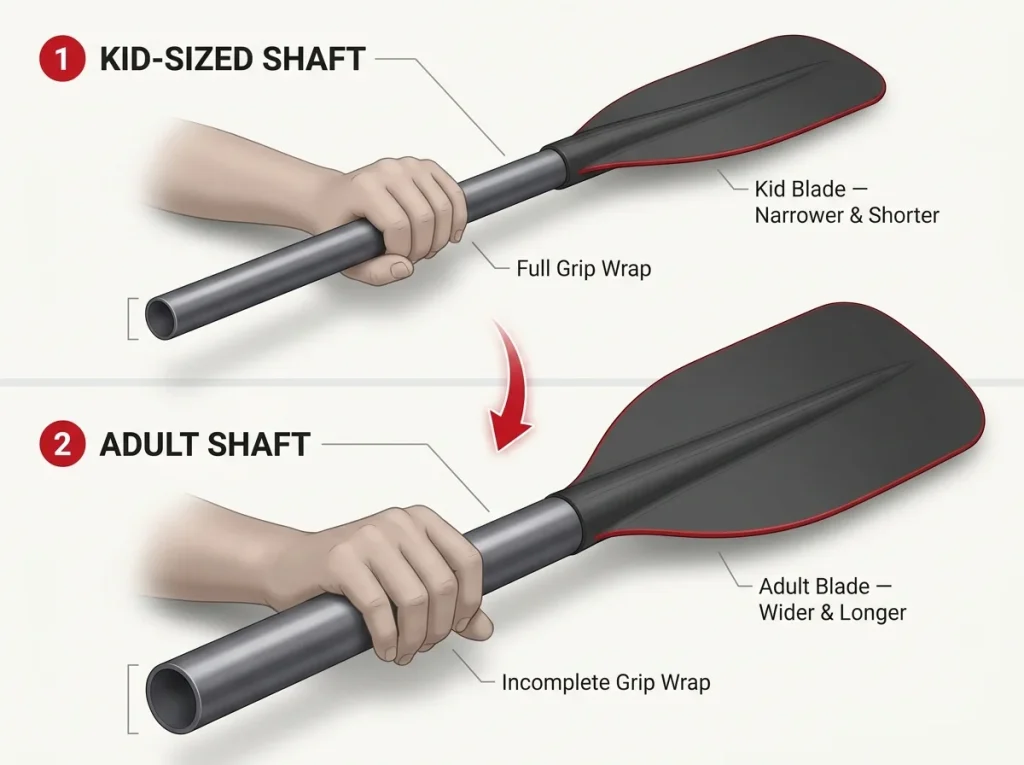
Length is the number everyone checks. The two specs that actually make a paddle work for a kid are the ones nobody reads: shaft diameter and blade size. Cut down an adult paddle to the right length and it still fails a child, because those two things don’t shrink with the cut.
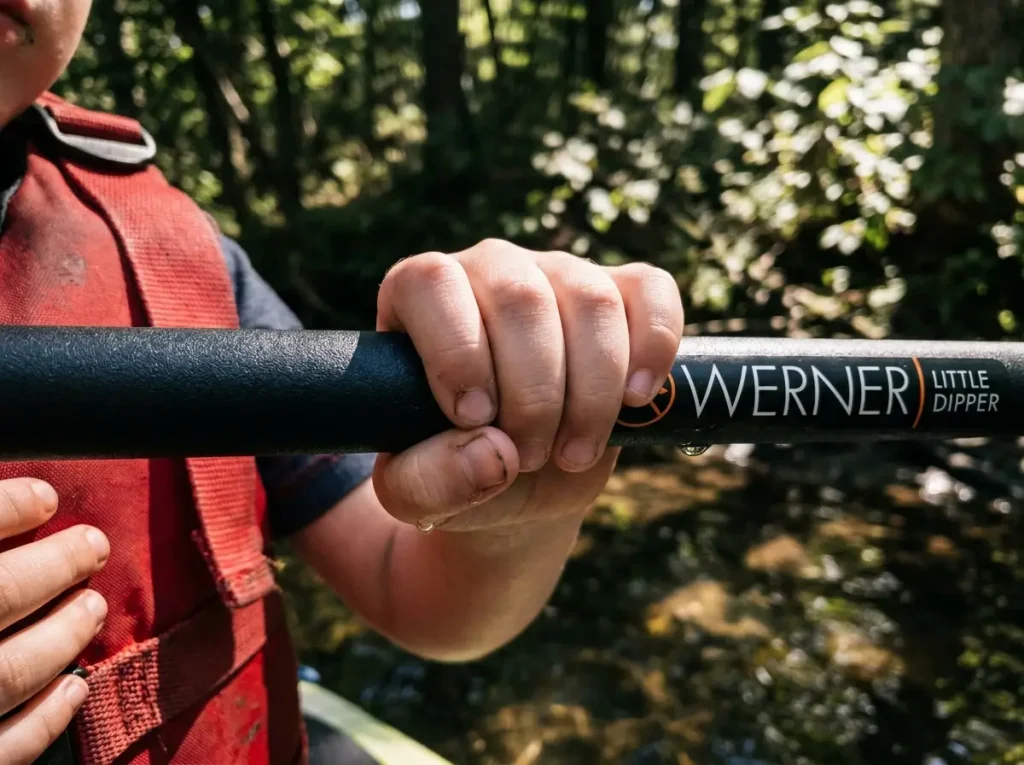
A kid-sized shaft runs roughly 1.0 to 1.125 inches around, a genuinely smaller tube than an adult grip. That gap sounds trivial until you watch it play out. A small hand can’t close all the way around an adult shaft, so the kid clamps down in a white-knuckle grip to hold on, and that’s what burns them out in twenty minutes. Parents read the early quit as weak arms. It’s usually a shaft too fat for the hand.
Blade size is the other half. A kid-sized blade shape, narrower and shorter than an adult’s wide blade, moves less water per stroke, which is exactly what you want, because a kid fighting a wide adult blade is doing a grown paddler’s work with a child’s shoulders. Boaters call the number that predicts fatigue swing weight, meaning how heavy the paddle feels moving through a stroke, not how it reads on a scale. A light blade on a thin shaft is the whole game.
Get those two right and the stroke sorts itself out. A right-sized shaft and blade let a kid learn a clean forward stroke instead of flailing, and the basics of a good paddle stroke finally click because the tool isn’t fighting them. You’ll see the moment it happens: the splashing near a sibling’s face turns into an actual catch and pull.
Materials and What They Mean for Weight, Durability, and Price
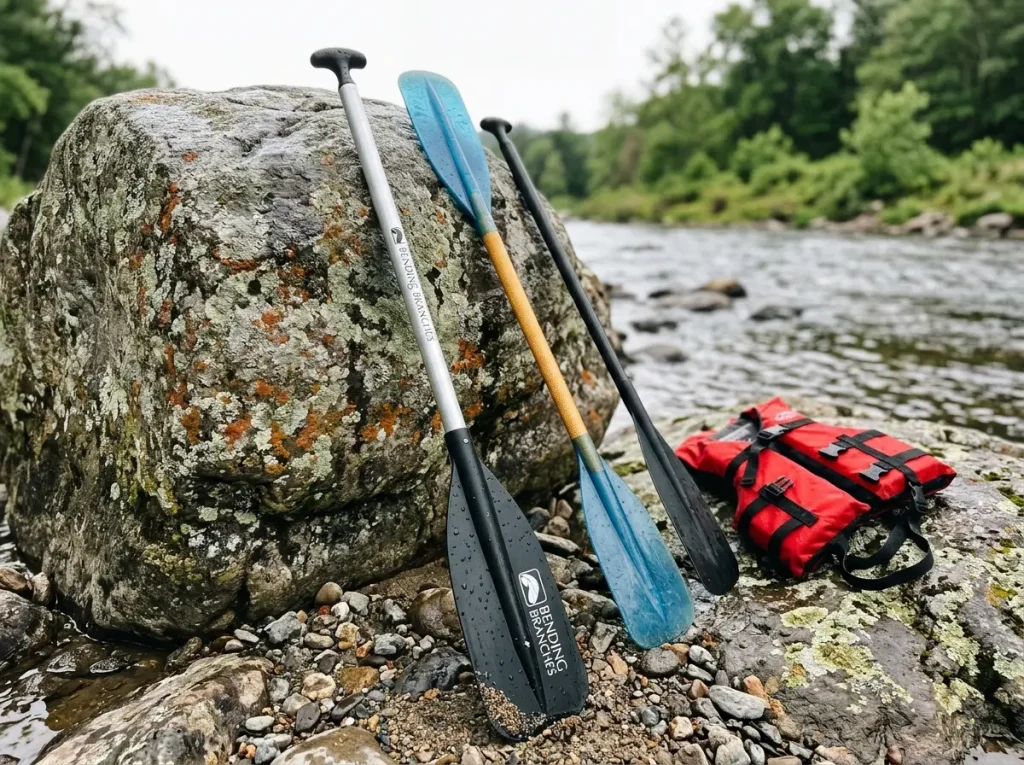
Paddles come in three material tiers, and for a kid you do not automatically want the top one. Entry paddles pair an aluminum shaft with a polypropylene or plastic blade. Mid-range moves to fiberglass in both the shaft and blade. Premium runs a carbon fiber shaft with a carbon or nylon-composite blade.
The jump you feel most is swing weight. Fiberglass cuts it noticeably over aluminum, and carbon cuts it again, which is the real reason a lighter paddle keeps a kid going. Less arm fatigue means more time actually paddling and less time riding with the paddle across their lap. Carbon is the upgrade a kid who’s hooked will notice.
There’s one honest catch with aluminum: it conducts cold. On an early-season release trip with water below 60 degrees, a cold aluminum shaft in a kid’s bare hands is a comfort and grip problem adults barely register. Cold water deserves respect, and small hands feel it first. If your season starts early, that alone can push you off the cheapest option.
For a kid who paddles a handful of days a year, though, entry aluminum is genuinely enough, and there’s no reason to buy carbon for a six-year-old who’ll swim more than they paddle. The same wood-versus-carbon trade-off runs through adult gear too, and our rundown on rafting oars walks the material tiers if you’re outfitting the whole boat. Spend where it changes the day, not where the spec sheet flatters you.
The T-Grip Problem Nobody Warns Parents About
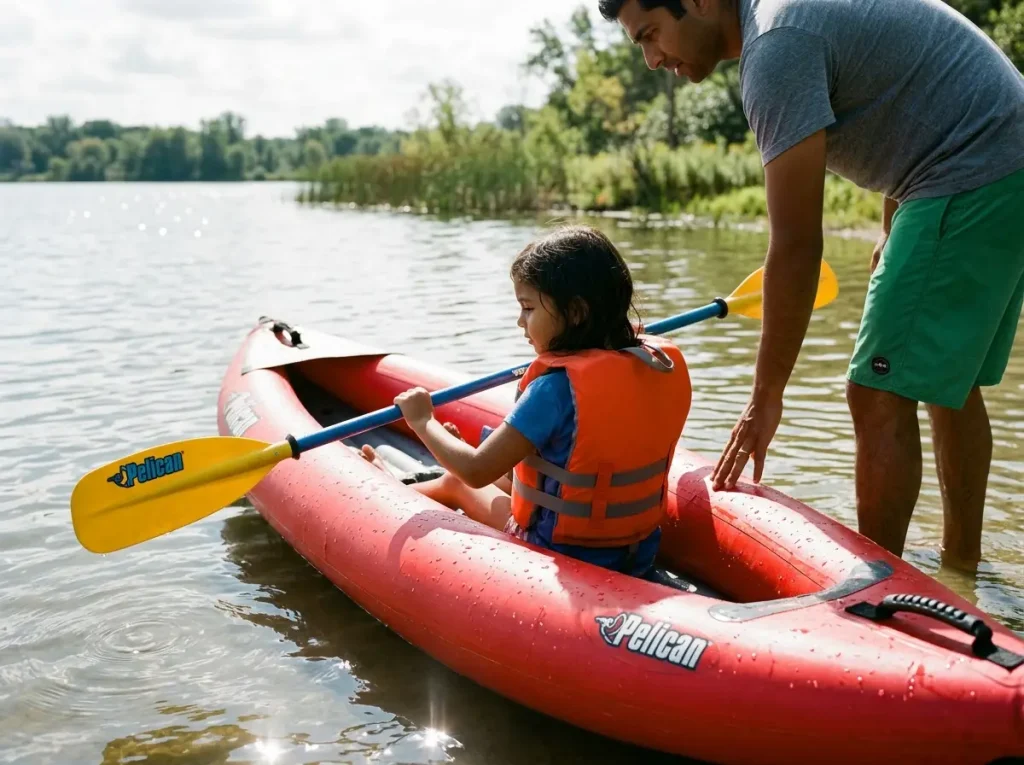
Time for the part of the safety talk that gets skipped for kids. In whitewater rafting, face injuries are the most common injury category, about a third of all documented cases, covering eyes, mouth, nose, and teeth. Most of those come from a paddle, not a rock. A peer-reviewed study of commercial whitewater rafting injuries put the face-injury share at 33.3 percent.
The culprit has a name. The T-grip is documented as the single largest source of paddle injuries in whitewater, and the higher it rides above the water, the more likely it swings into a neighbor’s face. That data is all adult, gathered on paddle-raft crews. Reason it forward, carefully: a kid has a smaller face, less predictable bracing reflexes, and a paddle that’s too long rides even higher in their hands. The same sizing mistake that tires a child out also raises the odds of a strike.
None of that matters if the vest isn’t right first. The American Canoe Association’s Smart Start guidance treats a properly fitted, worn life jacket as the baseline before anything else, and paddle choice sits downstream of it. Gear the kid’s PFD first, paddle second. If you’re still sorting fit, the right PFD for a young paddler is the purchase that comes before this one.
The practical takeaway ties back to sizing, because for a kid, injury prevention and paddle fit are the same conversation. A correctly sized, two-bladed kayak paddle in a kid’s hands stays lower and swings a shorter arc than an oversized T-grip. Pair that with learning to brace against a capsize in calm water and you’ve handled the real whitewater safety for kids without a single scary lecture.
Teach the low, quiet paddle before you teach the power stroke. A kid who keeps the blade near the water instead of winding up over their head is safer for everyone in the boat, and the good habit sticks better when it’s the first one they learn.
Best Kids’ & Youth Rafting Paddles Our Picks by Age and Budget
These are the paddles worth putting in a kid’s hands, sorted by where your child actually falls on the sizing chart. The grown-ups in your crew are shopping a different list, and our guide to the best rafting paddles without overpaying for carbon covers the adult side. Everything below is a double-blade youth kayak paddle, because that’s what a kid on a family river trip actually uses.
The Budget Pick That Isn’t a Cut-Down Adult Paddle

The Carlisle Kids Saber earns the budget slot because it solves the shaft-diameter problem cheaply. At 190 cm it fits a kid in the 4 to 4.5 ft band, and the reduced blade means a young paddler isn’t muscling adult-sized water on every stroke. It’s aluminum, so it’s heavier than the step-up picks and it’ll feel cold on an early-season morning, but for a kid learning the forward stroke on flat water, that’s a fair trade for the price.
Two More Budget Options Worth a Look

The Perception Hi Five covers the same kid as the Saber and mostly comes down to which one you can get your hands on. If you want a second trusted name at the entry price, the Bending Branches Whisper rounds out the budget tier with a kid-sized aluminum paddle from a brand with a long paddlesports history. Any of the three gets a beginner on the water without overspending, so buy the one that’s in stock in the right length.
Best for the Smallest Paddlers
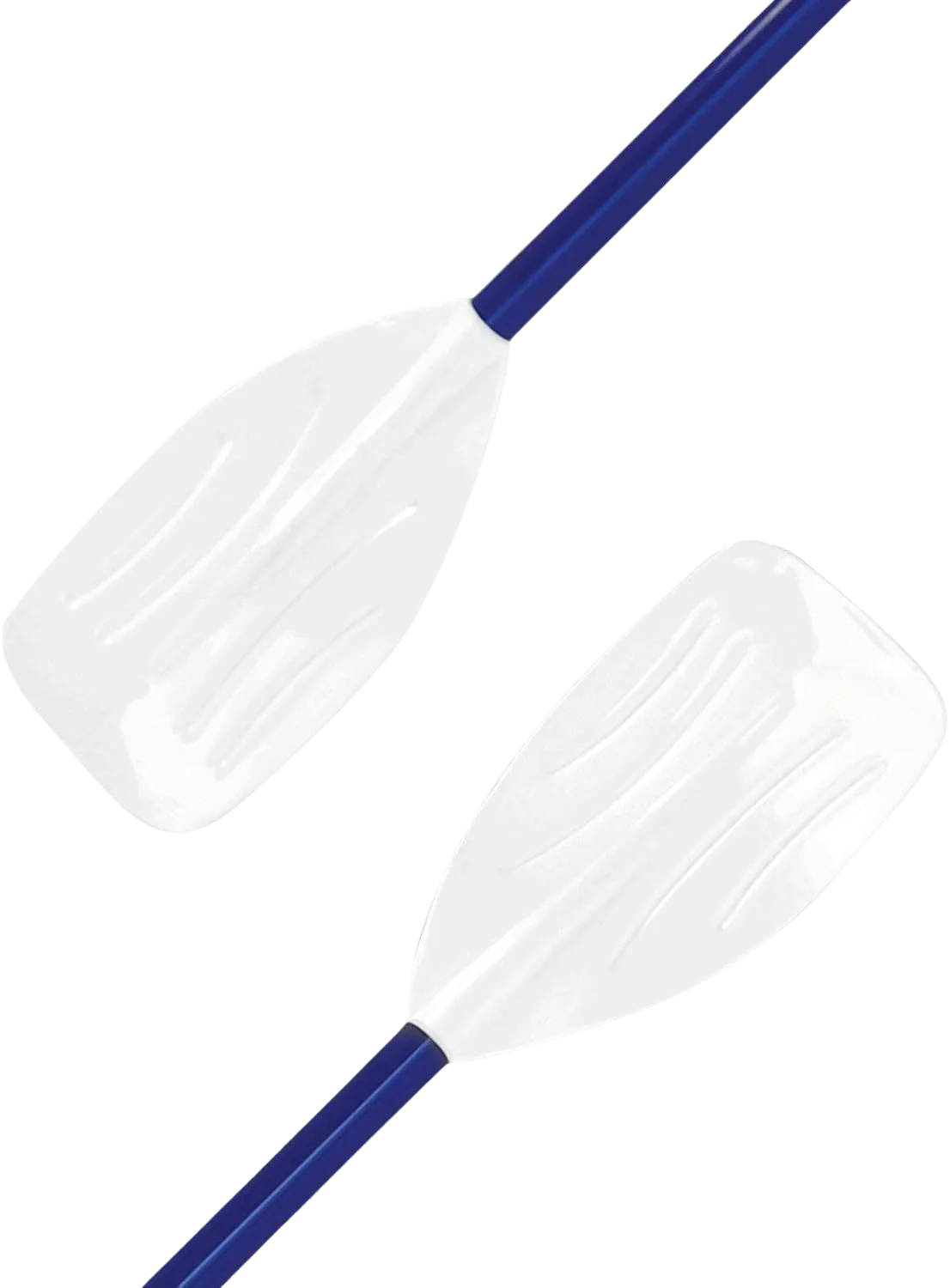
The Pelican Kids paddle fills a real gap. Most kids paddles start around 182 cm, which is already too long for a five-year-old, and a too-long paddle on a small child is the setup that drives the whole high-swing, bad-rotation problem. At 152 cm it fits the littlest paddlers, and the three-piece design means it disappears into your pack when the kid decides they’d rather trail a hand in the water.
Adjustable Picks for the Growth-Spurt Years
The years between 5 and 5.5 ft are where you either buy smart or buy twice. An adjustable-length paddle spans that range so you’re not shopping again every spring. The Carlisle Magic Plus runs 210 to 230 cm with a polypropylene-wrapped fiberglass blade, which makes it the do-not-rebuy pick for a kid mid-growth-spurt. If you want a second brand in the same role, the Accent Lanai offers a comparable adjustable youth setup. Either one buys you a few seasons on one purchase, which is the closest thing to a bargain in kid gear.
The Step-Up and Premium Picks
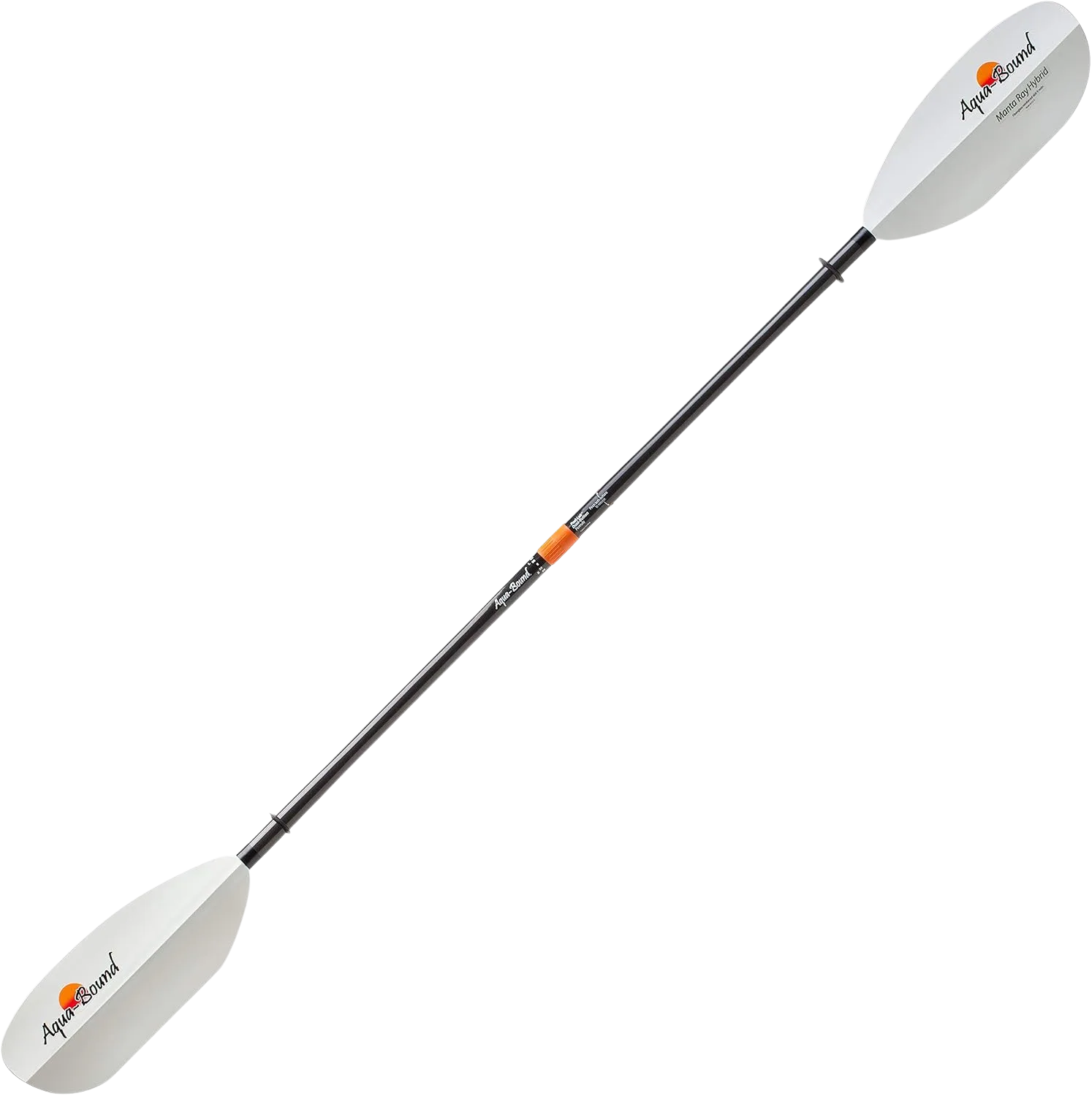

The Aqua-Bound Manta Ray Hybrid and the Werner Little Dipper are the paddles you buy when the kid has proven they’ll use it. The Manta Ray’s carbon shaft is the mid-price step up for a teen on a duckie, and the Little Dipper’s small-diameter shaft is the one built specifically for small hands rather than adapted for them. Neither is a first paddle. A pricier paddle doesn’t make a beginner better, and our take on why a fifty-dollar paddle beats the guide stick holds just as true for kids: buy the tier that matches how often they actually paddle.
Paddles for Duckies and Inflatable Kayaks on Family Raft Trips
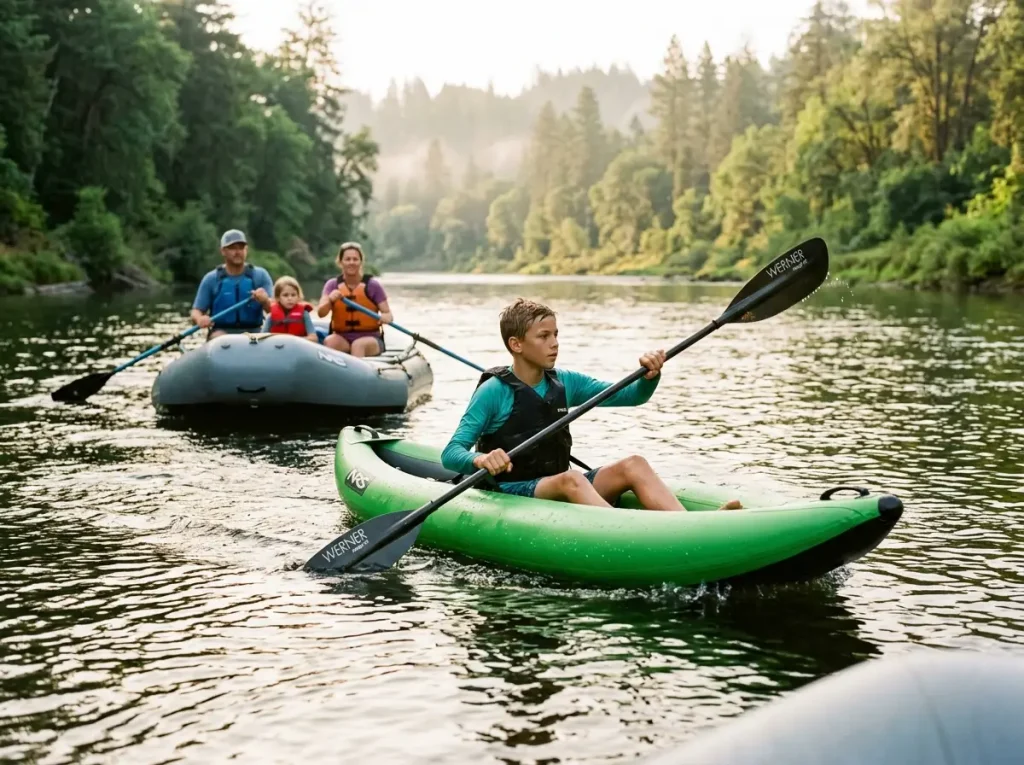
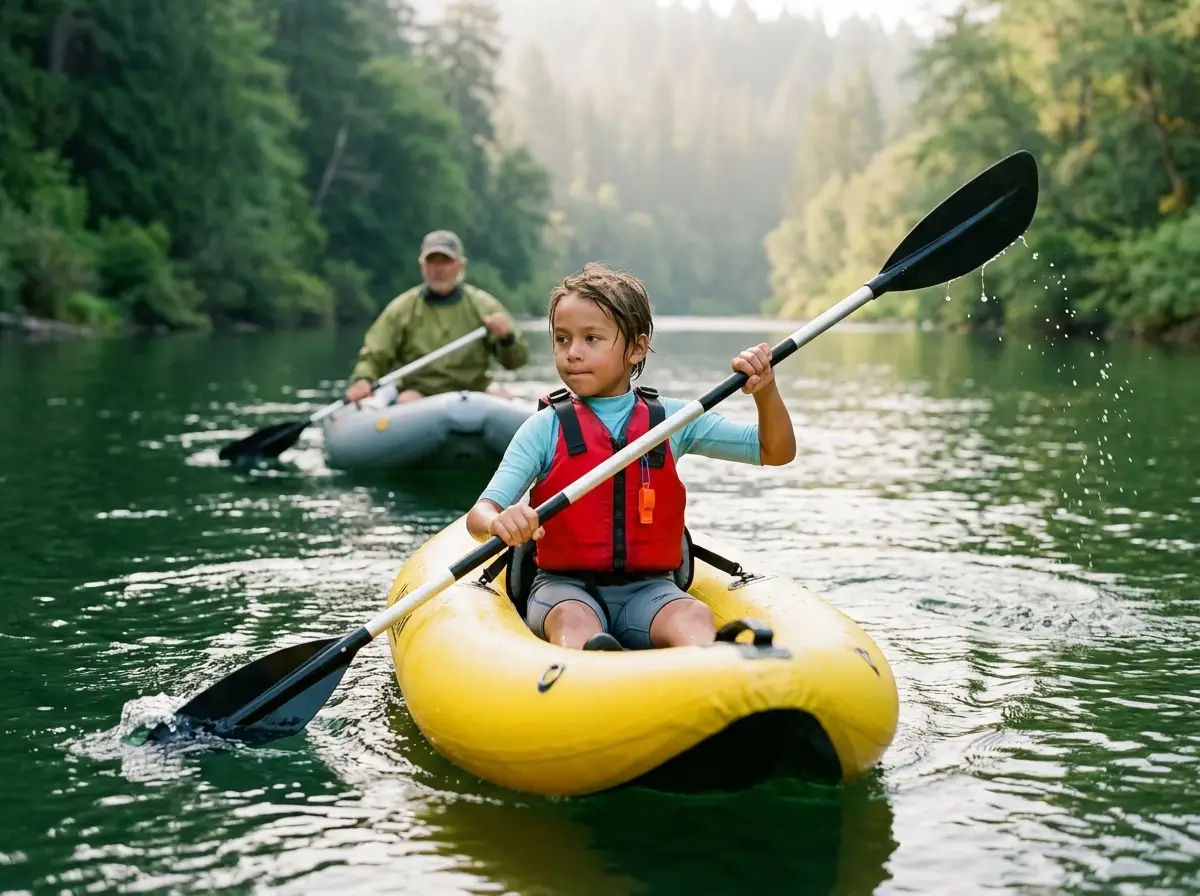
Here’s the pattern nobody writes down: on a family trip, the paddle decision follows the boat decision, not the other way around. The move that works, repeated on private-boater forums for years, is to bring one or two duckies so the kids can rotate onto them, and to assign one adult to kid duty any time another adult is on the oars. The paddle you buy exists to serve that rotation.
A ducky is wider than a rec kayak, so a kid sits higher off the water and needs a longer paddle than their height alone would suggest. That’s where the sizing chart and the boat come together: take the kid’s height number, then bump up for the width of the ducky. A paddle that’s right in a skinny hardshell can come up short on an inflatable.
Pack one more paddle than you think you need. Paddles get away from you in a flip, and a spare kid-sized paddle stashed in the raft means a lost one doesn’t strand your kid in the bow for the rest of the run. A paddle leash is the other cheap fix, tethering the paddle to the boat so a bobble doesn’t turn into a chase.
For an older kid or teen who’s outgrown the kid-specific paddles, the Werner Skagit CF is a lightweight carbon-reinforced crossover, long enough for a ducky without being a full adult touring paddle. Pair it with the mid-price Aqua-Bound Manta Ray from the picks above and you’ve got the two paddles that cover the teen-on-a-ducky years. If you’re still choosing the boat itself, the inflatable kayaks we’d actually run is where that decision starts.
Is Your Kid Actually Ready to Paddle?
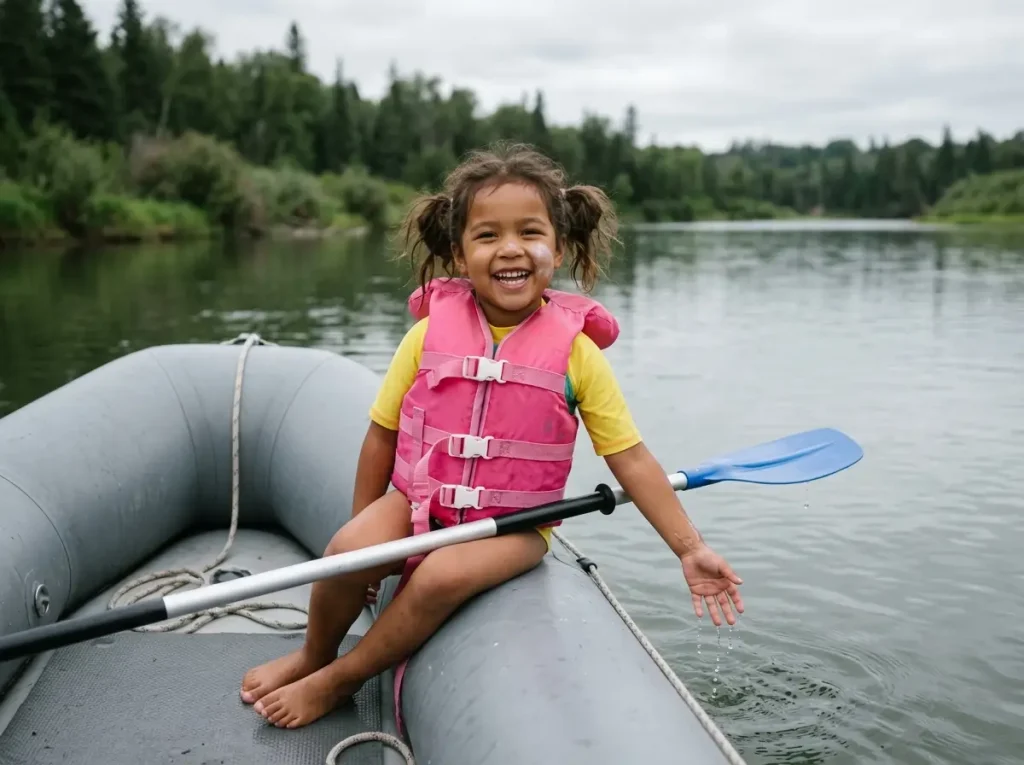
Time for the honest part, the one no product roundup wants to say out loud: your kid might not be ready, and buying a paddle won’t change that. Younger kids get bored of paddling fast. They swim, they fish, they hop between boats, and they paddle in bursts when the mood strikes. A paddle is worth buying when the kid actually wants to move the boat, not just occupy a seat in it.
Look for the real signals before you spend. Can they follow a simple command on the water, hold a paddle without dropping it, and sit a ducky in calm current without panicking? Those matter more than age. A kid who’s there yet will tell you by grabbing the paddle themselves. A kid who isn’t will use it to splash their sibling and then hand it back.
If the honest answer is not yet, skip the purchase this season. An adjustable paddle you already own, or a borrowed one for a day, bridges the gap fine, and there’s no shame in a kid who mostly rides for a summer. Supervision does more for a young paddler than gear anyway. Assigning one adult to watch the kid in the water beats any paddle on the rack.
Frame the whole decision around the child in front of you, not the spec sheet. If you’re building toward a first family trip, planning a family river trip covers the trip side, and the American Canoe Association’s Kids Go Paddling guide lays out a youth safety mindset that starts, as always, with the life jacket and good judgment.
Caring for a Kid’s Paddle Between River Trips
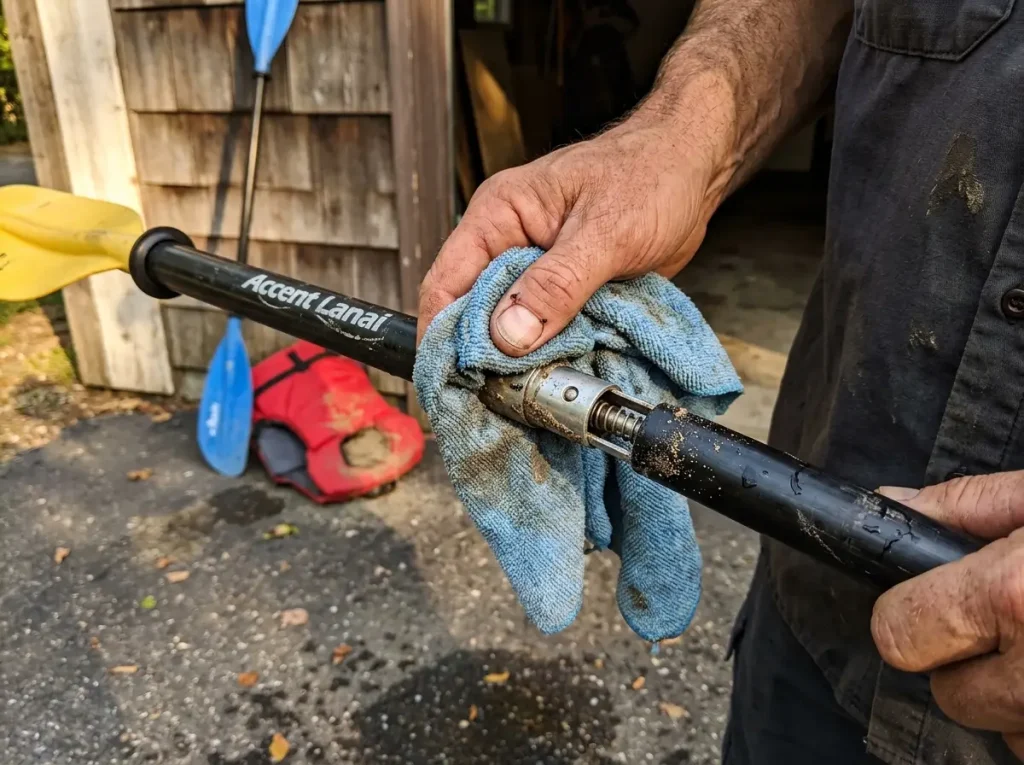
A kid’s paddle can last through two or three kids if you treat it right, and the care takes about five minutes. Rinse the silt and grit off the ferrule after every trip so a two- or three-piece paddle keeps separating cleanly. A joint packed with sand is a joint that seizes, and then you’re wrestling it apart at the next put-in.
Dry it before it goes into storage, and keep it out of direct sun over the off-season. UV quietly degrades polypropylene blades and the plastic drip rings over a couple of years, turning a flexible blade brittle. A paddle stored in a hot garage window takes more abuse from the sun than it ever does from the river.
Before each trip, check the ferrule or the adjustable clamp for grit so it locks at the right length and holds. When a blade does crack or a shaft bends, it’s often worth fixing rather than tossing, and knowing whether a cracked paddle is worth repairing can save you a replacement. An adjustable paddle that’s been cared for is also the one that hands down cleanly to the next kid in line.
The Bottom Line
Your kid almost certainly needs a double-blade kayak-style paddle, not a T-grip raft paddle, no matter what the listing calls it. Size it to their height and hands today, and lean on an adjustable model to cover the growth years instead of buying long. And settle the PFD fit and the honest readiness question before you spend a dollar on the paddle itself.
Before you buy anything, put any paddle in your kid’s hands in ten minutes of calm water and watch. You’ll know right away whether they’re ready to move the boat or just along for the ride, and that answer tells you exactly which paddle, if any, to buy.
Frequently Asked Questions
01What size paddle should I get for my kid’s height?
Match height to length: under 4 ft fits about 152 to 182 cm, 4 to 4.5 ft fits 182 to 190 cm, near 5 ft fits 190 to 210 cm, and taller teens run 220 to 230 cm. Go up a size for a wider ducky, and size to the kid today rather than buying long to grow into.
02What is the difference between a kayak paddle and a raft paddle for a kid?
A kayak paddle has two blades on one shaft and is what a kid uses to move a ducky or help from a seat. A raft paddle is single-blade with a T-grip for a paddle-raft crew. Nearly every rafting-family kid wants the double-blade kayak style.
03Do kids need their own paddle for whitewater rafting?
On a commercial trip, no, the outfitter supplies paddles sized for your kid. On your own raft or ducky, a kid-sized paddle is worth it once the child actually wants to paddle rather than ride along.
04How much should I spend on a kid’s paddle?
An entry aluminum-and-poly paddle is genuinely enough for a kid who paddles a few times a year. Save the carbon upgrade for a child who paddles often and keeps asking to do more, since a lighter shaft mainly buys longer time on the water.