
In this article
The ranger at the put-in asks to see the toilet system. Someone on your crew produces a cardboard box of sealed bags, and the trip leader’s face does the thing every trip leader’s face does, because a stack of bags is not what the permit asked for. That standard is not opinion or preference: the NPS and the BLM both put it in writing, and the systems that satisfy it sort into three material classes with wildly different capacities. What follows is the category by type, by capacity, and by price, plus the arithmetic to size one for your actual crew and your actual days, and the short list of things that fail on the water.
Here is how the five common river toilet setups compare before any brand name enters the conversation.
| System Type | Typical Capacity | Weight & Material | Best For |
|---|---|---|---|
| Bare 20mm rocket box (DIY) | 60–70 uses | ~20 lb steel, no inner tank | Crews who want maximum volume for minimum money |
| Rotomolded tank in a rocket box | 40–50 uses | ~3 lb tank, crushproof | Most private trips; easiest cleanout |
| Aluminum system | 60–70 uses | Light for its volume, no rust | Big groups and long permits |
| 5-gallon bucket + snap-on seat | Backup or urine only | 5 gal plastic | The second container, never the only one |
| Wag-bag kit (day tripper) | Single use | Gel and bag | Required between camps, never the camp system |
What Your Permit Actually Requires
Most first-timers arrive at this topic thinking portable toilet is one category and one purchase. Human waste disposal on a permitted river is two categories and two purchases, and the permit says so in writing. Get that wrong and you have a full kit in the boat and a compliance problem at the ramp.
Washable and Reusable Is the Whole Standard
On the Colorado through Grand Canyon, the Park Service’s noncommercial river trip regulations spell out that your camp toilet has to be the washable, reusable type, in a container the managing agency accepts. That single phrase ends the bag-only plan on the spot. A groover is a container you carry out full, wash, and carry back in again, and everything else in the category is a supplement to it.
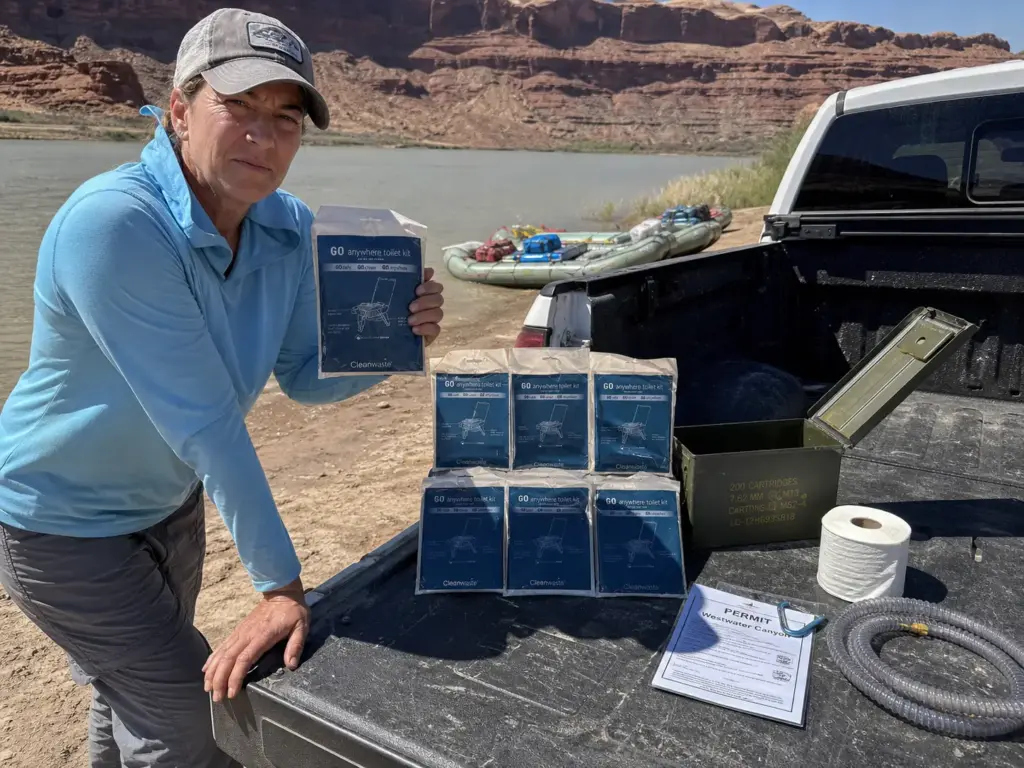
Bag systems still have a legitimate job, but they come with their own storage rule. Used kits have to ride in a hard-sided container or a heavy-duty waterproof bag labeled Human Waste. Tossing them in the dry bag with your spare shirt is not a gray area.
The Day-Use Rule Most First-Timers Miss
Between camps, most permitted reaches require a dry chemical or enzyme kit rather than the camp container, because nobody is unstrapping a rocket box for a lunch stop. The Cleanwaste WAG Bags Toilet Kit is the standard version of that rule: gelling agent, odor-control bag, paper and a wipe in one pouch, legal to drop in a dumpster at the end.
Buy these by the trip, not by the box. Crews consistently underestimate how many get used on a hot day when lunch runs long.
What Is Allowed in the Can
Feces, urine, and toilet paper. That is the entire list. No wipes, no tampons, no diapers, no trash, and this is regulation rather than etiquette, because every one of those items is what plugs a cleanout hose three weeks later at a dump station.
If you want the procedure side of this, we cover the full walkthrough of actually using one on the river separately. Worth remembering that the groover is one line on a longer river camping checklist, and it sits alongside the rest of the permit-required camp and kitchen kit you are already buying.
The Commercial Groover Systems Compared
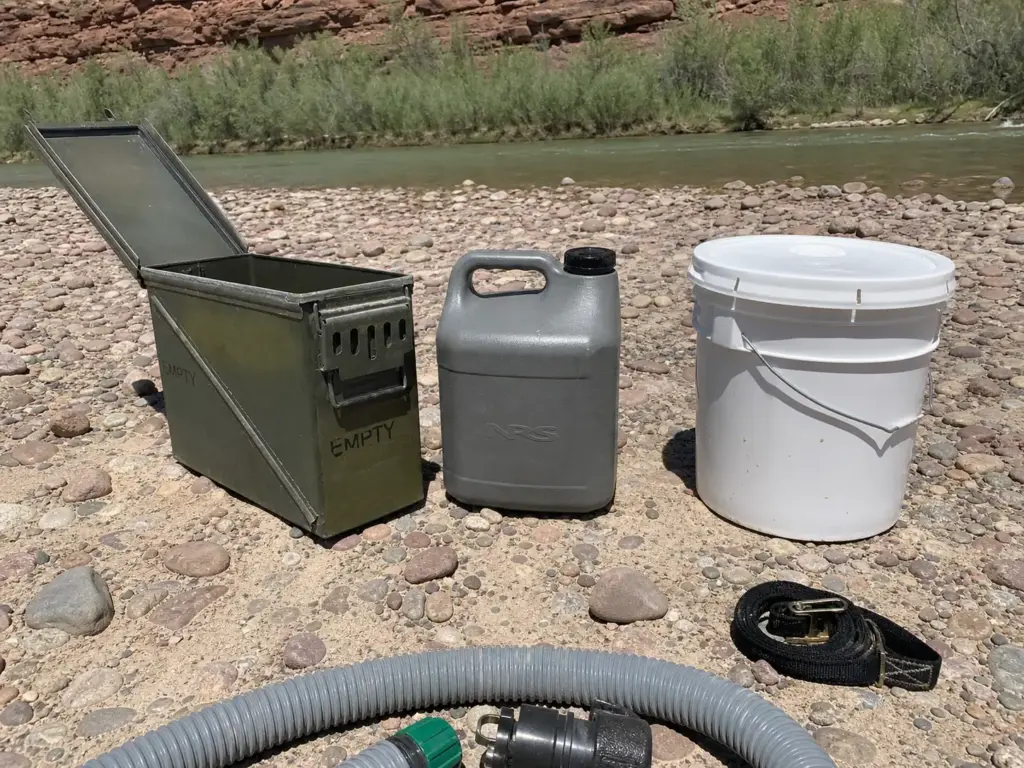
Everyone arrives at this category having heard three brand names and no framework. The framework is simple once somebody says it out loud: nearly every system on the market is a container riding inside a surplus 20mm ammo can, and the only real variables are what that container is made of and how much it holds. Complete commercial systems run roughly $250 to $1,100 depending on material and capacity, which is a wide enough spread that knowing the classes matters more than knowing the names.
The Rotomolded Plastic Class
The Eco-Safe Toilet System from Pacific River Supply defined this class and still anchors it. A crushproof rotomolded polyethylene tank rated around 50 uses drops inside a rocket box, with a 3-inch cleanout hose and a washout adapter, and it clears BLM, NPS and Forest Service requirements. The tank itself weighs about 3 pounds.
The Coyote portable toilet sits a step up inside the same class, in the 50 to 60 use range, which is worth knowing because the classes overlap more than the marketing suggests. What you are buying here is convenience at the dump. What you are trusting is a gasket seal. Plastic systems drain through a hose instead of being inverted, which is the difference between a two-minute job and a wrestling match.
The Aluminum Class
Selway Fabrication’s River Bank II is the aluminum benchmark, built in the 60 to 70 use class and compatible with a SCAT machine. An aluminum groover buys you volume without the steel weight penalty and it does not rust at the rim. It also sits at the top of the price range, and for a crew of six on a week-long trip that capacity is money you did not need to spend.
Two other names round out the real market: Jon-ny Partner from Partner Steel and SDG River Gear, both on the BLM’s own compatibility list. The same aluminum-versus-rotomolded argument plays out in dry boxes, for identical reasons.
Bare Steel and What It Costs You
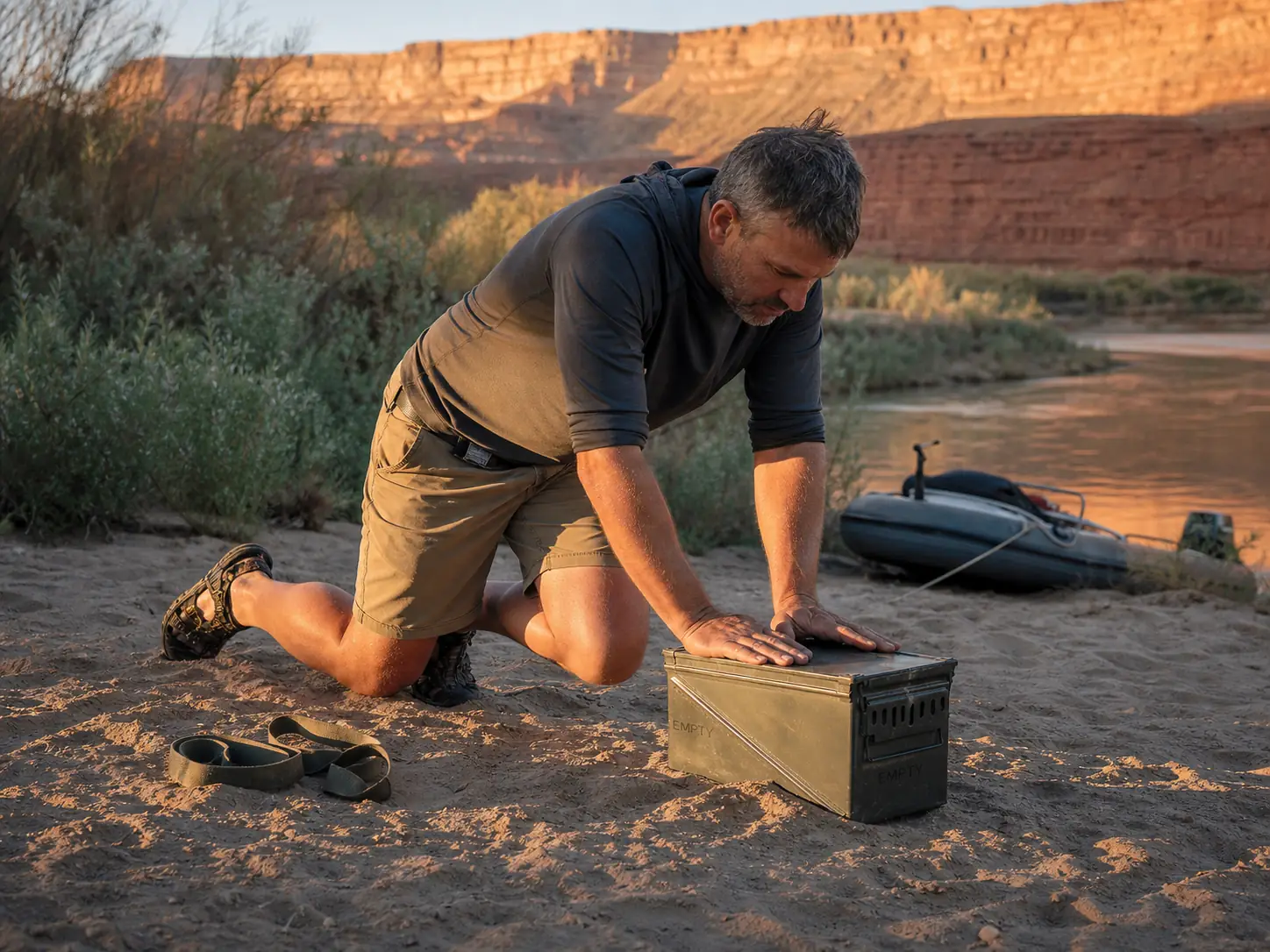
A surplus 20mm can runs about 20 to 21 pounds empty, with an M548 measuring roughly 18.6 by 8.5 by 14.6 inches. It survives being dropped on rock in a way no plastic tank does. It also rusts at the rim and holds whatever gasket you fabricate.
What to Read on the Spec Sheet
Four things decide whether a system works for you, and none of them are the brand: gasket quality, whether there is a pressure-release valve, cleanout hose diameter, and whether the unit nests inside a standard rocket box for transport. Single-wall versus double-wall matters for heat, and heat is what turns a sealed container into a pressure problem on a July afternoon in the desert.
The rated 50 uses printed on a spec sheet is not a universal number, and it is not the ceiling of the category. An open 20mm can holds more than a lined system in the same shell, because the liner steals volume. Boaters who assume the branded system is automatically the bigger one are reading the marketing, not the box.
Where the Groover Goes and How You Solve the Privacy Problem
Siting the groover is the one camp decision an entire crew remembers, and it has almost nothing to do with which system you bought. Veterans call the good ones thrones with a view for a reason. Get it wrong and you spend four nights listening to people complain about a smell that follows the evening breeze straight into the kitchen.
Downwind, Downstream, and Away From the Kitchen
Site it downwind, well off the kitchen, and away from the water source. The Park Service explicitly requires toilet articles stored separately from food, so this is not just camp courtesy. Give it a real walking route too, because the thing nobody plans for is the 2 a.m. trip across loose cobble with a headlamp and bare feet.
Privacy: Shelter, Terrain, or Neither
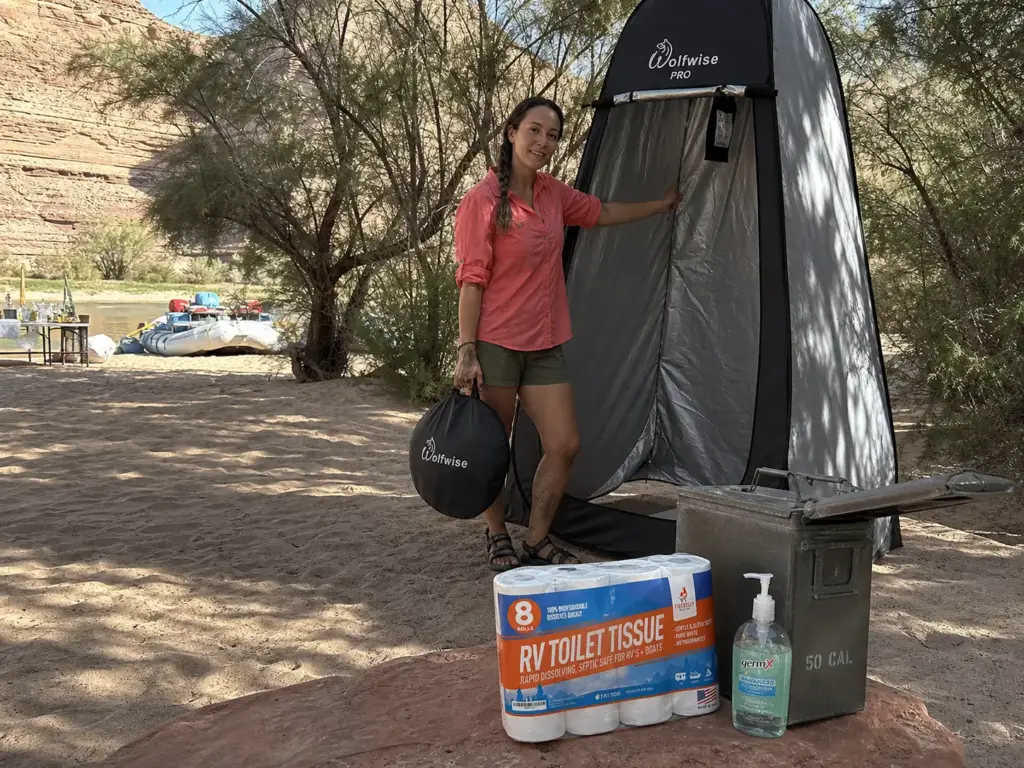
Privacy comes from one of three things: a privacy shelter, terrain, or nothing at all. Plenty of experienced groups run the third option and think the first is silly, which is a fair position on an empty beach and a terrible one on a crowded weekend. A WolfWise PRO Pop Up Shower Tent deploys in seconds and packs flat on the frame, but a tarp and two oars does the same job for free, and a boulder does it better than either.
This is also worth thinking through if your crew is mixed, since the privacy and logistics that hit differently for women on a multi-day trip start right here. A feminine urination device solves a real part of that, because a funnel device makes the pee bucket a standing option and removes the reason to walk off into the dark alone.
The Groover Key
The best system in the category costs nothing. A 50-cal ammo can holds the toilet paper and hand sanitizer, and it lives in camp when the groover is free. If the key can is gone, the groover is occupied, and that is the entire occupied signal. No door, no lock, no shouting across the beach.
What goes in that can matters more than people expect. Household toilet paper does not break down in a sealed tank and it is a documented cause of cleanout clogs, so rapid-dissolve septic-safe paper like Firebelly Outfitters RV Toilet Paper belongs in the key can from day one. And if you have ever wondered where a name like groover comes from, it is the two parallel grooves a bare 20mm rim pressed into your thighs, back before anyone thought to bolt a seat on.
Set the groover before you set the kitchen. Crews that unload food first end up siting the toilet in whatever space is left, which is usually too close to camp and upwind of dinner. The order of operations is the whole trick.
Cleanout, Odor Control, and the Sanitation Rules Nobody Enjoys
The takeout is where a groover decision gets graded. Everyone thinks about the buying and the camping, and almost nobody thinks about standing at a dump station with a line of RVs behind them and a container that does not fit the fitting.
SCAT Machine or RV Dump: Find Out Before You Buy
There are two cleanout paths and they are not interchangeable. Some takeouts have a SCAT machine, which pumps the can directly, and everywhere else you are looking for an RV dump station. A SCAT machine requires your container to physically fit and strap into the unit, which is a dimensional question with a yes or no answer.
The BLM’s Scoop on Poop guide for the Rogue River lists which systems actually fit a SCAT machine, and the list of SCAT-compatible containers is shorter than the catalog. This belongs in planning what happens at the takeout, not in the parking lot afterward.
Keeping It Semi-Liquid
The Park Service requires contents to stay in a semi-liquid state, and that requirement is doing real work. Add urine or river water as the trip goes on. A can that dries out becomes what boaters call a brown rock, which is exactly as unpumpable and undumpable as it sounds, and the usual way it happens is a container left in a hot garage for a month after the trip.
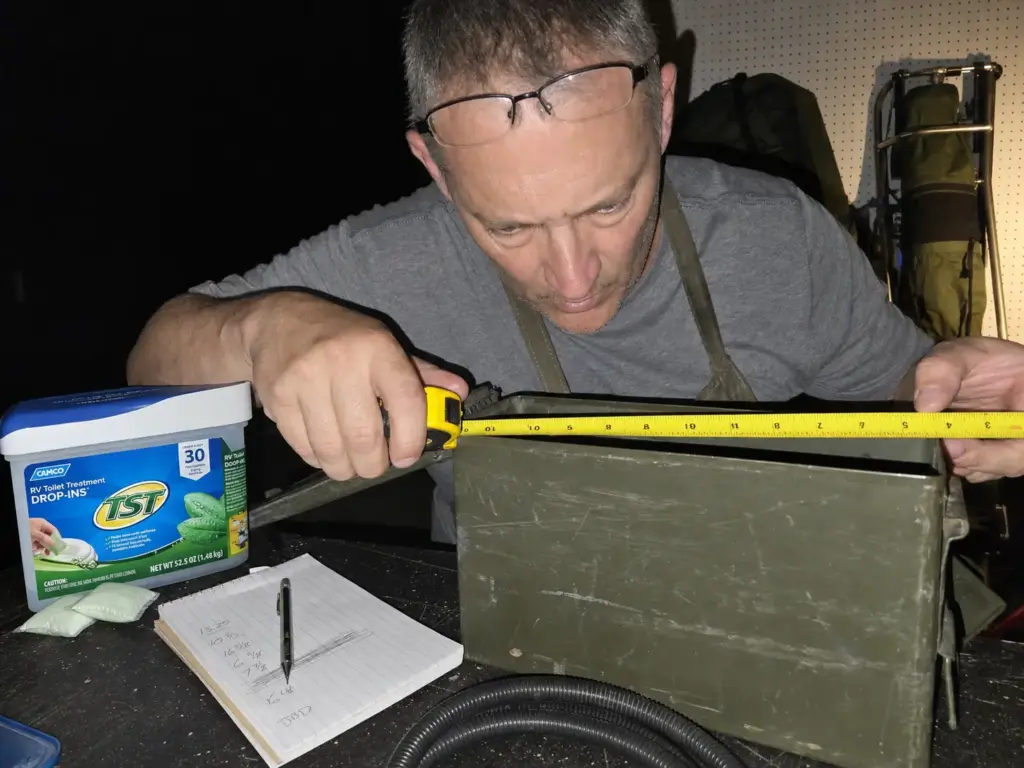
A septic-safe odor control additive like Camco TST RV Toilet Treatment breaks down waste and tissue without formaldehyde, which is what keeps the contents pumpable and what makes an RV-station dump viable at all. Dose them per the package instructions, and dump within days of takeout rather than whenever you get around to it.
The Handwash Station Is Not Optional
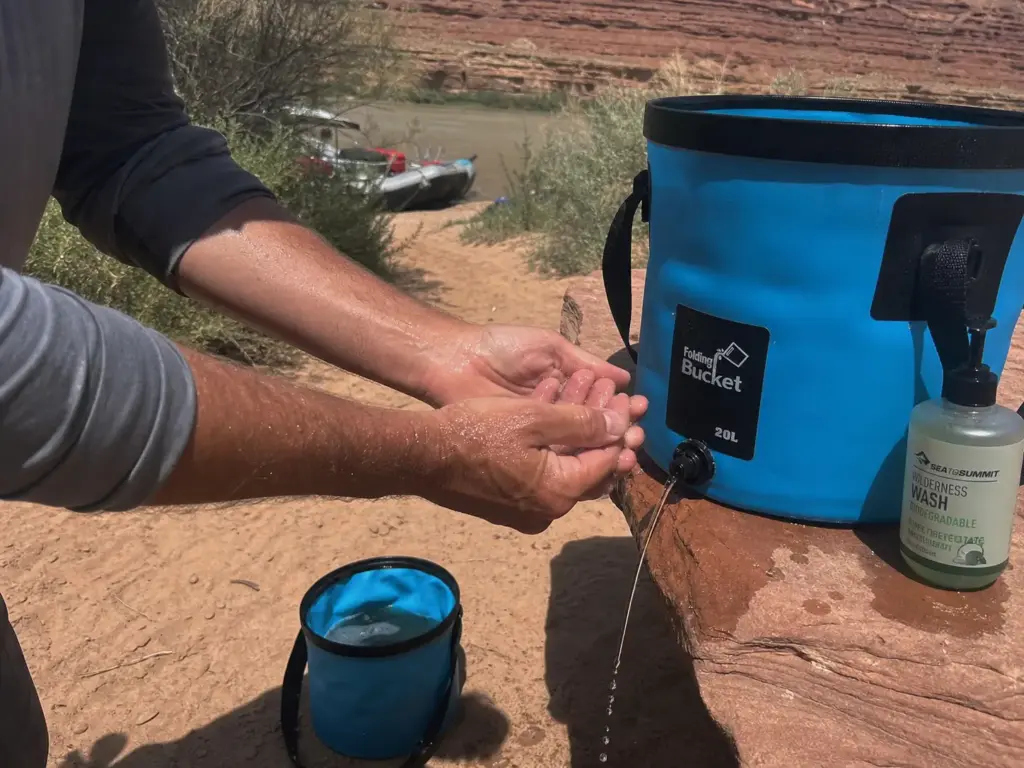
Handwashing is the norovirus firewall, and every authority source treats the wash station as mandatory rather than a nicety. It sits on the return path between the groover and camp, so nobody walks past it. A 5 Gallon Collapsible Bucket folds flat and costs almost no boat space, which removes the last excuse for skipping it.
Take that seriously, because a norovirus outbreak is a trip-ending medical problem and it moves through a camp faster than anyone expects. Norovirus prevention on the river is essentially one habit repeated at one station.
Sizing Your Groover With Math Instead of a Spec Sheet
Every guide in this category waves at about one use per person per day and moves on. Nobody runs the arithmetic with a real crew and real days, which is the exact moment a buyer needs help, because the difference between 42 and 63 uses is the difference between one container and two.
The Formula
Uses needed equals people, times river days, times uses per person per day. Run the multiplier at 1.0 for a standard trip and 1.5 for a conservative estimate on food-heavy menus or long permits. That second number is not paranoia. Long trips with real cooking produce noticeably more volume than a three-day run on sandwiches, and every experienced trip leader has watched it happen.
Two inputs get underestimated on a multi-day rafting trip and both of them push the same direction. First, the layover day, which reads as a rest day on the itinerary and behaves as a full day in the can. Second, the guests nobody counted, because a group size calculation done in March rarely survives to launch day intact. Run the number on the crew you might actually have rather than the crew on the permit application.
Two Worked Examples
Six people, seven days, at 1.0 gives you 42 uses. One 50-use can covers that, tight but fine. Take the same six people at 1.5 and you get 63 uses, which puts you over, and now you need a second can or an open 20mm setup rated in the 60 to 70 range.
Ten people times five days is 50 uses, which is exactly one full can with zero margin. Zero margin on day five of a trip is not a plan. Bring a backup bucket, or size up.
When the number comes back over, there are three moves and they cost wildly different amounts. Pull urine out with a separate bucket, which is the cheapest and biggest single change. Step up a capacity class, from a 40 to 50 use rotomolded tank to a 60 to 70 use aluminum or open steel setup. Or carry a second container, which is what most large groups end up doing anyway because it also gives you a spare when something fails mid-trip.
Most crews reach for the third option first and the first option last, which is backwards on both cost and boat space.
Measure Any Container in Cubic Inches
Here is the number that frees you from the marketing entirely: Canyonlands puts an actual figure on it, about 2,000 cubic inches of container per 50 uses, which works out to roughly 8.7 US gallons. Measure the box you are considering, multiply length by width by height, divide by 40, and you have its real use count regardless of what the tag says.
Run that on a surplus 20mm can and the result explains why the cheap option keeps winning capacity arguments on the ramp. Same math applies to sizing the whole trip, not just the groover, and it is the arithmetic that separates a smooth week from a rationed one.
A separate pee bucket pulls up to half a gallon and nearly 4.5 pounds per person per day out of the main container. That is the single biggest lever on the whole formula. Do the math again with urine removed and a crew that needed two cans usually needs one.
Building Your Own Rocket Box and Whether It Actually Passes
Everyone hears just use an ammo can from someone at the boat ramp, and nobody ever says whether that is real advice or ramp bravado. It is real advice. It comes with four caveats that nobody states, and one of them can end your trip at the takeout instead of the put-in.
Does a Bare Ammo Can Pass? Yes, Here’s the Agency’s Own List
The plain answer is yes. The BLM’s Scoop on Poop lists ammo cans alongside Eco-Safe, Selway, Jon-ny Partner and SDG as SCAT-machine compatible, in the agency’s own document. The Park Service standard is washable and reusable, with secure containment and adequate volume. A rocket box meets every clause of that, which is unsurprising once you notice that the commercial systems are containers designed to ride inside one.
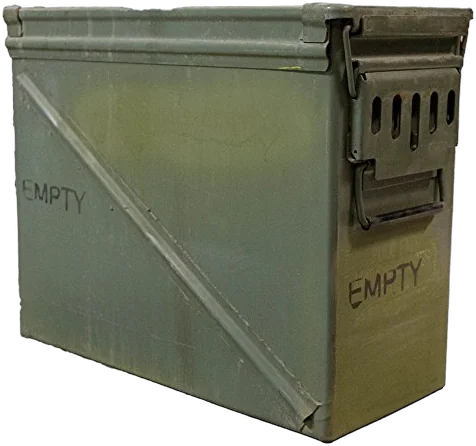
A surplus 20mm rocket box plus a snap-on seat is the whole build. Boaters add a gasket, a strap point and sometimes a bag liner, and that is where the project ends. There is no fabrication skill barrier here, which is why the advice circulates so freely.
The Four Caveats Nobody States
Caveat one: no cleanout hose. An open can drains by inversion, into a SCAT machine or over a dump station, and that is messier than draining through a 3-inch hose. Some dump stations will not accommodate it at all, which is a conversation you want to have before the trip.
Caveat two: the seal is on you. Steel rims rust and the gasket is whatever you fabricate. Inspect it before every trip and replace it the first season it goes stiff, because a seal that fails in the sun on day four is not a repair you make on a beach.
Caveat three: 20 pounds empty is real. That is dead weight before anything goes in it, and it lives low and centered on the frame the same way mounting a hard box to the frame works for a dry box.
Caveat four is the one nobody runs. Confirm your specific takeout has a SCAT machine, and confirm your can physically fits and straps into it. Call the office. Two minutes on the phone beats an hour of improvising at the ramp with a full container.
What It Costs Compared to a Complete System
A DIY build lands in the neighborhood of $100 to $200 all in, against the $250 to $1,100 range for a complete commercial system. That gap is real, but it is not the interesting part of the comparison.
The interesting part is capacity. An open 20mm can sits in the 60 to 70 use class, higher than the rotomolded systems, precisely because no liner is taking up space inside it. For a lot of crews the cheap answer is also the higher-capacity answer, which is not how gear categories usually work and is worth sitting with before you spend.
The Pee Bucket, the Backup, and the Budget End of the Category
Ask a veteran what one thing changed their groover experience and you rarely hear a brand name. You hear that they started using a pee bucket.
Why Urine Is the Capacity Problem
Urine is the biggest capacity thief in the container: up to half a gallon and nearly 4.5 pounds per person per day. Pull it out and you can effectively double how many days a can lasts, and you cut the smell dramatically at the same time, because the smell is mostly what is happening in the liquid.
Where the managing agency permits it, urine goes in the river. Dilution is the solution to pollution is the working principle, and it sits inside the wider Leave No Trace standard a river trip is held to rather than against it. Confirm the rule for your specific reach, because it is not universal and the exceptions are real.
The Backup Container
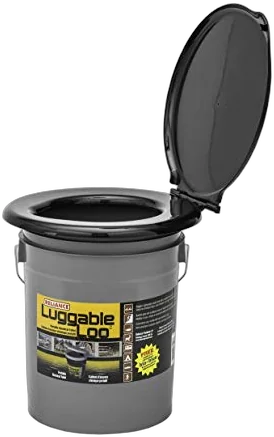
The Reliance Luggable Loo is a 5-gallon bucket with a snap-on seat and lid, and that is the entire product. It earns its space three ways: as the pee bucket beside the groover, as the emergency container if the main system develops a problem mid-trip, and as the place used day-tripper kits ride until takeout.
There is a fourth reason nobody puts in the catalog. A bucket in camp keeps people from wandering to the water’s edge in the dark after cocktails, which is the setup for most of the minor injuries that happen on a beach at night.
What a Bucket Is Not
State this plainly, because the internet keeps blurring it: a bucket with a seat is not a legal standalone camp groover on a permitted river. It does not meet the washable and reusable containment standard on its own, and no ranger is going to accept it as your system. It is the second container. Never the only one.
What Actually Fails on the River
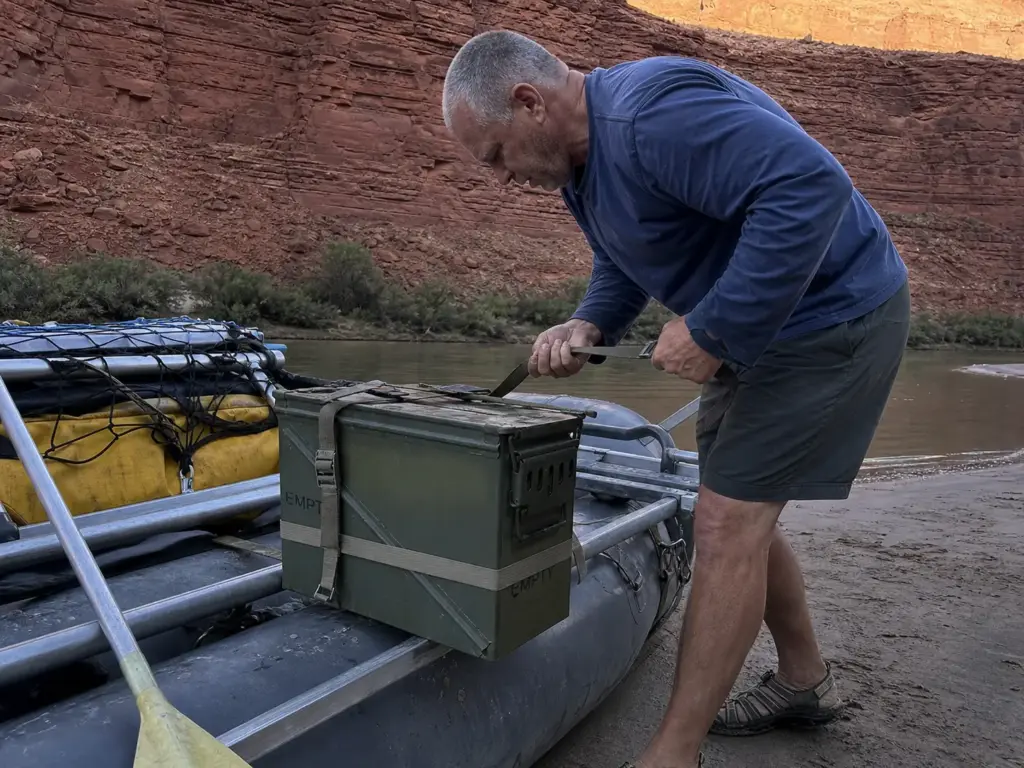
Nobody sells you a groover by explaining how it breaks. But every failure in this category traces back to a habit rather than a defect, which means every one of them is preventable for free.
The Hose Clog and the Wipes Rule
The signature failure has a name. The bulging blue snake is a cleanout hose plugged solid with baby wipes, swelling under pressure at the dump station, then leaking at the coupling in front of an audience. Wipes are the single most-cited cause of groover disasters in every forum thread on the topic, and they are already prohibited by the feces-urine-paper-only rule the Park Service mandates.
Prevention is a sentence at the put-in. No wipes in the can, ever, and put a trash bag next to the groover so there is somewhere else for them to go. The rule fails when there is no alternative container, not when people are being difficult.
Human Error at the Cap and the Lid
The one documented system leak that circulates in community threads traced back to whoever handled the can that morning rather than to any product defect. The cap was not seated. That is the whole story, and it is the whole story most of the time.
Fix it with a routine: the cap check belongs to the morning breakdown, done by the same person every day, the same way the same person always checks the frame straps. Lids matter for a different reason. A groover left open near camp for five minutes becomes a fly problem, and flies moving between the groover and the kitchen is exactly how norovirus gets into a group.
The slowest version of human error shows up weeks after the trip. A sealed can parked in a hot garage dries out into the brown rock, and by then it is nobody’s job because the trip is over and the gear got put away. That one is prevented by a calendar entry rather than a technique: dump it within days of the takeout, while the shuttle rig is still packed and somebody still remembers whose turn it is.
Strapping It Like It Matters
A loaded groover is a heavy sealed container riding on a boat that might flip, and the steel shell alone starts at around 20 pounds before anything goes in it. It gets strapped down the way everything else on the boat should be: two cam straps minimum, low and centered, gasket inspected before the trip rather than after the swim.
Treat it as rigging to flip, which is exactly how a loaded groover should be treated, and the worst case stays a recovery problem instead of a river-cleanup problem. The tell that a boat is rigged by someone who has flipped one is where the heavy hard gear sits: low, centered, and strapped through the frame rather than to a D-ring that was never load-rated for it.
Give the groover talk at the put-in. Ninety seconds: clean the seat, shut the lid, wash your hands, nothing but paper goes in. It prevents most of the trip’s sanitation problems, and experienced rafters are routinely the ones who leave it a mess, so give the talk to everyone rather than just the first-timers.
Buy for Your River, Not for the Review
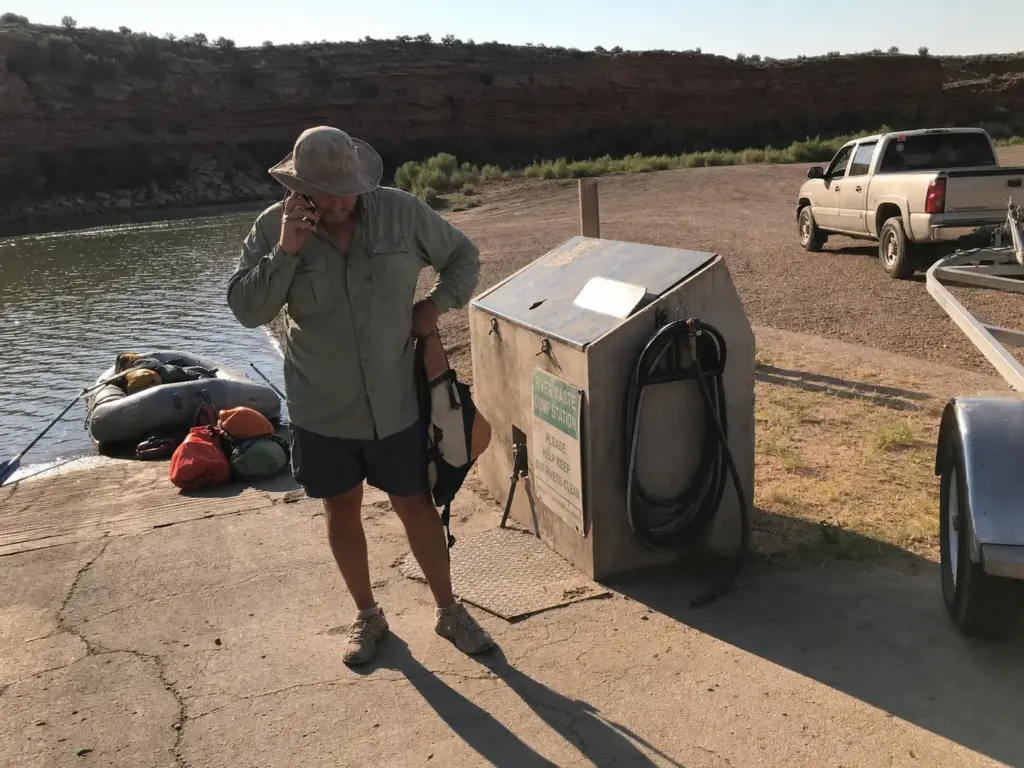
The reason gear reviews mislead in this category is that the right answer is regional. Two crews running identical trips on different rivers can need different containers, and the only way to know which one you are is to ask the office that issues your permit.
The Two Standards People Conflate
There are two separate requirements and readers routinely collapse them into one. First, a washable and reusable container for camp. Second, a dry chemical or enzyme bag system for day use between camps. Fail either and you are non-compliant with a boat full of gear, which is the most frustrating version of getting it wrong.
This is not a Western-permit quirk either. The same pack-it-out standard applies well outside the West, Rio Grande included, and the trend runs one direction as agencies pull vault toilets at backcountry units and push the waste management burden onto the private boater. The Grand Canyon, where these rules are strictest, is the ceiling rather than the exception.
The Two Questions to Ask Your Permit Office
Start by identifying your managing agency and unit: BLM district, NPS park, or USFS forest. That single fact determines which document governs you, and it is worth knowing early if you are looking at which permitted rivers you’re actually likely to draw. A BLM permit and an NPS permit can cover different stretches of the same river, so name the unit rather than the river.
Then call that specific office and ask two questions. Is a washable and reusable container required for camp on this reach? And is the cleanout at the takeout a SCAT machine or an RV dump station? If the answer is a SCAT machine, ask the follow-up: do the dimensions of my container fit and strap into your unit?
Then Buy to the Answer
Now the purchase is trivial. You know your required standard, you know your cleanout path, and you know your use count from the formula. Match those three against the three material classes and there is usually exactly one sensible option left.
That is the part gear reviews cannot do for you, because the reviewer is not running your river. The four agency documents behind this article make the point on their own: the BLM’s Rogue River guide, Canyonlands, Grand Canyon and Rio Grande do not say identical things about containers, volumes or cleanout. Read the one that governs your permit and treat the other three as context.
If the office gives you an answer that contradicts something you read online, the office wins. That sounds obvious written down and it is the single most common way boaters end up with a container that fails at the ramp, because a forum thread about a different river is still the easiest information to find.
Conclusion
Three material classes, one capacity formula, two standards to satisfy. That is the whole category once you strip out the brand arguments, and everything else is a detail that follows from your river and your crew size.
The honest close is that the expensive aluminum unit is the right call for big groups on long permits and overkill for six people on a week-long trip, and for a surprising number of crews the surplus rocket box is both the cheapest answer and the higher-capacity one. Run the formula on your actual people and your actual days, then call the permit office and ask the two questions. And if this is your first private trip, make the groover the first thing you sort out rather than the last, because it is the one piece of the kit that can stop a launch.
Frequently Asked Questions
01What is a groover toilet?
A groover is the portable, washable, reusable toilet system a permitted river trip carries in the boat and packs out at the takeout. The name comes from the two parallel grooves the rim of a bare 20mm ammo can pressed into your thighs, back before anyone bolted a seat on top. The seat arrived later; the name stuck.
02What is the best camping toilet on the market?
There is no single best camping toilet, and any guide that names a winner is skipping the part that actually decides it. The right container depends on your group size, your river days, and whether your takeout has a SCAT machine or an RV dump station. Pick the material class, run the sizing formula, then buy.
03What is the best toilet for a boat?
For a raft, the rotomolded tank riding inside a 20mm rocket box is the strongest all-around arrangement on the water. The tank runs around 3 pounds, it is crushproof, the shell straps to a frame, and it drains through a hose instead of being inverted. A bare rocket box is the higher-capacity, lower-cost alternative.
04What is the best type of toilet for an RV?
Different vehicle, overlapping supply chain, which is exactly why river boaters end up buying RV-grade consumables for their groover systems. Septic-safe drop-in treatments and rapid-dissolve RV toilet paper are the correct products for a groover, and an RV dump station is one of the two legal cleanout paths at the end of a trip.
05Can you pee in the river instead of the groover?
On many permitted reaches, yes, and keeping urine out of the container is the single biggest capacity gain available to you. Dilution is the solution to pollution is the working principle behind it, and the effect on how long a can lasts is dramatic. It is not universal, so confirm the rule with the office that issued your permit.