
In this article
Your buddy shows up at the put-in with a $120 box-store kayak, all shiny translucent vinyl, and you already know how the day is going to end. First real wave train, the thing folds like a wet taco, fills to the gunwales, and now two people are chasing a half-sunk boat downstream while everyone else eddies out to watch. I’ve seen it happen more than once, and it’s always the same boat. The honest truth nobody selling kayaks says out loud is that most of the inflatable kayaks you’ll find first are lake furniture, not river boats — and the handful that actually run moving water are worth every dollar of the gap. Below is which inflatable kayaks hold a line on real rivers, what separates them from the pool toys, and how to spend smart instead of spending twice.
Here’s the short version — the boats we’d actually put a friend in, matched to the kind of water they’re buying for.
| Model | Best For | River / Class | Price Tier |
|---|---|---|---|
| AIRE Tributary Tomcat Solo | Best overall river boat | Class III–IV | Mid |
| NRS STAR Viper | Hard-shell-like handling | Class III–IV | Premium |
| AIRE Tomcat Tandem | Two paddlers | Class III–IV | Mid |
| Sea Eagle 393RL | Gear-hauling river days | Class I–III | Mid |
| Intex Excursion Pro K2 | Budget flatwater starter | Class I | Budget |
What Separates a River IK From a Pool Toy
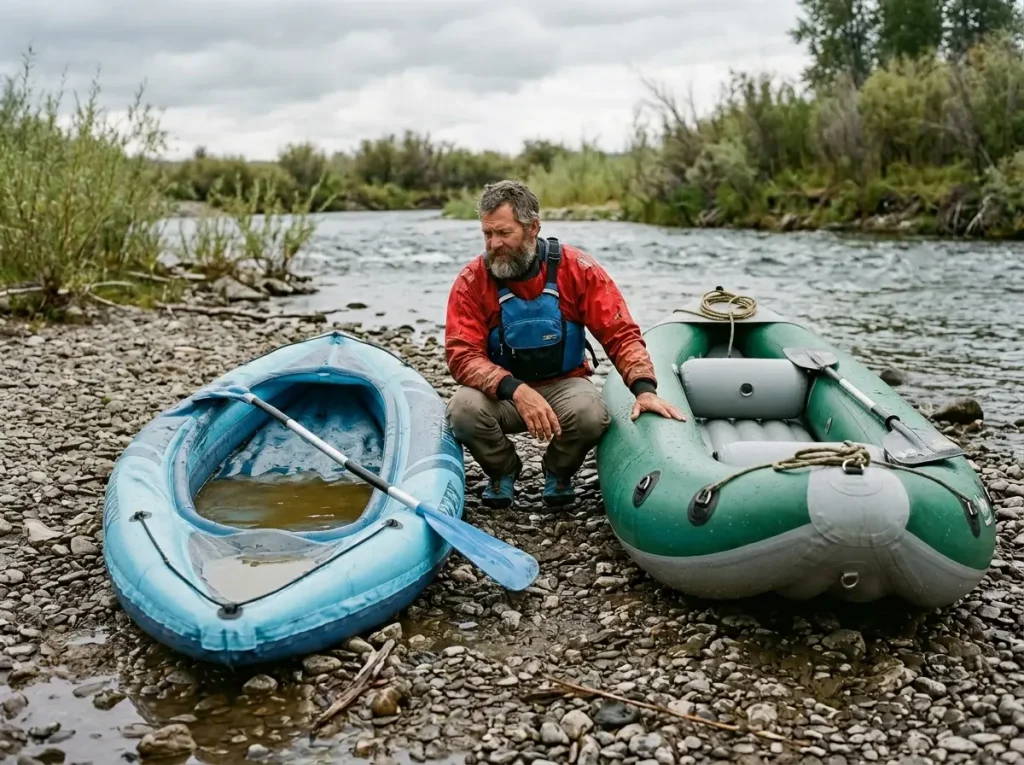
Walk into this purchase knowing one thing: the inflatable kayak market is split clean down the middle, and the two halves barely belong in the same conversation. On one side you’ve got real river boats built to bounce off rock and shed water. On the other you’ve got vinyl float toys designed for a calm pond and a cold drink. They both say “inflatable kayak” on the listing. Only one of them belongs on moving water.
The reason this matters is money and skin. Buy the wrong one and you’re not just out the cash — you’re swimming a rapid you had no business swimming, chasing gear, and learning the hard way what a self-bailing floor is for. Let’s draw the line clearly so you can shop without getting burned.
The $120 Amazon Kayak Trap
The cheapest inflatable kayaks on Amazon are genuinely tempting, and that’s the trap. A hundred and twenty bucks for a two-person “explorer kayak” feels like a steal next to a boat that costs ten times that. What you’re actually buying is a single chamber of thin vinyl with a flat floor that sits flush with the water, no drainage, and seams that are glued instead of welded.
On a warm flat pond, that boat is fine. I mean it — fine. Put it on a river with any current and the story changes fast. The thin vinyl scrapes open on the first sharp rock, the flat floor means every wave that comes over the side stays in the boat, and within one wave train you’re sitting in a swamped tub that won’t steer. The boat becomes the hazard, not the rapid.
What the Price Gap Actually Buys You
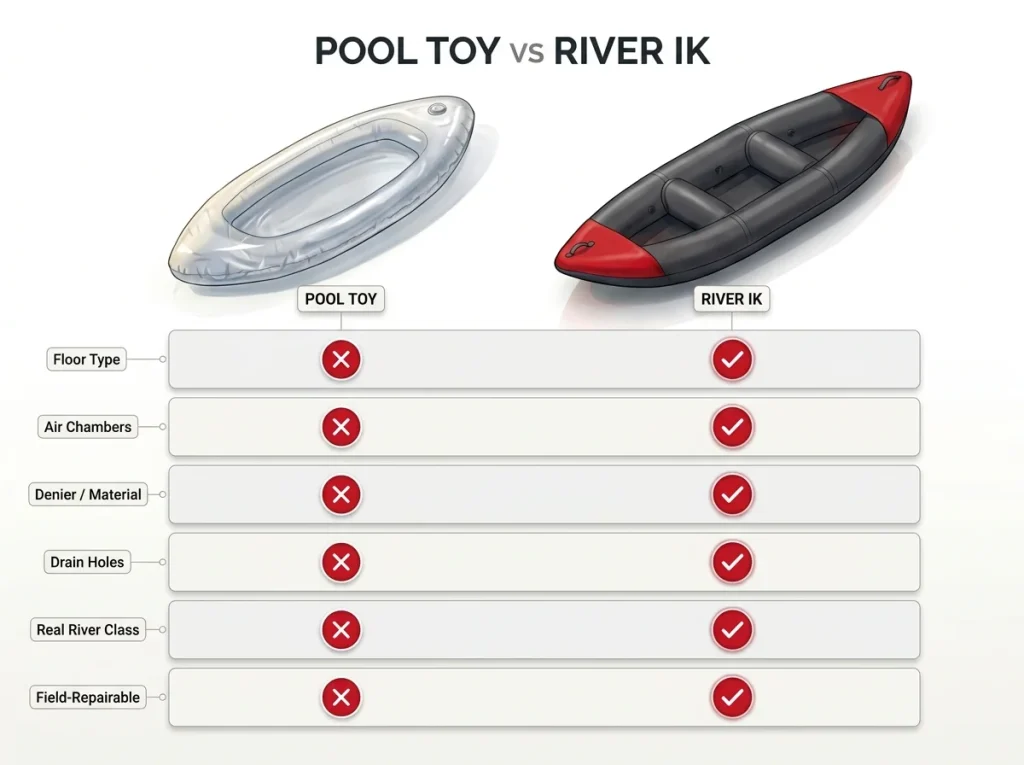
That gap between a vinyl toy and a real river inflatable kayak isn’t brand markup. It’s construction you can feel. A river-worthy boat uses welded 1000-denier PVC or Hypalon, multiple independent air chambers, a raised self-bailing floor, and on the good ones a replaceable inner bladder so a pinhole is a cheap fix instead of a dead boat.
Multiple chambers mean a single puncture doesn’t sink you — you limp to shore on the others. Welded seams mean the boat doesn’t unzip along a glue line when it flexes in a hole. The self-bailing floor means the boat empties itself while you keep paddling. None of that exists on the cheap end, and all of it is the difference between a boat that runs Class III and one that folds in Class I.
How to Spot Lake Furniture in a Product Photo
You can usually call it from the listing photos before you ever read a spec. Look at the floor first: if it sits flush with the bottom of the tubes and there are no drain holes punched around the perimeter, it’s not self-bailing, and it’s not a river boat. Look for language too — “ideal for calm lakes and mild rivers,” “2 to 3 mph,” or a weight that’s suspiciously light for the size.
One big air chamber instead of three or four is another tell. So is a price that seems too good, a vague “heavy-duty vinyl” with no denier number, and a paddle that looks like it came free in the box. Real river inflatable kayaks list their denier, their chamber count, and their drain configuration because those specs are the whole point.
Our Picks for Every Kind of River Day
Here’s where the rubber tube meets the rock. These are the boats we’d actually rig and run, sorted by the kind of river day you’re buying for — not by which one pays the best commission. If you’re still weighing an inflatable kayak against a full-size whitewater raft, our guide to the best whitewater rafts for every river covers that side of the decision in depth; this page is for the paddlers who already know they want a ducky.
A quick note on how to read these: “best overall” doesn’t mean “most expensive.” It means the boat that does the most things well for the most people. Match the pick to the water you run most, not the gnarliest thing you’ll do once a season.
Buy the boat with replaceable-bladder construction when you can swing it. On an AIRE, a pinhole in the inner bladder is a ten-minute inner-tube swap at the take-out, not a trip-ending leak. That’s the quiet reason these boats are still on the river twenty years after someone bought them.
Best Overall — AIRE Tributary Tomcat Solo
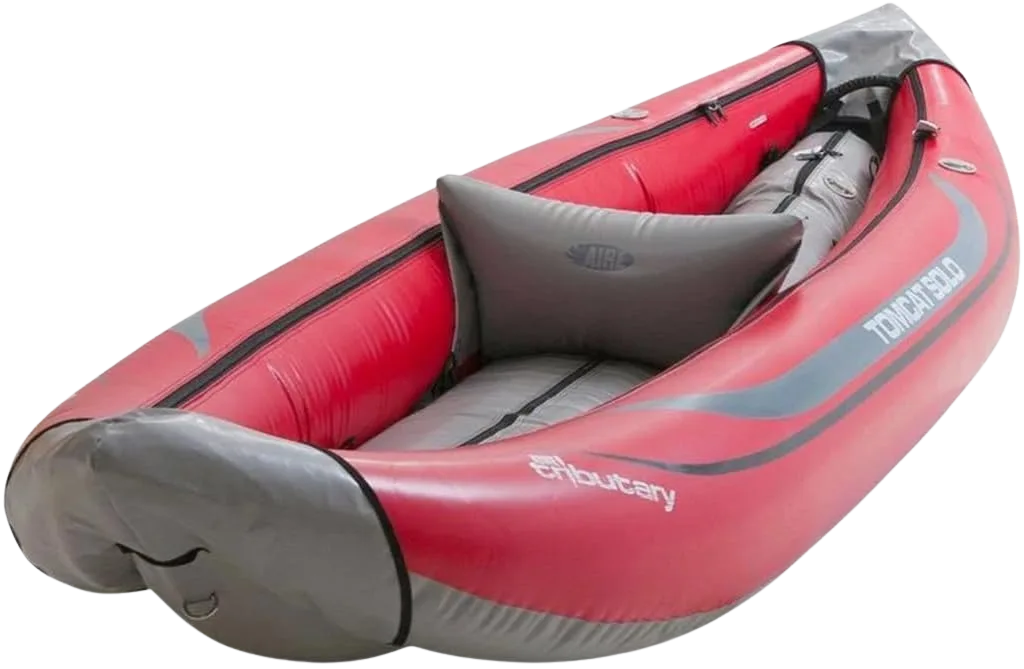
The AIRE Tributary Tomcat Solo earns its “best overall” tag the boring way: by being the boat that keeps showing up at take-outs decade after decade. At 10’3″ and 34 pounds, one person can wrestle it onto a roof rack and off again without a second set of hands. The 1000-denier PVC shell shrugs off the rock contact that would open a vinyl boat, and the self-bailing floor means a swamped run drains itself instead of turning into a bailing chore.
What really sets AIRE apart is the Aircell construction — an inner urethane bladder inside an outer PVC shell. If you pinhole the bladder, you swap it like a bike tube instead of trashing the whole boat. That’s why guides and private boaters keep these in service for twenty-plus years. It’s more boat than a pure flatwater paddler needs, and it’s exactly enough boat for someone who wants to grow into Class III without buying twice.
Best Tandem — AIRE Tributary Tomcat Tandem
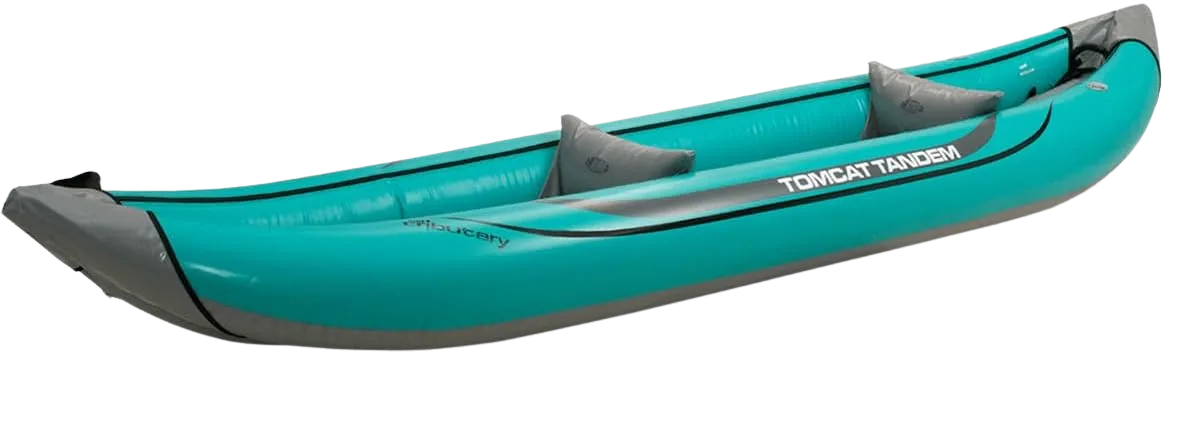
If you paddle with a partner, a kid, or a dog, the AIRE Tributary Tomcat Tandem is the one. It takes everything that makes the Solo trustworthy — welded 1000-denier PVC, three independent chambers, a self-bailing floor — and gives you room for two. Two people punching the same wave train put a lot more water in the boat, and the self-bailer is what keeps that from becoming a problem.
The honest catch with any tandem is that two paddlers have to actually paddle together, and the boat is heavier to carry and to car-top. But for couples, parents teaching a kid to read water, or anyone who wants a single boat that flexes between solo-with-gear and two-up, this is the most forgiving way to do it.
Best for Bigger Paddlers — AIRE Tributary Tomcat Max
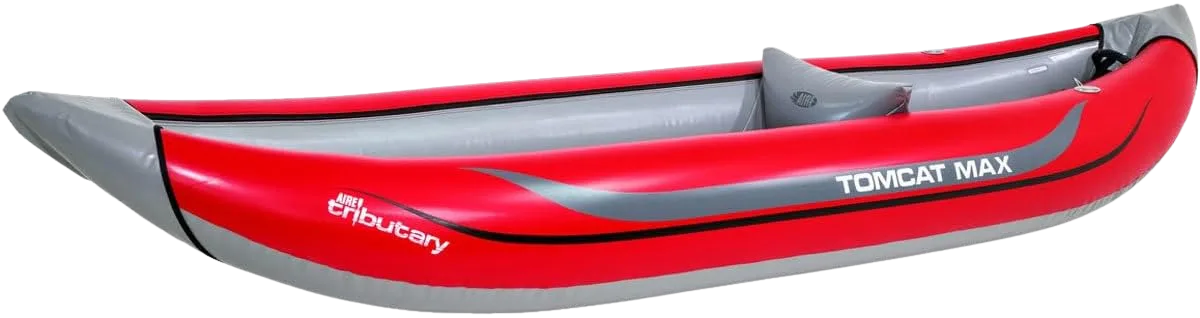
Plenty of good boats get ruled out for one dumb reason: the paddler doesn’t fit. The AIRE Tributary Tomcat Max fixes that without making you compromise on river performance. It’s the Tomcat hull with more volume and legroom, so taller and heavier paddlers get a boat that floats them properly and doesn’t fold them into a pretzel for a day on the water.
A boat that fits is a boat you can actually brace and edge in. If you’ve ever rented a ducky that left your knees up around your ears, you already know how much fit changes your control. The Max is the easy call for anyone the standard solo just doesn’t accommodate.
Best Whitewater Performance — NRS STAR Viper
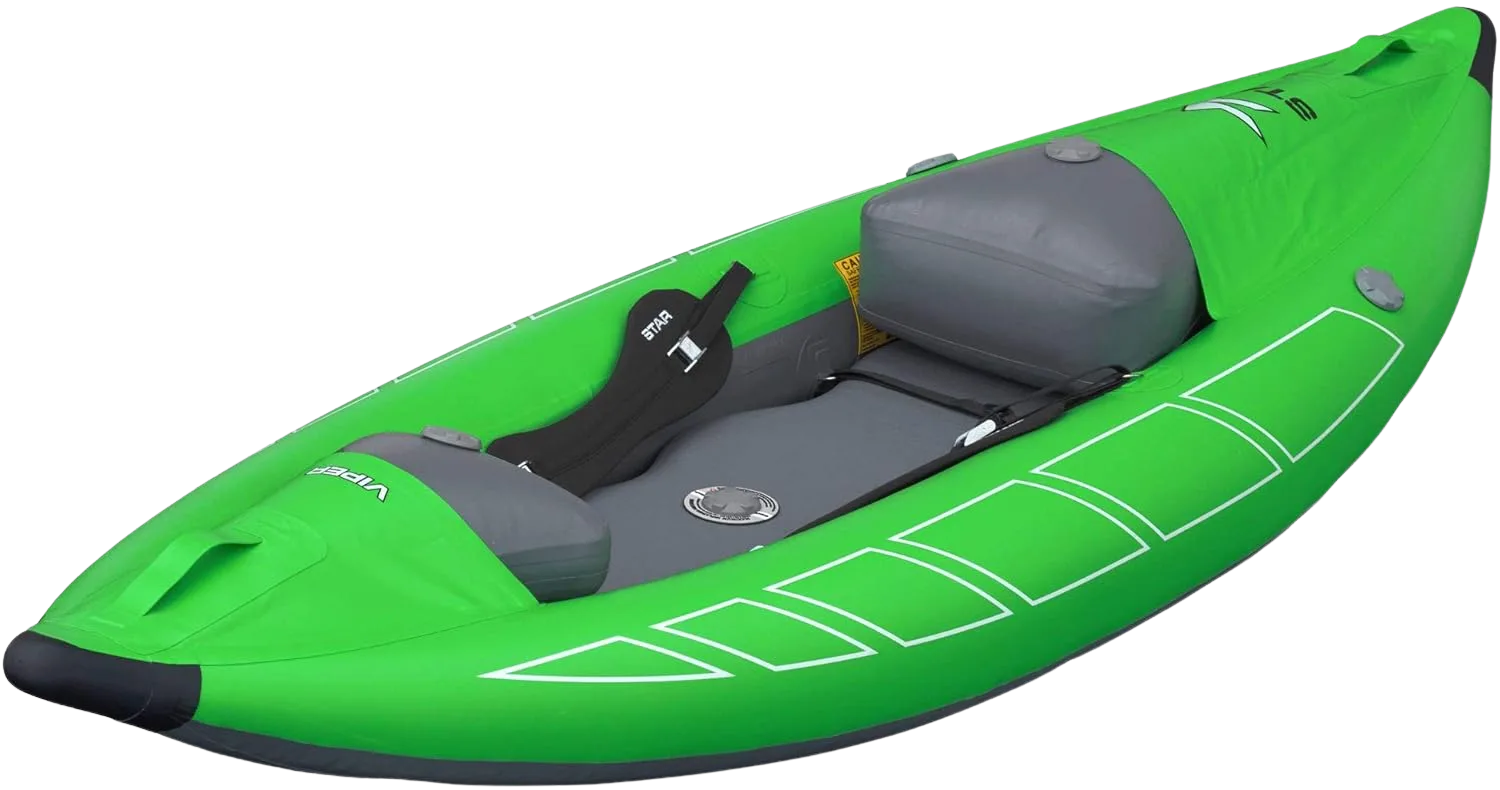
The knock on inflatable kayaks has always been that they wallow — soft, slow, and vague compared to a hardshell. The NRS STAR Viper is the answer to that complaint. Its 4-inch drop-stitch floor inflates to 8–10 PSI, which makes the whole boat stiff enough to track straight, hold an edge, and even surf a wave instead of just bobbing through it.
That stiffness is the difference between a boat that goes where you point it and one that argues with you in current. The Viper sits at the premium end of the range, and it’s more than a first-timer needs. But for a paddler who’s outgrowing a rec boat and wants something that performs when the water gets pushy, it’s the inflatable that feels closest to the real thing.
Best Whitewater Packraft — Kokopelli Recon Self-Bailing
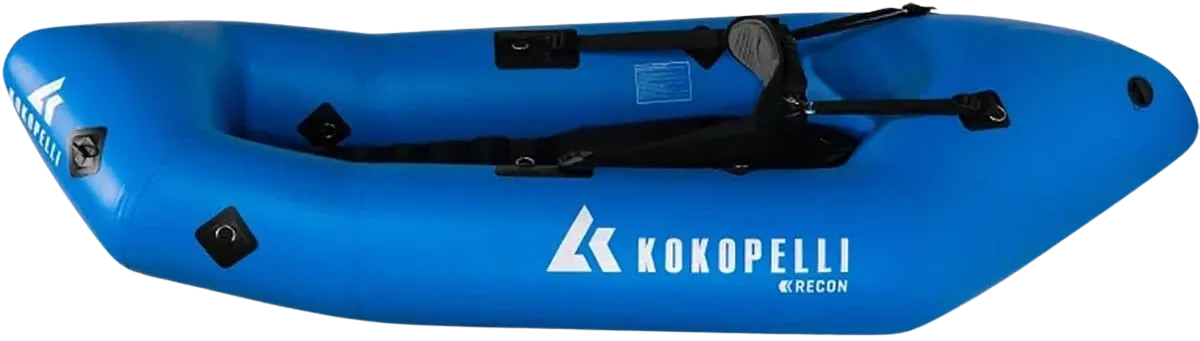
Not every river starts at a road. If your idea of a good day involves hiking past the crowds to a stretch nobody else bothers with, the Kokopelli Recon is the boat that gets you there and back. It’s a true self-bailing packraft, rated for Class III–IV, that still rolls up small enough to ride in a pack on the walk in.
A packraft is a different animal from a full-length ducky — shorter, slower on flatwater, but unbeatable when portability is the whole point. If you’re cross-shopping packable boats more broadly, our breakdown of the best packrafts for every river and trip digs into the deck types and denier that separate them. For burly hike-in whitewater, the Recon is the one we’d carry.
Best Budget Packraft — Advanced Elements PackLite+
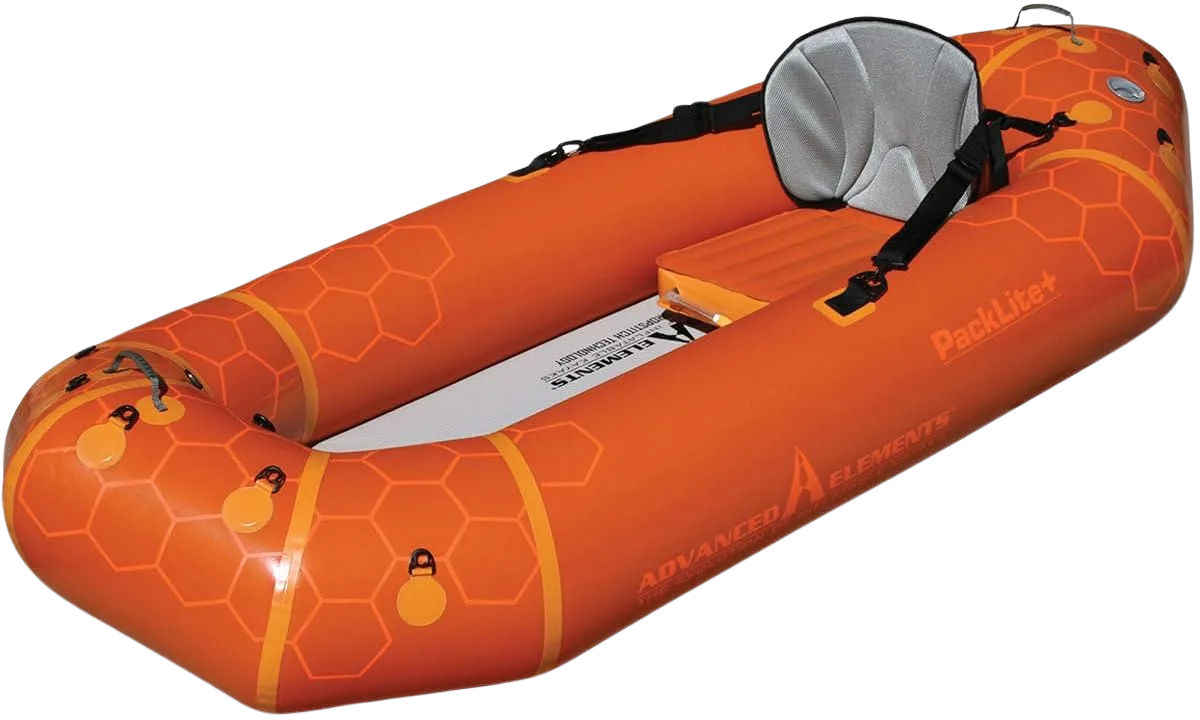
If the Kokopelli Recon is more boat and more money than your floats call for, the Advanced Elements PackLite+ is the honest budget alternative. It’s ultralight, packs down to almost nothing, and lives happily in the trunk for the day a calm river or a warm flat stretch shows up unexpectedly.
Be clear about what it is, though. This is a flatwater and gentle-moving-water boat, not a whitewater packraft. Take it on a mild stretch and it’s a joy to carry; take it into real rapids and you’ve bought the wrong tool. Within its lane, it’s a lot of convenience for very little money or weight.
Best for Gear-Hauling — Sea Eagle 393RL
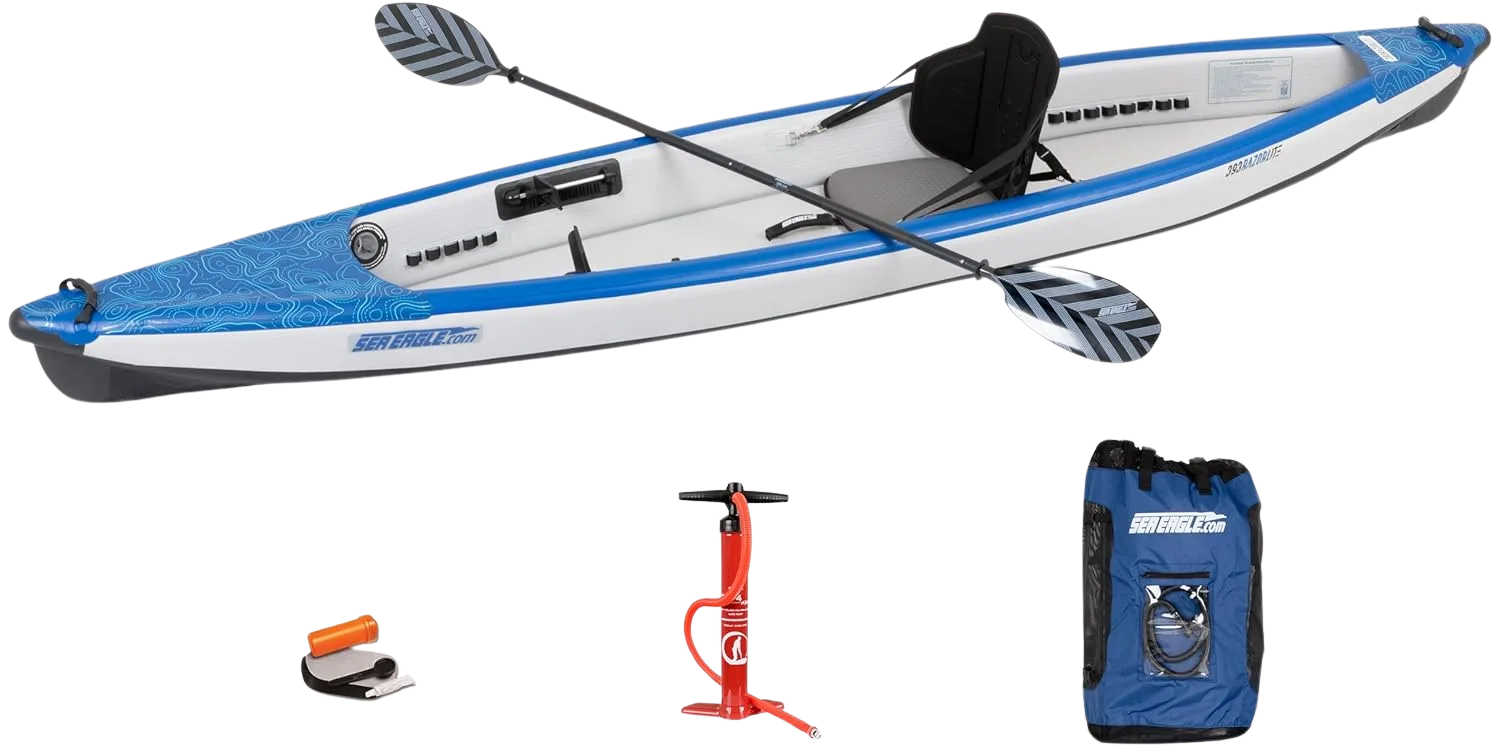
For overnight river trips and gear-heavy days, length and capacity win. The Sea Eagle 393RL brings a long touring hull and a 500-pound load rating, which is enough for a paddler, a week of dry bags, and a cooler that actually holds ice. The longer waterline also means it tracks better than a stubby rec boat, so you’re not correcting your line every other stroke on the flats between rapids.
It’s a drop-stitch, self-bailing design, so it stays rigid and drains itself even when it’s loaded down. This isn’t the boat for steep, technical Class IV — it’s the boat for moving-water multi-day trips where you need to carry your life for a few days and still keep up with the group.
Best Drop-Stitch Value — Aqua Marina Tomahawk Air-K
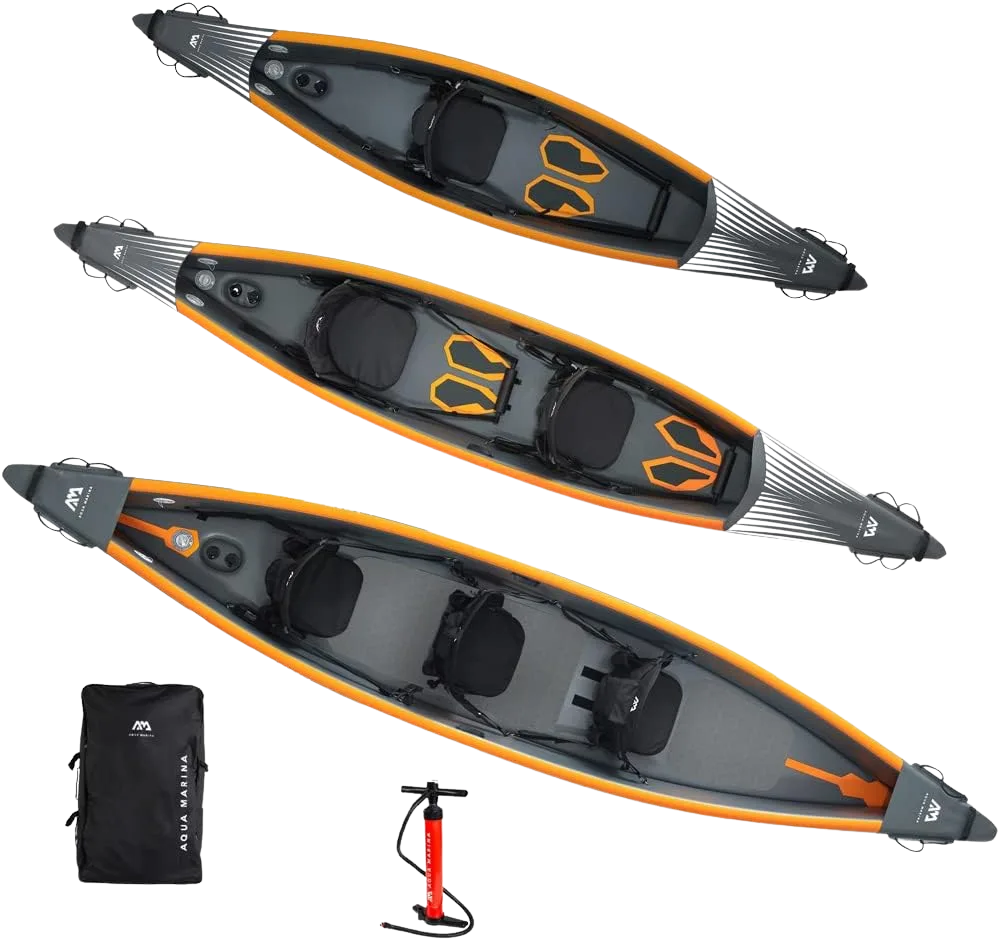
If the NRS STAR Viper’s stiffness sounds great but the price doesn’t, the Aqua Marina Tomahawk Air-K is the value path to a rigid drop-stitch boat. You give up some toughness and outright whitewater capability compared to the premium boats, but you get that tracks-straight, holds-an-edge feel that soft rec boats never deliver.
It’s at its best on easy whitewater and moving water, where the rigidity actually pays off and the lighter-duty build isn’t getting hammered on rock. For a newer paddler who wants to feel what a stiff floor does without committing premium money, it’s a smart place to start.
Best for River Fishing — BOTE Zeppelin Aero 10′
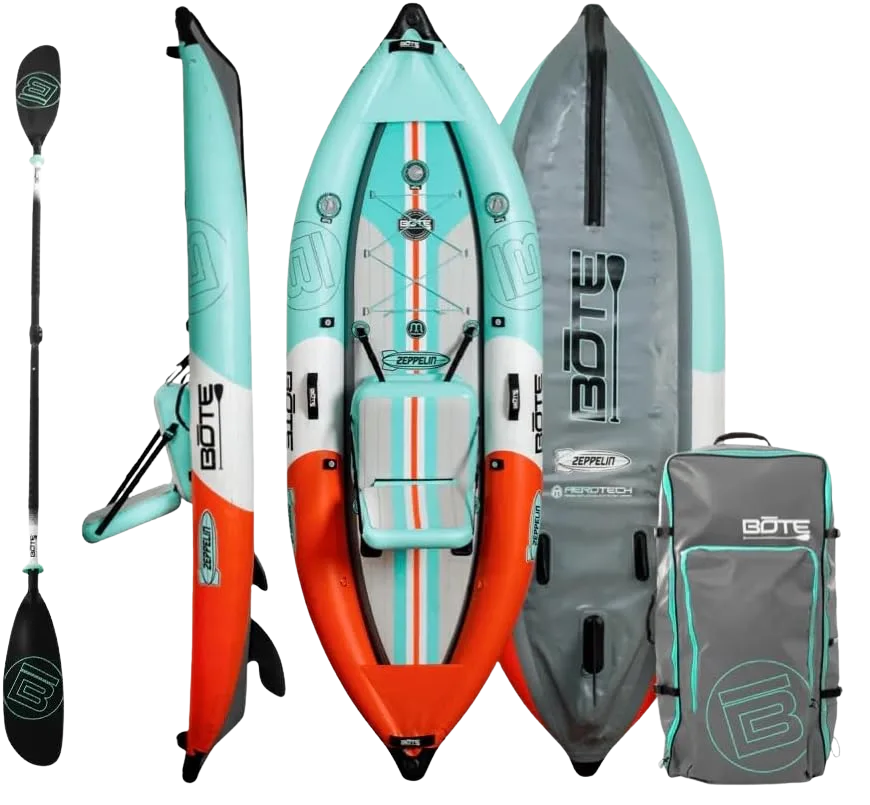
Anglers want a different boat than whitewater paddlers, and that’s fine. The BOTE Zeppelin Aero 10′ is built around stability so you can stand or lean to cast without pitching into the river. It shines on easy water — drifting a bank, working a slow run, parking in an eddy to fish a seam.
What it is not is a rapids boat. Take it on gentle moving water and it’s a comfortable, accessory-friendly fishing platform. Push it into real whitewater and you’ve asked it to do a job it wasn’t designed for. For the paddler whose river days revolve around a rod instead of a wave train, it’s the right call.
Best Budget — Intex Excursion Pro K2
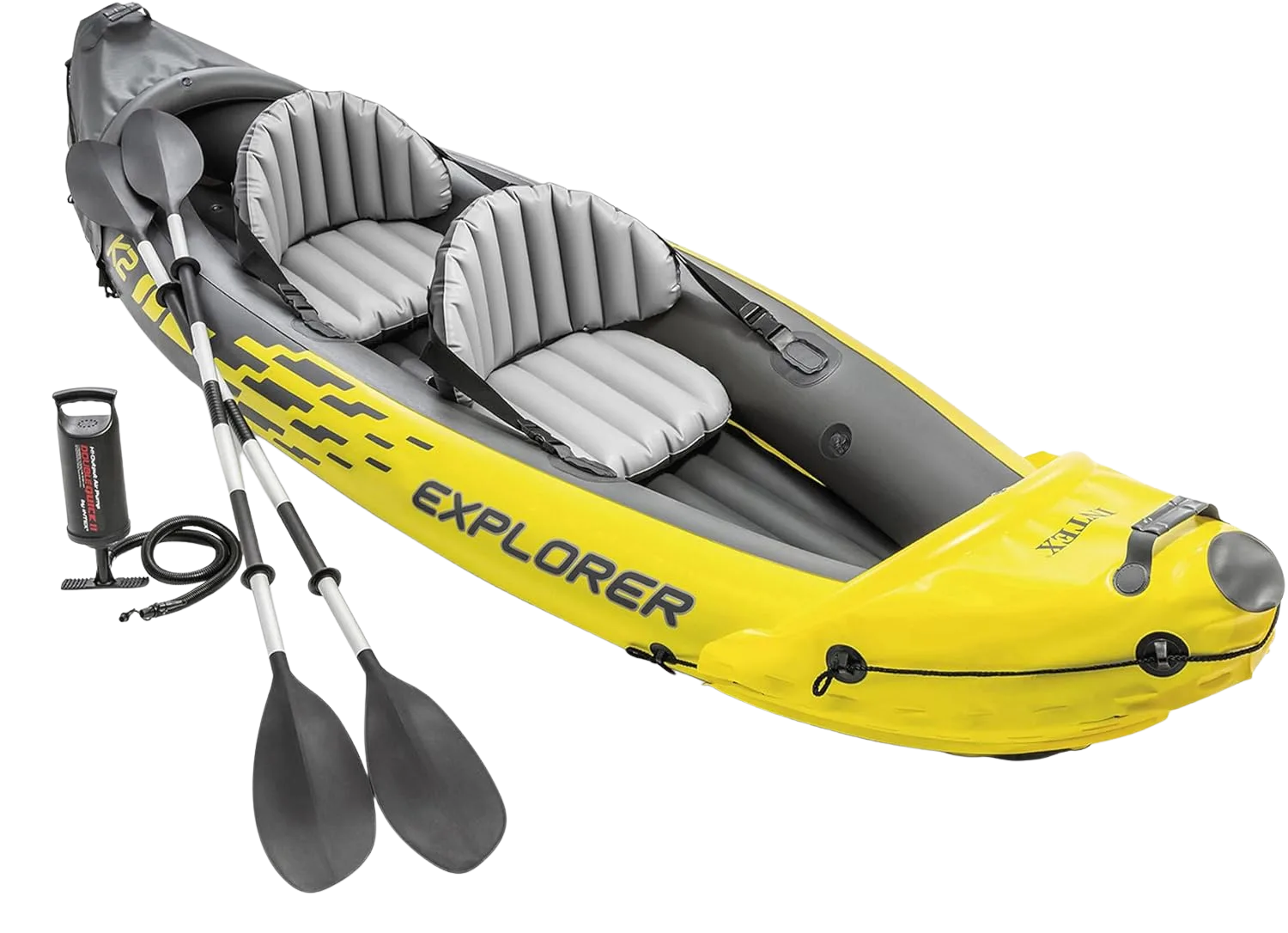
I’ll be straight with you about the Intex Excursion Pro K2, because most roundups won’t. As a cheap way to float a warm, flat river or a lazy Class I stretch with a friend, it’s honestly fine. It’s the best of the budget tandems, it’s tougher than the dollar-store stuff, and it gets two people on the water for the price of a tank of gas and a pizza.
But it is the boat from the put-in story at the top of this page. It has no self-bailing floor, it’s not built for rock, and it swamps and stays full the moment it sees a real wave. Buy it knowing exactly what it’s for — a calm, warm float — and it’ll serve you well. Buy it thinking it’ll grow into whitewater and you’ve bought the wrong boat twice.
Self-Bailing Floors and Why They Matter on Moving Water
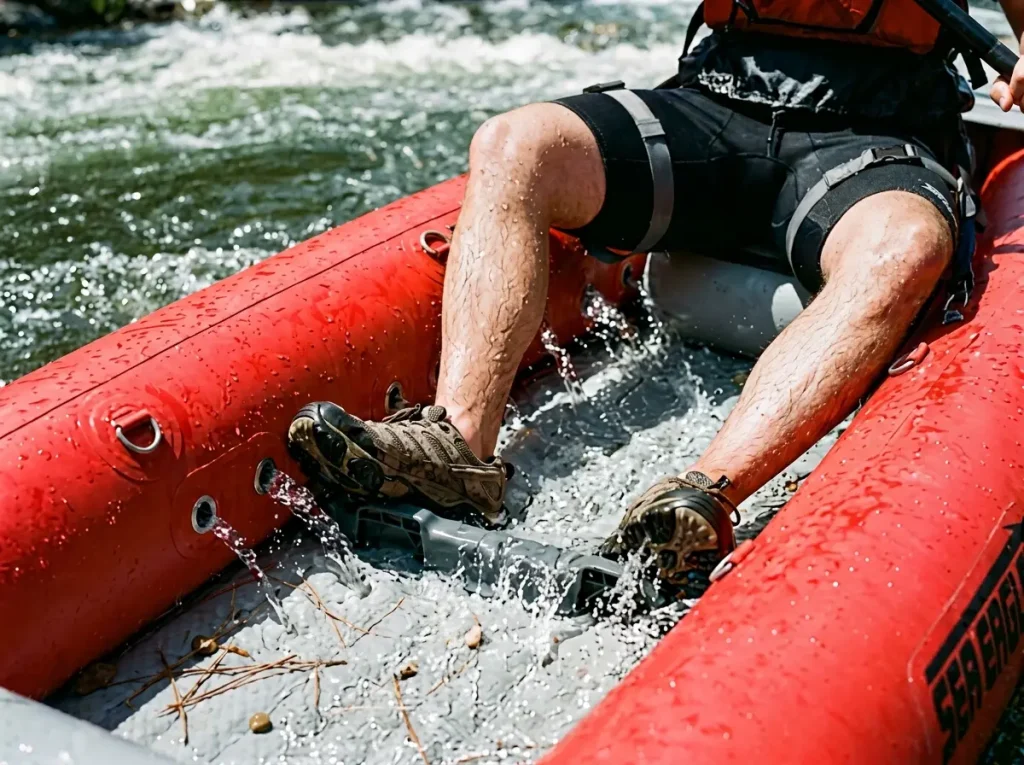
If you remember one piece of jargon from this whole page, make it self-bailing. It’s the single feature that most cleanly divides river boats from lake boats, and it’s the one competitors mention in passing without ever telling you why it matters. So let’s actually get into it, because it’s the thing that keeps you paddling instead of swimming.
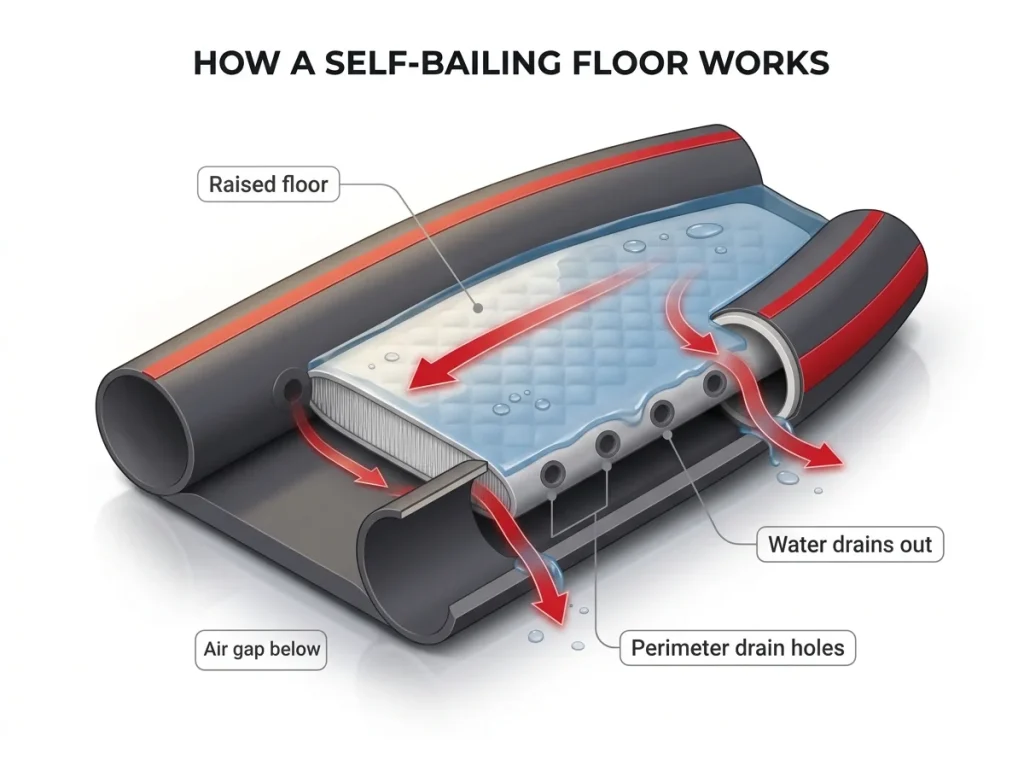
How a Self-Bailing Floor Works
A self-bailing floor is an inflated deck that sits a few inches above the bottom of the boat, with drain holes punched all the way around the perimeter where the floor meets the tubes. When water comes over the side — and on a river, it will — it lands on the raised floor and immediately runs off through those holes, back into the river where it belongs. As river outfitters explain, a self-bailing floor drains a swamped boat in seconds without you lifting a finger.
That’s the whole trick, and it’s genuinely elegant. You take a wave to the chest, the boat fills, and three seconds later it’s empty again because the floor is higher than the waterline. It’s the same logic that separates a bucket boat from a self-bailer on full-size rafts — and if you want that comparison in detail, our breakdown of inflatable raft floor types walks through every version.
Why a Non-Self-Bailer Leaves You Swimming
Now picture the opposite. You’re in a flat-floored boat — a cheap vinyl ducky or an old-school bucket boat — and you punch into a wave train. Each wave dumps water in, and none of it leaves. By the third wave the boat is heavy, sluggish, and sitting low, sloshing with fifty pounds of water that throws your balance every time you lean.
At that point you’re not really paddling anymore. You’re a passenger in a swamped boat that won’t respond, and the river is making your decisions for you. This is exactly how people end up swimming rapids they could’ve cleaned in a self-bailer — the boat quit before they did. The drain isn’t a luxury feature. It’s the difference between staying in control and becoming carnage.
Drain Count Is a Spec Worth Checking
Here’s the part nobody tells beginners: not all self-bailing floors drain equally, and the drain count is a real spec you can compare. A boat with four drain valves is fine for Class I–II, where you’re not taking on much water. Step up to Class III and beyond and you want more and bigger drains, because you’re shipping a lot more water a lot faster.
Some dedicated whitewater boats run as many as sixteen floor drains, often with the ability to plug them for a dry flatwater paddle and open them for whitewater. That’s a feature worth having — one boat, two jobs. When you’re comparing models, don’t just check the box that says “self-bailing.” Look at how many drains it has and whether they’re closeable, because that number tells you what class of water the designer actually built it for.
Construction and Materials That Survive a River
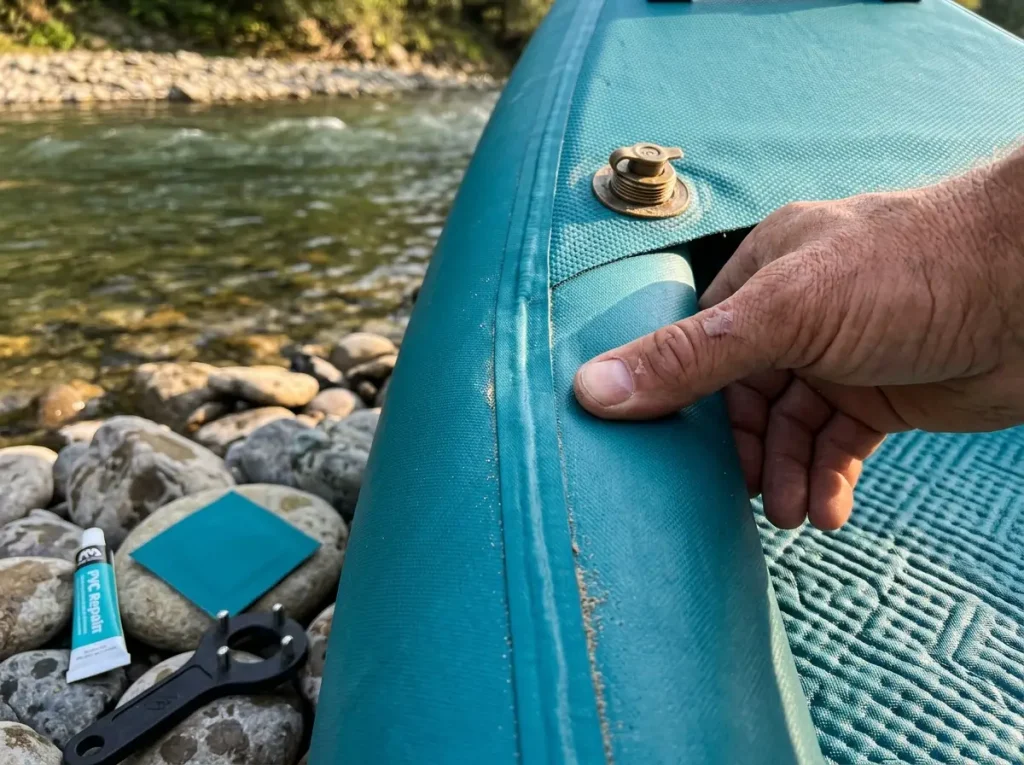
A river is an abrasive, unforgiving place for a boat. Rock, sand, sun, and pressure all work on the hull every day you’re out. What the boat is made of decides whether it survives a season or a decade, and whether a puncture is a quick patch or the end of the trip. This is where the price gap from earlier turns into something you can see and feel.
PVC, Hypalon, and Welded vs Glued Seams
Most quality river inflatable kayaks are built from heavy PVC — usually 1000-denier — or from Hypalon, a rubberized fabric prized for its UV and abrasion resistance. Both are a world apart from the thin, unsupported vinyl on a box-store boat. The denier number tells you the fabric’s thickness and toughness; 1000D is the river standard because you can feel it shrug off rock that would gouge cheaper material.
Just as important is how the seams are joined. Quality boats use welded seams, where the panels are heat-bonded into a single piece that won’t peel apart under flex. Cheap boats use glued seams that fail at the glue line first, usually right when the boat is working hardest in a hole. The PVC-versus-Hypalon decision is the same trade-off that drives full-raft buying decisions on material, and it’s worth understanding before you spend.
Drop-Stitch Floors and Multi-Chamber Hulls
The other construction feature that defines a modern river IK is the drop-stitch floor. Thousands of tiny threads connect the top and bottom layers, so the floor can be pumped to high pressure — 8 to 10 PSI — and go rigid as a board. That stiffness is what lets an inflatable track and carve instead of wallowing, which is why the performance boats lean on it.
Multi-chamber construction is the safety half of the equation. A good boat has three or four independent air chambers instead of one, so a single puncture can’t deflate the whole thing. You lose one chamber, the others keep you floating, and you paddle to shore on what’s left. One big chamber means one hole sinks the boat — another reason the cheap end is a poor bet on moving water.
Repairing a Punctured Boat in Camp
Sooner or later you’ll put a hole in a boat, usually three days into a trip and miles from the car. This is where good materials pay off again. Welded PVC and Hypalon both take a field patch — clean the area, apply adhesive and a patch, let it cure, and you’re back on the water. The same patching skills that fix a Hypalon raft in the field carry straight over to an inflatable kayak.
The standout here is AIRE’s replaceable-bladder design. Because the inner bladder is separate from the outer shell, a pinhole means you pull the bladder and swap or patch it, rather than fighting to find a slow leak in a sealed boat. Cheap vinyl, by contrast, often won’t hold a patch at all — the material is too thin and the surface too slick for adhesive to grab. On a multi-day trip, repairability isn’t a nice-to-have. It’s whether your trip continues.
Outfitting Is Half the Purchase
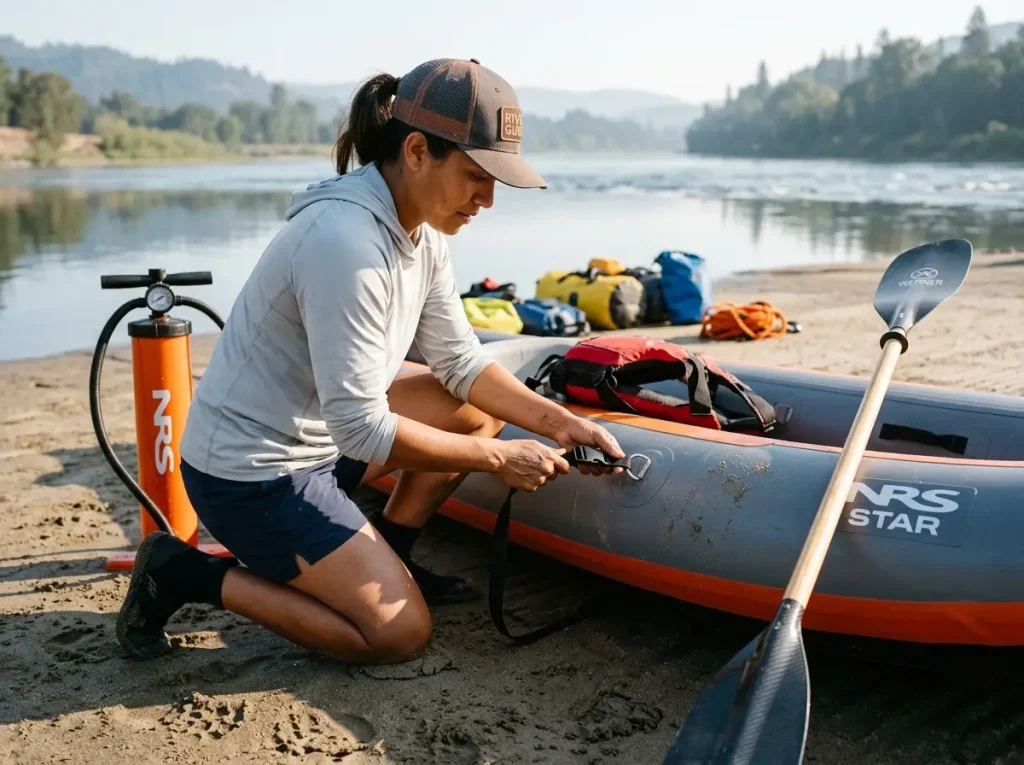
Here’s the thing the boat listings won’t tell you: the bare boat is only half of what makes an inflatable kayak run a river well. The other half is outfitting — the straps, the pressure, and the pump that turn a floating tube into a boat you actually control. Budget for the whole package or you’ll be disappointed by a perfectly good boat that you set up wrong.
Thigh Straps Keep You in the Boat
Thigh straps are the cheapest upgrade that changes the most. They’re simple padded straps you hook your thighs under, and they connect you to the boat so you can lean out for a strong brace and stay put when a wave tries to buck you out. Without them, you’re just sitting on top of the boat hoping to stay aboard; with them, you can edge and brace like you mean it.
Most river boats are built to take them — the AIRE Tomcat, for example, has a dozen pairs of cargo loops to mount straps and dry bags. If your boat doesn’t come with thigh straps, they’re the first accessory to buy, full stop. They turn you from cargo into a paddler.
Thigh straps are the single cheapest thing you can add that changes how a boat handles. Rig them snug enough that you can hook in fast but pop out instantly in a flip. Practice that exit on flatwater before you need it in a rapid — you want the wet exit to be muscle memory, not a surprise.
Floor PSI and Why Inflation Pressure Matters
That rigid drop-stitch floor everyone raves about only works if you actually inflate it to pressure. A drop-stitch floor wants 8 to 10 PSI to go stiff and track like a hardshell. Pump it to half that and the boat wallows, the tracking goes soft, and you’ve turned a performance boat into something that paddles like the pool toy you were trying to avoid.
This is one of the most common mistakes new owners make — they inflate by feel, the floor feels “firm enough,” and it’s actually way under pressure. Get a pump with a gauge and hit the number on the boat’s spec sheet. The difference between a properly inflated floor and a soft one is night and day, and it costs you nothing but a few more strokes on the pump.
The Pump, the Paddle, and the Rest of the Kit
To hit real PSI you need a real pump — a high-volume barrel or double-action pump that moves serious air, ideally with a pressure gauge. The little pump that comes free with a cheap boat won’t get a drop-stitch floor anywhere near 10 PSI. Plan on a good pump as part of the purchase, not an afterthought.
Then there’s the paddle, which deserves better than the aluminum stick in the box, and the dry bags, throw bag, and repair kit that round out a river setup. None of it is optional once you’re on moving water. For the full list sorted by the kind of water you run, our rafting gear checklist by river class lays out exactly what belongs in the boat. The point stands: budget for boat plus straps plus pump plus paddle, not just the sticker price.
Matching the Boat to the River, Not Just the Rapid
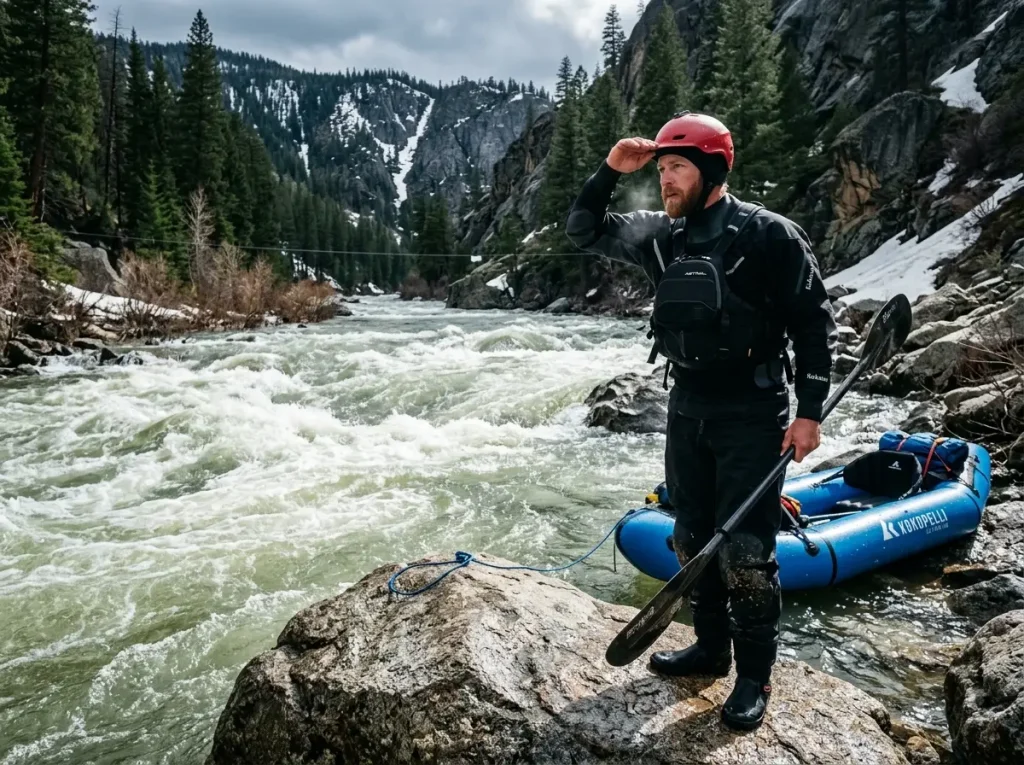
Every roundup tells you a boat is “rated for Class III.” Almost none of them tell you that a class rating is only half the story. The same rapid changes character with the season and the flow, and cold water changes the whole calculation regardless of which boat you bought. This is where river experience matters more than spec sheets, and it’s the part nobody else covers.
Reading the Class Rating Honestly
A class rating describes the water, not your boat and not your skill. When a boat is “rated for Class III,” it means the boat is capable of Class III in capable hands — it does not mean you’ll run Class III safely the first time you sit in it. The rating is a ceiling for the equipment, not a promise for the paddler.
Be honest about where you actually are. If you’re new, the smart move is to spend your first season on Class I–II getting your strokes, your bracing, and your water-reading dialed before you point a capable boat at bigger water. If you’re still fuzzy on what the Class I–V scale actually means on real water, get that dialed first — the boat can only do what the driver can.
Flow (CFS) Changes the Decision
Here’s the piece IK roundups never mention: flow, measured in cubic feet per second, completely changes a river. A run that’s a friendly Class II at 2,000 CFS can be a pushy, consequential Class III at 6,000 CFS — same rapids, same names on the map, totally different river. Higher flow means faster water, bigger waves, fewer eddies to catch, and less time to fix a mistake.
So “what boat for this river” isn’t a fixed answer — it depends on when you’re running it. A boat and skill level that are perfect for a summer low-water float can be over their heads on the same stretch during spring runoff. Check the gauge before you go, and match the boat and your plans to the flow you’ll actually see, not just the rapid class printed in a guidebook.
Cold Water Changes Everything
Cold water is the hazard that gets underestimated more than any rapid. Below about 60°F, falling in triggers cold shock — an involuntary gasp and a scramble of your breathing that can put you in serious trouble in the first minute, before hypothermia is even a factor. A snowmelt river that’s a delight to swim in July can be a genuine emergency in May, and the boat you chose doesn’t change that math.
What changes the math is what you wear. On cold water, a wetsuit or drysuit goes on over the PFD, not instead of it, and the colder the water the more that matters. It’s worth understanding exactly what cold-water immersion does to you so you respect it before you’re in it. Match your boat to the rapid, sure — but match your clothing to the water temperature, every single time.
Match the boat to the flow, not just the rapid class. An inflatable kayak that’s a blast on a stretch at 2,000 CFS can be a completely different decision at 6,000. Learn to pull up the river gauge before you load the car — five minutes on the USGS site tells you more about your day than any guidebook rating.
Inflatable vs Hardshell, and When Your Boat Is Already Enough
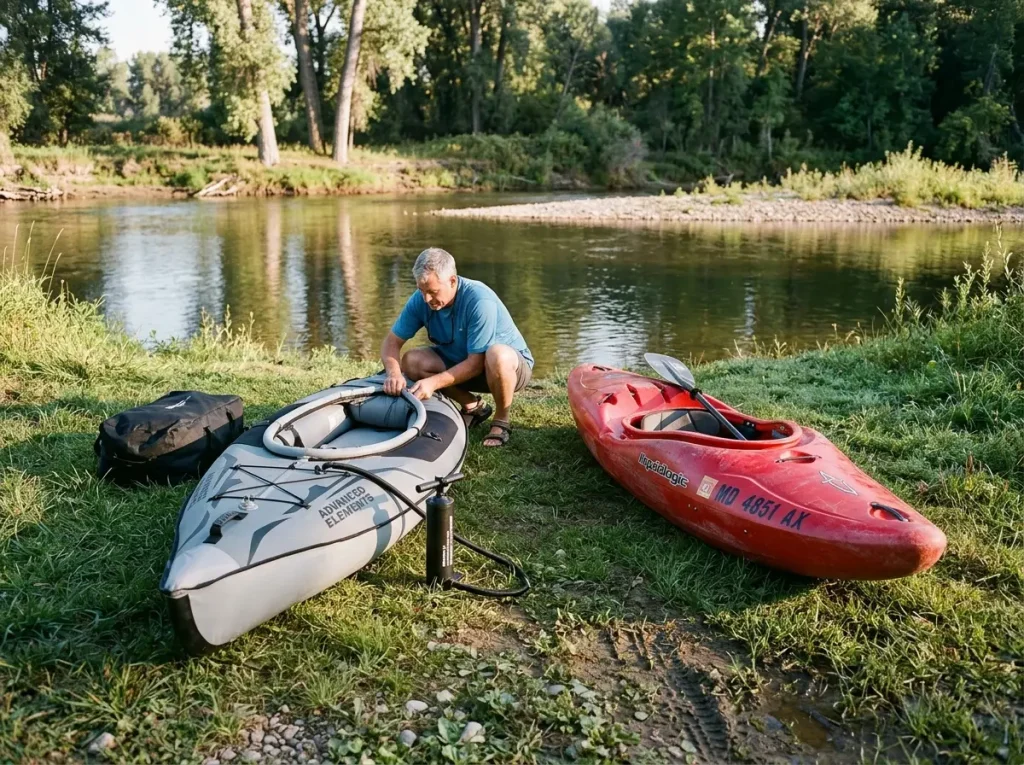
The inflatable-versus-hardshell debate gets treated like a turf war, but the real answer is just “it depends on what you’re doing.” Both have a place, and being honest about where each one wins saves you from buying the wrong boat — or buying a boat you didn’t need at all. This is the part where the gear site is supposed to talk you into a purchase. Instead, let’s talk about when not to.
Where Inflatables Win and Where They Don’t
Inflatables win on stability, toughness, and storage. They’re far more stable than a hardshell for a beginner, they shrug off rock that would crack plastic, they deflate into a duffel for travel, and they need no roof rack. For most recreational river paddlers, those advantages are the whole ballgame. And for anyone who wants to carry a boat deep into the backcountry, a packable inflatable opens up trips a hardshell never could.
Hardshells win on outright performance. They’re faster, they edge more precisely, they roll, and at the steep end of whitewater they do things no inflatable can. If you’re chasing Class IV+ creeking or playboating, that’s hardshell territory. For everyone else running moving water and easy-to-moderate whitewater, an inflatable gives up little that matters and gains a lot that does.
Can You Roll an Inflatable Kayak?
This question comes up constantly, and the honest answer is: mostly no, and you shouldn’t plan on it. Self-bailing inflatable kayaks are wide, high-volume, and open — the exact opposite of the snug, sealed hull a hardshell paddler rolls back up. A few specialized decked inflatables can be rolled, but the boats in this guide generally aren’t built for it.
That’s not the problem it sounds like. The play in an IK isn’t the combat roll — it’s the wet exit and self-rescue. You fall out, you keep hold of your boat and paddle, you get yourself to the surface and to an eddy, and you climb back in. That’s why the stability and self-bailing matter so much: the boat is designed to keep you in it in the first place, and to be easy to remount when you’re not.
When the Boat You’ve Got Is Already Enough
Here’s the anti-sell, plainly: you might not need to buy anything on this page. If your river days are warm Class I–II floats with friends, and you’ve already got a boat that handles that, keep using it. A sub-$200 boat is genuinely enough for gentle, warm water, and no roundup should talk you into a $1,000 boat you’ll use twice a year.
The time to upgrade is when the water you want to run outgrows the boat you have — when you’re eyeing real whitewater, cold water, or multi-day trips where a swamped boat or a failed seam stops being an inconvenience and starts being a real problem. Buy the boat for the rivers you actually run most, not the one trip you fantasize about. That’s how you spend smart.
The Safety Gear You Buy Alongside the Boat
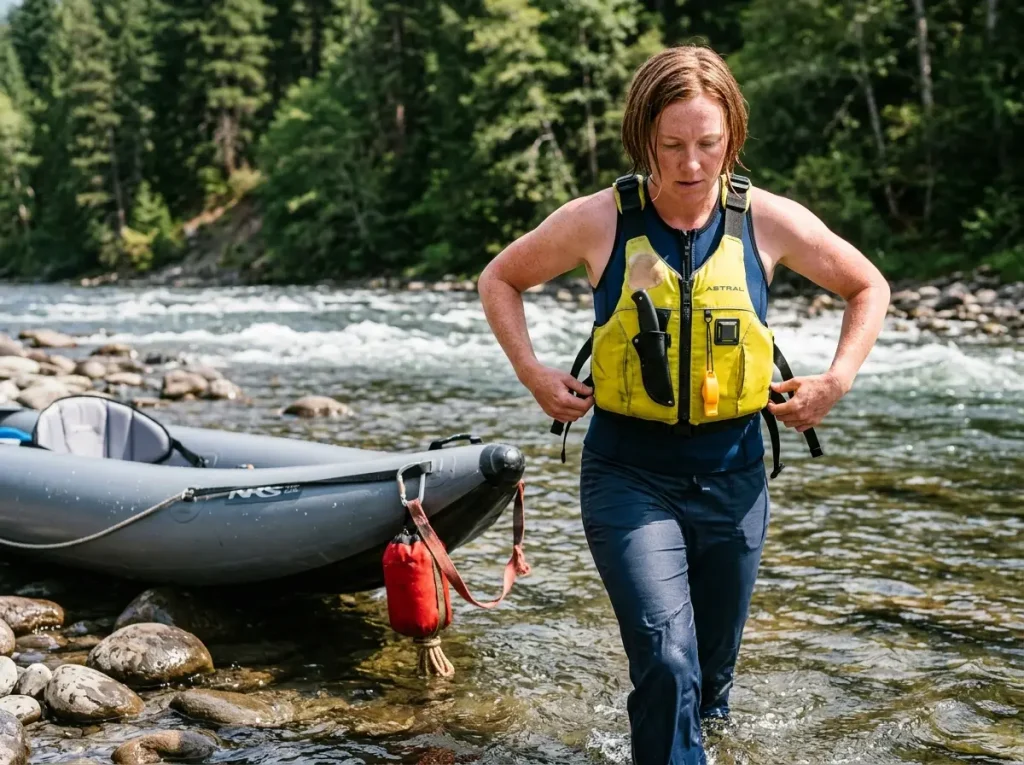
A boat is the fun purchase. The safety gear is the one that actually keeps you around to use the boat, and it’s not optional. The good news is the list is short, the gear lasts for years, and none of it is exotic. Buy it at the same time as the boat and treat it as part of the same purchase, because it is.
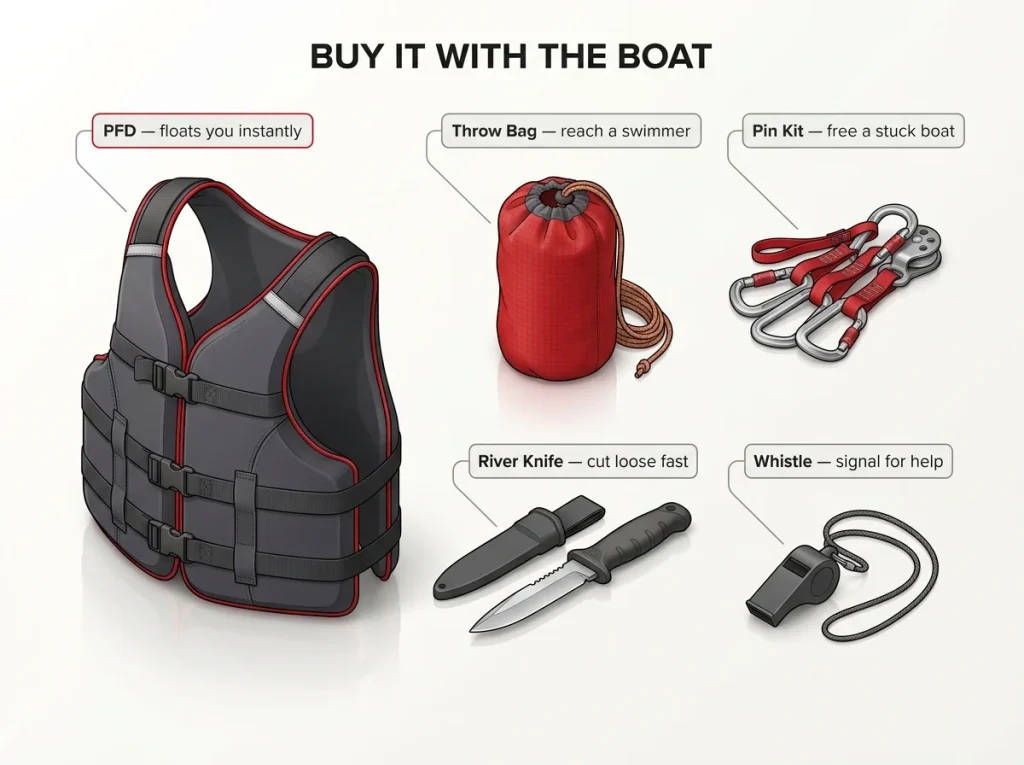
The PFD Is the Most Important Purchase Here
If you spend money anywhere on this page, spend it here first. A foam Type III or Level 70 paddling PFD is the single highest-leverage thing you’ll buy, and the numbers make the case bluntly: the American Canoe Association reports that 83% of fatal-accident victims weren’t wearing a life jacket. The boat won’t hurt you. Going without the vest is what does.
A proper river PFD rides high enough that it won’t ride up over your chin in a swim, fits snug without choking you, and lets your arms paddle freely. Spend a little time getting one that fits right and you’ll actually wear it, which is the whole point. Our guide to picking a river PFD that fits your paddling style walks through the sizing and types worth your money.
Why Not an Inflatable Belt-Pack PFD
You’ll see slim inflatable belt-pack PFDs marketed for paddling, and they’re the wrong tool for whitewater. They rely on manual inflation — you have to pull a cord to fire the CO2 — and they aren’t inherently buoyant if you’re stunned, injured, or disoriented after a swim. In moving water, the moment you most need flotation is the moment you might not be able to trigger it.
A foam vest floats you the instant you hit the water, no action required, every time. That’s exactly what you want on a river. Save the inflatable belt packs for flatwater paddleboarding on a calm day, and wear real foam on anything with current.
Throw Bag, Pin Kit, and Knowing the Water
Past the PFD, two more pieces round out the river safety kit. A throw bag — a rope stuffed in a bag you can throw to a swimmer — is the basic rescue tool every paddler in the group should carry and know how to use. And a basic pin kit for the day a boat gets stuck on a rock gives you the means to free a wrapped boat instead of leaving it.
But the gear is only half of safety. The other half is judgment — scouting a rapid you can’t see the bottom of, knowing your limits, and paddling with people who know theirs. Gear plus skill plus good decisions is the actual safety system. The throw bag in your boat is worth a lot less if nobody on the trip has practiced throwing it.
The PFD is the highest-leverage dollar you’ll spend on this whole page, so buy it before you finish picking the boat. Try it on, cinch it down, and lift it by the shoulders — if it slides up past your ears, it’s too loose or too big. A vest that rides up in a swim is worse than useless because it lulls you into thinking you’re covered.
Conclusion
Strip away the marketing and the choice is simple. A real river inflatable kayak has a self-bailing floor, welded multi-chamber 1000-denier construction, and the toughness to bounce off rock — everything the cheap vinyl boats don’t. Get that part right and you’ve avoided the only mistake that actually costs you.
Then remember the boat is half the purchase. Thigh straps, a real pump and proper PSI, and a foam PFD are what turn a good boat into a boat you can control and survive. And match your choice to the water you’ll really run — the rapid class, yes, but also the flow and the temperature, because a boat that’s perfect in warm July water is a different decision in a cold spring flood.
Pick the boat for the river you paddle most, rig it right, dress for the water, and go run something well within your level. The best inflatable kayak is the one that gets you home grinning and dry — and now you know how to spot it.
Frequently Asked Questions
01Are inflatable kayaks safe for whitewater rapids?
Yes, a whitewater-specific inflatable kayak with a self-bailing floor handles Class II–IV safely with a competent paddler and a PFD. Cheap flatwater vinyl boats are not safe for rapids and should stay on calm water.
02What class of rapids can an inflatable kayak handle?
It depends on the boat and the paddler. Recreational inflatable kayaks suit Class I–II, while dedicated whitewater boats like the AIRE Tomcat or NRS STAR Viper run Class III–IV. The rating is a ceiling for the boat, not a guarantee for the paddler.
03Are inflatable kayaks good for beginners on rivers?
Yes. Inflatable kayaks are more stable and forgiving than hardshells, which is exactly why so many first-time river paddlers start in one. Pair a stable boat with easy water, thigh straps, and a PFD and it’s an excellent way to learn.
04How long do inflatable kayaks last?
A quality welded boat like the AIRE Tomcat lasts 20-plus years with basic care and a replaceable bladder. Cheap vinyl boats usually last a season or two before seams fail. Material and construction decide the lifespan.
05Do you need a wetsuit to paddle an inflatable kayak?
On cold or snowmelt water below about 60°F, yes — a wetsuit or drysuit goes on over your PFD to guard against cold shock. On warm summer water, regular paddling clothes are fine. Dress for the water temperature, not the air.