

In this article
Picture the new boat owner standing in the gear shop, one hand on a budget Carlisle and the other on a premium Werner that costs four times as much, trying to figure out which one makes them a real boater. Here’s the thing the shop won’t tell you: the outfitters running thousands of trips a season hand their crews the cheap one. There’s a reason for that, and it has nothing to do with cutting corners. The best rafting paddles for most people aren’t the lightest or the priciest, they’re the ones that survive a season of rock strikes and don’t make you wince when one floats away mid-rapid. This guide breaks down what actually makes a paddle work, how to size it to your seat instead of a height chart, and which paddle to buy at every tier.
Here’s the quick pick matrix before we get into the why.
| Best For | Paddle | Length | Material |
|---|---|---|---|
| Crew / most boaters | Carlisle Outfitter | 57–60″ | Xenoy blade, aluminum shaft |
| Tall paddlers and R2 | Carlisle Outfitter | 66″ | Xenoy blade, aluminum shaft |
| Budget guide stick | Carlisle Guide Heavy-Duty | 72″ | Xenoy blade, aluminum shaft |
| Premium guide stick | Werner Guide Stick | 62–66″ | Fiberglass |
| Wood feel | Sawyer Canyon Guide Wood | 62″ | Laminated wood |
| Inflatable kayak / spare | Aqua-Bound Shred 4-Piece | ~192–200cm | Fiberglass double-blade |
What Actually Makes a Rafting Paddle Work
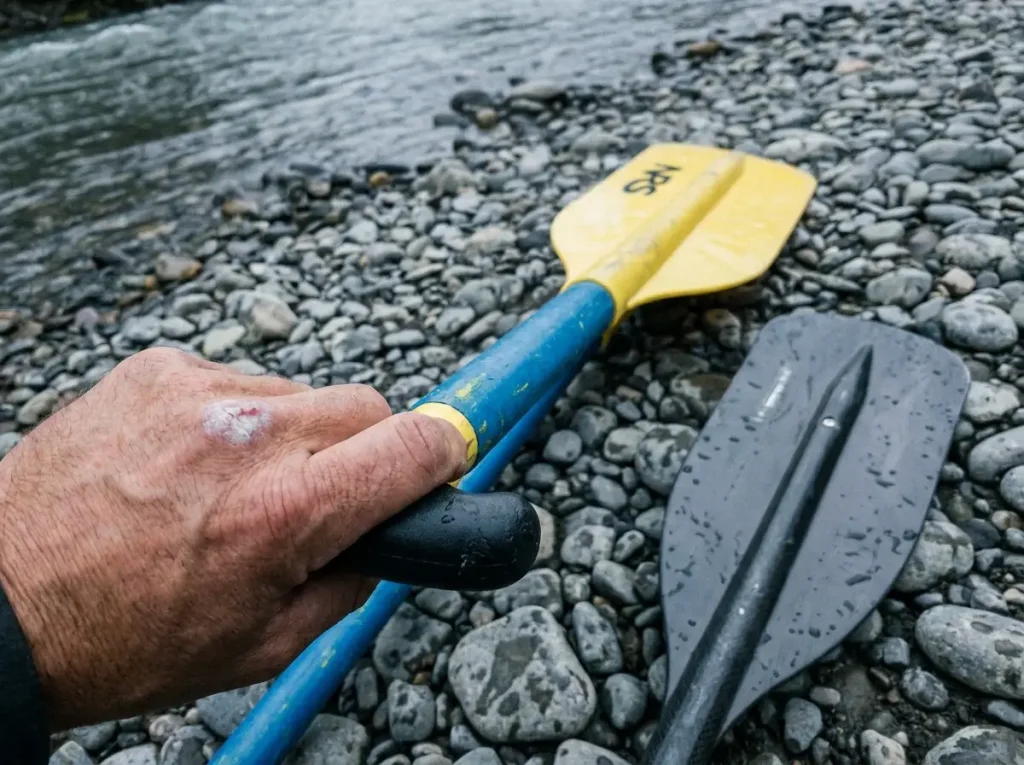
Strip away the marketing and a raft paddle is three parts that each do one job: the blade grabs water, the shaft transfers your effort, and the grip lets you aim. Get those three right and the price tag mostly stops mattering.
Blade shape is the part people overlook. A scooped blade (also called dihedral) catches the most water and gives you raw forward power, which is what a crew charging downstream wants. A straight blade, symmetrical front to back, trades some of that bite for control and works the same in either direction, which is why a lot of guides who throw braces and back-strokes lean toward a more neutral face. Neither is better in a vacuum. It’s about whether you’re paddling hard forward or steering and correcting, a difference worth understanding before you ever pick up the strokes that blade has to throw.
Then there’s the shaft. Rigidity is the quiet spec nobody puts on the label, and it matters more than the brand name. A stiff shaft moves the boat; a noodly cheap one flexes under load and wastes the effort you put in. You feel it most on a hard pull when you need the boat to actually go.
The grip on nearly every raft paddle is a T-grip, not the palm grip you’d see on a touring kayak paddle. That T is what lets you index the blade angle by feel, which is the whole game when you’re indexing the T-grip for a brace and can’t look down to check.
Paddle Materials and How They Hold Up to Rock
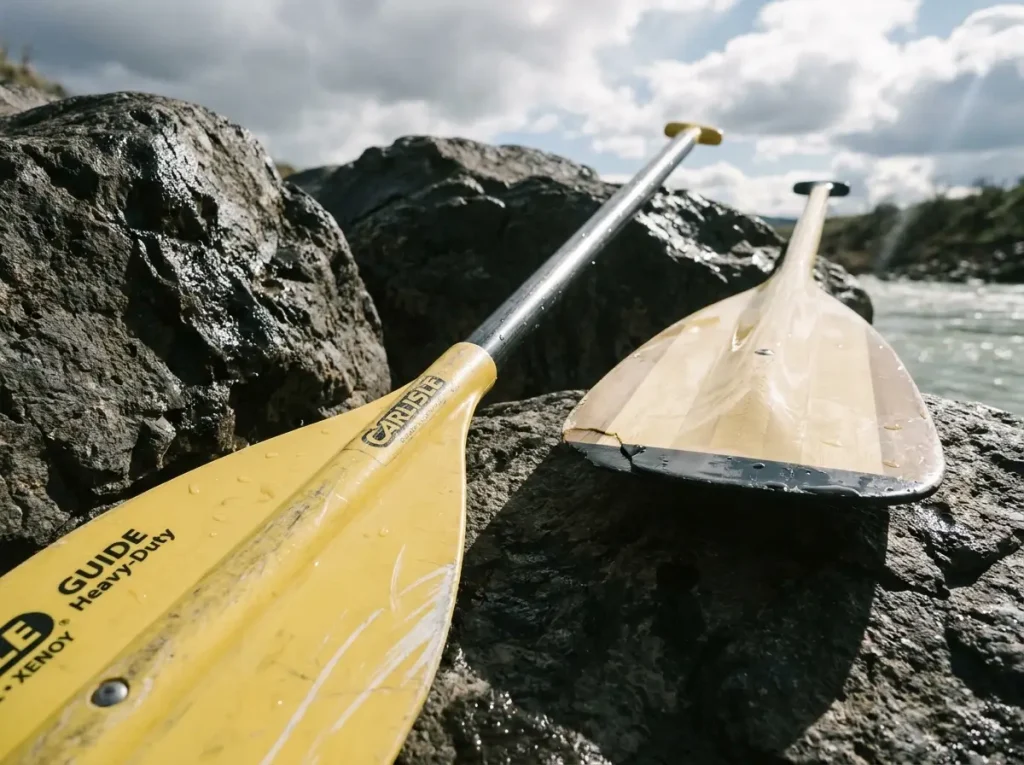
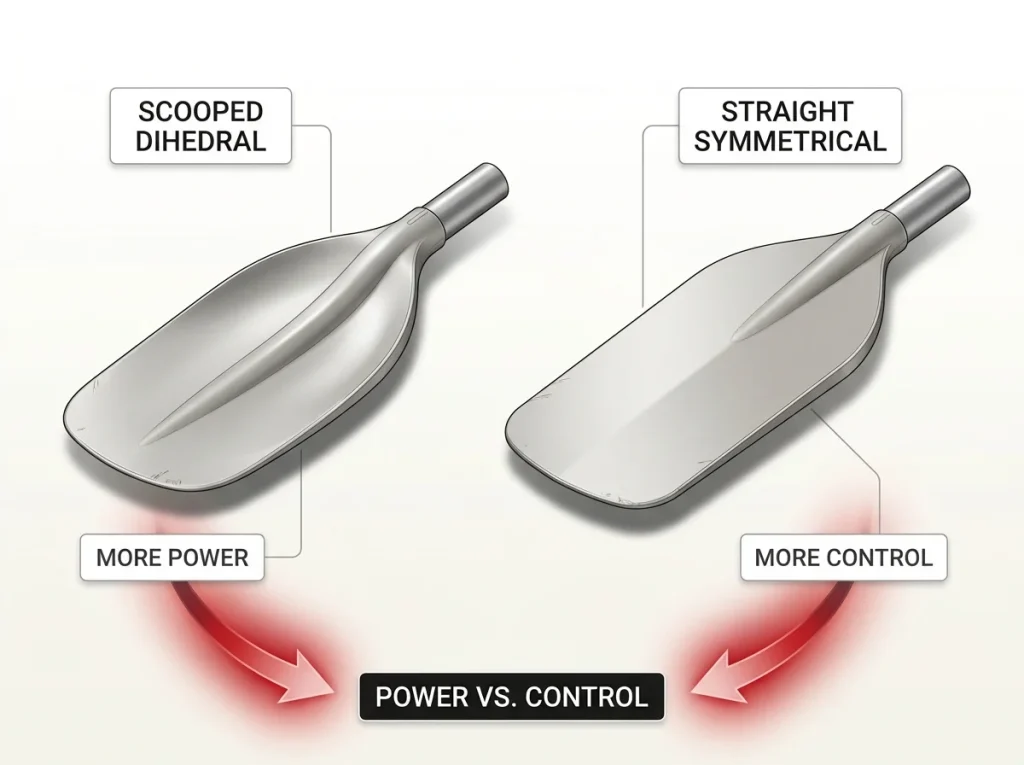
Everyone asks if carbon is better. The honest answer is “better at what?” Because the thing carbon is worst at is the thing rivers do most: bang your paddle off rock.
Carbon fiber is stiff, light, and efficient. It’s also brittle on a sharp, focused impact. Catch a rock point just wrong and carbon can crack outright, and even normal use chips away at the blade edges over time. It’s a beautiful material for a paddle that never touches stone, which is not a paddle that lives on a river.
Fiberglass and thermoplastics like Xenoy do the opposite. They flex under impact, absorb the energy, and spring back. That’s the whole reason outfitters arm entire crews with plastic-bladed paddles, they bounce off rocks instead of shattering. Aluminum shafts push that durability even further: they shrug off impacts and rough handling, and the only real tradeoff is weight and cold metal in your hands, not breakage. Lean hard enough on an aluminum shaft and it can bend, but it rarely snaps.
Wood sits off to the side, with a warm natural flex that’s repairable but needs more babying than plastic or glass.
Put numbers on it and the picture sharpens. The Carlisle Outfitter runs a 7.5 by 21.5 inch Xenoy blade on an HDPE-coated aluminum shaft. The NRS PTC uses a high-impact 8 by 18 inch ABS blade NRS rates for multiple paddling seasons. That’s not premium gear, that’s gear built to get beaten on, which is the same wood-vs-carbon question that plays out on oars when you start rigging an oar boat.
If you can only own one paddle and you run anything rocky, pick the material by how it fails, not how it performs on a calm pool. A Xenoy or ABS blade that scuffs and keeps going beats a carbon blade that cracks the one time you pin it on a rock. When a blade does chip or a shaft bends, knowing a basic field repair gets you off the water.
How to Size a Rafting Paddle to Your Seat and Tube
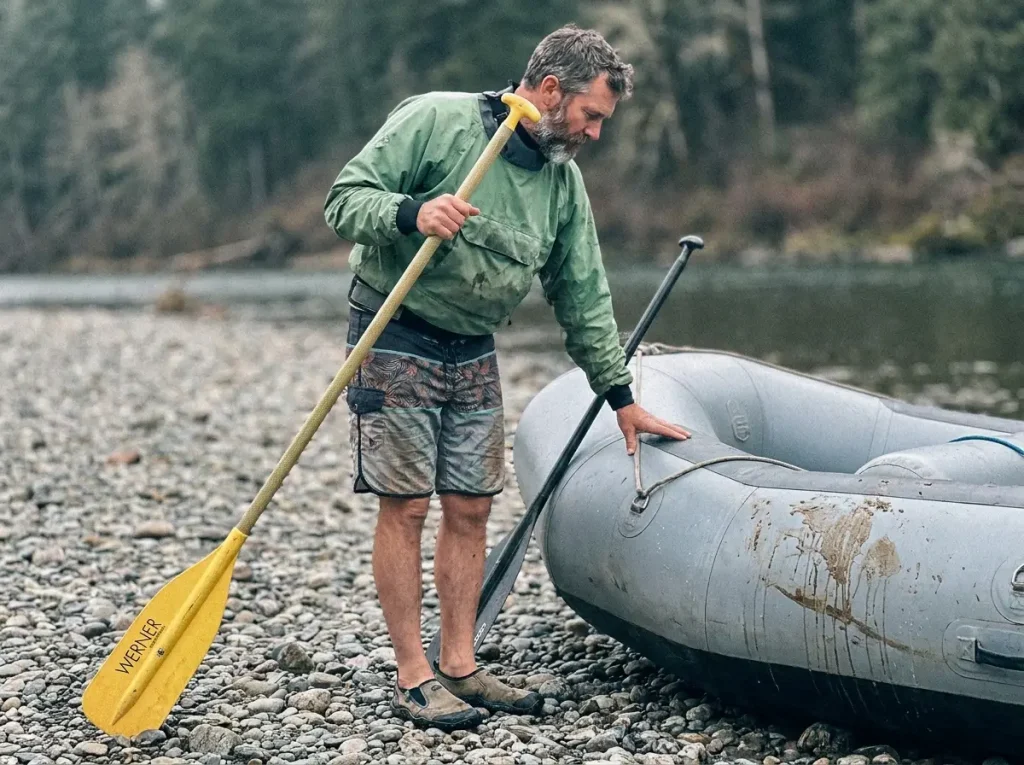
The chart on the gear-shop wall sizes you like you’re buying ski poles, off your height. The river doesn’t care how tall you are. It cares whether your blade fully buries from where you’re actually sitting.
Crew and passenger paddles have standardized on 57 inches for small-tube rafts, meaning tubes 20 inches or under. The old standard was 60, and the shift down wasn’t about power. River outfitters standardized on a 57-inch crew paddle as a deliberate safety measure, because as tubes got smaller the longer T-grips rode higher and started catching people in the face. The tiny loss of reach was worth fewer split lips and chipped teeth.
Guides are a different seat. Sitting high on the stern rocker, a guide needs a longer guide stick, usually 62 to 66 inches, just to reach past the tube and bury the blade to steer. Paddlers over six feet tend toward 64 to 65 inches, and you reserve 66-plus for the tallest boaters or the biggest tubes. Most rafters land somewhere in the 60 to 64 inch band, though paddles get manufactured from about 54 inches all the way up to 72.
The mistake that trips up new boat owners is sizing a whole crew off one chart. The guide and the crew in the same boat run different lengths, because they’re sitting at different heights over different parts of the tube. The whole logic of paddle sizing is seat, torso, and tube, so check your paddle length against your raft’s tube diameter rather than a number on a wall. For the deeper breakdown by seat and torso, the full paddle-length guide walks through every case.
Why You Probably Don’t Need a Carbon Guide Paddle

Walk past the carbon wall. I know it’s hard. But the commercial outfitters who run more river days in a month than most of us run in five years arm their entire crews with standard Carlisle “custy” paddles, the plain plastic ones, and they do it on purpose.
The clearest case for the cheap paddle came from a guide on Mountain Buzz: “at swim time I don’t want to worry about an expensive paddle.” That’s the whole argument in one sentence. Everyone goes for a swim eventually. When you’re the one in the water watching your paddle ride the current away from you, you want to be annoyed, not heartbroken.
What does more money actually buy? Mostly lower swing weight. A lighter paddle fatigues your arms less over a long day, and that’s real, but it’s not magic. The honest guidance is to buy the lightest paddle you can afford and match the spend to how much you actually paddle.
Premium earns its keep at volume. One boater ran the same Werner guide stick from 2005 through years of full-time guiding without breaking it. At that frequency, the light swing weight pays for itself every single day. At once a month, it mostly buys bragging rights.
There’s also a question hiding underneath this one. If you find yourself rowing more than you paddle, your money belongs in oars, not a carbon paddle, and it’s worth being honest about whether you’re really a paddle boat or an oar boat before you spend. Swing weight only matters if you’re actually swinging it, which is why the upgrade pays off in less paddling fatigue over a long day, or doesn’t pay off at all.
A simple test: count your river days per year. Under twenty and you’re a crew paddle person, full stop. Over a hundred and you’re guiding enough that a premium stick’s lighter swing weight saves your shoulders. The middle is where it’s a judgment call, and even then the cheap paddle is never the wrong answer.
The Best Crew Paddles for Most Boaters
This is the paddle you hand everyone in the boat and then forget about. Bombproof, affordable, and replaceable without a second thought. For the vast majority of private boaters, the buying decision starts and ends right here.
The Everyday Crew Paddle (60-Inch)

This is the paddle the river actually rewards for crew duty. The wide Xenoy blade gives passengers enough bite to move the boat, and when someone clips a rock, the blade scuffs and keeps working. If your raft has small tubes, 20 inches or under, drop the crew down to the Carlisle Outfitter in 57 inches to keep T-grips out of faces. The 60-inch length is the everyday standard for everyone else, and the commands that move a paddle crew work the same no matter what’s in their hands.
For Taller Paddlers and R2 (66-Inch)

Tall paddlers and two-person R2 crews are the ones who outgrow a 60-inch paddle. You sit a little higher and reach a little farther, and a short paddle leaves you slapping at the surface instead of burying the blade. The 66-inch Outfitter solves that without changing a thing about the durability or the price tier.
Guide Sticks Worth the Reach
From the stern you sit higher than anyone, and you’re steering the whole boat with one blade. That means length and leverage, and it’s the one place where spending more can genuinely pay off, if you’re back there often enough.
Best Budget Guide Stick for Big Water

If you’re steering a big paddle raft or you sit high on the stern, 72 inches gets your blade to the water with leverage to spare. The Guide Heavy-Duty is the paddle for the boater who needs guide-length reach but doesn’t guide enough to justify spending up. It’s heavier than a fiberglass stick, and you’ll feel that over a full day, but it shrugs off the abuse a big-water boat dishes out.
When Premium Is Worth It

This is the paddle that justifies its price exactly one way: volume. The fiberglass build keeps the swing weight low, which is the difference between fresh shoulders and dead arms at the end of a long guiding day. The longevity is real, boaters have run the same Werner stick for fifteen-plus years, but that math only works if you’re paddling enough to spread the cost across hundreds of days. If you want to go deeper on how the major paddle brands stack up for rafters, that comparison is its own rabbit hole.
The Wood Guide Stick (If You Want One)
Some guides will never give up a wood stick, and honestly, the wood crowd has a point. The warm flex, the feel in your hands on a long ferry, the way it looks laid across the stern tube, none of that shows up on a spec sheet but all of it matters to the people who care.

Be honest with yourself about the tradeoff. Wood needs more care than Xenoy or glass: it wants storage out of the sun, the occasional re-oil, and a little respect for sharp rock. The wood lovers who run custom sticks from builders like Snyder or Rivrstyx will tell you a good one rivals composites in balance, but those are special-order builds, not something you add to a cart. The Sawyer Canyon Guide is the buyable middle ground, the wood feel without the wait.
Paddles for Inflatable Kayaks and Your Spare
Two different jobs, one smart paddle. If you run an inflatable kayak you need a double-blade, not a T-grip, and every paddle raft should already be carrying a break-down spare. A 4-piece paddle covers both.
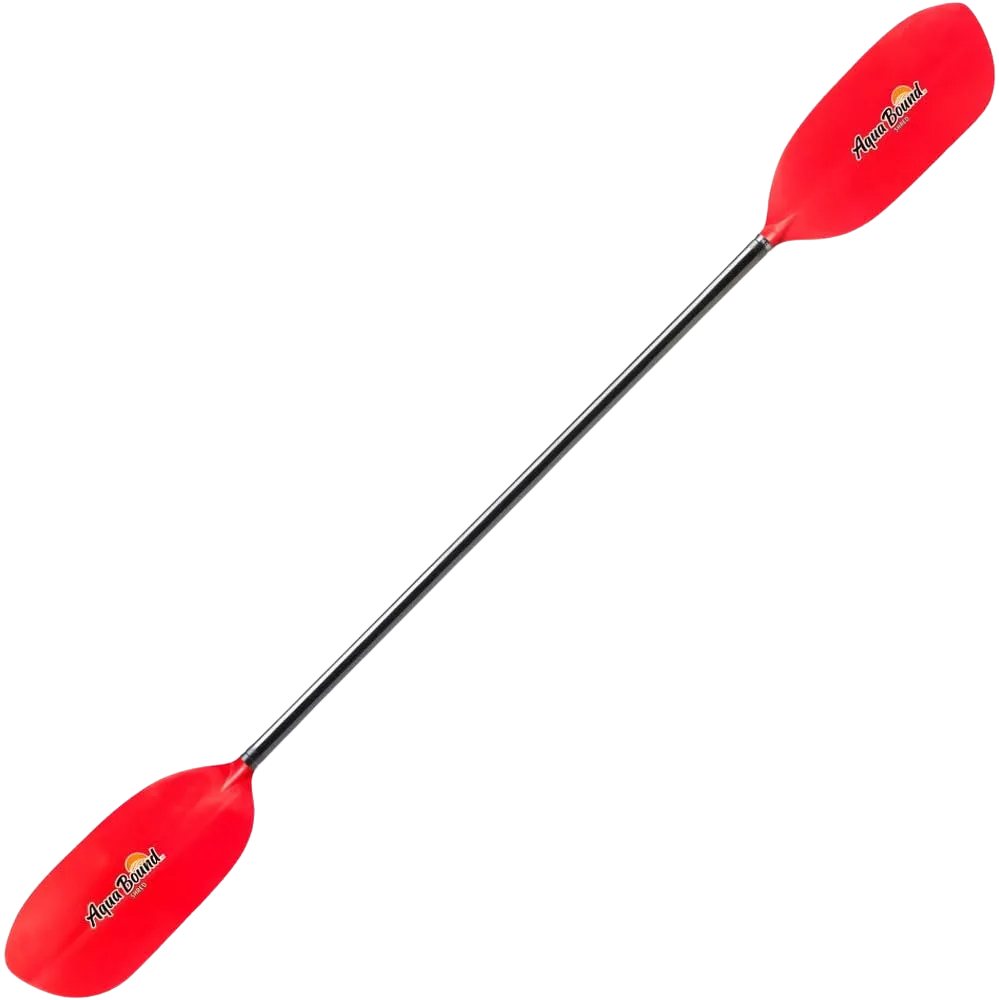
An inflatable kayak paddle is a double-blade, somewhere around 192 to 200 centimeters, not the single-blade T-grip you’d hand a raft crew. If you’re shopping for the inflatable kayak itself, the paddle is the easy part of that decision. The Shred’s fiberglass blades hold up to river abuse without the brittleness of carbon, and the 4-piece breakdown paddle design is the clever part. It packs down small enough to stow in a stern compartment, which is exactly where a spare belongs.
That spare matters more than newcomers think. The story plays out the same way every season: someone loses a paddle in a rapid, reaches for the backup, and finds out the boat never carried one. Guides keep a break-down stowed in the stern for precisely this. Whether you boat in an IK or a paddle raft, knowing what to actually do when a paddle goes overboard starts with having a second one aboard, and a spare paddle earns its spot on every gear checklist you pack from.
Paddle-Buying Mistakes That Cost You a Paddle or a Tooth
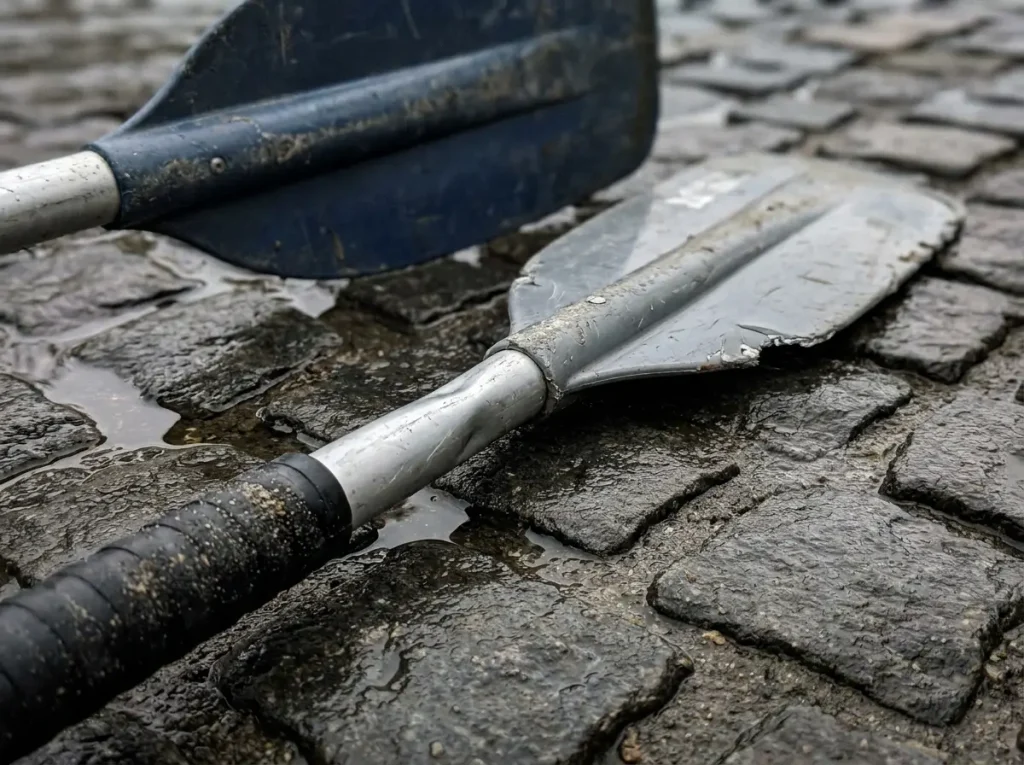
Every one of these is a lesson someone learned the hard way at the take-out. You can skip the tuition.
The big one is buying guide-grade carbon for a whole crew when standard “custy” paddles are what the boat actually runs. You spend four times the money for paddles that crack easier and get treated worse, because crew paddles take the most casual abuse. The second mistake is sizing off a height chart instead of seat position, which leaves the guide and crew running the wrong lengths for where they actually sit.
Then there’s the safety one. Handing a crew 60-inch-plus paddles on a small-tube raft puts those high T-grips right at face height, and that’s the exact injury that pushed the whole industry down to 57. A blade that’s undersized or just cheap will flutter, that wobble you feel mid-stroke when the blade can’t hold clean water, and a flexy shaft quietly wastes the energy you’re putting in. Aluminum shafts bend under hard leverage, too, though they rarely snap outright. The technique mistakes that follow the gear mistakes are a whole separate conversation, but most of them start with the wrong paddle in your hands.
Last, the quiet one: not carrying a spare. It feels optional right up until the rapid where it isn’t. And while we’re talking long days, a paddle that chews up your palms is its own kind of mistake, which is why a lot of boaters fight blisters from a long day on the shaft with a decent pair of gloves.
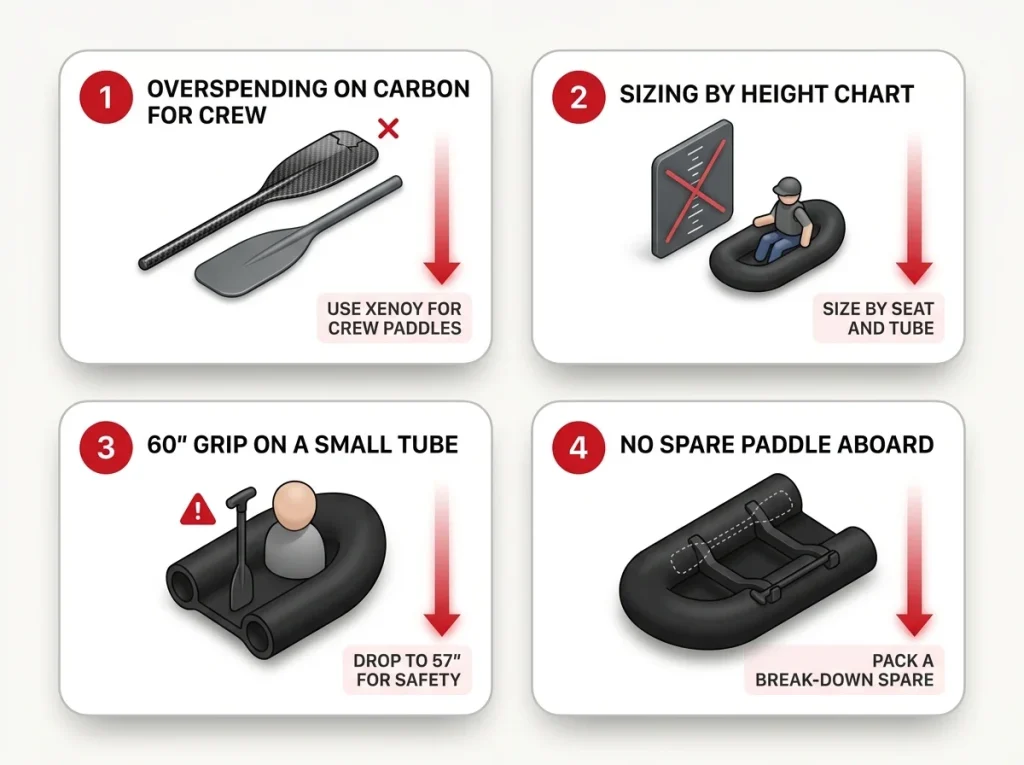
Before your next trip, lay every paddle in the boat side by side and check two things: that the crew lengths match your tube size, and that there’s a break-down spare in the pile. Two minutes at the put-in beats a long swim watching your only paddle disappear downstream.
The Bottom Line on Buying a Rafting Paddle
Three things carry the whole decision. Durability beats carbon for most boaters, because a Xenoy or aluminum paddle survives the season of rock strikes that cracks the expensive stuff. Size to your seat and tube, not a height chart, which means 57 inches for small-tube crews and 62 to 66 for the guide seat. And match the spend to your paddling volume, because premium only pays off if you’re out there constantly.
Pull your paddles out before the next trip, check the lengths against your seats and tubes, and make sure there’s a break-down spare riding in the boat. Do that and you’ve already made better gear decisions than most of the boats at the ramp.
Frequently Asked Questions
01What length rafting paddle do I need?
Crew on small-tube rafts (tubes 20 inches or under) run 57 inches; standard crew length is 60. Guides go 62 to 66 because they sit higher on the stern. Size to your seat height and tube diameter, not a height chart.
02What is the best material for a rafting paddle?
For most boaters, a Xenoy or ABS plastic blade on an aluminum shaft wins. It flexes, absorbs rock strikes, and lasts seasons. Carbon is lighter and stiffer but brittle on a sharp rock impact, so it suits full-time guides more than weekend crews.
03What size paddle does a raft guide use?
A guide stick of 62 to 66 inches, because the guide sits higher on the stern rocker and needs the extra length to bury the blade and steer. Paddlers over six feet trend to 64 or 65; reserve 66-plus for the tallest boaters or big-tube rafts.
04Do you need a different paddle for an inflatable kayak?
Yes. An inflatable kayak uses a double-blade kayak paddle around 192 to 200 centimeters, not a single-blade T-grip raft paddle. A 4-piece breakdown double-blade also doubles as a stowable spare for a paddle raft.
05How much should you spend on a rafting paddle?
For crew duty, a budget-friendly paddle survives a full season just fine. Spending more mostly buys lower swing weight, not more durability. Premium guide sticks earn their price only if you paddle or guide often enough to feel the lighter swing every day.