


In this article
You know the boater at the put-in. Everyone else is rigged, dressed, and ready to push off, and he’s still hunched over a bargain 12V inflator that’s wheezing half a chamber of air into a soft raft. Here’s the thing nobody tells you when you buy your first boat: the pump that inflates your raft and the pump that gets it to real pressure are usually not the same tool. Ask any private boater who’s run a few seasons and they’ll tell you they carry two. This guide breaks down every pump type and the inflation gear around it, how much pressure your raft actually needs, which models earn their spot in the kit, and how to build a put-in setup that gets you firm and on the water fast.
Raft Pump Types and What Each One Is For
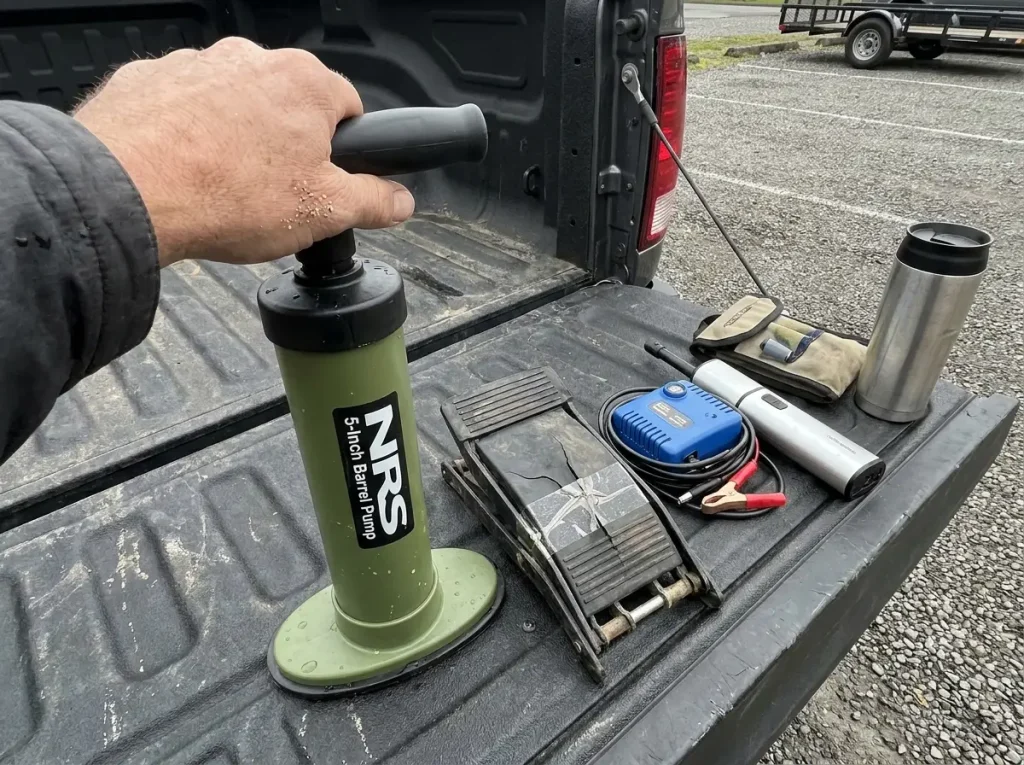
Walk into any river shop and the pump wall looks like overkill. Foot pumps, barrel pumps, 12V inflators, cordless units, and now boats with the pump built right in. They are not interchangeable, and buying the wrong one is how you end up arm-pumping four tubes while your buddies sip coffee. Before any brand names, here is what each family actually does, because the raft pump you pick should match the raft you run shapes the pump you need.
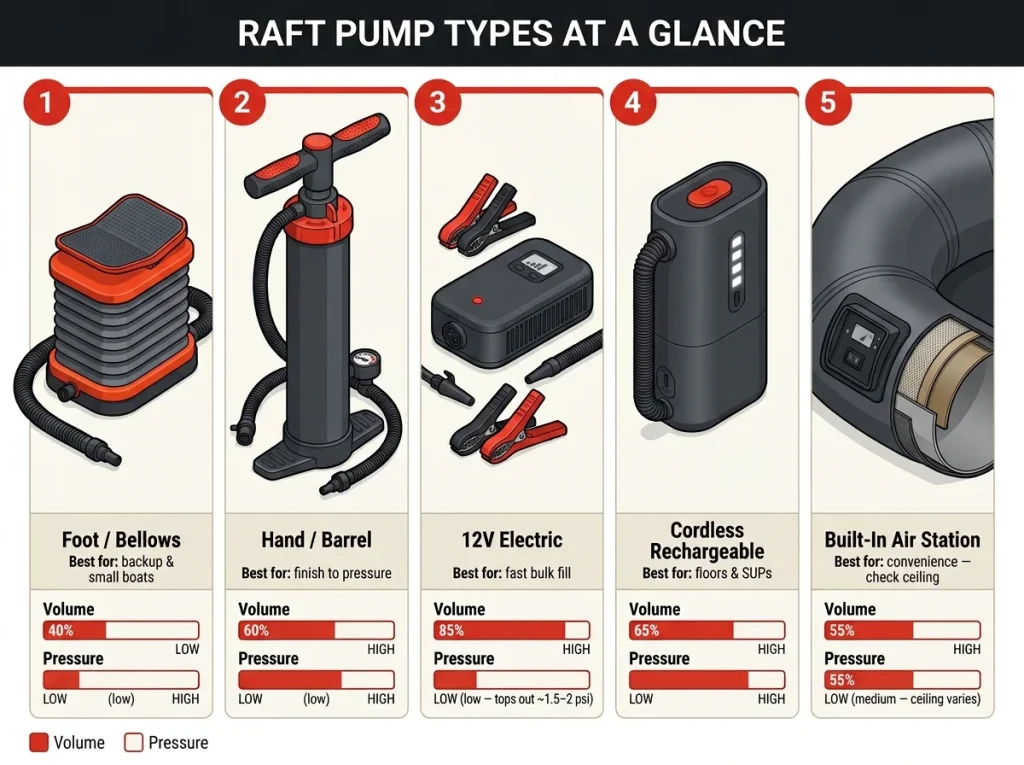
Foot and bellows pumps (the no-battery backup)
The foot pump is the one that probably came in the box with your boat. You stomp it, it moves a respectable amount of air, and it never needs a battery or a charge. A bellows pump is slow on a big raft, but it is close to bombproof and weighs almost nothing in the dry bag.
Most people write off the foot pump the day they buy something fancier. Keep it anyway. It is the backup that gets you off the ramp when your electric dies, and on a small boat it might be all you ever need.
Hand and barrel pumps (single, dual, and triple-action)
A barrel pump is the workhorse of the private boater world. It is a tall cylinder you push down on, with a wide base that keeps it steady on a gravel bar. The action matters more than the brand. A single-action pump pushes air on the down stroke only. A dual-action pump moves air on both strokes, which fills a tube fast. Some pumps then flip to single-action mode and trade speed for the higher pressure that finishes the job.
This is also where the small stuff lives. A compact pump like the K-Pump K-Mini rides under a seat for quick top-offs on the river, but it is a finisher, not a primary pump for a full raft. Match the barrel to your boat, because a packraft and a 16-foot cataraft are not the same job and a bigger boat means more air volume to move.
12V, cordless, and built-in electric pumps
A 12V inflator clips to your vehicle battery with alligator clamps and does the grunt work. It moves a lot of air fast and saves your shoulders, which is the whole point. The catch, and we will hammer this in a minute, is that it stops short of full raft pressure.
Cordless rechargeable pumps cut the cord, and some of the newer ones hit high PSI, which makes them genuinely useful for drop-stitch floors and SUPs. You are just now managing battery life on top of everything else. Built-in air stations are the newest wrinkle, with a few boats shipping with an integrated pump so there is nothing separate to forget at home. Convenient, as long as you know its pressure ceiling before you trust it with a stiff floor.
Manual vs Electric vs Built-In Which Actually Hits Pressure
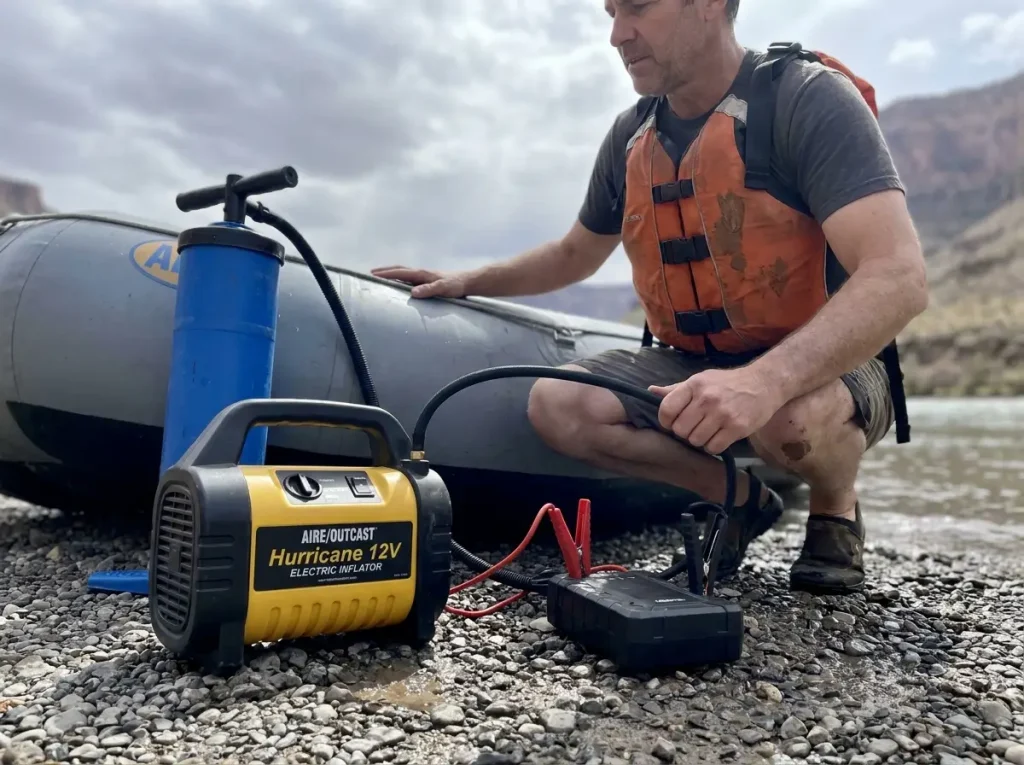
Here is the part the spec sheets dance around. No single pump does both jobs well, and the workflow almost everyone lands on after a season or two is the same one: electric to shape, hand pump to finish. Reviewers test pumps in isolation, but the boat ramp tests them as a system.
The electric-to-shape, hand-to-pressure workflow
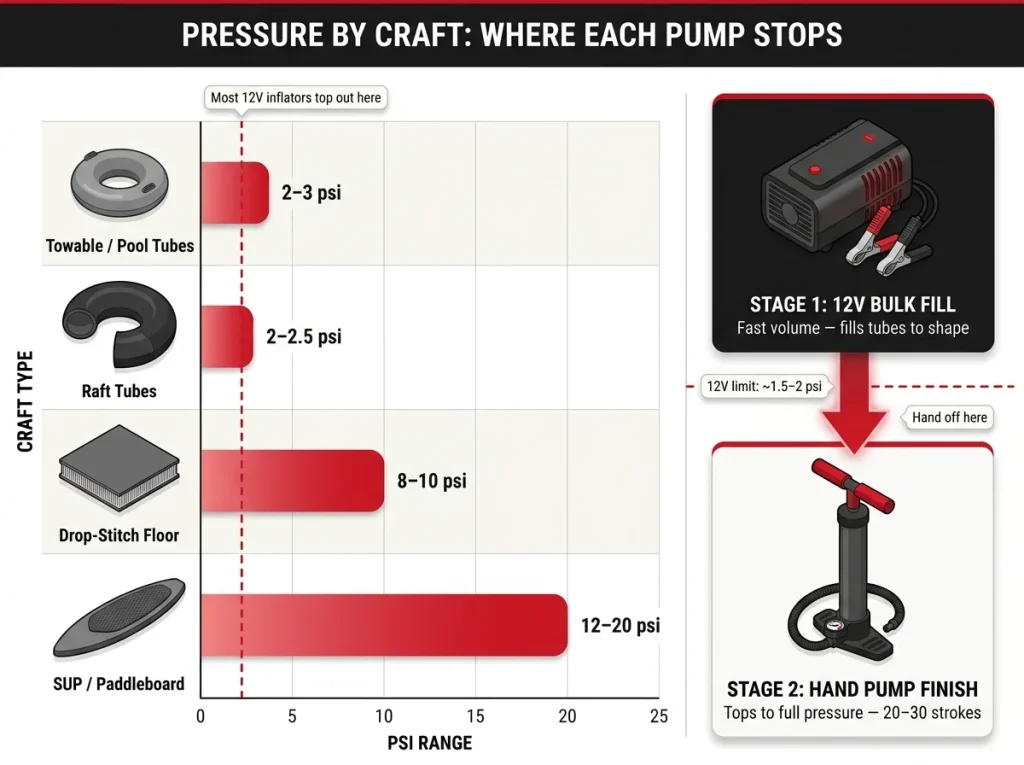
A 12V inflator will take your tubes from flat to firm-ish in a couple of minutes per chamber. That feels like victory until you press a palm into the tube and it still gives more than it should. Most 12V units top out around 1.5 to 2 psi, and a raft wants to be firm. That last bit of pressure is exactly where the electric runs out of lungs. Even the makers say so plainly, since AIRE positions a 12V inflator as the bulk-fill step a hand pump finishes to pressure.
So you grab the barrel pump for the top-off. Twenty or thirty strokes per tube and the boat is where it should be. The handoff is the system. The electric buys back your time and your shoulders, and the hand pump buys the pressure that actually matters on the water.
Fill on dual-action to move volume fast, then flip the same pump to single-action for the last firming strokes. The boat goes from soft to dialed in a fraction of the strokes it takes to brute-force it in one mode.
When manual-only is genuinely enough
Not everyone needs a battery. One small raft, an inflatable kayak, or a packraft on a patient morning is a perfectly good reason to skip the electric entirely. A good dual-action hand pump or a foot pump will get a small boat to pressure without much fuss.
Manual-only stops making sense when you are inflating a lot of boat or a lot of boats. Rig a 16-footer with a drop-stitch floor by hand every weekend and you will understand fast why people buy the electric. There is no shame in either answer. It comes down to how much air you move and how often.
Built-in air stations and their pressure ceiling
Built-in and integrated air stations are slick. One unit, nothing loose to lose, and a tidy setup at the ramp. The thing to check before you lean on one is its pressure ceiling. Some integrated units are tuned for low-pressure tubes and will not get a drop-stitch floor to its 8 to 10 psi target. Read the spec, not the marketing copy, and keep a hand pump in the boat as insurance.
How Much Pressure a Raft Actually Needs (Volume vs Pressure)
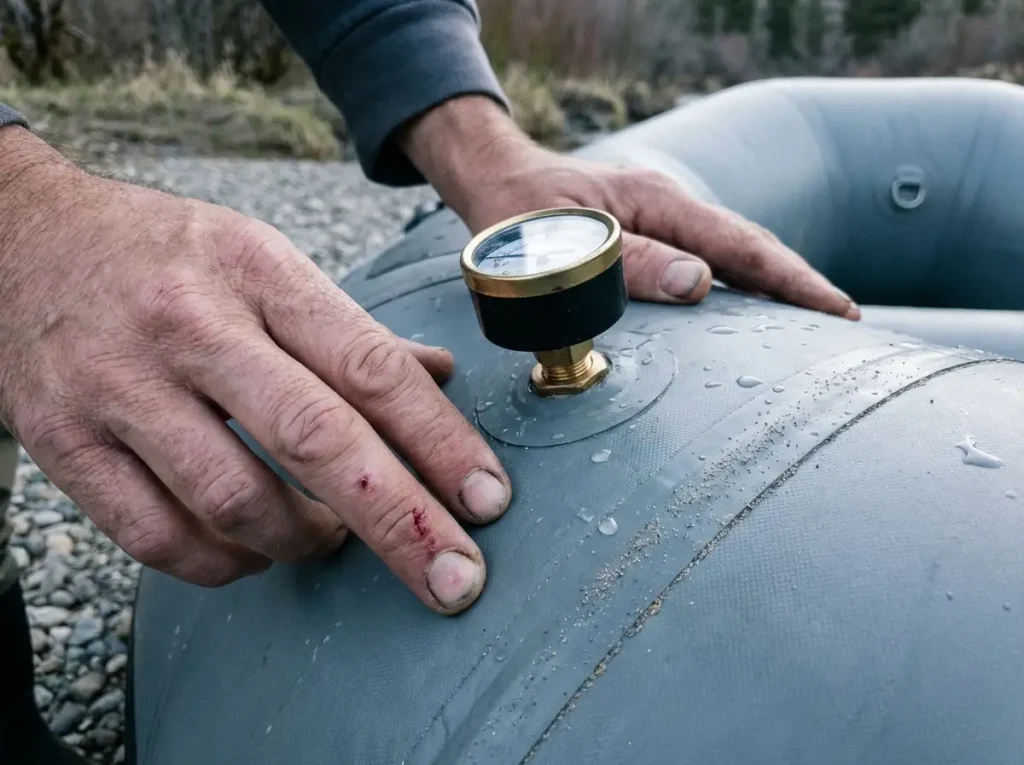
Get this section right and half the pump confusion disappears. The numbers are small, the consequences of ignoring them are not, and the volume-versus-pressure thing is the single most useful idea on this page.
Real PSI targets by craft (tubes, floors, SUPs)
A raft is not a bike tire, and that trips up almost everyone coming from any other inflatable. Raft tubes run roughly 2 to 2.5 psi, and a properly inflated tube should still give a little when you lean on it. Rock-hard is wrong. Drop-stitch and rigid floors are the opposite animal, running about 8 to 10 psi, and SUPs, or paddleboards, go higher still at 12 to 20 psi. Those numbers are why a drop-stitch floor runs far higher pressure than the tubes and needs its own high-pressure stage.
High volume vs high pressure (why one pump can’t do both)
This is the distinction that sells the wrong pump to good people. High volume means moving a lot of air quickly at low pressure, which is what tube fills want. High pressure means forcing air in against resistance, which is what a stiff floor wants. They pull in opposite directions, and most single pumps are built for one or the other.
A high-volume tube pump will fill your tubes beautifully and then stall out trying to firm a drop-stitch floor. That floor is also why self-bailing boats raise the high-pressure question at all, since self-bailing floors are the reason the high-pressure question even comes up. If you run a drop-stitch floor, plan for a two-stage pump or a dedicated high-pressure finisher from the start.
Under-inflation, taco-ing, and the afternoon-sun swing
A soft boat is not just slow off the ramp. It handles badly and it is less safe. Under-inflate a raft and it tacos in holes, folds around rocks, and sits low in the water where it should ride high. Boaters use the word taco because that is exactly what a soft tube does when a hydraulic grabs it.
Then there is temperature, which nobody warns first-timers about. Air expands as it warms, so a boat you pumped firm on a cold morning can climb past its limit by mid-afternoon under direct sun. NRS warns that raft pressure climbs as the day warms, so a cold-morning fill needs an afternoon burp. Let a little air out at lunch on a hot day and you spare the seams. A pressure gauge ends the guessing at both ends of the day.
Don’t trust your eyes, trust the give. A raft tube at pressure dents about a thumb’s width under hard palm pressure and springs right back. If it feels like a drum it’s over; if your hand sinks in, it’s still soft.
Valves and Adapters (the Launch-Killer Nobody Mentions)
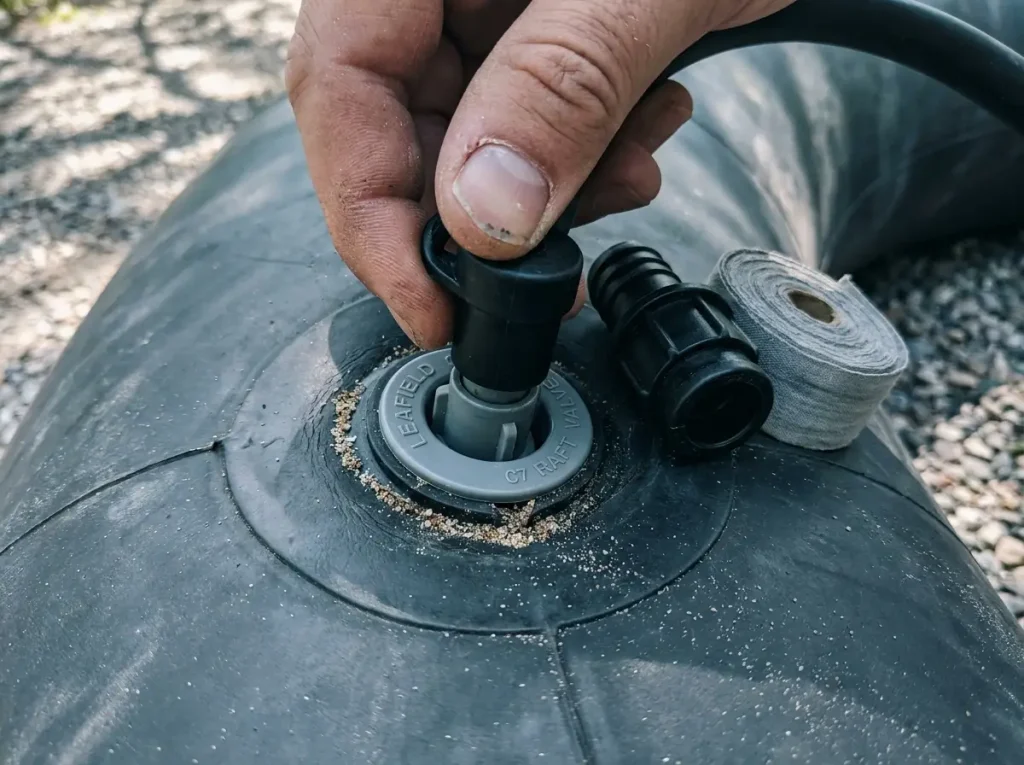
You can own the best pump on the river and still be stuck on the ramp if its adapter won’t twist into your valve. This is the cheapest part of the kit and the one that ends trips, so it earns its own section.
The common valve standards explained
There are more than a dozen valve adapter standards floating around, and they do not all play nice. The ones you will actually meet are Halkey-Roberts, Leafield C7 and D7, Summit, Bravo, AD-2, and the Boston or mini-Boston style. Each has its own thread or bayonet fitting, which is why a pump that fits your buddy’s boat may not fit yours.
How to identify the valve on your boat
A quick field read covers most cases. Leafield C7 valves show up on commercial rafts and premium SUPs. Halkey-Roberts is common on SUPs and inflatable boats. Boston valves are the two-way kind you mostly see on pool toys and cheaper floats. Look at the valve before you buy a pump, not after, and confirm which adapter your pump needs to mate with it.
Carrying the right adapters (and not losing them)
The adapters are tiny and they vanish into car mats and tall grass. Buy the ones your boat uses, then keep them with the pump so they travel together. The same care pays off elsewhere too, since the same kit that holds air at the valve patches a leak in camp when a valve seats poorly or a seam weeps.
Tape the adapters your boat actually uses right to the pump hose. They walk off in the grass, and the trip that dies at the ramp is always the one where the only matching adapter stayed home on the workbench.
Best Hand and Barrel Pumps
These are the pumps that finish the job, the muscle that takes your tubes from shaped to firm. Whatever electric you run, one of these should ride in the boat as the closer.
High-volume barrel pumps for full-size rafts
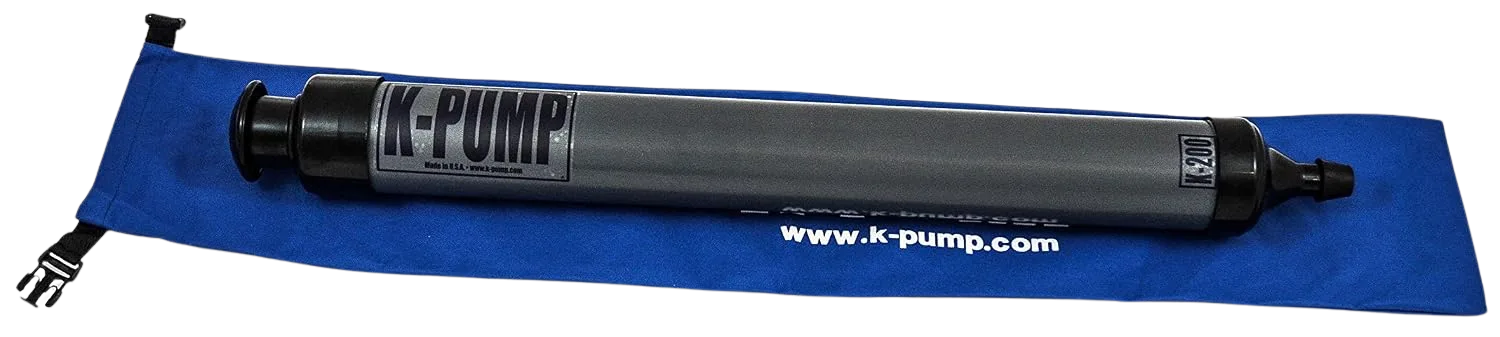
The K-200 is the pump most full-size raft owners settle on after they get tired of fighting smaller units. It moves enough air to make a big tube fill feel reasonable, and unlike a lot of electrics it will actually take that tube the rest of the way to pressure. If you own one boat and want one pump that does the whole job, this is the honest default.
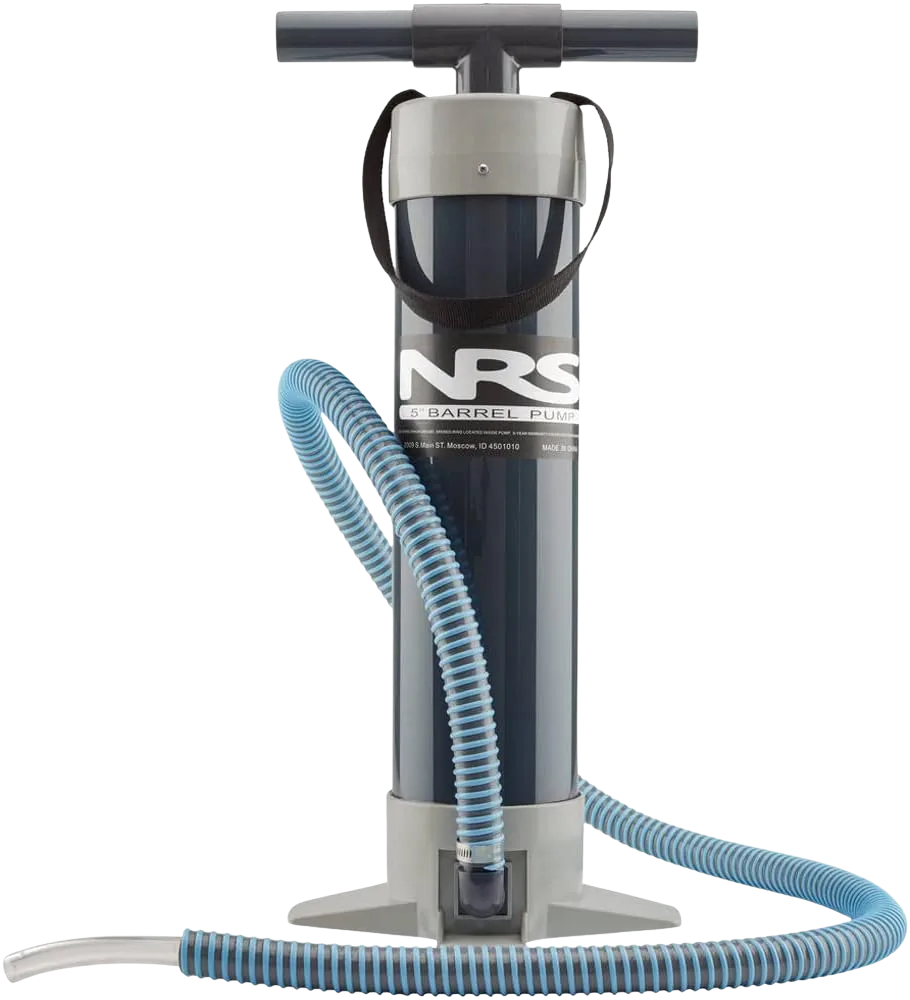
The NRS 5-inch is the barrel pump that has been on river trailers forever, and it keeps its place because it is simple and tough. The wide base means it does not tip on uneven ground while you lean into it, and the serviceable O-ring is the difference between a pump you fix in five minutes and a pump you replace. Sand and river water do not scare it.
Compact pumps for IKs and smaller boats
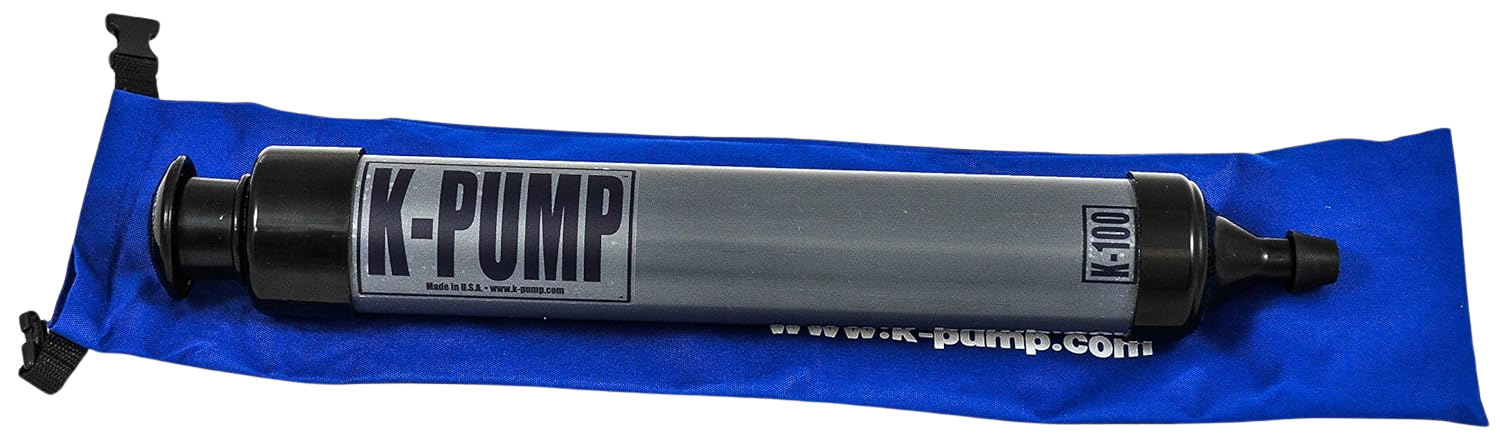
If your boat is an inflatable kayak, a small raft, or a float for mellow water, the K-100 is the right amount of pump. It is light, it packs small, and it does not cost much, which makes it a sensible first buy before you know whether you will ever own a bigger boat. Step up to the K-200 only when the boat outgrows it.
Two-stage high-pressure pumps for drop-stitch floors
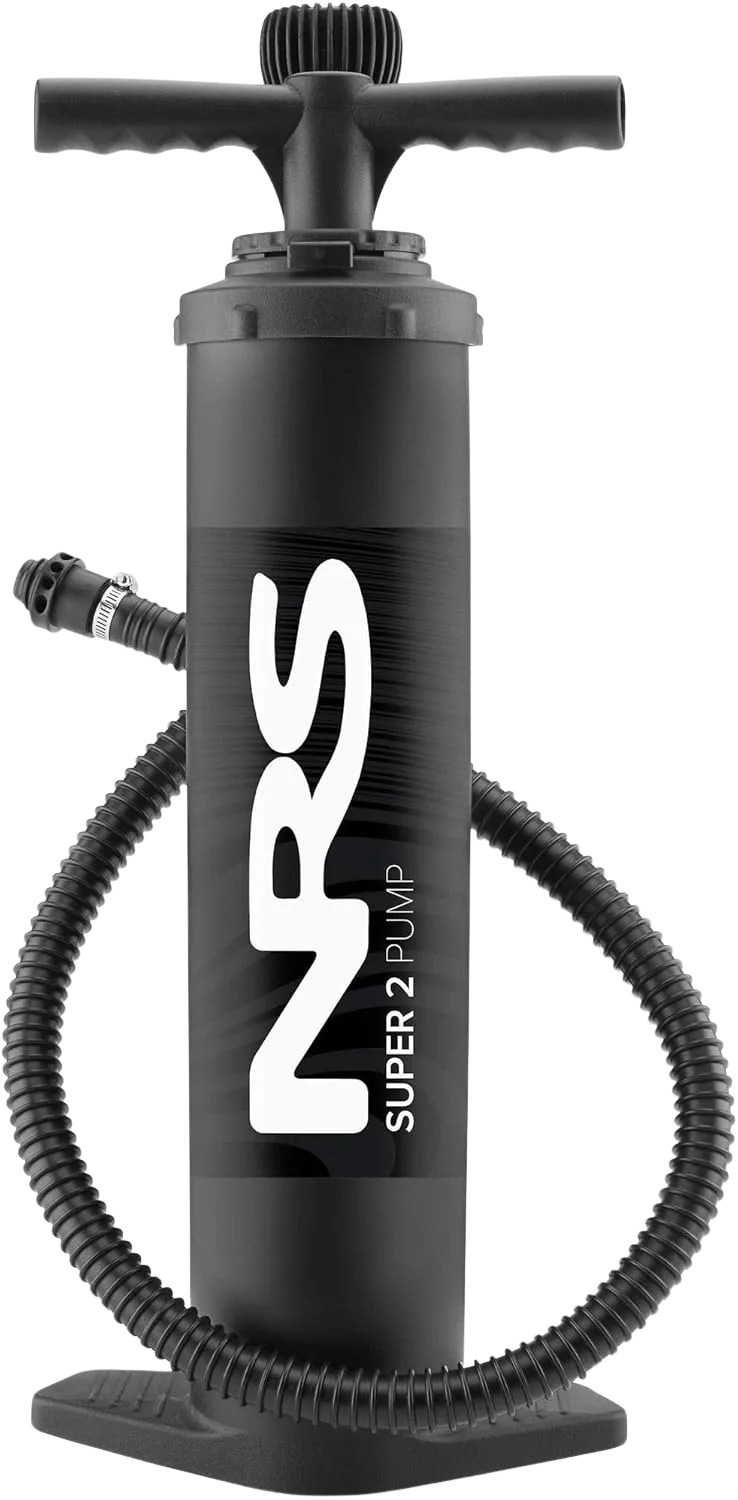
If your boat has a drop-stitch floor, this is the hand pump that solves the volume-versus-pressure problem in a single tool. Dual-action mode fills the tubes quickly, then you flip it to single-action to push the floor up to its much higher target, and the built-in gauge tells you when you are there. It costs more than a plain barrel pump, but it replaces two pumps. If you want a leaner, cheaper option, the single-chamber NRS High-Pressure Super Pump reaches up to 20 psi with a gauge and covers most drop-stitch floors on its own.
Best 12V and Electric Inflators
An electric raft pump is the arms-saver, the thing you clip to your battery so you are not hand-pumping four tubes from flat. Here are the 12V and cordless units worth owning, plus one honest warning about the ones that are not. A quick safety note first: makers warn against running the vehicle engine while you pump off the battery, since voltage spikes can cook the unit. Most 12V units also carry a continuous-use limit, often around 20 minutes, so give the motor a rest before it overheats.
12V inflators for bulk fill
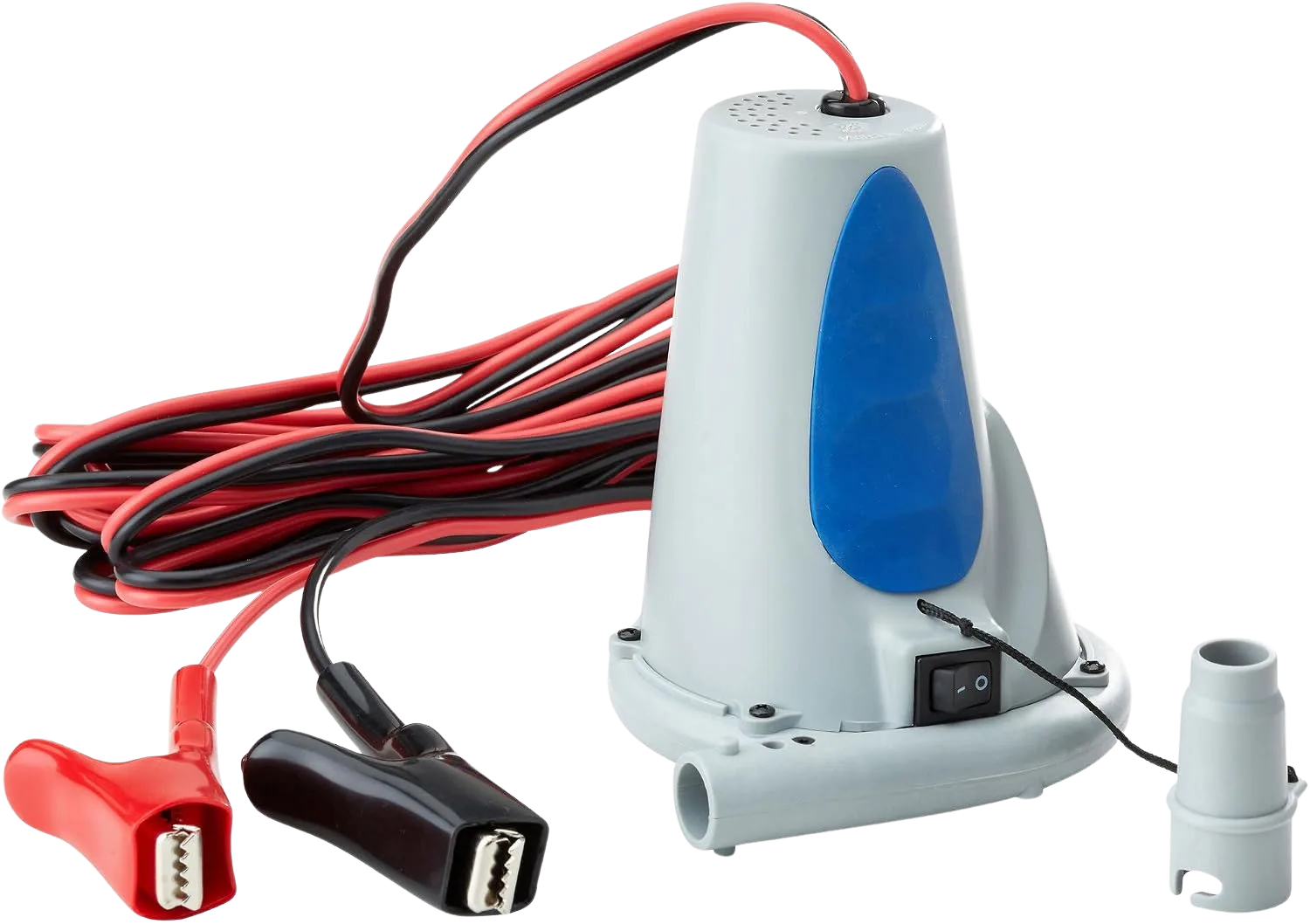
The Blast is the 12V a lot of boaters end up with because it is rugged and it just works. It shapes tubes fast off the vehicle battery, and you pair it with a barrel pump for the finish. Treat it as the bulk-fill half of the kit and it will save your shoulders for years.
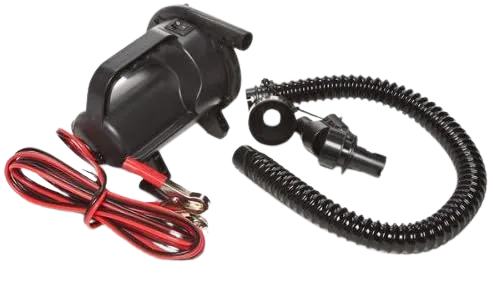
If you only want to buy a 12V once, this is the one boaters point to. The Hurricane, sold under both the AIRE and Outcast names, has a reputation for running for a decade and then some while cheaper units burn out around it. It is hands-free with the right adapter, so it fills a chamber while you rig the rest of the boat. Pricier up front, cheaper over ten years.
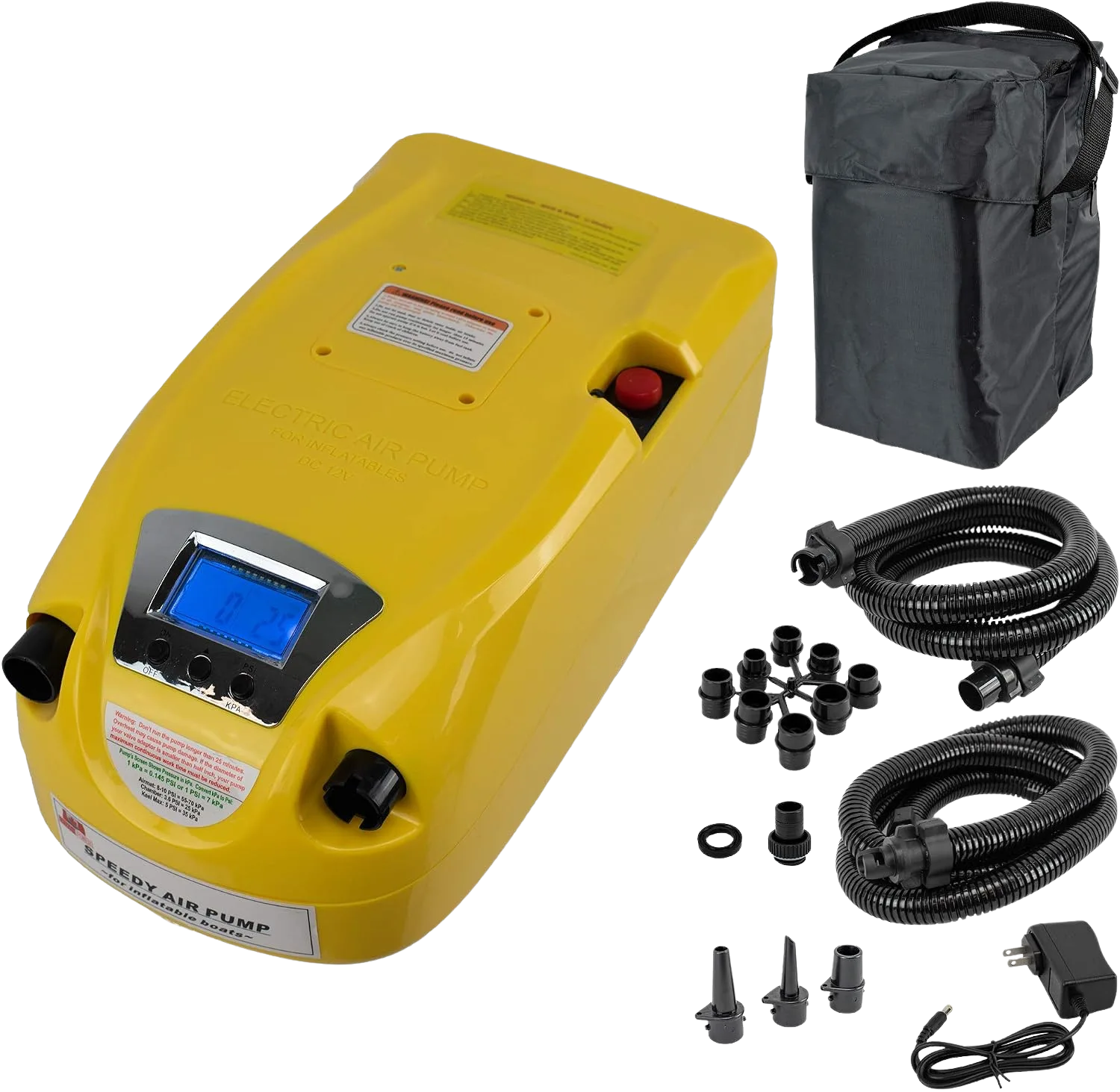
The Seamax two-stage is for boaters who would rather let the electric carry more of the load. It moves volume in its first stage and then pushes to higher pressure in the second, so it closes more of the gap a plain 12V leaves behind. You may still top off the last bit by hand, but it shortens that work.
Cordless rechargeable for high-pressure floors and SUPs
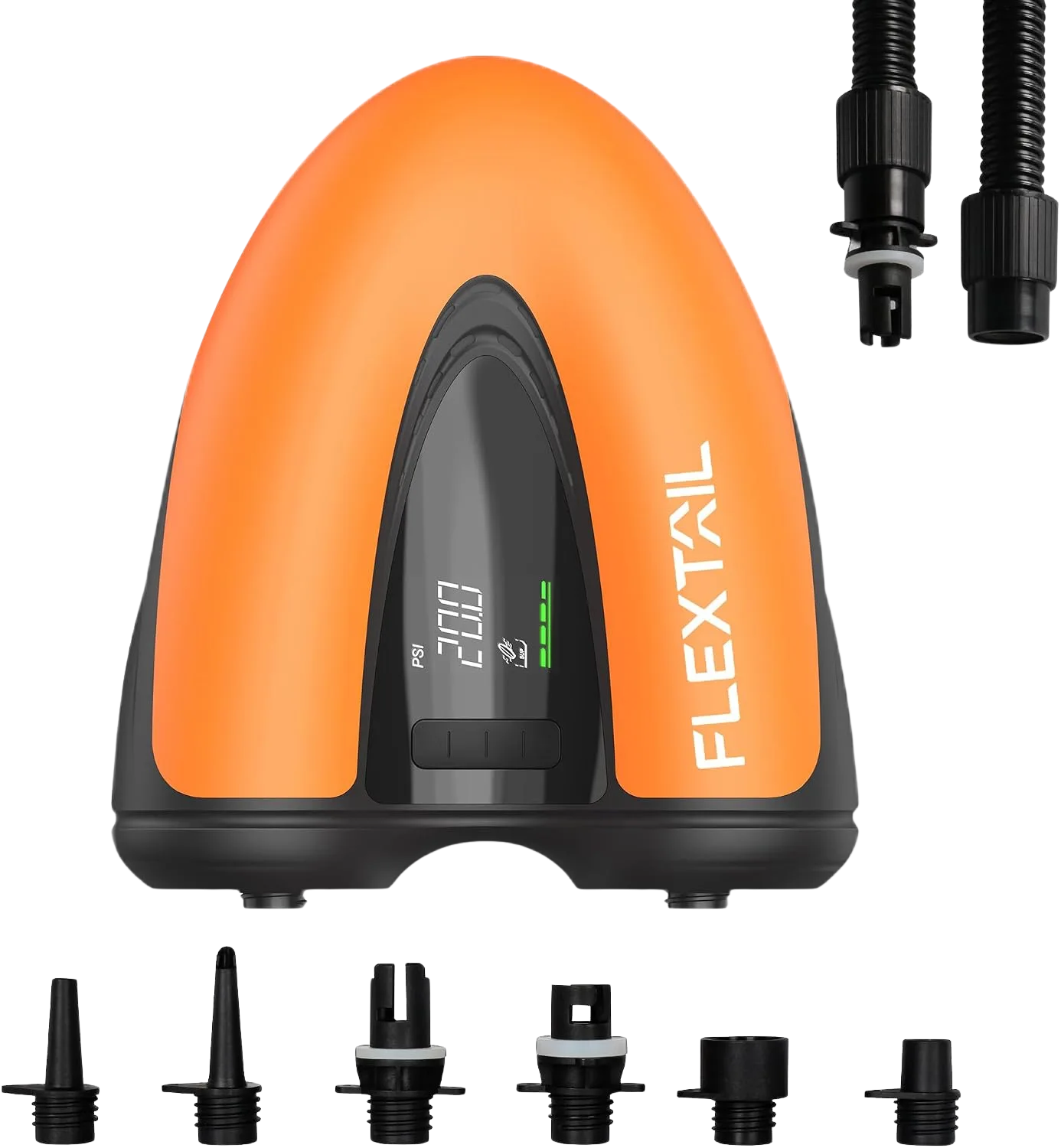
The FLEXTAIL EVO is the cordless unit to look at if your trouble spot is a drop-stitch floor or a SUP rather than low-pressure tubes. It runs dual-stage up to 20 psi and cuts off when it hits the pressure you set, which means you can walk away and rig something else. The trade-off is the usual cordless one: you are now charging a battery, so top it off before the trip. The lower-pressure FLEXTAIL Max Boat Pump exists too, but it tops out near 1.7 psi, so it is a tube filler, not a floor pump.
What to Skip on Cheap SUP Inflators
Here is the warning the affiliate roundups skip because it costs them a sale. The cheap, no-name SUP inflators, the ones boaters call Chinamart or Temu quality, are built for small high-pressure SUP boards, not big low-volume raft tubes. People keep buying them expecting a raft pump and getting burned.
The field reports are consistent. One of these units topped off a single chamber with about half a psi in 10 to 15 minutes, the same time it took to hand-pump the rest of the boat. Worse, they tend to burn out in two or three seasons, so you replace them again and again. That is the math behind buy-once-cry-once: a proven inflator like the Hurricane outlives a stack of disposables and costs less over its life. If a pump’s whole pitch is that it is cheap, that is usually the most expensive thing about it.
Building Your Put-In Pump Kit (and Keeping It Alive)
A single pump is not a kit. The boaters who are rigged and ready while everyone else is sweating have a system, and it is not complicated or expensive to copy. This is the part no roundup assembles, so here is the whole thing in one place.
The two-pump system that actually works
The working kit is four things: an electric or 12V for the bulk fill, a hand or barrel pump to finish to pressure, a pressure gauge to confirm, and the valve adapters your boat actually uses. The electric does the volume, the hand pump does the pressure, and the gauge settles every argument about whether the boat is firm enough. Round it out with a no-battery foot pump as backup, and a dead battery never ends your day.
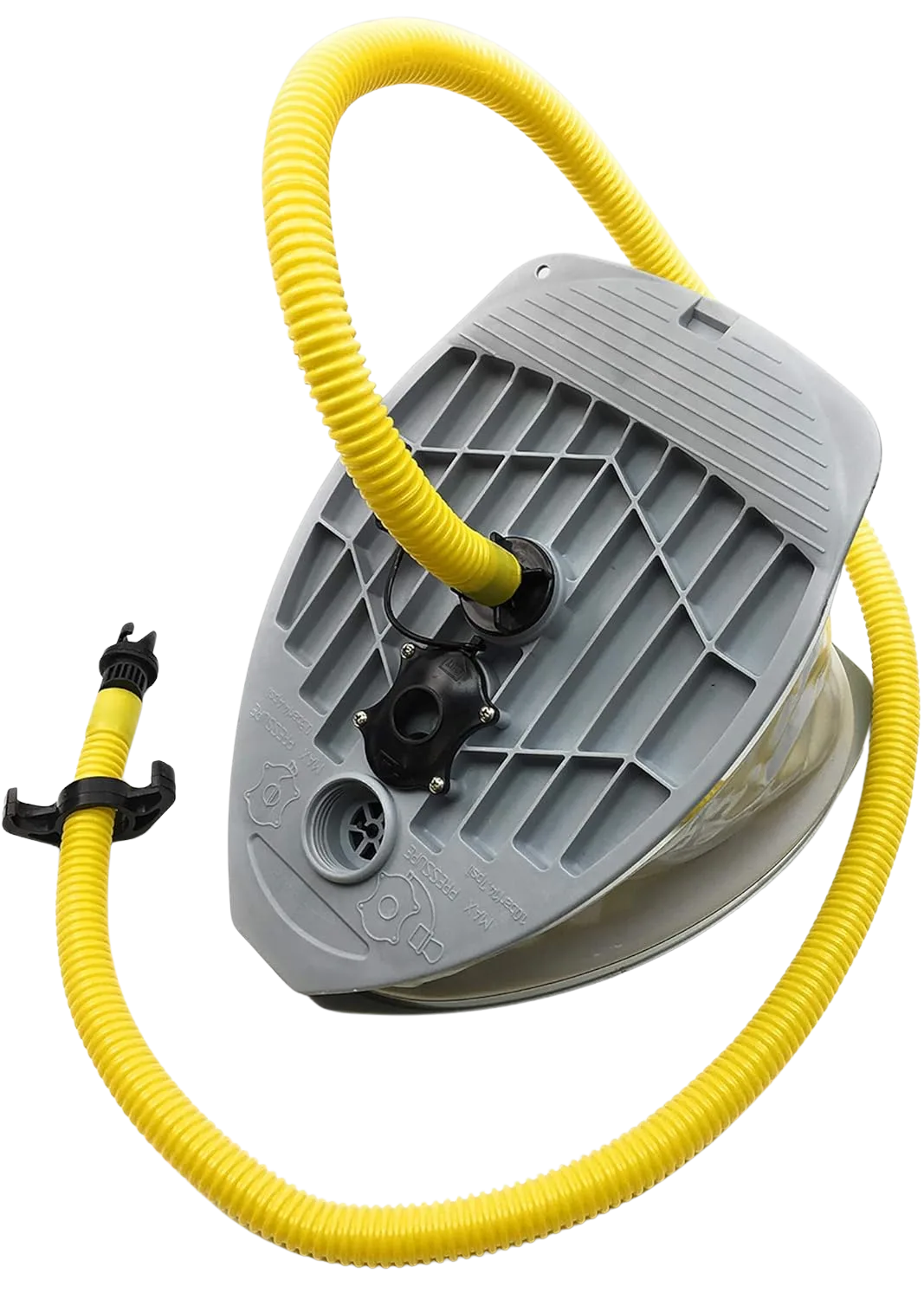
The honest budget truth is that the foot pump that came with your boat is fine to start, and a double-chamber unit like this Seamax 9L is a step up that still costs little. It moves real volume and reaches up to 15 psi by foot, so it is not just a sad backup. It can start a fill or firm a floor when your battery is dead, which is exactly when you need it most.
Field maintenance that keeps a pump alive
A pump that suddenly will not move air feels like a disaster at the ramp and is usually a five-minute fix. Barrel-pump O-rings dry out and shrink over time, and when they do the pump strokes but pushes nothing. Keep white lithium or silicone grease in the repair kit and put a thin film on a dry inner wall, never random spray lube, because a dab of the right grease on the O-ring keeps a barrel pump pumping for years. When you reassemble, tilt the piston in at an angle so you do not pinch the O-ring on the way down.
A barrel pump that strokes but moves no air is almost always a dry or pinched O-ring, not a dead pump. Carry a spare O-ring and a small tube of silicone grease, and you can revive it on the gravel bar in the time it takes someone to find the cooler.
When to upgrade and what to skip
There is a sane order to all this. Start with the foot pump you already have and a gauge, and run that until the arm work annoys you. When it does, add a 12V for the bulk fill and a barrel pump for the finish, which is the kit most weekend boaters land on. Skip the throwaway SUP inflators entirely, and only buy a two-stage or cordless high-pressure pump if you actually run a drop-stitch floor. Follow the clockwise-to-shape, counterclockwise-to-pressure sequence NRS recommends every time, fill each chamber to shape first and then top each to pressure, and the boat comes out balanced. The pump and adapters belong on your packing list too, so put the pump and adapters belong on your river gear checklist next to the throw bag. One last caution tied to that afternoon-sun swing: do not chase a high number on a cold morning, because over-pressuring strains the seams your boat’s material has to hold.
Conclusion
Three things to carry off this page. First, plan for two pumps, a 12V or electric for the bulk fill and a hand or barrel pump to finish to pressure. Second, know your numbers and your valve, because tubes want about 2 to 2.5 psi, drop-stitch floors want 8 to 10, and the wrong adapter ends a launch before it starts. Third, buy once on the parts that matter and skip the throwaway SUP inflators that die in two seasons.
Before your next trip, run the sequence: fill each chamber to shape, top each to pressure, check it with a gauge, and burp it at lunch if the sun comes out. Then go run something.
Frequently Asked Questions
01What kind of pump do I need to inflate a raft?
For a full-size raft, most boaters run two pumps: a 12V inflator for the fast bulk fill and a high-volume hand or barrel pump to finish to pressure. A foot pump works as a no-battery backup or a starter. Match the volume to your boat size.
02Can you inflate a whitewater raft with an electric pump alone?
Not fully. Most 12V inflators top out around 1.5 to 2 psi, which shapes the tubes but stops short of firm raft pressure. Use the electric for the bulk fill, then finish with a hand or barrel pump and confirm with a gauge.
03What PSI should a whitewater raft be inflated to?
Raft tubes run roughly 2 to 2.5 psi and should still give slightly when pressed, not feel rock-hard. Drop-stitch floors are different, running about 8 to 10 psi, which needs a high-pressure stage your tube pump cannot reach.
04Are cheap 12V raft pumps worth it?
Usually not for the long haul. Bargain SUP-style inflators often deliver under 1.5 psi and burn out in a couple of seasons. A proven unit like the AIRE Outcast Hurricane outlasts several disposables, so buying once tends to cost less over time.
05Do I really need a pressure gauge?
It is the cheapest way to stop guessing. A gauge confirms you have hit pressure instead of thumping the tube and hoping, and it helps you catch the afternoon-sun pressure climb before it strains a seam.