
In this article
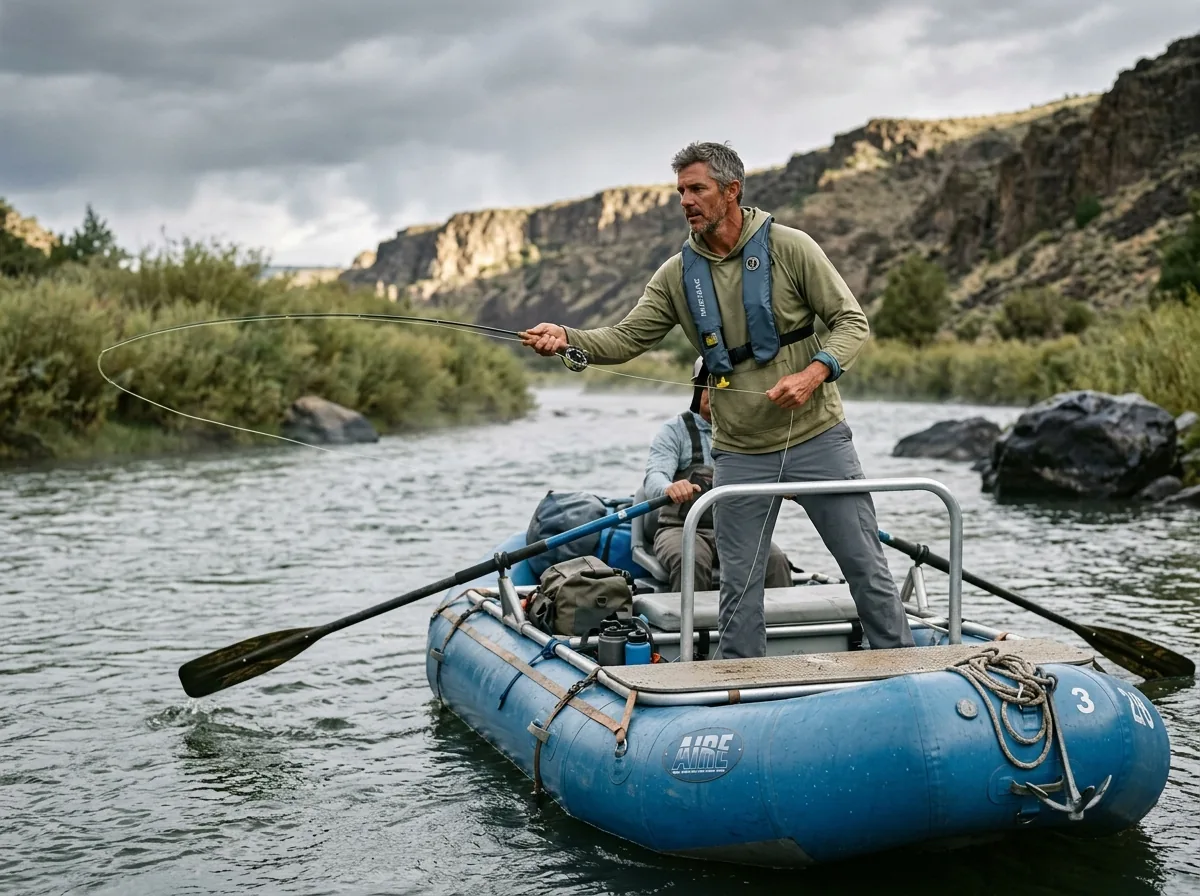
Picture yourself standing to punch a cast off the bow, one thigh braced against a lean bar, both feet planted on a casting deck. The exact rig that makes you steady while fishing is the same rig that can pin your feet if the boat rolls out from under you. Most fishing-frame guides never mention that, because they get written by fly shops and gear retailers, not people who run whitewater. This raft fishing frame setup guide walks the whole rig the way a river buddy would at the put-in: sizing, the rower, seating, thigh bars, a casting platform, rod holders, and an anchor system, then the safety layer and an honest way to build it without dropping a fortune on day one.
How to Size a Raft Fishing Frame to Your Boat
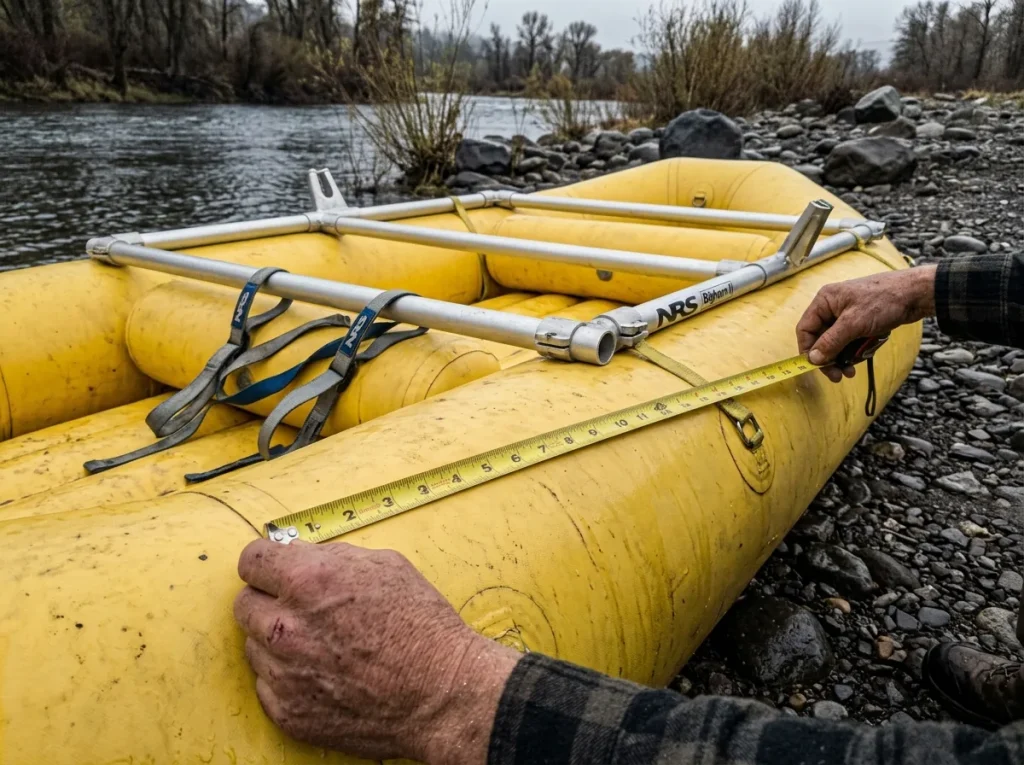
Before you buy anything, get a tape measure and read your own boat. The two numbers a frame is sized to are center-to-center (C2C) width, tube centerline to tube centerline, and flat tube length, and your raft frame should match the C2C. A raft running 60 inches C2C wants a roughly 60-inch frame, unless you plan to run double side rails. Guessing off the boat’s overall length is how people end up with a frame that either perches on the tubes without seating square or overhangs and works the tubes on every rock.
Two numbers trip people up. First, crossbars eat about 1.5 inches of usable bay length each, so if you are planning five bays, budget close to eight inches of “lost” length to the bars themselves or your cooler lands somewhere you did not draw it.
Second, a fishing frame should carry a little extra length beyond the standard sizing formula. You want slack so a swivel seat, a lean bar, or a casting platform can shift once you are actually casting from the thing, and so the angler keeps elbow room for a backcast instead of being locked into one layout the day it arrives. This is exactly the kind of geometry the retailers state as a bare formula and never explain.
When you are stuck between two widths, size up, not down. Boaters who run a 54-inch frame with a half-inch of overhang per side on a 53-inch C2C raft report the overhang is a non-issue, while an undersized frame never sits right. If you want the deeper background on which style of frame fits your water, start by picking the right raft frame type before you overbuy, and if you are weighing brands, here is how the major frame makers actually differ.
Start from a modular base with a clamp-on fitting system so anything you add later bolts on without redrilling. The NRS Bighorn II Raft Frame is a solid example of that kind of base: anodized aluminum, an adjustable 66-to-88-inch width, and the LoPro clamp system that accepts thigh bars, seats, and anchor mounts down the road. Getting that base squared and true is its own job worth doing carefully before you load a single accessory onto it.
Once the frame fits, leave it bolted to the trailer between trips instead of breaking it all the way down every time. Boaters who do this get on the water more often, because rigging goes from an hour in the driveway to strapping the boat on and driving.
Setting Up the Rower’s Station

The rowing station is the engine room, and getting it wrong is how a good day turns into dead shoulders by noon. Footwell width changes with what the rower sits on. Off a cooler, a dry box, or a flip seat you are looking at roughly 22 inches of well; off a mounted seat it opens up closer to 30. Set that before you commit seat and foot-bar positions, because it decides how much leg the rower has to push with.
Give the rower a foot bar or a deluxe foot bar to brace against. That push-off point is what saves your back on a long day, since the power in an oar stroke comes from the legs, not the arms.
Oar tower height and oar length go together, never separately. A taller tower, offered in the common 6, 8, and 10-inch heights, raises the pivot and needs a longer oar or the stroke geometry falls apart. If you are dialing that in, here is how to match oar-tower height to oar length without buying twice.
One thing the fishing-specific guides skip: the rower needs a clean sightline to the angler’s backcast. Set the station so whoever is on the oars is not blind to the lane behind the caster, or you will spend the day ducking flies and losing the boat’s angle at the same time. A rower who cannot see the back-cast cannot keep the boat where the fish are without hooking a hat.
Seating for the Angler and the Rower
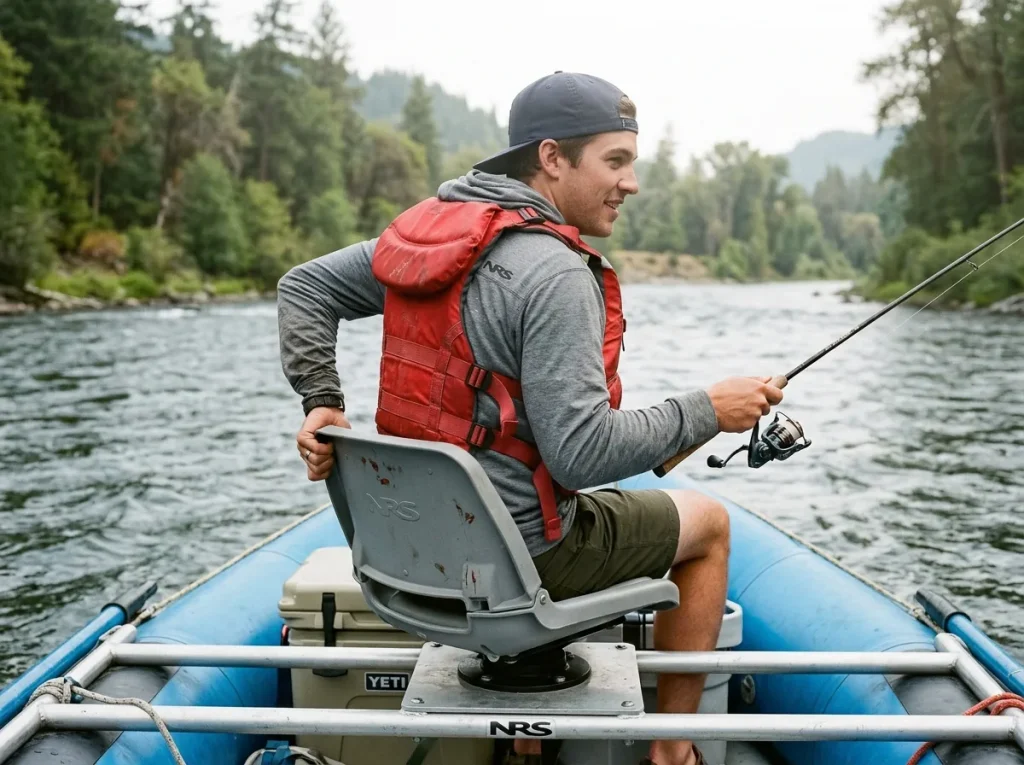
Seating is where a rowing frame stops being a rowing frame and starts being a fishing frame. The angler’s chair does the most work, so start there. A low-back seat keeps the backcast lane clear, which matters more than it sounds when you are throwing line all day. A high-back seat trades some of that clearance for all-day rowing comfort, so it often lands on the rower instead of the caster.
The piece that changes everything is a swivel seat. A 360-degree swivel lets the angler rotate to any casting position without shuffling the whole seat around, so you can turn on a rising fish instead of repositioning hardware. A clean pairing here is the NRS Low-Back Raft Seat mounted on the NRS Swivel and Plates for Padded Raft Seats: the low profile keeps your line lane open, and the swivel plate turns it into a full casting station.
Plan your stern seat mount or flip seat mount for a second angler before you drill anything, and space the seat so a standing angler’s knees are not jammed against the thigh bar at the moment of a hookset. That clearance is the quiet mistake that shows up later, and it ties straight into the next section.
Thigh Bars and a Casting Platform for Standing Casts
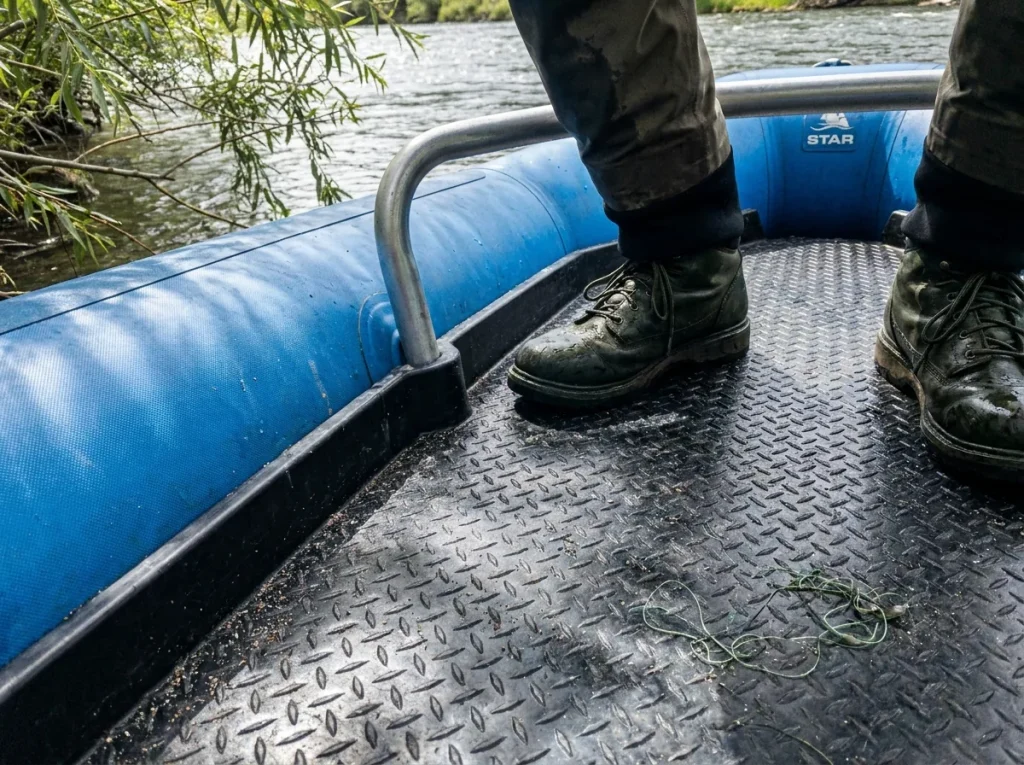
Standing to cast off a self-bailing raft is where you reach more water and where the risk starts, so rig this part with your eyes open. A thigh bar, sometimes called a lean bar, gives you a wrap-around brace so you can stand and cast without pitching over the tube on a wave.
The shape matters. A Y thigh bar and a U-shaped thigh bar wrap your legs differently, and the angled-end designs are built to cut the leg-and-foot snag a straight bar creates. That snag reduction is not a comfort feature; it is the difference between stepping out clean and getting hung up.
The casting platform is the other half, and its fit spec is non-negotiable. A casting deck made of HDPE must fit the tube chamber exactly. Too loose and you leave a foot-entrapment gap right where your boots go; too tight and it wears and pinches at the tube seam until it fails.
Measure the chamber and match the deck to it. Do not eyeball it and do not assume “close enough” is fine, because the gap you can barely see is the one a boot wedges into. That fit connects directly to how a foot gets pinned in current, which is the whole reason this is a spec and not a preference.
Dry-fit the casting deck on the tubes at home, then stand on it and rock your weight around before you ever drill or trust it on the water. Ask anyone who has caught the wobble at the ramp: a deck that shifts a half-inch underfoot on the first standing cast is a deck that needed to be checked in the driveway.
Rod Holders and On-Board Gear and Line Storage
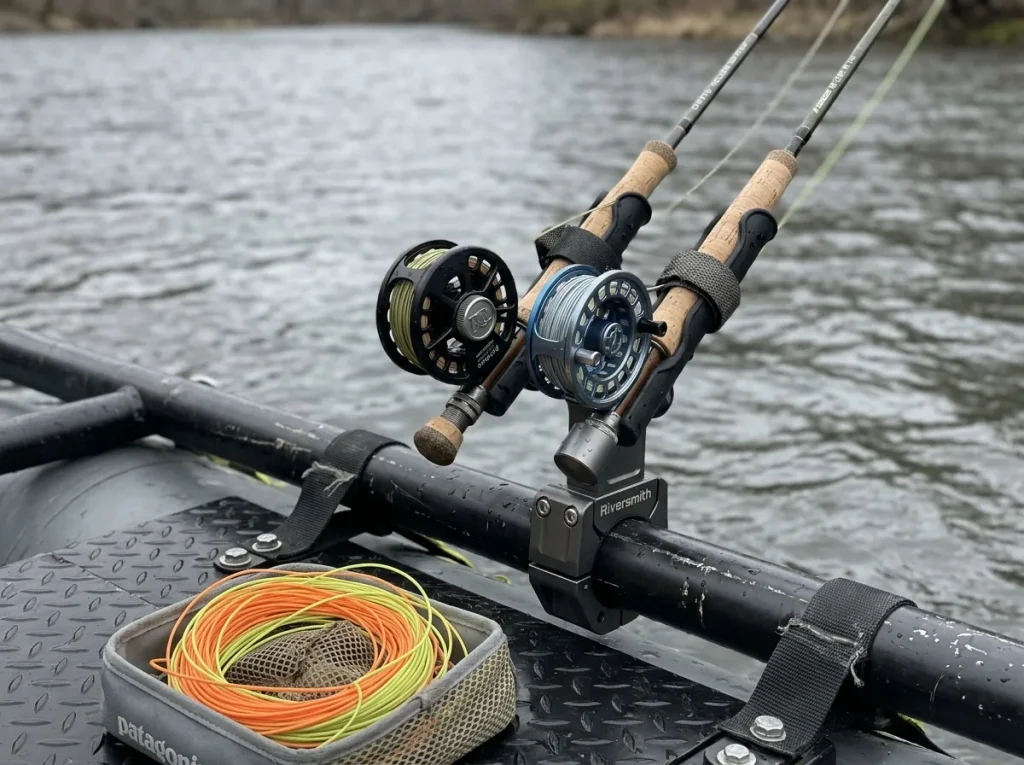
A rigged rod loose in the boat is a broken rod waiting to happen and a snag hazard the whole time. Rod holders or a frame-clamp rod carrier keep multiple rigged rods secured tip-up while you row between holes, instead of rolling around the floor catching on everything. The Riversmith Swiftcast Raft Rod Carrier is a purpose-built version that holds rigged rods tip-up through real whitewater, which is exactly when loose rods die.
Give yourself a stable surface too. A bolt-on, frame-width diamond-plate HDPE deck like the NRS Raft Cargo Platform gives you solid footing plus a mounting base for rod holders, side rail racks, and a stripping basket. That basket earns its keep by managing loose fly line so it does not wrap a foot or a cleat at the wrong moment.
Whatever you mount, lock it down with rated cam straps so nothing shifts or becomes a snag if the boat goes over; the same discipline that keeps a dry box rigged to survive a flip applies to every deck and rack on the frame. One common miss: people mount rod holders where they foul the oar stroke or block the rower’s sightline. Dry-fit before you drill, every time.
The Anchor System (Sizing It and Anchoring Safely)
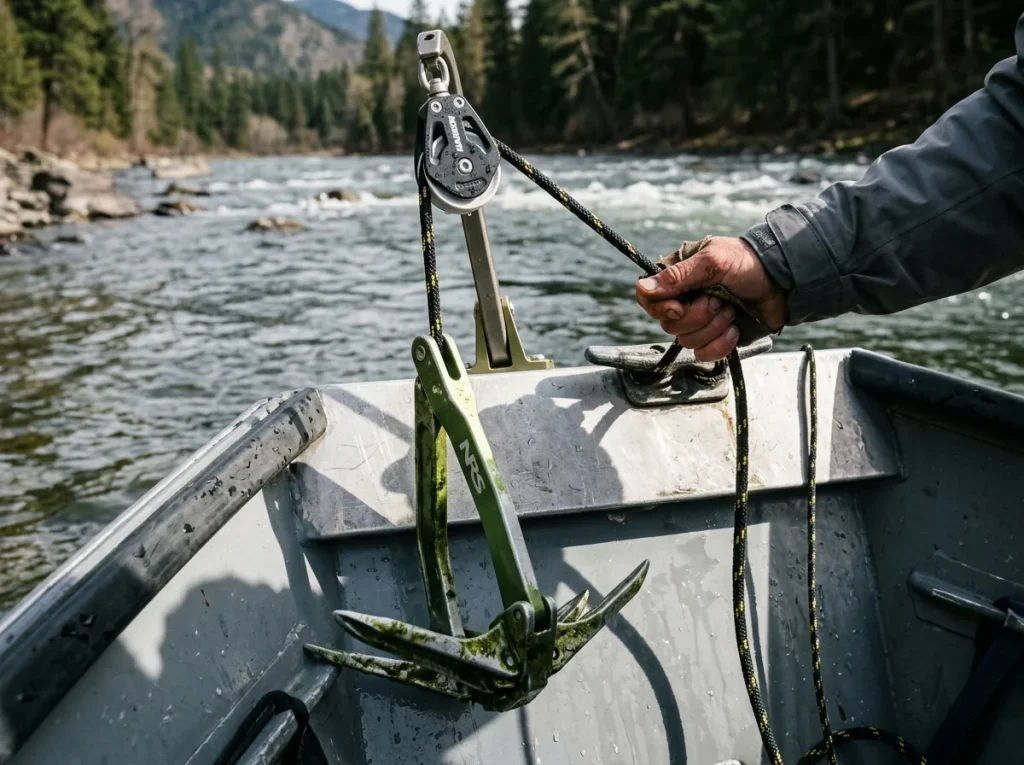
The anchor system is the last piece you add and the one with the sharpest edge. The rig is a stern mount, a pulley-and-cam cleat control run, rope, and a weight. The cam cleat lets you set and release the line from the rower’s seat, which is the whole point: you want to drop the hold and dump it fast without leaving your station. A complete stern setup pairs that pulley mount with a properly sized weight like the NRS Urchin Lightweight Boat Anchor.
Size the anchor weight to your boat, not to a generic “one anchor fits all” purchase. The working range runs roughly 18 pounds for a 9-to-10-foot raft up to about 35 pounds for a 14-to-15-footer, so match it to your length and current.
And here is the rule no fishing-only site leads with: never anchor in moving water beyond a gentle current. Water strong enough to load the line can pin or flip the boat if the anchor does not release clean, which is why guides who have seen it happen anchor in flat water and nowhere else. State river-safety guidance backs the same caution about standing and anchoring in current.
Rig the line so it releases clean, with nothing dead-ended and minimal slack, the same logic you use rigging the whole boat to flip-safe. Use a rescue rope grade 3/8-inch line, not hardware-store cord that swells and jams.
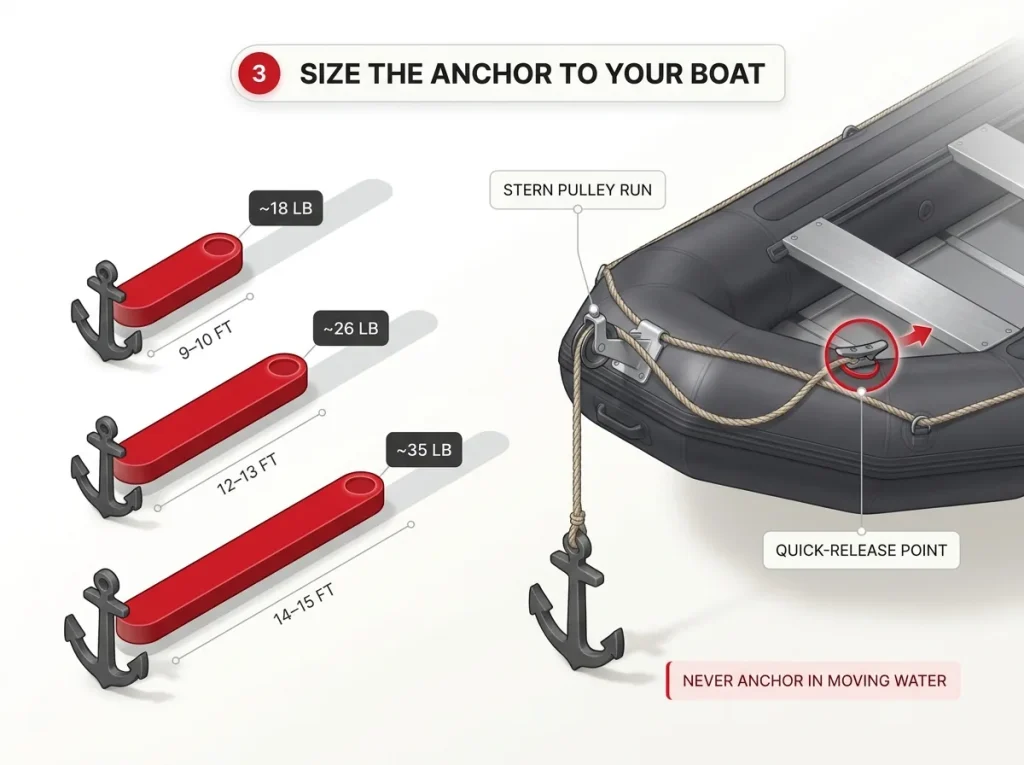
A note on the mount hardware itself: a forged-fitting stern anchor system built around the NRS LoPro pattern is the clamp-on version most private boaters run, and it drops onto the same frame rails as the rest of your gear. Pick the mount that matches your frame’s fittings so the whole system reads as one rig, not a bolt-on afterthought.
Set the cam cleat where your rowing hand can reach it without leaning off your seat. If dumping the anchor means standing up or twisting around, you will hesitate at the exact moment you cannot afford to, which is the moment the current decides it wants the boat.
The Whitewater-Safety Layer Nobody Talks About
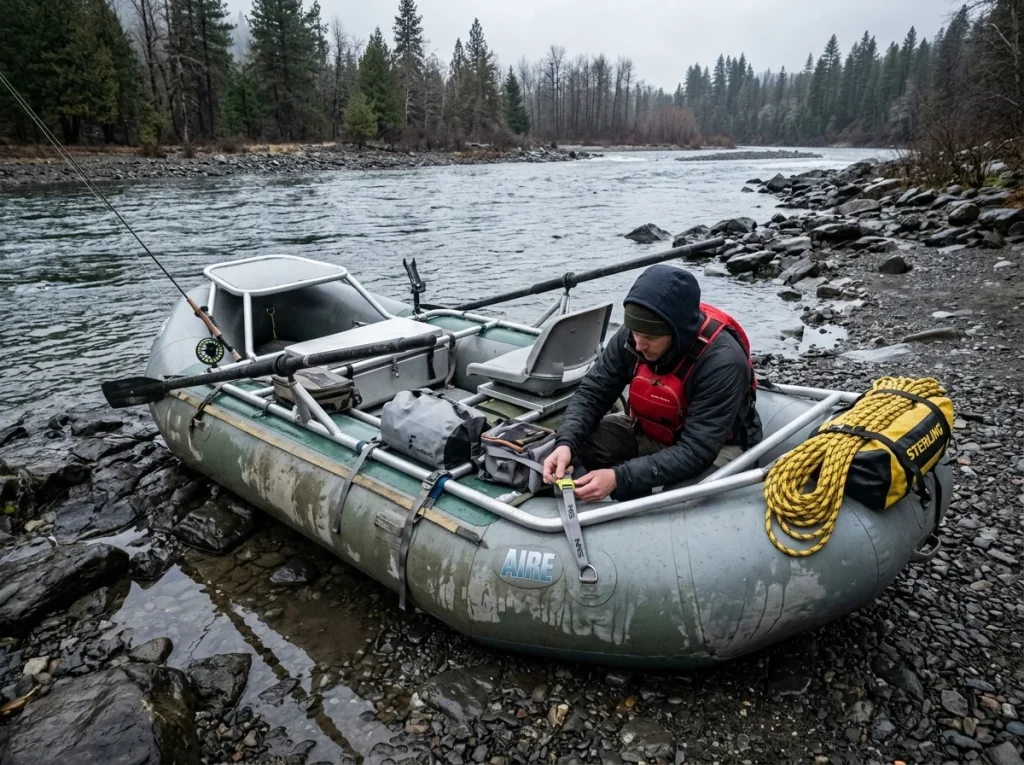
Every component you just bolted on changes what happens if the boat rolls. The thigh bar, the casting deck, the anchor line, the rigged rods: each one is a stability feature on a good day and a snag point on a bad one. This is the part a fly shop will not write and a river runner will not skip, so read it twice.
Start with the mechanism. As American Whitewater’s safety code defines it, foot entrapment happens when a foot gets caught in a crack, crevice, or undercut and pinned, most often when someone stands up in water that is mid-thigh to mid-torso deep. The same mechanics make a loose casting-deck gap or a thigh bar set too close to the seat a genuine hazard, not a comfort quibble. Your foot does not know the difference between a slot in the riverbed and a slot in your rig.
Now picture the swim. Feet braced on a deck, a thigh bar across your legs, a rod rigged in a holder, and an anchor line in the water: each is a way to get held when the boat is upside down and you need to be free. Rig against it.
The same rule that governs throw-rope rescues, taught in university whitewater rescue coursework, applies to your whole fishing rig: nothing dead-ends on a person or a fixed point without a way to release, and you strip out slack everywhere you can. Know how you would self-rescue, getting your feet off the deck and back to the boat, before you are standing to cast in current, not while it is happening.
It helps to understand what a swim under the boat actually demands so the plan is already in your head. None of this means standing to fish is off the table. It means you rig the standing platform, the bars, and the anchor so the boat that helps you cast is also the boat you can swim away from clean.
Building It in Stages on a Real Budget
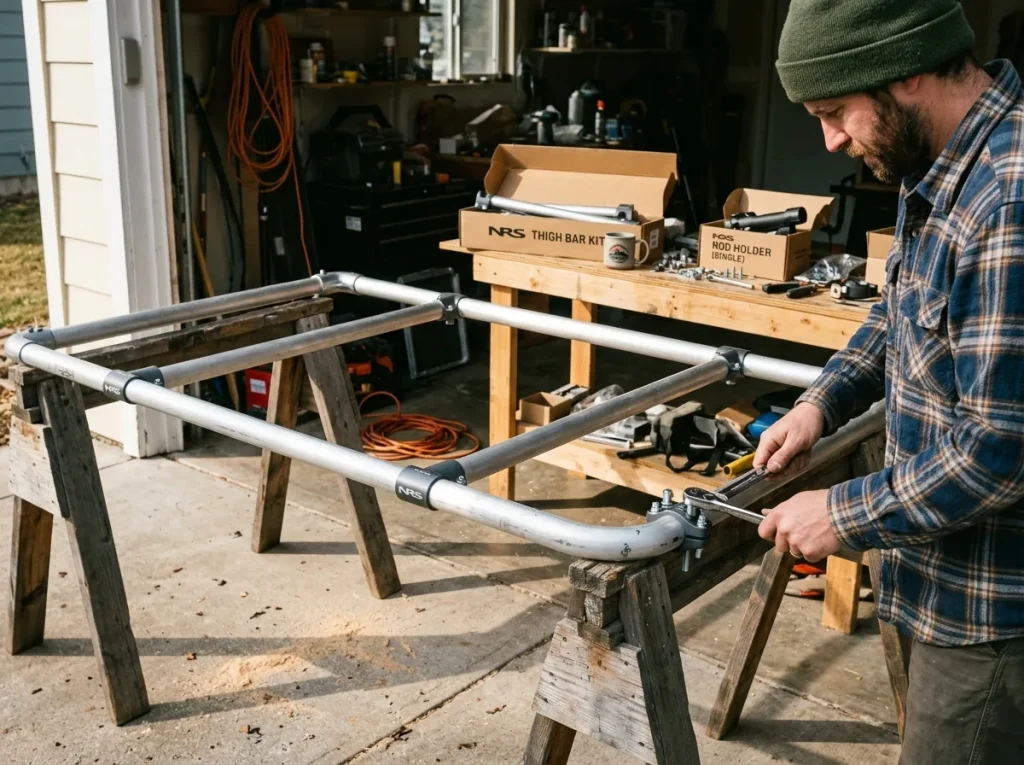
You do not need the fully accessorized package on day one, no matter how good the pre-built photos look. The smart build is three separate, stageable purchases, not one big receipt.
Buy the modular whitewater base frame first, the budget frame everything else clamps onto. Add the thigh bar and rod holders the next season, once you know how you actually fish. Add the anchor system last, because it is its own line item and the piece you can float without.
This works because the fittings are modular. A clamp-on system like NRS LoPro means the accessories you add later do not need a new frame, just new clamp-on parts, so nothing you buy in stage one gets thrown away in stage two.
Private boaters have a word for skipping this, and it is a warning: “overbuy,” ordering a fully accessorized custom frame before you know what you reach for. Buy the base, run it a season, and let your own fishing tell you which piece comes next. If you want the honest math on what a full frame build runs before you commit, here is the frame cost nobody quotes up front.
Wrapping It Up
Size the frame to your raft’s center-to-center width and leave a little casting slack, then buy a modular base you can build on. Remember that the thigh bar, the casting deck, and the anchor line that make you stable are the same parts that can hold you in a flip, so rig every one of them to release clean. Build in stages and let the fishing tell you what to add next, instead of buying the big package blind.
Before your next float, walk your own rig at the ramp and find every point that could catch a foot if the boat goes over. Fix those first, catch fish second.
Frequently Asked Questions
01What is the difference between a rowing frame and a fishing frame?
A fishing frame is a rowing frame plus the parts that let someone cast: a swivel seat, a thigh or lean bar, a casting platform, rod holders, and usually an anchor system. The base frame and sizing are the same. The fishing build just clamps more on.
02What size raft frame do I need for fishing?
Match the frame width to your raft’s center-to-center tube measurement, and leave a little extra length for accessories. When you are between sizes, size up. A small overhang beats an undersized frame that never sits square.
03Do you need an anchor system on a fishing raft?
Not to float, but most anglers add one to hold a position over fish. Size the weight to your raft length, roughly 18 to 35 pounds, and never anchor in moving water beyond a gentle current. A line that will not release clean can pin or flip the boat.
04Can you stand up and cast safely from a raft?
Yes, with a thigh bar and a properly fitted casting deck, but the fit matters. The deck must seat tightly to the tube chamber. A loose gap or a thigh bar set too close to the seat is a foot-entrapment hazard, not just a comfort problem.
05How much does it cost to set up a fishing raft frame?
It ranges widely, because it is really three separate purchases: a modular base frame, then seating, thigh bar, and rod holders, then an anchor system. Build in stages instead of buying a fully accessorized package on day one.