

In this article
You dip a hand off the raft tube at the ramp, the water feels brisk but fine, and you decide the fleece in your dry bag is overkill. Three hours later you’re soaked to the skin in a cotton hoodie, shivering hard enough that your hands won’t work the way you need them to. Air temperature and water temperature lie in opposite directions, and the base layer against your skin is the one piece still doing its job when a wave folds you out of the boat. Get the fabric, the fit, and the weight right, and cold water stops being the thing that ends your day early.
Why Your Base Layer Matters More in Cold Water Than You Think
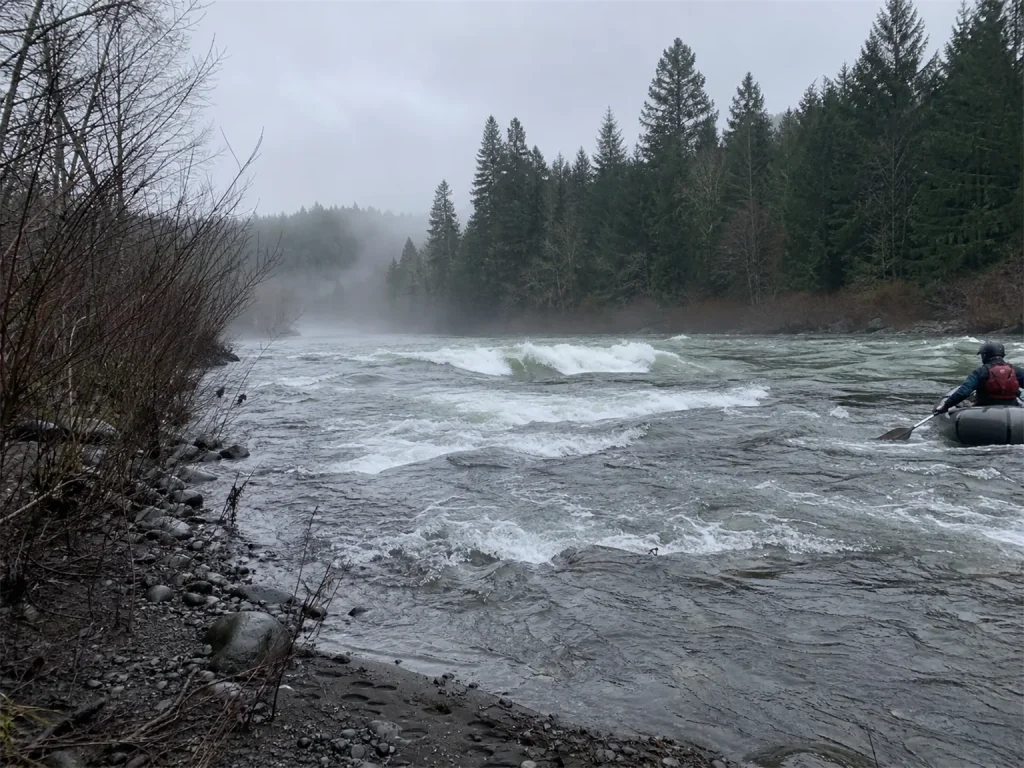
Water pulls heat out of you far faster than air at the same temperature, up to about 25 times faster according to the National Weather Service’s cold water safety guidance. That single fact is why a base layer that feels plenty warm standing on the bank can lose most of its value the instant you go in. You aren’t dressing for how the air feels at the put-in. You’re dressing for immersion.
Early-season snowmelt and spring runoff are the classic trap, where the air is pleasant and the water is barely off freezing. Veteran boaters keep a simple gut check for exactly this, the 120-rule: add the air temperature and the water temperature together, and if the total comes in under 120°F, you dress for the swim, not the sunshine. That’s the whole reason base-layer choice sits closer to safety gear than to comfort wear on a cold river.
There’s a second reason cold water gets people, and it hits before hypothermia is even in the picture. Cold shock is the gasp-and-hyperventilate reflex that hits the moment you plunge into cold water, and roughly one in five cold-water immersions turn fatal in that first minute alone. A base layer does nothing to stop that first gasp. What it does is buy you time on the back end, once you’re through the initial shock and swimming for shore with your coordination already fading. If you want the full picture of what cold-water immersion actually does to you, it’s worth understanding before your next early-season run.
This is where cotton earns its bad reputation. Every serious guide agrees on it: cotton soaks up water, holds it against your skin, and loses essentially all its insulating value once wet. It’s not neutral when it gets soaked, it actively works against you, wicking heat out all day. Ask around at any boat ramp and you’ll hear the same confession, that somebody wore a cotton shirt “just for the drive there” and paid for it. Cotton socks and underwear get people just as often as cotton shirts.
The stakes are real without being complicated. Hypothermia sets in clinically when your core temperature drops to around 95°F, only about three and a half degrees below normal. A long day in a wet layer with wind on the water can walk a paddler there even when the river “felt fine” the first hour. Once you cross into genuinely cold water, the base layer alone stops being enough and you’re into wetsuit-or-drysuit territory, which is its own decision.
Merino Wool vs Synthetic and What Keeps You Warm Wet
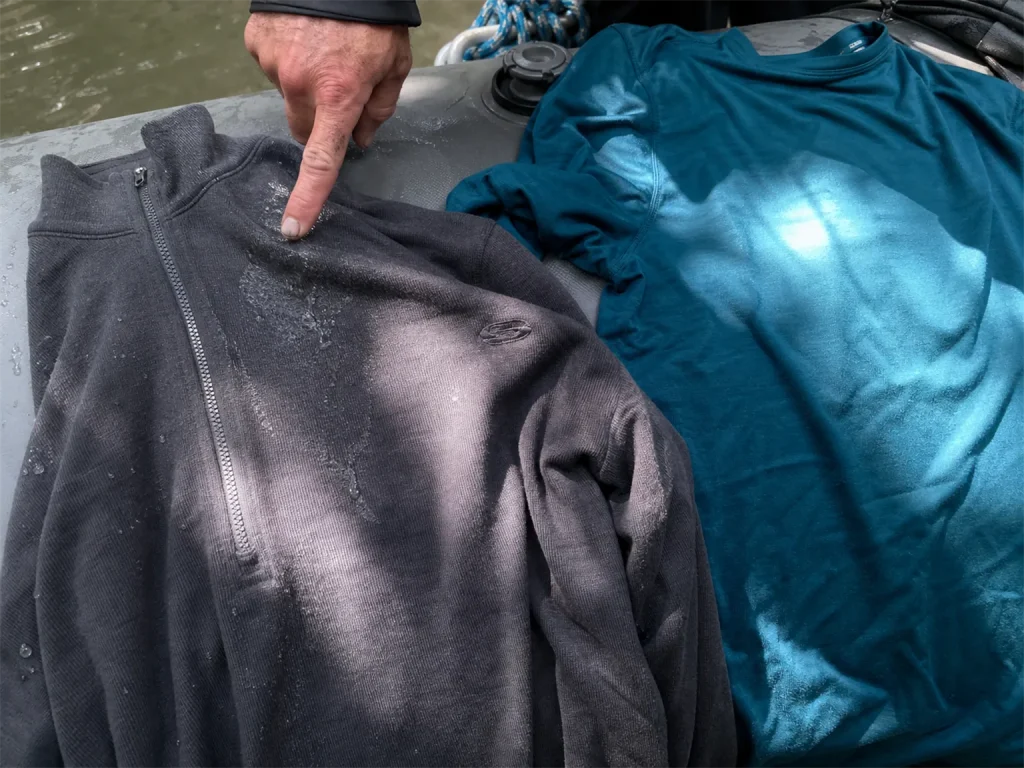
Stand around long enough at a takeout and you’ll hear the two-camp argument: the merino wool diehard and the “synthetic dries faster and costs less” boater. Both are right, and which one is right for you depends entirely on the trip you’re running.
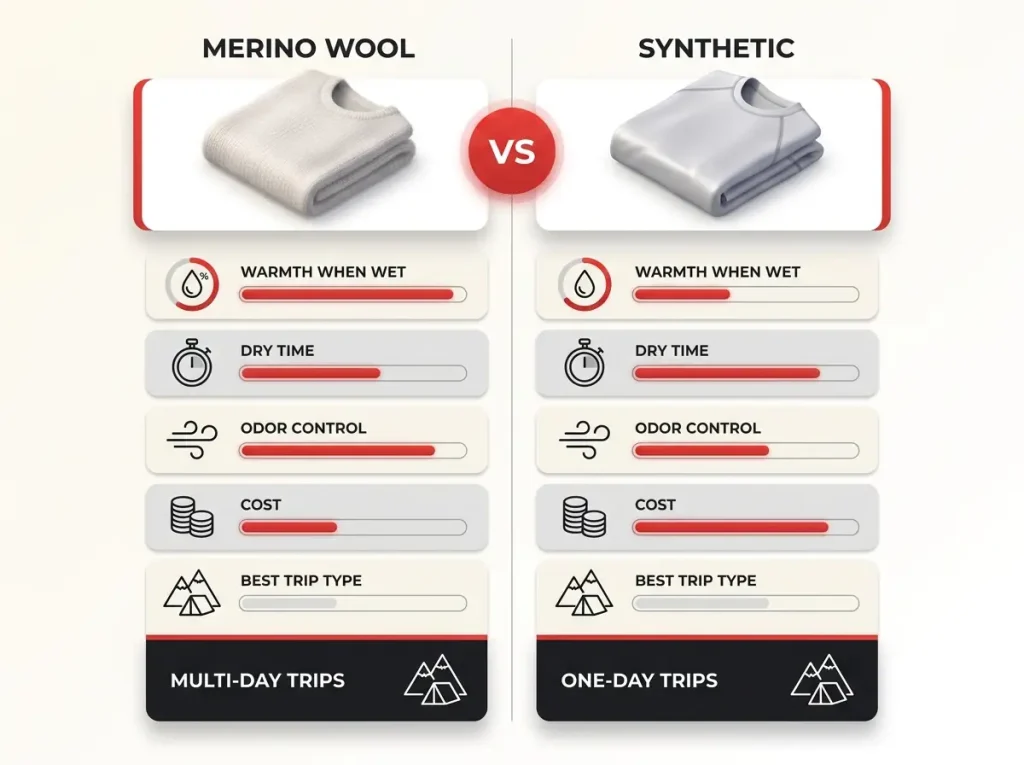
Merino’s party trick is that it holds onto roughly 40% of its insulating value even fully soaked. The fiber actually generates a little heat as it absorbs moisture, so a wet merino layer keeps working in a way that surprises people the first time they swim in one. Synthetic base layers (polyester, polypropylene, nylon, or Patagonia’s Capilene) get their warmth from trapped air instead of the fiber itself, so they lose most of that loft once they’re wet. Some, like grid fleece, add a waffle texture that traps a bit more warmth for the weight. What synthetics give back is speed. They dry noticeably faster and cost a fraction of good merino.
For a one-day trip where you swim once and dry off by lunch, that fast-dry edge barely matters, which is a big part of why synthetic is the honest default for a lot of boaters. Where merino pulls ahead is the multi-day, no-laundry reality, the trip where you swim on day one and never fully dry out again. Odor resistance from lanolin and warmth-when-wet stop being marketing bullet points and start being the difference between a tolerable camp and a miserable one, along with the durability to shrug off repeated soakings. If you’re going to invest in wool, learn how to keep wool and synthetic layers from stinking between trips so they last more than a season.
If you only splurge on one wool item, make it socks. Your feet stay wet all day no matter what footwear you run, and wool socks keep working soaked while the rest of your kit can be cheaper synthetic without you ever noticing. When the water turns truly cold, neoprene socks take over the job.
One honest caveat before you go all-in on wool: industry guidance also flags loose wool worn directly under a wetsuit as hydrophilic, meaning it can hold water where you’d rather it moved on. Merino isn’t automatically the better layer. It’s the better layer for specific trips, and knowing which trip you’re on is the whole game.
How Snug and How Heavy to Match Your Water Temp
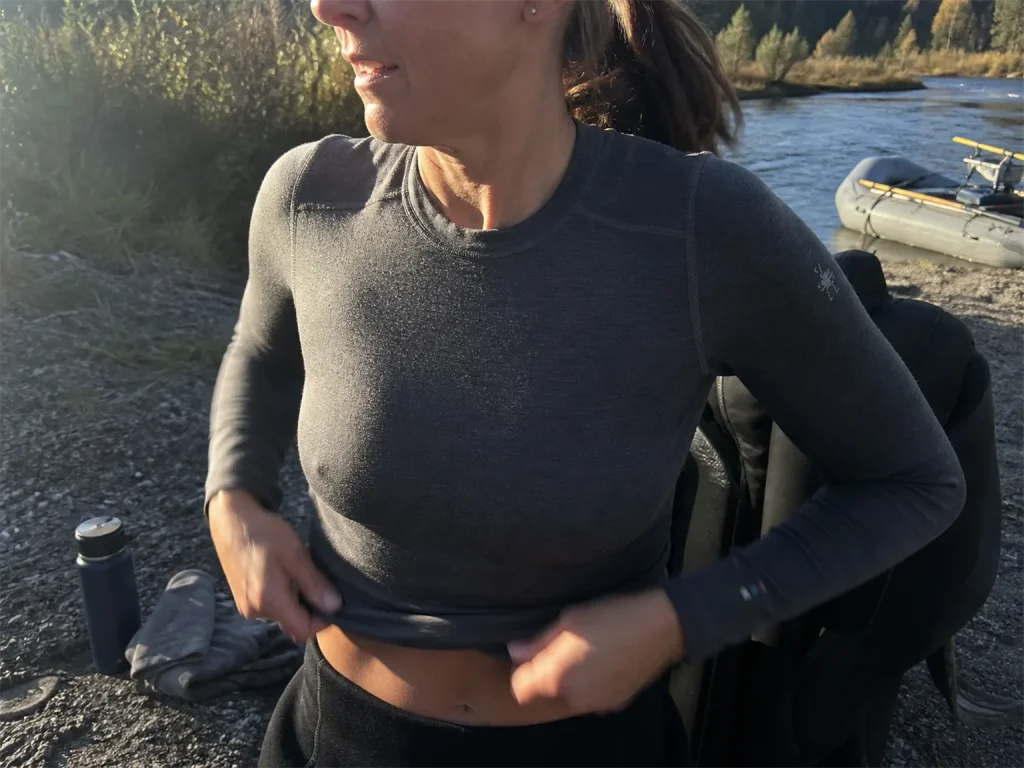
Everybody repeats “dress for immersion.” Almost nobody tells you what that means in actual fabric weight at 45°F versus 60°F. That’s the gap this section fills, because the difference between a good day and a cold one is usually a weight class, not a brand.
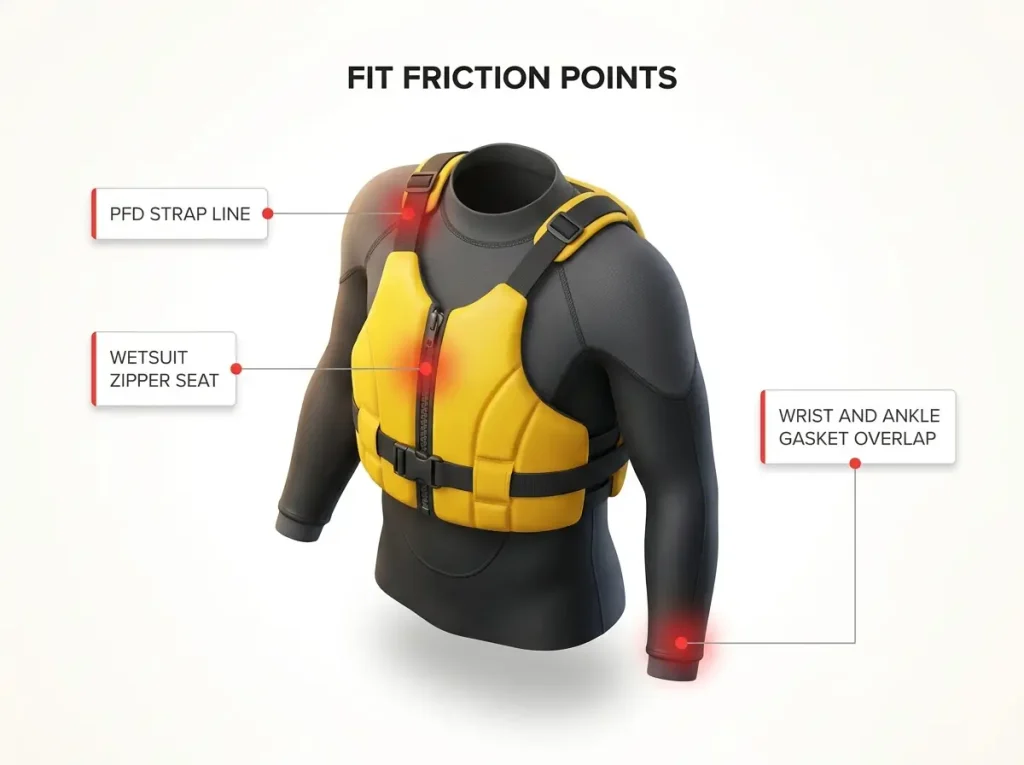
Start with fit. A base layer needs to sit snug and close to the skin so it can trap the thin warmed layer that does the insulating. But there’s a line, and crossing it costs you. A layer tight enough to bind circulation actively works against warmth, and the classic mistake is bringing “tighter is warmer” over from ski gear. An over-tight layer under a PFD strap (your life jacket) or a wetsuit zipper is a common reason paddlers end up with numb hands on the oars, which is a boat-control problem, not just a comfort one. A cut with four-way stretch helps here, moving with your reach on every stroke instead of fighting it.
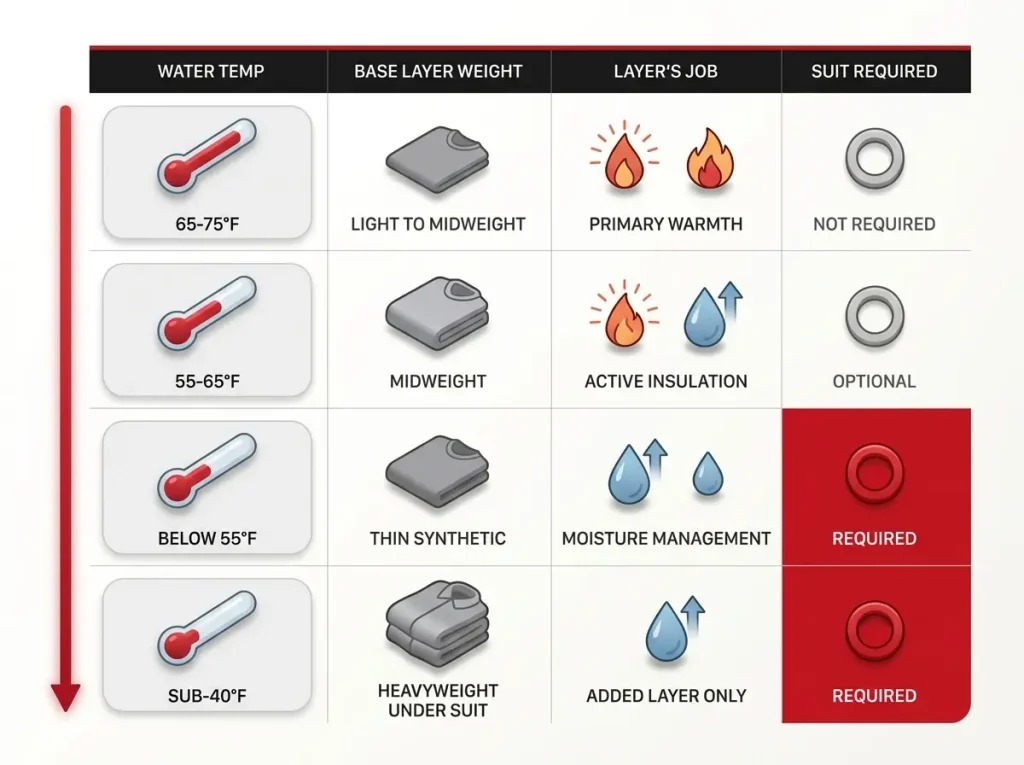
Then there’s weight. Base layers sort into three rough classes: lightweight (around 175 to 200gsm), midweight (roughly 230 to 260gsm), and heavyweight or expedition weight (300gsm and up). That number is the dial you actually turn for water temperature, and here’s how it maps out on the water.
- 65 to 75°F water: the base layer is your primary warmth. A light-to-midweight synthetic or a 200gsm merino, worn alone or under a splash top, covers short exposure.
- 55 to 65°F water: midweight merino or a polyester equivalent under a 2 to 3mm Farmer John wetsuit. This is the band where weight choice matters most, because the base layer is still doing real insulating work.
- Below about 55°F: a wetsuit or drysuit is mandatory, and the base layer’s job flips to moisture management and anti-chafe. A thinner synthetic often beats a bulky heavyweight merino here.
- Sub-40°F: heavyweight merino makes sense only as an added layer under a drysuit for static, low-activity days, never as standalone protection.
The common mistake is buying a heavyweight expedition top for a 55 to 65°F day trip, then overheating and moving moisture poorly when a lighter layer would have served better. Weight isn’t a “more is better” spec. It’s a match-to-conditions spec, and getting it wrong is what walks you toward the core-temperature stakes Divers Alert Network lays out for cold-water exposure.
You know the fit is right when you stop noticing the layer. If you’re aware of it pulling at your shoulders or wrists on the drive up, it’s too tight for a full day on the sticks. Size for range of motion, not for how heroic it looks in the mirror.
Where the Base Layer Fits in Your Layering System
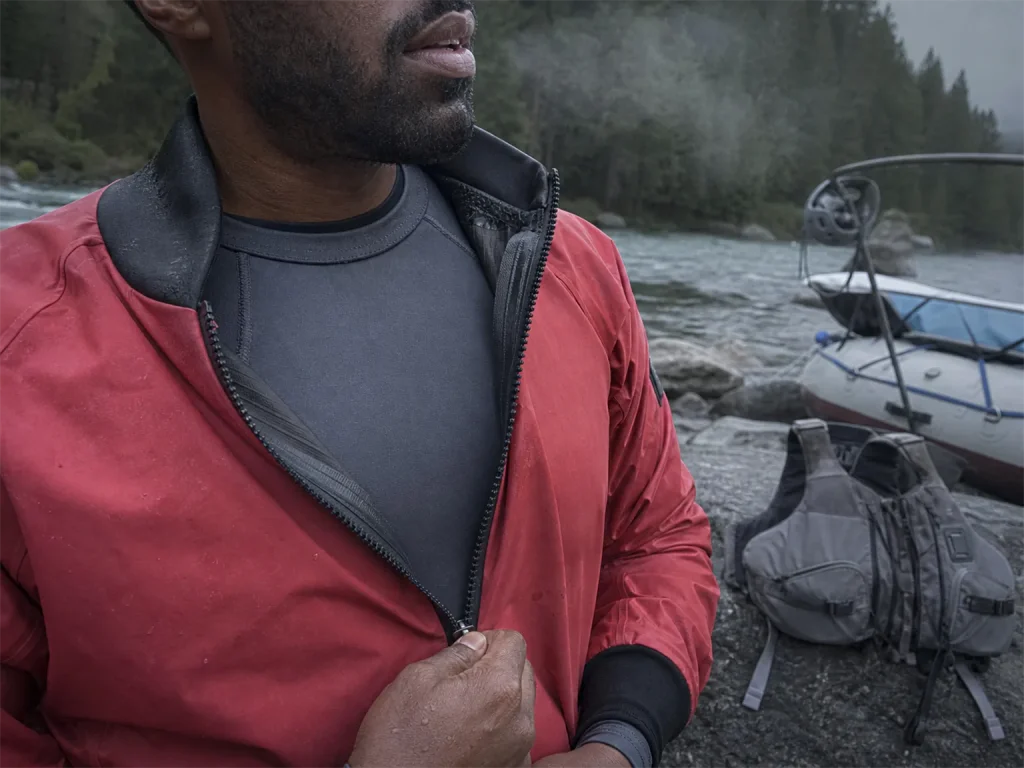
A base layer is the foundation, not the finish. Get it right and everything over it works. Overbuild it and nothing over it fits. The skin-out order is simple: base layer, then a mid or insulating layer, then your wetsuit or drysuit, then a splash top or paddle jacket as the outer shell. The base layer’s only jobs are to wick moisture and, in the warmer band, to insulate.
This article is only about that first layer on purpose. The full system, how the mid layers and shells stack together by water temperature, lives in our guide on how to layer the whole system for cold water, and there’s no reason to duplicate it here. In the 65 to 75°F range, a splash jacket over the top often does more to keep you comfortable than adding base-layer weight, because it blocks the wind and spray that steal heat off a damp layer.
Below the wetsuit threshold, the base layer’s role quietly changes. It stops being about warmth and becomes about moving moisture and preventing chafe under a suit. That’s why boaters routinely overspend on the “warmest” merino when a thin wicking layer would actually serve them better. For the complete rundown of what to wear rafting from the skin out, the apparel hub ties every piece together.
Best Base Layer Tops for Cold-Water Rafting
These four tops cover the real range: the honest midweight everyman, the warmest pick for genuinely cold days, the one built to not fight your suit, and the budget top that’s actually fine for a day trip. Every pick is a men’s and women’s fit, so nobody lands on the wrong product page.
Best Overall Top — MERIWOOL Midweight Long Sleeve
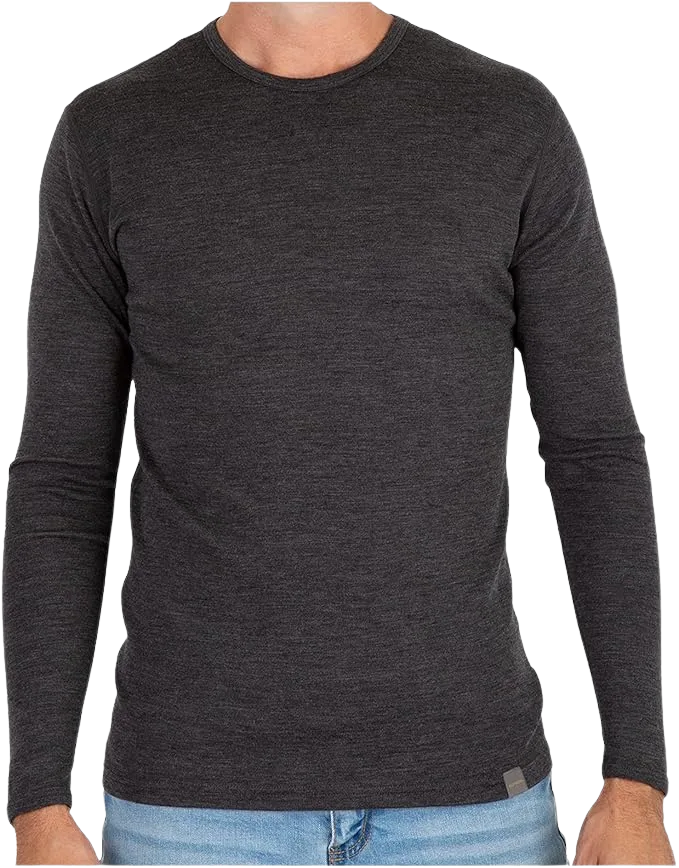
The reason this one gets the overall nod is that it doesn’t ask you to guess. Midweight merino is forgiving across the widest slice of cold-water conditions a weekend boater actually runs, and it works soaked. It’s the top that turns a “what if the water’s colder than I think” morning into a non-issue.
Best Premium / Warmest — Icebreaker 260 (Women’s) or Smartwool Classic Thermal (Men’s)

A word of honesty on this one: 260gsm is more warmth than most weekend boaters need for most trips. It shines on cold, slow float days and support-boat rowing where you aren’t generating much heat yourself. If you run active whitewater in the 55 to 65°F band, the midweight overall pick will usually serve you better without cooking you.
Best for Low Bulk Under a Suit — Kokatat OuterCore (Men’s) or WoolCore (Women’s)
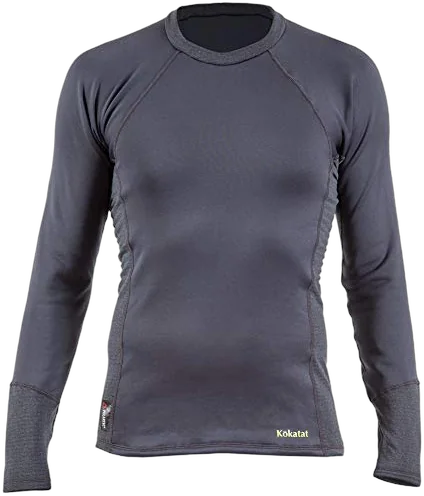
Most base layers are designed for the outdoors in general, then asked to work under paddlesport gear as an afterthought. This one starts from the suit and works backward, which is exactly why it earns its keep for anyone spending real time in a drysuit. More on that fit problem in the last section.
Best Budget Top — 32 Degrees Heat Crew
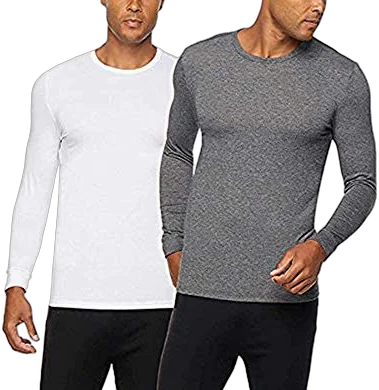
The honest read: for a single warm-season day on the water, this does what a premium merino top does. The gap between it and wool shows up over multiple days without laundry, where odor and slow drying start to grind on you. For your first cold-water season while you figure out what you actually need, starting here is a smart, cheap move.
Best Base Layer Bottoms and Leggings
Legs get forgotten until you’re kneeling in a cold puddle in the bottom of the raft, and then they get remembered fast. Bottoms lose heat against a wet floor quicker than most people expect, and the good ones are thinner than you’d guess. Fewer standout leggings survived this buying cycle than tops, so the two here are the ones genuinely worth owning right now.
Best Overall Bottom — MERIWOOL Thermal Pants
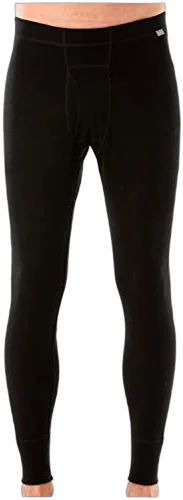
Pairing your bottoms to your top in the same brand and weight isn’t just tidiness. It means both pieces behave the same way when they’re wet, so you’re not guessing why one half of you is colder than the other. For most boaters, this is the set-and-forget answer for the legs.
Best Premium Bottom (Men’s) — Icebreaker 200 Oasis 3/4 Legging
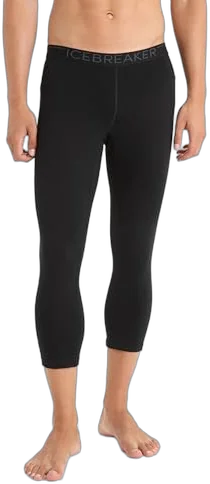
If you run a drysuit or wading booties, the 3/4 cut matters more than it sounds. A full-length legging balls up right where the sock overlaps and creates the exact pressure point that goes numb by mile ten. Ending the fabric above that overlap is a small design choice that pays off all day.
Budget vs Premium and What’s Worth Paying For
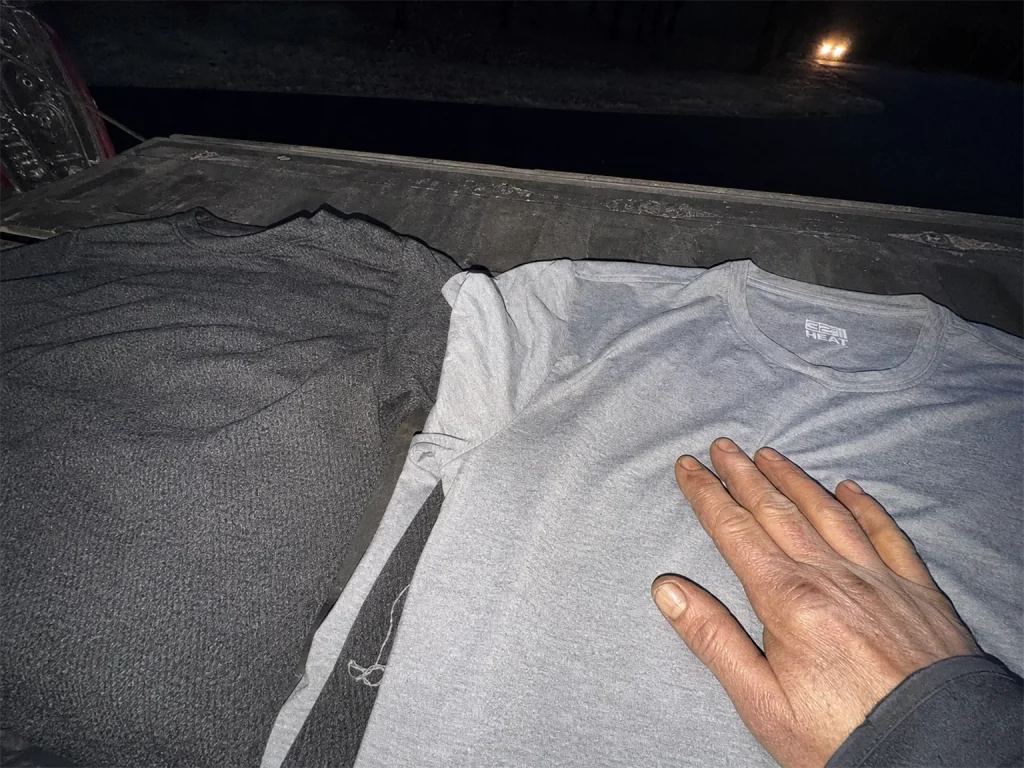
Here’s the honest takeout answer nobody in the SERP wants to give you straight: for a lot of trips, the cheap synthetic top is genuinely fine, and the trick is knowing exactly when it stops being fine. Premium earns its price in two situations. The first is multi-day trips without laundry, where merino’s odor control and warmth-when-wet make the difference between a bearable camp and a rough one. The second is genuinely cold water, where the warmth margin actually matters for your safety.
Everywhere else, you’re paying for comfort, not capability. A warm-season one-day float where you swim once and dry by lunch does not require merino. That budget synthetic crew handles it, and sometimes the most honest answer is the layer you already own. A basic synthetic gym base layer sitting in your drawer beats buying wool you don’t need for one warm afternoon.
The premium you should never skip isn’t the fancy top. It’s wool socks, and if you boat cold water often, the low-bulk layer that doesn’t fight your suit. Spend there first, and let the shirt be cheap until you know you need better.
Where the real money should go is bigger than any base layer anyway. If you’re staring down consistently cold water, it’s smarter to rent a drysuit before you buy one than to overspend on the warmest wool top and still be underprotected. The base layer is the cheap part of staying warm. Spend where it counts, and don’t let a shirt convince you it’s doing the suit’s job.
Base Layer Fit Gotchas Under a PFD and Wetsuit
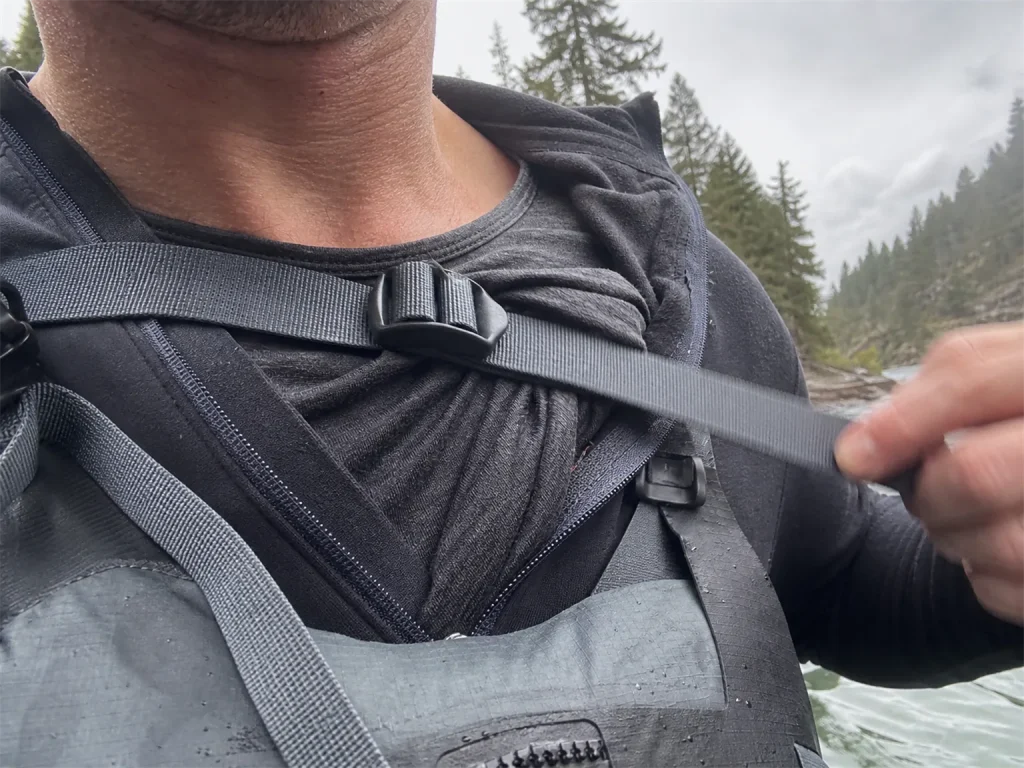
This is the stuff you only learn by doing it wrong once. A base layer doesn’t live in isolation. It lives under a PFD, a wetsuit, or a drysuit, and how it plays with that gear is where good intentions go sideways. Name the mistake first: buying for how warm the layer feels standing on shore instead of how it fits under everything else.
Start with bulk under a wetsuit zipper. An overbuilt base layer can make a Farmer John genuinely hard to seat and zip, to the point where you’re fighting the suit on the bank while everyone waits. Buy your under-layer for the suit, not for the parking lot. The thicker the base layer, the more it fills the space the neoprene needs.
Then there’s chafing at the seams. Flat-stitch or flatlock seams matter enormously where a PFD strap or a wetsuit edge rides across your shoulders and ribs, because a raised seam under load turns into a raw spot by mile three. This is the entire reason the paddlesport-cut Kokatat layer exists, and it’s a detail general outdoor base layers routinely miss. A drysuit adds its own version of the problem, where bulk at the wrist and ankle gaskets or under the waist fights the seal, so thinner-and-smoother beats warmer-and-bulkier under a suit almost every time. It’s worth understanding how a base layer plays with a drysuit before you commit to the heaviest option.
The classic story writes itself. A paddler gears up for a first cold trip, buys the thickest, warmest layer on the shelf, and spends the day fighting bulk under the PFD and a zipper that won’t fully close. Their coordination suffers not from cold but from gear that doesn’t fit together, which matters because reduced mobility in a swim is a real hazard, as the NWS’s breakdown of cold-water boating hazards spells out. You feel a bad base-layer-to-suit match at the shoulders on every paddle stroke. A good match, you forget it’s there.
The Bottom Line on Cold-Water Base Layers
Three things carry the whole decision. Never wear cotton against your skin in cold water, because it holds moisture and quits the moment it’s wet. Match your base layer weight to the water temperature, not the air, using the bands above instead of guessing. And spend where it counts, on wool socks and a low-bulk layer that fits your suit, while skipping the premium where a cheap synthetic does the same job.
Before your next early-season run, check the actual water temperature for your stretch of river and pick your weight to match it. Do that one thing and you’ve already made the call that most people get wrong at the ramp, back when the water felt fine and the fleece stayed in the bag.
Frequently Asked Questions
01What should you wear under a wetsuit for cold-water rafting?
Wear a snug, non-cotton base layer, either thin synthetic or light-to-midweight merino. Under a wetsuit the layer’s main job is wicking and anti-chafe, so thinner and smoother beats thick and warm. Cotton is the one thing to never put under neoprene.
02Is merino wool or synthetic better for a rafting base layer?
Synthetic dries faster and costs less, which is plenty for a one-day trip. Merino wins on multi-day trips for odor control and warmth when it stays wet. Neither is universally better; it depends on trip length and water temperature.
03At what water temperature do you need a wetsuit instead of just a base layer?
Around 60 to 70°F water is the line where a base layer alone stops being enough and a wetsuit or drysuit becomes the call. Below about 55°F a suit is mandatory, and the base layer’s job shifts to moisture management rather than warmth.
04Can you go rafting without a wetsuit if you wear a good base layer?
In warm water around 65 to 75°F, a base layer plus a splash top can be enough for short exposure. In genuinely cold water no base layer replaces a wetsuit or drysuit. It works with one, not instead of one.
05What is the difference between a base layer and long underwear for rafting?
For rafting they are often the same garment; the difference that matters is the fabric. A base layer implies technical wicking synthetic or merino built for wet activity, while cotton long underwear holds water and fails cold. Buy for the fiber, not the label.