
In this article
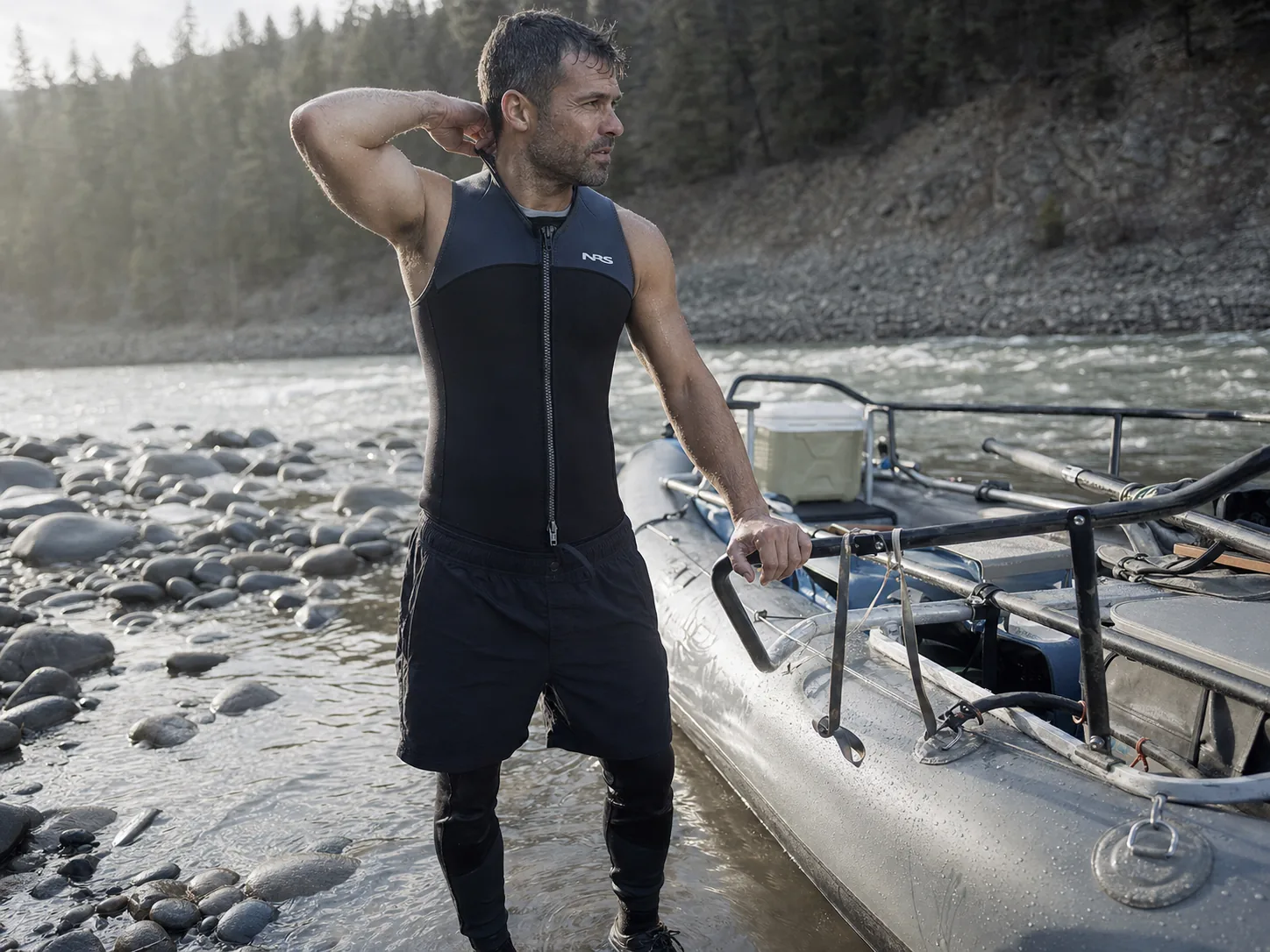
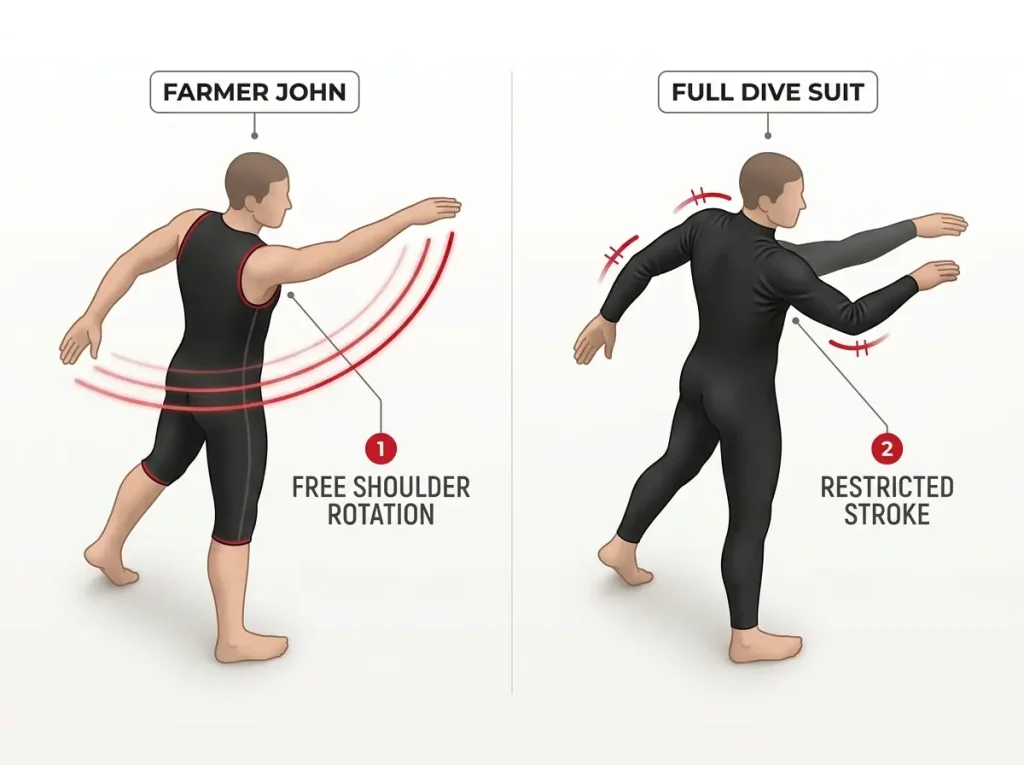
Scroll through most best rafting wetsuit lists and you’ll notice the same thing: ten dive-shop and surf wetsuits ranked under a whitewater headline, written by someone who has clearly never rowed a cold spring run. The suit the rafting industry actually issues isn’t a full wetsuit at all. It’s a Farmer John or Farmer Jane, sleeveless and cropped at the knee, worn with a splash top over it.
This guide skips the repackaged scuba gear and recommends suits you can buy sized for paddling, tiered by how often you really boat cold water, and tied to the one thing that decides everything: what your suit does the second you’re out of the boat. Think of it as one piece of the bigger picture we cover in what to wear rafting.
Here’s how the picks break down before we get into the why.
| Pick | Best For | Key Spec |
|---|---|---|
| NRS Farmer John / Jane 3.0 | Best overall, one suit for most cold trips | 3mm, sealed seams, titanium laminate |
| Stohlquist Rapid John / Storm Jane | Budget, a few spring trips a year | 3mm, reinforced Supratex knees |
| NRS Ultra John / Jane | Regular cold-water boaters | 3mm with Graphene warmth lining |
Why Most Rafting Wetsuit Lists Get It Wrong
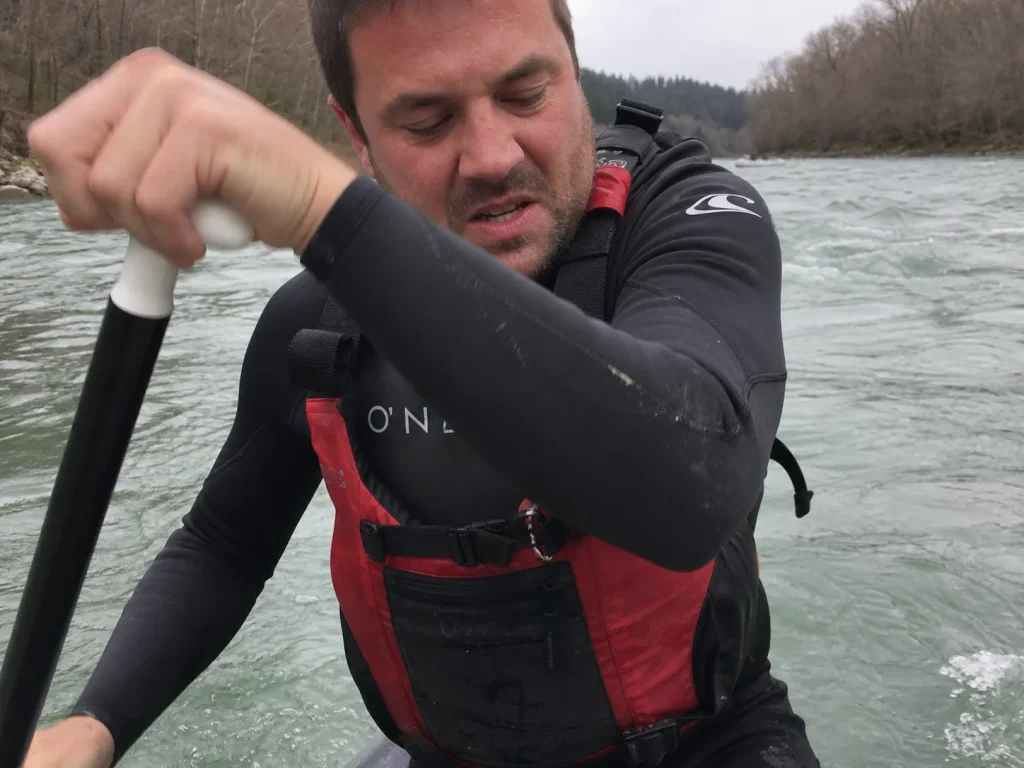
Show up to a cold-water put-in in a full-sleeve scuba suit and the veteran rigging next to you already knows how your day ends: fighting your own sleeves by lunch. A full wetsuit built for diving is designed to keep you warm while you float mostly motionless underwater. Rafting is the opposite job. You’re rotating your shoulders through a paddle or oar stroke a few thousand times a day, and every full sleeve adds resistance that turns into shoulder fatigue by early afternoon.
That’s the whole reason the Farmer John and Farmer Jane exist. Sleeveless by design, they leave your shoulders and arms free to row while the neoprene covers the core, legs, and torso where you actually lose heat. It’s not a compromise. It’s the shape the rafting industry converged on because it works, and a 3mm Farmer John is what’s sitting in the rental bin at almost any outfitter in the West.
The other thing nobody tells first-timers: a wetsuit isn’t supposed to keep you dry. It traps a thin layer of water against your skin that your core then warms, and that warmed layer is what slows heat loss. Getting wet is the design working, not failing. A full dive suit does the same thing while making you paddle against it.
Take the O’Neill Men’s Reactor-2, a genuinely well-built surf suit with a loyal following. If you’re chasing waves, it’s a solid buy, and you can check it on Amazon if surfing is where you’re headed. But pull it on and mimic a forward stroke, and you feel the sleeves load up across the deltoids at the top of every reach. Over one rapid, no big deal. Over eight hours on the oars, it’s the difference between finishing strong and finishing cooked. Whether you go wetsuit or drysuit at all is its own call, and we break that down in wetsuit or a drysuit for rafting.
What Thickness You Actually Need for Cold Water
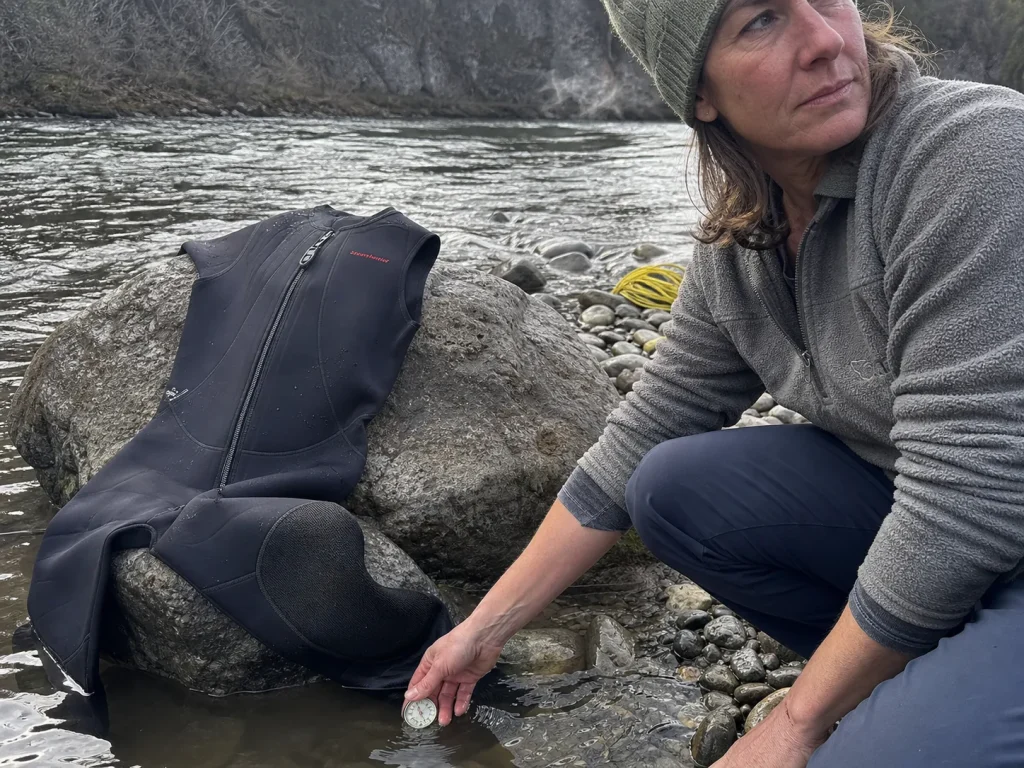
The sunny 75°F morning at the put-in fools more first-timers than any other single thing. It feels like shorts weather. Meanwhile the river is running 48°F snowmelt, and the air temperature has almost nothing to do with what happens when you go in.
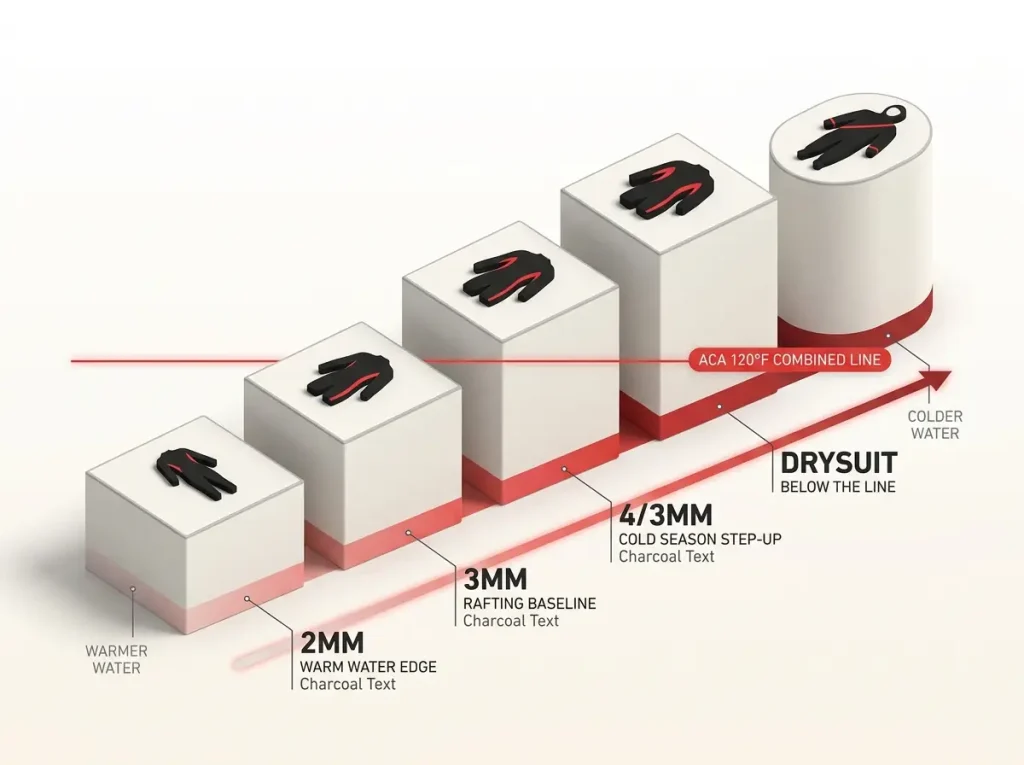
There’s a clean rule that takes the guesswork out of it. The American Canoe Association’s guidance says you want thermal protection any time the water temperature is below 60°F, or the air and water temperatures added together come in under 120°F. Add the two numbers on a thermometer instead of eyeballing the sky. You can read the full American Canoe Association’s cold-water survival guidance if you want the reasoning behind it.
For thickness, the bands are simple. A 2mm suit or shorty covers warmer water where you just want a little edge. 3mm is the rafting baseline, comfortable in roughly 50 to 70°F water, which is why it’s the industry default. A 4/3mm steps up the warmth as the water drops, and past that the honest answer starts shifting toward a drysuit. Match the number to your river, not the forecast. Pull the current gauge reading or the river temp before you decide, the same way you’d check the flow in CFS before committing to a run. This bites hardest in the shoulder season, when spring snowmelt keeps a river running cold long after the air has warmed up. It’s the same planning muscle as building a gear checklist by river class.
Why does the number matter so much? Water pulls heat off you about 26 times faster than air at the same temperature. A 55°F afternoon feels fine standing on the bank. That same 55°F water can have you in trouble within minutes of a swim. The thickness isn’t about comfort on the boat. It’s about buying yourself time in the water.
Most river gauges publish water temp right alongside flow. Check it the night before, add it to the day’s forecast low, and if the two land under 120, the suit isn’t optional. That one bit of math has kept more first-timers warm than any spec sheet.
Fit, Mobility, and Seams That Survive a Season
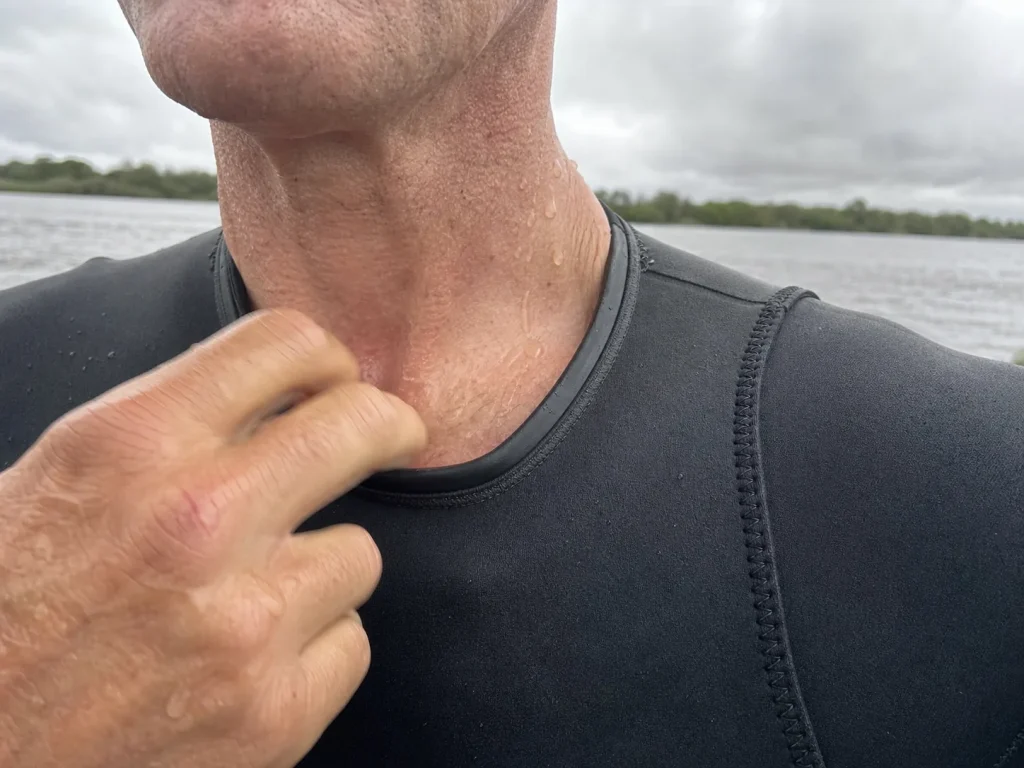
A wetsuit that doesn’t fit right doesn’t insulate, no matter how thick it is. Most people who complain about being cold in a 3mm suit don’t have a thickness problem. They have a fit problem, and the river flushes right through the gaps.
Snug Enough That It Doesn’t Flush
The suit should feel snug at the neck, wrists, and ankles, snug enough that very little water moves in and out of those openings when you’re in the current. A loose suit floods repeatedly, dumping the warmed layer and replacing it with cold river every time you move. You know the fit is right when a swim barely changes how warm you feel. You know it’s wrong when cold water sluices down your back the first time a wave hits you.
Room to Row
Snug is not the same as restrictive. Before you buy, pull the suit on and run through a few full strokes, reaching across your chest the way you would on the oars or a paddle. You want full range of motion through the shoulders, the neoprene moving with you and not fighting you at the top of the reach. This is exactly where the sleeveless cut earns its keep and where a full dive suit gives itself away.
Seams and Zips That Last
Construction is where a rafting suit takes abuse a dive suit never sees. Flatlock stitching is fine for warmer water, but glued-and-blind-stitched (GBS) or sealed seams keep cold water from wicking through the needle holes. Look for reinforced knee and seat panels too. On a raft you’re kneeling on tubes, scooting over rock at the put-in, and climbing in and out all day, and that’s where a thin suit blows out first. Back-zip suits are easier to get into; front-zip and zip-free designs seal a little better. None of it matters if the panels that touch the boat aren’t reinforced.
Try the suit on with the thin base layer you’ll actually wear under it, not bare skin. A suit that fits perfect on skin in the shop can pinch across the shoulders once there’s a layer underneath, and you won’t find out until you’re already on the water.
Best Overall — NRS Farmer John and Farmer Jane 3.0
This is the suit in half the outfitter bins in the West, and it earns the spot.
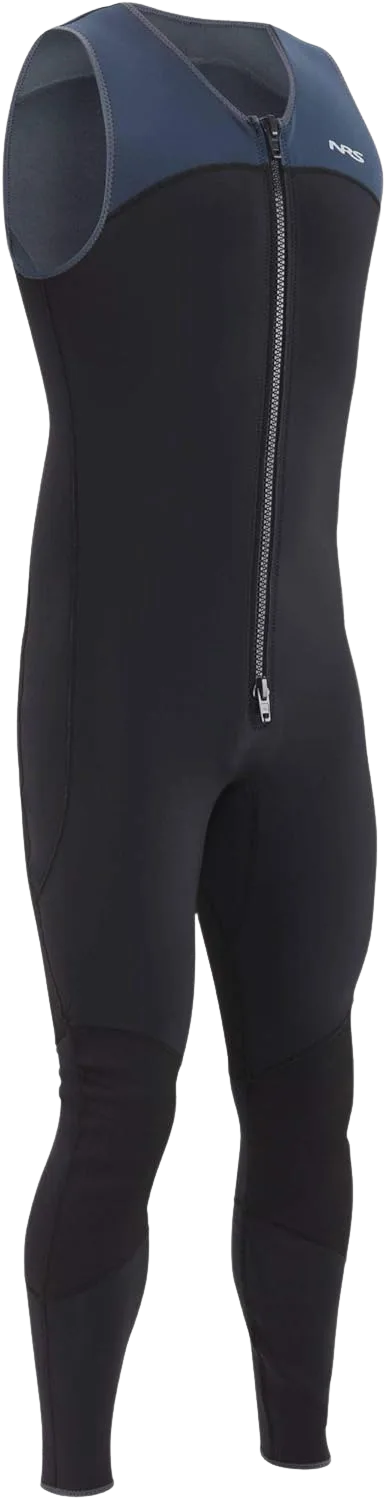
The “3.0” isn’t just a thickness stamp. It’s NRS’s specific fabric-and-seam package: Terraprene neoprene with stretch panels, sealed seams, and a titanium laminate layer that bounces radiant heat back at you. That’s why it costs more than a generic 3mm suit of the same measured thickness, and it’s where the extra money actually goes.
Men get the Farmer John cut, women get the Farmer Jane with a fit built for a different frame, and both keep the sleeveless shoulders that let you row all day. If you’re buying one suit to cover most of your cold-water trips and you don’t want to think about it again, this is the one. The long-term durability holds up too, as this owner’s review after years of abuse shows.
Best Budget Pick — Stohlquist Rapid John and Storm Jane
You don’t have to drop down to a repackaged scuba suit to save money, and this pick is the proof.
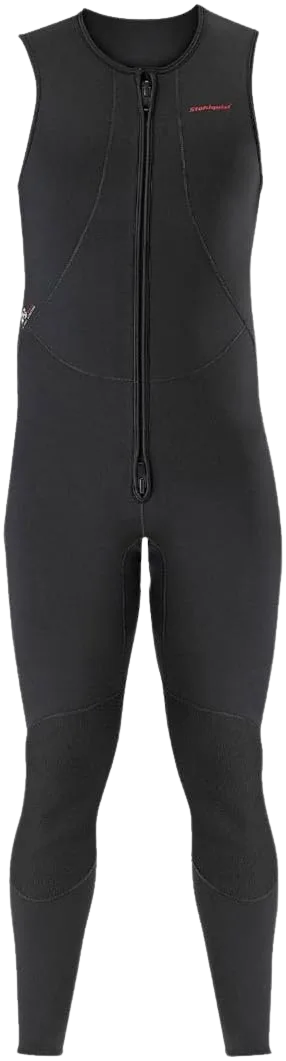
Stohlquist has been making paddling gear for decades, and the Rapid John and Storm Jane show it. You get the same sleeveless Farmer cut, 3mm neoprene, and reinforced high-wear panels, just without the premium fabric package of the NRS. For someone doing a handful of spring trips a year, or buying a first suit without knowing yet how deep into the sport they’ll go, this is the honest starting point. It’s the right tool at a friendlier price, not a cheaper tool pretending to be right.
Best for Regular Cold-Water Boaters — NRS Ultra John and Ultra Jane
This is the last stop before you start pricing out a drysuit.
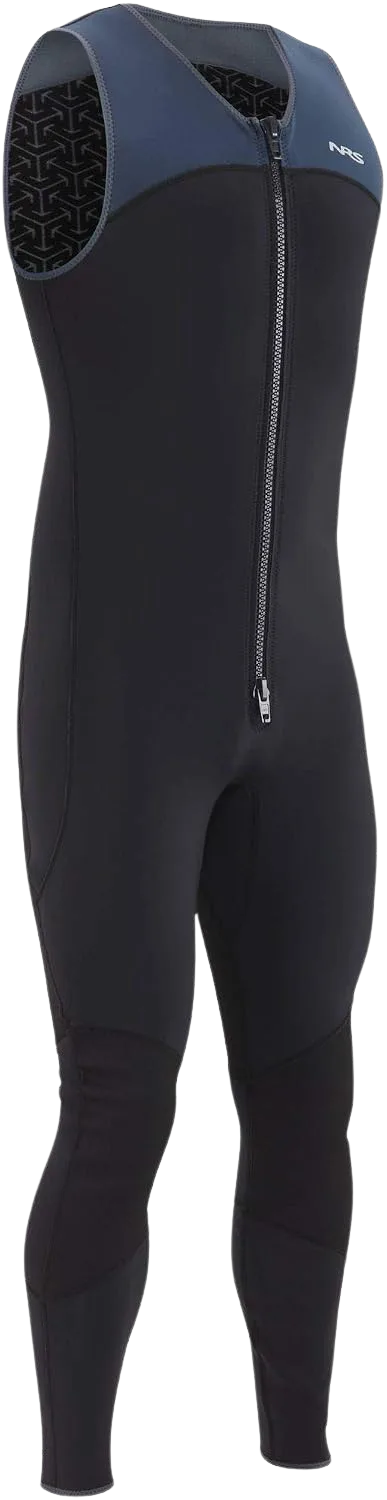
The Graphene lining is the difference here. It sits against your skin and adds warmth without pushing you to a thicker, stiffer suit that would cost you mobility. If you’re running early-season snowmelt regularly, guiding, or just cold-natured and tired of shivering through the flatwater between rapids, the Ultra buys you margin. It’s the pick for people whose calendar has a lot of cold water on it, and who aren’t ready to commit to a drysuit’s price and gasket upkeep yet.
The Layering System That Makes a Wetsuit Work
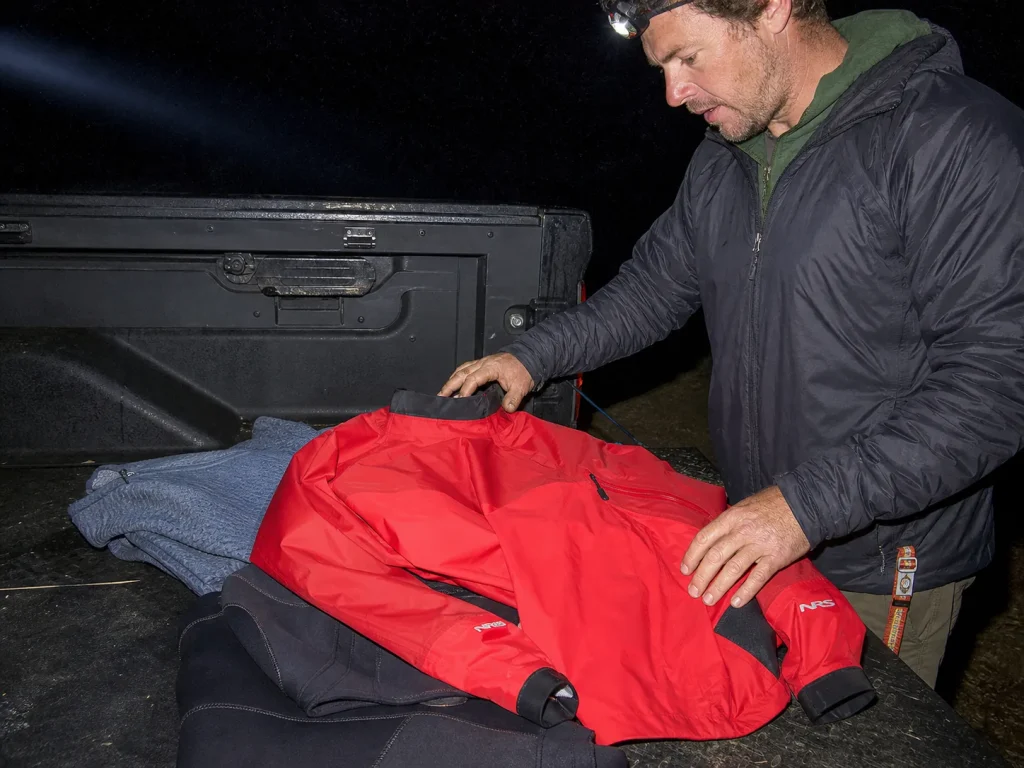
Here’s the mistake that sinks more people than a thin suit: buying the “warm” wetsuit, pulling a cotton hoodie on underneath, skipping the top layer, and then being cold all day and blaming the suit. The suit was never the whole system. It’s the middle of it.
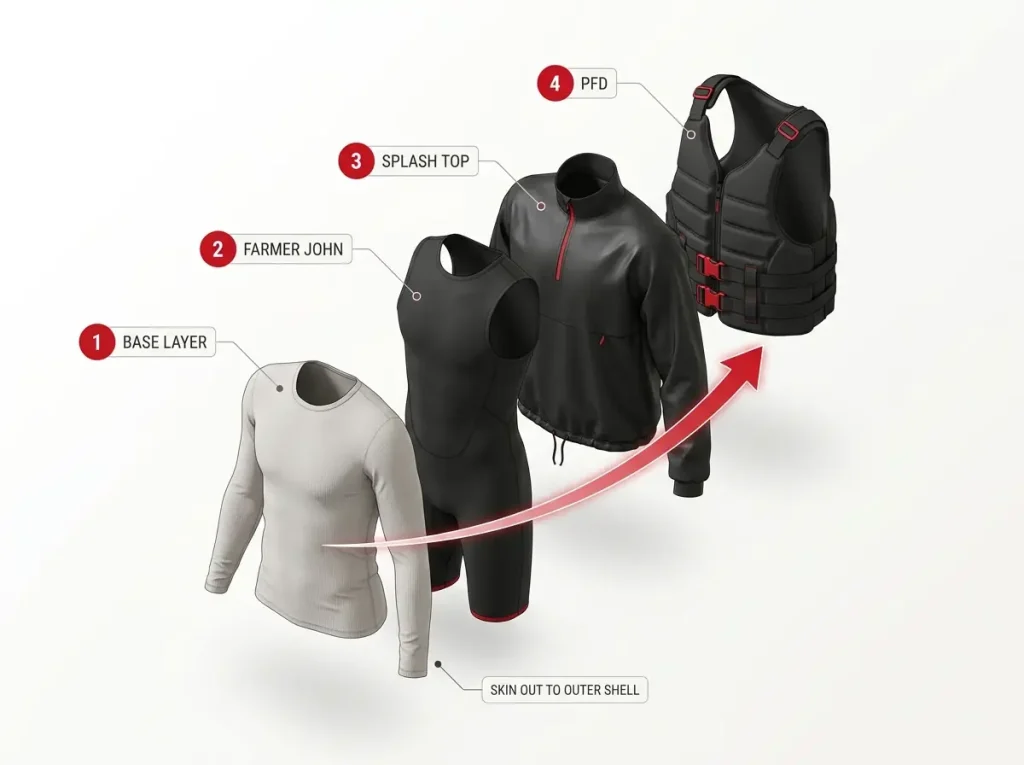
A Farmer John leaves your shoulders and arms bare on purpose, which means it assumes something goes over the top. Underneath, you want a thin synthetic or wool base layer against the skin, never cotton, and a thin fleece layer if the water is truly cold. Wet cotton loses all its insulating value and actively pulls heat off you, which is why it’s the single most repeated layering mistake on cold water. We go deeper on the full skin-out approach in how to layer for cold water.
Over the top goes a splash top or paddle jacket. That’s the piece that blocks wind and spray off the wet neoprene between rapids, and it’s the layer that actually finishes the Farmer John. A packable rain shell earns a spot in the dry bag too, for the cold wind at camp once you’re off the water. The NRS Endurance Paddling Jacket (men’s · women’s) is a clean match, with a waterproof-breathable HyproTex shell, a paddler’s cut, and a hem that layers over the suit and under a PFD without bunching. If you want to compare options, we round them up in a dedicated splash jacket guide.
Build the system from the skin out and test it dry at home before the trip. Base layer, wetsuit, splash top, PFD, in that order. If anything binds when you rotate your shoulders on the living room floor, it’ll bind worse on the water when you’re cold and tired.
What Your Wetsuit Does the Moment You Swim
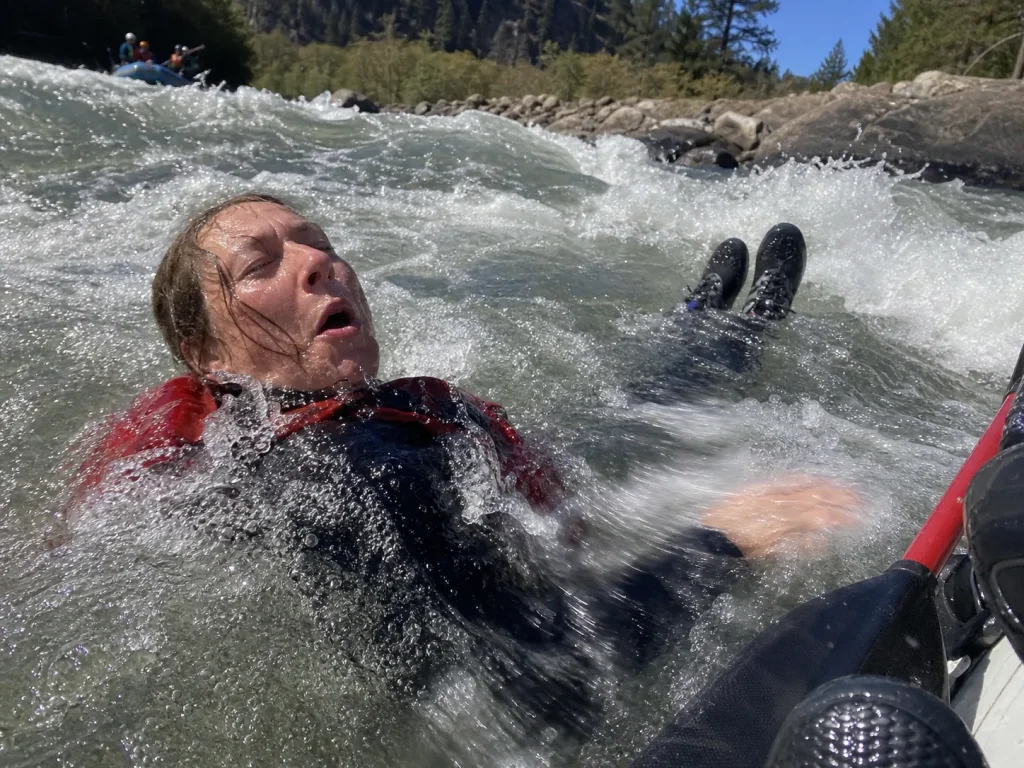
Everything above about thickness and fit comes down to one moment: the split second you’re out of the boat in cold water. That’s the real reason any of it matters, and it’s the part every generic roundup skips.
When you hit cold water suddenly, the sudden immersion triggers cold shock, the involuntary gasp reflex, within seconds. Below about 70°F it kicks in, and below roughly 59°F your breath-hold capacity collapses from a normal 60 to 90 seconds down to just a few. Those first 60 to 90 seconds are the hazardous part of a swim, not the cold itself but the gasp that can pull water in before you get your breathing under control. The National Weather Service’s cold water hazard warnings lay out the physiology if you want the detail.
A properly fitted suit is what buys you through that window. It slows the heat loss so your hands keep enough grip strength to grab a throw rope, and your head stays clear enough to swim defensively, feet up and nose downstream. A wrong-fit or too-thin suit does the opposite. It floods, stops insulating right when you need it, and turns a manageable swim into a real problem. This is exactly the scenario we cover in cold water immersion, and it’s worth understanding before you ever need it.
The honest version of this, the one veteran boaters tell first-timers, is that “just bring a jacket” was never an adequate answer. The suit is self-rescue equipment as much as it’s comfort equipment. And if a long cold swim does go sideways, knowing the basics of treating hypothermia on the water is the other half of the picture.

When to Skip the Wetsuit and Get a Drysuit
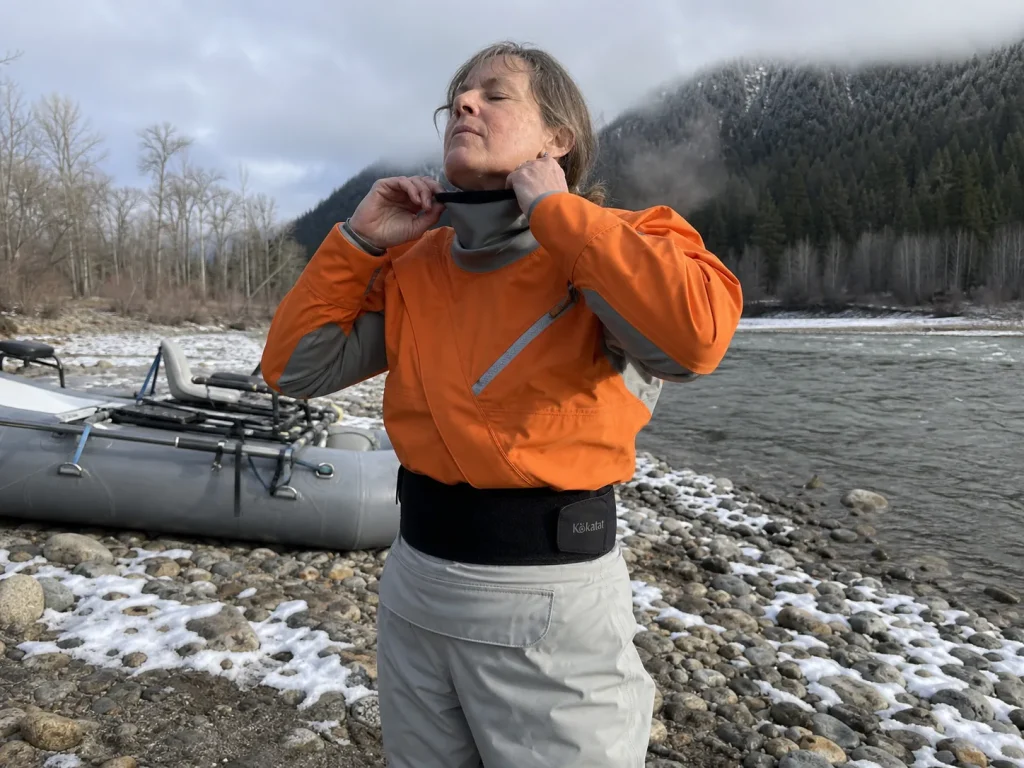
At some point the honest answer stops being “which wetsuit” and becomes “you want a drysuit.” Knowing where that line falls saves you from buying the wrong thing twice.
A wetsuit has a real floor. Around the ACA’s 60°F water or 120°F combined line, or for anyone boating genuinely cold water on a regular basis, a drysuit is the honest upgrade. It seals you off from the water entirely with latex gaskets and a waterproof-breathable shell, which is a different level of protection than a suit that works by letting a little water in. The Kokatat Meridian Hydrus (men’s · women’s) is the go-to here, and it’s the piece to look at when your season has more cold water on it than warm.
But before you buy anything, be honest about how you actually boat. There’s a real tier system here:
- One-and-done guided trip: rent the outfitter’s Farmer John. Most guide services stock 3mm suits and fold them into the trip price. Buying makes no sense for a single day.
- A few spring trips a year: the private boater running a handful of runs a season is well served by a budget Farmer John like the Stohlquist, without overspending.
- Regular cold-water boating: step up to the warmer wetsuit, or make the jump to a drysuit if you’re on frigid water often.
Sometimes the honest answer really is “rent it, don’t buy.” That’s the anti-sell, and it’s the advice a friend gives you instead of a shop. Whatever you land on, making it last comes down to caring for neoprene and gaskets so the suit is ready when the next cold run comes around.
Conclusion
Three things to carry away. Buy a Farmer John or Farmer Jane sized for paddling, not a full dive suit that fights your stroke all day. Treat the suit as the middle of a system, layered skin-out with a base layer under and a splash top over. And match your thickness to the water temperature while respecting what a swim actually does to you in cold water.
Before your next trip, look up your river’s water temp, add it to the forecast low, and dress for that number instead of the sunshine. The suit that keeps you comfortable on the boat is the same one that keeps you safe in the water, and getting that call right is the whole game.
Frequently Asked Questions
01What thickness wetsuit is best for whitewater rafting?
A 3mm Farmer John is the rafting standard, effective in roughly 50 to 70°F water. Drop to 2mm for warmer water, and step up to 4/3mm or a drysuit as the water falls toward the 60°F line. Match the number to your river’s water temp, not the air.
02Do you need a wetsuit for whitewater rafting?
If the water is below 60°F, or air plus water is under 120°F combined, yes, you need thermal protection. On a warm summer float with warm water you can skip it. The water temperature decides, not how nice it feels standing on shore.
03What do you wear under a wetsuit for rafting?
A thin synthetic or wool base layer, never cotton, which loses all insulation wet and pulls heat off you. The base layer goes skin-out under the suit, with a splash top or paddle jacket over the top to block wind and spray between rapids.
04How tight should a rafting wetsuit fit?
Snug enough that very little water flushes in and out at the neck, wrists, and ankles, but not so tight it limits your paddle stroke. A loose suit floods repeatedly and stops insulating, which is a fit problem, not a thickness problem.