
In this article
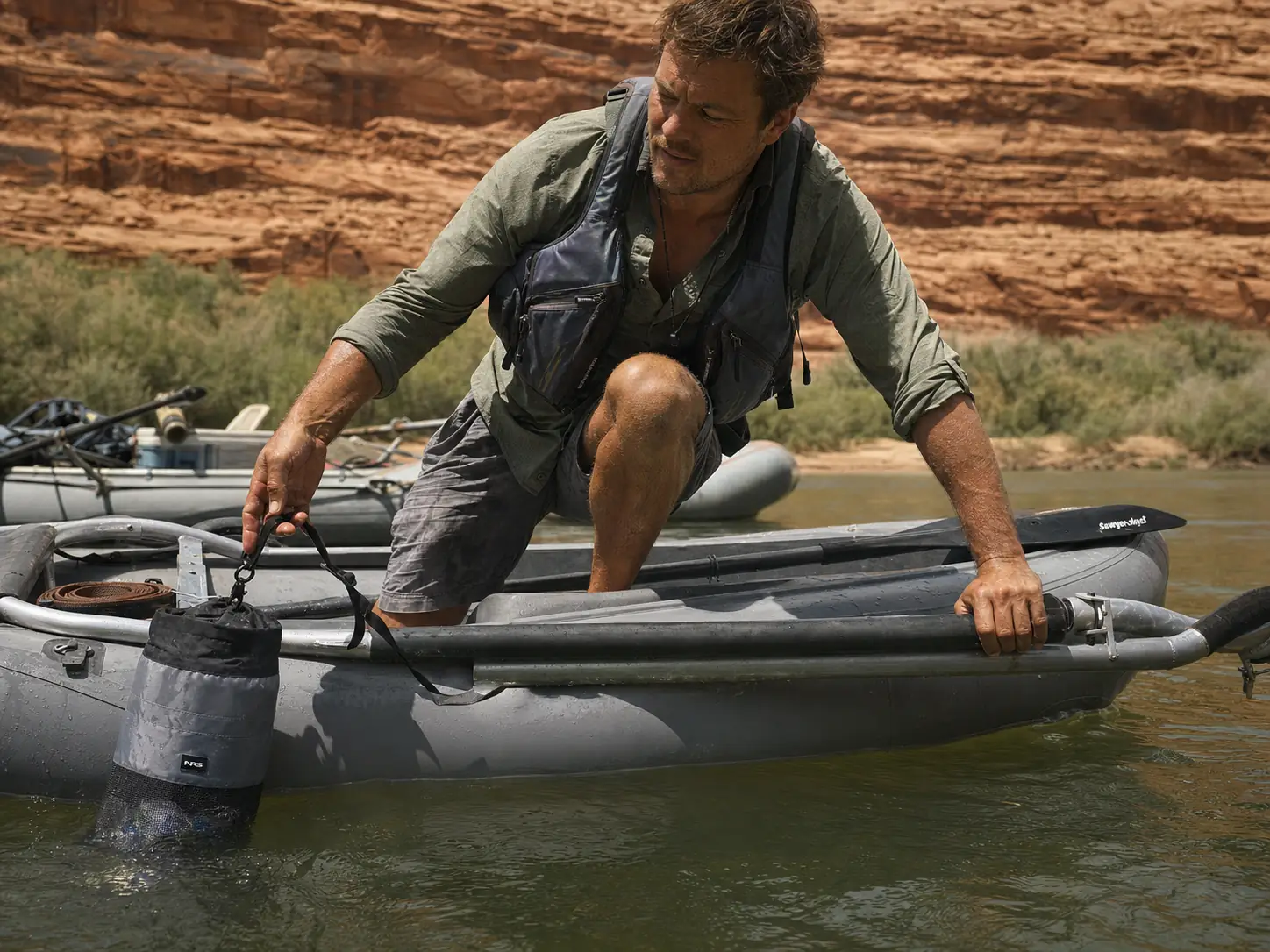
You are on the oars, the boat keeps pulling right, and you have already told the paddle crew twice to even out. They are paddling fine. The thing steering your raft is the loaded mesh bag towing off the stern, and on Mountain Buzz there is a thread where exactly that happened to a guide whose drag bag, towed by the smallest person on board, out-pulled three larger paddlers working the opposite tube. Most boaters buy this gear without ever hearing that, because nobody writing about drag bags and soft storage for river camping bothers to explain that they are two different categories doing two different jobs, and that neither one keeps anything dry. Here is what each one actually is, which ones are worth buying, and how to rig both so they earn their space on your frame.
What a Drag Bag Actually Is (and What It Isn’t)
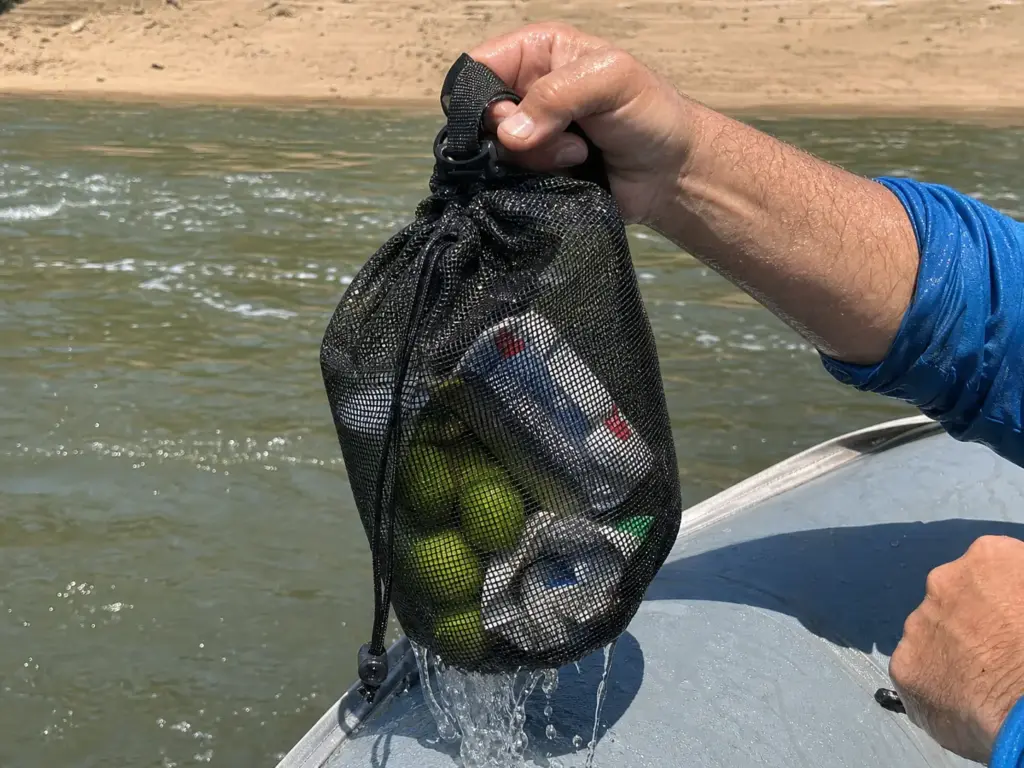
A drag bag is a heavy-duty mesh sack you tow in the water beside or behind the boat. That is the whole design brief. It is not a failed dry bag and it is not a cheap alternative to one. The water goes straight through, which is exactly what you want from it.
Three jobs make it worth the space on your D-ring. Cooling beverages in the current works better than any cooler you brought, because the river is usually colder. Trash containment is the second job, keeping empties out of the footwell where they roll underfoot all afternoon. And at camp it becomes the bag you hang, which matters more than most people expect.
The NRS Mesh Drag Bag is the size everyone else gets measured against: 11 inches in diameter, 22 inches tall, 15 ounces. That is roughly a 12-pack plus ice. Keep those numbers in your head when you are looking at a competitor’s bag, because “large” on a product page often means smaller than that.
The most common way people get burned here is packing something that has to stay bone-dry into a mesh bag because it was the closest bag at hand. A phone, a sleeping bag, a dry change of clothes. If any of that matters to you, you want a coated bag with a real roll-top closure instead, and the roll-top dry bags rated for full submersion are a different purchase entirely.
The mesh is also why the bag stays usable on day four. A sealed bag full of wet trash and beer cans turns into a swamp by the second night. A mesh one drains, vents, and rinses itself every time you drop it back in the current.
What Counts as Soft Storage (and Why It’s a Separate Category)
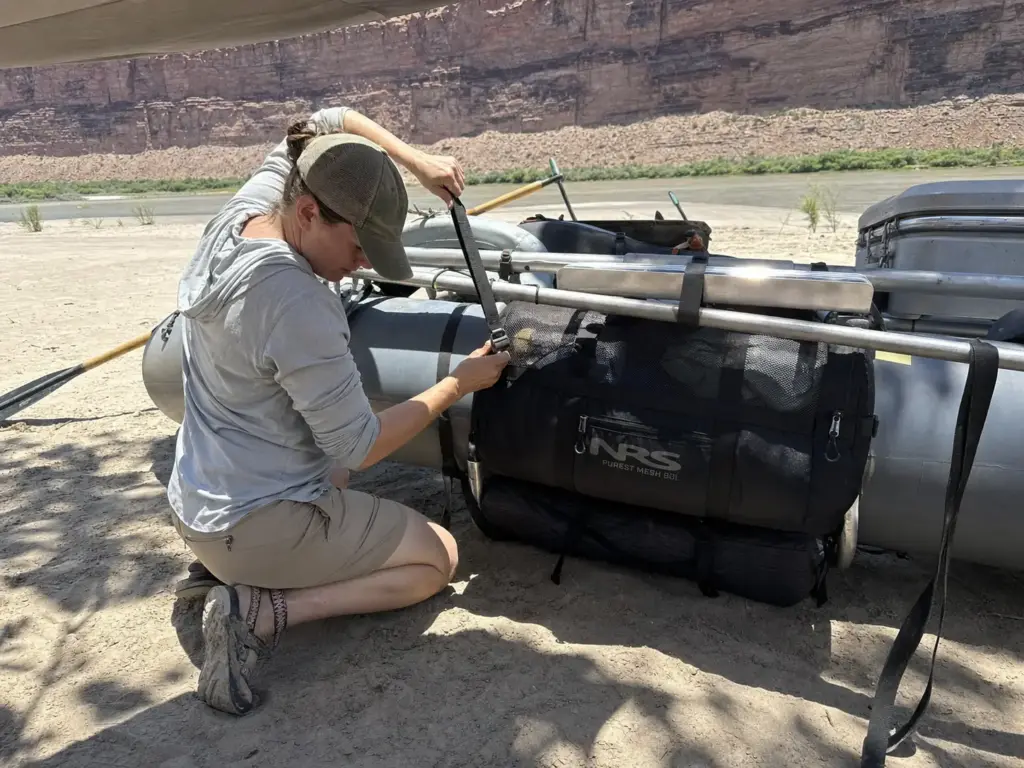
Soft storage is the duffels, drop bags, stash bags and crossbar bags that keep your camp gear organized and attached to the frame. No waterproof rating, not built for submersion. The names in that list describe where the bag mounts, not what it is made of, which is why the category confuses people who are shopping by material.
What defines the good ones is construction that assumes the bag lives outside for a week. The NRS Purest Mesh Duffel runs a ripstop nylon lower body with a mesh upper panel, so damp gear vents overnight instead of souring. There is an end pocket that separates wet from dry and a zippered accessory pocket for a wallet, phone and keys.
Down River Equipment describes its own line as breathable multi-mesh reinforced with UV-resistant nylon webbing, built to strap directly to a thwart or crossbar. Read that again: the mount point is why the product exists. That is the line between river soft storage and the gym duffel in your garage, and it is worth understanding alongside thwart bags and under-seat storage, which solve the same mounting problem in a different spot on the boat.
That mounting detail is also what makes these bags work on both hull types. On an oar rig the duffels live on the frame, stacked against the frame crossbars where the rower can reach them. On a paddle raft with no frame there is nothing to stack against, so camp organization happens at the lash points and gear loops along the tubes, which means fewer and smaller bags rather than one big one. Sun exposure is the reason the webbing spec matters at all: a nylon strap left in Grand Canyon sun for eighteen days is a different strap than the one you bought.
Soft duffels that strap to a thwart or crossbar survive a raft flip far better than anything riding loose on a cargo floor. Loose bags find their way out from under the frame and go downstream on their own schedule while you are still in the cold water sorting out your own swim. The strap-mount detail is the whole difference, and it is also what keeps a camp stove and a table from wandering, so rig them the same way you rig a camp stove that survives a flip.
Here is the rule of thumb worth memorizing: if it needs to stay dry, it is not a drag bag job and it is not a mesh duffel job. Sea to Summit and SealLine roll-tops carry IPX7 and IPX8 ratings for full submersion. Drag bags and mesh duffels carry no waterproof rating at all, because they were never trying to. If you want the sealed option instead, a rigid dry box is the other direction entirely.
The waterproof vs submersible distinction is worth holding onto while you shop, because manufacturers use the first word loosely. Waterproof can mean it sheds rain. Submersible means it holds out water while fully underwater, which is the only rating that survives a flip. Mesh bags claim neither, so at least they are honest about it.
Soft storage also only makes sense as part of a system. A duffel strapped to the crossbar is one piece of the rest of the river camping and kitchen kit that has to fit on the same frame, and the boaters who rig well are thinking about all of it at once rather than buying bags one at a time.
How to Rig a Drag Bag So It Doesn’t Fight Your Oars
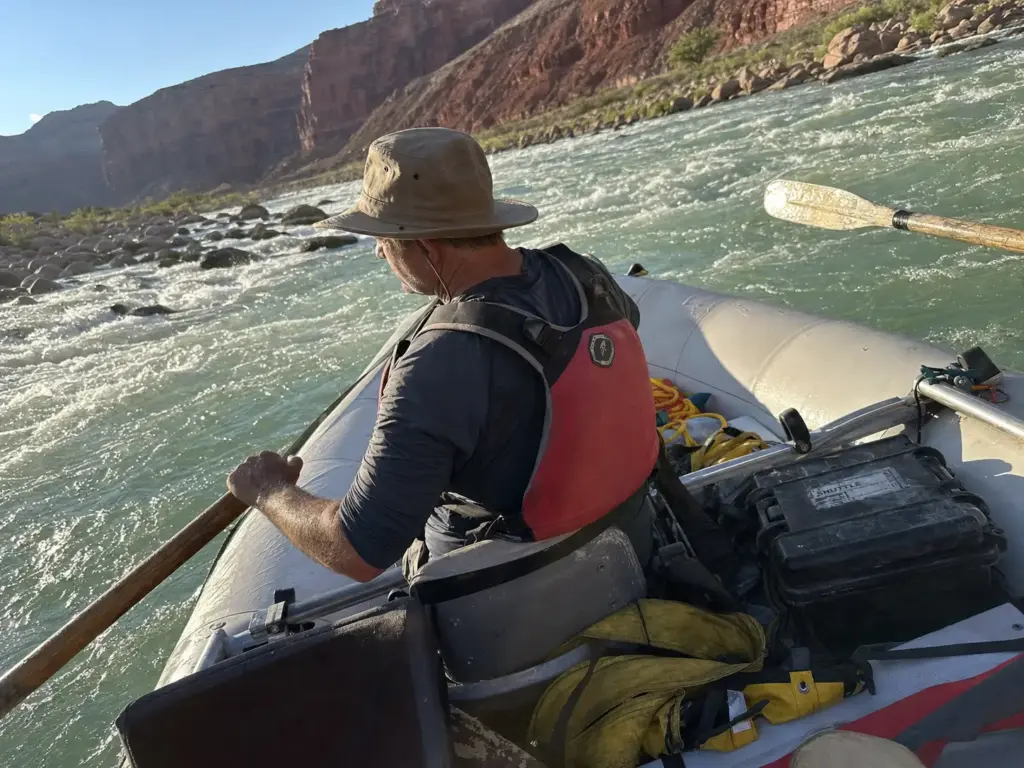
Nobody warns you about this, so here it is first: a loaded drag bag in moving current is a sea anchor. The bag does not care that you meant it as a beer cooler. It generates real steering drag, and the longer the tether, the more leverage it has to turn your boat.
The clearest illustration comes from a Mountain Buzz thread on drag bag rigging, where a guide on a commercial guide trip watched a bag towed by a roughly 100-pound paddler pull the raft off-line hard enough to overpower three larger paddlers working the opposite tube. One bag, out-steering three grown adults. That is not a theoretical warning about drag coefficients. That is a boat that will not go where you point it.
The fix is short and boring. Clip the bag to the D-ring nearest the stern or the oarsman, not out on a long tether trailing behind the boat. Short lead, less leverage, less fight. The bag still cools your drinks at two feet of line just as well as it does at ten, so there is nothing to lose by keeping the D-ring attachment tight to the boat.
For hardware, a locking carabiner or a cam strap through a webbing D-ring does the job. A cam buckle strap has one advantage a carabiner does not: you can release it under load with one hand, which is what you want when the bag needs to come in right now and your other hand is on an oar. Worth being clear about what this carabiner rigging is and isn’t. It is convenience hardware holding a bag of cans, not life-safety gear, and the carabiners worth clipping to a D-ring for rescue work live in a different part of your kit and should stay there.
If your frame does not have a usable attachment point where you need one, that is a raft rigging problem worth solving properly rather than working around with a longer tether. How the frame itself is built and rigged covers where those points should be.
Learn to read the symptom, because the cause is invisible from the oar seat. If the boat pulls consistently to one side and the crew is paddling evenly, check the bag before you start correcting people. Boaters spend entire afternoons blaming a crew for a bag.
Pull the bag in before anything technical. Entering a rapid, running a rock garden, setting up for a tight move — haul it onto the tube and let it ride. A bag that is fighting your line in flat water will fight it a lot harder in the meat of the rapid, and that is the worst possible moment to discover how much pull it has.
The Mesh That Fails Underwater (and How to Spot It Before You Buy)
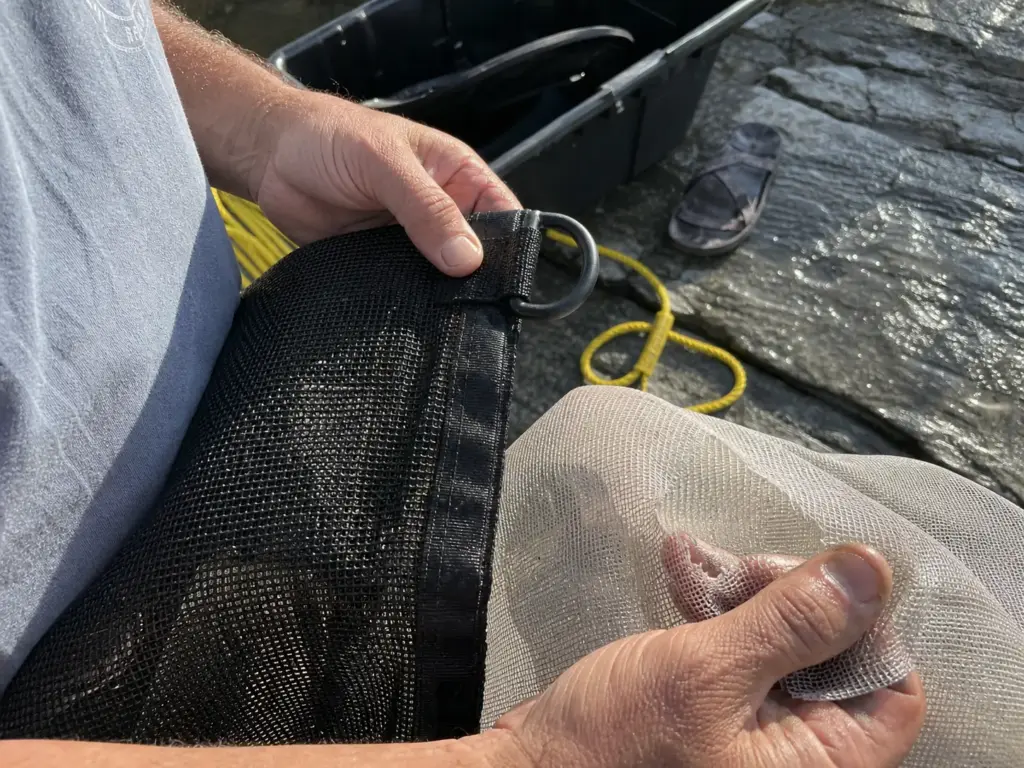
Not all mesh is the same mesh, and the difference does not show up in a product photo. The bag that fails is the one made from snorkel-gear or laundry-grade mesh: thin, uncoated, stitched at the seams rather than reinforced. On a screen it looks like the same black bag.
The failure mode is what makes this worth a section. The tear opens underwater, out of sight, while you are rowing and looking downstream. Nothing announces it. You find out when something floats past the boat, and by then whatever else was in there is spread across a quarter mile of river.
River forums are consistent about what holds up: round-bottom, PVC-coated or vinyl-clad polyester mesh beats the flat two-panel bags that community shorthand calls “pita style.” A round bag holds its shape under tow load. A flat one folds against itself, and the crease is where the wear concentrates. That is a functional difference, not a cosmetic one.
Three things to check before you buy anything:
- Seams that are doubled and stitched through, not single-stitched at the edge
- A real 1-inch D-ring on webbing, not a fabric loop sewn to the mesh
- A barrel-lock closure on the drawcord that stays shut when the bag is loaded and dragging
The coating language is worth decoding too. Vinyl-clad mesh and double-lined mesh both mean the individual strands are jacketed rather than bare, which is what lets the bag survive being scraped along a tube and dragged over a gravel bar at every camp. Bare mesh abrades at every contact point and gives out at the one you cannot see.
There is a real budget tier below the dedicated drag bag, and it is honest about what it is. NRS markets a smaller economy mesh bag as an inexpensive, throw-in-the-boat kind of bag, and for on-boat trash or a gear catch-all it works fine. Towing it loaded is asking it to do a job it was not built for.
Check the bag at takeout, not at the put-in. Hold it up to the sun with the drawcord open and look through the weave for parted strands and stress lines around the D-ring. Damage happens on the water, so the useful inspection is the one you do after a trip, when there is still time to replace it before the next launch.
Best Drag Bags for River Camping
The honest version of this section is short, and the reason is worth saying out loud. Most of the drag bags river people actually recommend come from cottage gear brand shops that sell only on their own sites, which means there is one bag in this category with real availability. It happens to be the round-bottom construction the forums prefer anyway.
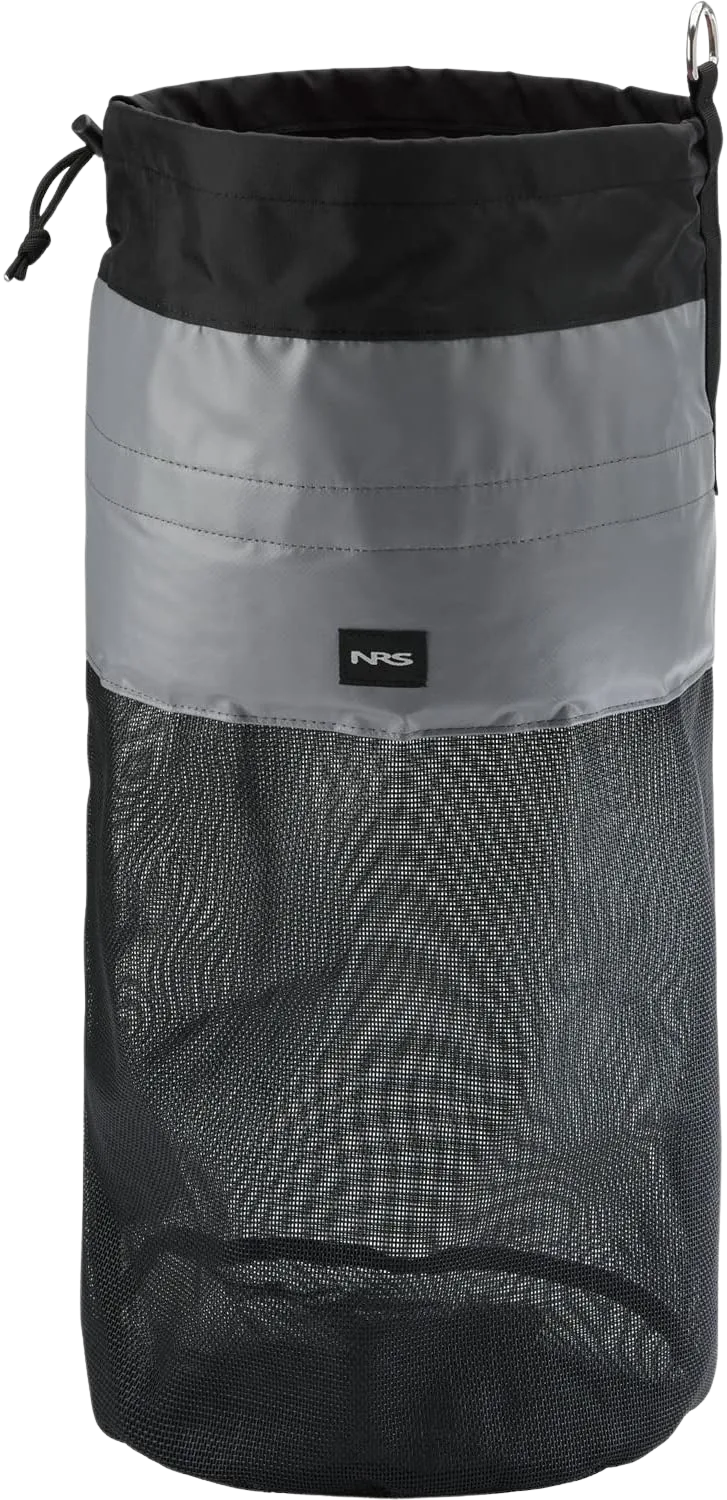
Everything from the materials section applies directly to this bag, which is why it is the pick. The NRS Mesh Drag Bag is round-bottomed, the seams are reinforced rather than single-stitched, and the D-ring is webbing-mounted so the load goes into the strap instead of tearing out of the mesh. Those are the three failure points, addressed.
Capacity is the part worth sizing honestly. Roughly a 12-pack plus ice covers a day trip or a small crew’s camp trash. A big crew on a multi-day river trip will fill it by mid-afternoon and want a second bag rather than a bigger one, since two moderate bags tow better than one heavy one.
Now the anti-sell, because it applies here. If you already own a heavy mesh bag that holds its shape and has a real D-ring on webbing, you do not need to buy this. The upgrade only earns its money when what you own is laundry mesh with a sewn fabric loop. Check yours against the three points above before you spend anything.
One honest note on availability: stock across this whole category runs thin, this bag included. Most of it is made in small batches by small shops, and that is normal rather than a red flag. The private boater market is small, and commercial outfitter gear buyers order direct in bulk, so retail inventory is an afterthought for a lot of these makers. Buy it when you see it in stock rather than the week before a launch.
Best Soft Storage for Camp Gear on the Frame
This is where the category split pays off in an actual purchase. Soft storage handles the clothes-and-camp-junk layer that ends up damp no matter how carefully you pack. Trying to solve that layer with sealed dry bags means paying premium money to keep wet things sealed in with other wet things.
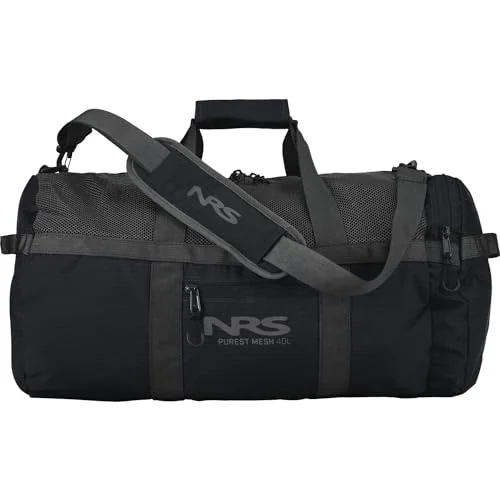
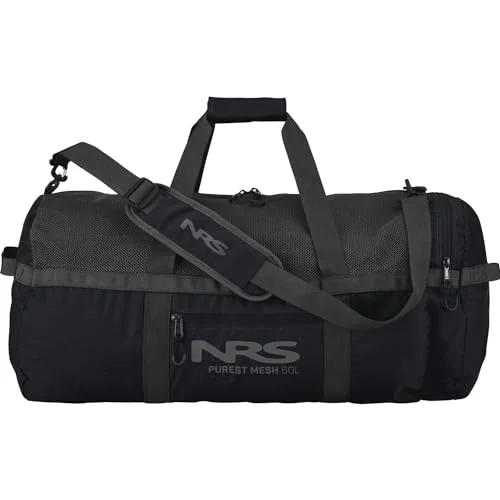
Sizing is the only real decision between them. The 40L covers one boater’s personal layer or a small crew’s shared camp gear, and it is the easier bag to wedge under a crossbar on a crowded frame. The 60L is the multi-day size for a full crew. Boaters who run both usually load the big one with communal camp gear and keep the small one as a personal bag.
Treat the mesh top as the feature it is. It vents, which is why your clothes do not smell like a wet dog by day three, and it is also why your wallet goes in the zippered pocket rather than loose in the main compartment. That distinction catches people who assume the zip pocket is for convenience rather than for the things that would fall through mesh.
Strap it to a thwart or crossbar rather than letting it ride loose. Everything in the pro tip earlier applies here specifically: a lashed duffel is still on the boat after a flip, and a loose one is a rescue problem.
One more piece, so the picture is complete. A sealed expedition duffel like the NRS Bill’s Bag is the other tool entirely: a PVC TobaTex body, a StormStrip closure, a backpack harness and compression straps for hauling gear to camp on your shoulders. Bigger, pricier, genuinely sealed. If your gear has to stay bone-dry rather than just organized, that is the direction, and the submersion-rated options are worth reading before you buy one. You can see the difference in build on the NRS Bill’s Bag itself.
Both mesh duffel sizes are running low in stock at the moment, which is worth knowing before you plan a rig around them.
Hanging Food and Trash at Camp Without Feeding the Wildlife
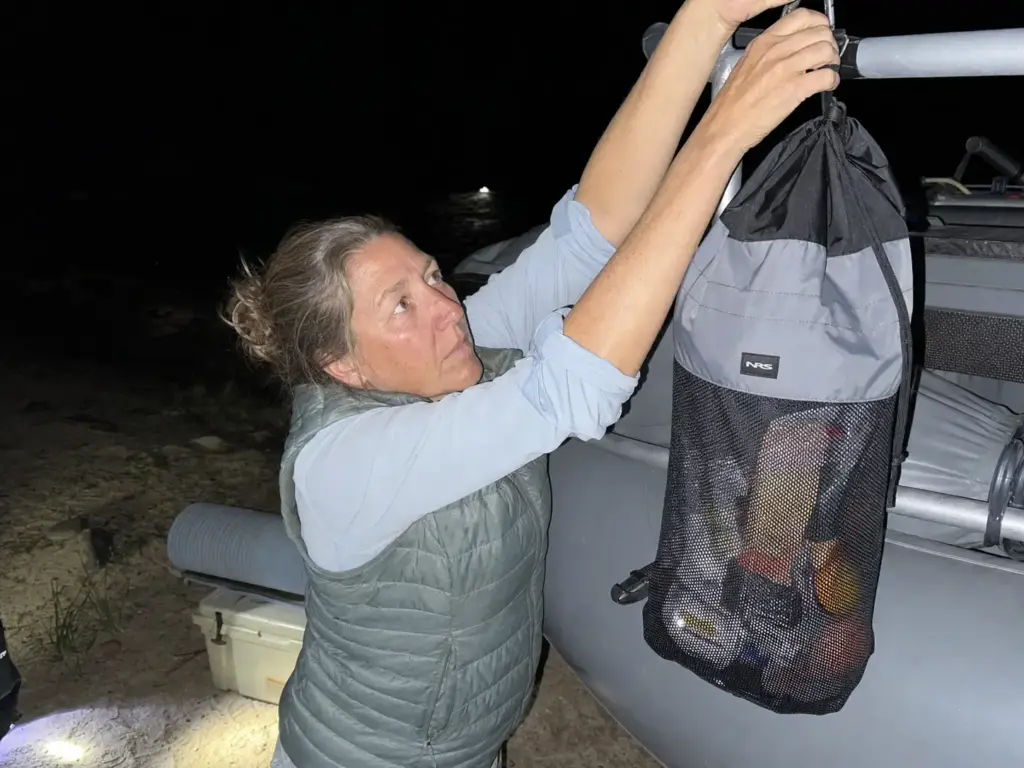
On a permitted trip, wildlife-proofing your camp stops being courtesy and becomes the thing a ranger checks. And the animal that raids your camp is almost never the one people prepare for.
The Park Service documents what actually happens on the Colorado River corridor: ravens have chewed through a clear dry bag to reach something shiny inside, and deer mice have overrun popular beaches because of loose food storage. Birds and rodents. A sealed bag stops water, not a beak. Waterproof and animal-proof are unrelated properties, and the raven on the beach does not read spec sheets.
The mistake is small and universal. You set the food or trash bag on the ground for a minute while you deal with something else. That minute is when it happens, every time, and the bag you were about to hang is the one that gets opened.
The Park Service’s noncommercial river trip regulations are direct about the requirement: food and trash get hung or boxed any time camp is unattended, and used WAG or PETT bags go in a waterproof container. That last one is a groover question as much as a storage one, and groover systems and how waste gets packed out covers the containment side properly. It sits alongside the fire pan requirement in the same category of gear you get checked on at the put-in rather than gear you get to choose.
Leave No Trace’s food-hanging standard sets the backpacking baseline at 12 feet up, 6 feet out from the trunk, 100 feet from water and 200 feet from camp. River beaches rarely offer a tree that cooperates with any of that. The working version is simpler: the highest secure point you can reach, away from where people walk at night, and never at ground level. An oar tower works. A line rigged between two boats works. The sand does not.
A mesh bag is the right tool for this job specifically, and not by accident. It drains, so wet trash is not sitting in its own liquid. It vents, so the bag is not a sealed fermentation chamber by day three. And it is the bag you were already going to hang off the frame anyway.
There is one adjustment worth making for the ravens in particular. They work visually, which is why the Park Service’s example involved a clear bag with something shiny inside, so an opaque bag or an outer trash sack inside the mesh removes the cue that starts the problem. Rodents are the opposite: they work by smell and by climbing, so height and distance from camp do the work, not opacity.
Timing matters more than most crews expect. The raid window is not overnight, it is the late-afternoon stretch when everyone is setting up tents and the kitchen bag is sitting open on the sand. Hang the food bag first, before the tents go up, and the whole problem mostly disappears.
The Short Version
A drag bag is mesh and gets wet on purpose. Drinks, trash, hanging food. Soft storage straps to the frame and keeps camp gear organized and aboard. Neither one keeps anything dry, and the boaters who learn that the expensive way learn it from a soaked sleeping bag.
Rig the bag short and near the stern. A long tether on a loaded bag will out-steer your crew and cost you an afternoon of blaming the wrong people.
Check the mesh and the seams before you buy. The cheap stuff opens underwater, where you cannot see it happen and cannot do anything about it.
Before your next multi-day, rig the drag bag at home exactly the way you plan to run it, load it up, and pull on the tether from the oar seat. You will know in ten seconds whether that attachment point is going to fight you on the water. While the frame is out, work out where the duffels sit too, since the roll-up table and camp kitchen setup is competing for the same crossbar space and it is easier to solve in the driveway than on a sandbar.
Frequently Asked Questions
01What is a drag bag used for on a raft?
A drag bag is a heavy-duty mesh sack you tow in the water beside or behind the boat to keep drinks and produce cold, hold trash and empties, and hang food away from wildlife at camp. It is not waterproof. The mesh lets water through by design.
02What is the best storage for camping clothes on a river trip?
Use a mesh-top soft storage duffel strapped to a thwart or crossbar for the layer that gets damp anyway, and a roll-top dry bag for anything that must stay bone-dry. Splitting them at the packing stage saves you digging through one soaked duffel at camp.
03Is a drag bag the same thing as a dry bag?
No, and mixing them up is the most common mistake with this gear. A drag bag is mesh and meant to get wet. A dry bag is coated and roll-top sealed to keep water out. Anything you would be sick about finding soaked goes in the dry bag.
04Will a drag bag slow down or steer my raft?
A loaded one absolutely can. River forums report a single drag bag creating enough resistance to pull a boat off-line against three paddlers working the opposite tube. Rig it short and near the stern D-ring, and pull it in before anything technical.
05How do you hang food on a river trip when there are no trees?
Use the highest secure point available: a raft frame, an oar tower, or a line rigged between boats. Leave No Trace sets the tree standard at 12 feet up and 6 feet out, but on sand the working rule is off the ground and away from the night walking path.