

In this article
The bargain “river raft” sitting in your cart has its real rating buried in the fine print, Class I to II, flatwater and gentle riffles. The run you keep picturing is Class III. Ask anyone who runs rivers and you hear the same thing every spring: the cheap boat is not just slower, its failure mode drops you into cold, pushy water, and that swim is the real hazard. The good news is that the best budget whitewater rafts are genuine, capable self-bailers that cost a fraction of a premium boat, and this guide draws a hard line between them and the dressed-up pool toys so you end up with one that holds up instead of one that gets you swimming.
Here is the budget shortlist at a glance, and every boat on it is a real self-bailer, not a pool toy.
| Raft | Best For | Length / Typical Crew | Real Self-Bailer? |
|---|---|---|---|
| Saturn 9.6 ft Mini Raft (RD290X) | Small rivers, solo or duo runs | 9’6″ / 2–3 | Yes |
| BRIS 12 ft River Raft | Most boat per dollar | 12′ / 3–4 | Yes |
| Saturn 13 ft Raft (RD365) | Overall value, day trips | 13′ / 4–6 | Yes |
| BRIS BRF450 15 ft Raft | Gear-hauling, multi-day | 15′ / 6–8 | Yes |
| AIRE Tributary 14′ HD | Buy once, keep it for years | 14′ / 5–7 | Yes |
| NRS Otter 130 | Name-brand build and resale | 13′ / 4–6 | Yes |
The Line Between a Real Raft and a Pool Toy
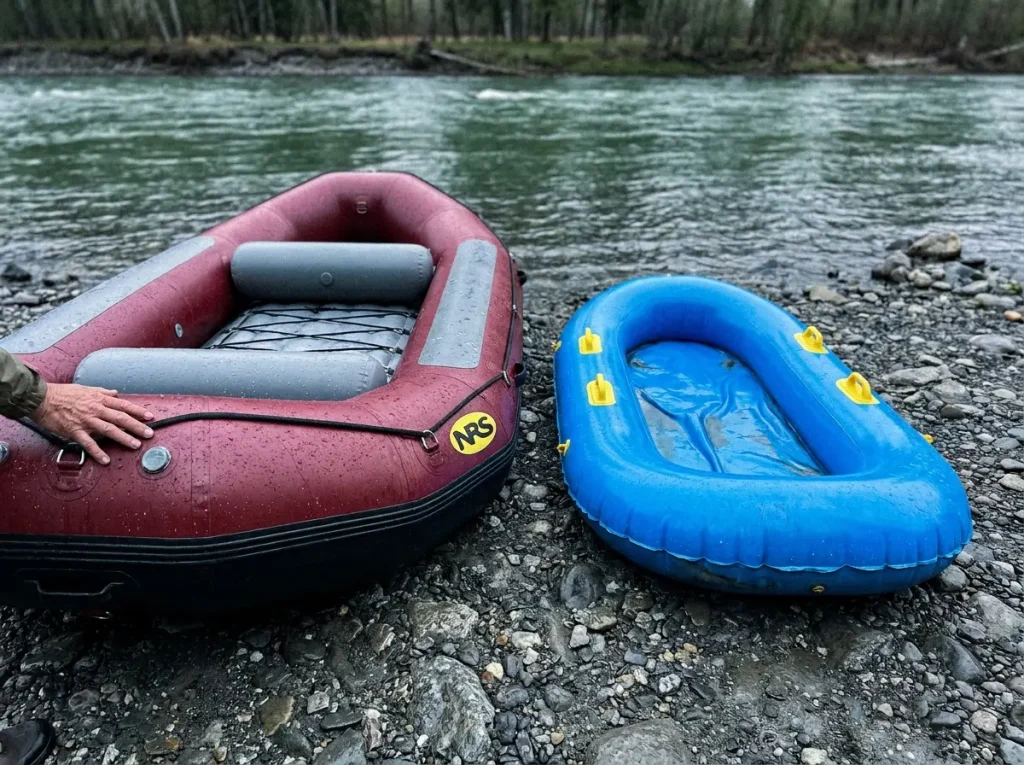
Here is where most first buyers go wrong: they shop on the sticker price and the weight capacity, and they never look at the floor. A bright vinyl Intex Mariner 4, Excursion, or Seahawk reads “river raft” on the box and runs about a tenth the cost of a real boat, so it feels like the smart budget move. It is rated for Class I to II at best, flat water and mild riffles, and that rating is not marketing caution. It is the ceiling.
The problem with a pool toy is not that it is slow. It is how it fails. A thin vinyl tube that pops or folds in the middle of a rapid puts you in the water in a heartbeat, and now your whole group is dealing with a swim instead of a fun line. River forums are full of these stories, and a few of them ended far worse than a soaked phone. That is the line this whole article exists to draw, and it is why “cheap” and “unsafe” are not the same word once you know what to look for.
What actually makes a boat whitewater-rated
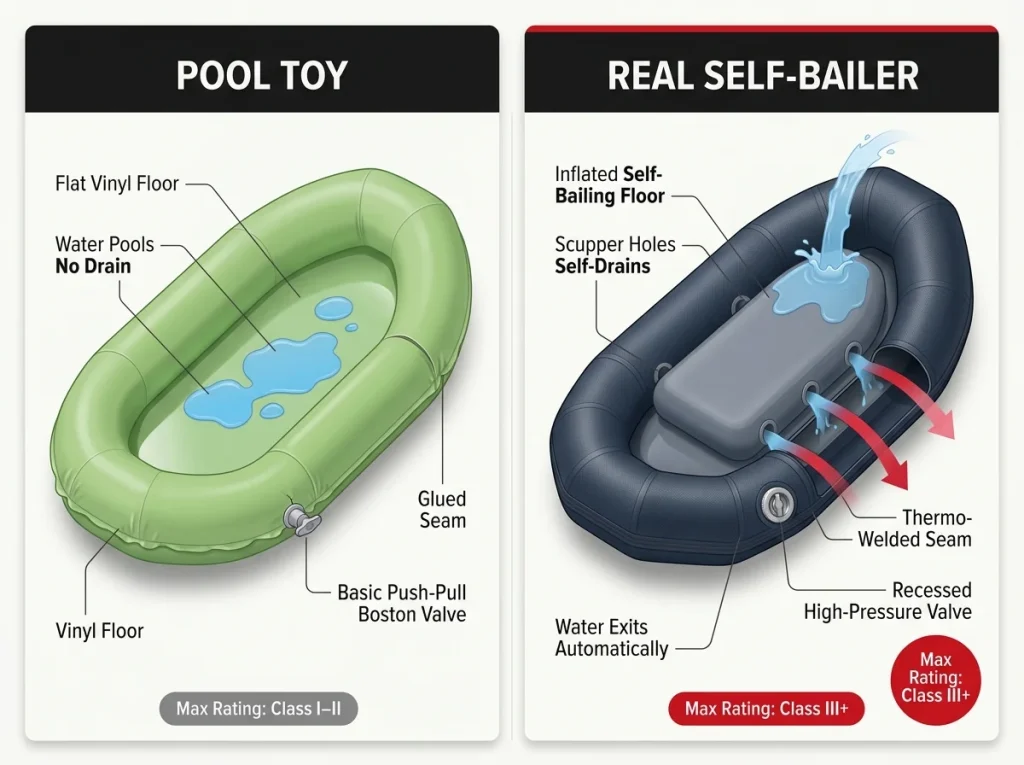
A real whitewater raft earns the label three ways: a self-bailing floor that drains on its own, heavy-denier welded PVC instead of thin glued vinyl, and real D-rings and seams that take a beating. The label on the box is the last thing to trust. Floor type and fabric are the first.
The cleanest proof that the floor sets the ceiling comes from one brand’s own lineup. The Sea Eagle 370 tops out at Class III without self-bailing valves, while the self-bailing Explorer 380x in the same family is rated to Class IV. Same brand, same general size, different floor, two full classes of difference. Price did not move that ceiling. The floor did. If you want the full scale those ratings come from, the standard Class I to V scale every boater should know before they buy is worth ten minutes before you spend a dollar.
Before you trust any cheap boat, flip it over and look at the floor. If the bottom is a flat sheet of vinyl with no drain holes and no separate inflated floor sitting above the tubes, it is a flatwater boat wearing a river costume. A real self-bailer has a clear gap and scupper holes you can see.
Why a cheap pool toy fails and why that puts your whole group at risk
A swim is not the worst part. The worst part is that a swimmer becomes everyone else’s problem the second they go in. Now your buddies are chasing a person and a flipped boat through current instead of running their own line, and rescue in cold water is a clock that runs fast.
A swim toward a strainer, a hydraulic, or an undercut rock is exactly the swiftwater scenario that self-rescue skills exist for, and a pool toy is what drops you into it. The cold itself is the part that hurts people, not the splash, which is exactly why a swim in cold, pushy water is the real hazard, not the whitewater and worth understanding before you ever launch.
The same line applies to other cheap craft. If you are eyeing an inflatable kayak instead, the same pool-toy-versus-real-boat test applies to inflatable kayaks, and the tell is identical: real floor and real fabric, or a toy.
The cheapest boat that is genuinely safe on Class III
So what is the floor price for a boat that belongs on real water? In practice, a true budget self-bailer starts around the entry-level Saturn class, several times the cost of a vinyl pool toy but a fraction of a premium boat. That is the honest number. Below it you are buying flat water. At it, you are buying a boat that can read and run a Class III line without folding under you. The shortlist below starts right there.
How We Picked These Budget Rafts
You do not need to take a shortlist on faith. The same checklist we ran works on any boat you find, so you can judge a Craigslist listing or a new model that drops next year on its own merits.
Floor type comes first, every time. A real self-bailer drains itself in a rapid, while a bucket boat with a standard floor leaves you bailing by hand when you should be paddling. After the floor, fabric does the heavy lifting: thicker denier PVC and thermo-welded seams beat thin glued vinyl, and the four inflatable floor types and what each is actually for explain why a drop-stitch or laced self-bailing floor changes how a boat handles.
Floor type, the first thing that separates a real raft from a toy
Hold a boat to one question before anything else. Does the floor drain on its own? If the answer is no, it is a flatwater boat, and no amount of capacity or color makes up for it. Self-bailing is not a luxury feature on whitewater. It is the difference between a boat that empties as you go and one that swamps and gets heavy at the worst moment.
Fabric, denier, and seams, where cheap boats actually fail
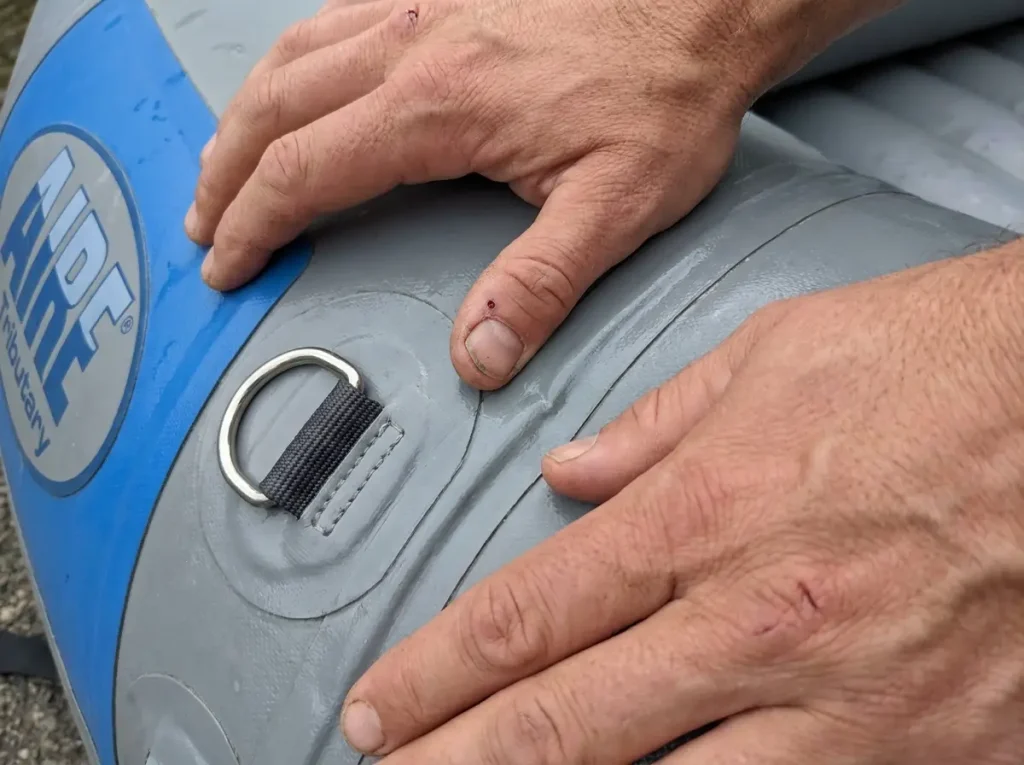
Boats almost never fail in the middle of a panel. They fail at the seam, the valve, or the floor join, and that is true of cheap boats and pricey ones alike. So we weighted construction over brand prestige: heavy welded PVC, recessed valves, solid thwarts, and reinforced D-ring patches. A boat with a great spec sheet and weak seams is a boat with an expiration date.
Capacity, warranty, and resale, value beyond the sticker
The last filter is what the boat is worth in two years, not just today. A name-brand boat holds resale and sometimes carries a transferable warranty, which means the “budget” price is really a lower net cost over time. We mixed true rock-bottom picks with one or two boats that cost a little more and give it all back in longevity.
The Budget Raft Shortlist
These six are the affordable whitewater rafts worth your money, and they sit at the budget end of our full whitewater raft guide for every river if you want to see how they stack up against the pricier tiers. If this is your very first boat, the most forgiving picks here overlap with the most beginner-friendly whitewater rafts ranked by ease, so start with the smaller Saturns and work up.
Best for Small Rivers and Solo Crews
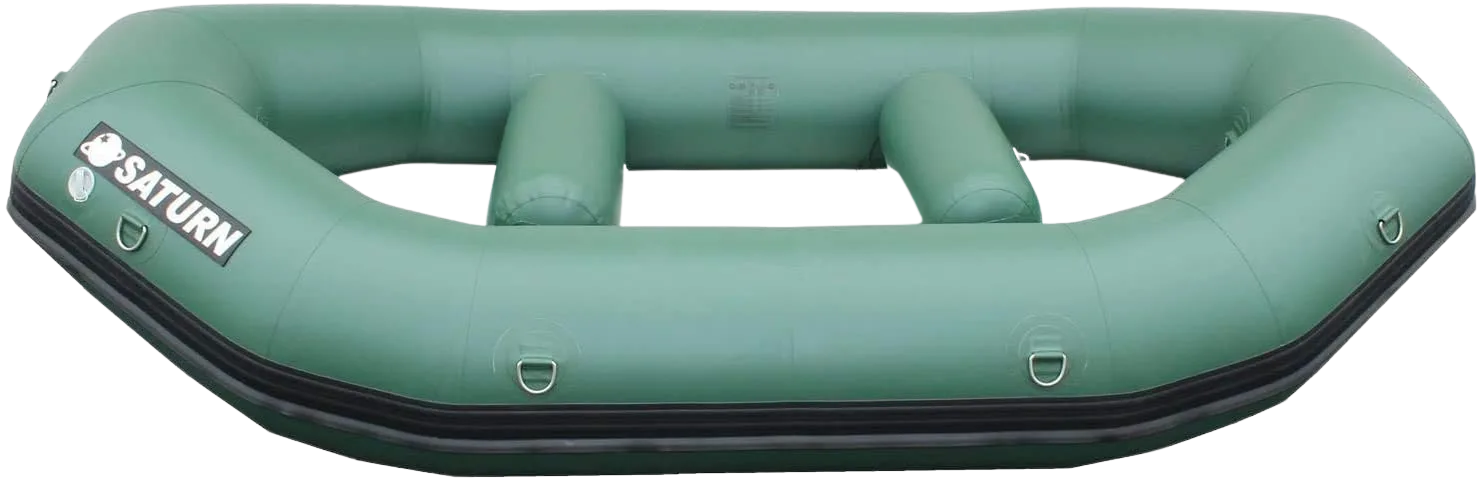
If your home run is a small, rocky, low-volume river, a 9-footer is the right tool and a 14-footer is a barge. The Saturn 9.6 RD290X is the budget pick that gets the floor right at the smallest size, so you get real drainage and real fabric without buying more boat than your water needs. It is also the one most people can car-top and pump up alone, which matters more than the spec sheet admits when you are launching solo.
The trade-off is honest: at this length it is a two-to-three person boat, and it gets bouncy on big pushy water. On the runs it is built for, that quickness is the whole point.
Best Boat-Per-Dollar
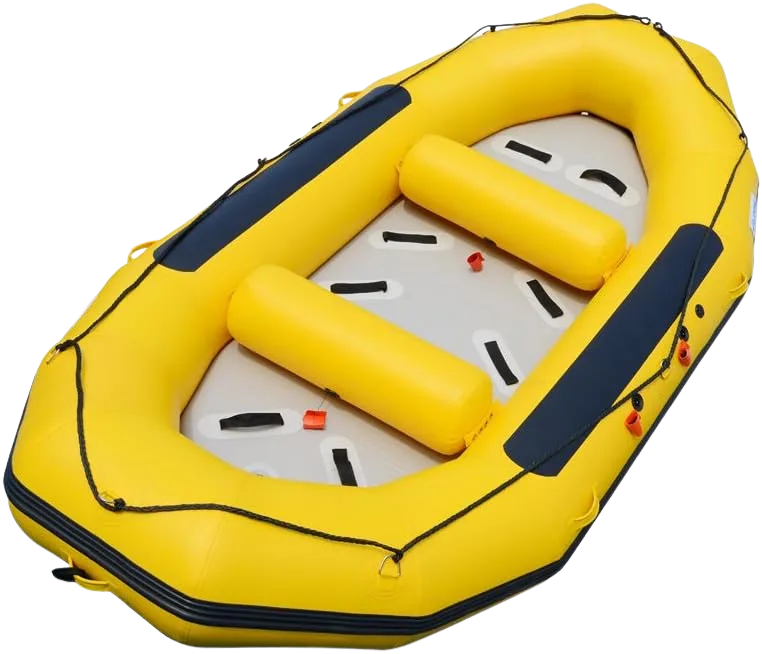
The honest pitch for the BRIS 12 ft is simple. It is a real twelve-foot self-bailer at a price that undercuts the brand-name boats by a wide margin, which is exactly what a first-time private boater on a tight budget is looking for. You give up the dialed fit and finish of an NRS or AIRE, and resale is weaker, but the boat itself runs.
Go in with eyes open. Check every seam and valve when it arrives, carry a patch kit, and treat it as a boat you learn on rather than a forever boat. For a lot of weekend paddlers, that is the perfect first raft.
Best Overall Value
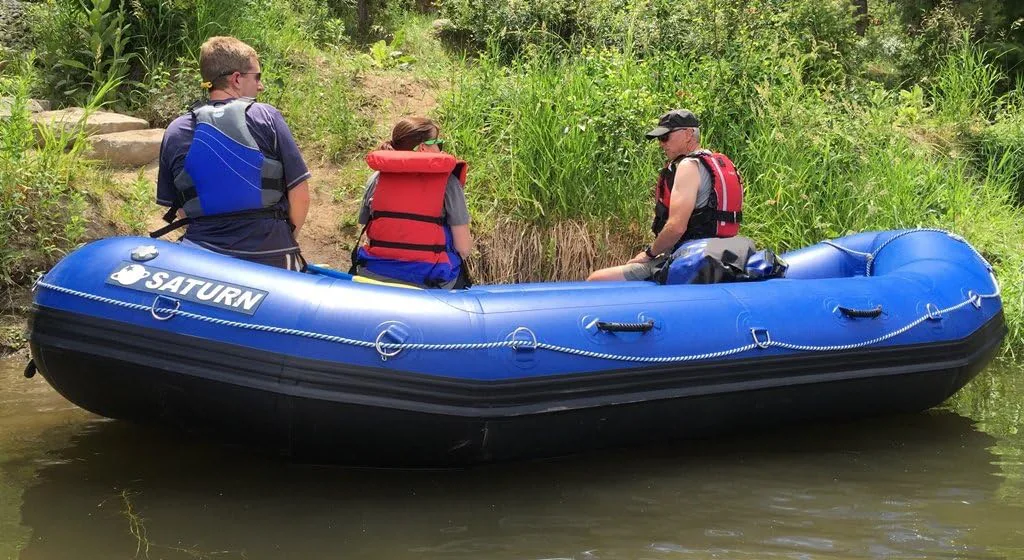
If someone asked for one boat off this list without knowing their river, the Saturn 13 ft RD365 is the answer. Thirteen feet is the do-everything length for private boaters: big enough for a crew of four to six and a cooler, small enough to handle without a degree in rigging. The reinforced tube tops address the exact spot where a budget boat usually shows wear first.
It is the value-overall pick because it asks you to give up almost nothing a weekend paddler will notice. You are paying no-name money for a boat that runs like it costs more.
Best Big Cheap Boat for Gear-Hauling
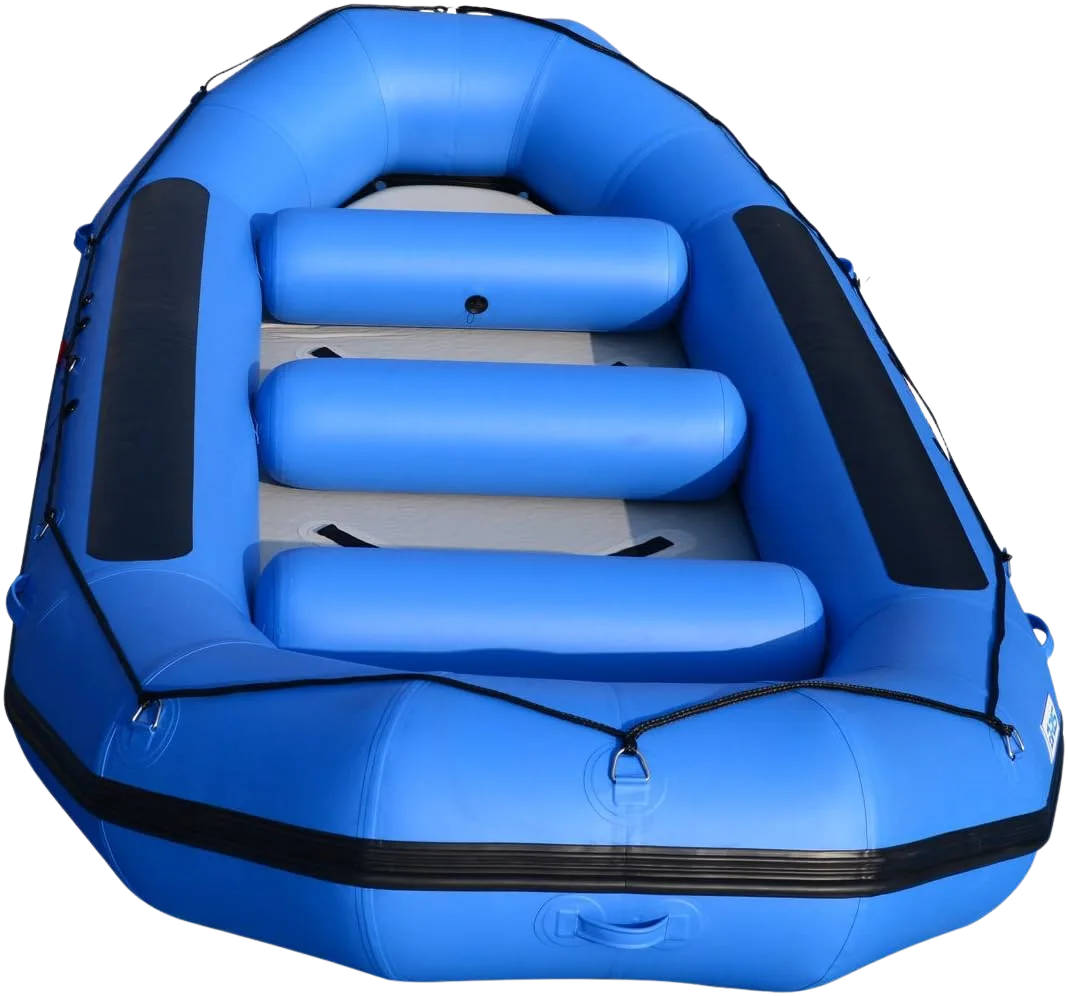
For multi-day trips with a big crew and a mountain of gear, the BRIS BRF450 15 ft gives you the most cargo room per dollar of anything here. On a big-volume river with overnight loads, this is the boat that carries the kitchen and the groover without riding low.
Now the honest warning, because oversizing is the most common budget mistake on this list. A fifteen-footer on a small, low-flow run is harder to handle, not safer. It catches more rock, it is a chore to row, and it needs real water under it to come alive. Buy this boat for the trips you actually take, not the trip you imagine once a year.
Best Spend-a-Bit-More, Keep-It-Forever
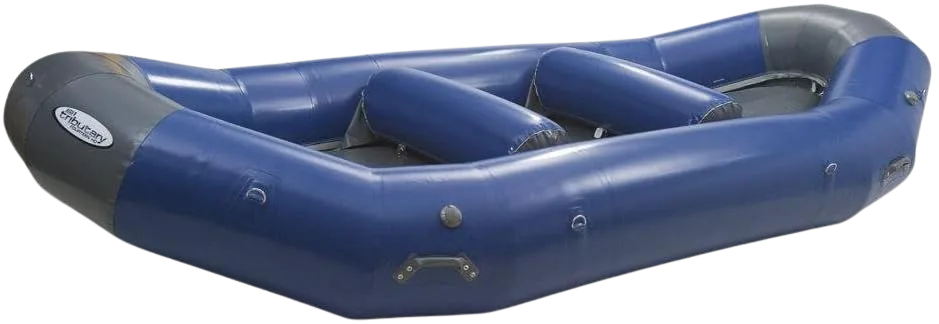
The AIRE Tributary 14 sits at the ceiling of the budget range, and it earns the spot by lasting. AIRE’s design puts an air-holding bladder inside a tough outer shell, so a tube puncture is a bladder swap instead of a boat-ending wound. The warranty is the real headline: it transfers to whoever owns the boat, which is why a Tributary holds value on the used market better than almost anything at this price.
If you plan to keep one boat for years and want the least drama, this is the smart spend. It costs more up front and gives it back in longevity and resale.
Best Name-Brand on a Budget
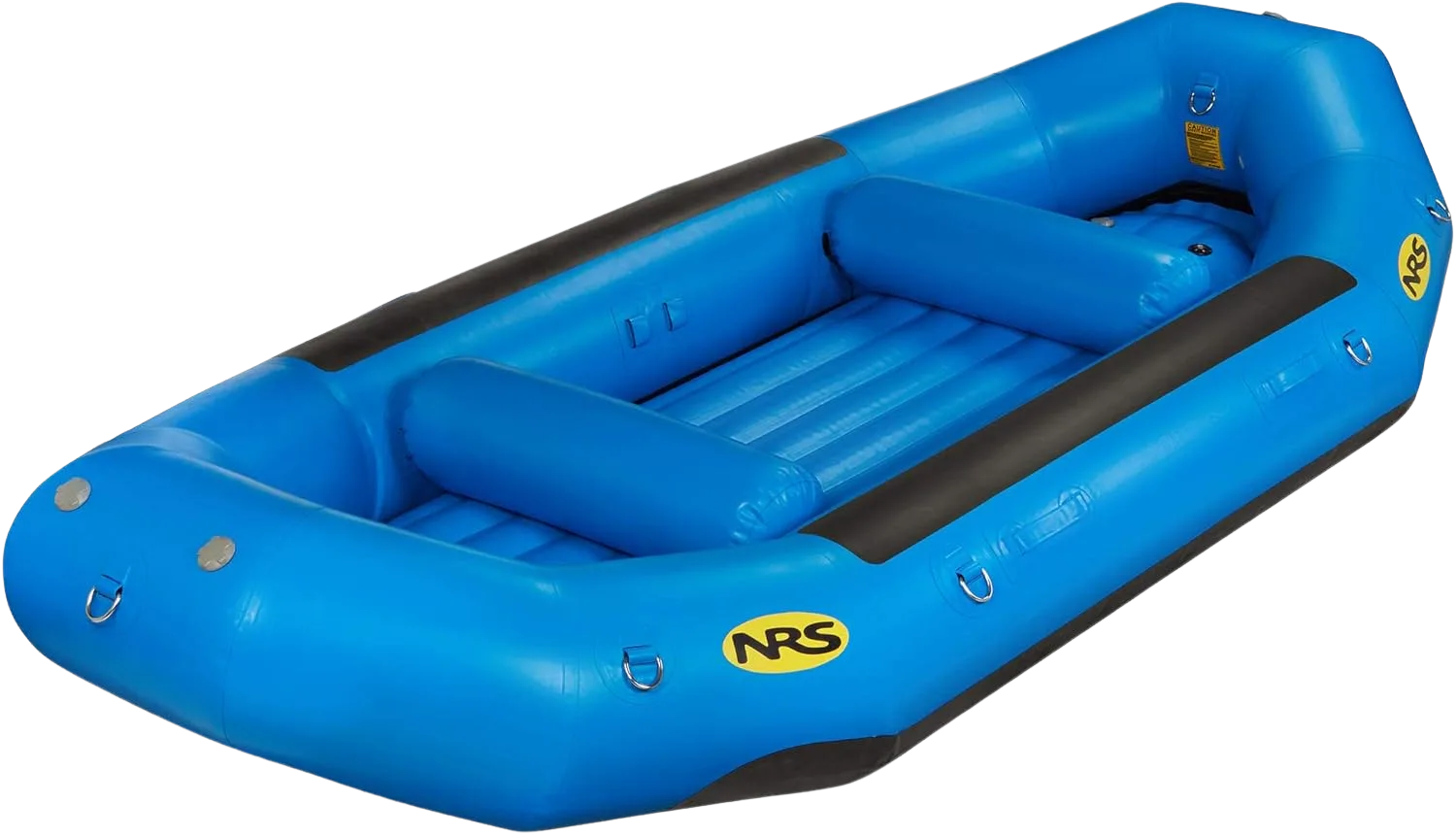
The NRS Otter 130 is the boat to buy if you want a known quantity. NRS build quality, real customer support, and a boat that paddlers respect mean it holds resale better than the no-name options, so if you ever upgrade, you get more of your money back. It is also the strongest used-or-new pick on the list, because a clean used Otter is one of the best deals in rafting.
You pay a little more than the BRIS boats for the badge, but here the badge is real. This is a boat that lasts and stays worth something.
What Budget PVC Actually Gives Up
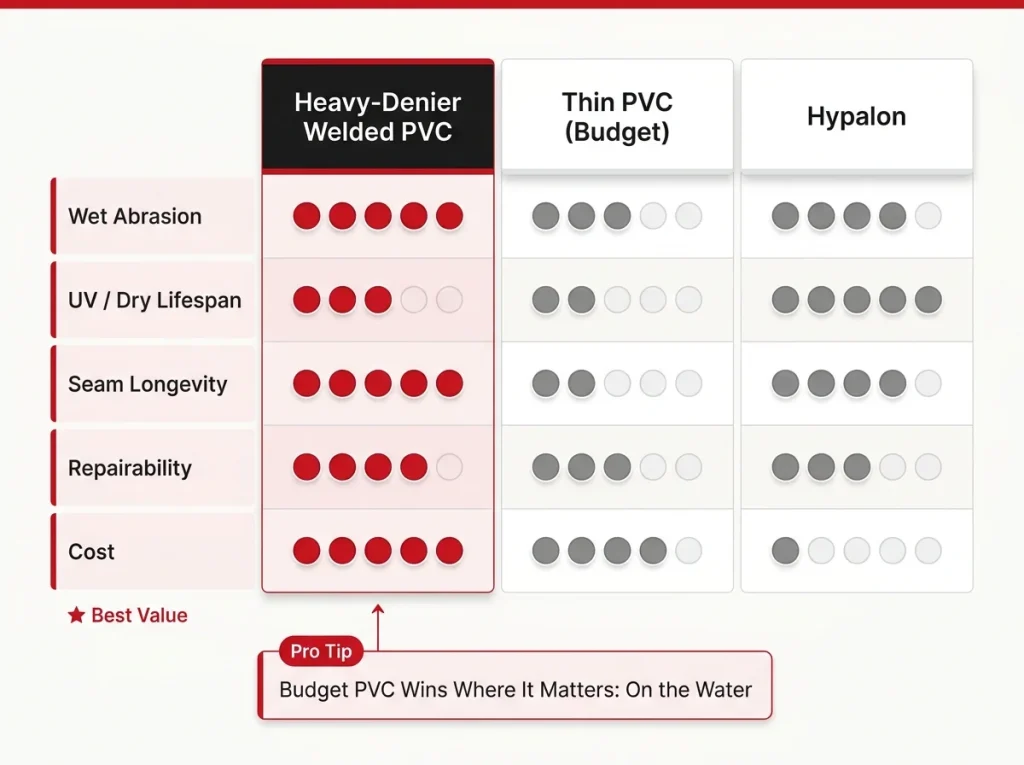
Time to put the biggest myth in budget boating to rest. The internet will tell you PVC is junk and Hypalon is the only serious material. That is too simple, and it costs first-time buyers money they do not need to spend. The truth is more useful: a thick, welded-seam PVC boat is a genuinely capable boat, and the full PVC versus Hypalon breakdown for the money backs that up with the details.
PVC vs Hypalon, what the debate gets wrong
Here is the part nobody front-loads. Fabric thickness often matters more than the base material. A heavy-denier welded PVC tube can out-scrape a thin Hypalon one, and modern thermo-welded PVC seams are frequently stronger than the fabric around them. So when you pay a Hypalon premium for an occasional-use boat, you are often buying a feature you will never cash in.
Premium boats step up to urethane or Pennel-Orca coatings, but those do not show up at a budget price, and a weekend paddler does not need them. Well-built PVC is not a compromise. It is the right call.
Do not pay a Hypalon premium you do not need. For occasional-use boating, a heavy-denier welded-seam PVC boat out-scrapes thin Hypalon and often outlives glued boats. Spend the difference on a good pump and a throw bag instead, where it actually changes your day on the water.
Seams and storage, where boats actually die
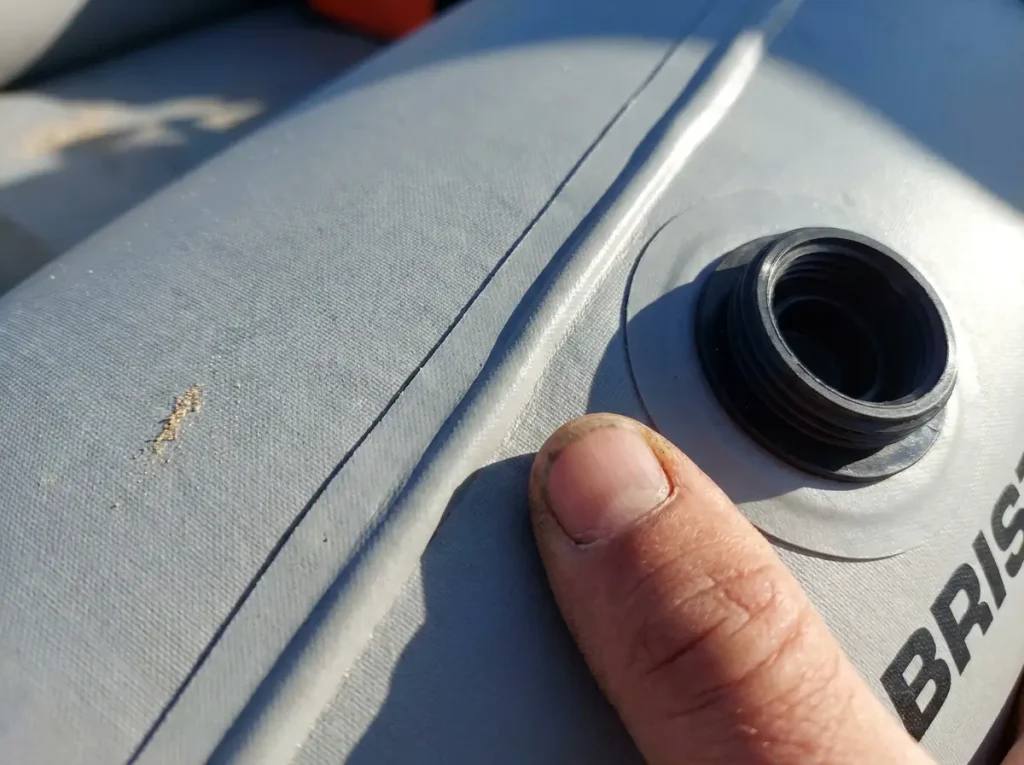
Both materials fail in the same place, and it is not the panel. It is the seam. Older glued PVC boats tend to hit glue and seam trouble around the ten-year mark, while welded PVC holds on much longer. Hypalon is not immune either: its glued seams can break down in hot, humid storage. The lesson is that how you store a boat predicts its life more than the brochure material name, and a boat that lives folded in a hot shed wears out fast no matter what it is made of. When a seam does let go, seam repair that actually holds is a learnable skill, not the end of the boat.
UV and abrasion, the real budget sacrifice
So what do you actually give up at the budget end? Two things, mostly. PVC has less dry-land abrasion resistance than Hypalon, and it has a shorter UV lifespan if you leave it in the sun. But here is the part the spec wars miss: rental fleets report PVC does at least as well when wet, and wet is the condition you actually run in. The real sacrifice is sun life and glued-seam longevity, not on-water capability. Keep a budget boat out of constant UV and dry it before storage, and you erase most of the gap.
Self-Bailing vs Bucket Boats and Sizing Your Raft
Two decisions sink more first-time buyers than any other: picking the wrong floor, and buying the wrong size. Get these right and a cheap boat feels great. Get them wrong and an expensive boat feels miserable. The dedicated guide on why self-bailing beats bucket boats until it doesn’t goes deep, but here is what you need before you buy.
How a self-bailing floor actually drains and why uncut scuppers fool first buyers
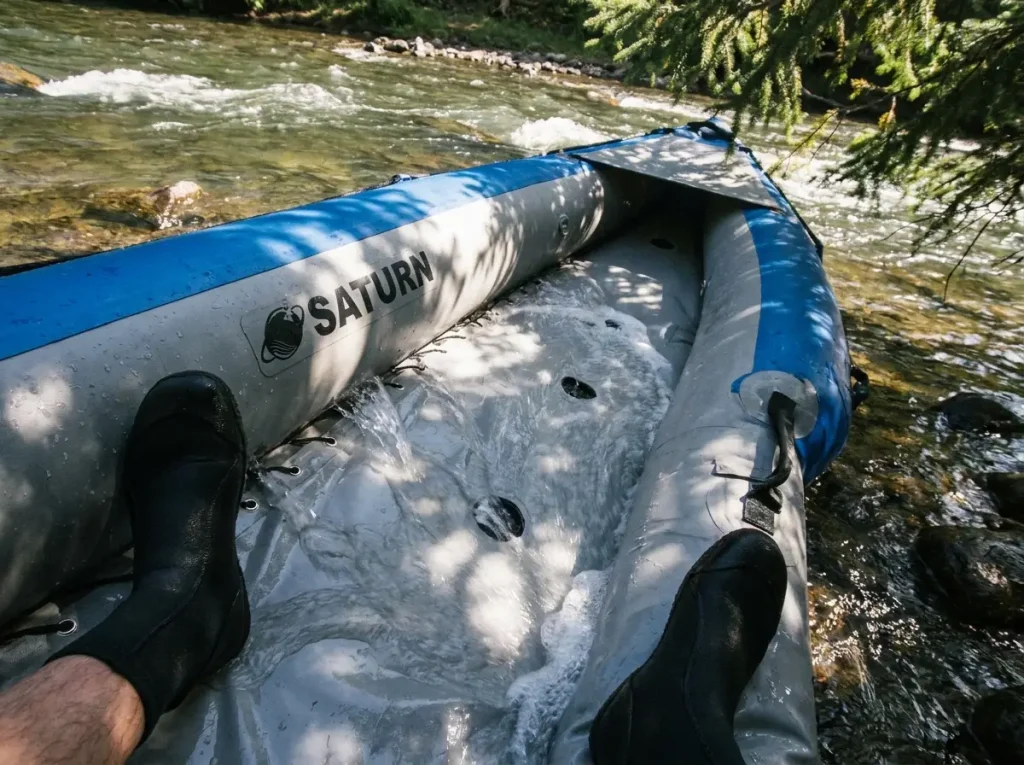
A self-bailing floor is an inflated floor that sits above the bottom of the tubes, with drain holes (scuppers or laced gaps) around the edge. Water that splashes in simply flows back out through those holes, so the boat empties itself while you keep paddling. In real whitewater you take on water constantly, and a self-bailer that drains as you go is the difference between a boat that stays light and one that gets heavy and sluggish at the worst moment.
Plenty of budget boats ship with the self-bailing holes uncut from the factory. Check the floor before your first real run, and cut or open the lacing or scupper holes if they are sealed. More than one new owner has launched wondering why their self-bailer was not draining, and the answer was sitting right there in the floor.
When a bucket boat is fine and when it is a liability
A bucket boat has a standard floor with no drainage, so any water that comes in stays in until you clear it by hand, the old practice of bucket bailing. On mild water and flat floats, a bucket boat is fine and usually cheaper. On pushy whitewater, it becomes a liability fast: a swamped bucket boat wallows, refuses to track, and turns into a heavy, slow target right when you need it to respond. If your water has any real push, buy the self-bailer.
Sizing length and crew to your river, not the spec sheet
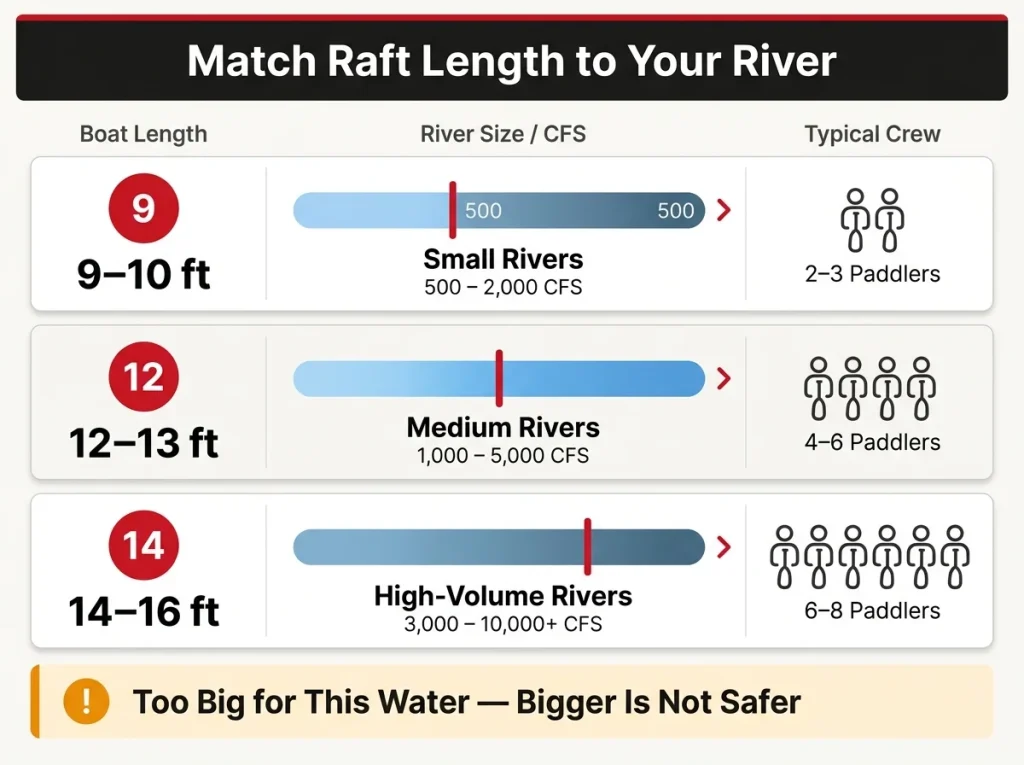
Bigger is not safer, and that is the trap. A 9’6″ boat and a 14-to-16-foot boat are different animals on the same run. Size to your home run first: the river you paddle most, at the flows you actually see. Match crew and gear load to that, then pick the smallest boat that does the job, and lean on a proper raft size guide that maps length to crew and class if you are between two lengths. The right size handles better, costs less, and is easier to rig.
The Real Out-the-Door Cost
Here is the number that blindsides budget shoppers at the ramp: the boat is only about half the spend. A raft with nothing else is not a rig, and a few of the missing pieces are not optional. Before you celebrate the cheap boat, budget for the rest, and the full gear checklist by river class lays out exactly what a complete setup looks like.
The PFD you can’t skip and why a ski vest won’t pass here
A raft is nothing without the right PFD, and this is the one place you do not get to go cheap or improvise. Whitewater calls for a USCG-approved Type III or Type V life jacket, and a general-boating or water-ski vest from the garage does not count. It is the wrong tool in a swim and it is against the Coast Guard requirement for an approved life jacket for this water. A high-float rescue vest rides high enough that it keeps your head up when the river is doing its best to push it down.
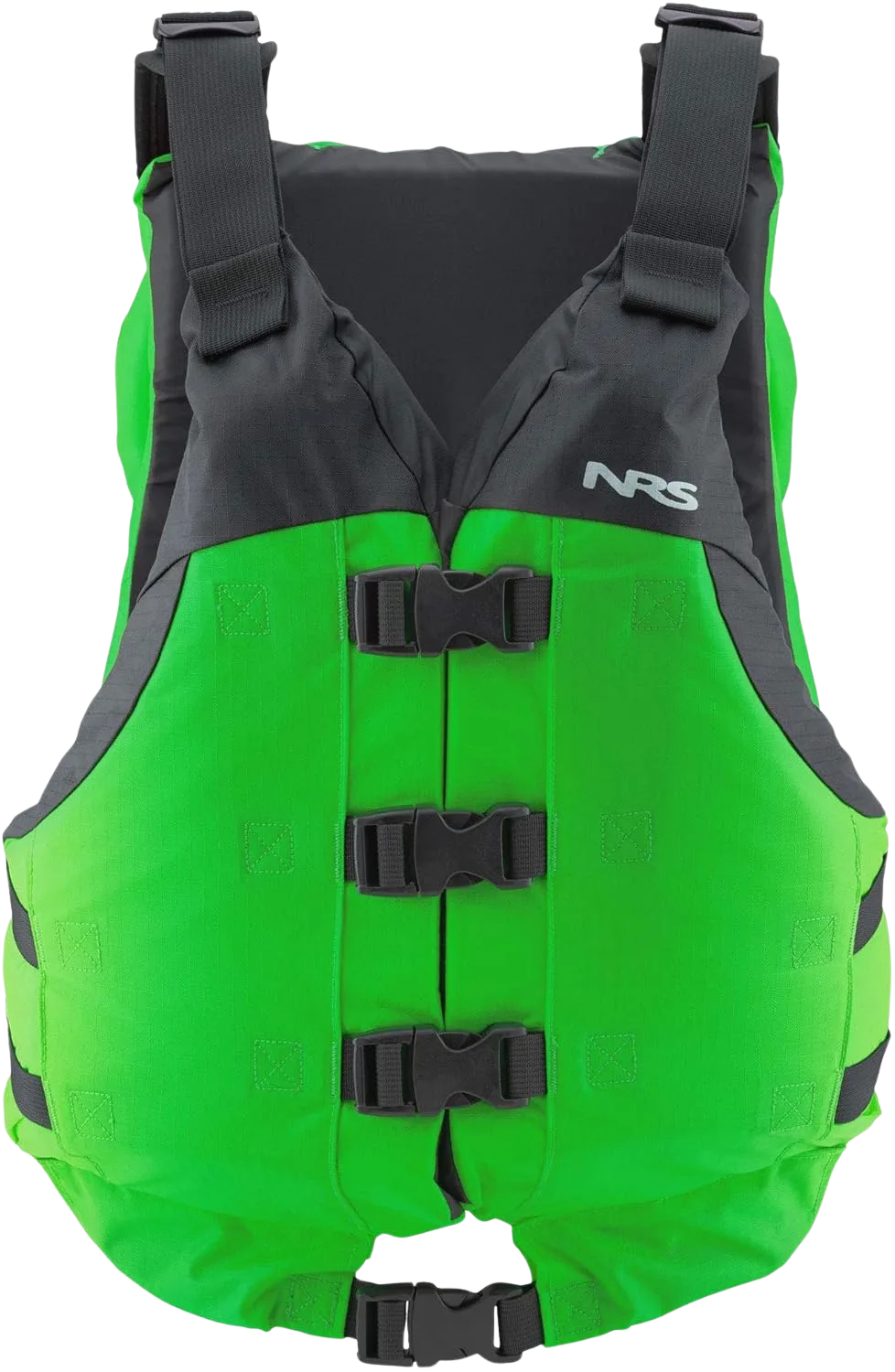
The NRS Big Water V is the vest worth building your kit around. It has the flotation to handle aerated whitewater and the rescue-friendly cut serious boaters trust, and it is the single piece of gear that turns a swim from a scary story into a manageable one.
Pump, paddle, and the gear that gets you on the water
A budget raft still needs air, and pumping a twelve-footer by hand with a basic raft pump is a workout you will resent before you even launch. An electric pump is the upgrade nobody regrets: the Seamax Portable 12V Two-Stage Electric Air Pump tops off these exact budget boats in a few minutes off a battery, then a quick hand-pump finish gets you to running pressure. Add paddles for a paddle raft or a set of oars and a frame for an oar rig depending on how you run, plus a repair kit for the inevitable patch, and your real out-the-door number starts to take shape.
None of it is glamorous. All of it is the difference between owning a boat and owning a rig.
The throw bag, half the safety rig
Every budget setup needs rescue rope, full stop. A throw bag is how you reach a swimmer from shore or from an eddy, and a boat without one is only half a safety system. The NRS Guardian Rescue Throw Bag is a proven, no-fuss choice that packs the right length of floating line and throws clean instead of birdnesting when it matters. Learn to throw it on flat water before you ever need it on moving water.
Buying Used at This Price Point
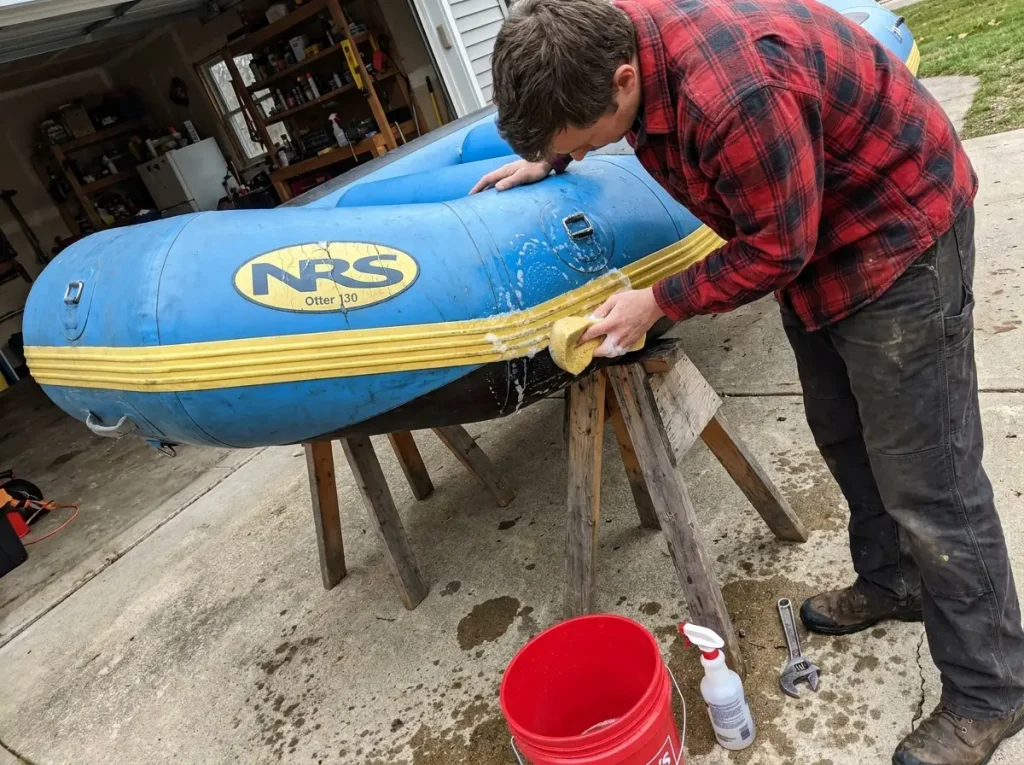
Here is the move most budget guides skip: at this price, a used name-brand boat often beats a new no-name one. A well-kept used NRS, Saturn, RMR (Rocky Mountain Rafts, a direct-sale brand worth watching on the used market), or AIRE can cost about what a fresh fifteen-foot no-name does, and the seams, the build, and the resale are all better. The catch is that you have to inspect it like you mean it.
Why used name-brand often beats new no-name
The math is simple once you see it. A name-brand boat is built better, holds resale, and is more likely to have been owned by someone who cared for it. A no-name fifteen-footer is cheap up front and worth almost nothing in two years. At equal money, the used name-brand boat is usually the better boat and the better investment, and the brand differences that drive that are covered in how the major raft brands stack up on build and resale.
The soapy-water seam test and 48-hour leak-down
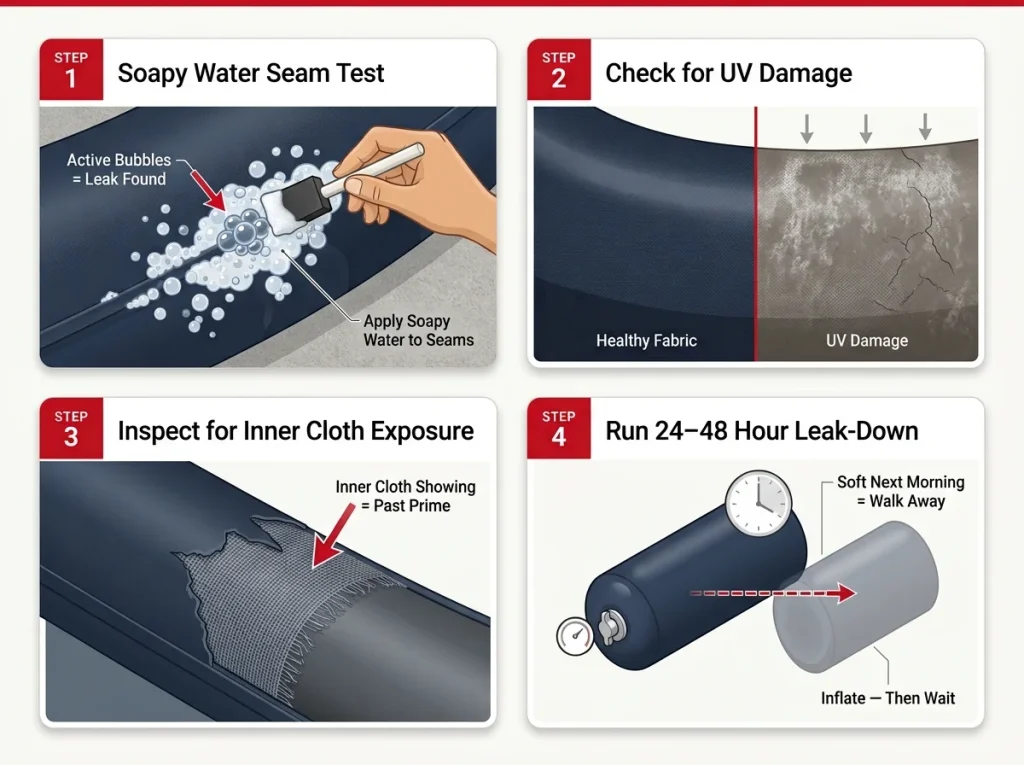
A used boat is only a deal if it holds air, so test it before money changes hands. Brush soapy water along the seams and around the valves and watch for bubbles, which is how a slow leak shows itself in seconds. Look for faded or discolored fabric, the sign of UV wear, and for inner cloth showing through the outer layer, the sign of a boat that is past its prime. Then inflate each chamber on its own and let it sit.
Run the full leak-down before you buy, not after. Inflate each chamber separately and let the boat sit for 24 to 48 hours. A boat that is firm at hour one but soft the next morning has a slow leak at a valve or seam, and that is your walk-away signal or your bargaining chip. The drive back to test it twice is cheaper than a boat that will not hold air.
Warranty, the real new-vs-used tiebreaker
When new and used come out close, warranty breaks the tie. A new Saturn can add a five-year warranty for a small upcharge, and a used boat almost never carries coverage. The exception is AIRE, whose warranty transfers to the second owner, which is exactly why a used Tributary is one of the safest used buys in rafting. If peace of mind matters more to you than saving the last few dollars, that warranty is worth paying for.
Match the Boat to Your River and Crew
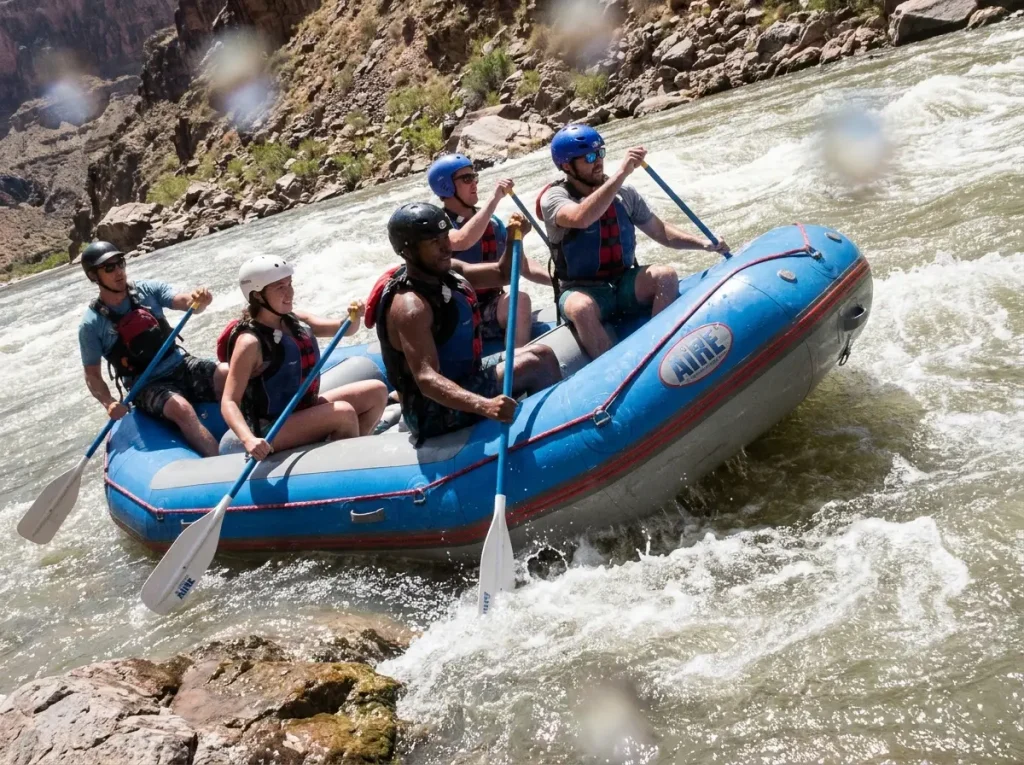
Everything comes back to one idea: buy the boat your river actually needs, not the one with the biggest number on the box. The same length behaves like two different boats at two different flows, and capacity alone tells you almost nothing about how a boat handles the river running you actually do.
Read your home run, CFS, length, and how a boat actually handles
Flow changes everything. A 9’6″ boat at 1,500 CFS is a nimble, playful craft, and at 5,000 CFS it is a cork. Length and rocker change how a boat climbs waves and punches holes, so the right boat is the one matched to the flows you actually paddle. Spend an evening learning your home run’s typical CFS range and class, and get honest about your reading water skills, before you shop, because that number, not the price tag, should drive the size you buy.
The oversizing trap, bigger isn’t safer
The instinct to “buy big to be safe” backfires more than any other budget decision. A boat that is too big for its water catches rock, rows like a barge, and never settles into a clean line, and if it does get pinned, freeing a wrapped raft takes the right pin kit and a plan, not muscle. Right-sized boats are safer because they do what you ask. Size up only when the water and the load genuinely call for it.
Crew, gear load, and day vs multi-day
Be honest about how you actually paddle. If it is mostly day trips with two or three friends, a 12-to-13-foot boat is plenty and easier to manage solo at the ramp. If you run real multi-day trips with a full crew and a kitchen, then the bigger boat earns its keep. And if you mostly paddle alone or want the cheapest real-boat entry of all, a packraft is the lightest, lowest-cost way onto moving water for solo runs your home river does not demand a full raft for.
The Bottom Line on Budget Rafts
The cheapest safe boat is a real self-bailer, not the vinyl “river raft” on the box, and floor type, not price, sets the ceiling. Budget the whole rig, because the pump, the paddles, the PFD, and the throw bag are roughly the other half of getting on the water. And remember that a used name-brand boat with a clean leak-down usually beats a new no-name, with warranty as the tiebreaker.
Before you buy anything, look up your home run’s typical flow and class, then buy the smallest real self-bailer that handles it. The right cheap boat is not the biggest or the flashiest. It is the one that fits your water and gets you running.
Frequently Asked Questions
01Are Intex rafts safe for whitewater rafting?
No. Intex Mariner, Excursion, and Seahawk river rafts are rated for Class I to II flatwater and mild riffles, not real whitewater. Above that, a thin vinyl boat can fail and put you in pushy water, which is the exact risk a self-bailing whitewater raft is built to avoid.
02What is the cheapest raft you can safely use on whitewater?
A true budget self-bailer like the entry-level Saturn class is the cheapest raft that is genuinely safe on whitewater. Below that price you are buying a flatwater inflatable, not a whitewater boat. The floor type, not the sticker, sets the safe ceiling.
03How much does a budget whitewater raft cost out the door?
Plan for the boat to be roughly half the spend. On top of the raft you need a pump, a paddle or oars, a USCG-approved PFD, and a throw bag. Pricing only the boat is what blindsides first buyers at the ramp.
04Can you use a cheap raft for Class III rapids?
Only if it is a real self-bailing whitewater raft, not a pool toy. A budget self-bailer can handle Class III, while a bucket-floor or vinyl river raft has no business there. The floor type sets the ceiling, so read the floor, not the marketing.
05Is a used raft better than a new budget raft?
Often yes. A used name-brand PVC boat from NRS, Saturn, RMR, or AIRE usually beats a new no-name fifteen-footer at the same money, as long as it passes a soapy-water seam test and a 24 to 48 hour leak-down. The catch is warranty, since only AIRE coverage transfers to a second owner.