
In this article
You’re in a plain cotton tee, soaked through in the first rapid, and by lunch your shoulders are cooked red on a day that didn’t even feel that hot. Every guide has watched a first-timer live exactly that, and the fix isn’t more sunscreen. The truth private boaters figure out fast is that the river fries you in ways a trail hike never does, and the lotion you packed is mostly gone by mid-morning. Get your rafting sun protection right and you set it at the put-in and stop thinking about it. Here’s why river sun is worse, why sunscreen alone quits on you, and the hat-and-hoodie system that actually holds up, with honest picks from budget to guide-grade.
A quick look at the picks this guide lands on:
| Category | Top Pick | Why | UPF |
|---|---|---|---|
| Guide-grade hoodie | NRS Silkweight Varial | Stretch fabric, integrated hood survives a flip | UPF 30+ |
| Budget sun shirt | Ewedoos UPF 50+ Rash Guard | Plenty for a single guided day | UPF 50+ |
| Wide-brim hat | Tilley LTM6 Airflo | Floats, cinches in wind, lifetime warranty | UPF 50+ |
| Hat under a helmet | Cotopaxi Tech 5-Panel | Low profile fits where a brim can’t | UV fabric |
Why River Sun Hits Harder Than Trail Sun
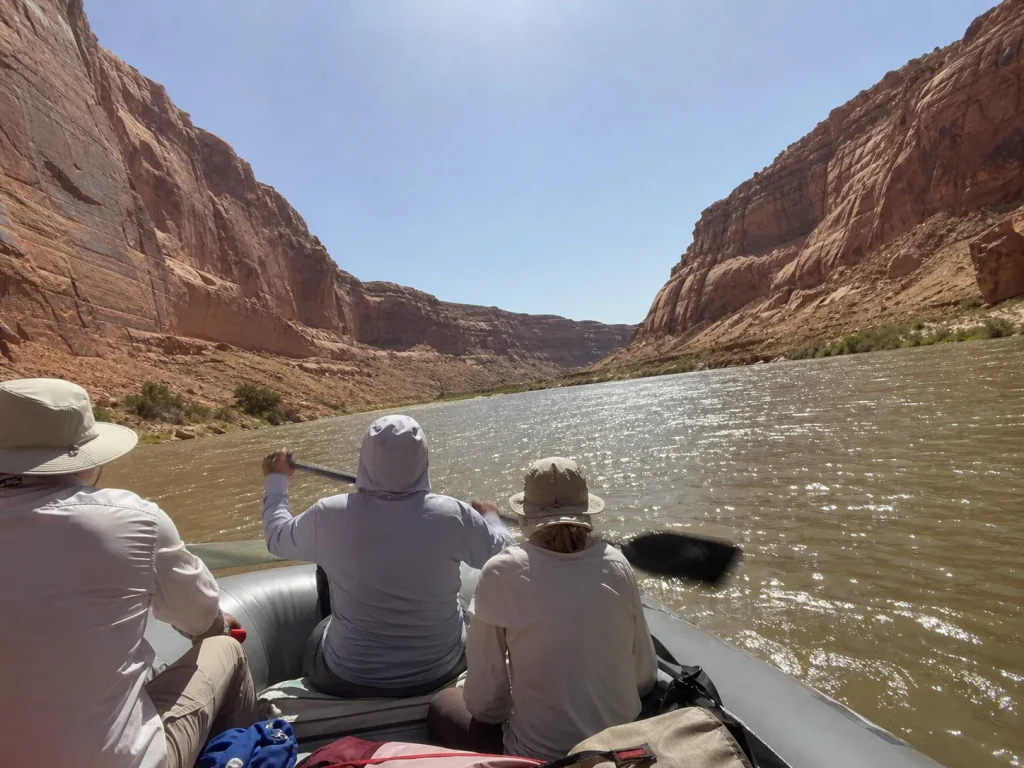
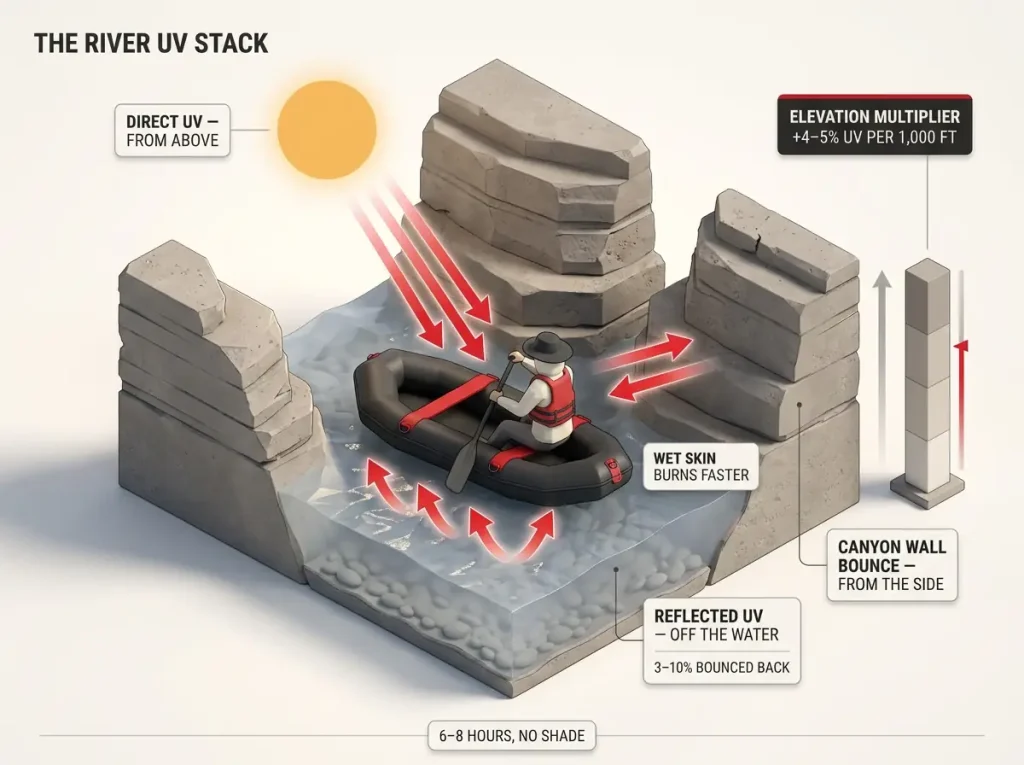
Spend a day hiking and the sun comes from one place: overhead. Spend a day on the river and it comes from everywhere. Calm freshwater reflects roughly 3 to 10 percent of UV straight back up at you, and once the water is moving or choppy, with canyon walls bouncing light back in from the sides, that number climbs. You’re getting hit from below and off the rock, not just from the sky.
Altitude stacks on top of that. UV intensity rises about 4 to 5 percent for every 1,000 feet of elevation, according to the Skin Cancer Foundation, and the EPA’s more conservative estimate still puts it around 2 percent. A mountain-fed put-in, or one of the high desert launches that feed into a multi-day Grand Canyon run, delivers meaningfully more UV than the same hours at sea level, even on an equally bright day. You can check any launch against the EPA’s UV Index guidance before a trip.
Now stack the whole thing together the way an actual river day stacks it: direct sun, plus reflected glare off the water, plus canyon-wall reflection, plus elevation, plus six to eight hours with no shade anywhere, plus the fact that you’re wet, which itself makes skin burn faster. That’s an exposure profile no land hike matches. It’s also why the season-long math matters, since roughly 90 percent of non-melanoma skin cancers are linked to UV, and a boater racks up that exposure day after day.
Ask any guide and they’ll describe the same day-one scene: a first-timer soaked in the opening rapid, sunburned red by lunch, still with a full afternoon on the water ahead. It happens on nearly every trip because people plan for the air temperature, not for the sun bouncing off the whole scene.
Why Sunscreen Alone Won’t Cut It on the Water
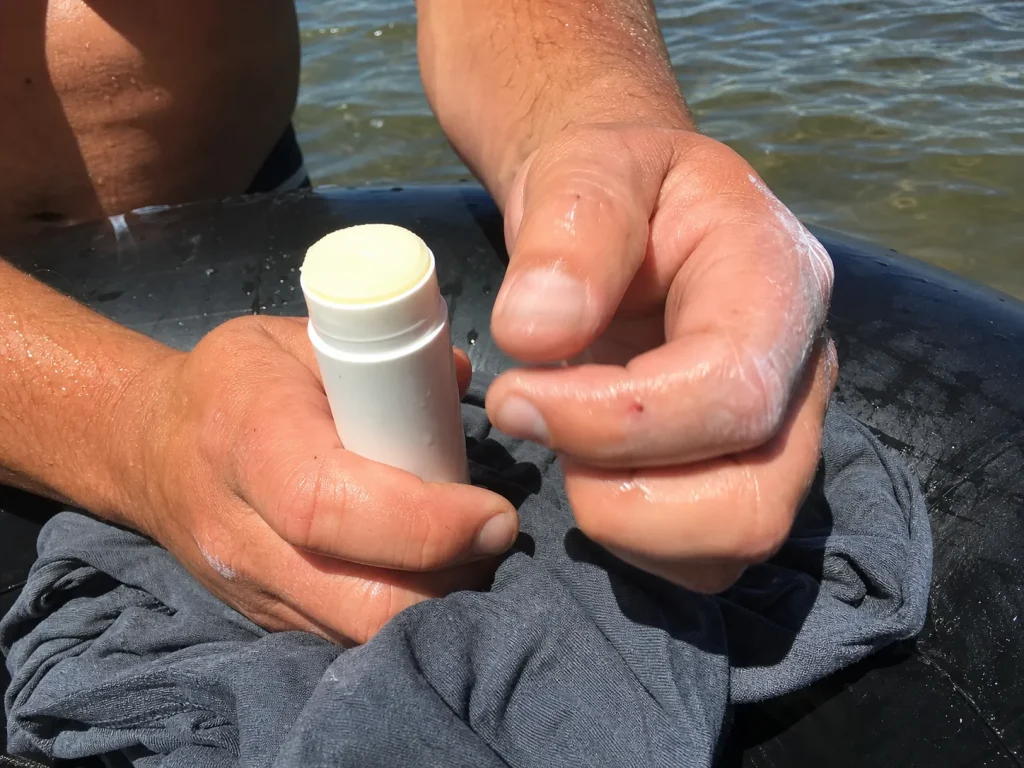
Everybody’s sun plan is the same: slap on sunscreen, reapply as needed. Then your hands are wet and slick, the bottle’s buried at the bottom of a dry bag, and it’s 2 p.m. before you remember it exists. Sunscreen is the backup, not the plan, and the reason is baked into how it’s tested.
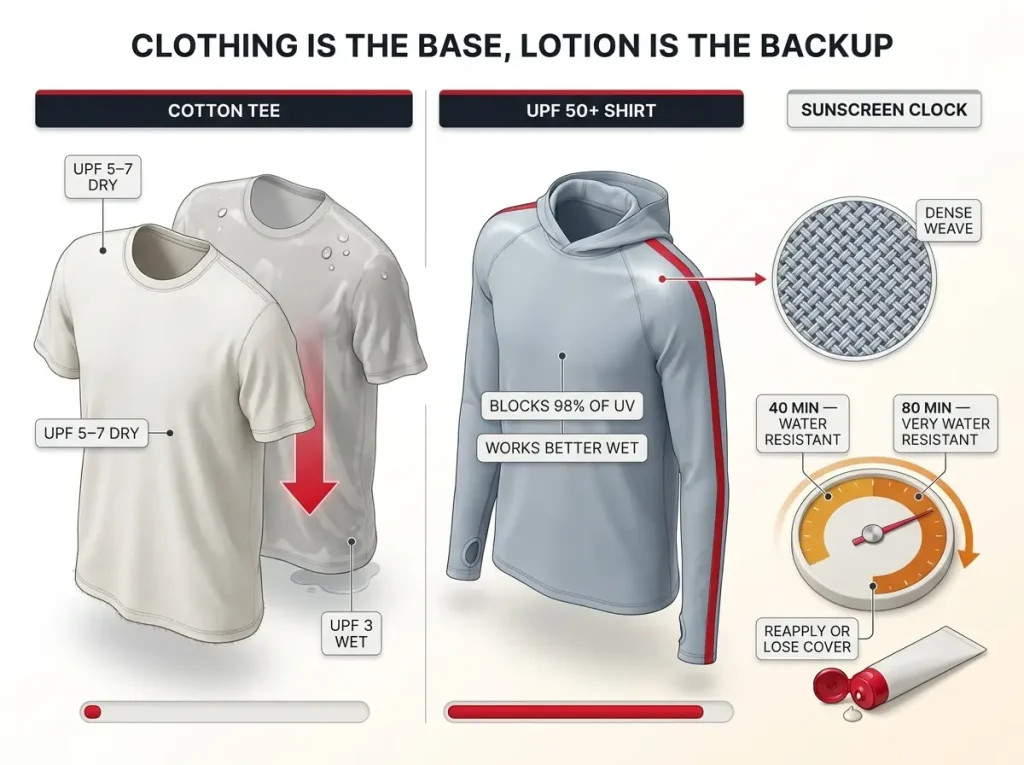
A water-resistant sunscreen is certified for only 40 minutes of continuous water exposure, and a “very water resistant” one for 80, before it has to go back on. That testing assumes a clean, dry reapplication. Reapplying with wet, sunscreen-slicked hands from a raft tube is not that, so your real coverage drops off faster than the label suggests.
Meanwhile the shirt most people bring is working against them. A plain white cotton tee rates around UPF 5 to 7 dry, and drops to as low as UPF 3 once it’s wet, which on a raft happens in the first five minutes. So the casual float shirt is close to useless as sun protection right when you need it most. Compare that to a UPF 50+ fabric, which blocks about 98 percent of UV and, unlike sunscreen, works better wet than dry. You can read the science behind that in the Skin Cancer Foundation’s guidance on sun-protective clothing. Put a UPF shirt on at the put-in and it just keeps working, no reapplication required. That’s the whole case for clothing as the base layer of your defense, with lotion filling the gaps.
None of this changes the flip side of dressing for the river, which is when cold water, not sun, is the thing that can hurt you and the layering math runs the opposite direction. On a hot, sunny run, though, fabric coverage is what carries the day.
A stick-style, waxy sunscreen holds on your nose and ears far better than lotion, because your hands are in near-constant water contact and rub lotion right off. A lot of guides skip hand sunscreen entirely and let gloves do that job instead.
The Hat + Hoodie + Gaiter System That Replaces It
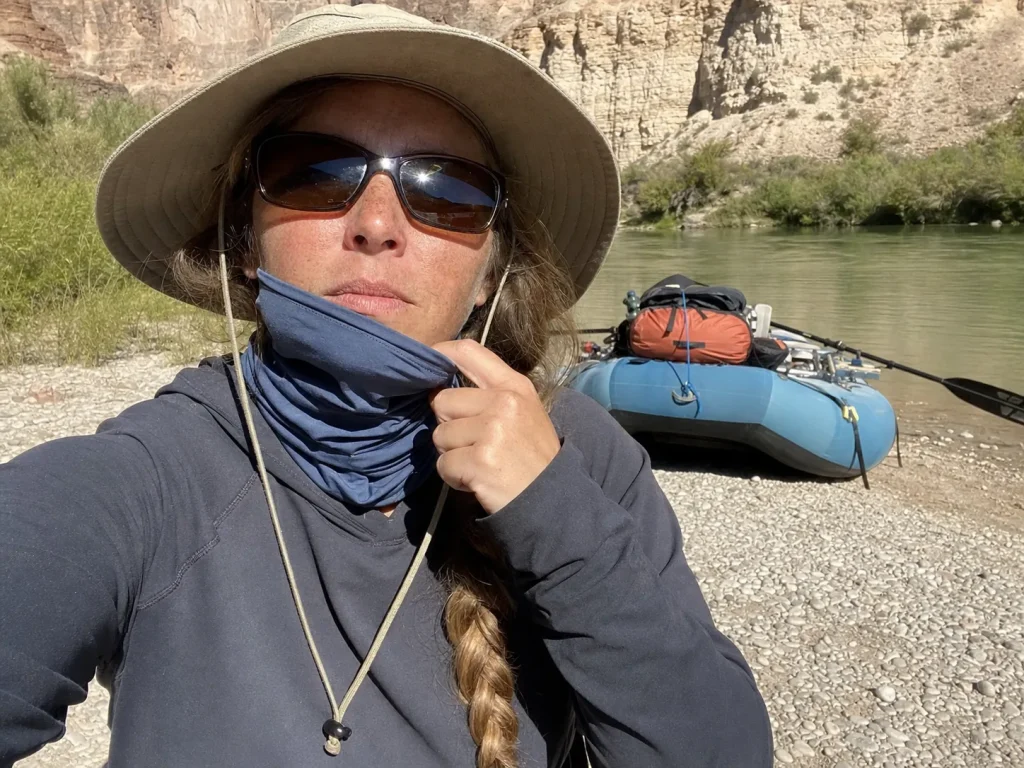
Once you accept that fabric does the heavy lifting, sun protection stops being one purchase and becomes a small layering system. The idea is simple: cover the big real estate with cloth so sunscreen only has to handle what’s left, which is your face, ears, and the backs of your hands. This is one piece of the bigger picture of what to wear rafting, and each part has a clear job.
The head gets a brim or a cap for shade and glare. The arms and torso get a UPF sun hoodie, and if it has a hood, that covers your scalp and the back of your neck too. The eyes get polarized sunglasses on a retention strap, because glare off moving water is relentless and unstrapped glasses are gone in your first swim, which is exactly why a dedicated pair of polarized sunglasses that stay put in a swim earns its place. And the gap a hoodie collar can’t reach, the lower face and neck, gets a neck gaiter.
That last piece is the one people forget. A hoodie’s collar leaves your lower face and throat open, and on a bright canyon run that skin cooks. A simple UPF gaiter or buff closes it, and the GOT Sports UPF 50+ Neck Gaiter (check it on Amazon) does the job for pocket change while doubling as wind and dust cover at exposed put-ins.
Dunk your hat or gaiter in the river when you start to overheat. A quick-dry piece cools you for the next stretch and dries back out fast, while a soggy cotton one just stays heavy and starts to smell by day two.
What Makes a Sun Hoodie Worth Wearing
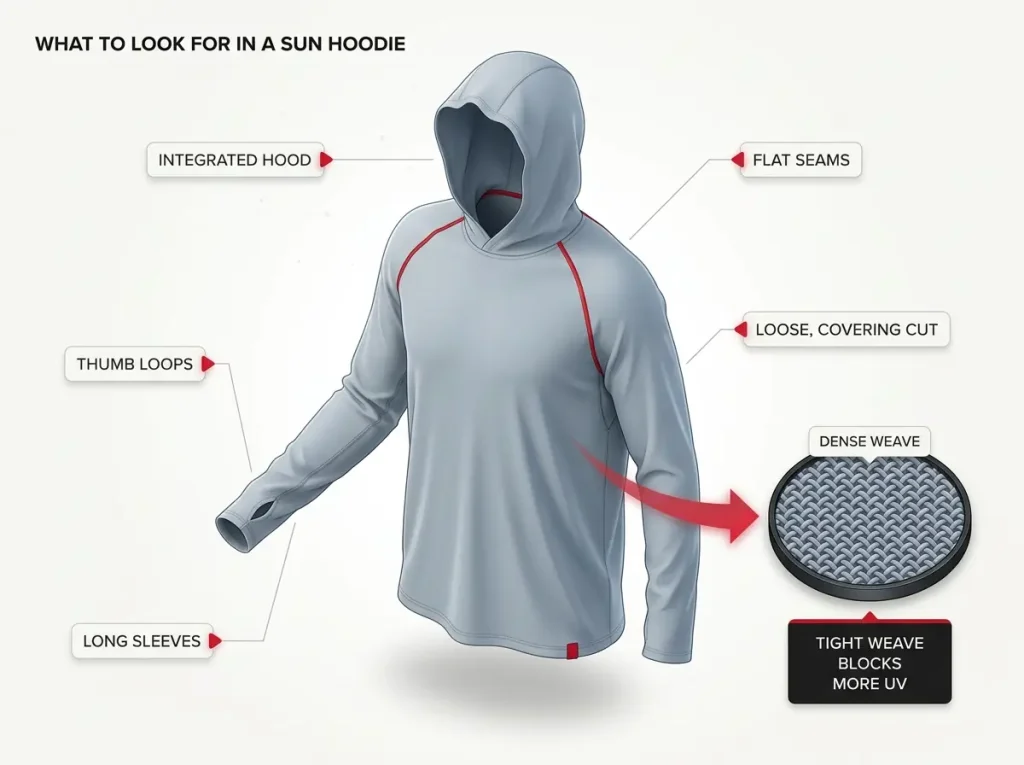
Two sun hoodies can hang side by side on a rack, look identical, and protect you completely differently. The number on the tag is only part of the story. What actually separates a real sun shirt from a thin technical tee is the weave and the color, not just the UPF rating.
Dense, tightly-woven synthetic fabric blocks far more UV than a light, loosely-woven one of the same weight, and a dark, tight weave can rate well past UPF 1,000, according to the Skin Cancer Foundation’s testing on how weave and color affect a garment’s rating. Synthetic polyester and nylon blends also hold their protection when wet, where cotton collapses, and they dry fast enough to save you from all-day chafing.
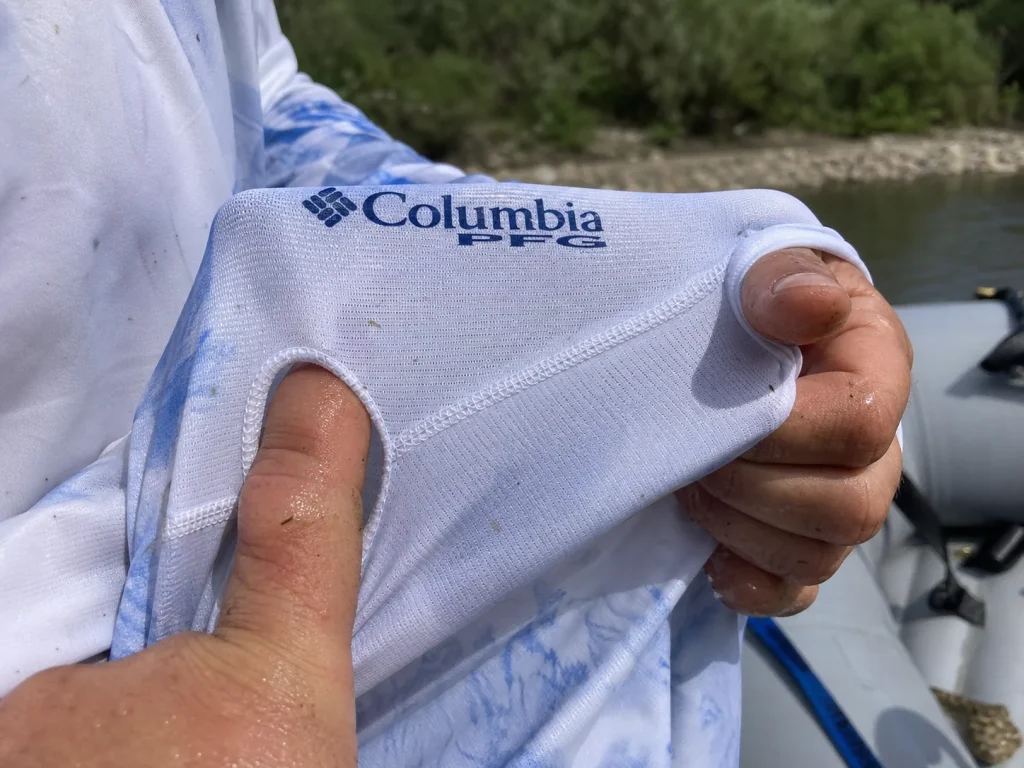
Then there are the features that earn their keep. An integrated hood covers your scalp and neck without a second piece of gear. Thumb loops pull the sleeve over the back of your hand, the one spot sunscreen never survives. A breathable, loose-but-covering cut gives you airflow without leaving gaps, and long sleeves are the entire point. As for rating, UPF 50+ is the target, but a UPF 30 stretch hoodie from a river brand is a fair trade when you’re buying it for mobility and wearing it inside a full-coverage kit.
The mistake to avoid is trusting the label alone. Plenty of budget hoodies claim UPF 50+ and quietly underperform, which you can see plainly when someone runs them past an actual UV meter.
The Best UPF Sun Shirts for Rafting
Three shirts, three honest use cases: the once-a-year guest who needs coverage and nothing fancy, the regular weekend boater, and the person living in it all season. Each of these comes in a men’s and a women’s cut, so nobody lands on the wrong page.
Best Budget Sun Shirt: Ewedoos UPF 50+ Rash Guard
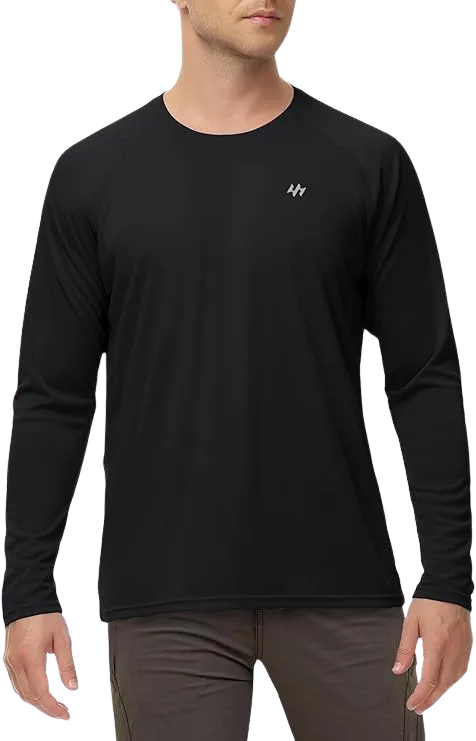
If your river time adds up to one guided trip a year, you do not need to overthink this. The Ewedoos covers your arms and torso at UPF 50+, dries fast when you get splashed, and costs little enough that losing it downstream wouldn’t ruin your week. It’s the shirt to hand a first-timer who’s never owned sun-protective clothing.
Best Mid-Tier Sun Hoodie: Columbia PFG Terminal Tackle
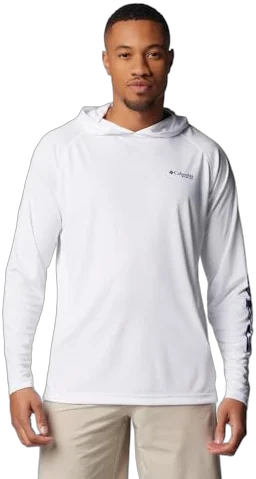
This is the shirt for the weekend boater who’s out a handful of times a season and wants something that lasts without going premium. The wicking fabric and vented back handle a hot afternoon better than the budget pick, and it’s easy to find in most sizes and colors. One honest note: because there’s no women’s Terminal Tackle, the women’s button sends you to the Tidal Tee II, the nearest sun-shirt in the same PFG line with the same fabric tech.
Best Guide-Grade Sun Hoodie: NRS Silkweight Varial
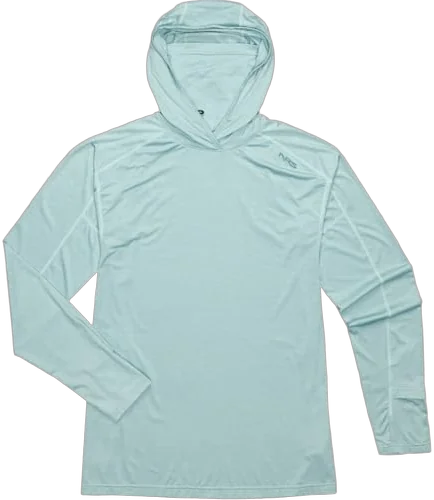
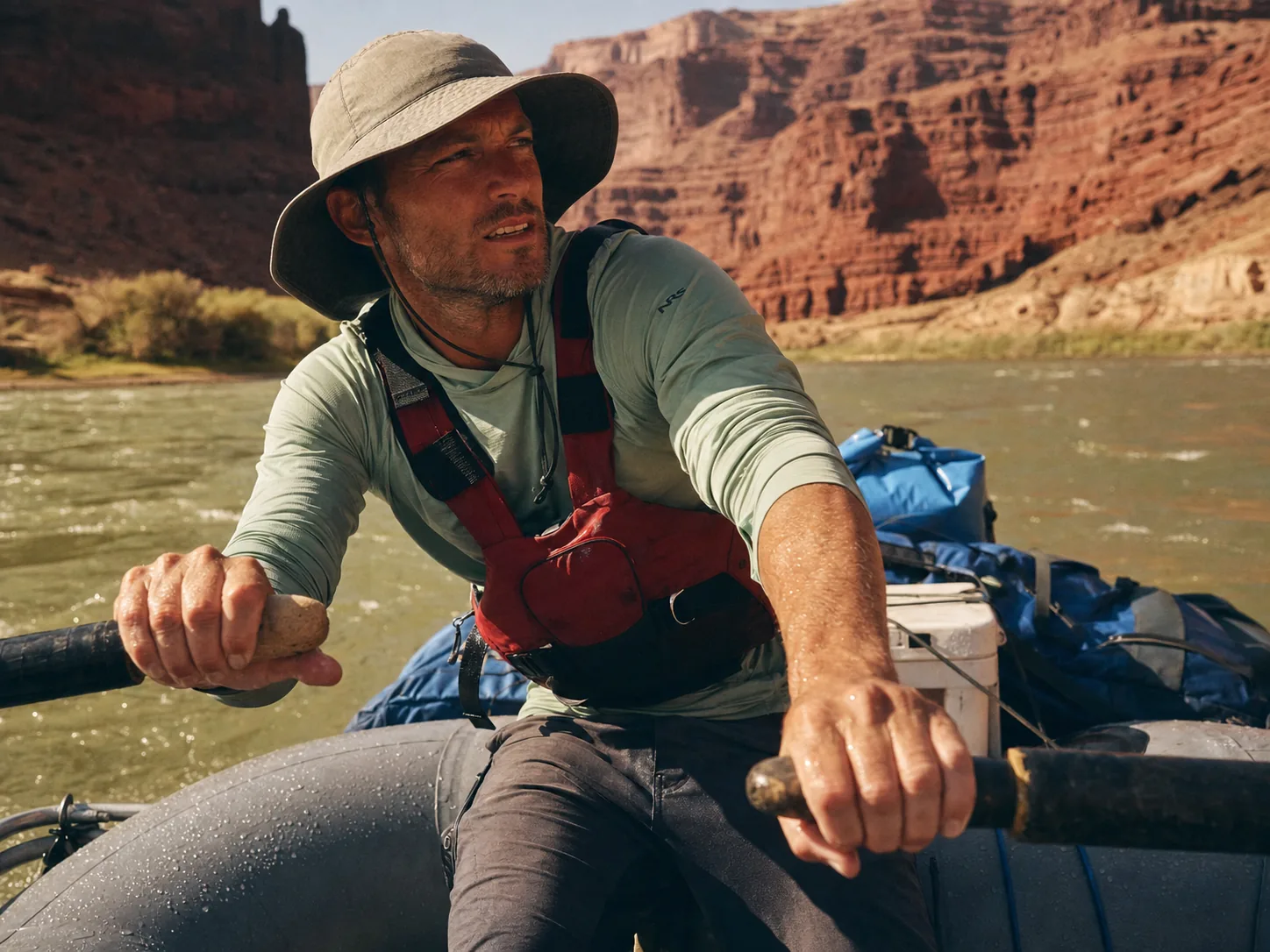
If you’re on the water dozens of days a season, this is the one worth the premium. NRS builds for rivers, and the stretch blend keeps you moving on the oars or paddle when a cotton-blend hoodie would go stiff and cling. Its rating sits at UPF 30+ rather than 50, which is a reasonable trade for that mobility once it’s part of a full kit, and layered over a base it also works for a cold, sunny spring run where you’re dressing for the water temperature, not the air. The integrated hood matters for more than sun, as the next section gets into.
Sun Hats by the Water You’re Actually Running
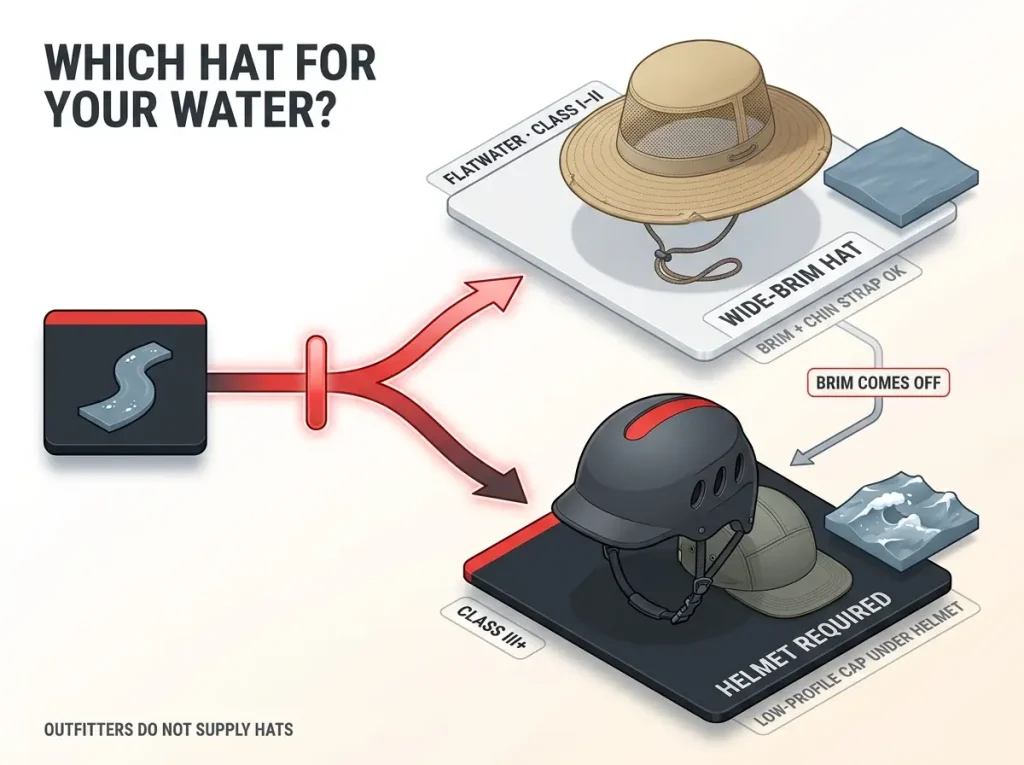
The hat question isn’t which brim looks best. It’s whether a helmet goes on your head today, because that single fact changes everything. Nobody else draws this line clearly, so here it is: a wide brim, or a legionnaire hat with a cape and neck flap for extra ear and neck shade, is excellent for flatwater and guided Class I to II floats, but the moment you’re running a Class III or Class IV rapid, a certified whitewater helmet is mandatory gear and the brim has to come off. Your hat has to be low-profile enough to live under or beside a certified whitewater helmet, or you’re going bare-headed through the sunniest, most exposed part of the day.
One more thing guests get wrong: outfitters usually hand you the helmet and PFD, but they expect you to bring your own hat and sunglasses. Don’t show up assuming the sun gear is covered the way the safety gear is.
Best Wide-Brim Hat: Tilley LTM6 Airflo
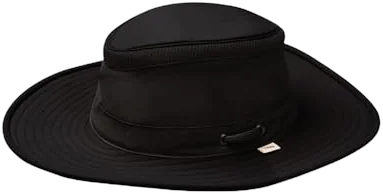
For flatwater floats and guided mellow water, this is the hat to beat. The floating crown is the detail that matters on a river, since a hat that pops off in an eddy stays retrievable instead of sinking, and the cinch cord keeps it planted when a canyon wind kicks up. It costs more than a throwaway booney, but the lifetime warranty means you buy it once.
Best Budget Hat: Columbia Bora Bora II Booney
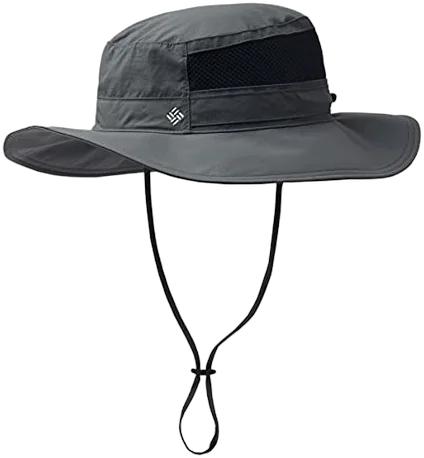
Most gear roundups give shirts a budget option and leave hats hanging. The Bora Bora fills that gap: a real chin strap that keeps it on in wind, UPF 50, and a mesh vent so your head isn’t a sweat box. It’s the sensible pick for a guided-trip guest who wants a proper wide-brim without spending premium money.
Best Hat for Helmets: Cotopaxi Tech 5-Panel

Once you’re in whitewater and the wide brim comes off, this is what keeps sun off your face. The low-profile 5-panel shape slides under a helmet without pushing it around, and the UV-blocking fabric still shades your face and eyes. If your trips involve Class III or harder, this belongs in your bag alongside, not instead of, a brimmed hat for the mellow stretches.
Best Women’s Hat: Outdoor Research Oasis
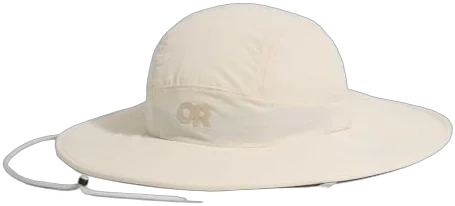
The Oasis is cut for a woman’s head rather than shrunk down from a men’s pattern, which shows up in how it actually sits and stays put. The downturned brim is the smart detail, giving real face shade without dropping into your sightline when you’re reading the water ahead. It fills the flatwater and guided-float role for anyone who’s never found a unisex hat that fit right.
What Your Hat and Hoodie Survive in a Flip
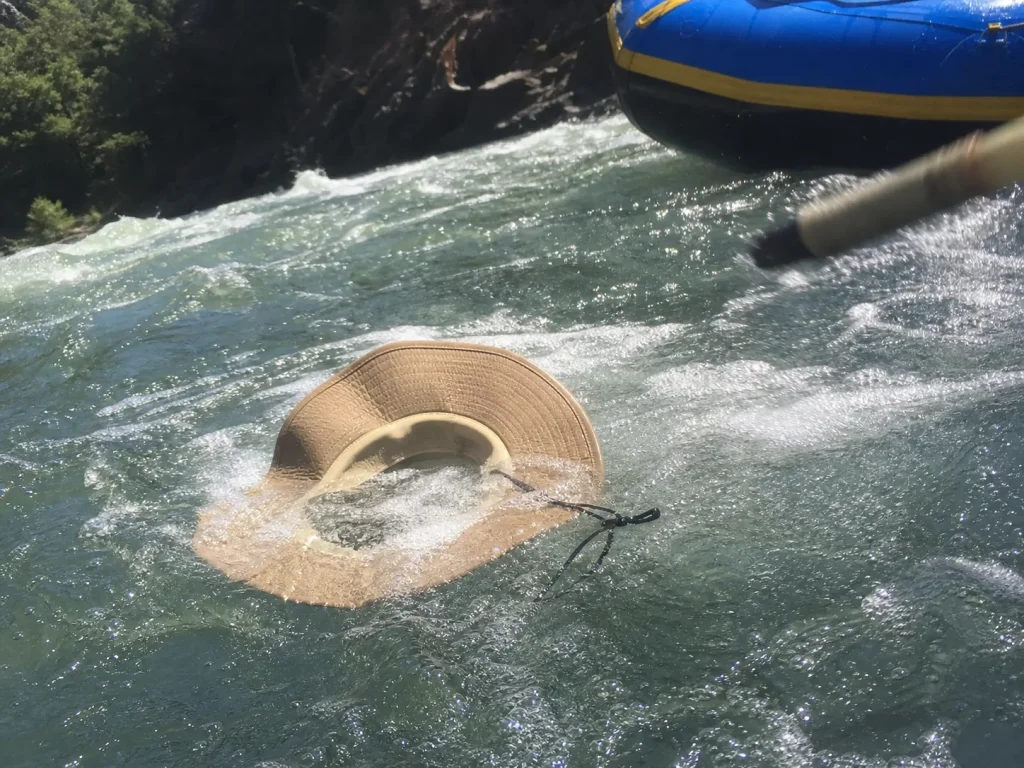
Nobody plans for the swim, only for the float. But the hydraulic doesn’t care about your chin strap, and what’s still on your head when you surface is a question worth answering before you’re in the water. This is the part every competitor skips, and it changes what you buy.
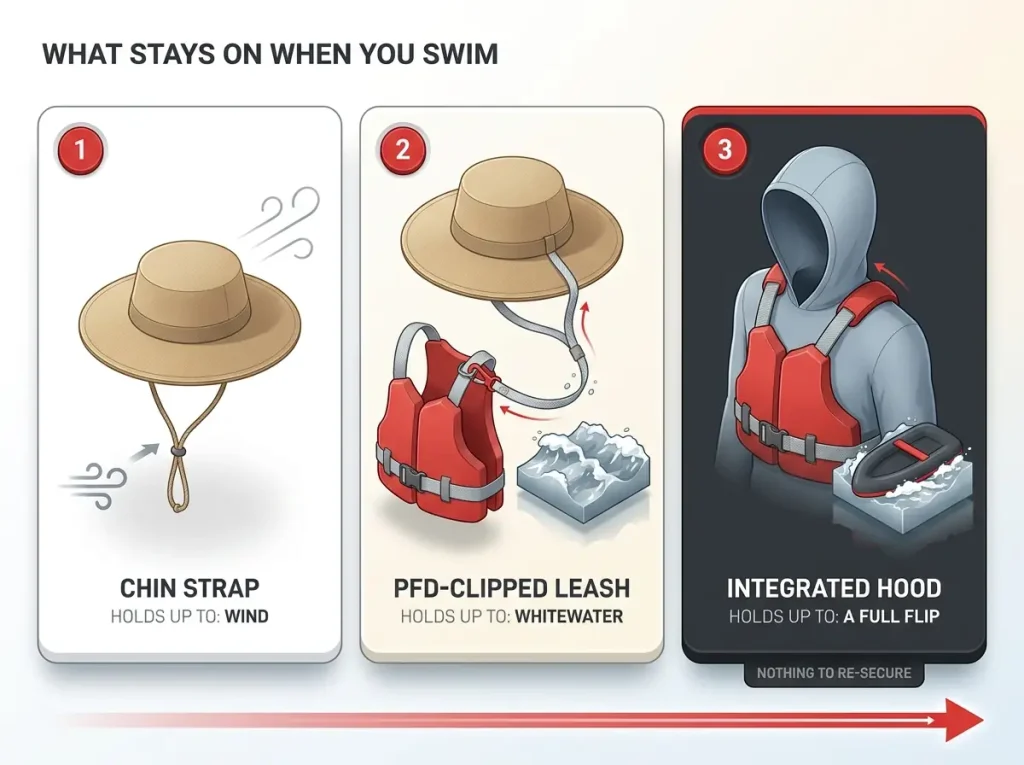
A chin strap resists wind, not whitewater. It’ll keep a hat on through a canyon gust, but a hole big enough to capsize you can rip it off regardless of how snug it is. The upgrade is a leash or retainer clipped to your PFD strap, the same “rig to flip” thinking you already apply to everything else on the boat, so that when your hat comes off it’s still attached to you instead of gone downstream. When your raft actually goes over, that difference is the whole game, and the mechanics of getting a flipped raft back upright are worth knowing cold.
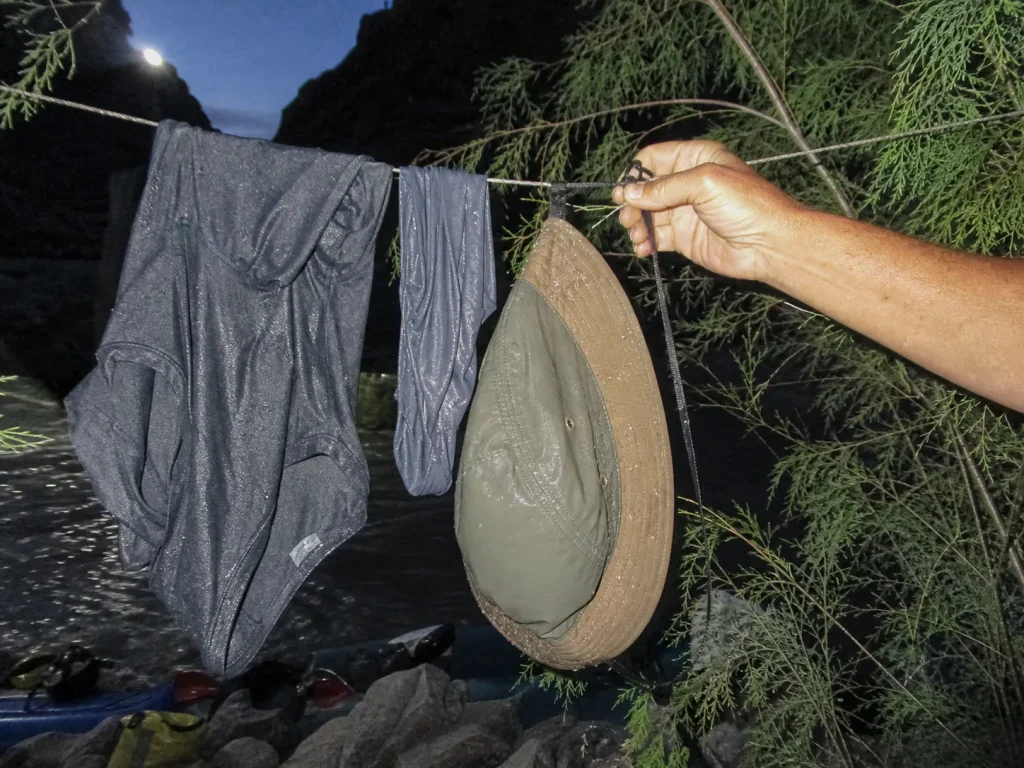
Then there’s the one piece of sun gear that survives a flip with zero effort: an integrated hood on your hoodie. It’s sewn to a garment that’s already held down by your PFD, so there’s nothing to lose overboard and nothing to re-secure after a swim. That’s the real argument for a hooded sun shirt like the NRS Silkweight over a separate hat in bigger water. A floating brim hat, like the Tilley, at least stays on the surface where you can grab it, which beats watching a sinking hat disappear.
Ask around and every guide has the story: a hydraulic tears a floppy hat off mid-rapid, and it’s gone downstream in seconds, leaving the rower bare-headed and squinting for the rest of an eight-hour day.
Guide or Once-a-Year Guest, Match the Gear to Your Trips
Here’s the anti-sell nobody in a gear shop will give you: a once-a-year guest does not need the premium setup, and a guide doesn’t want the throwaway one that dies mid-season. Buy for how you actually boat, not for the top shelf.
The divide is real. A guide or repeat private boater wears the same UPF kit 60 to 100-plus days a season, which is where durability and season-long UV load justify spending up. What that money buys is fabric that holds its UPF after dozens of washes, straps and cinch cords that don’t wear through by August, and a hood and seams that survive repeated swims. Frame it against the fact that about 90 percent of non-melanoma skin cancers are linked to UV, per the Skin Cancer Foundation’s UV Index risk breakdown, and spending up reads less like vanity and more like managing an occupational exposure. A once-a-year guided guest, meanwhile, is genuinely fine in the budget shirt and a chin-strap booney, and the right kit for either boater depends on what your trip’s river class actually calls for.
There’s a multi-day angle nobody mentions either. Wear one hoodie for a week on a river trip and odor and camp laundering become real. Quick-dry synthetics rinse in the river and dry overnight on a line, while cotton stays funky and damp. That nightly rhythm, rinse the kit, dip the hat to cool it, hang it before dark, is part of living on a multi-day trip that a day-tripper never thinks about. This packing-list walkthrough shows how a real boater’s sun kit fits into the rest of the load.
On a multi-day trip, rinse your sun hoodie in the river at camp and hang it before the sun drops so it’s dry by morning. A synthetic shirt does this overnight; the same reason cotton fails as sun protection is why it never dries in time.
Rounding Out Your Sun Defense: Eyes, Hands, and Skin
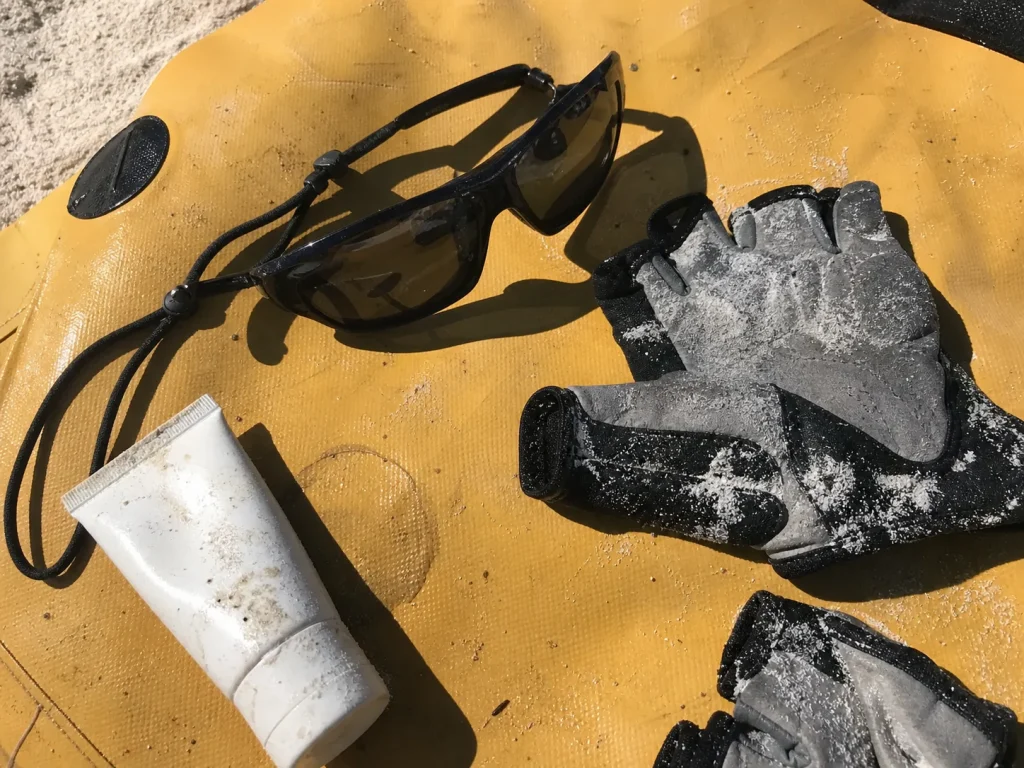
The hat and hoodie do the heavy lifting. What’s left are the leaks, and closing them is what actually finishes the day. There are only three.
Your eyes take glare off the water for hours, so polarized sunglasses on a retention strap are non-negotiable, and unstrapped pairs are gone in your first swim. Your hands, specifically the backs, get sun the whole time you’re on the oars or paddle, and sunscreen you can’t reapply with wet hands won’t hold there, which is why a pair of paddling gloves that cover the backs of your hands beats lotion for anyone out often. And the last gaps, your face, ears, and the back of your neck, are where mineral sunscreen finally earns its spot.
For that sunscreen, a high-SPF zinc oxide or titanium dioxide formula is the move, and reef-safe or mineral matters in protected waterways, so skip the oxybenzone and octinoxate chemical actives. Keep it simple, though. This is the roughly 10 percent of you that clothing can’t reach, not a second shopping list, and a single stick or tube handles all of it.
Conclusion
The river doubles your sun, hitting you from the sky, the water, and the canyon wall for hours with no shade, so plan for fabric coverage instead of a bottle you’ll never reapply in time. Match the hat to the water: a wide brim for flatwater and guided floats, a low-profile cap once a helmet goes on. And buy for how often you boat, since the budget kit is plenty for a guided day and the guide-grade kit earns its keep over a full season.
Set your kit at the put-in and forget about it clear to the take-out, because that’s the entire point of clothing-based protection. On your next sunny trip, cover the big real estate first and let sunscreen handle nothing but the gaps.
Frequently Asked Questions
01Does a wet UPF shirt still protect you from the sun?
Yes. A UPF 50+ synthetic shirt actually works better wet than dry and still blocks about 98 percent of UV. That’s the opposite of a cotton tee, which can drop to around UPF 3 once it’s soaked.
02Is sunscreen or UPF clothing better for a day on the river?
Clothing is the base, sunscreen is the backup. Water-resistant sunscreen is only certified for 40 to 80 minutes of water exposure and is hard to reapply with wet hands, while a UPF shirt covers your arms and torso all day. Use mineral sunscreen for the gaps clothing can’t reach.
03What UPF rating do I need for rafting?
UPF 50+ is the target for a sun shirt, blocking about 98 percent of UV. UPF 30, common on stretchy river-brand hoodies, is a fair trade when you’re buying for mobility and wearing it as part of a full-coverage kit.
04What hat stays on in whitewater?
For flatwater and guided floats, a wide-brim with a cinch cord or chin strap works. In real whitewater a chin strap won’t beat a hydraulic, so clip a leash to your PFD, and once you’re in Class III or harder you’re in a helmet anyway, so switch to a low-profile cap.
05Do I need a hat if my sun hoodie already has a hood?
The hood covers your scalp and neck but not your face, so you still want a brim or cap for shade and glare, or a neck gaiter to close the lower-face gap. In a swim, though, the hood is the piece that stays put automatically.