
In this article
A rescue PFD is the only piece of river gear that gets less useful the less you know about it. Picture a private boater who buys one after a bad swim, clips the belt in on the next easy Class II float because that is what the belt is for, and spends the day wearing a tether that can catch on a strainer branch. Ask anyone who runs safety for a living and you will hear the same line about these vests: they carry features that will hurt you without training and practice. This guide covers what a Type V PFD actually is, how the rescue belt works and where it fails, who genuinely needs one, and the five rescue-belt vests currently worth buying.
Here is how the five picks compare on the specs that matter.
| PFD | Design flotation | Harness standout | Best for |
|---|---|---|---|
| NRS Rapid Rescuer | 22 lbs | Quick-release belt with contoured foam panels | Working guides and safety boaters |
| Kokatat HustleR | 16 lbs | Adjustable suspension-style harness | Hard-to-fit torsos |
| Astral GreenJacket | 16.5 lbs | First-generation rescue belt design | The category reference point |
| Astral Indus | 22.3 lbs | Tow loop rated to 1,100 lbs | Big, pushy water |
| Stohlquist Descent | 17 lbs | Cross-Chest Cinch anti-ride-up harness | Boaters who fight ride-up |
What Actually Makes a PFD Type V
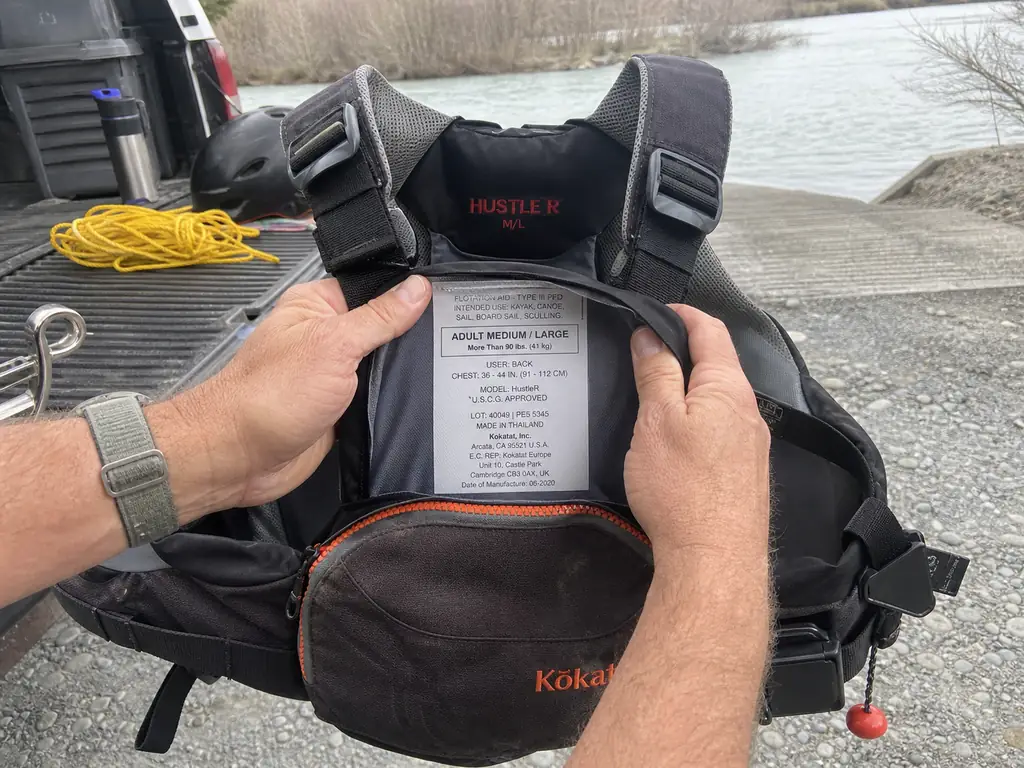
Most people read Type V as Type III but better. It is not a tier. It is a restriction, and misreading it is exactly what puts an untrained boater into a harness.
The USCG Type System in One Minute
The USCG type classification sorts flotation devices by what they are approved for, not by how good they are. A Type V is a special use device, which means it is approved only for the activity printed on its label and only when worn the way that label describes. Owning one does not automatically satisfy a carriage requirement the way a general purpose vest does. If you want the full breakdown, the official USCG guidance on PFD selection, wear, and care spells out the categories and the wear-per-label rule in plain regulatory language, and our own guide to how the USCG type classifications actually break down covers the parts this section deliberately compresses.
Why Special Use Means Restricted, Not Better
Special use is a narrower approval, not a higher grade. A Type V is built around a job, and everything about it assumes you are doing that job. That is why every rescue PFD is a Type V, but plenty of Type V vests are not rescue PFDs at all. Sailing harness vests, work vests, and inflatable belt packs all live under the same label.
The thing that defines the rescue category is the harness. Not the classification, not the buoyancy number, not the color. If a Type V has no quick-release belt and no ring for a tether, it is a special use vest that happens to share a letter with the gear in this article.
What a Type V Adds That a Type III Doesn’t
Strip away the marketing and a rescue PFD adds three pieces of hardware to a good Type III: a load-bearing rescue belt around the ribs, a quick-release belt buckle, and a ring the tether clips to. Nothing about buoyancy is inherently higher. Two of the vests below actually float less than a well-built recreational vest.
This is where the most common shopping mistake starts. People compare flotation lbs across listings, pick the biggest number, and assume they bought the most capable vest. Design flotation and rescue readiness are separate specs that get conflated constantly, and no amount of foam turns a vest into rescue gear. Treat the rescue belt as one component of the rest of your safety and rescue kit, because on its own it does very little.
How a Rescue Belt Works Under Load
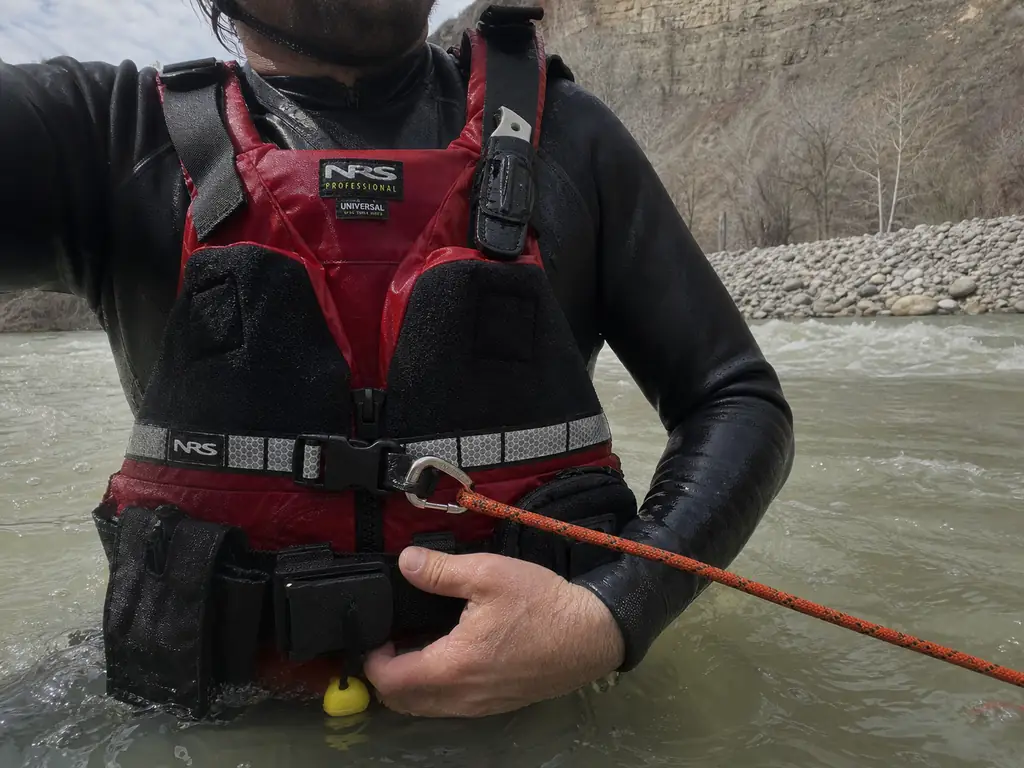
The belt is hardware you trust with another person’s weight while moving water pulls on both of you. Worth understanding it the way you would explain it on a gravel bar before a drill, not the way a spec sheet lists it.
The Three Parts of a Rescue Belt
A rescue harness is three things working together. First, a band of webbing that circles your ribs and carries the load into your torso instead of your shoulders. Second, a quick-release belt buckle that sits at your side or slightly forward, positioned so one hand can find it without your eyes. Third, a steel or anodized aluminum ring riding on that webbing, called a D-ring or an O-ring depending on its shape, and on some designs a breakaway D-ring that sheds the load on its own. That ring is where the tether clips. You will hear the whole assembly called a tow belt as often as a rescue belt, and the short tether some boaters run off it has its own name on the water: a cow tail, or cow’s tail if you learned it from a climber.
The ring is the load point. The buckle is the escape. Everything else on the vest is flotation and pockets. In a live-bait rescue, a rescuer clips a tended shore line to that ring, swims out to a swimmer or a pinned boater, and the line team pulls both of them back into the eddy. The same hardware carries the load during a pin extraction, when a boat is wrapped and someone has to work in the hot zone rescue area right at the obstacle. All of that force runs through the ring, into the webbing, into your ribs. That tether is one link in the rest of the rescue kit that belt connects to, and the belt is useless without the rope, the throw bag, the anchors, and the people tending them.
What a Clean Release Feels Like
A clean release is short and boring. Your hand drops to the buckle, the webbing tail is already sitting free rather than tucked under a strap, you pull once, and the belt opens and runs out through the ring in one motion. You should feel the tension leave your ribs before you consciously register that you pulled.
The reason people drill it dry, over and over, is that release mechanics differ by brand and model. Some pull down, some pull out and away, some need the tail to be clear before they will run. Under load and under stress you get muscle memory, not deliberation. And when a loaded buckle binds anyway, the fallback is a knife you can reach with one hand mounted where you can find it blind.
Drill the release in flat water and standing water, not just in the rapid. Almost everyone rehearses the dramatic version and skips the boring one, and the boring one is where the hardware actually lets people down.
Where the Release Fails Most Often
Here is the number that should reframe how you think about this category. Release testing on rescue harnesses recorded failure rates above 25 percent in slow-flowing or standing water. Not in the hydraulic. Not in the wave train. In the calm.
The mechanism makes sense once you see it. A clean release wants tension. Current keeps the tow tether taut, so when the buckle opens the webbing runs straight out through the ring. In an eddy or a slow pool, the tether goes slack, the webbing folds back on itself, and slack webbing jams in the buckle exactly the way a seatbelt does when you yank it wrong. The rescuer pulls, nothing runs, and the belt is still attached to a line.
This is also where the flotation myth finally collapses. The NRS Big Water V carries roughly 25 lbs of design flotation, the highest of anything named in this article, and it has no rescue harness at all. Four front buckles, leg-strap webbing, a flotation collar, no ring, no quick-release. It is a very capable high-float vest for big water rafting and it cannot do a single thing described in this section. More foam is a different job, not a better version of this one.
Who Needs a Rescue PFD (and Who Doesn’t)
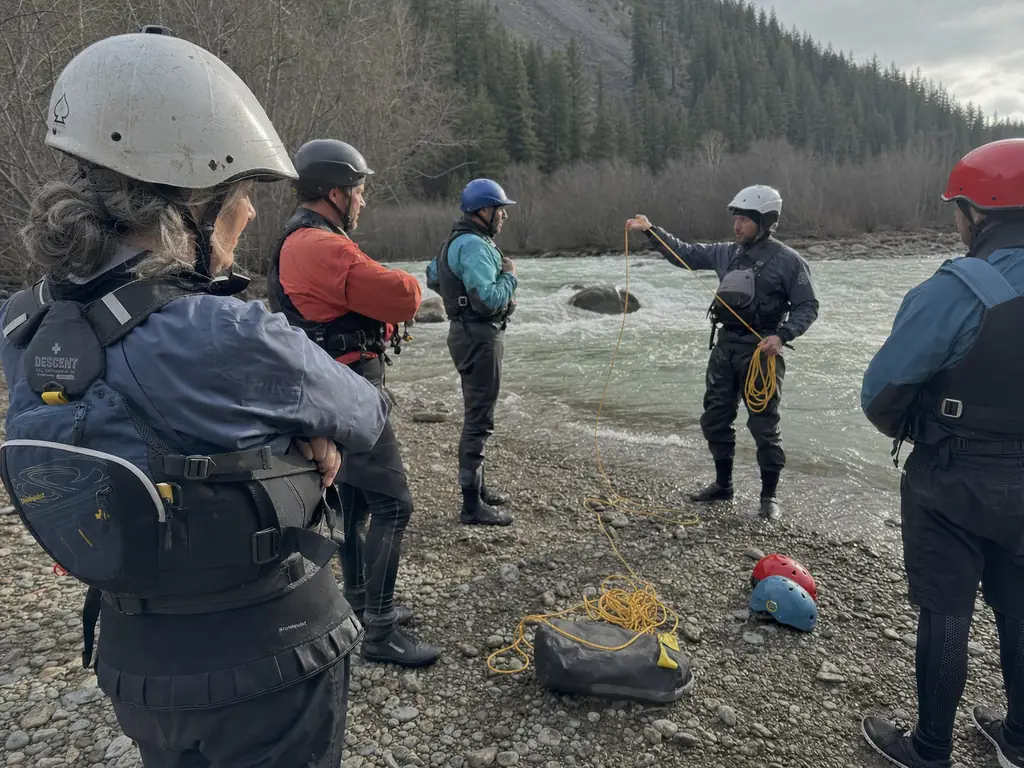
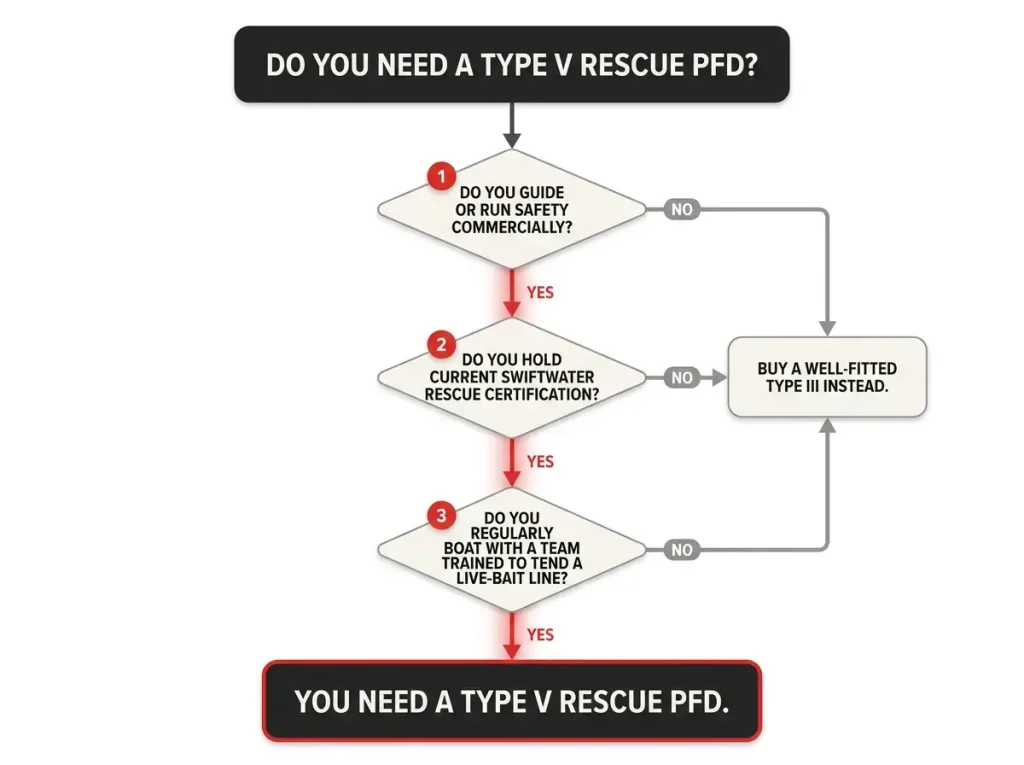
Three groups genuinely need a rescue belt. Everyone else is buying an entanglement hazard with a stainless ring on it. That sentence costs us affiliate revenue and it is still the honest version.
River Guides and Safety Boaters
If you work as a whitewater guide commercially or run safety for a trip, the belt is a job requirement. You will use it, you will drill it with a crew that knows how to tend a line, and someone senior will check your hardware before you get on the water. On Class III+ whitewater with paying passengers, a pin scenario is a scheduled possibility rather than a freak event. Rescue is part of the work rather than a contingency you hope never arrives, and that repetition is what makes the vest an asset. If you are curious how somebody ends up in that role, the certification path guides actually follow lays out the sequence.
Swiftwater-Trained Private Boaters
The second group is private boaters with current swiftwater rescue training, the people a guide crew would call a swiftwater rescue technician rather than a passenger. The common benchmark is an ACA Level 4 Swiftwater Rescue course, a two-day curriculum covering strainers, entrapments, self-rescue, and assisting distressed paddlers. The American Canoe Association recommends renewing it every three years.
That renewal cadence matters more than people want it to. SRT certification behaves like a CPR card. A course you took six seasons ago and never practiced since is a memory, not a qualification, and the release you rehearsed on a different vest does not transfer cleanly to the one you own now.
If you are shopping for a rescue vest before you have booked a swiftwater course, flip the order. Take the course first. Half the students walk out knowing exactly which harness layout they want, and a few walk out deciding they do not want one at all.
Everyone Else, Read This Before You Buy
If you are a weekend rafter, a private boater without current training, or someone who bought a rescue vest because it looked like the serious option, this category is not an upgrade for you. An unclipped tether is a snag point with no offsetting benefit. A clipped one, worn by someone who has never released under load, is worse than that.
The most common pattern out there is treating the belt as a mandatory accessory. It came with the vest, so it gets clipped, and it rides through ordinary paddling on water where nobody is running safety. Nothing about that adds protection. A working swiftwater professional reviewing one of these vests said it plainly: they have features that will hurt you without proper training and practice.
Cost makes the point sharper. This category runs roughly $200 to $400, and that premium buys certified rescue-rated webbing and hardware tested to hold a person under dynamic river load. It is engineering, not brand markup. It is also worth nothing at all without the training that puts it to use. If that describes you, spend the money on a vest that fits beautifully and read our guide to picking a PFD when you’re not a guide instead.
Fit, Bulk, and the Ride-Up Problem
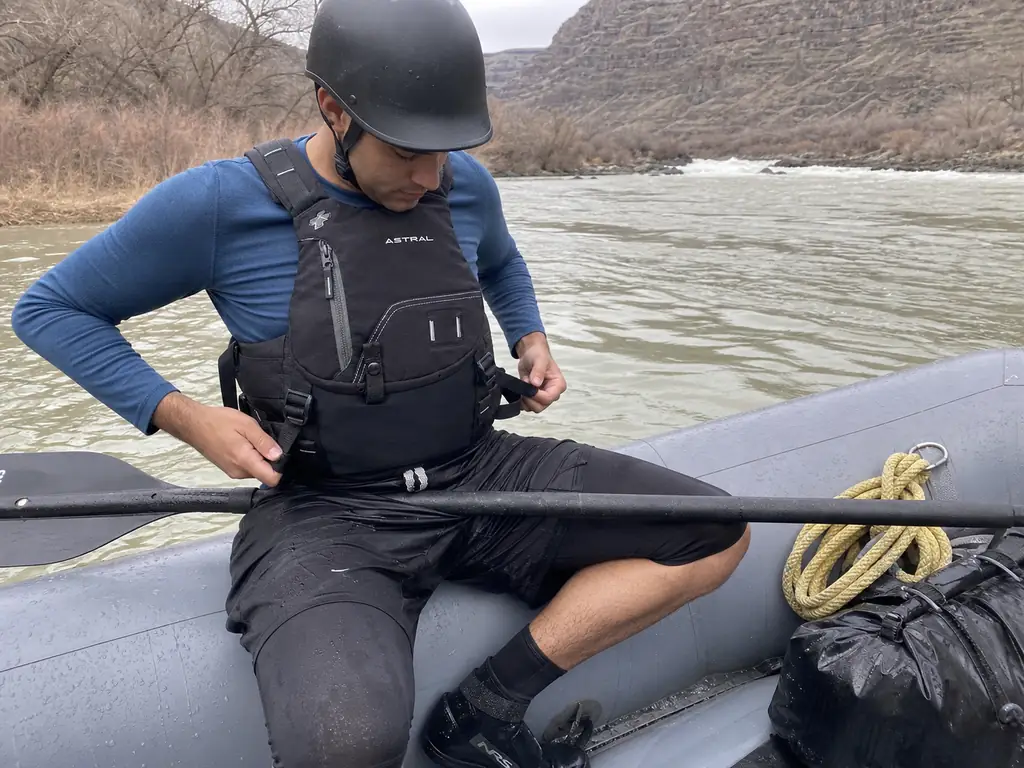
Fit on a rescue vest is not a comfort question. It decides whether the release buckle is where your hand expects it at the exact moment you cannot look down.
What a Badly Fitted Belt Does Under Tension
Ride-up is the vest migrating up your torso toward your armpits and throat while the tether is loaded. The tether pulls the ring, the ring pulls the webbing, and if that webbing is not cinched down into your ribs the whole vest climbs instead of holding.
The consequence is not abstract. Mid-tow, your hand drops to where the buckle lived when you geared up, and the buckle has moved three or four inches north with the rest of the vest. You find it. You just spend half a second hunting, in the middle of the one task where half a second is the whole budget.
This is a known engineering problem rather than user error. Stohlquist built the Descent around a Cross-Chest Cinch harness engineered specifically against ride-up instead of using a conventional four-buckle layout. When a manufacturer designs a system around a failure mode, that is confirmation the failure mode is real and common enough to matter.
Seated Torso Length Beats Chest Size
Most sizing conversations start and end at chest circumference, and that is the wrong tie-breaker for this category. What actually decides fit is seated torso length, because you wear this vest sitting in a boat with your hips flexed, not standing in a shop with your arms out.
A vest that measures correctly standing can still sit two inches high once you are seated, which pushes the belt off your ribs and onto soft tissue before any load arrives. If you have never measured yourself this way, our sizing guide covers how to measure seated torso length across the brands that use different chest measurement charts.
Fit-test a rescue vest sitting on the floor with your knees up, then have someone pull steadily on the tow ring while you keep your eyes closed and reach for the buckle. If your hand lands anywhere except on the release, the belt is too loose or the vest is too long for your torso.
The Bulk Trade-Off Nobody Mentions
Rescue vests carry more foam volume and more hardware than a recreational vest, and that shows up in your paddle stroke and in how hot you get. Shoulders rotate a little less freely. On a hot afternoon in flat water you feel every extra panel.
That trade is worth making when the harness is part of your job. It is a pure cost when it is not, which loops back to the previous section. Bulk is the honest downside of this category, and any roundup that pretends it does not exist is selling rather than advising.
Best Rescue PFDs (Type V) Worth Your Money
Every pick below has a confirmed quick-release rescue belt. That was the filter, and it is why several popular high-flotation vests are absent. Five vests, five different problems solved.
NRS Rapid Rescuer PFD (Best Overall for Guides)
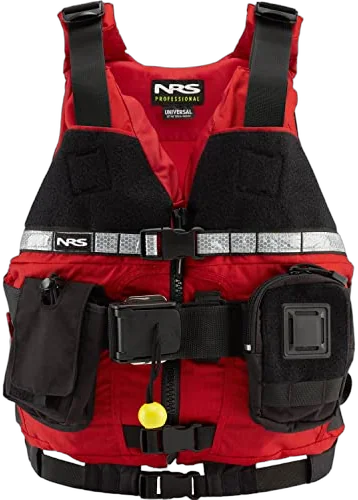
At 22 lbs of design flotation the Rapid Rescuer sits at the high end of the rescue-belt field, which is the number that matters when you are the person swimming toward someone in aerated water. The contoured foam panels keep that volume off your paddle stroke better than a flat-panel layout does, though you will still notice the bulk against a recreational vest.
The real argument for it is standardization. When six people on a trip wear variations of the same vest, everybody knows where everybody else’s release lives, and a crew can run a drill without a tour of four different buckle designs first. That is worth more on a working river than any single spec on the sheet.
Kokatat HustleR Rescue PFD (Best Adjustable Fit)
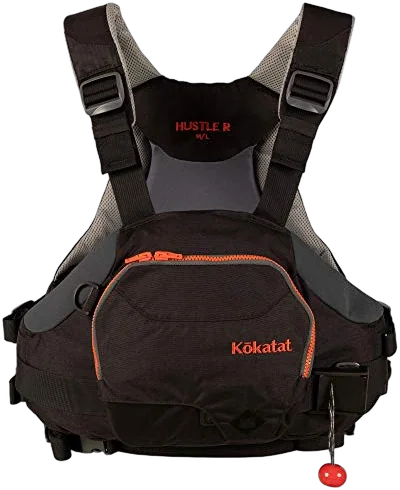
Sixteen pounds is the lowest design flotation in this roundup, and that is deliberate rather than a compromise. Kokatat built the HustleR around mobility and fit precision, which is what you want if you spend your day paddling hard and your rescue role is planned rather than reactive.
The adjustability is the reason it earns a slot. If you sit at the edge of two sizes, or if your seated torso length runs long relative to your chest, this is the vest most likely to put the buckle where your hand expects it. That advantage disappears if you never bother tuning it, so budget twenty minutes on dry land before your first trip.
Astral GreenJacket Rescue PFD (The Benchmark)
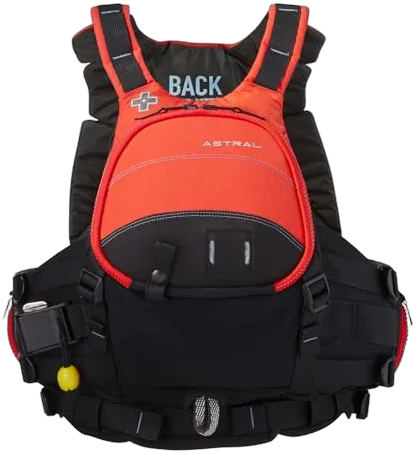
Ranking the GreenJacket first by default would be lazy, so we will say what it actually is: the design everyone else iterates from. Its first-generation rescue belt set the convention for where the buckle sits and how the tether ring rides, which is why instructors so often teach on it.
Its flotation sits mid-pack at 16.5 lbs, and the fit runs snug through the chest on some builds. If you are between sizes or carry width across the ribs, try it before committing, because a benchmark that does not fit you is just a well-reviewed vest that rides wrong.
Astral Indus Life Jacket (Best for Big Water)
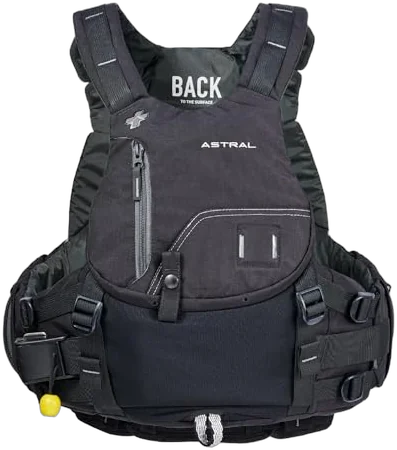
That 1,100 lb figure is a load capacity for the anchor point, not the belt release. Astral also builds the vest around PVC-free Gaia foam, which is a materials choice rather than a performance one, but it is the reason the flotation panels feel different in the hand than a standard closed-cell block. Two separate engineering problems live in a rescue harness: holding under a loaded tow, and letting go cleanly on demand. The Indus solves both in one design, and the reinforced connection between the shoulder straps and the chest harness is where the load actually goes.
Choose it when your water is big and aerated enough that flotation genuinely changes your swim. Choose something slimmer if most of your season is technical low-volume water, because the extra volume you are paying for shows up in every paddle stroke you take on the way there.
Stohlquist Descent Rescue PFD (Best Anti-Ride-Up Harness)
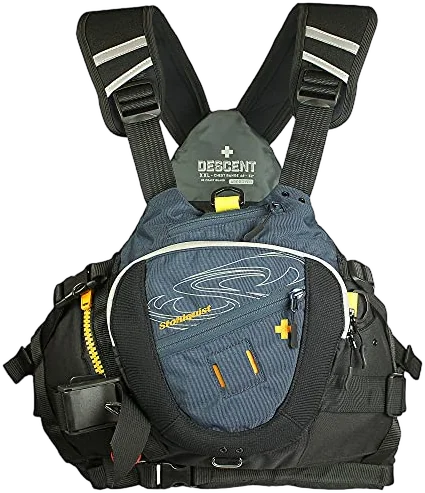
Seventeen pounds of design flotation puts the Descent in the middle of the field, which tells you where Stohlquist spent its effort. The Cross-Chest Cinch is the whole argument, and it addresses the failure mode described earlier in this article rather than a feature checklist.
Worth noting that a harness this specific rewards fitting it properly and punishes ignoring the instructions. Set the cinch once on dry land, load the ring with a partner pulling steadily, and adjust until the vest stays put. Then leave it alone.
The Budget Question
There is a straight answer here and it is not a comfortable one. The genuinely budget-tier true rescue PFD in this category was the NRS Zen, at 17.5 lbs of design flotation with a 1.5 inch quick-release belt and a stainless ring. Real rescue hardware, meaningfully below the rest of the field on cost.
As of this writing it is unavailable across every Amazon listing we checked, and it shows as closeout at NRS. We are naming it anyway because it explains the shape of this category: the low end is thinning out, and what remains starts around where the picks above sit. That is the honest picture, and it is another reason the gatekeeping section matters. If the entry price for legitimate rescue hardware keeps climbing, buying in without the training behind it is an even worse trade than it was.
Keeping a Rescue PFD Rescue-Ready
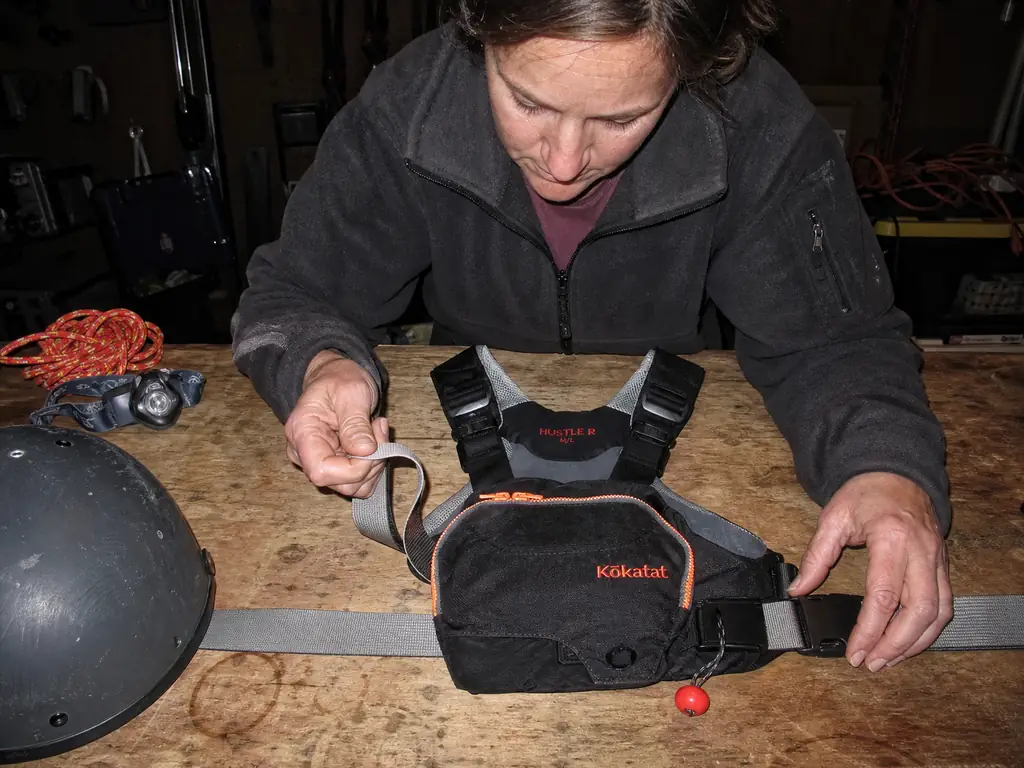
You retire a climbing rope on a schedule. Almost nobody retires a rescue belt, because the belt never looks worn out, right up until it is. Treat the webbing like the rope and not like the vest.
What UV Does to Rescue Webbing
Sunlight is the quiet problem. Rescue vests are cut from ripstop nylon shells in the 400 to 420 denier nylon range, and the harness webbing underneath is the same family of fiber. Nylon webbing under repeated UV exposure fades and discolors, grows brittle enough to crack instead of bend, and develops a fine surface fraying at wear points. All three show up well before a strength test would fail the webbing, which is the useful part. The manufacturer breakdown of what UV exposure does to nylon webbing over time walks through the progression in order.
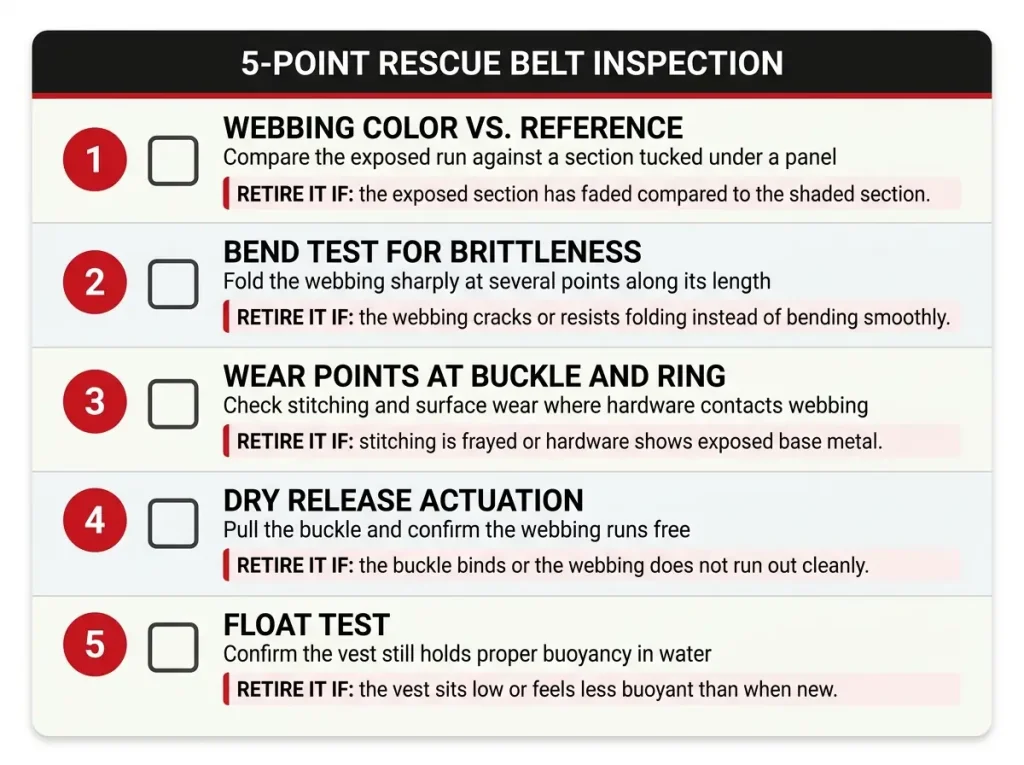
Here is the counterintuitive bit. Most people wait for fraying. Fading is the earlier signal. Compare the exposed run of your belt against a section that sits tucked under a panel, and if the two no longer match you are looking at accumulated UV damage, not a cosmetic issue.
Anodized aluminum ring hardware and coated buckles have a related problem. Once the coating is scraped through, the metal underneath resumes degrading on its own schedule, and a buckle that binds slightly during a dry test will bind harder when it is loaded and wet.
The Seasonal Inspection That Takes Five Minutes
The protocol is short. Check the webbing along its full length for fading, stiffness, and fuzz at the wear points. Actuate the quick-release belt and confirm it opens cleanly with the webbing running free. Then float-test the vest to confirm the foam has not lost buoyancy.
Run it seasonally rather than before big trips only. Gear that only gets inspected before the trip that scares you is gear you are trusting blind on all the ordinary days in between. Storage matters more than people assume: a vest that lives on a hot dashboard or a sunny garage hook ages faster than one that runs the same water and then goes back into a gear bag.
When to Retire a Rescue Belt
There is no published hour count for a rescue belt the way there is for a rope, so the call is yours. The practical rule is that a belt whose webbing is visibly sun-faded, stiff enough to crack when you fold it, or fuzzy at the wear points has already told you what it thinks.
The same reasoning applies to the rest of your soft goods. The same retirement logic applies to throw rope, which lives an even harder life in the sun and gets replaced even less often than the vest it pairs with.
The Bottom Line on Rescue PFDs
Type V is a restriction, not an upgrade. The harness defines the category, and the harness is what makes this a training-gated tool rather than a nicer vest.
The quick-release fails most in slow water, which means the drill that matters is the boring one in the eddy and not the dramatic one in the rapid.
If you are not guiding, running safety, or currently swiftwater certified, the honest pick is a well-fitted Type III and the money stays in your pocket.
Whatever vest you are wearing right now, go pull its buckles dry this week and find out how they actually release before a river asks you the same question.
Frequently Asked Questions
01Do I need a Type V rescue PFD for whitewater rafting?
Only if you guide, run safety, or hold current swiftwater rescue certification. For recreational rafting a well-fitted Type III is the correct choice. The rescue belt adds a snag point and a decision you are not trained to make.
02What training do I need before using a rescue PFD harness?
A swiftwater rescue course. ACA Level 4 is the common benchmark, a two-day curriculum with a recommended three-year renewal. Owning the vest without it means carrying hardware you cannot safely load.
03Can you wear a rescue PFD without clipping into the belt?
Yes, and plenty of people do. An unclipped tether is still a snag hazard with no upside, so most trained boaters stow it flat against the vest rather than leaving it loose.
04Does more flotation make a PFD better for rescue?
No. Flotation and rescue readiness are separate specs. A vest can carry the highest design flotation in its category and have no rescue harness at all. The belt, ring, and quick-release define a rescue PFD.
05How often should you inspect or replace a rescue PFD belt?
Inspect seasonally: webbing condition, a dry release of the buckle, and a float test. Retire the belt once the webbing is visibly sun-faded, stiff enough to crack rather than bend, or fuzzy at the wear points.