
In this article
Search “best dry box for rafting” and almost every list points you at a welded-aluminum box built by a one-person shop in Idaho or Colorado, sold direct or through a river-gear dealer three states away, with no way to just put it in a cart. The one dedicated roundup out there is written by a manufacturer ranking its own three boxes inside its own top seven. We don’t sell dry boxes and nobody pays us to rank theirs higher, so this list is only the boxes you can actually buy today, with an honest read on where each one leaks and where it holds. Below you get the material truth, what “waterproof” really means when your boat is upside down, how to size a box to your trip and your frame, and a straight answer on whether you even need one.
Here’s the buyable lineup at a glance before we get into the why.
| Pick | Best For | Material | Why It Made the List |
|---|---|---|---|
| Bosski River Rafting Dry Box | Traditional aluminum look | 6061 welded aluminum | The only real welded-aluminum shoebox box you can buy on Amazon in frame-matched sizes |
| NRS Boulder Camping Dry Box | Budget kitchen box | Rotomolded polyethylene | Seamless one-piece build sidesteps the shoebox-lid leak, at a fraction of custom-aluminum cost |
| Plano Guide Series 3700 | Phone, wallet, camera | Polycarbonate, IPX7 | Genuinely submersion-tested, not just marketing copy, the box-inside-the-box layer |
| ROAM 95L Rugged Case | Expedition hauling | LLDPE, gasket seal | Largest buyable capacity, flagged honestly as an overlanding crossover, not a submersible box |
Aluminum vs Rotomolded Dry Boxes
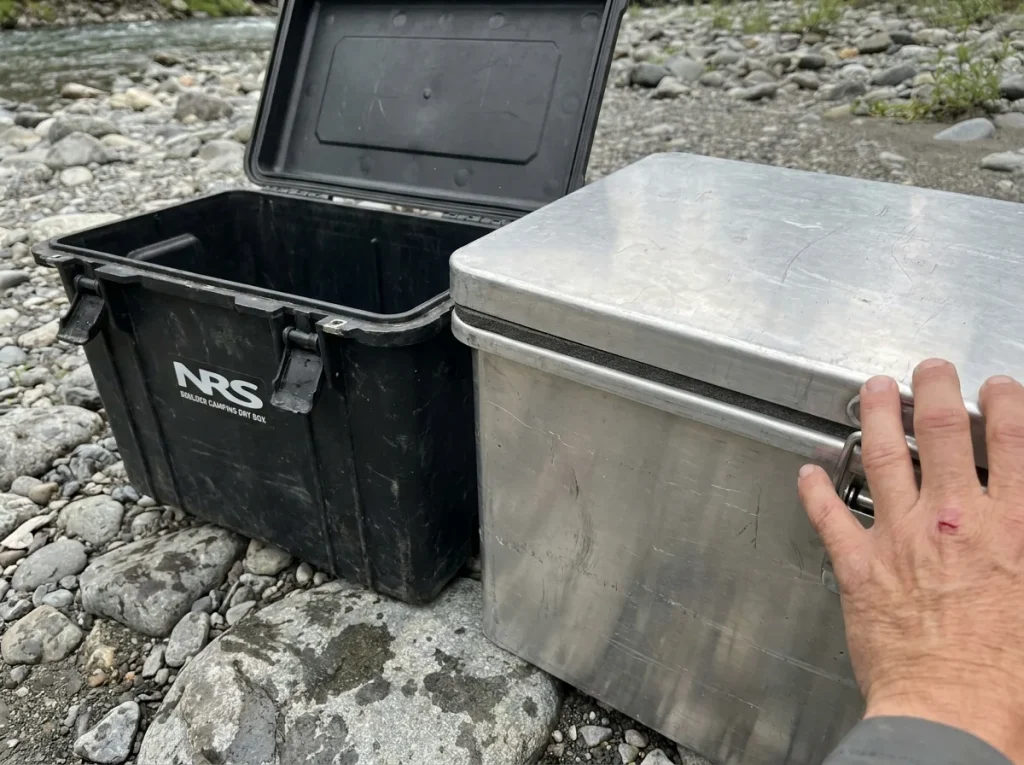
The story boaters repeat at the ramp is that aluminum is the premium choice and plastic is the budget compromise. Then someone watches a rotomolded box come out of a flip bone-dry while the fancy welded box next to it holds half an inch of river, and the story stops making sense.
Welded aluminum boxes are the traditional look. Most run 6061 aluminum, tig-welded, with a shoebox lid that overlaps the base and seals against a foam gasket pulled tight by compression latches. The upside is real: makers size them to your frame, you can dent-hammer a corner back into shape in camp, and they last for decades. The catch is that every weld seam and that gravity-reliant lid are potential leak points the day the boat goes over in a Class IV wave train.
Rotomolded boxes are molded in one piece from polyethylene, the same process behind YETI coolers. No assembly seams means fewer physical places for water to sneak in, and field reports keep describing seamless plastic boxes staying fully dry after a flip that soaked the aluminum box riding next to them. The tradeoff runs the other way: a cracked rotomolded shell is done, while a dented aluminum box gets repaired and keeps floating downriver.
Cost sits where you’d expect. Custom-fabricated aluminum climbs into serious money because someone is welding it to your dimensions, while off-the-shelf rotomolded boxes cost a fraction of that. The honest read is that material alone does not decide how dry your gear stays.
Don’t buy “rotomolded” as if the word alone means waterproof. A cheap plastic lid can flex under submersion and open a gap in the gasket. The gasket quality and the latch tension matter as much as the molding process, so press on the closed lid and watch how evenly it pulls down before you trust it.
What “Waterproof” Really Means on a Flip
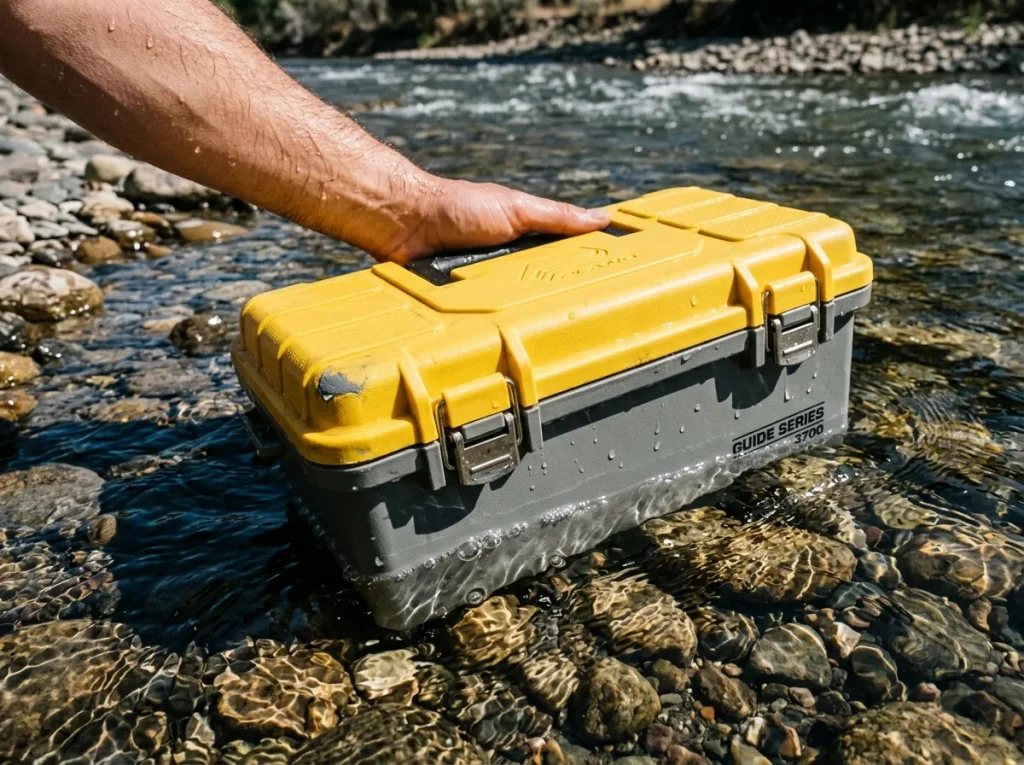
Run the bathtub test before your first trip. Flip a brand-new box upside down in the tub, hold it under, and watch whether water beads in around the lid. It’s a cheap, low-stakes way to learn your box’s real sealing before the river teaches you the expensive way.
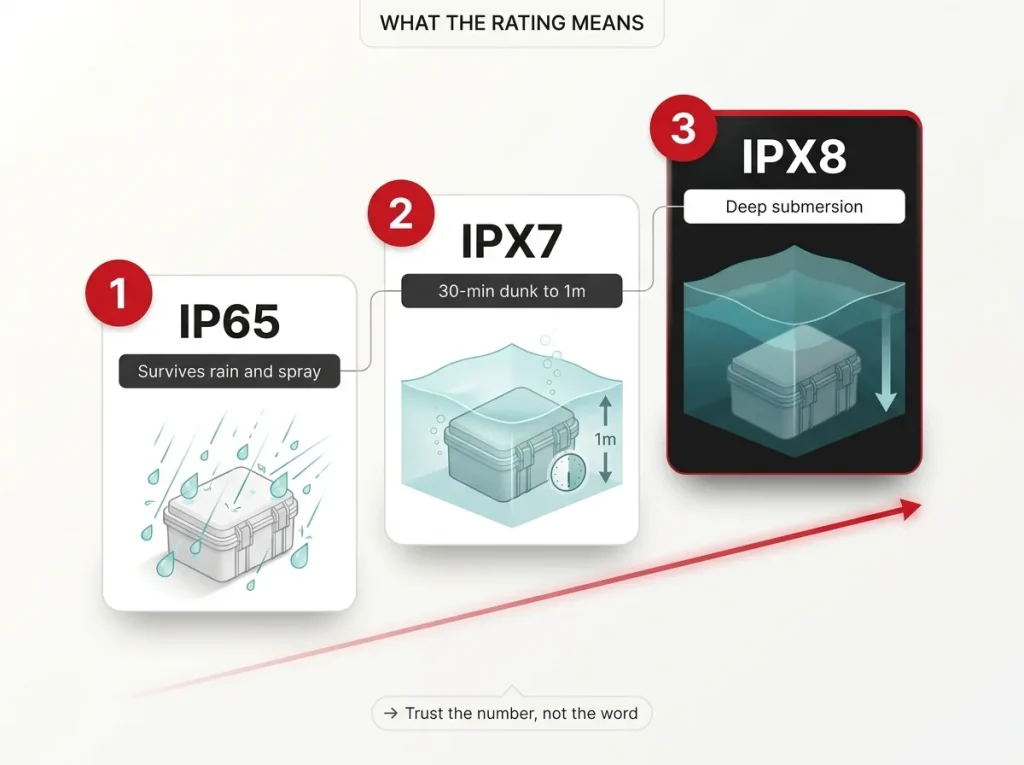
The marketing word you actually want to decode is the IP rating. IP65 means dust-tight and protected against water jets from any angle, which covers rain and put-in spray but says nothing about submersion. IPX7 means the box was tested underwater to one meter for 30 minutes, and that’s the number that matches a real flip and swim. IPX8 goes deeper than a meter, with the exact depth set by the maker. Most boxes that say “submersible” in the listing cite no tested standard at all, so the rating number tells you more than the adjective does.
Here’s the part the vendor articles gloss over: why a shoebox lid leaks when everything else about the box looks bomber. That lid seals with gravity and latch pressure pushing the gasket down onto the rim. Turn the box upside down in a flip and that pressure now works against the seal instead of with it, and the gasket that held perfectly on the shelf starts to weep along its weakest edge. It isn’t usually a dramatic flood. It’s a slow seep that leaves you opening the box at the take-out to find a shallow pool in what used to be the lid.
That seep is exactly why a well-secured box does double duty as a safety component, not just storage. A box strapped tight adds buoyancy that can help right a flipped boat, a point spelled out plainly in American Whitewater’s river Safety Code. A box that rips loose in the wave train is worse than no box at all.
One rafter’s boat flipped and stayed inverted for 15 to 20 minutes, and even their well-regarded aluminum box took on about half an inch of water. No box is a guarantee. Pack anything truly mission-critical inside a ziplock or a small dry bag within the box, and the box plus the bag becomes your real dry system.
That double-bag habit is where a soft bag earns its keep alongside the box. For the gear that absolutely cannot get wet, pairing the box with a submersible dry bag rated for whitewater beats trusting any single seal, and it’s the same logic behind keeping the safety-critical stuff like your first aid kit in its own waterproof layer inside the box.
Sizing a Dry Box to Your Trip
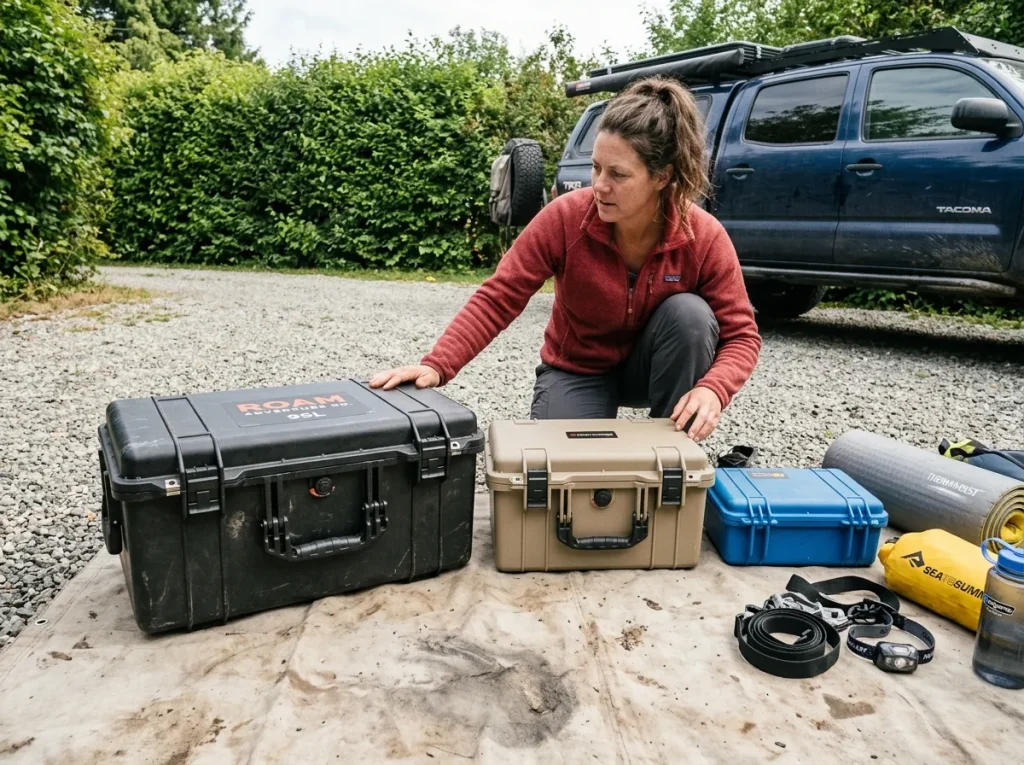
The buying regret nobody warns you about is sizing to the gear pile you have now instead of the multi-day pile you’ll have in two seasons, then finding out the box you oversized doesn’t even fit the frame bay.
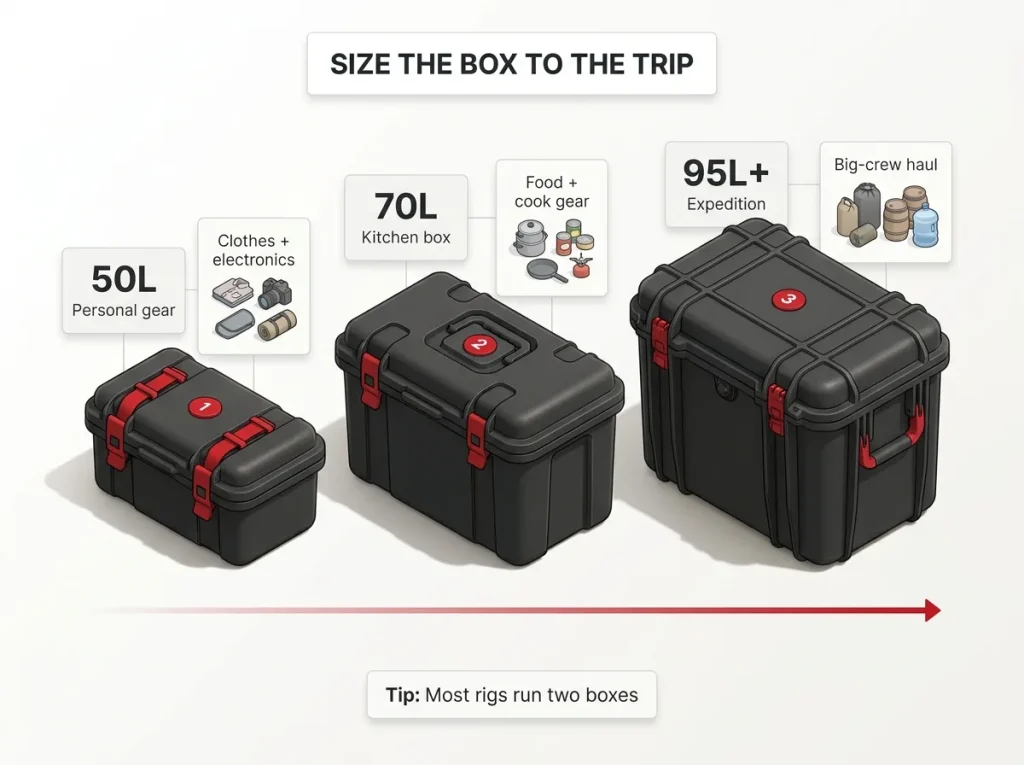
Keep the capacity math rough and it holds up. A box around 50 liters handles personal gear for most trips. A kitchen box in the 70-liter range carries camp food and cook gear for a multi-day run. Push to 95 liters or more only when you’re hauling for an expedition or a big crew. Most multi-day rigs end up running two boxes anyway, one for clothes and electronics and a dedicated kitchen box for food, because mixing your dry socks with the bacon grease is a lesson you learn exactly once.
Match the box to real contents, not to how impressive it looks in a listing. Capacity should track your trip length and crew size, which is the same variable that drives how much food and cooler space a multi-day menu really takes. If you’re mapping out a longer expedition, the box capacity falls straight out of the systematic work of planning a multi-day river trip, not the other way around.
There’s an anti-overbuy reality check worth sitting with too. The National Park Service’s own accepted “waterproof enough” standard for a permitted Grand Canyon trip is the humble ammo can, spelled out in the National Park Service’s noncommercial river trip regulations for Grand Canyon. If a 20mm ammo can clears the bar on the most regulated river in the country, you can probably breathe before dropping serious money on the biggest box in the catalog for weekend floats.
Frame Fit Is a Buying Decision, Not an Afterthought
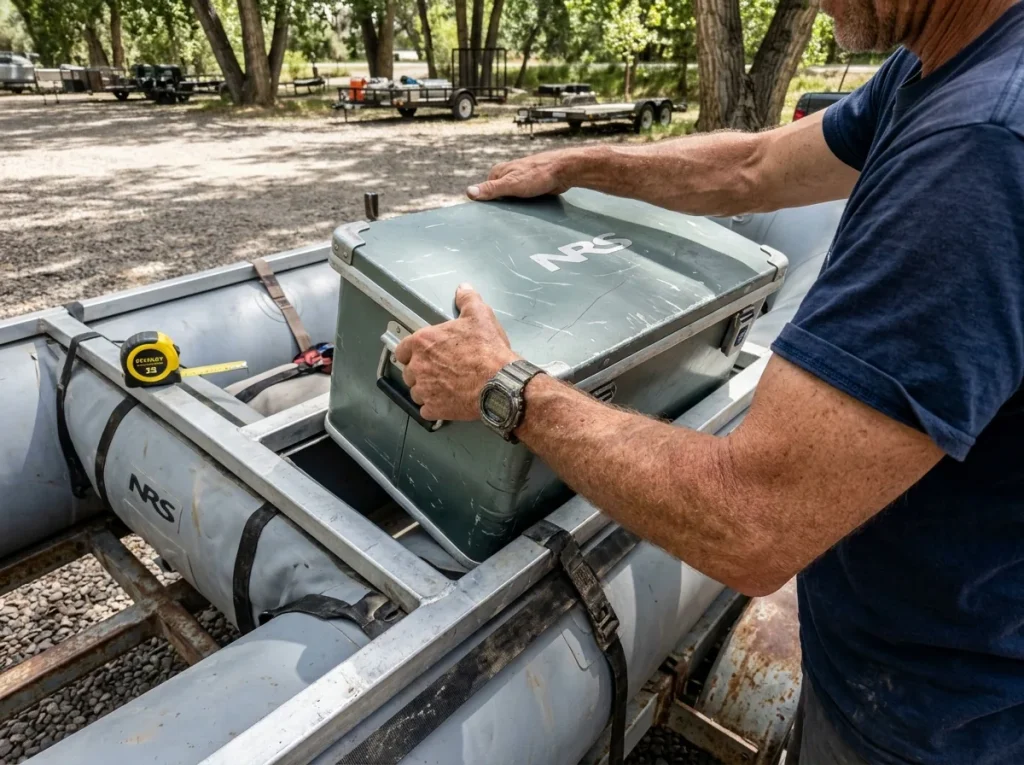
The best box on paper is worthless if it shows up and won’t seat between your rails because it’s two inches too wide. That’s a deal that cost you nothing to buy and everything to use.
NRS’s own frame-building guidance sizes the cross-bar bays roughly half an inch wider than the box or cooler that drops into them. So the real move is to measure your bay, or at least note your rail spacing, before you buy anything. This is also where off-the-shelf and custom split apart: rotomolded boxes come in fixed footprints and you build or buy your frame around them, while welded-aluminum makers size the box to your frame, which is the honest reason custom aluminum costs more.
Which box even fits starts with which frame you’re running, so if you’re still sorting out the frame type you’re building around, settle that first because it bounds every box dimension downstream. Readers still weighing the trade-offs between frame brands should lock that in before shopping boxes at all.
This article covers fit as a buying filter only. The actual mounting-tab height, strap selection, and rig-to-flip patterns belong to the deeper guide on how to rig a dry box so it survives a flip, and the center-to-center bay math lives in the walkthrough on how to build and rig a raft frame. The video below shows the bay-to-box relationship better than any spec sheet.
Dry-fit the box in the bay in your driveway with the exact straps you’ll run, not on the ramp at the put-in with a line of boaters behind you. If it drops in clean and the straps reach with room to cinch, you’re set. If it fights you at home, it will fight you worse when the shuttle’s waiting.
Best Dry Boxes You Can Actually Buy
Every box below is purchasable on Amazon right now. The dealer-only aluminum boxes the forums love, the ones from the small welding shops, aren’t here for one honest reason: you can’t one-click buy them, and a “best of” list that sends you chasing a two-week email order isn’t doing you a favor.
Best Traditional Aluminum — Bosski River Rafting & Storage Dry Box
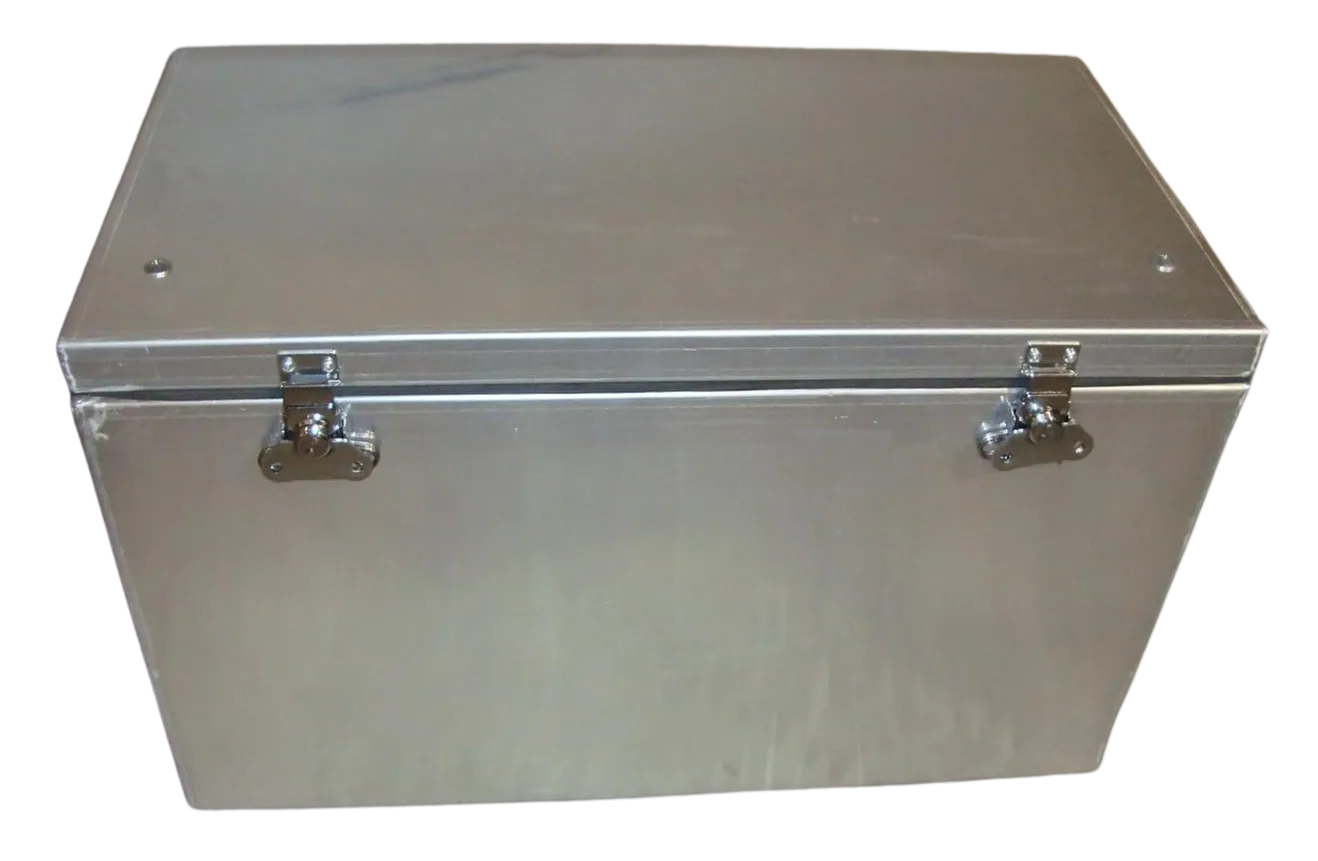
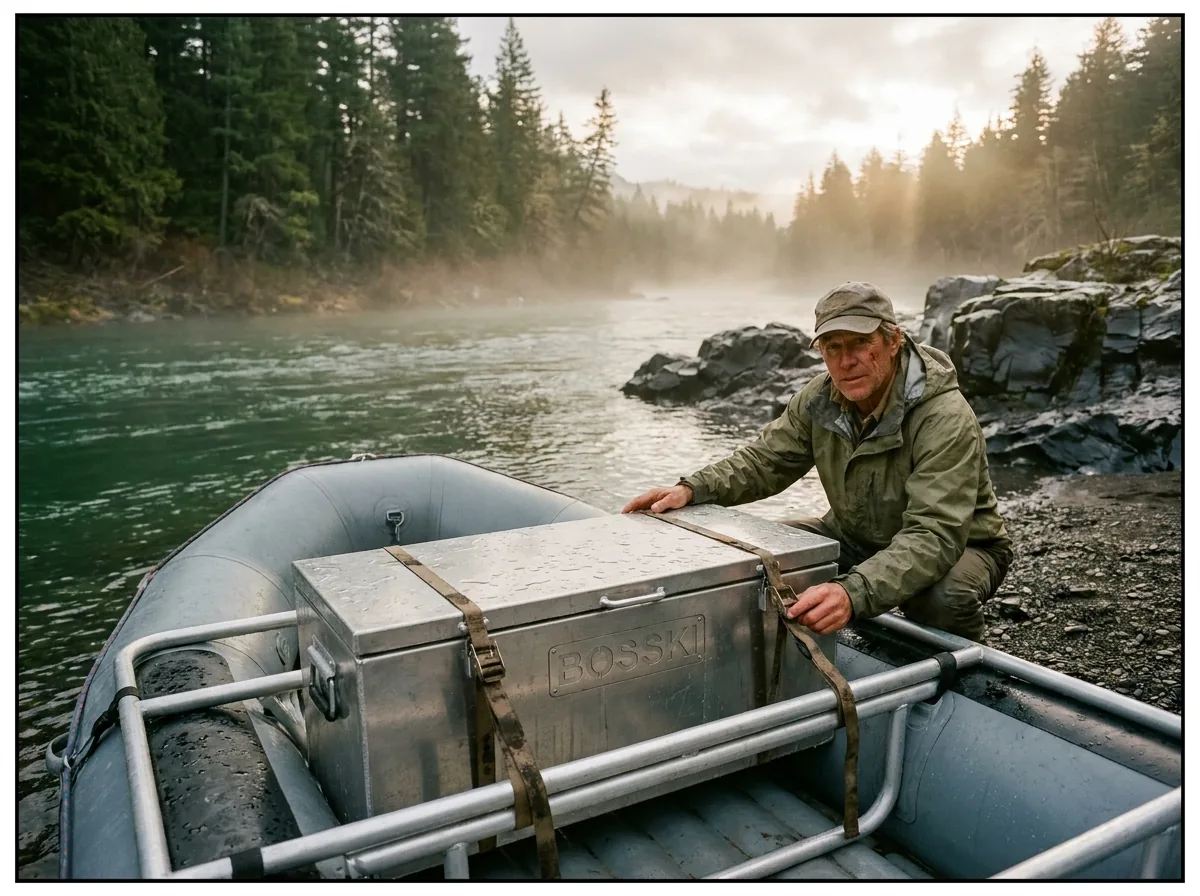
If you want the traditional welded-aluminum box and you want to buy it without emailing a fabricator, the Bosski River Rafting & Storage Dry Box is the one that actually exists on the shelf. It comes in frame-matched sizes so you can order to your bay instead of hoping a fixed footprint fits, and the aluminum takes camp abuse and dent repair the way plastic never will. Treat the shoebox lid honestly: it seals well upright and weeps a little inverted, so it’s a box for keeping your kitchen and clothes dry, not a submarine for your phone.
Best Budget Rotomolded — NRS Boulder and Canyon
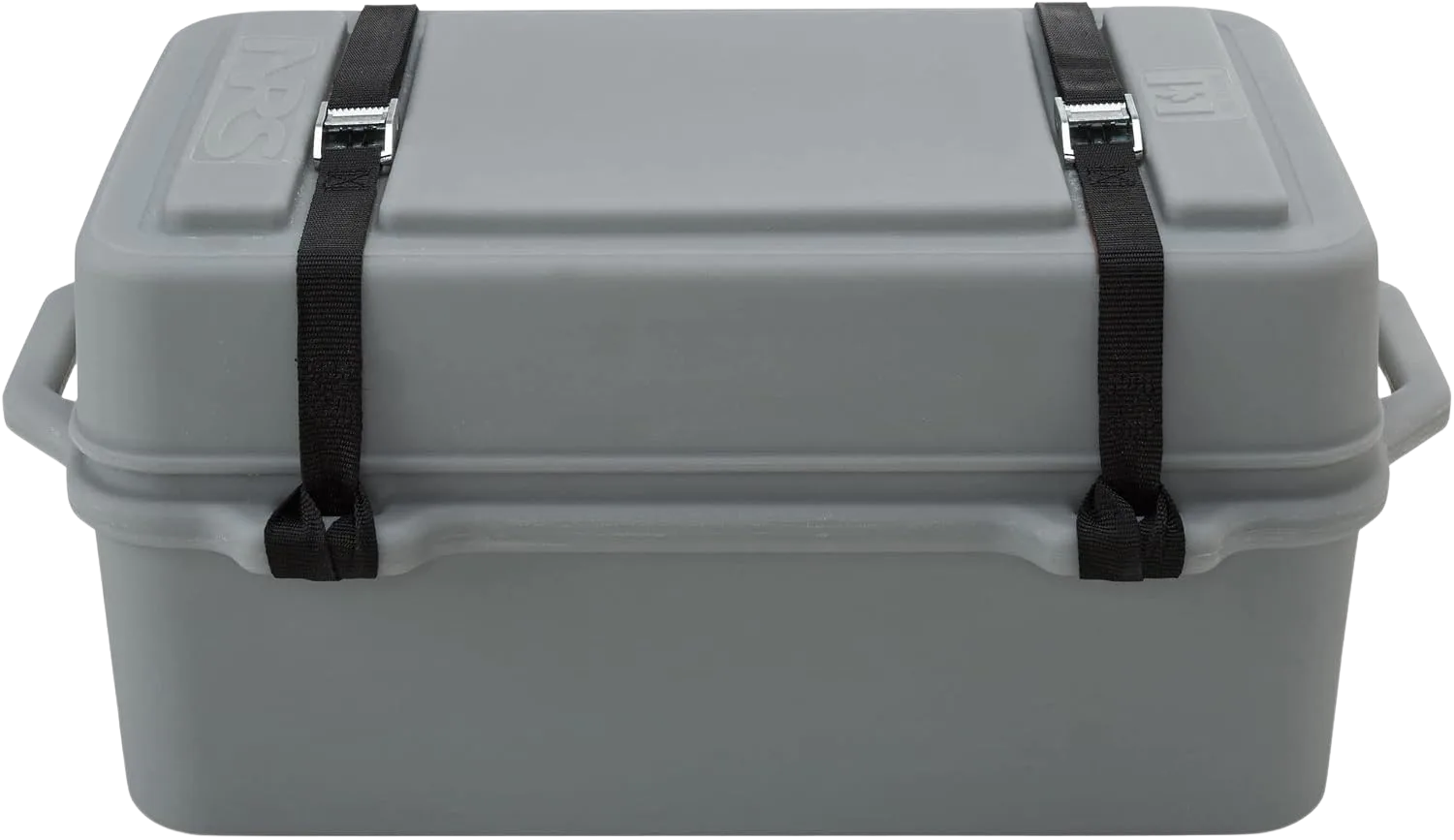
For most private boaters building a first rig, the NRS Boulder Camping Dry Box is the smart-money box. The seamless rotomolded shell has no welds to fail, it swallows a multi-day kitchen load, and it costs a fraction of what a custom aluminum box runs. If your frame bay is tighter or you’re outfitting a day-tripper setup, the smaller NRS Canyon Camping Dry Box is the same build in a shorter footprint, so you can size down without giving up the seamless construction.
Best for Personal Gear & Electronics — Plano Guide Series
Inside the big box, you still want a hard shell around the stuff that ends a trip if it dies. The Plano Guide Series 3700 Field Box is the pick here because it’s genuinely IPX7-rated, tested for submersion to a meter, with a Dri-Loc O-ring seal instead of marketing language. It’s the box-inside-the-box for your phone, wallet, keys, and a compact camera. For day-trippers who just need to protect a phone and keys and don’t want to carry more than that, the smaller Plano Guide Series 3500 Field Box is the cheaper, more compact version of the same idea.
Best for Expedition Hauling — ROAM Adventure Co. 95L
When the trip runs long and the gear list balloons, the ROAM Adventure Co. 95L Rugged Case is the largest capacity you can buy on Amazon without going custom. Lockable steel latches, a stout LLDPE shell, and an optional MOLLE panel make it a genuine gear hauler for expedition-length trips. Here’s the honest flag: ROAM builds this as an overlanding crossover with a dust and water-resistant gasket, not a marine-submersible rating, so treat it as a rugged cargo box that keeps splash and rain out, and keep your truly submersion-critical items in the Plano or a dry bag inside it.
Do You Even Need a Dedicated Dry Box?
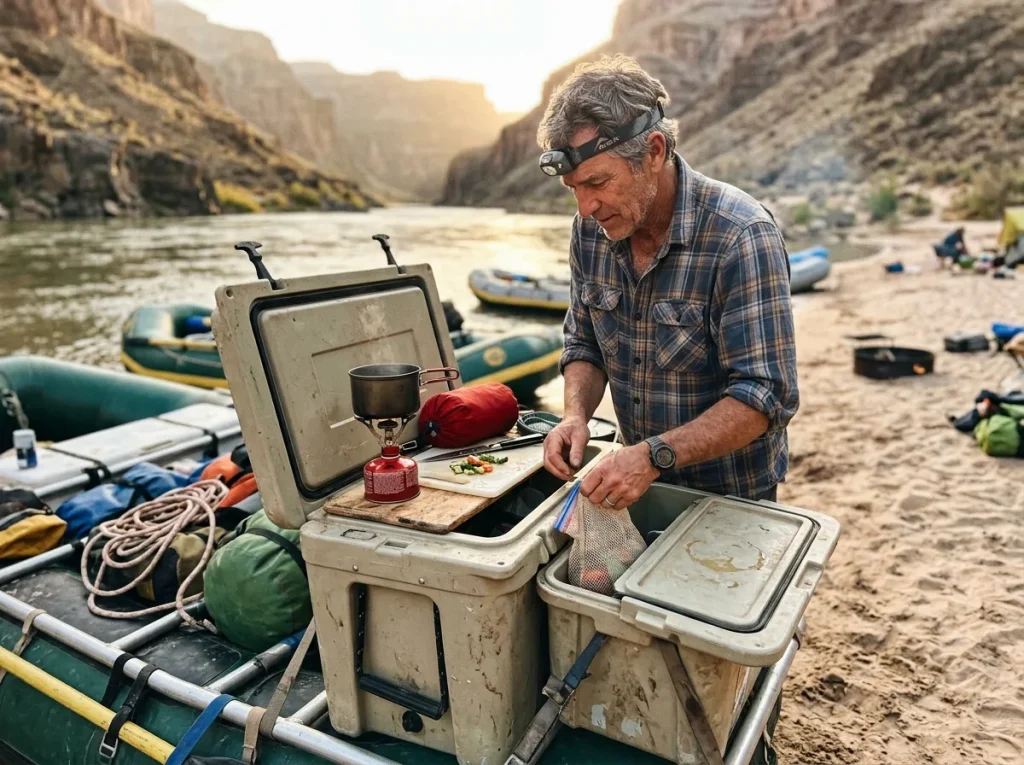
Here’s the anti-sell gut-check before you spend a dime: sometimes the honest answer is the cooler already strapped to your frame.
A quality hard cooler with bomber seals and latches, the YETI-tier stuff, can hold water in a bathtub test, and boaters run big coolers as de facto kitchen and dry boxes all the time. For a lot of day and overnight trips, a good cooler is about as dry as a shoebox-lid aluminum box, and it’s doing double duty you already paid for. If that’s the road you’re on, matching the right cooler to your trip gets you cold storage and dry storage in one purchase.
So when does a dedicated box actually earn its spot on the frame? When you’re running multi-day trips with electronics, first aid, or communication gear that can’t get wet, or when you want dry storage kept separate from cold storage so your dry socks never meet the melting ice. The mistake pulls the other way too: dropping serious money on a premium box for weekend floats an ammo can would cover.
The layered system beats any single box. Don’t spend on a premium box and then skip the cheap ziplock that actually saves your phone. Box plus bag is the setup that keeps gear dry through a real swim, and it costs almost nothing to add the bag.
The Bottom Line
Three things decide this buy. Seamless beats seams, so don’t assume aluminum outperforms a good rotomolded box on a flip. IPX7 is the rating number that actually matters, not the word “submersible.” And you fit the box to the bay before you fall for a listing, because a box that doesn’t seat is a box you can’t use.
Before you spend, go measure your frame bay and pull the ammo can out of the garage to see what it already covers. Then buy the box that fits the trip you actually run, not the one you’re dreaming about, and pack a dry bag inside it for the gear that can’t afford a leak.
Frequently Asked Questions
01What size dry box do I need for rafting?
For personal gear, a box around 50 liters is plenty; a kitchen box for multi-day trips runs about 70 liters; expedition hauling wants 95 liters or more. Match capacity to trip length and crew, and measure your frame bay before you commit.
02Are aluminum dry boxes better than plastic for rafting?
Not automatically. Welded aluminum offers custom sizing and camp repairability, but seams and a shoebox lid are leak points. One-piece rotomolded plastic has no seams and often stays drier on a flip. Gasket and latch quality decide more than material.
03Do dry boxes actually stay watertight if the raft flips?
Not guaranteed. Even a well-regarded aluminum box can take on water over a long inversion, and a shoebox lid seals worse upside down. Pack anything mission-critical in a ziplock or small dry bag inside the box regardless of the box’s rating.
04What’s the difference between a dry box and a dry bag?
A dry box is rigid, so it protects crushable gear and mounts hard to the frame. A dry bag is soft, submersible, and packs into odd spaces. Most rigs run both: the box for structure, the bag for the stuff that absolutely can’t get wet.
05Do I really need a dry box or is a cooler enough?
For many day and overnight trips, a quality cooler is about as dry and does double duty. A dedicated dry box earns its keep on multi-day trips with electronics, first aid, or comms that can’t get wet, or when you want dry storage separate from cold storage.