


In this article
The first time I helped a buddy shop for his own boat, he found a 13-footer he could almost afford and called it done — until we stood at the put-in on launch morning and added it all up. The frame, the oars plus a spare, the cam straps, the dry box, the cooler mount: by the time the thing was actually ready to float, he’d spent close to double the sticker on the boat alone. I’ve rigged and rowed most of the boats in this guide, I don’t sell rafts, and I’m not tied to any outfitter, so a fair chunk of what follows is about when NOT to spend. This guide to the best whitewater rafts walks through how to choose one — material, size, floor and hull — what a complete rig really costs, when a budget boat beats a premium one, and the specific rafts worth buying in 2026.
Here’s the short version: five buyable boats that cover the range from a tight technical creek runner to a big-water gear hauler.
| Raft | Length | Crew | Best For |
|---|---|---|---|
| Saturn 9.6 ft Mini Raft | 9.6 ft | 2–3 | Tight technical creeks and solo day runs |
| BRIS 12 ft Whitewater Raft | 12 ft | Up to 6 | Agile day trips on narrow lines |
| Saturn 13 ft Whitewater Raft | 13 ft | Up to 5 | The do-everything paddle or oar boat |
| NRS E-142 Self-Bailing Raft | 14 ft 2 in | 6–8 | Multi-day trips hauling coolers and dry boxes |
| BRIS BRF450 15 ft Raft | 15 ft | Up to 8 | The biggest boat at the lowest entry price |
How to Choose a Whitewater Raft

Ignore most of the marketing and a raft purchase comes down to a short list of decisions, in the right order. If you’re new to whitewater entirely, it helps to first understand what the sport actually asks of a boat before you start matching specs to it. Once you know the kind of water you’ll run most weekends, the boat almost picks itself.
The Three Things That Actually Decide a Raft (shape, size, material)
A whitewater raft is the sum of three choices: its shape (round tube boat, cataraft or paddlecat), its size (length, width and capacity), and its material (PVC, Hypalon or urethane — what river rats call the big three). Everything else, the D-ring count, the thwart layout, the color, is detail you tune after those three are locked. Get the three big ones right for your home water and you’ll be happy with the boat for a decade. Get them wrong and no accessory fixes it.
The honest starting point most shops won’t tell you: for nearly everyone, the answer is a round, self-bailing PVC boat somewhere in the 12-to-14-foot range. That single sentence covers maybe 80 percent of private boaters, and the rest of this section is really about whether you’re in the other 20.
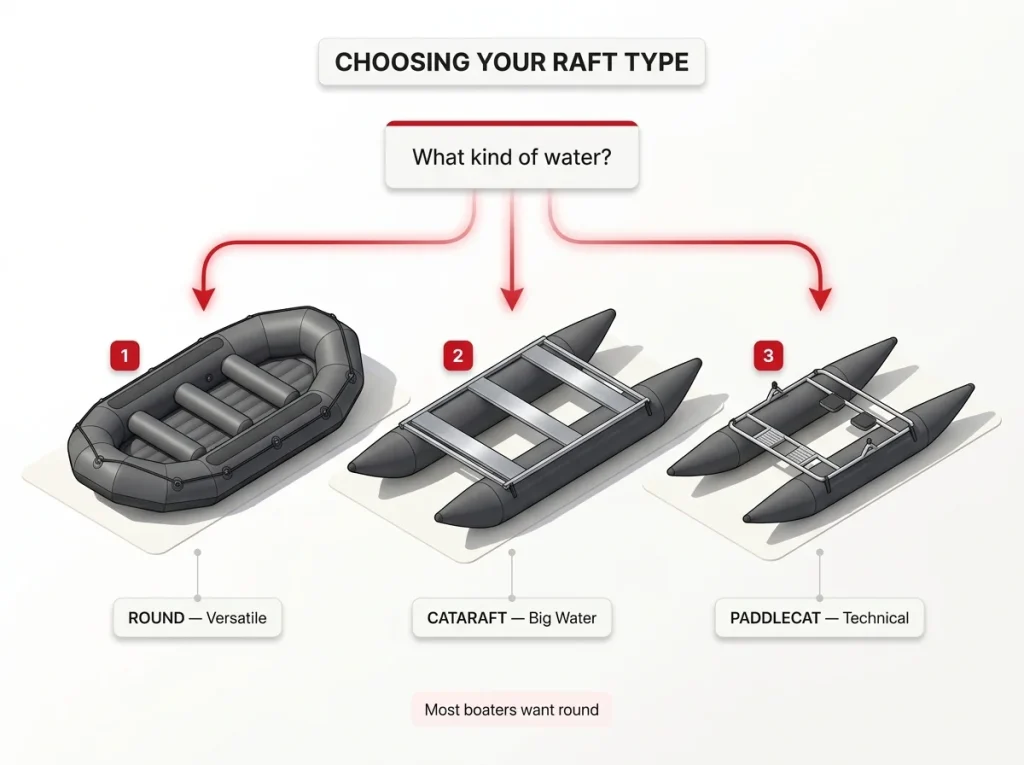
Round, Cataraft or Paddlecat — and Why Most People Want Round
A round raft — a closed oval of tubes with a floor — is the Swiss Army knife of the river. You can paddle it with a crew, rig it with an oar frame and row it solo, load it with a week of gear, or strap a cooler in for a lazy float. A cataraft (two pontoons joined by a frame, no floor) sheds water and punches through big holes beautifully and is a joy to row, but it carries less and isn’t a paddle boat. A paddlecat splits the difference for technical paddle teams. Both are specialty tools you graduate into once you know exactly what you want. For a deeper look at boat categories and how they pair with river class, our overview of the full range of raft and river types lays them side by side.
If your trips are smaller and lighter than a full raft demands, two close cousins are worth a glance before you commit. A packraft folds into a backpack for fly-in or hike-in water, so if you’re looking at packrafts instead you’re in a different boat category entirely. The same goes for solo paddlers eyeing nimble single-person craft — or inflatable kayaks for rivers, which trade carrying capacity for portability and a lower price of entry.
Paddle Raft vs. Oar Rig — How You’ll Power It
The last shape question is how the boat moves: paddles or oars. A paddle raft puts a crew of three to six on the tubes with single-blade paddles and a guide calling strokes from the stern — it’s social, it’s the commercial-trip experience, and it’s how most people first run a rapid. An oar rig bolts a frame across the tubes and lets one rower control the boat with two long oars, which is how you run technical water solo or haul a loaded boat on a multi-day. A round raft does both; you just swap the rigging. Plenty of owners run paddle on a day trip and bolt the frame on for the overnight, which is exactly why the round boat keeps winning.
Raft Materials — PVC, Hypalon and Urethane
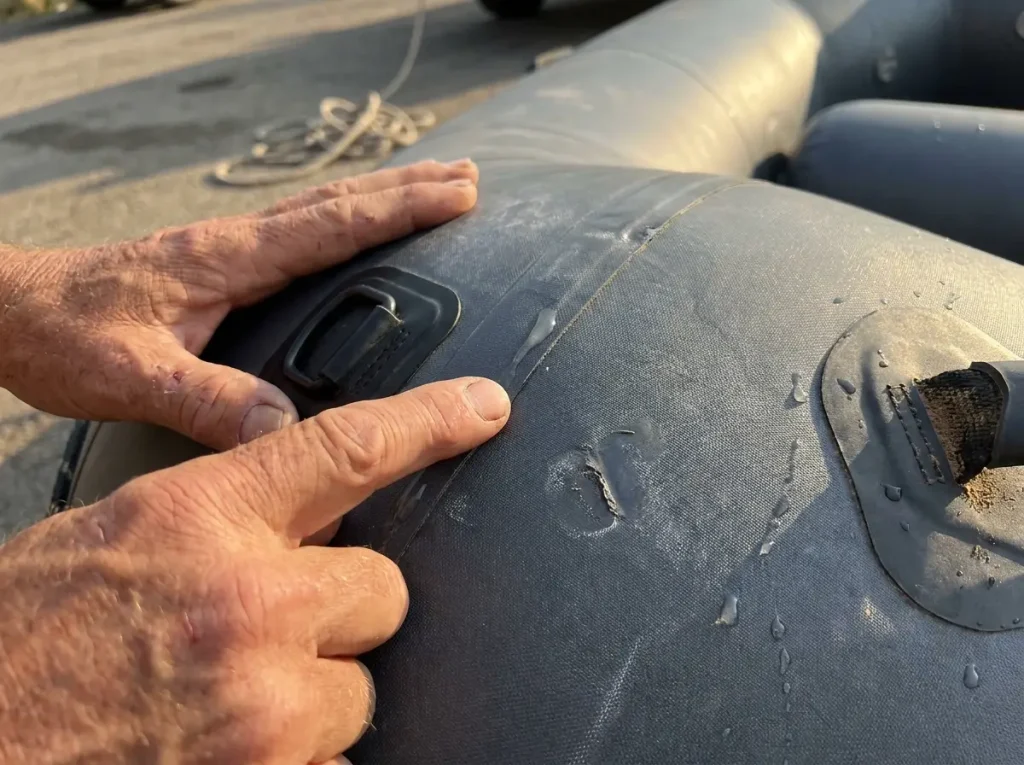
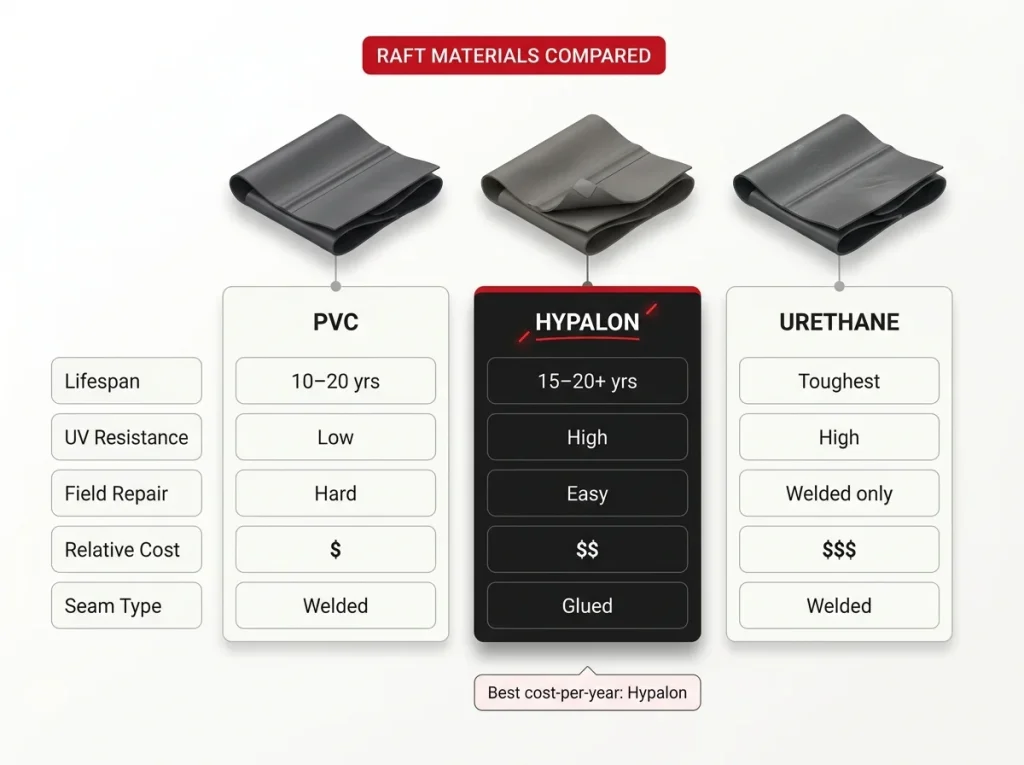
Material is the decision that quietly sets how long your boat lasts, how easily you fix it on a gravel bar, and what it’s worth when you sell it. It’s the most over-simplified topic in the sport, so this is where it pays to slow down. The short truth: there is no single best material, only the right one for how hard you’ll run the boat and where you’ll store it.
PVC — Best Value and Where It Falls Short
PVC is the budget-and-mid-tier workhorse, and it’s what every boat in our card picks below is built from. Modern PVC rafts use thermo-welded seams that are molecularly bonded — the seam is often stronger than the fabric around it, and it rarely fails. A glued-PVC boat from a value builder like Saturn, STAR or Bris will give you ten years of weekends easily, and up to twenty if you treat it right. The catch is twofold: a full panel is hard to repair in the field once a seam does let go, and PVC is the most vulnerable of the three to one specific killer — ultraviolet light. It isn’t rapids that retire a cheap raft; it’s a sunny driveway.
A budget PVC raft is a smart buy on one condition: keep it out of the sun. UV breaks down the coating long before any rapid does. Roll it, bag it, and stash it in the shade between trips and a value boat that’s “supposed” to last five to seven years will run closer to fifteen or twenty. I’ve seen garage-kept Saturns outlive sun-baked premium boats.
Hypalon and Pennel-Orca — The Long-Haul, Field-Repairable Choice
Hypalon — and its modern equivalent, Pennel-Orca — is the material outfitters reach for when a boat has to survive thousands of commercial miles. It shrugs off UV and abrasion far better than PVC, which is why a well-kept Hypalon boat can run trips for fifteen to twenty-plus years. The trade-off cuts two ways. Hypalon seams are glued rather than welded, which sounds like a weakness but is actually the feature: a glued seam can be re-glued on a sandbar with a patch kit and a little time, while a blown weld usually means a trip to a repair shop. That field-repairability is exactly why expedition boaters swear by it, and if you want to learn to patch a Hypalon tube in the field, it’s a skill that pays for itself on the first big trip. The downside is cost: a Hypalon boat from Hyside, Maravia or AIRE costs noticeably more up front. Spread across its lifespan, though, the cost-per-year often comes out lower than replacing budget boats — which is the whole argument, and one we lay out in a full PVC vs Hypalon breakdown.
Urethane and Welded Seams — Toughness at a Price
At the top of the heap sits urethane, the material in boats from Sotar and Jack’s Plastic. It’s the toughest, most abrasion-resistant fabric on the water, with welded seams that hold up to relentless rock contact, and it’s priced accordingly. Most private boaters never need urethane — it’s the choice for guides on shallow, rocky desert rivers who grind their boats over ledges all season. Knowing it exists is enough; you’ll feel it in your wallet long before you feel its limits.
What Size Whitewater Raft Do You Need

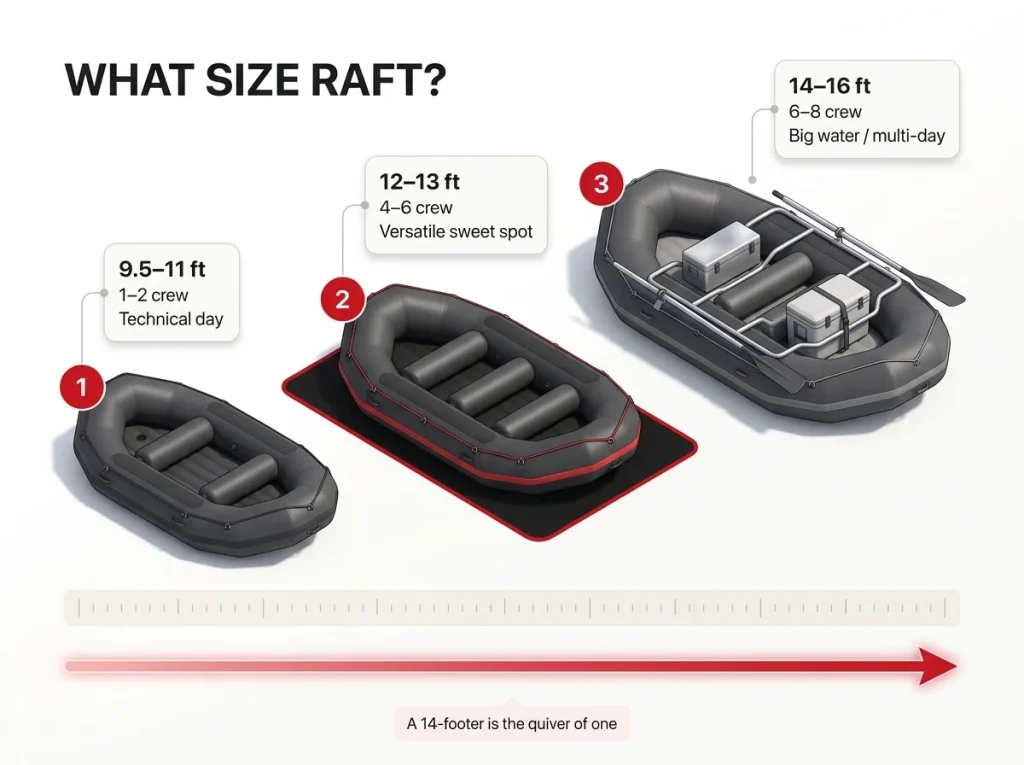
Size is where buyers make their most expensive mistake, and it’s almost always the same one: buying too big. A boat that’s a barge with your normal crew isn’t a better boat, it’s a heavier, harder-to-row, harder-to-store one. Match the length to the trips you actually take, and lean on our full raft size guide when you want the numbers broken down further.
Raft Length by Trip Type (day, technical, multi-day)
Length sorts roughly into three bands. A 9.5-to-11-foot boat is a nimble day and technical runner — it slips down tight, rocky lines and tucks into the back of a truck, but it won’t carry a crew and a week of food. The 12-to-13-foot range is the versatile sweet spot for most private boaters: enough room for four to six on a paddle day, light enough to wrangle solo. 14-to-16 feet is big-water and multi-day territory, where you need the volume to float a loaded boat through standing waves and haul coolers, dry boxes and groover for a week. If you can only own one boat, a 14-footer is the quiver of one — it opens up the widest range of rivers and trips, which is the single most repeated piece of advice you’ll hear from veteran owners.
Crew Size and Capacity — Why Not to Buy to the Max
Here’s the part the spec sheets bury. A capacity rating is a maximum, not a target. A boat rated for eight paddlers handles like a loaded school bus with eight aboard, and once you add gear it sits low, loses freeboard — how high the tubes ride above the waterline — and gets sluggish and wet exactly when you need it responsive. Size to your realistic crew plus gear, with headroom to spare, and the boat stays dry, trims right and turns when you ask it to.
Don’t buy to the max capacity rating. Pick the boat for the crew you paddle with most weekends, then leave a seat’s worth of headroom for gear. An under-loaded raft punches holes and stays dry; a maxed-out one plows, takes water over the bow and feels like rowing a waterbed. More boat than you need is a worse boat, not a safer one.
Width and Tube Diameter — Stability vs. Tight Lines
The other half of size is the part nobody measures: width and tube diameter. Wider tubes and a broader beam give you stability in big, pushy water — the boat resists flipping when a lateral wave slams the side. A narrower beam slips through tight, rocky technical lines that a fat boat would wedge into. Bigger tube diameter also means more buoyancy to ride up and over waves instead of plowing through them. There’s no free lunch: the wide big-water boat that feels planted on the Colorado feels clumsy on a pinched mountain creek, and vice versa. Pick for the water you run most, not the trip you take once a year.
Self-Bailing Floors and Hull Shape
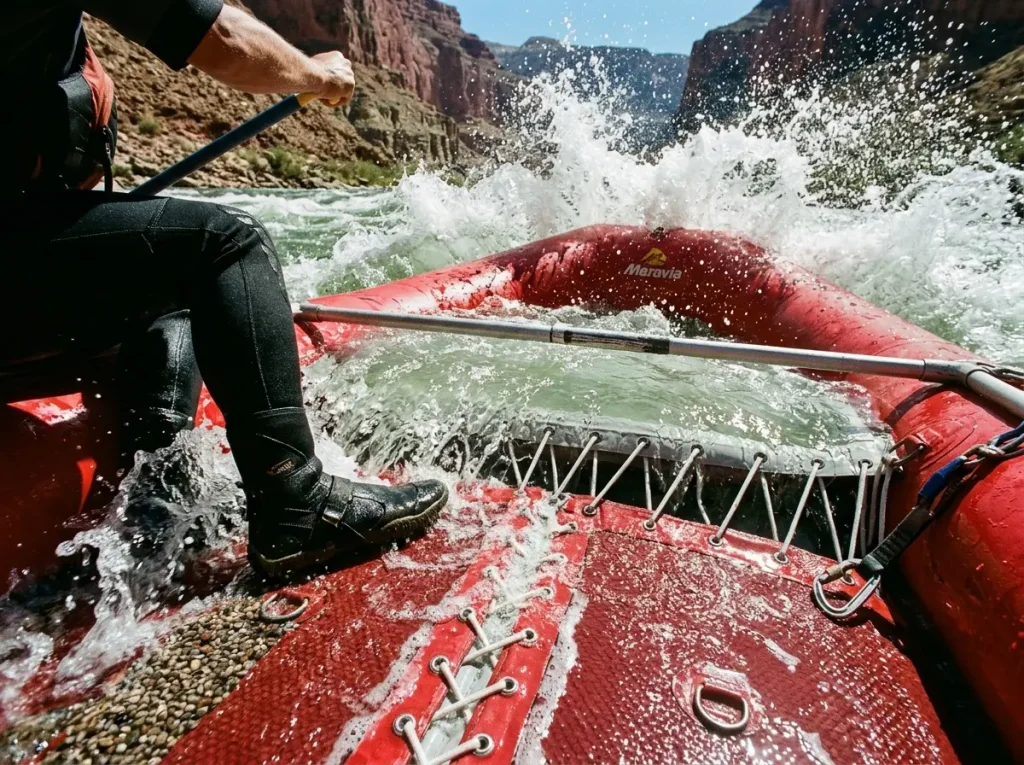
How a raft handles water — the water that inevitably comes aboard — is mostly a function of its floor. This is one area where the modern boat has flat-out won an old argument, and it’s worth understanding why before you look at any specific hull.
Self-Bailing vs. Bucket Boats — Why Self-Bailing Won
A self-bailing raft has an inflated floor that sits above the waterline, with lacing or gaps along the tube-floor seam that let water drain out on its own. A bucket boat — the old-school design with a flat floor that holds water — fills up in a rapid and has to be bailed by hand at the bottom of every drop. For whitewater, that argument is over: self-bailing won, and bucket boats are mostly a relic now. The difference on the water is night and day. Punch a wave in a self-bailing boat and the water that floods aboard is gone by the time you set up for the next one; in a bucket boat you’re stopping to bail while the current carries you toward the move you haven’t lined up yet. When you’re matching a hull to the kind of water you’ll run, it helps to know exactly what the numbers mean — the International Scale of River Difficulty maintained by American Whitewater is the Class I-to-VI system every boater uses to talk about difficulty.
Floor Types and Rigidity (drop-stitch vs laced)
Not all self-bailing floors are equal. A drop-stitch floor inflates rock-hard — thousands of internal threads hold the top and bottom skins flat under high pressure, so the floor acts almost like a rigid deck. That stiffness helps the boat track straight under oars and gives paddlers a solid platform to brace against. An older laced-in I-beam floor is softer and more forgiving but flexes more. For most buyers a drop-stitch self-bailing floor is the better all-around choice, and if you want the full rundown on construction, see how inflatable floor types compare before you decide.
Thwarts, Foot Cups and Rigging Points
The fittings are what turn a tube into a boat you can actually run. Thwarts — the cross-tubes that brace the hull’s shape — give paddlers something to lock their legs against and keep the boat rigid; removable ones let you clear space for gear on an oar rig. Foot cups glued to the floor give paddlers a place to wedge their feet so a wave doesn’t launch them off the tube. And the count and placement of D-rings decides how much you can rig and how securely — every cam strap, dry bag and frame mount clips to one. Before you buy, count the D-rings and picture where your frame and gear will actually go; running short of tie-downs on the water is a problem you can’t fix mid-trip.
The True Cost of a Complete Raft Rig
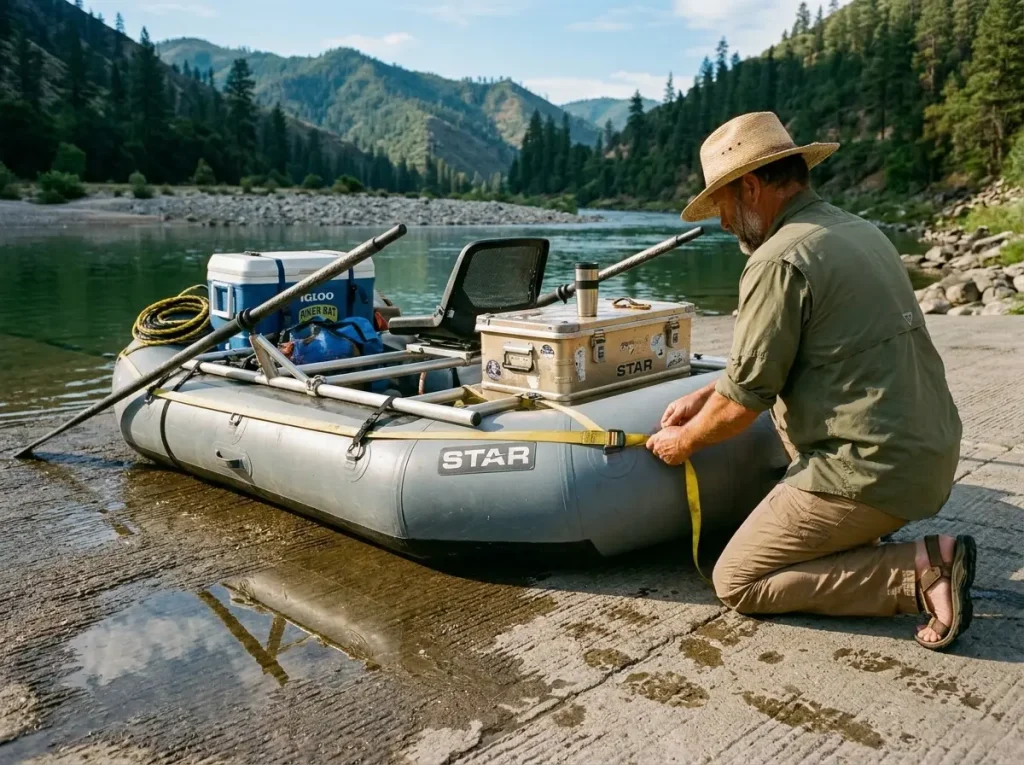
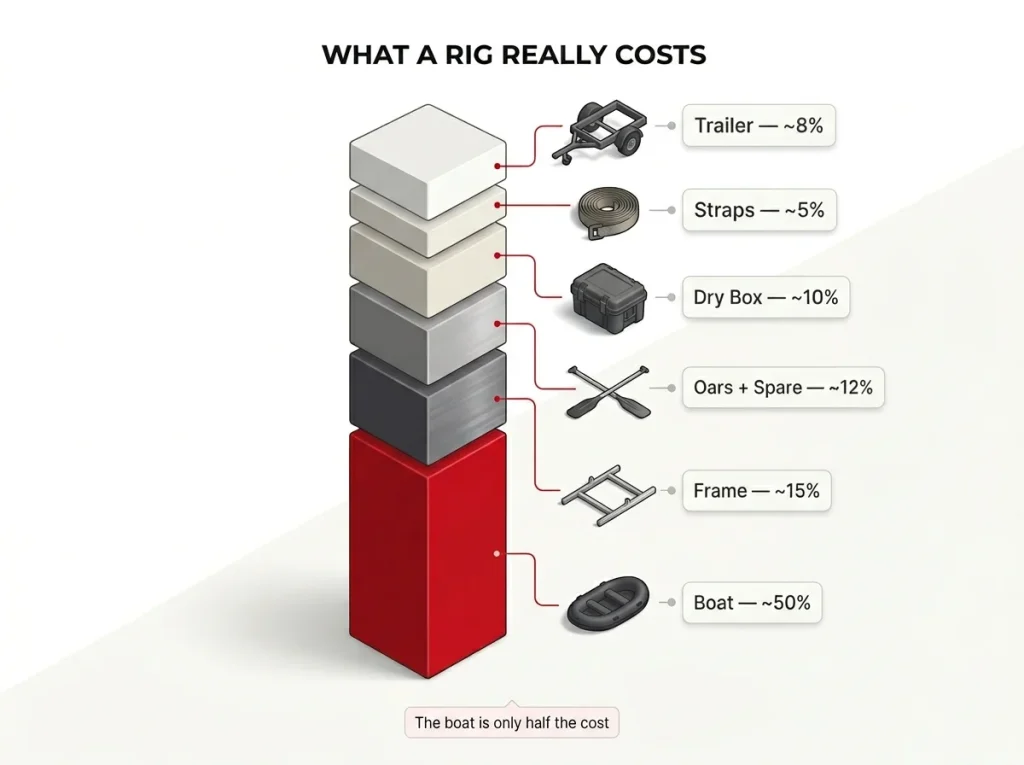
This is the section the rest of the internet skips, and it’s the one that’ll save you the most money. The number on the boat is not what it costs to go boating. A raft is a platform; the rig is the boat plus everything that makes it row, haul and survive a trip — and the boat is only about half of that total.
What a Complete Rig Actually Includes (and Costs)
Walk through a complete oar rig and the list adds up fast: the boat, an oar frame lashed across the tubes, two oars plus a spare, a set of cam straps, a dry box, a cooler, and dry bags for everything soft. None of that is optional on a real trip — it’s the difference between a boat and a boat you can actually launch. The frame alone is a real decision; our guide to choosing a raft frame covers the trade-offs between fishing frames, rowing frames and cargo setups. Oars are the other big line item, and picking the right oars for your boat length and water matters more than beginners expect. For the full kit, river class by river class, a full rafting gear checklist by river class lays out everything else — and don’t forget the personal gear that rides on you, from a PFD to a helmet to the right layering with a wetsuit or drysuit for cold water.
Carry a spare oar, always. Early on you’re far more likely to lose one — pop it out of the oarlock in a hole and watch it swim — than to snap one. A boat with one oar at the bottom of a rapid is just an expensive cooler. The spare isn’t an upgrade; it’s part of the rig, same as the frame.
Budget vs. Premium — When Each Makes Sense
So when does a budget PVC boat make sense, and when do you spend up? It comes down to how hard and how often you’ll run it. If you boat a handful of weekends a year and store the boat indoors, a value PVC raft is the smart money — you’ll never run it hard enough to find its limits, and the savings buy you a better frame and oars. If you boat heavy mileage, in sun-baked desert canyons, or you’re rowing technical rock gardens all season, the durability and repairability of Hypalon or urethane earns its keep. The hidden variable in that math is storage: keep any boat out of the sun and keep it out of the sun and maintained and you push its lifespan — and its cost-per-year — dramatically in your favor.
New vs. Used — Why a Used Premium Boat Often Wins
Here’s the move experienced boaters make that beginners miss: at the same money, a quality used boat often beats a new budget one. Rafts hold up well, the used market is deep, and a well-kept Hypalon boat that’s already proven itself will outlast and out-resell a brand-new value boat at the same price. A used complete rig — boat, frame and trailer together — costs far less than assembling everything new, and buying a package saves you the rookie mistakes of piecing together parts that don’t fit. The one rule: inspect the seams and the floor in person, press the tubes to check they hold pressure, and walk away from anything stored in the sun.
Best Whitewater Rafts for Day and Technical Runs
These are the nimble boats for the boater whose home water is technical — tight lines, rocky channels, and day trips where you want a craft that turns on a dime and doesn’t drain the bank. Every pick here is a self-bailing PVC boat that’s genuinely stocked and ready to ship. If your budget stretches and you want a boat to grow into for years, the premium step-up names worth buying direct are the STAR Outlaw 130, the AIRE Super Duper Puma with its bombproof inner-bladder design, and the NRS Otter 120 — none of them sold through Amazon, but all worth knowing.
Best Small Boat — Saturn 9.6 ft Whitewater Mini Raft
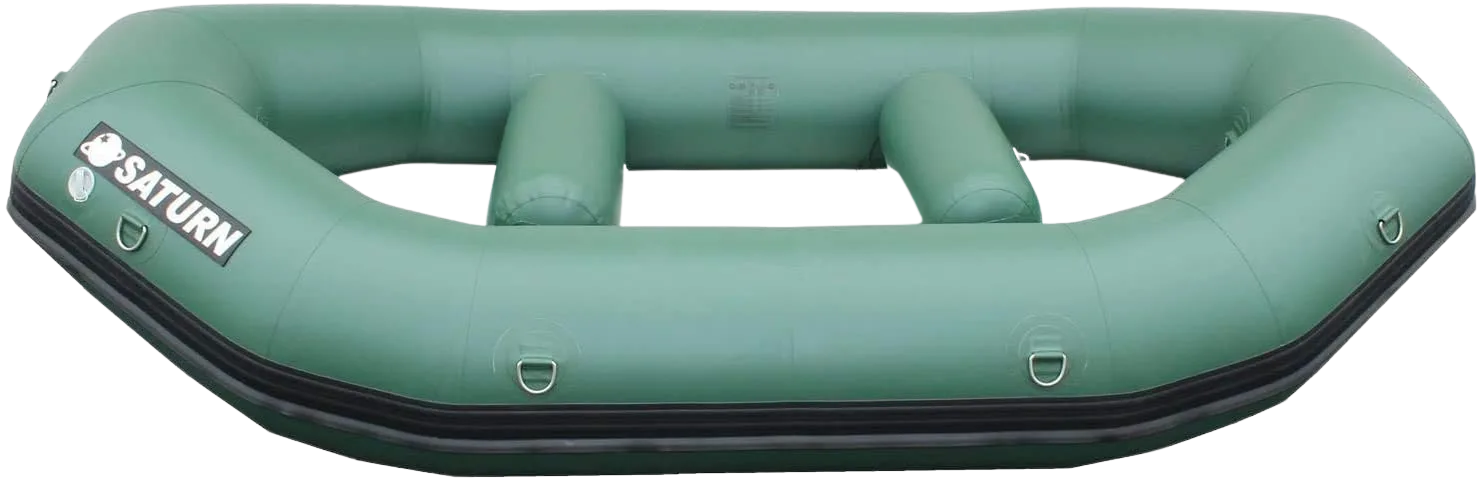
If your water is small and pinched and you mostly run solo or with one partner, the Saturn 9.6 ft Whitewater Mini Raft is the least boat you need and nothing more — which on a tight creek is exactly right. It self-bails, it slides down lines a 13-footer would wedge into, and one person can load it without help. Don’t ask it to haul a crew and a cooler; that’s not its job. As a first whitewater boat for technical day water, it’s hard to beat the entry price.
Best All-Around — Saturn 13 ft Whitewater Raft
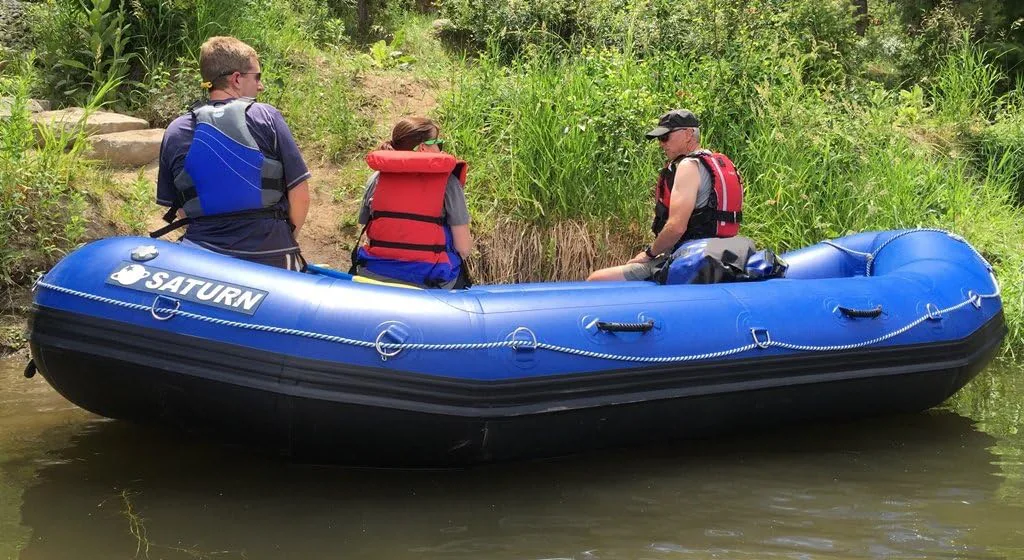
If you only buy one boat, make it something like the Saturn 13 ft Whitewater Raft. Thirteen feet sits right in the versatile sweet spot — big enough for four to six on a paddle day, light enough to row solo with a frame. The two removable thwarts mean you can lock paddlers in for a crew run or pull them and open up the floor for gear on an overnight, and 16 D-rings give you plenty to rig against. It’s the closest thing on Amazon to a true quiver of one for a private boater on a budget.
Best Compact Pick — BRIS 12 ft Whitewater River Raft
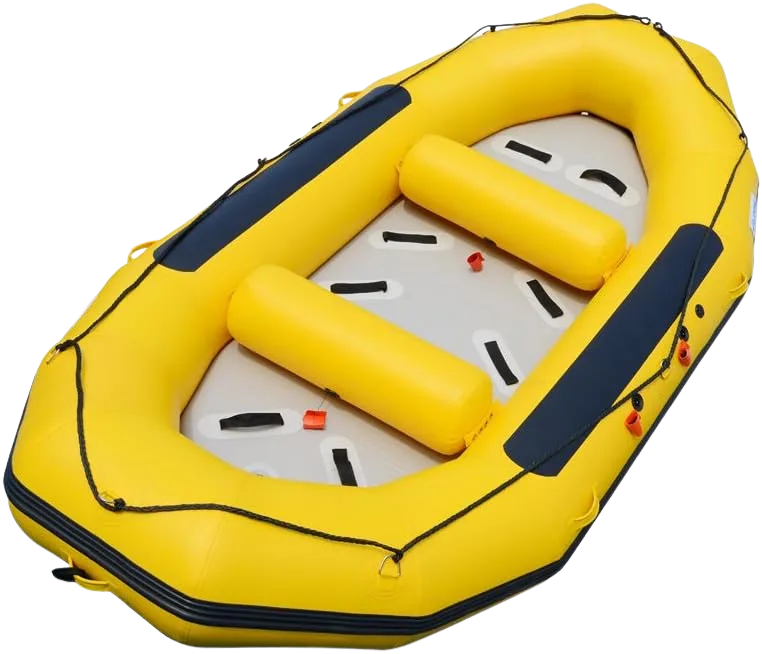
The BRIS 12 ft Whitewater River Raft is the pick when you want agility without dropping all the way to a mini raft. The drop-stitch floor inflates rigid, so it tracks better under oars than its size suggests, and the heavy 1.2 mm PVC takes rock contact in stride. It’ll seat up to six in a pinch, but its real strength is staying nimble on tight, technical lines while still carrying a small crew. A genuine budget workhorse for the boater whose home river rewards a smaller boat.
Best Group Boat — BRIS 13 ft Whitewater River Raft
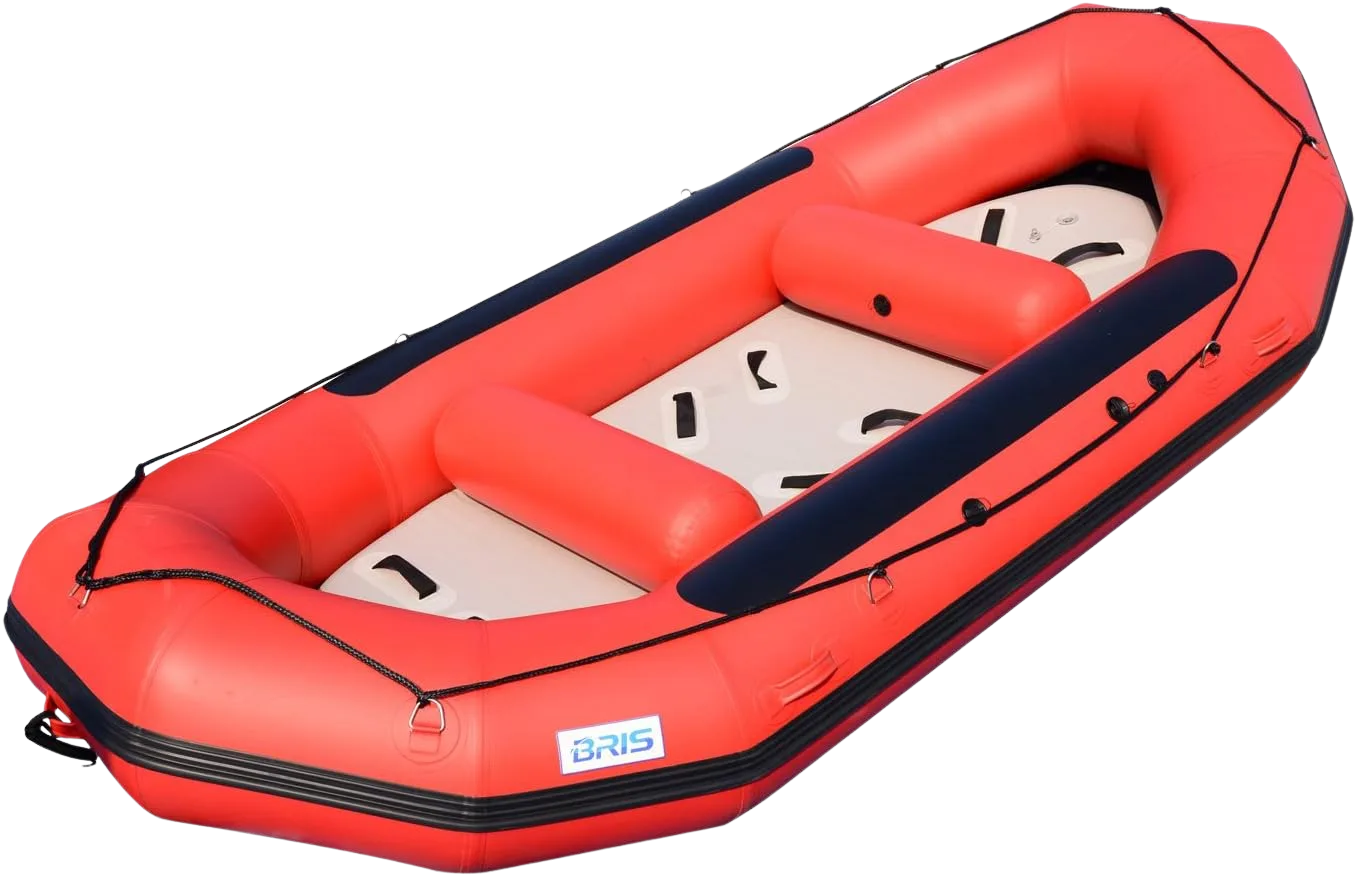
When the goal is getting the most people on the water for the least money, the BRIS 13 ft Whitewater River Raft is the value play. It packs the highest passenger capacity in this group — up to eight — at the lowest entry price, which makes it the obvious budget pick for a paddle club or a big family crew. Remember the sizing rule, though: just because it’s rated for eight doesn’t mean eight is how it runs best. Load it sensibly, keep some freeboard, and at around 128 pounds line up a second set of hands for the carry to the water.
Best Whitewater Rafts for Big Water and Multi-Day
When the water gets big and the trips get long, you need a boat with the volume to float a loaded hull through standing waves and the capacity to haul coolers, dry boxes and a week of food. Amazon’s catalog thins out fast at this size — the premium big-water boats most expedition rowers actually run, the STAR Outlaw 150, the AIRE with its inner bladders and ten-year warranty, and the Hypalon classics from Hyside and Maravia, are bought direct or used, not off a marketplace. Of what ships ready to go, these two cover the honest range from a true expedition boat to the most boat-per-dollar you can get.
Best Multi-Day — NRS E-142 Self-Bailing Raft
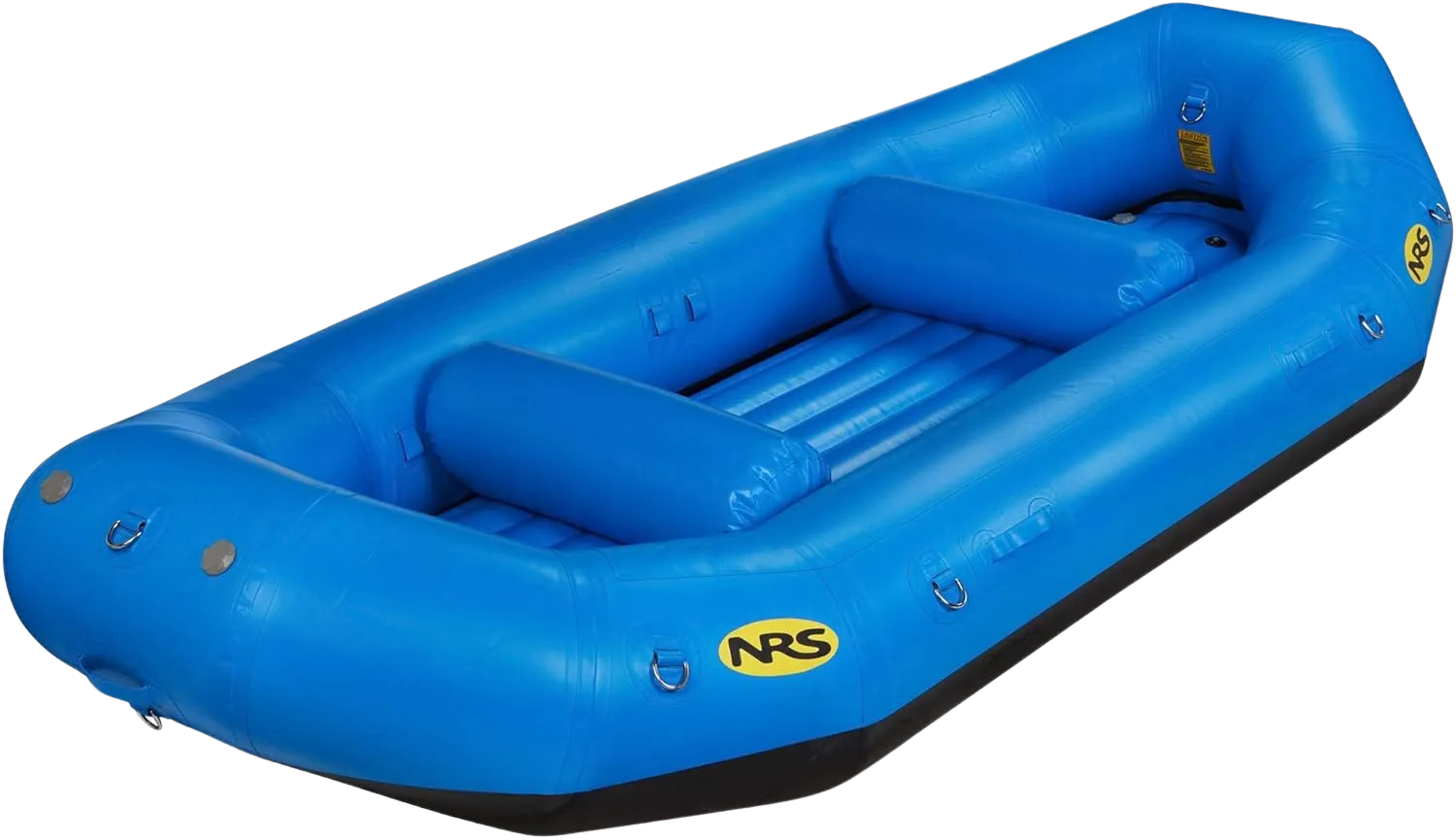
The NRS E-142 Self-Bailing Raft is the expedition boat of the group and the one I’d point a serious multi-day boater toward. At 14 feet 2 inches it has the volume to float a fully loaded hull through big standing waves and the deck space to rig a frame, a dry box and a week of food. NRS has earned its reputation on rivers like the Salmon and the Grand Canyon, and the build quality shows. This isn’t a beginner’s first paddle boat — it rewards someone with a little rigging experience — but as a do-it-all big-water boat that you can actually buy today, it’s the standout.
Best Big Value — BRIS BRF450 15 ft Inflatable Raft
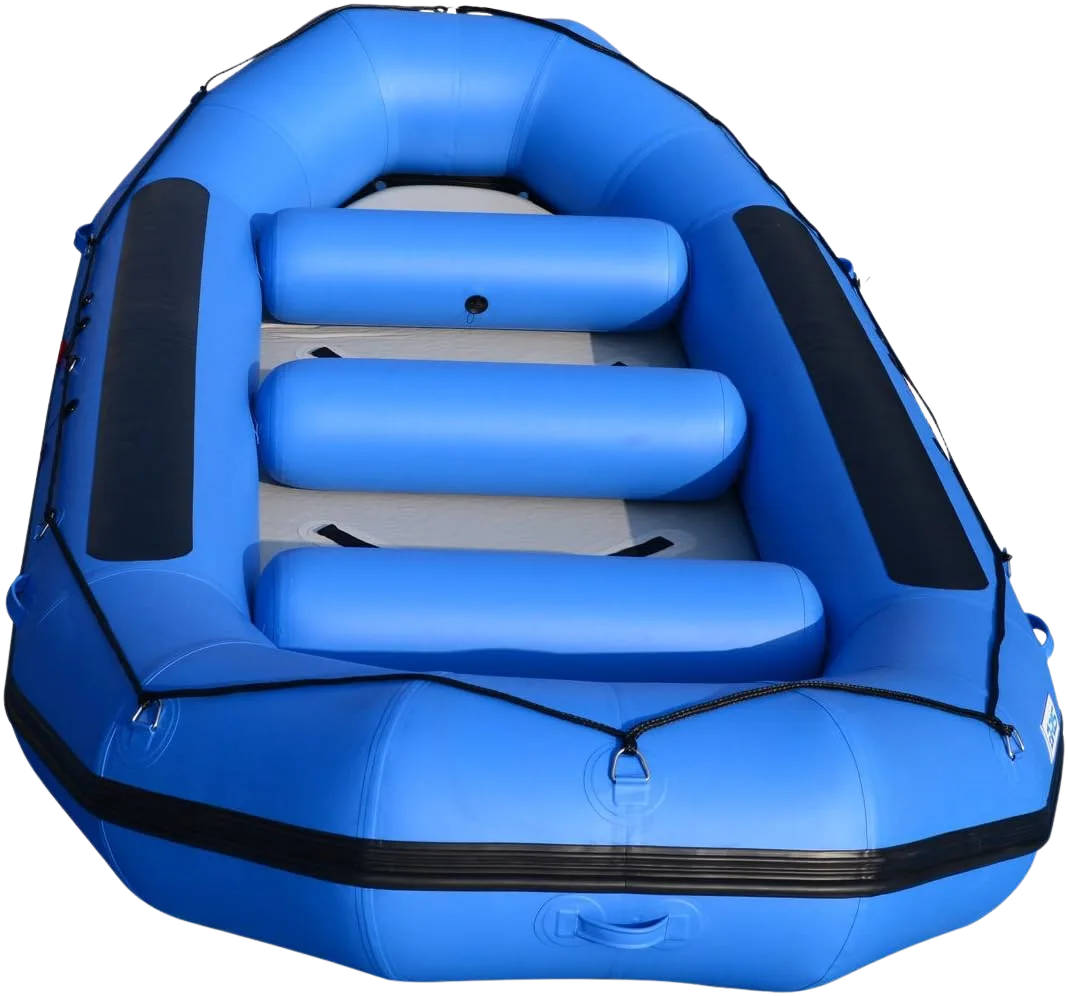
If you want the most boat your money can buy and you’re starting out, the BRIS BRF450 15 ft Inflatable Raft is the cheapest path to a full-size hull. Fifteen feet of heavy 1.2 mm PVC gives a big group a lot of platform, and it’s a sensible entry into group floats and calmer big water. Be honest with yourself about the water, though — for hard, pushy whitewater, a premium big-water boat with the right tube diameter and hull shape is worth the step up. As a budget way to put a large crew on the river, this is the value leader.
Conclusion
Buying a raft gets simple once you ignore the marketing and hold to three things. First, match the material and size to YOUR river and your real trips, not the biggest number on the spec sheet — a 14-footer is the quiver of one if you’re unsure, and a round self-bailing PVC boat covers most boaters for a decade. Second, budget the whole rig, not just the boat: the frame, oars, a spare, straps and a dry box are roughly half the cost and none of them are optional. Third, buy for cost-per-year, which often means a quality used boat beats a shiny new budget one at the same money. Before you put anything in a cart, price out the complete rig, check the used market in your area, and then pick the boat that fits the day you actually spend on the water most often.
Frequently Asked Questions
01What is the best material for a whitewater raft, PVC or Hypalon?
Pick PVC for value and Hypalon for longevity and field repair. PVC boats last 5 to 7 years of hard use; a well-kept Hypalon boat runs 15 to 20-plus, so it often costs less per year despite the higher sticker.
02What size whitewater raft do I need?
A 12-to-14-foot raft suits most private boaters, and a 14-footer is the one-boat quiver. Drop to 9.5 to 11 feet for tight technical day runs, and step up to 14 to 16 feet for big water and multi-day gear hauling.
03How much does a good whitewater raft cost?
The boat is only about half the cost of a complete rig. Budget for the frame, oars and a spare, straps and a dry box on top of the hull. Buying a used package cuts the total sharply and helps you avoid beginner mistakes.
04Are self-bailing rafts better than bucket boats?
Yes, for whitewater a self-bailing raft is the clear choice. Its elevated floor drains water automatically through the seam, so you keep moving instead of stopping to bail. Bucket boats fill in rapids and are mostly obsolete for moving water today.
05What is the best whitewater raft brand?
There is no single best brand, only the right boat for your water and budget. NRS, AIRE, STAR, Hyside and Maravia lead the premium tier, while Saturn and BRIS deliver the best value for budget-minded private boaters.